

 psychology
Similar presentations:




Eisoptrophobia. Ombrophobia. Xanthophobia
1. Eisoptrophobia, Ombrophobia, Xanthophobia
2. Eisoptrophobia
3.
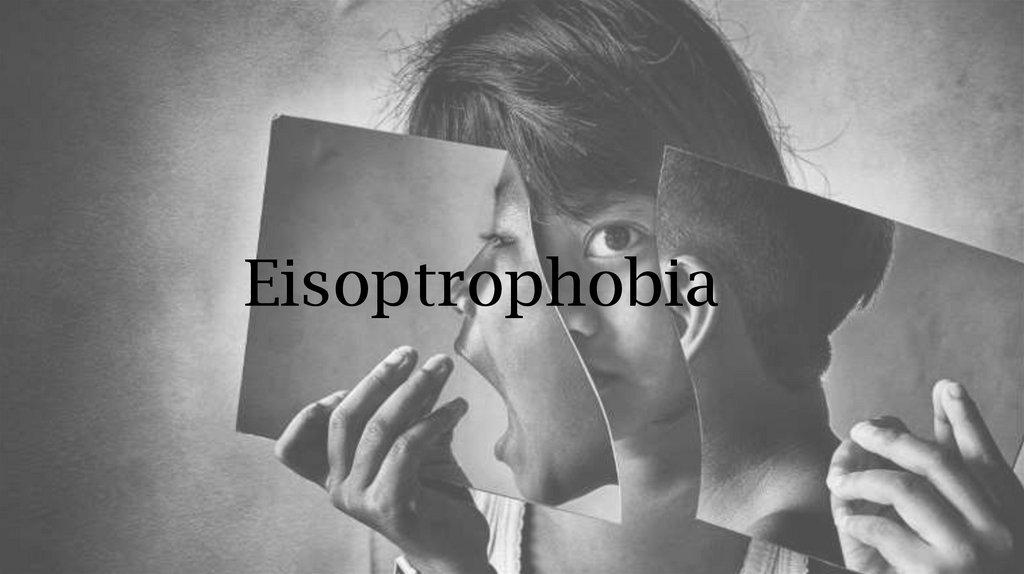
In psychology, the fear of mirrors is called eisoptrophobia. It's apanicky fear of seeing one's own reflection. The phobia is often
triggered by numerous horror films and magical stories in
which mirrors are portals to the other world.
Another cause of this disorder is flaws in one's own
appearance: a person considers themselves unattractive or is
dissatisfied with their figure. They live in constant fear of
seeing a mirror, so they avoid clothing stores, cars, and
anything that might reflect the real world. The individual
gradually becomes withdrawn, minimizes social interactions,
and becomes depressed.
4.
Psychotherapists disagree with the idea thateisoptrophobia is based on popular superstitions and
believe that the root of eisoptrophobia lies within the
individual. This is a way for people to escape reality and
refuse to take responsibility for their own destiny.
At first, mirror phobia is asymptomatic. At first, it seems
like a funny quirk. Often, a fear of mirrors is combined
with a fear of the dark. Another prerequisite is social
phobia. The individual is susceptible to the influence of
others' opinions and has problems with self-identification.
5.
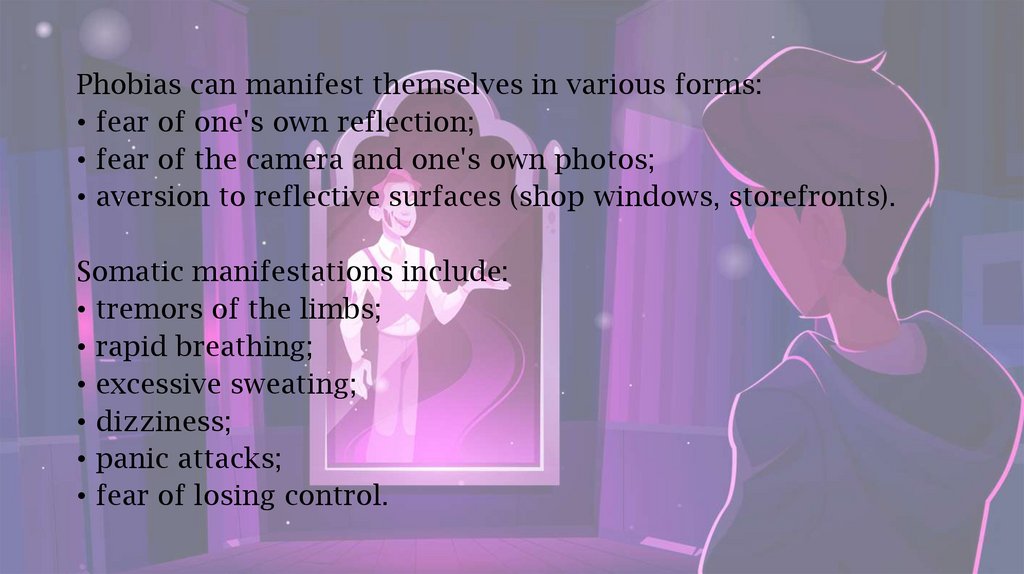
Phobias can manifest themselves in various forms:• fear of one's own reflection;
• fear of the camera and one's own photos;
• aversion to reflective surfaces (shop windows, storefronts).
Somatic manifestations include:
• tremors of the limbs;
• rapid breathing;
• excessive sweating;
• dizziness;
• panic attacks;
• fear of losing control.
6. Ombrophobia
7.
Rain is a natural phenomenon consisting of atmosphericprecipitation falling from clouds in the form of liquid
droplets. It's well-known that rain affects a person's wellbeing.
Of course, it all depends on our individual psychological
characteristics: for some, rain helps restore inner balance
and has a calming effect, while for others, rain causes
severe anxiety. The drumming of raindrops, the bubbles in
puddles, the smell of wet grass—all of these things aren't
simply associated with something unpleasant; they evoke a
panicky fear of being caught in the rain, of being caught in
the streams of water that monotonously descend from the
sky.
8.
This fear is called "Ombrophobia." Sometimes, thisirrational fear arises from the mere thought of being
caught in the rain. To avoid negative consequences, it's
important to respond appropriately to the fear.
9.
The causes of this strange phobia can be attributed tovarious factors. The main causes of ombrophobia are listed
below:
• genetic factors, biological factors, and environmental
factors;
• psychological trauma experienced in childhood or
adulthood;
• negative experiences (for example, dealing with "harmful"
rain);
• neurotic conditions;
• negative media influences (movies and frightening articles
depicting heavy, dangerous rainfalls only increase the
fear of this natural phenomenon).
10.
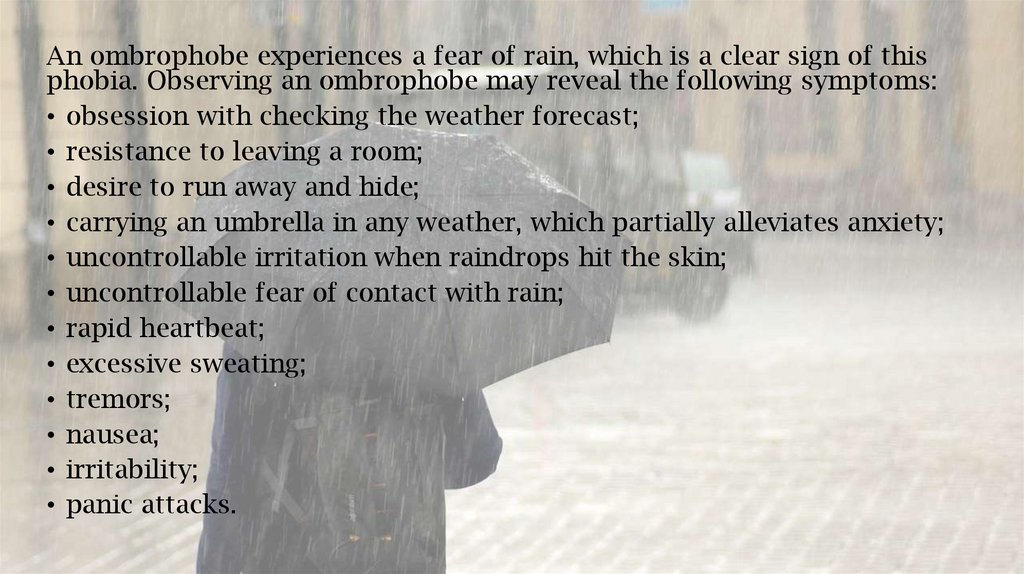
An ombrophobe experiences a fear of rain, which is a clear sign of thisphobia. Observing an ombrophobe may reveal the following symptoms:
• obsession with checking the weather forecast;
• resistance to leaving a room;
• desire to run away and hide;
• carrying an umbrella in any weather, which partially alleviates anxiety;
• uncontrollable irritation when raindrops hit the skin;
• uncontrollable fear of contact with rain;
• rapid heartbeat;
• excessive sweating;
• tremors;
• nausea;
• irritability;
• panic attacks.
11. Xanthophobia
12.
Xanthophobia is the fear of the color yellow.People suffering from this mental disorder cannot even eat
an orange without experiencing a feeling of terror.
According to scientists, less than 5% of people currently
suffer from xanthophobia.
A biased fear of yellow is most often caused by intense
negative experiences from the past. The fear experienced
by the body, for some reason, becomes attached to the
color yellow. As negative life experiences accumulate, the
nervous system attributes the feelings of fear and danger
that arise in adverse situations to the color yellow.
Although aware of the biased nature of their fear, sufferers
are unable to overcome it on their own.
13.
If fear hasn't completely overwhelmed a person, they canclose their eyes and avoid the yellow obstacle. In severe
cases, an uncontrollable attack of fear is inevitable,
accompanied by a rapid heartbeat and other symptoms of
panic.
Xanthophobia is treated with neurolinguistic programming
and stress-energy psychotherapy.