 english
Similar presentations:

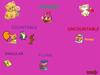

Number of nouns (Число существительных)
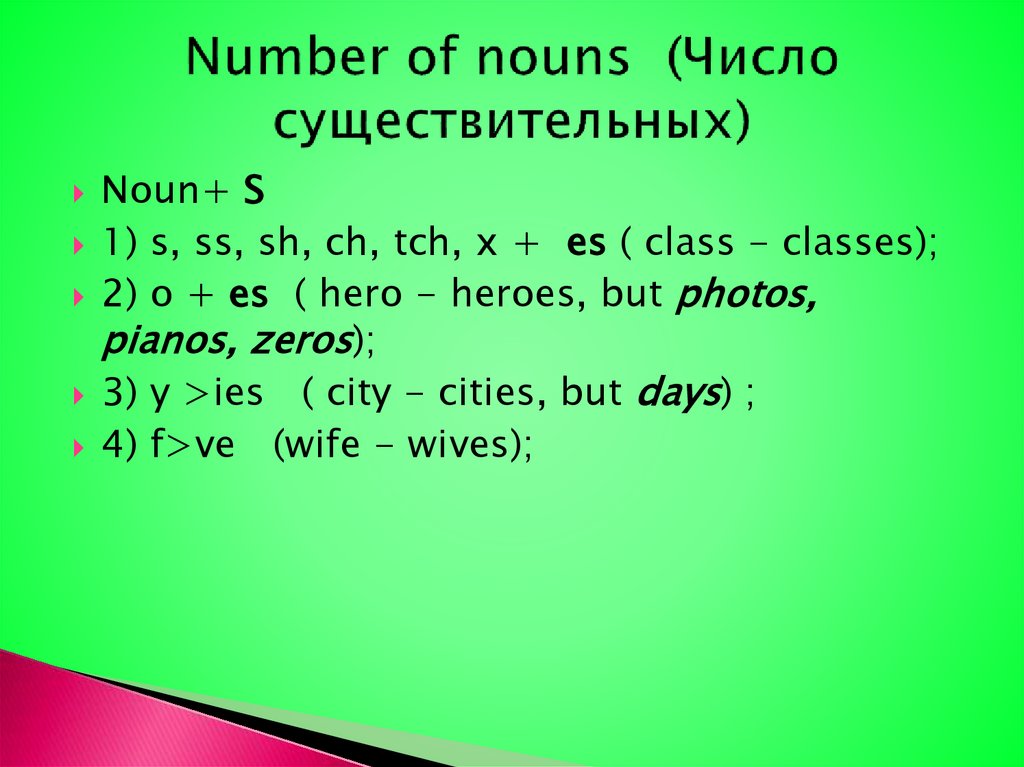
1. Number of nouns (Число существительных)
Noun+ S1) s, ss, sh, ch, tch, x +
es ( class - classes);
2) o + es ( hero - heroes, but photos,
pianos, zeros);
3) y >ies ( city - cities, but days) ;
4) f>ve (wife - wives);
2.
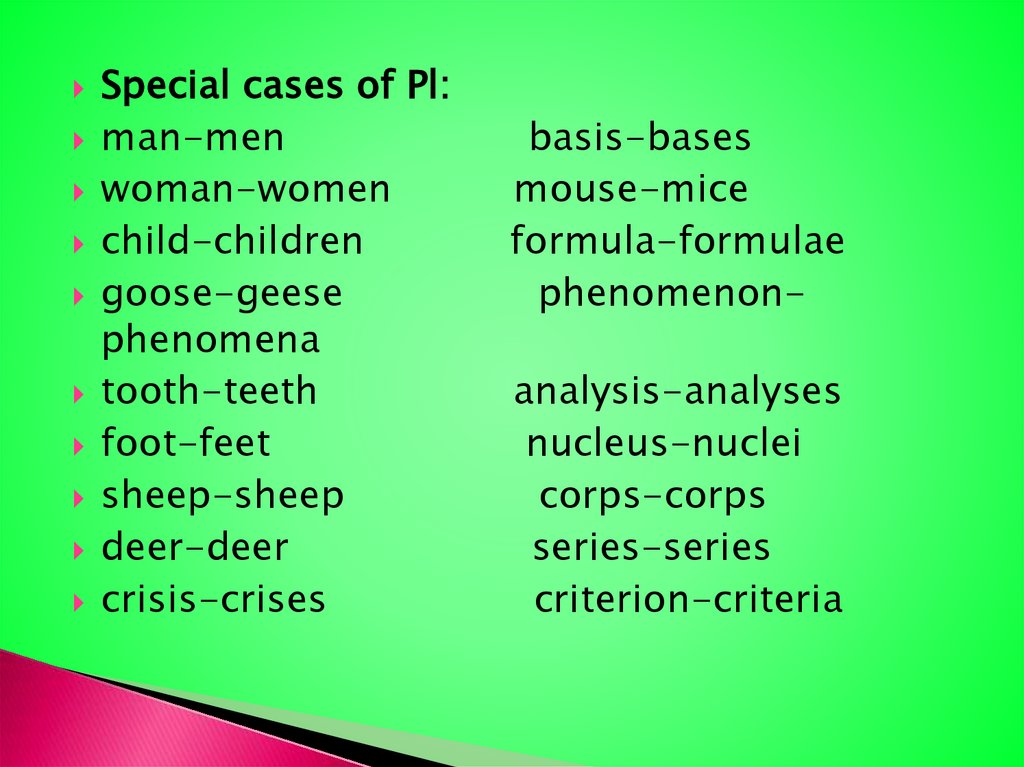
Special cases of Pl:man-men
woman-women
child-children
goose-geese
phenomena
tooth-teeth
foot-feet
sheep-sheep
deer-deer
crisis-crises
basis-bases
mouse-mice
formula-formulae
phenomenonanalysis-analyses
nucleus-nuclei
corps-corps
series-series
criterion-criteria
3.
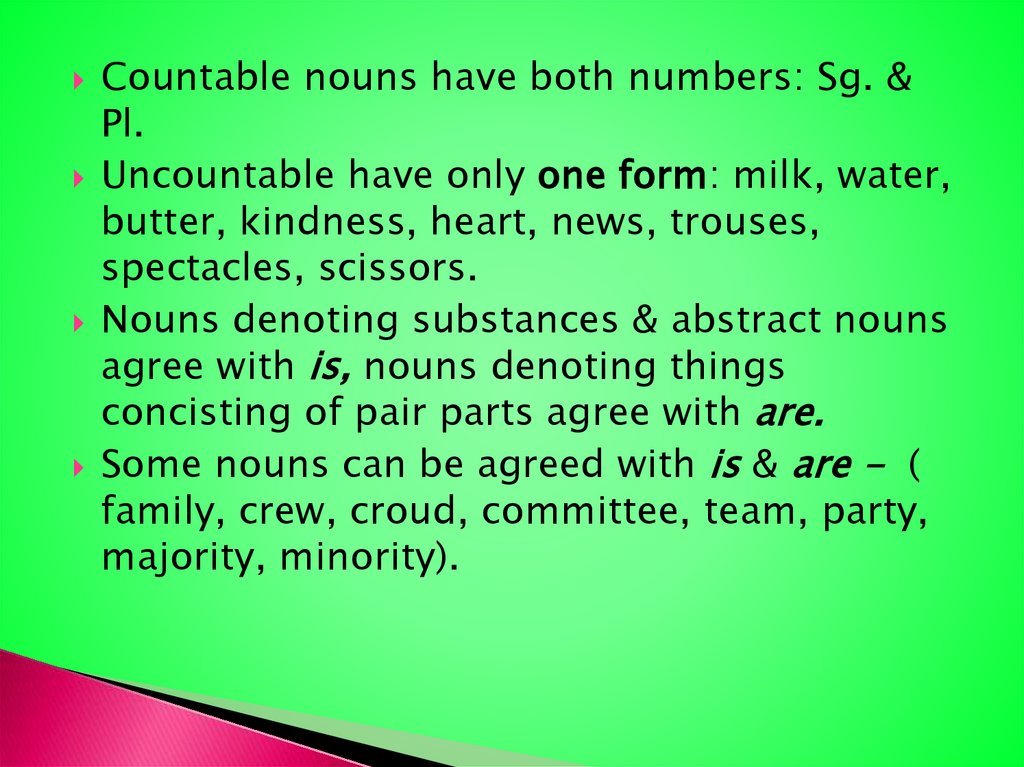
Countable nouns have both numbers: Sg. &Pl.
Uncountable have only one form: milk, water,
butter, kindness, heart, news, trouses,
spectacles, scissors.
Nouns denoting substances & abstract nouns
agree with is, nouns denoting things
concisting of pair parts agree with are.
Some nouns can be agreed with is & are - (
family, crew, croud, committee, team, party,
majority, minority).
4.
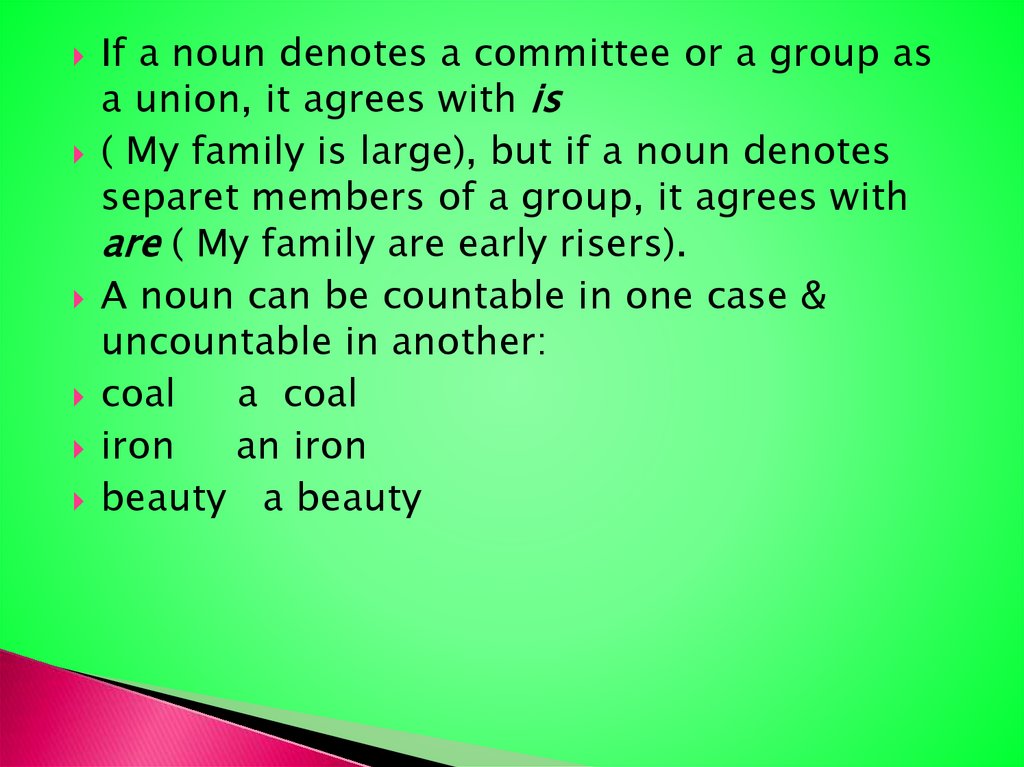
If a noun denotes a committee or a group asa union, it agrees with is
( My family is large), but if a noun denotes
separet members of a group, it agrees with
are ( My family are early risers).
A noun can be countable in one case &
uncountable in another:
coal
a coal
iron
an iron
beauty a beauty
5.
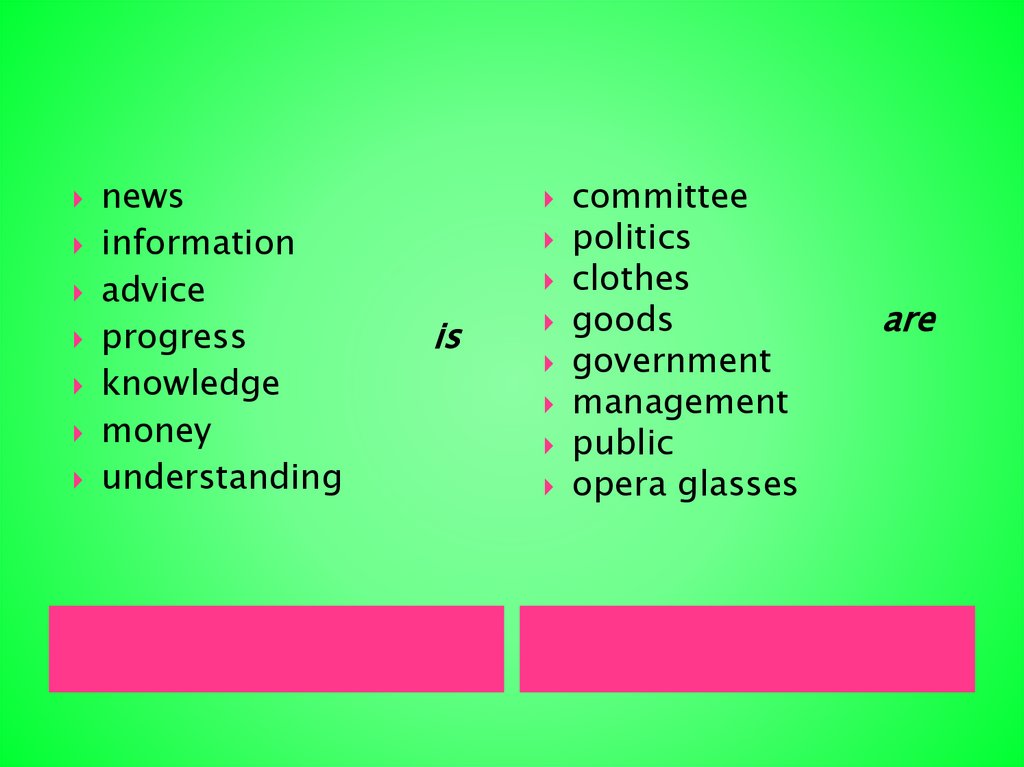
newsinformation
advice
progress
knowledge
money
understanding
committee
politics
clothes
goods
government
management
public
opera glasses
is
are
6.
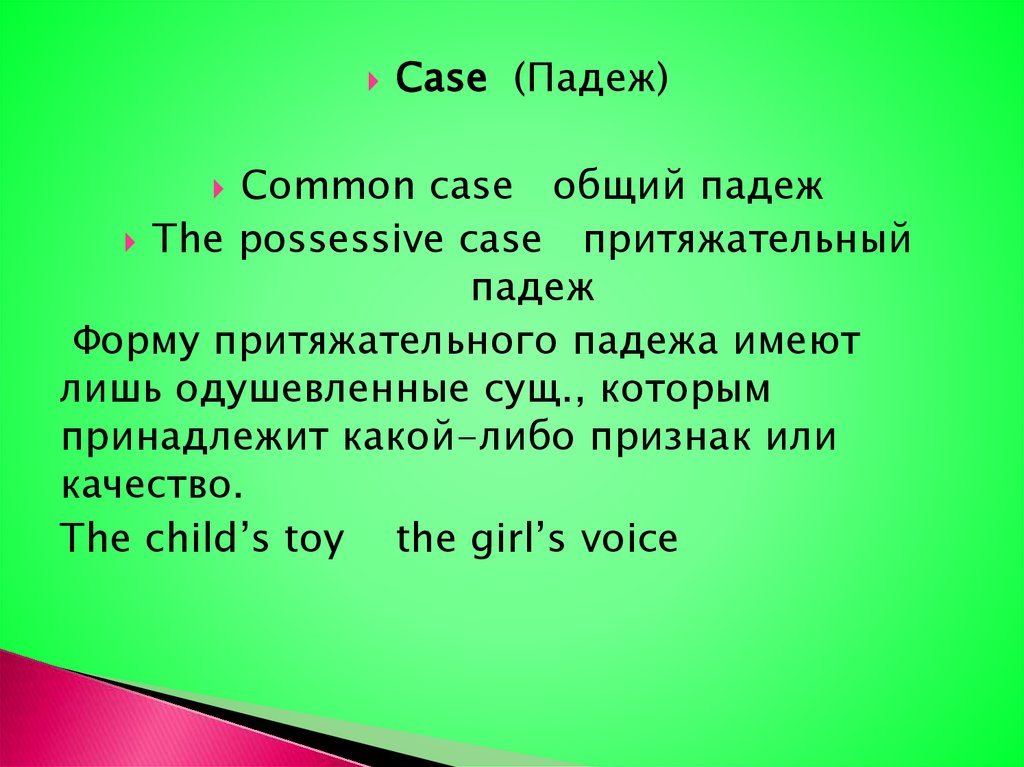
Case(Падеж)
Сommon case
общий падеж
The possessive case притяжательный
падеж
Форму притяжательного падежа имеют
лишь одушевленные сущ., которым
принадлежит какой-либо признак или
качество.
The child’s toy the girl’s voice
7.
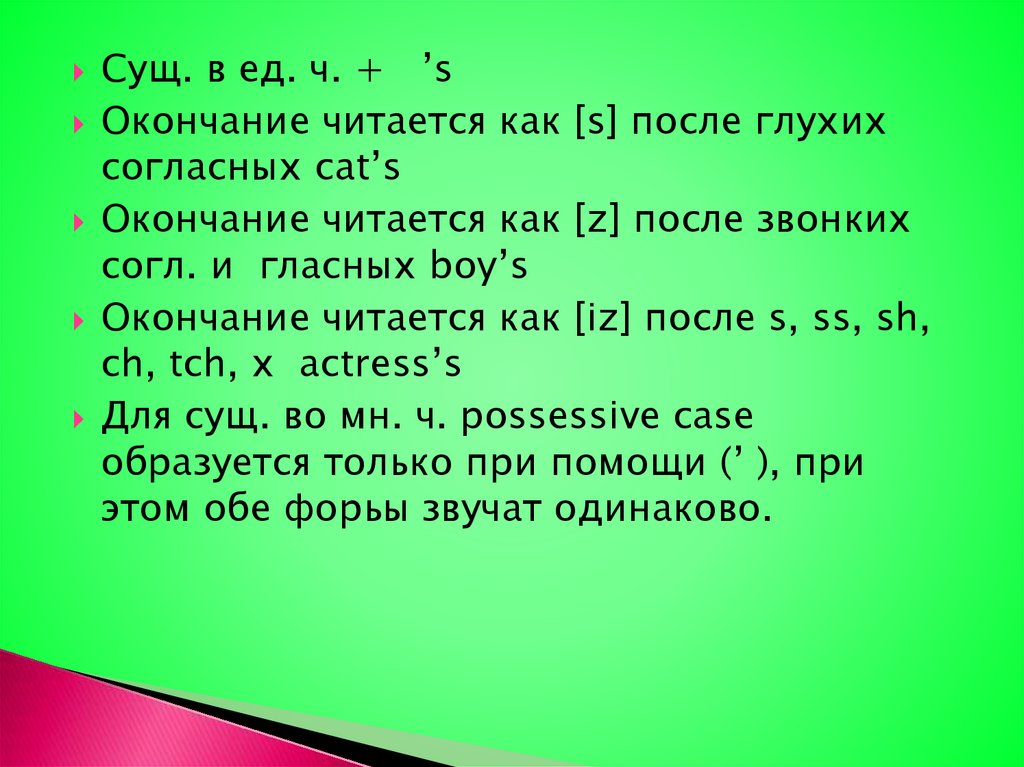
Сущ. в ед. ч. +’s
Окончание читается как [s] после глухих
согласных cat’s
Окончание читается как [z] после звонких
согл. и гласных boy’s
Окончание читается как [iz] после s, ss, sh,
ch, tch, x actress’s
Для сущ. во мн. ч. possessive case
образуется только при помощи (’ ), при
этом обе форьы звучат одинаково.
8.
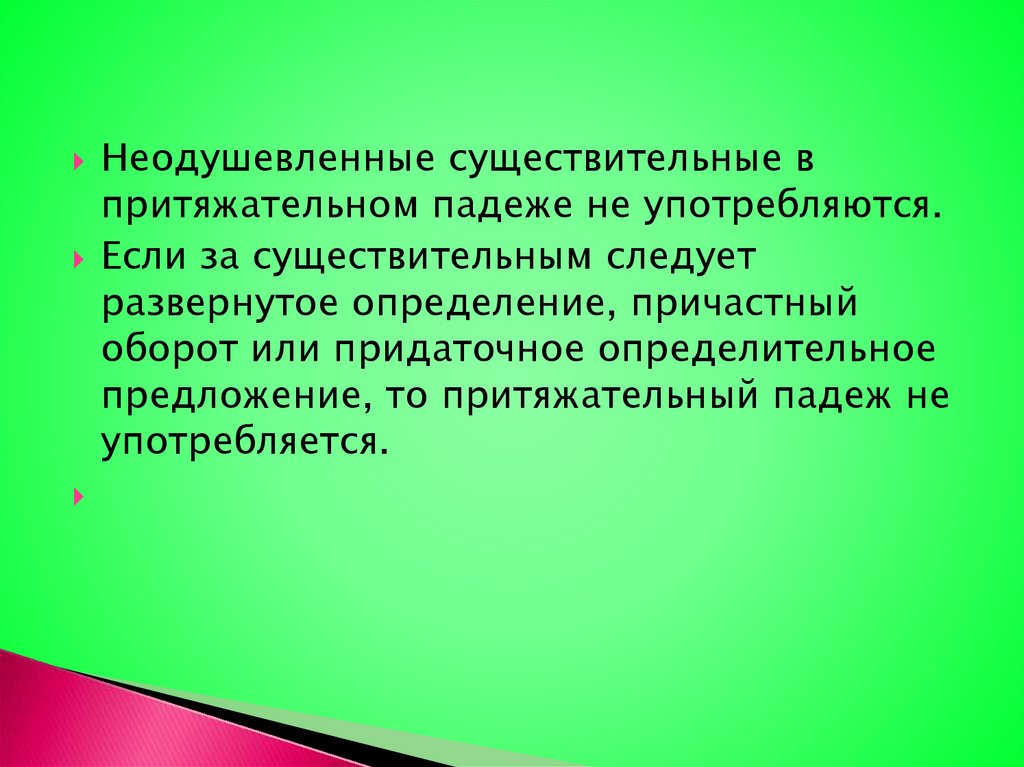
Неодушевленные существительные впритяжательном падеже не употребляются.
Если за существительным следует
развернутое определение, причастный
оборот или придаточное определительное
предложение, то притяжательный падеж не
употребляется.