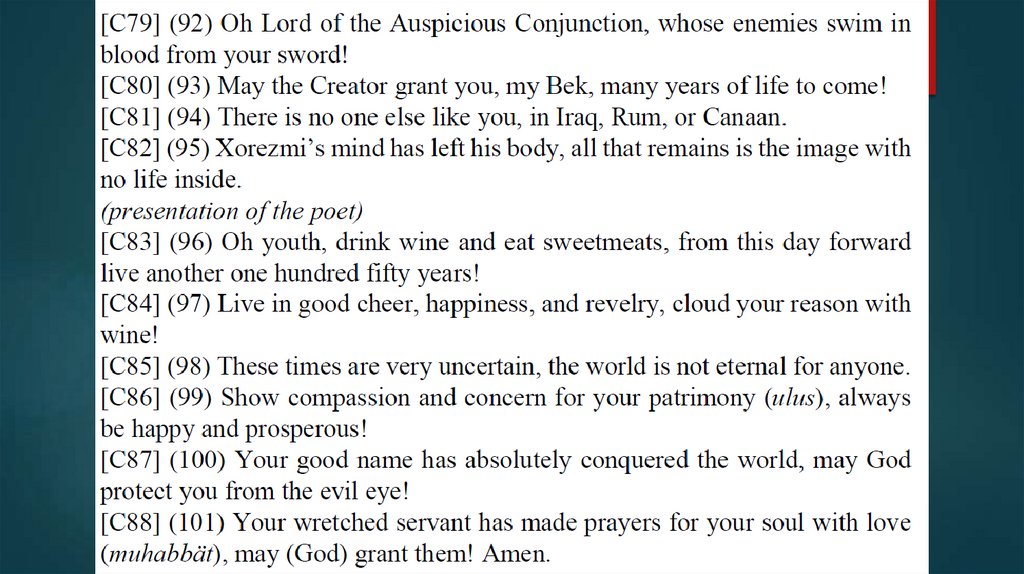
![Nehc ül-feradis: Uştmahlarnıŋ açuq yolı [‘Clear Path to Heaven’]](https://cf5.ppt-online.org/files5/slide/b/bfZS56WCnLFUztGPdBTaDjc12mM84eIuOylXxR/slide-8.jpg "Nehc ül-feradis: Uştmahlarnıŋ açuq yolı [‘Clear Path to Heaven’]")
 history
Similar presentations:



The Language and Literature of the Golden Horde
1. The Language and Literature of the Golden Horde
ULI SCHAMILOGLUDepartment of Kazakh Language and Turkic Studies
KAZ 300—Week 2-Wednesday
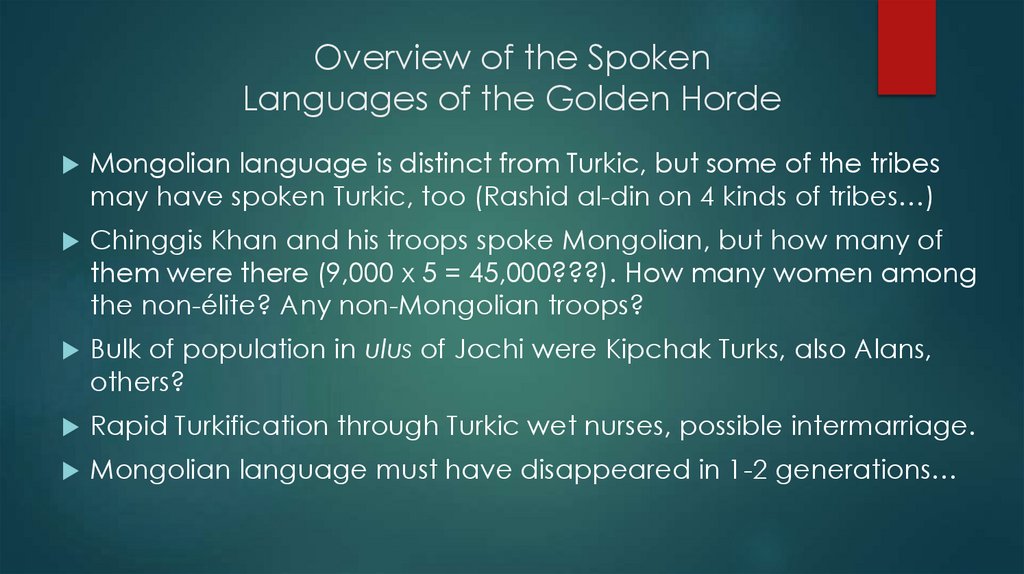
2. Overview of the Spoken Languages of the Golden Horde
Mongolian language is distinct from Turkic, but some of the tribesmay have spoken Turkic, too (Rashid al-din on 4 kinds of tribes…)
Chinggis Khan and his troops spoke Mongolian, but how many of
them were there (9,000 x 5 = 45,000???). How many women among
the non-élite? Any non-Mongolian troops?
Bulk of population in ulus of Jochi were Kipchak Turks, also Alans,
others?
Rapid Turkification through Turkic wet nurses, possible intermarriage.
Mongolian language must have disappeared in 1-2 generations…
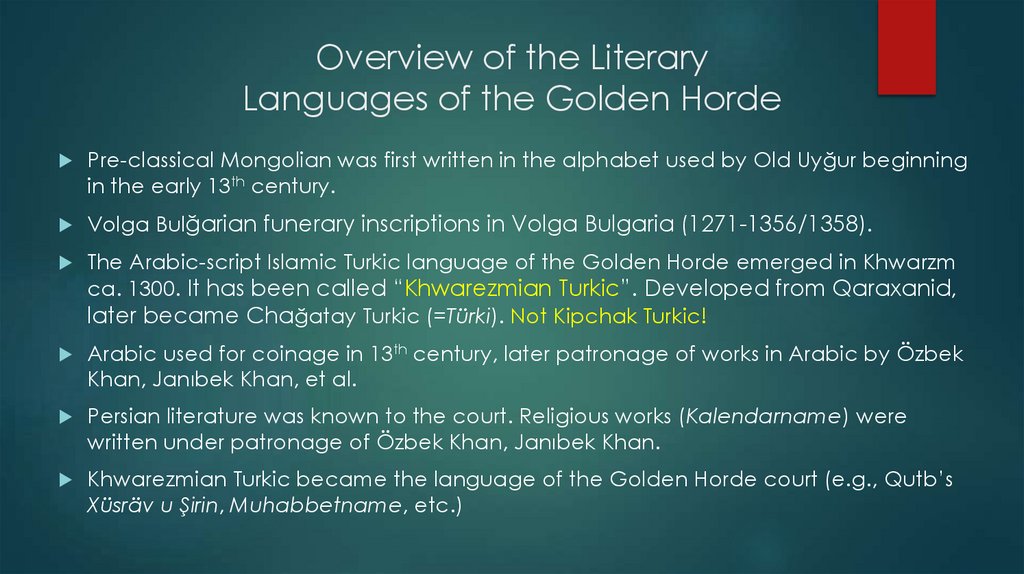
3. Overview of the Literary Languages of the Golden Horde
Pre-classical Mongolian was first written in the alphabet used by Old Uyğur beginningin the early 13th century.
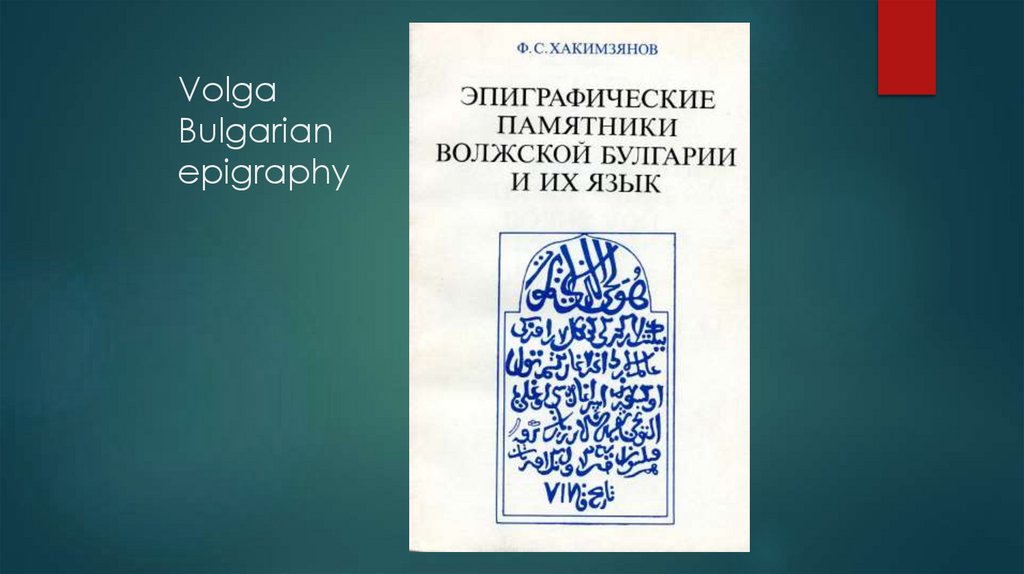
Volga Bulğarian funerary inscriptions in Volga Bulgaria (1271-1356/1358).
The Arabic-script Islamic Turkic language of the Golden Horde emerged in Khwarzm
ca. 1300. It has been called “Khwarezmian Turkic”. Developed from Qaraxanid,
later became Chağatay Turkic (=Türki). Not Kipchak Turkic!
Arabic used for coinage in 13th century, later patronage of works in Arabic by Özbek
Khan, Janıbek Khan, et al.
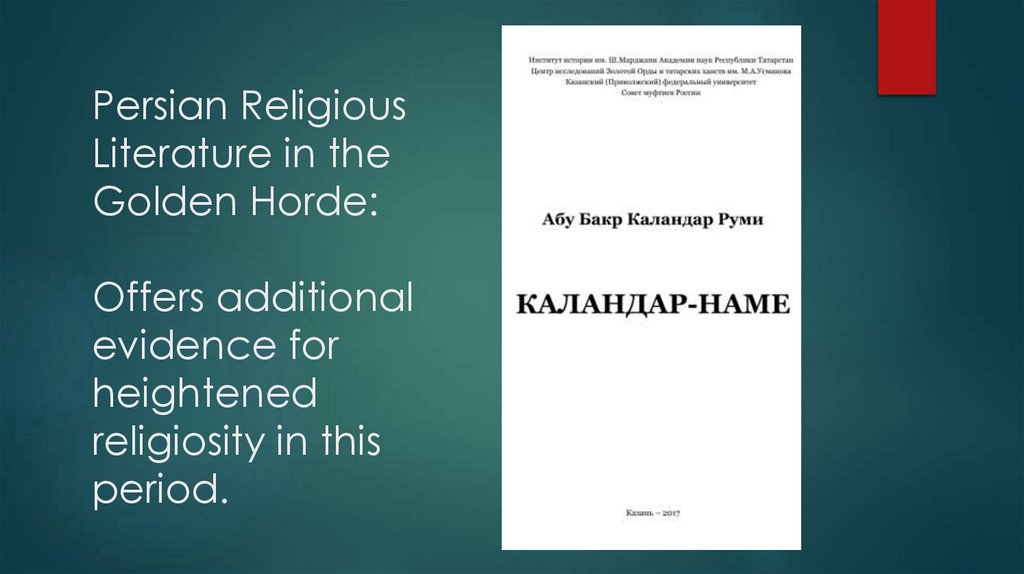
Persian literature was known to the court. Religious works (Kalendarname) were
written under patronage of Özbek Khan, Janıbek Khan.
Khwarezmian Turkic became the language of the Golden Horde court (e.g., Qutb’s
Xüsräv u Şirin, Muhabbetname, etc.)
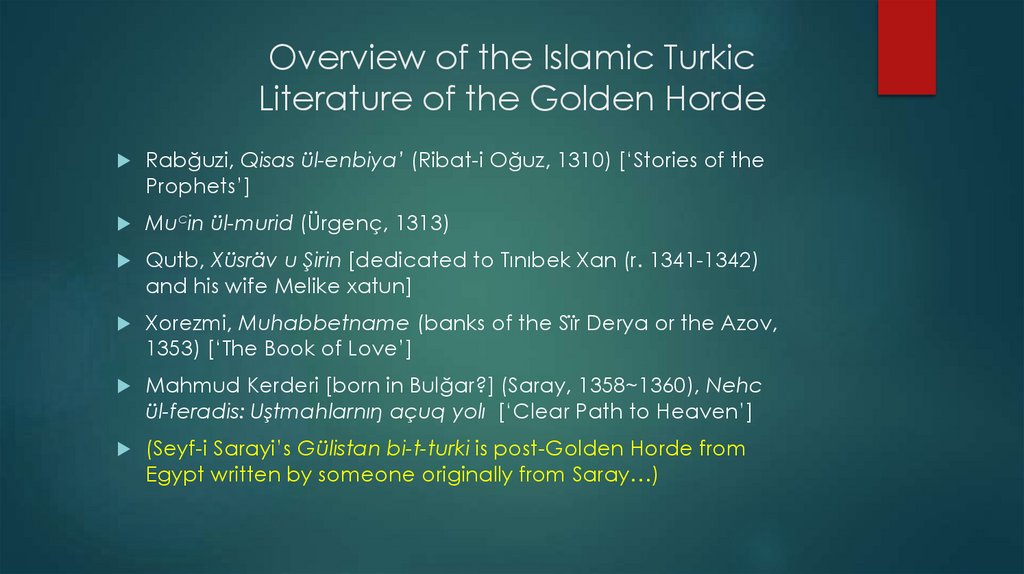
4. Overview of the Islamic Turkic Literature of the Golden Horde
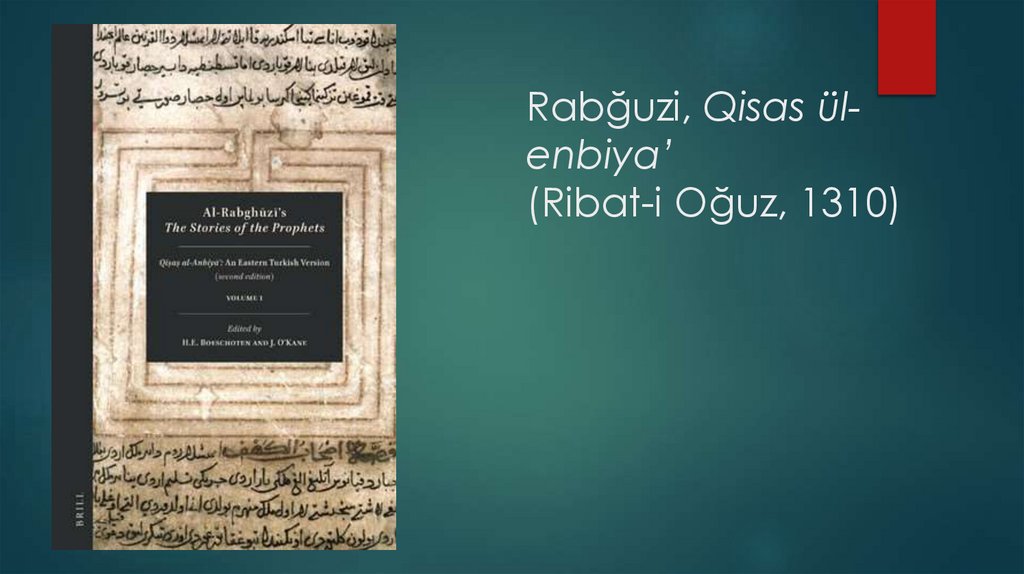
Rabğuzi, Qisas ül-enbiya’ (Ribat-i Oğuz, 1310) [‘Stories of theProphets’]
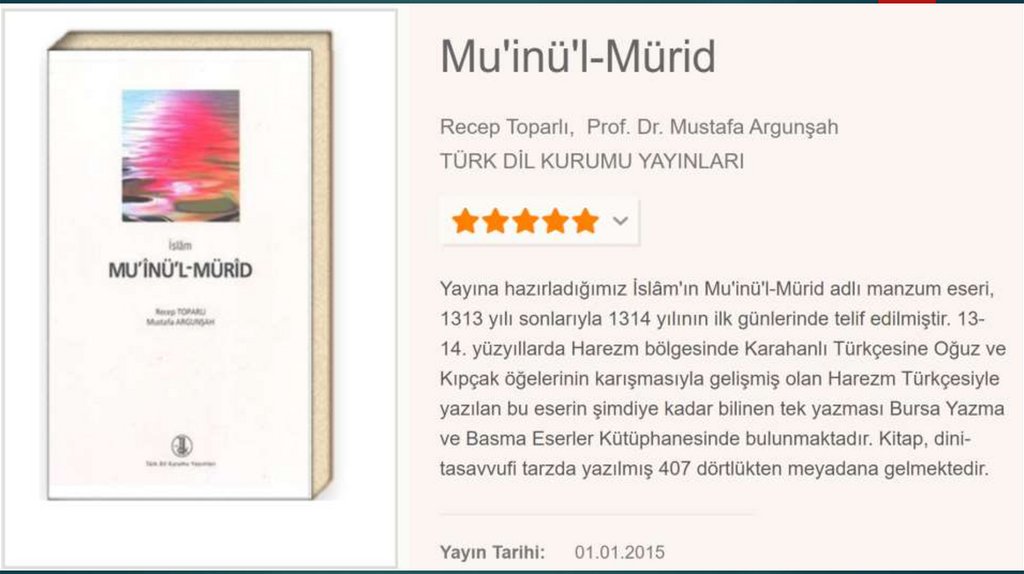
Mucin ül-murid (Ürgenç, 1313)
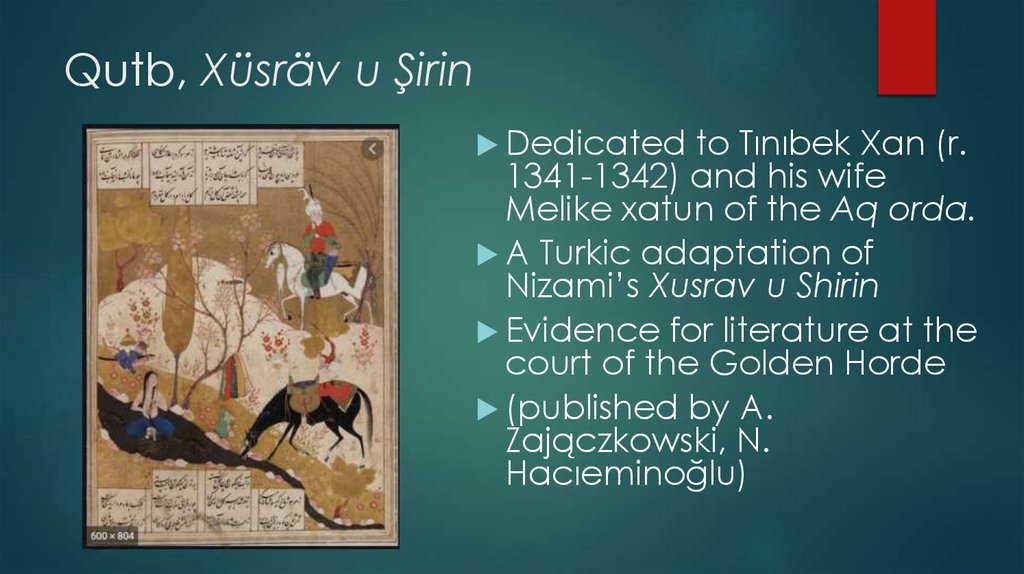
Qutb, Xüsräv u Şirin [dedicated to Tınıbek Xan (r. 1341-1342)
and his wife Melike xatun]
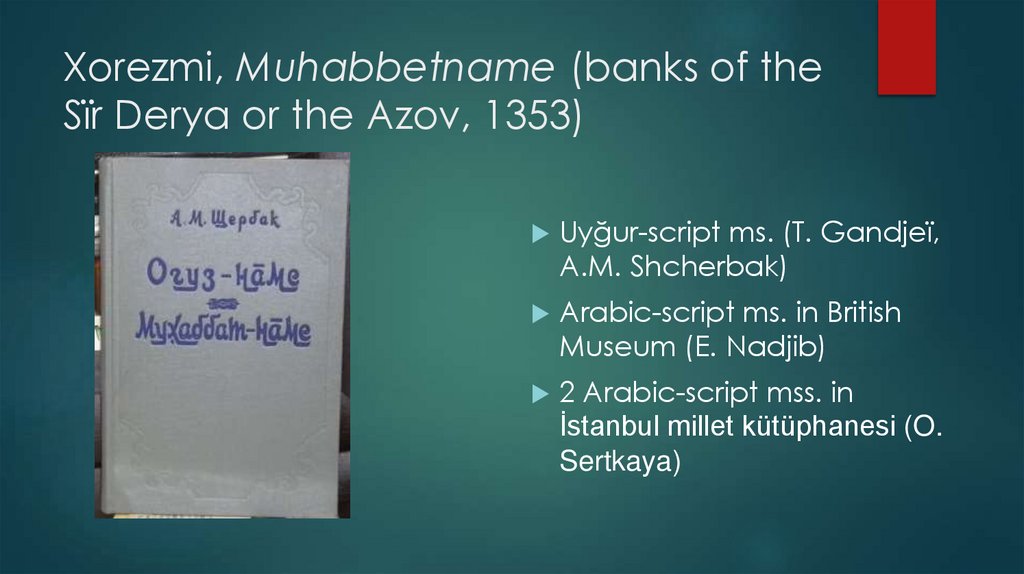
Xorezmi, Muhabbetname (banks of the Sïr Derya or the Azov,
1353) [‘The Book of Love’]
Mahmud Kerderi [born in Bulğar?] (Saray, 1358~1360), Nehc
ül-feradis: Uştmahlarnıŋ açuq yolı [‘Clear Path to Heaven’]
(Seyf-i Sarayi’s Gülistan bi-t-turki is post-Golden Horde from
Egypt written by someone originally from Saray…)
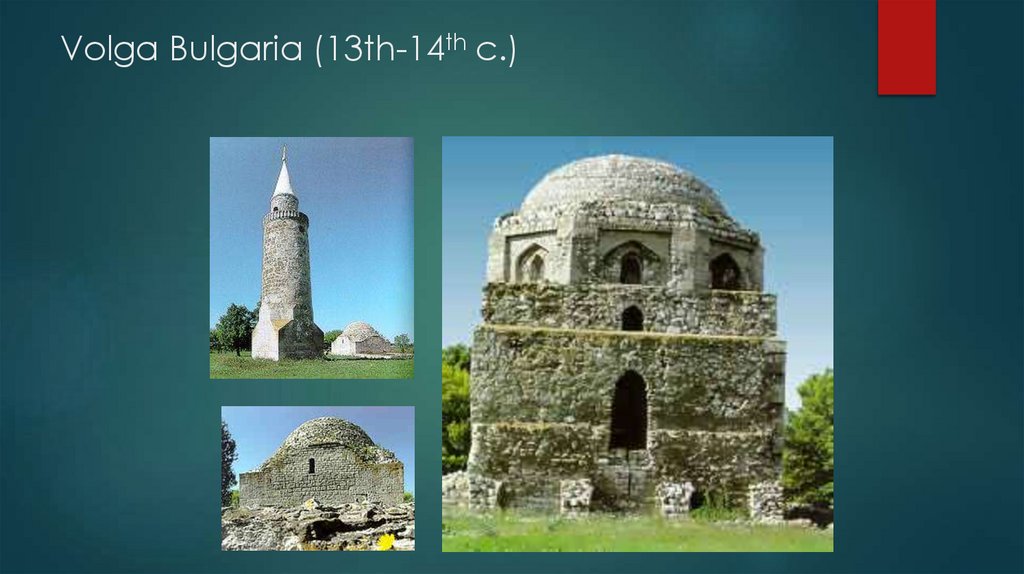
5. Volga Bulgaria (13th-14th c.)
6. Volga Bulgarian epigraphy
7. Rabğuzi, Qisas ül-enbiya’ (Ribat-i Oğuz, 1310)
Rabğuzi, Qisas ülenbiya’(Ribat-i Oğuz, 1310)
8.
(Ürgench, 1313)9. Nehc ül-feradis: Uştmahlarnıŋ açuq yolı [‘Clear Path to Heaven’]
Mahmud Kerderi born in Bulğar (per 1358ms. by ŞM=lost) /per 1360 ms. (=Muhammad
b. Muhammad b. Xusräv el-Xorezmi)
Died in Saray (1358~1360)
Handbook of Islam
Copied, perhaps as an act of piety.
Evidence of increased religiosity in this
period of the Black Death.
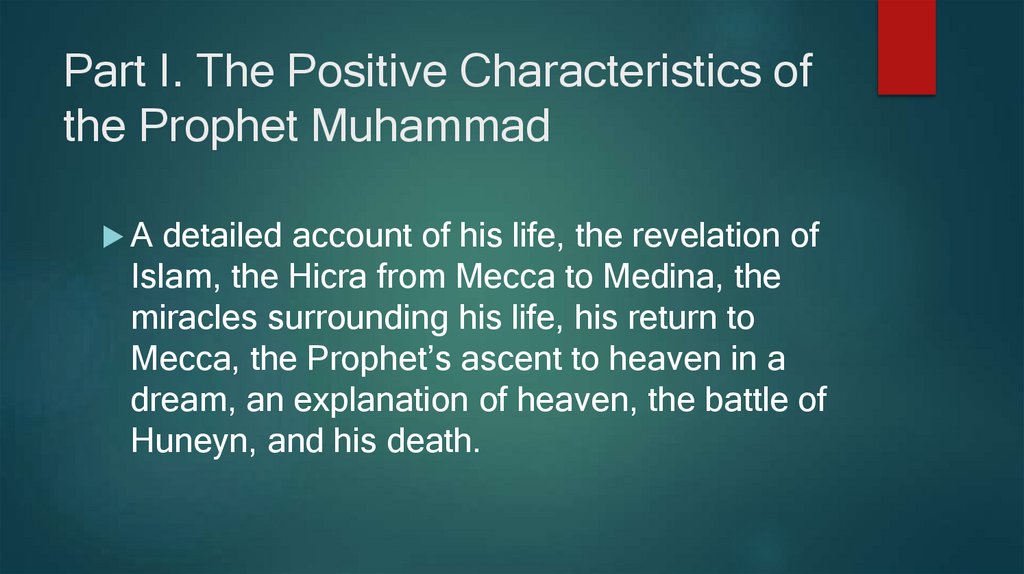
10. Part I. The Positive Characteristics of the Prophet Muhammad
A detailed account of his life, the revelation ofIslam, the Hicra from Mecca to Medina, the
miracles surrounding his life, his return to
Mecca, the Prophet’s ascent to heaven in a
dream, an explanation of heaven, the battle of
Huneyn, and his death.
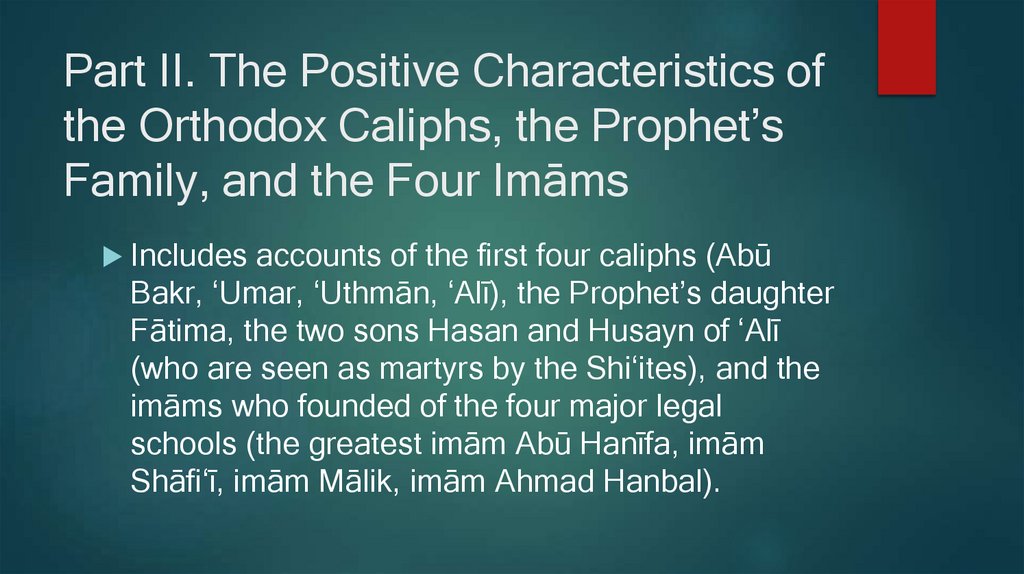
11. Part II. The Positive Characteristics of the Orthodox Caliphs, the Prophet’s Family, and the Four Imāms
Includes accounts of the first four caliphs (AbūBakr, ‘Umar, ‘Uthmān, ‘Alī), the Prophet’s daughter
Fātima, the two sons Hasan and Husayn of ‘Alī
(who are seen as martyrs by the Shi‘ites), and the
imāms who founded of the four major legal
schools (the greatest imām Abū Hanīfa, imām
Shāfi‘ī, imām Mālik, imām Ahmad Hanbal).
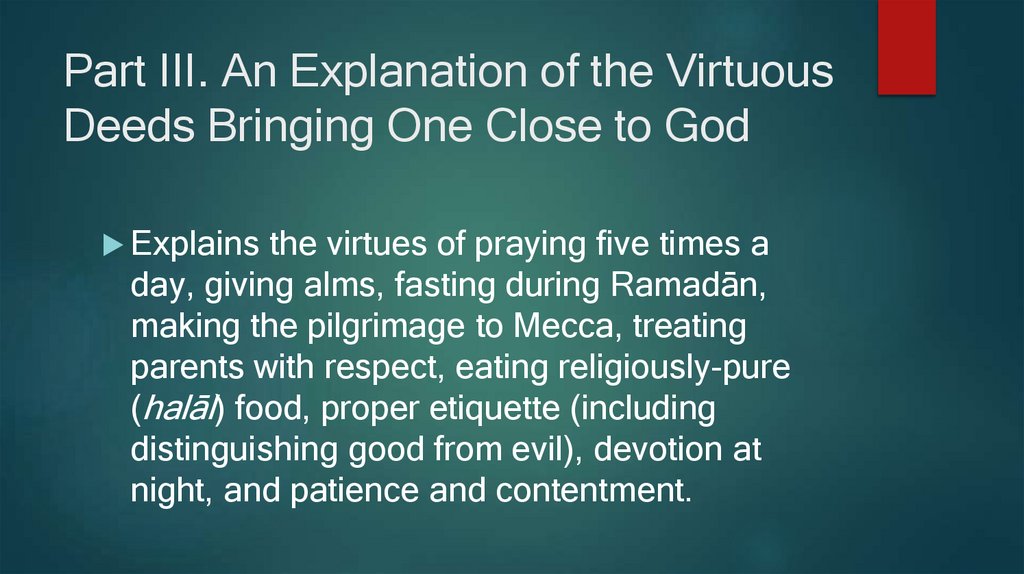
12. Part III. An Explanation of the Virtuous Deeds Bringing One Close to God
Explains the virtues of praying five times aday, giving alms, fasting during Ramadān,
making the pilgrimage to Mecca, treating
parents with respect, eating religiously-pure
(halāl) food, proper etiquette (including
distinguishing good from evil), devotion at
night, and patience and contentment.
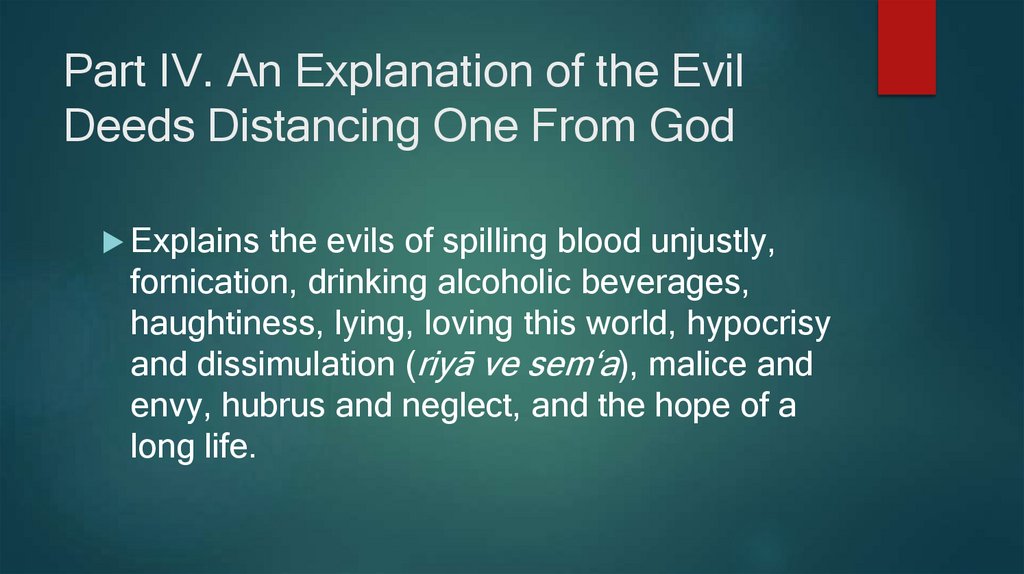
13. Part IV. An Explanation of the Evil Deeds Distancing One From God
Explains the evils of spilling blood unjustly,fornication, drinking alcoholic beverages,
haughtiness, lying, loving this world, hypocrisy
and dissimulation (riyā ve sem‘a), malice and
envy, hubrus and neglect, and the hope of a
long life.
14. Qutb, Xüsräv u Şirin
Dedicated to Tınıbek Xan (r.1341-1342) and his wife
Melike xatun of the Aq orda.
A Turkic adaptation of
Nizami’s Xusrav u Shirin
Evidence for literature at the
court of the Golden Horde
(published by A.
Zajączkowski, N.
Hacıeminoğlu)
15. Persian Religious Literature in the Golden Horde: Offers additional evidence for heightened religiosity in this period.
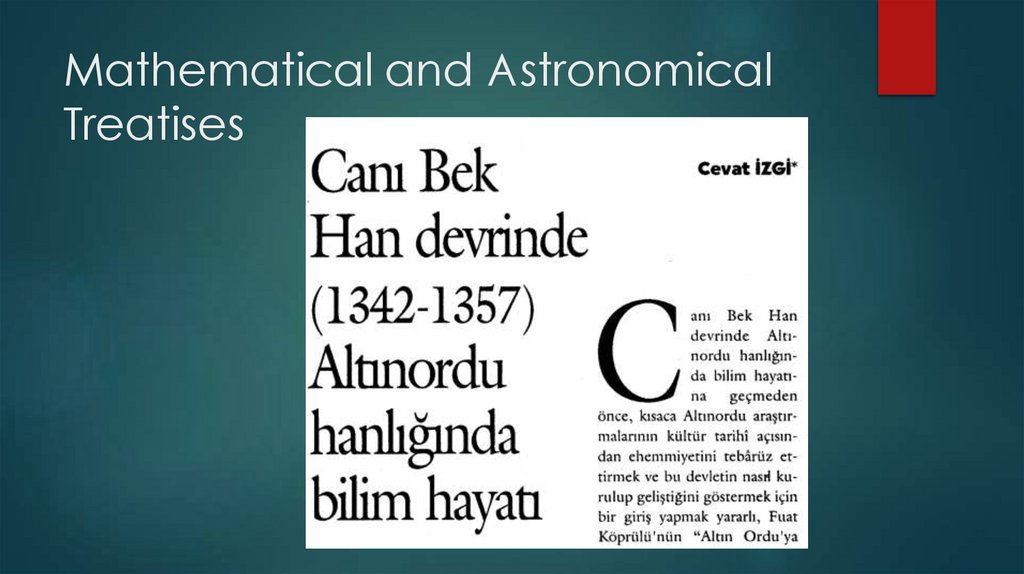
16. Mathematical and Astronomical Treatises
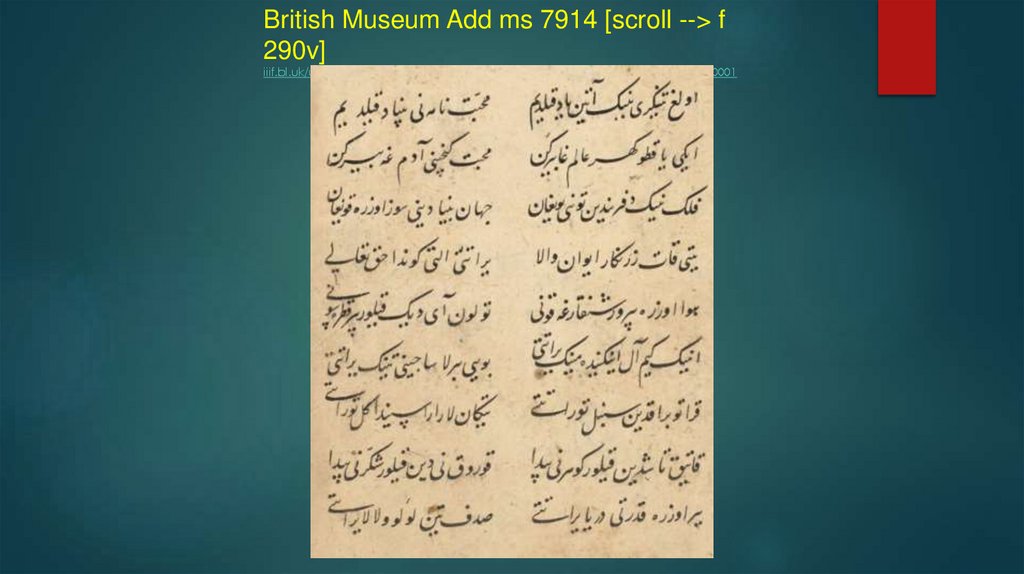
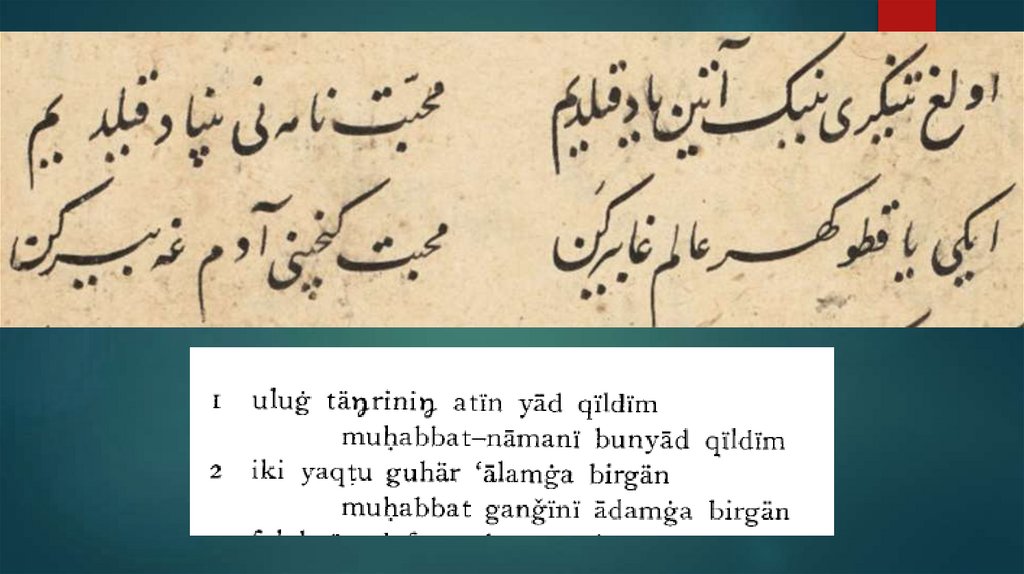
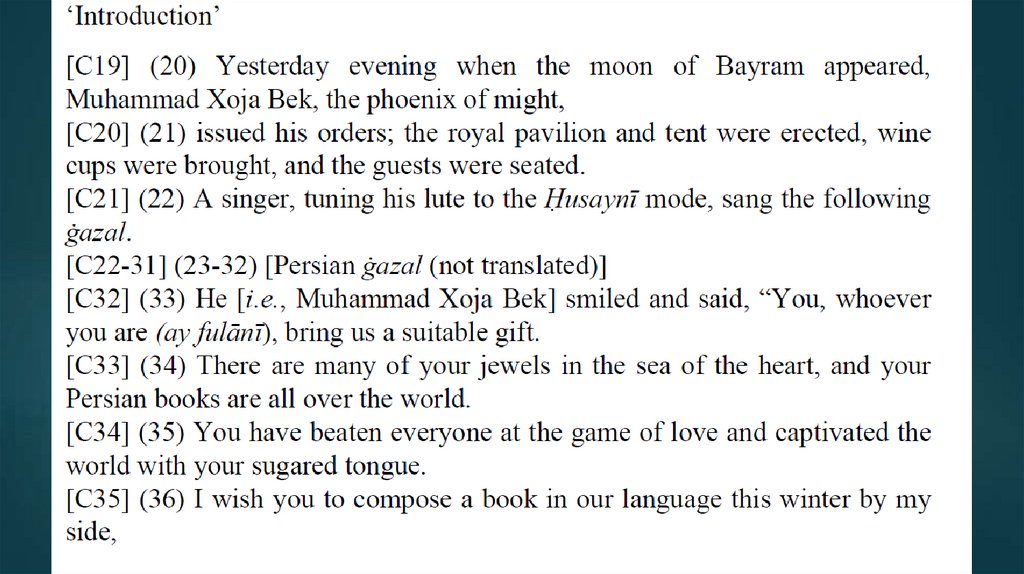
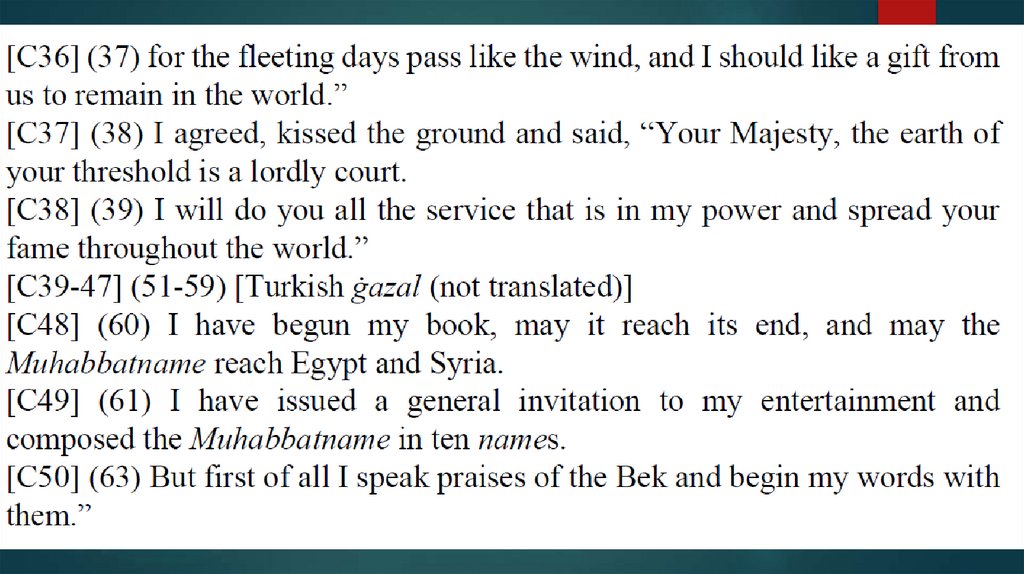
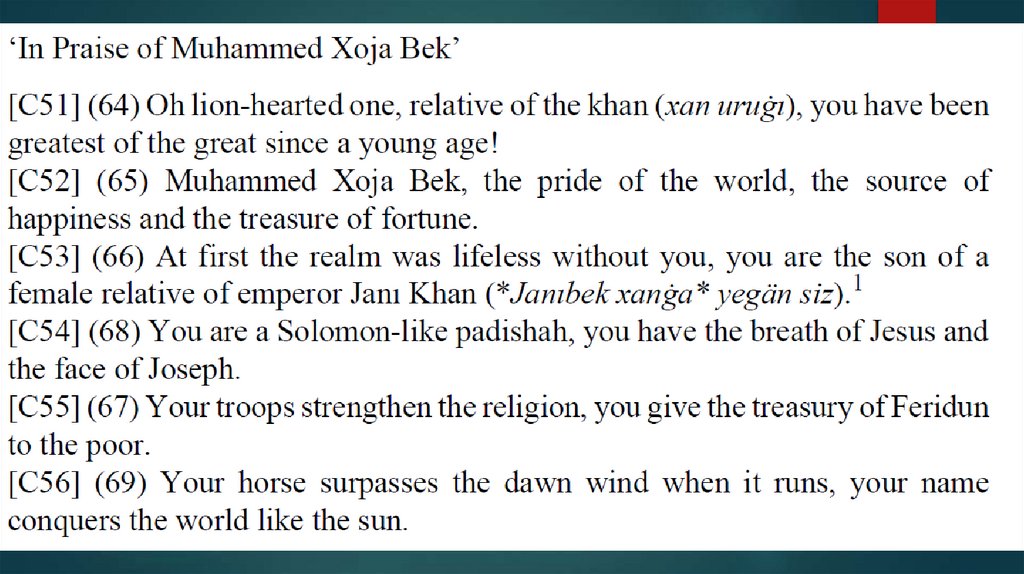
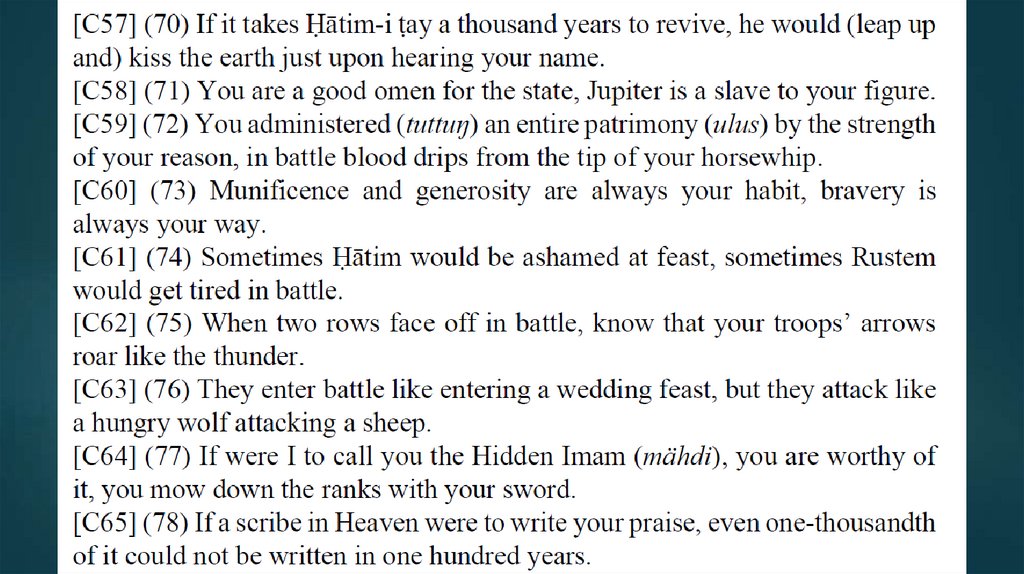
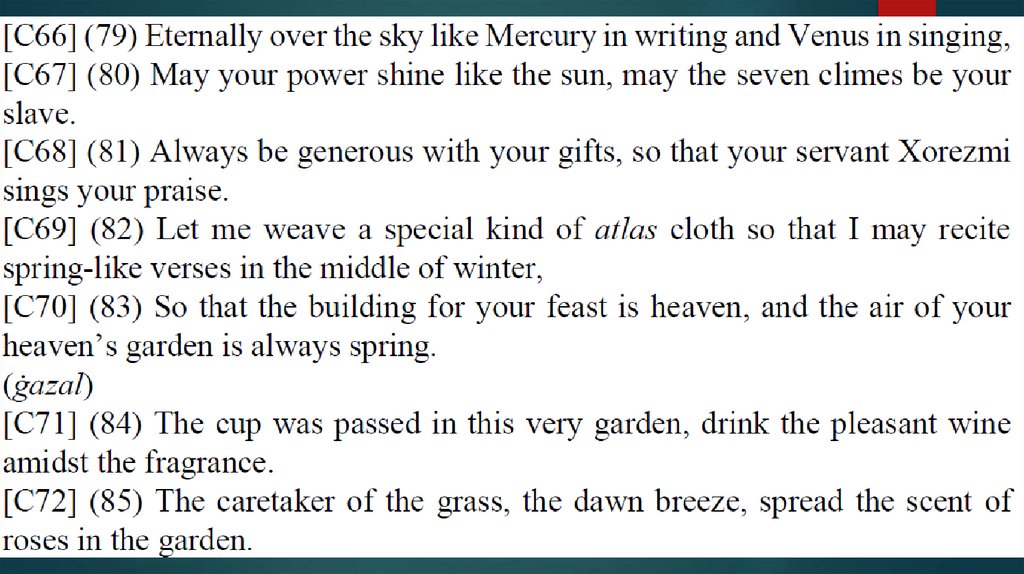
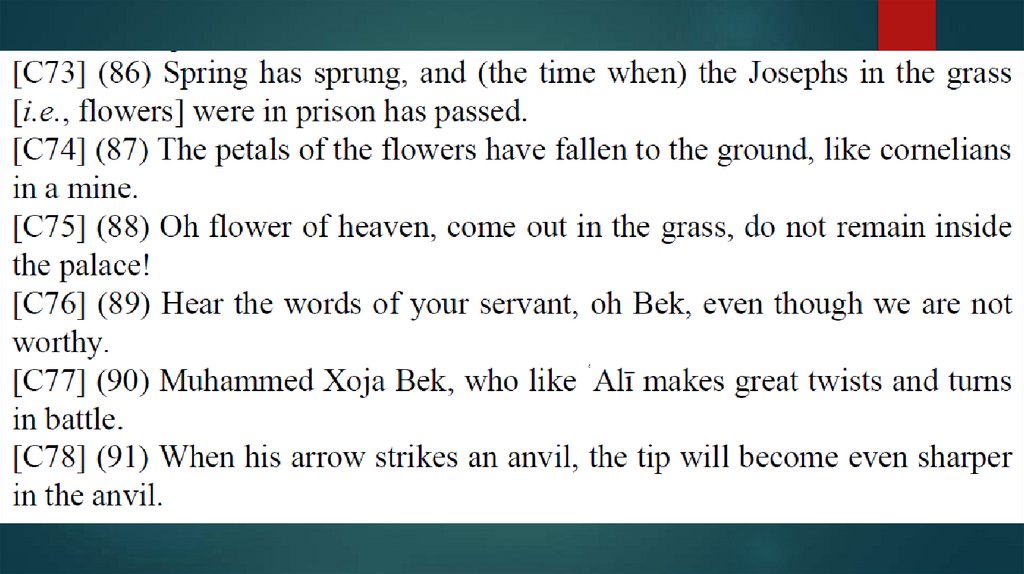
17. Xorezmi, Muhabbetname (banks of the Sïr Derya or the Azov, 1353)
Uyğur-script ms. (T. Gandjeï,A.M. Shcherbak)
Arabic-script ms. in British
Museum (E. Nadjib)
2 Arabic-script mss. in
İstanbul millet kütüphanesi (O.
Sertkaya)
18.
British Museum Add ms 7914 [scroll --> f290v]
iiif.bl.uk/uv/#?manifest=https://bl.digirati.io/iiif/ark:/81055/vdc_100102390723.0x000001