
 policy
Similar presentations:




Political science (6th class)
1.
PoliticalScience
6TH CLASS
2.
Today's Topics1 Neoliberalism vs Socialsm
2 from Realism to Constructivism
3 Cold War and New Cold War ?
2
3.
What’s up now?•GAZA Crisis?
3
4.
https://youtu.be/ZbwEHoJPv7E?si=qE0ECx6LSIfs4Pgq 2:08
5.
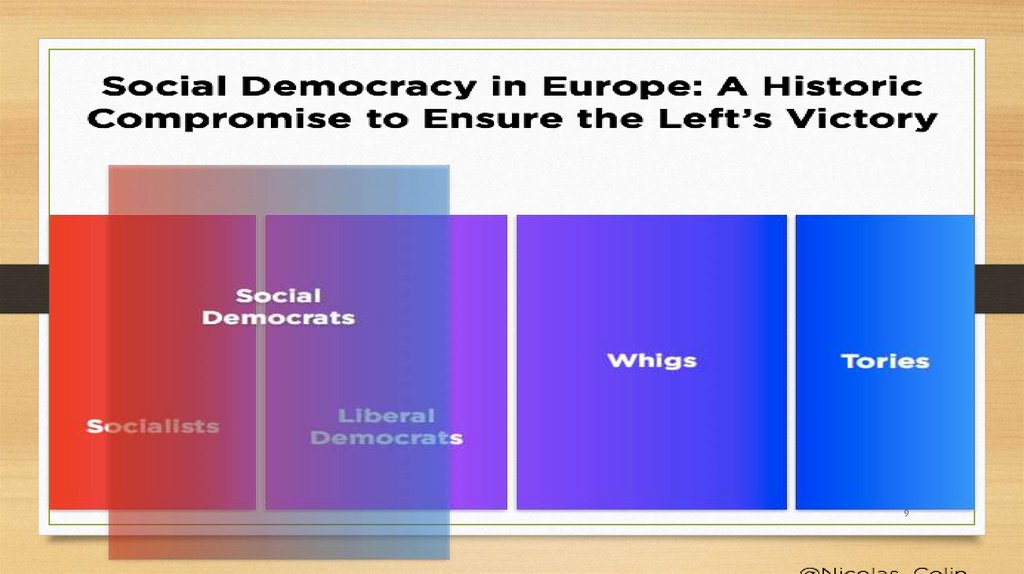
Neoliberalism vs Social
sm
5
6.
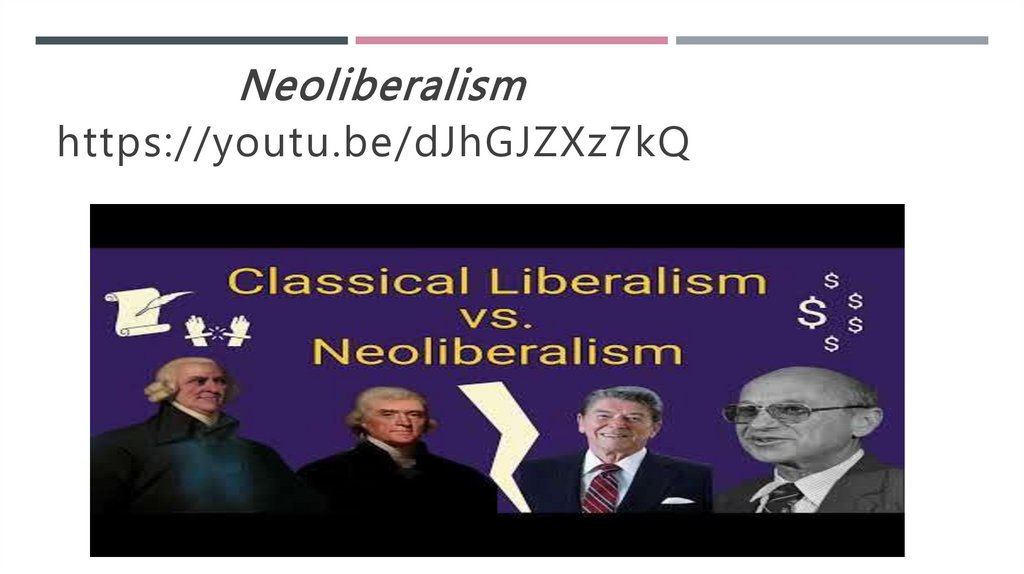
Neoliberalismhttps://youtu.be/dJhGJZXz7kQ
7.
78.
89.
910.
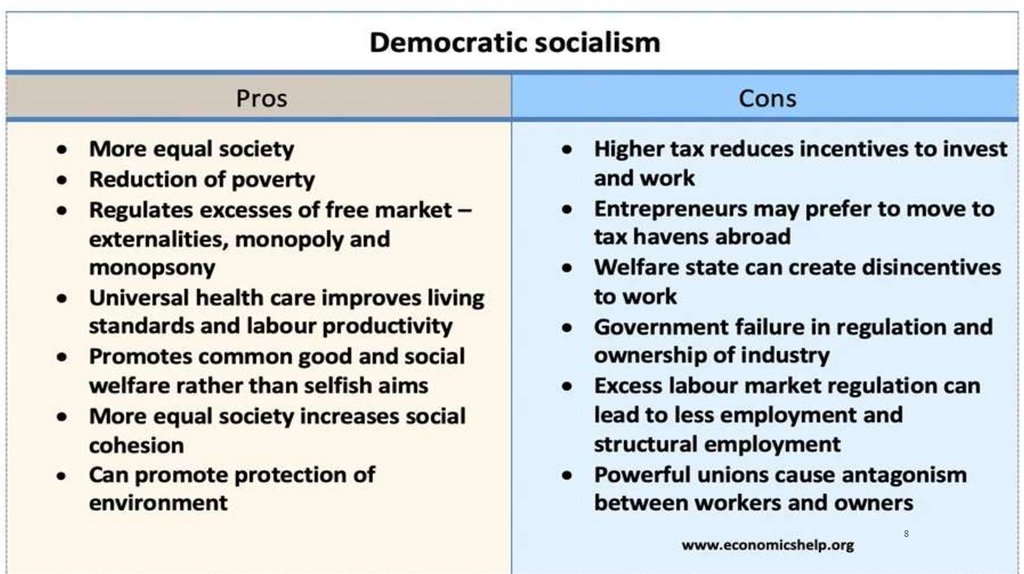
Democratic Socialismhttps://youtu.be/BlrDpTGRREA
3:33
11.
h t t ps://yo utu.be/jZdrZ - uiIT0? s i=dQN9n 8MQfj j3ewCn o 9 7:50 14:2112.
1213.
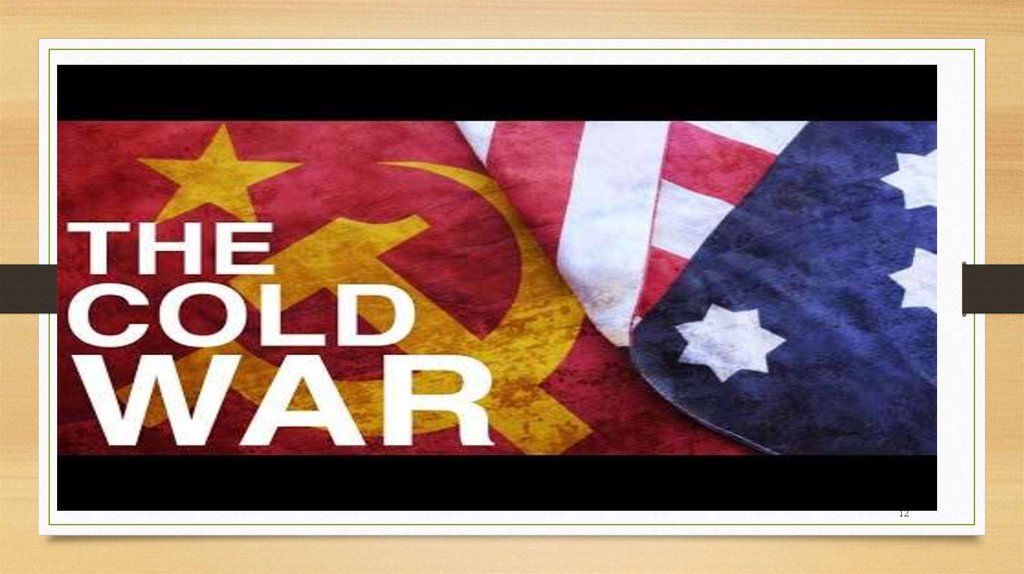
THECOLD
WAR
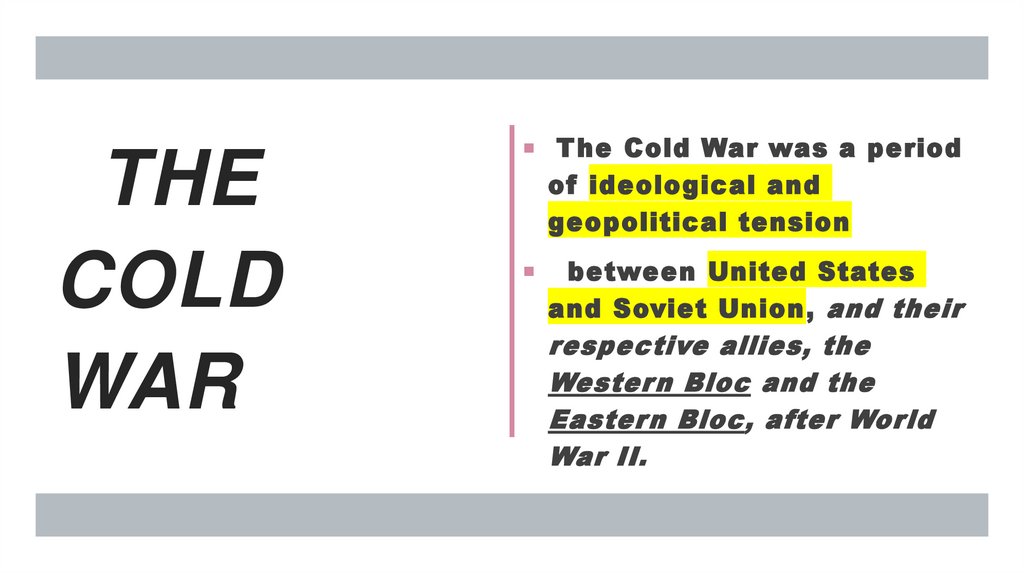
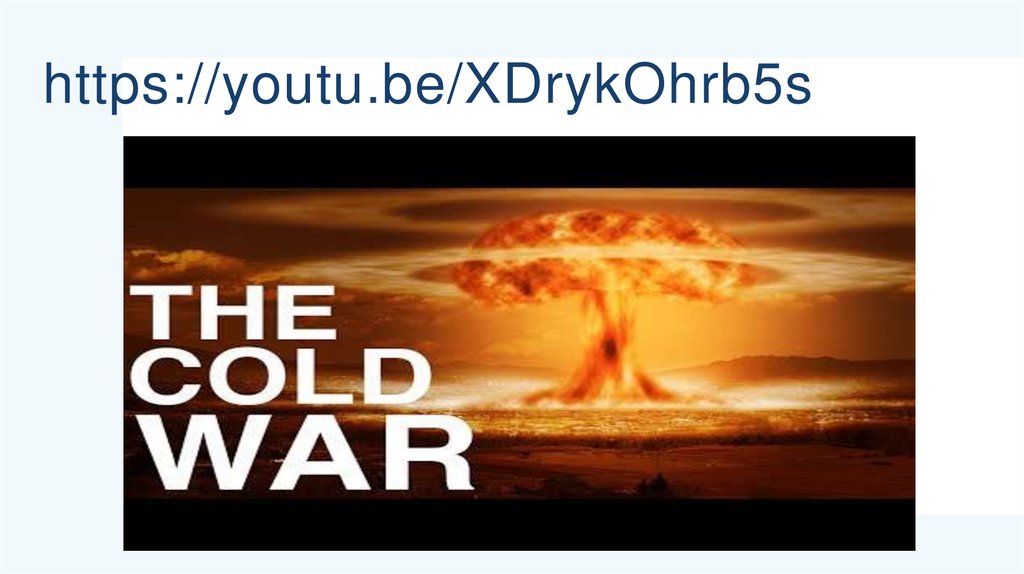
The Cold War was a period
of ideological and
geopolitical tension
between United States
and Soviet Union, and their
respective allies, the
Western Bloc and the
Eastern Bloc, after World
War II.
14.
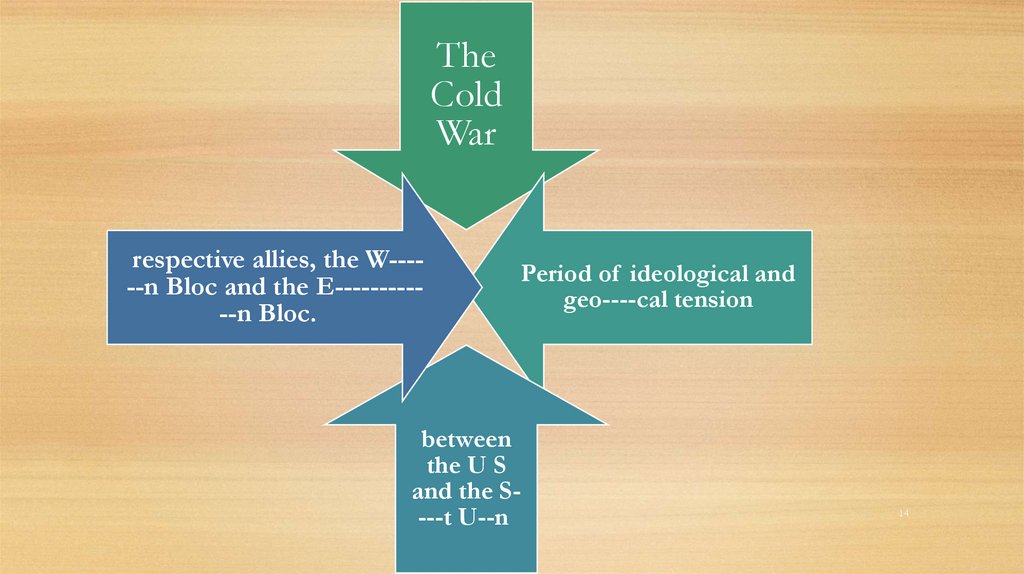
TheCold
War
respective allies, the W-----n Bloc and the E-----------n Bloc.
Period of ideological and
geo----cal tension
between
the U S
and the S---t U--n
14
15.
1516.
1617.
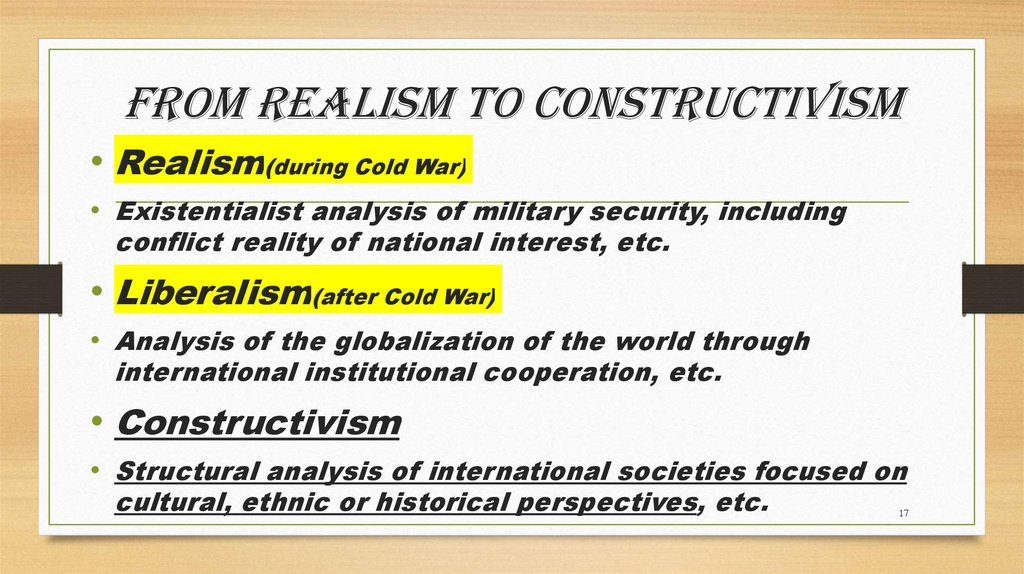
From realism to constructivism• Realism(during Cold War)
• Existentialist analysis of military security, including
conflict reality of national interest, etc.
• Liberalism(after Cold War)
• Analysis of the globalization of the world through
international institutional cooperation, etc.
• Constructivism
• Structural analysis of international societies focused on
cultural, ethnic or historical perspectives, etc.
17
18.
https://youtu.be/NF3u8Ju9aAg18
19.
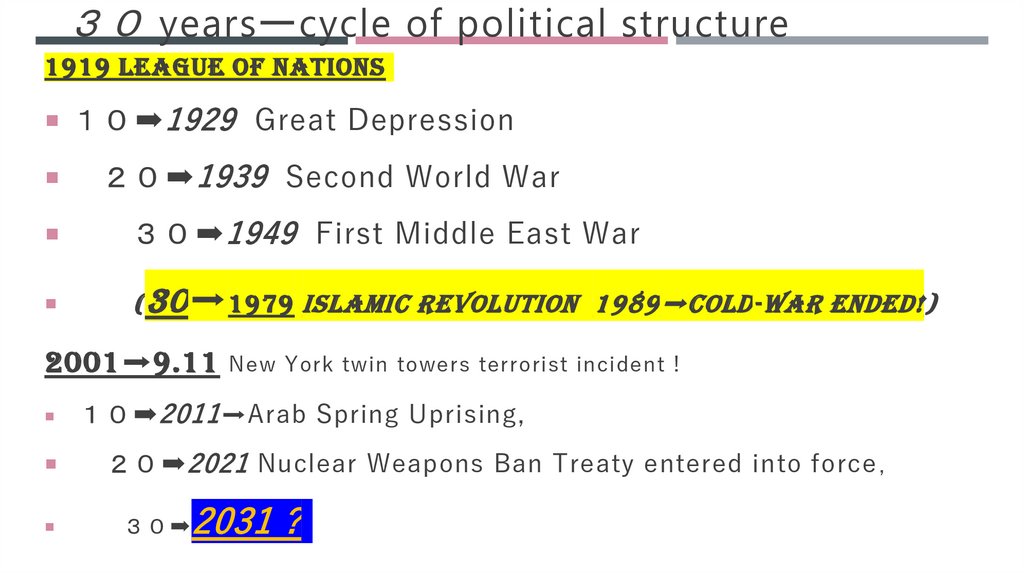
yearsーcycle of political structure1919 League of Nations
➡ 1929 Great Depression
➡ 1939 Second World War
➡ 1949 First Middle East War
( 30 ➡ 1979 Islamic revolution 1989➡Cold-War ended!)
2001➡9.11 New York twin towers terrorist incident !
➡ 2011 ➡Arab Spring Uprising,
➡ 2021 Nuclear Weapons Ban Treaty entered into force ,
➡
2031 ?
20.
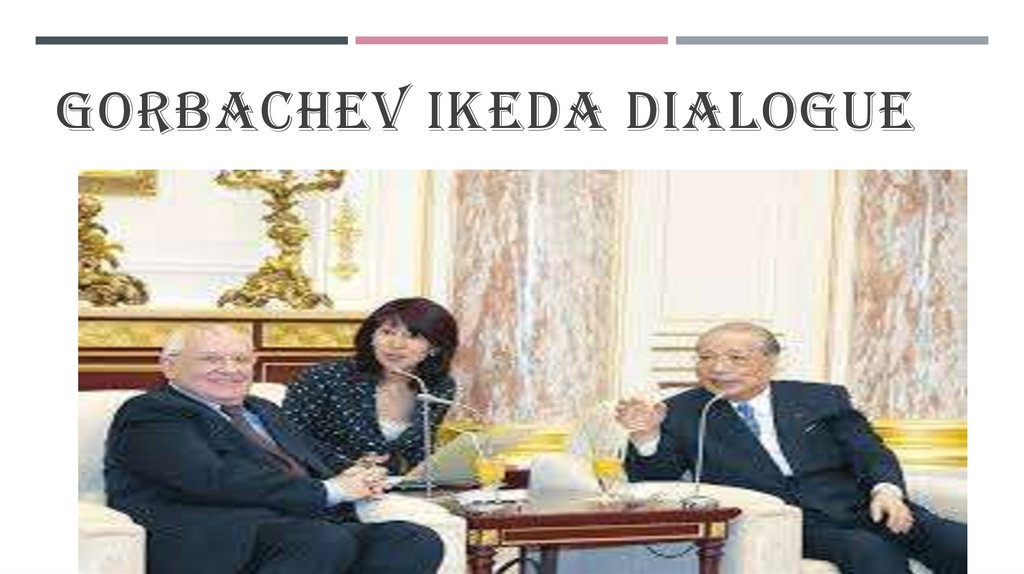
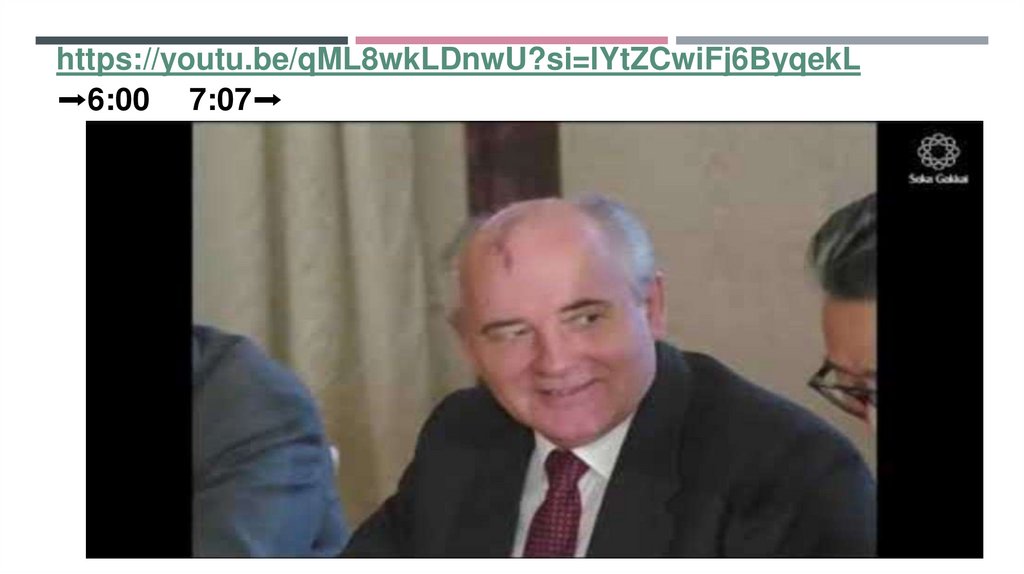
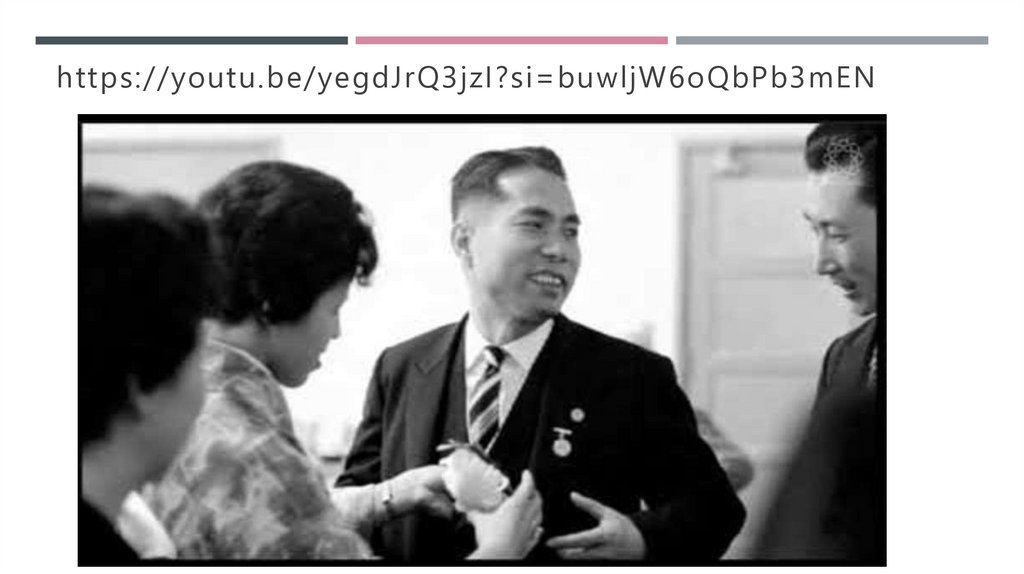
Gorbachev Ikeda Dialogue21.
https://youtu.be/qML8wkLDnwU?si=lYtZCwiFj6ByqekL➡6:00 7:07➡
22.
https://youtu.be/yegdJrQ3jzI?si=buwljW6oQbPb3mEN23.
Dr. Ikeda’s Humanism Citizen Diplomacy suppor tedGorbachev’s New Thinking Diplomacy
→ in fact, Total Abolition of Medium-Range
Nuclear Weapons, ended the Cold War .
“ With humanistic peace journey, Dr Ikeda
proved that even under the Iron Curtain,
his peace dialogue and civic diplomacy
were possible!” (Novel Peace Winner
Gorbachev’s praise)
24.
Let’s have a discussion!What have you learned from
the Cold War in your country ?
or what have we failed to
learn?
25.
DemocracyTransformed
?
26.
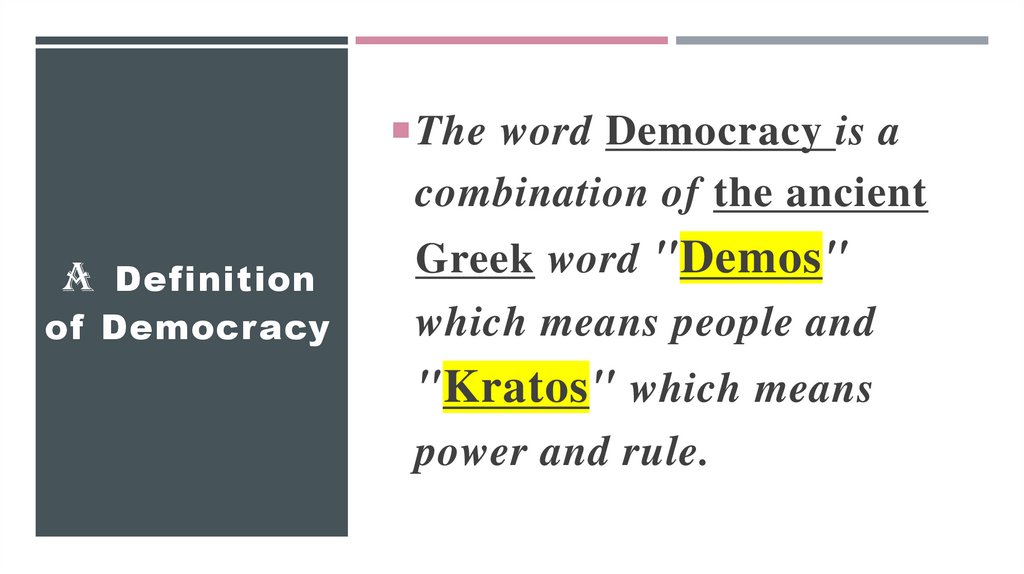
The word Democracy is acombination of the ancient
A Definition
of Democracy
Greek word "Demos"
which means people and
"Kratos" which means
power and rule.
27.
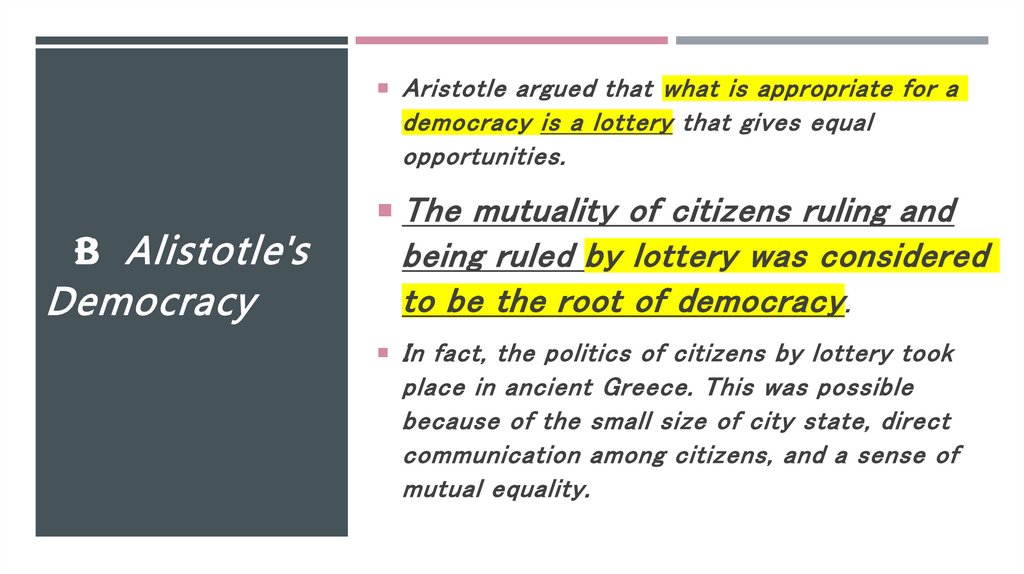
Aristotle argued that what is appropriate for ademocracy is a lottery that gives equal
opportunities.
B Alistotle's
Democracy
The mutuality of citizens ruling and
being ruled by lottery was considered
to be the root of democracy .
In fact, the politics of citizens by lottery took
place in ancient Greece. This was possible
because of the small size of city state, direct
communication among citizens, and a sense of
mutual equality.
28.
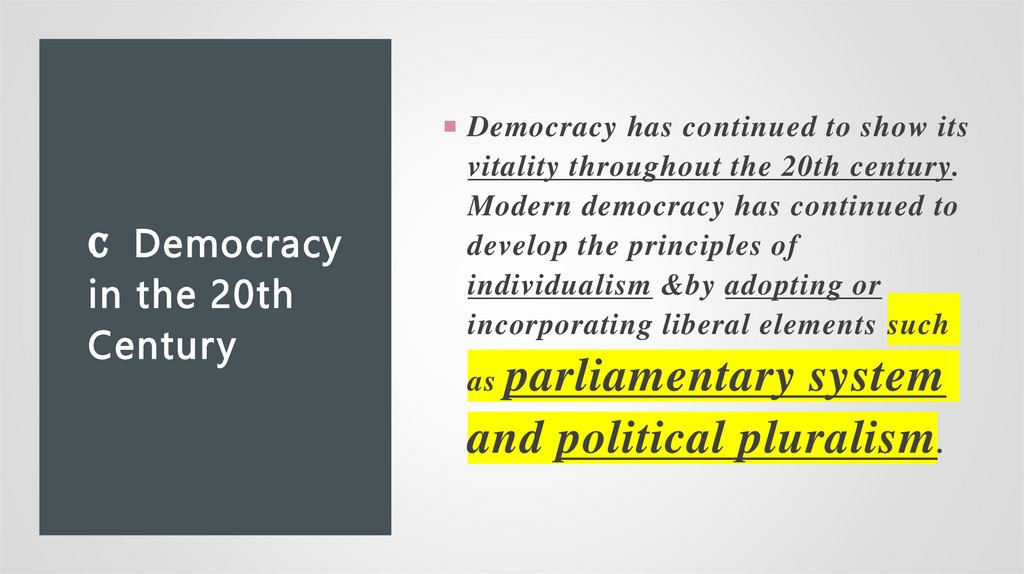
Democracy has continued to show itsC Democracy
in the 20th
Century
vitality throughout the 20th century.
Modern democracy has continued to
develop the principles of
individualism &by adopting or
incorporating liberal elements such
as parliamentary system
and political pluralism .
29.
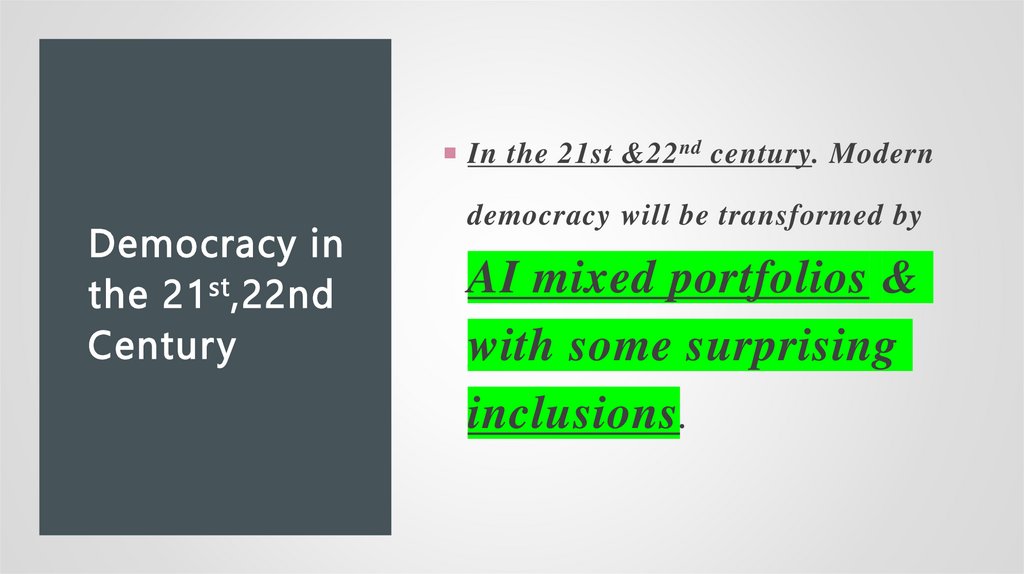
In the 21st &22 nd century. ModernDemocracy in
the 21 st ,22nd
Century
democracy will be transformed by
AI mixed portfolios &
with some surprising
inclusions .
30.
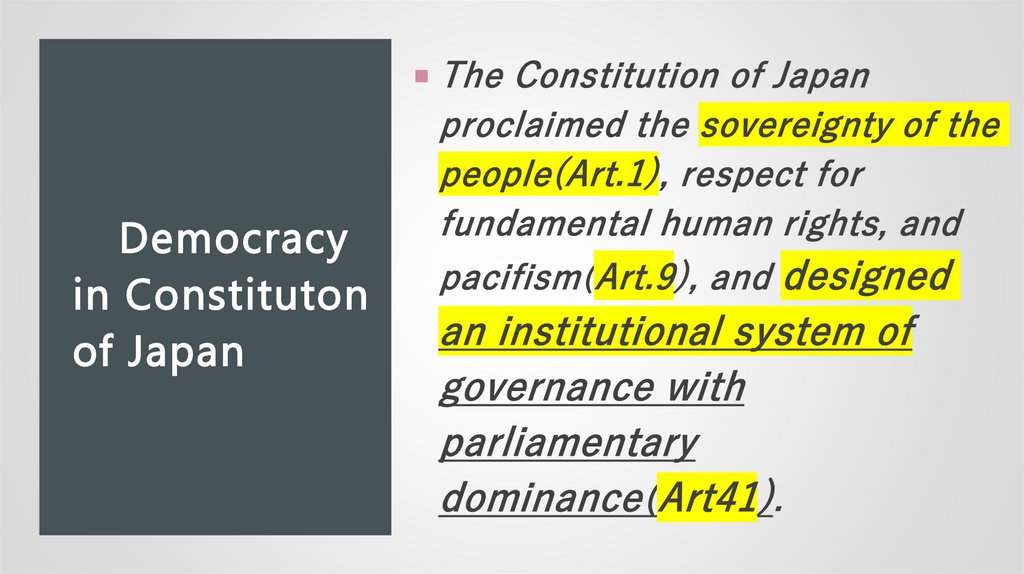
The Constitution of JapanDemocracy
in Constituton
of Japan
proclaimed the sovereignty of the
people(Art.1), respect for
fundamental human rights, and
pacifism(Art.9), and designed
an institutional system of
governance with
parliamentary
dominance(Art41).
31.
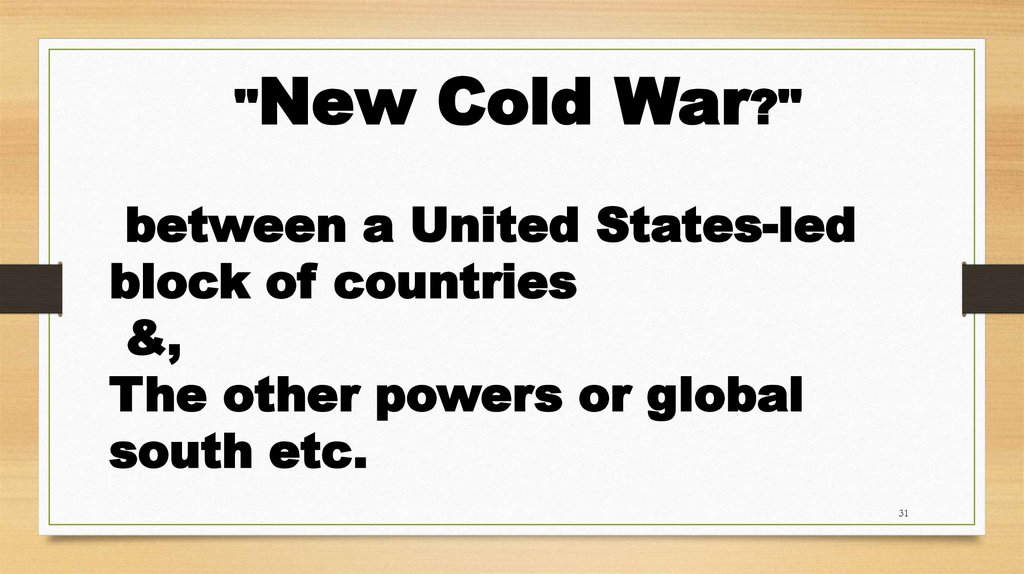
"New Cold War?"between a United States-led
block of countries
&,
The other powers or global
south etc.
31
32.
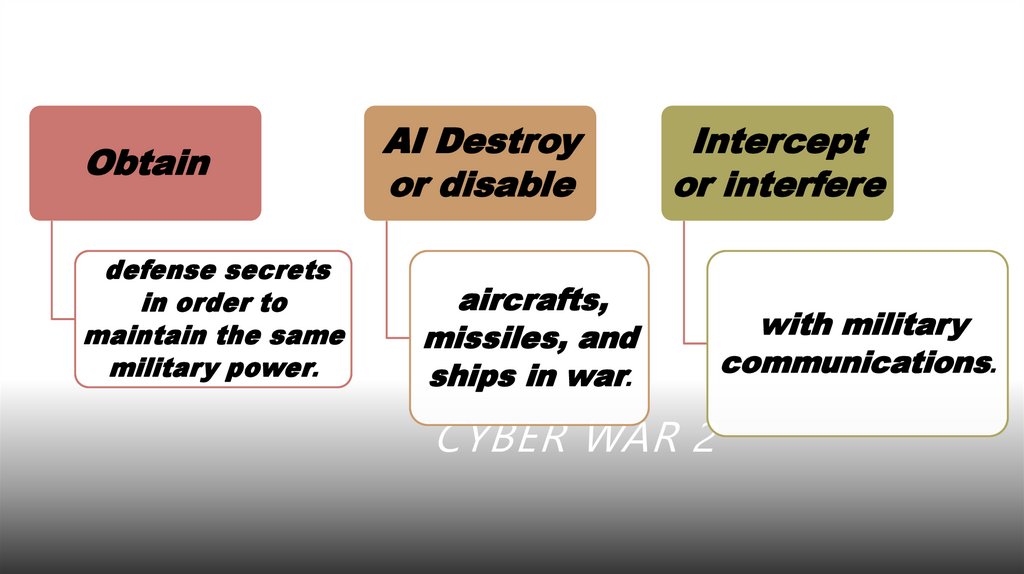
Obtaindefense secrets
in order to
maintain the same
military power.
AI Destroy
or disable
Intercept
or interfere
aircrafts,
missiles, and
ships in war.
CYBER WAR 2
with military
communications.
33.
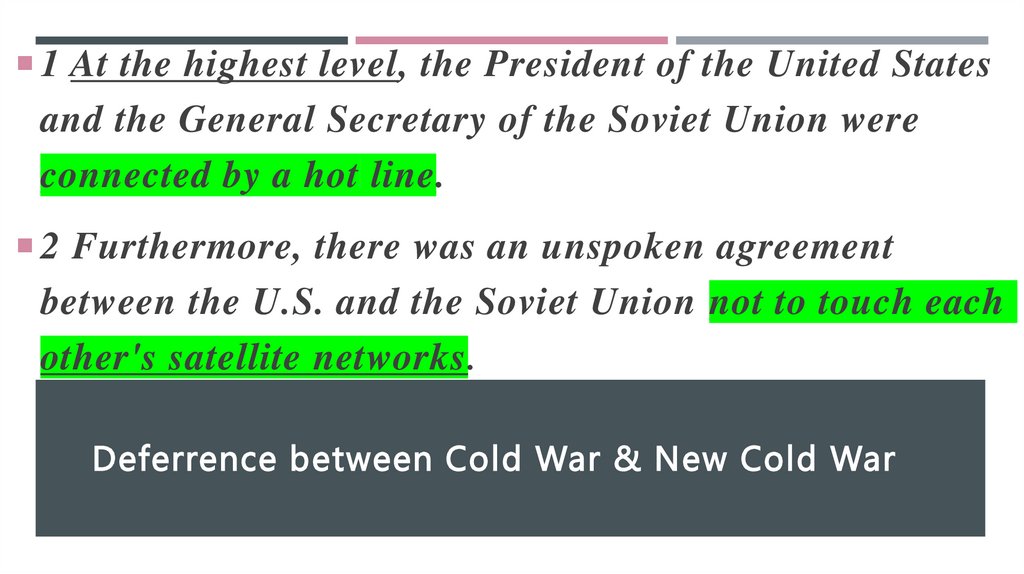
1 At the highest level, the President of the United Statesand the General Secretary of the Soviet Union were
connected by a hot line.
2 Furthermore, there was an unspoken agreement
between the U.S. and the Soviet Union not to touch each
other's satellite networks .
Deferrence between Cold War & New Cold War
34.
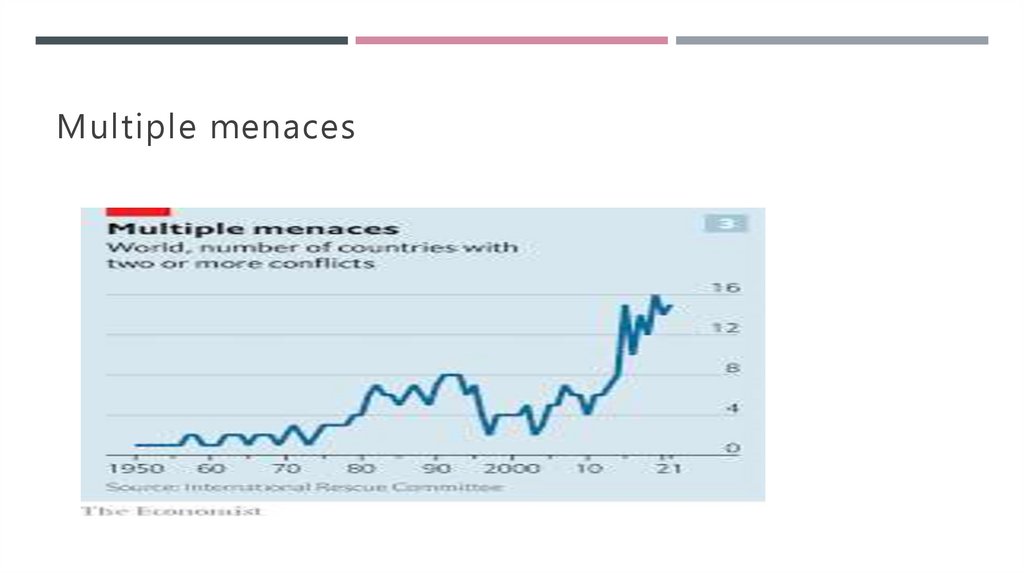
ICRC alarming conflict area mapafter WW2
35.
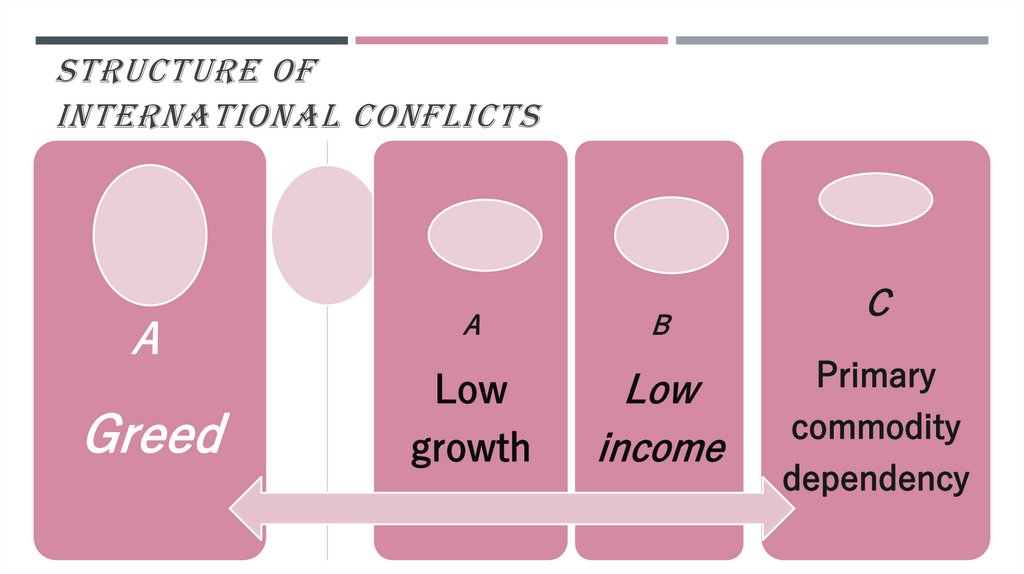
Structure ofinternational conflicts
A
Greed
A
Low
growth
B
Low
income
C
Primary
commodity
dependency
36.
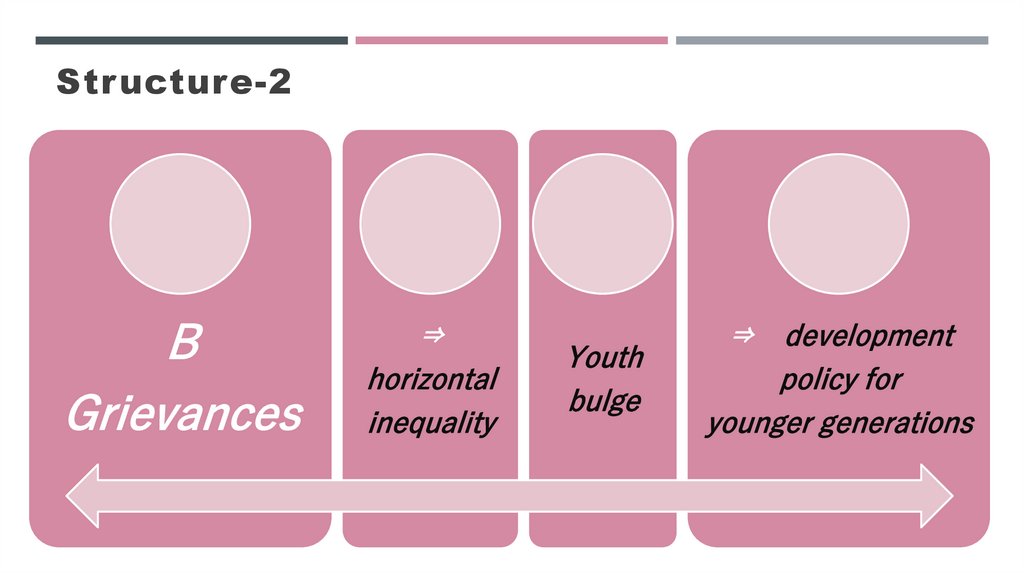
Structure-2B
Grievances
⇒
horizontal
inequality
Youth
bulge
⇒ development
policy for
younger generations
37.
Multiple menaces38.
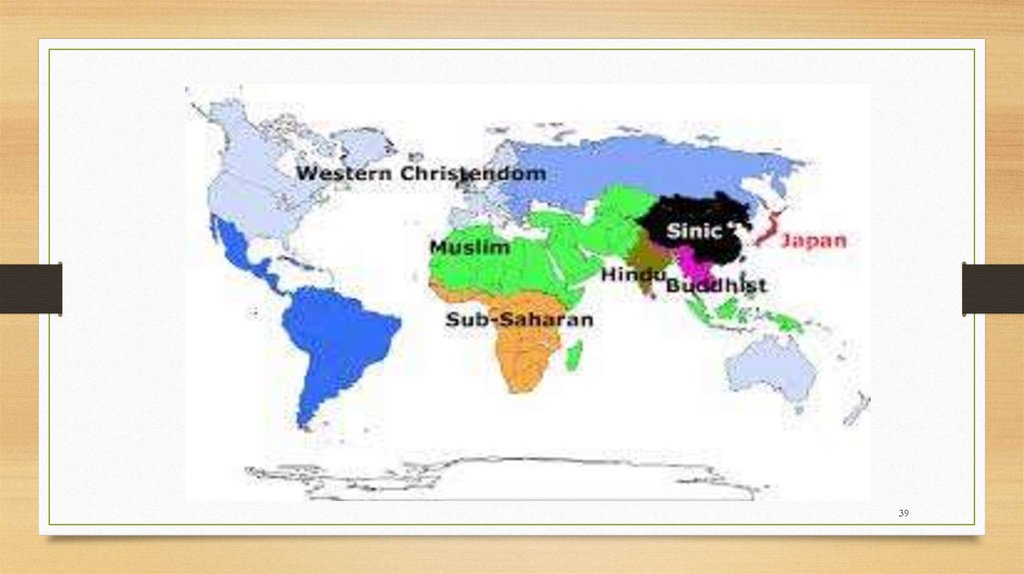
3939.
40.
Passage of the Japan PKO LawJapan's participation in UN peacekeeping operations
began in June 1992 with the enactment of the "Law
Concerning Cooperation in United Nations
Peacekeeping Operations.
This law was enacted after the Gulf Crisis of 1990,
when the Japanese people and the Diet discussed how
Japan, as a member of the international community,
could contribute to the peace and security of the region .
41.
Five Principles for Japan's Par ticipation (Par t1)
Basic policies and principles organized for the purpose of
avoiding problems with Article 9 of the Constitution.
(1) An agreement for a ceasefire has been reached
between the parties to the conflict.
(2) The parties to the conflict , including countries that
belong to the area where the peacekeeping force
operates, have consented to the activities of the
peacekeeping force and to Japan's participation in the
peacekeeping force .
42.
Five Principles for Japan'sPar ticipation (Par t 2)
(3) The peacekeeping force shall maintain a strictly neutral
position without bias toward any particular party to the
conflict.
(4) If a situation arises in which any of the above principles
is not met, the participating troops from Japan may
withdraw.
(5) The use of weapons shall be limited to the minimum
necessary for the protection of the lives of personnel .
43.
Japan's contribution under thePKO Law
First, in 1992, Japan dispatched approximately 600
personnel of the Japan Self-Defense Forces to the United
Nations Transitional Authority in Cambodia .
Since then, about 9,000 personnel have been dispatched
to a total of 14 UN peacekeeping operations around the
world, and the activities of Japanese personnel have been
highly evaluated by the international community as
disciplined and reliable .
44.
In addition to humanitariancontributions,
Japan has also made significant financial contributions to
PKO, contributing about 11% of the total contributions by
member countries, the second largest share after the United
States. In the framework of material cooperation under the
PKO Law, Japan also contributes in the form of providing
supplies and equipment used by Japanese troops in PKO
activities to the local government and the UN side .
45.
Japan's IntellectualContribution to PKOIn the field of personnel training , Japan has
been actively involved in various aspects, such
as co-hosting PKO executive personnel training
courses and peacebuilding human resource
development projects for civilian experts in
Japan, and supporting PKO training centers in
other countries .
46.
PKOs are cur rently facing anumber of challenges
UN peacekeeping operations (PKOs) are currently
facing a number of challenges. The international
community has high expectations of Japan in terms of
the dispatch of logistics support units in highly
specialized fields such as aviation and medicine, police
officers, female personnel, and the provision of
equipment.
47.
Japan's contribution to inter nationalpeace
In today's international society, no country can maintain
its own peace and security by itself.
Japan, as a responsible member of international peace
and stability, needs to further discuss concrete measures to
actively contribute to world peace and stability through UN
peacekeeping operations , recognizing once again that a
peaceful and stable international environment will bring
certain security and prosperity to its own country .