 english
Similar presentations:



Lesson 26: must, have to, should
1.
HAVE TOMUST
SHOULD
2.
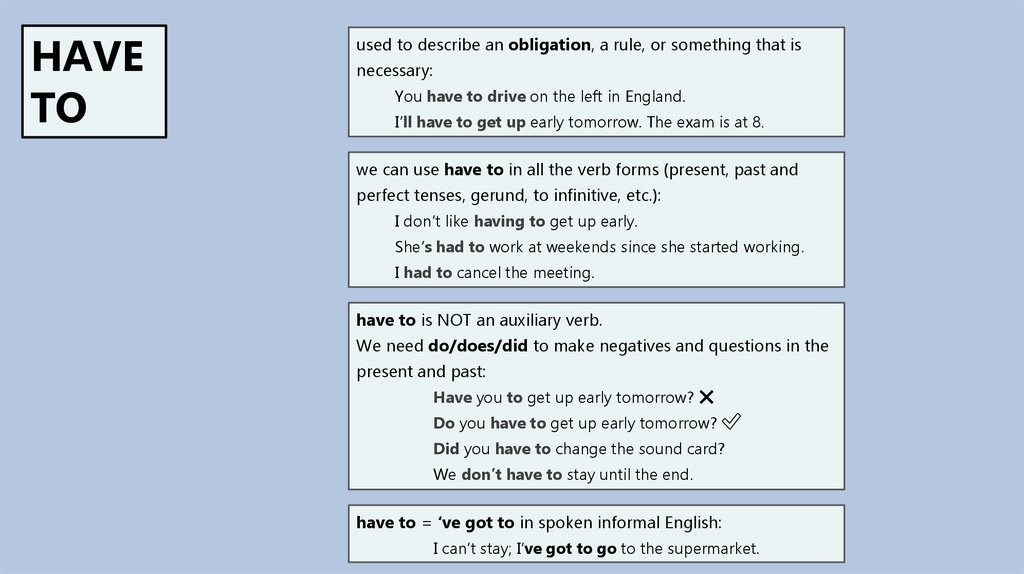
HAVETO
used to describe an obligation, a rule, or something that is
necessary:
You have to drive on the left in England.
I’ll have to get up early tomorrow. The exam is at 8.
we can use have to in all the verb forms (present, past and
perfect tenses, gerund, to infinitive, etc.):
I don’t like having to get up early.
She’s had to work at weekends since she started working.
I had to cancel the meeting.
have to is NOT an auxiliary verb.
We need do/does/did to make negatives and questions in the
present and past:
Have you to get up early tomorrow? ❌
Do you have to get up early tomorrow? ✅
Did you have to change the sound card?
We don’t have to stay until the end.
have to = ‘ve got to in spoken informal English:
I can’t stay; I’ve got to go to the supermarket.
3.
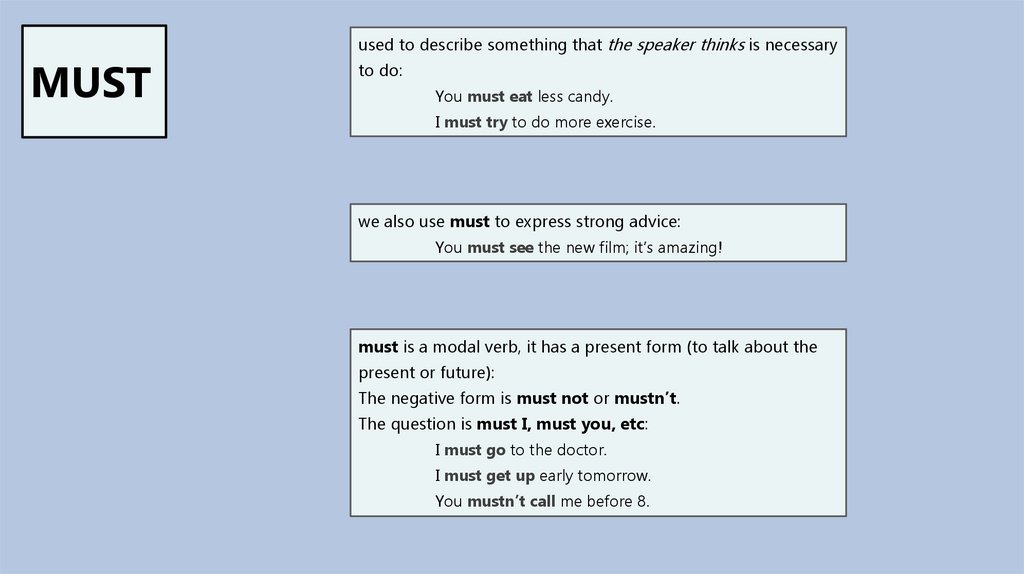
used to describe something that the speaker thinks is necessaryMUST
to do:
You must eat less candy.
I must try to do more exercise.
we also use must to express strong advice:
You must see the new film; it’s amazing!
must is a modal verb, it has a present form (to talk about the
present or future):
The negative form is must not or mustn’t.
The question is must I, must you, etc:
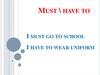
I must go to the doctor.
I must get up early tomorrow.
You mustn’t call me before 8.
4.
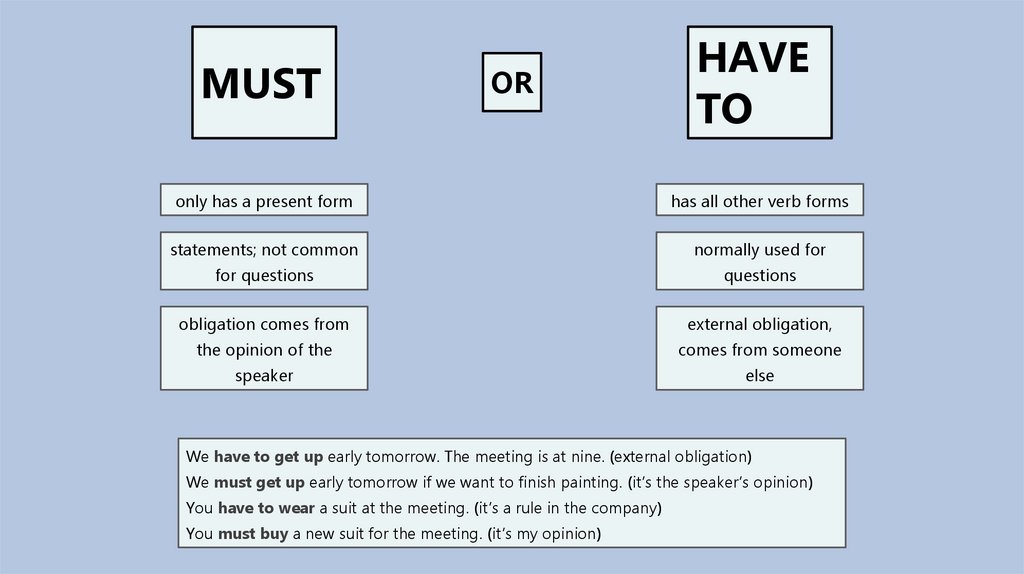
MUSTOR
HAVE
TO
only has a present form
has all other verb forms
statements; not common
normally used for
for questions
questions
obligation comes from
external obligation,
the opinion of the
comes from someone
speaker
else
We have to get up early tomorrow. The meeting is at nine. (external obligation)
We must get up early tomorrow if we want to finish painting. (it’s the speaker’s opinion)
You have to wear a suit at the meeting. (it’s a rule in the company)
You must buy a new suit for the meeting. (it’s my opinion)
5.
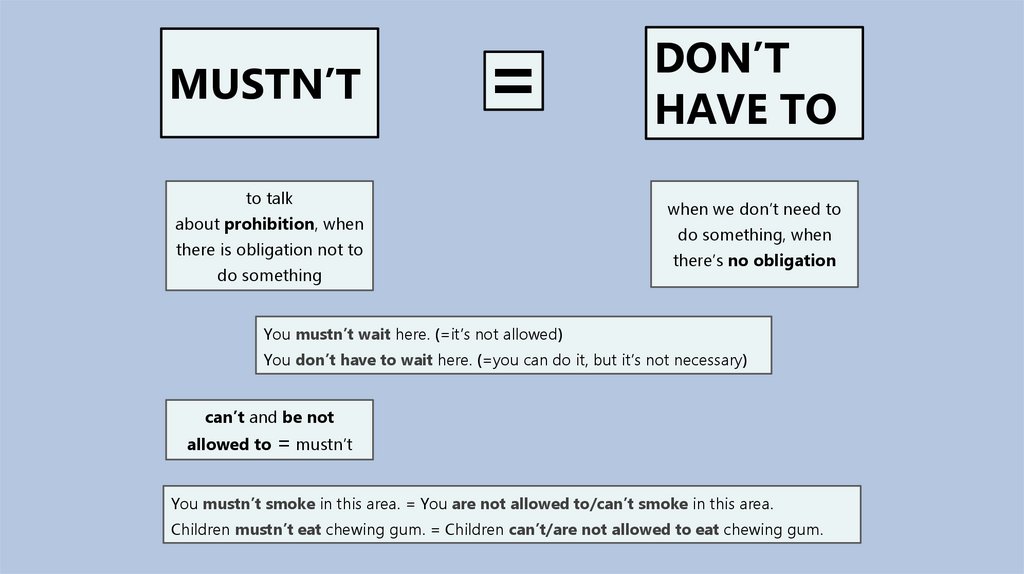
MUSTN’T=
to talk
about prohibition, when
there is obligation not to
do something
DON’T
HAVE TO
when we don’t need to
do something, when
there’s no obligation
You mustn’t wait here. (=it’s not allowed)
You don’t have to wait here. (=you can do it, but it’s not necessary)
can’t and be not
allowed to = mustn’t
You mustn’t smoke in this area. = You are not allowed to/can’t smoke in this area.
Children mustn’t eat chewing gum. = Children can’t/are not allowed to eat chewing gum.
6.
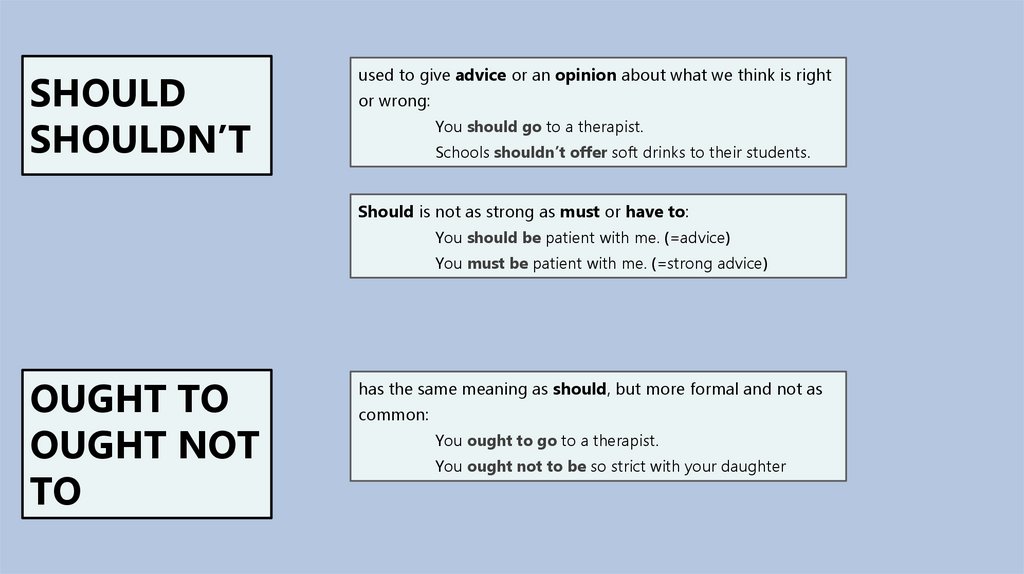
SHOULDSHOULDN’T
used to give advice or an opinion about what we think is right
or wrong:
You should go to a therapist.
Schools shouldn’t offer soft drinks to their students.
Should is not as strong as must or have to:
You should be patient with me. (=advice)
You must be patient with me. (=strong advice)
OUGHT TO
OUGHT NOT
TO
has the same meaning as should, but more formal and not as
common:
You ought to go to a therapist.
You ought not to be so strict with your daughter