 geography
Similar presentations:









Ile-Alatau National Park
1.
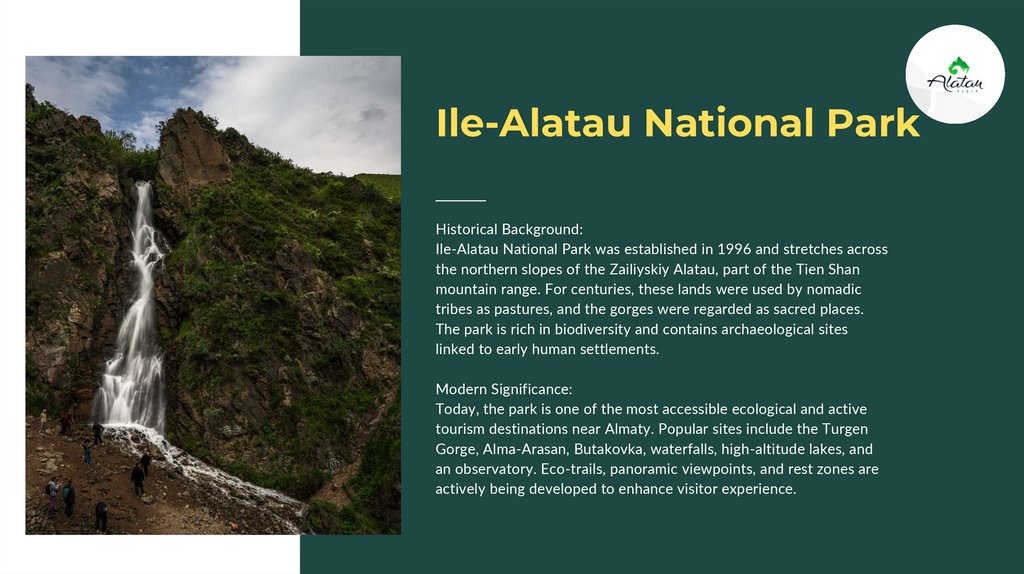
Ile-Alatau National ParkHistorical Background:
Ile-Alatau National Park was established in 1996 and stretches across
the northern slopes of the Zailiyskiy Alatau, part of the Tien Shan
mountain range. For centuries, these lands were used by nomadic
tribes as pastures, and the gorges were regarded as sacred places.
The park is rich in biodiversity and contains archaeological sites
linked to early human settlements.
Modern Significance:
Today, the park is one of the most accessible ecological and active
tourism destinations near Almaty. Popular sites include the Turgen
Gorge, Alma-Arasan, Butakovka, waterfalls, high-altitude lakes, and
an observatory. Eco-trails, panoramic viewpoints, and rest zones are
actively being developed to enhance visitor experience.
2.
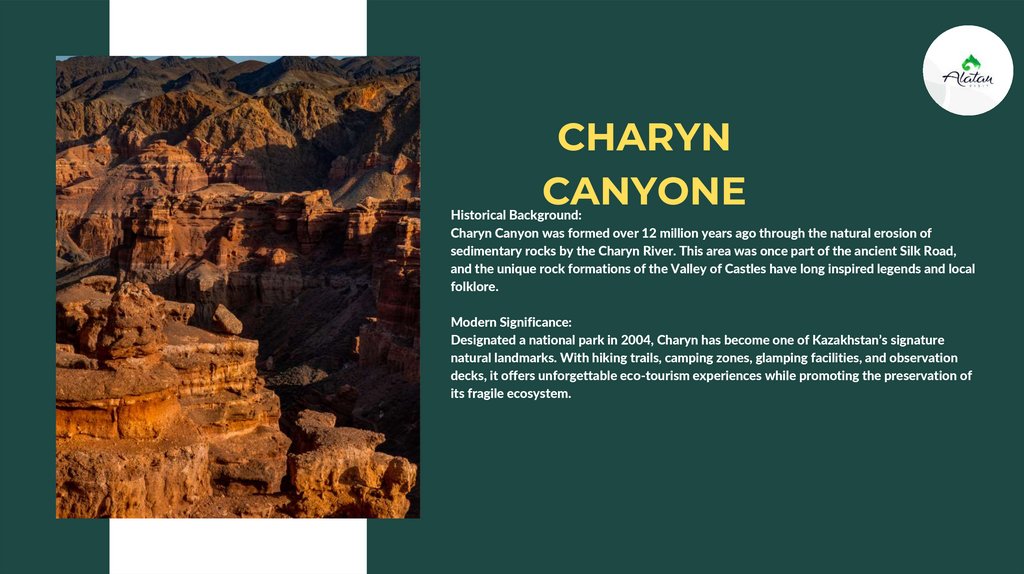
CHARYNCANYONE
Historical Background:
Charyn Canyon was formed over 12 million years ago through the natural erosion of
sedimentary rocks by the Charyn River. This area was once part of the ancient Silk Road,
and the unique rock formations of the Valley of Castles have long inspired legends and local
folklore.
Modern Significance:
Designated a national park in 2004, Charyn has become one of Kazakhstan’s signature
natural landmarks. With hiking trails, camping zones, glamping facilities, and observation
decks, it offers unforgettable eco-tourism experiences while promoting the preservation of
its fragile ecosystem.
3.
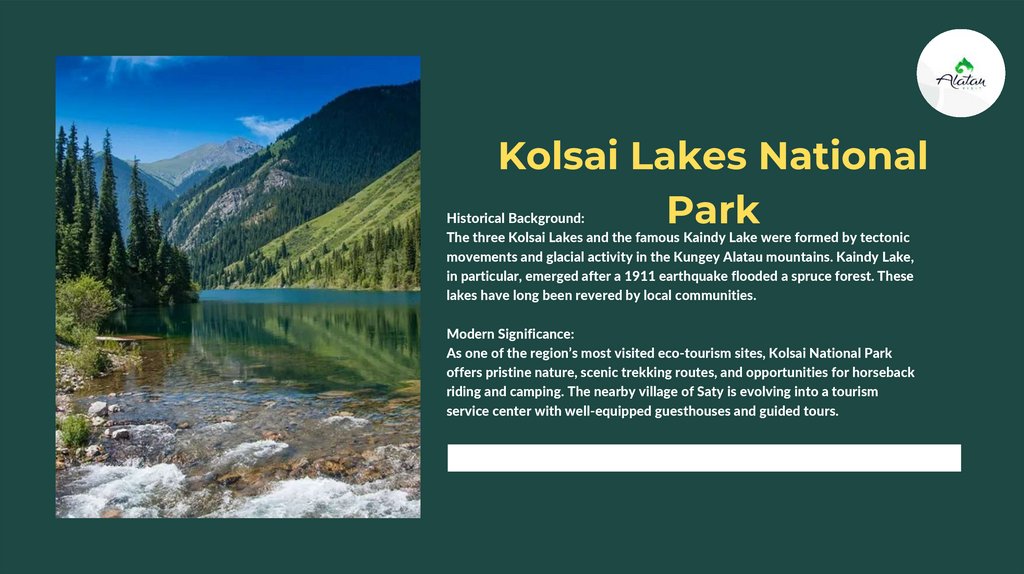
Kolsai Lakes NationalPark
Historical Background:
The three Kolsai Lakes and the famous Kaindy Lake were formed by tectonic
movements and glacial activity in the Kungey Alatau mountains. Kaindy Lake,
in particular, emerged after a 1911 earthquake flooded a spruce forest. These
lakes have long been revered by local communities.
Modern Significance:
As one of the region’s most visited eco-tourism sites, Kolsai National Park
offers pristine nature, scenic trekking routes, and opportunities for horseback
riding and camping. The nearby village of Saty is evolving into a tourism
service center with well-equipped guesthouses and guided tours.
4.
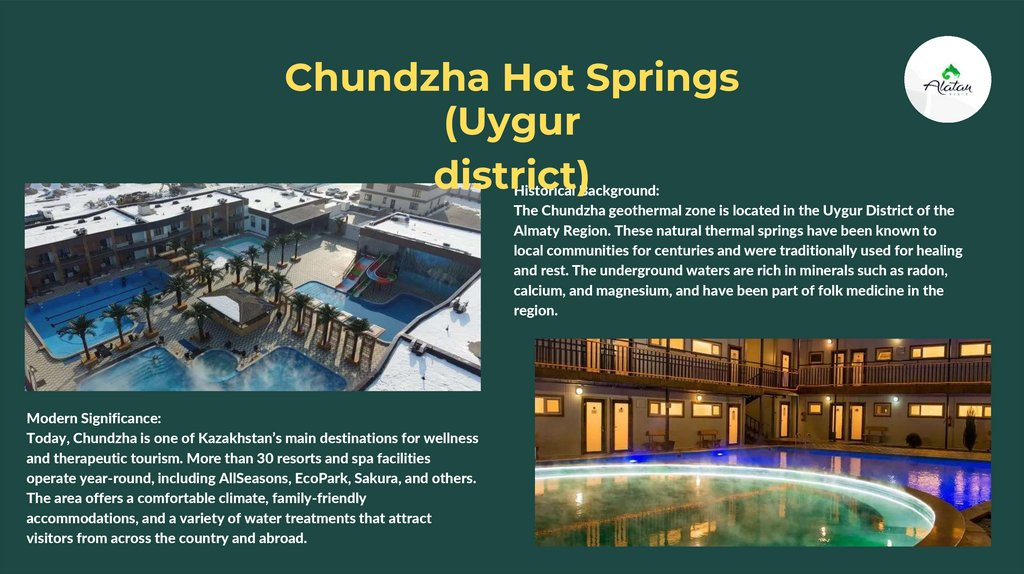
Chundzha Hot Springs(Uygur
district)
Historical Background:
The Chundzha geothermal zone is located in the Uygur District of the
Almaty Region. These natural thermal springs have been known to
local communities for centuries and were traditionally used for healing
and rest. The underground waters are rich in minerals such as radon,
calcium, and magnesium, and have been part of folk medicine in the
region.
Modern Significance:
Today, Chundzha is one of Kazakhstan’s main destinations for wellness
and therapeutic tourism. More than 30 resorts and spa facilities
operate year-round, including AllSeasons, EcoPark, Sakura, and others.
The area offers a comfortable climate, family-friendly
accommodations, and a variety of water treatments that attract
visitors from across the country and abroad.
5.
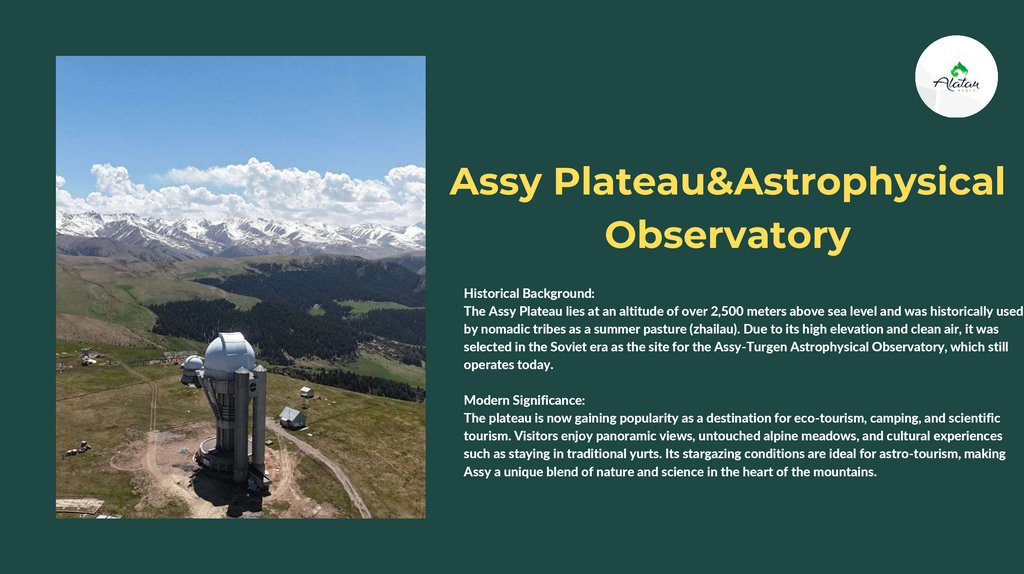
Assy Plateau&AstrophysicalObservatory
Historical Background:
The Assy Plateau lies at an altitude of over 2,500 meters above sea level and was historically used
by nomadic tribes as a summer pasture (zhailau). Due to its high elevation and clean air, it was
selected in the Soviet era as the site for the Assy-Turgen Astrophysical Observatory, which still
operates today.
Modern Significance:
The plateau is now gaining popularity as a destination for eco-tourism, camping, and scientific
tourism. Visitors enjoy panoramic views, untouched alpine meadows, and cultural experiences
such as staying in traditional yurts. Its stargazing conditions are ideal for astro-tourism, making
Assy a unique blend of nature and science in the heart of the mountains.
6.
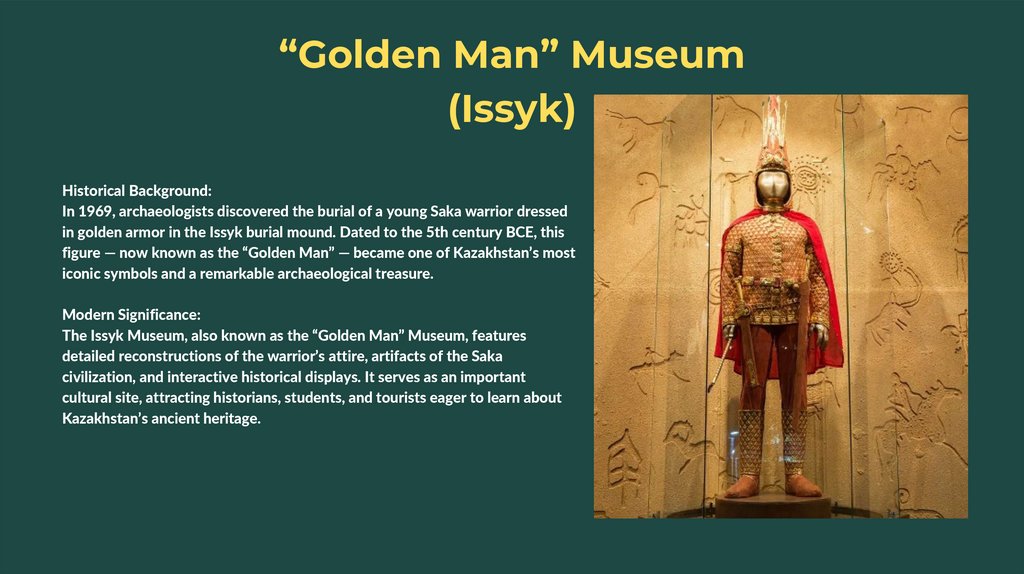
“Golden Man” Museum(Issyk)
Historical Background:
In 1969, archaeologists discovered the burial of a young Saka warrior dressed
in golden armor in the Issyk burial mound. Dated to the 5th century BCE, this
figure — now known as the “Golden Man” — became one of Kazakhstan’s most
iconic symbols and a remarkable archaeological treasure.
Modern Significance:
The Issyk Museum, also known as the “Golden Man” Museum, features
detailed reconstructions of the warrior’s attire, artifacts of the Saka
civilization, and interactive historical displays. It serves as an important
cultural site, attracting historians, students, and tourists eager to learn about
Kazakhstan’s ancient heritage.
7.
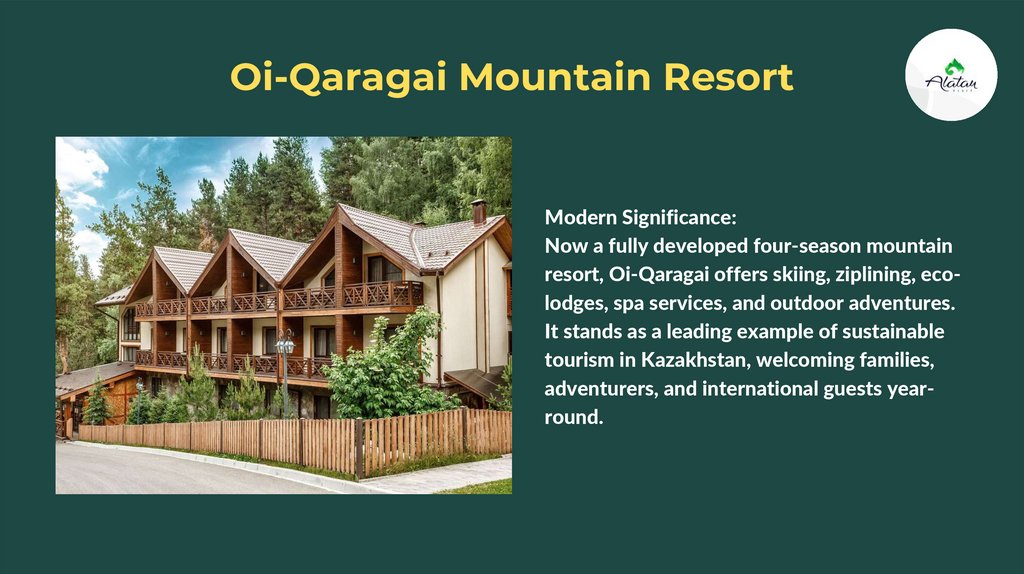
Oi-Qaragai Mountain ResortModern Significance:
Now a fully developed four-season mountain
resort, Oi-Qaragai offers skiing, ziplining, ecolodges, spa services, and outdoor adventures.
It stands as a leading example of sustainable
tourism in Kazakhstan, welcoming families,
adventurers, and international guests yearround.
8.
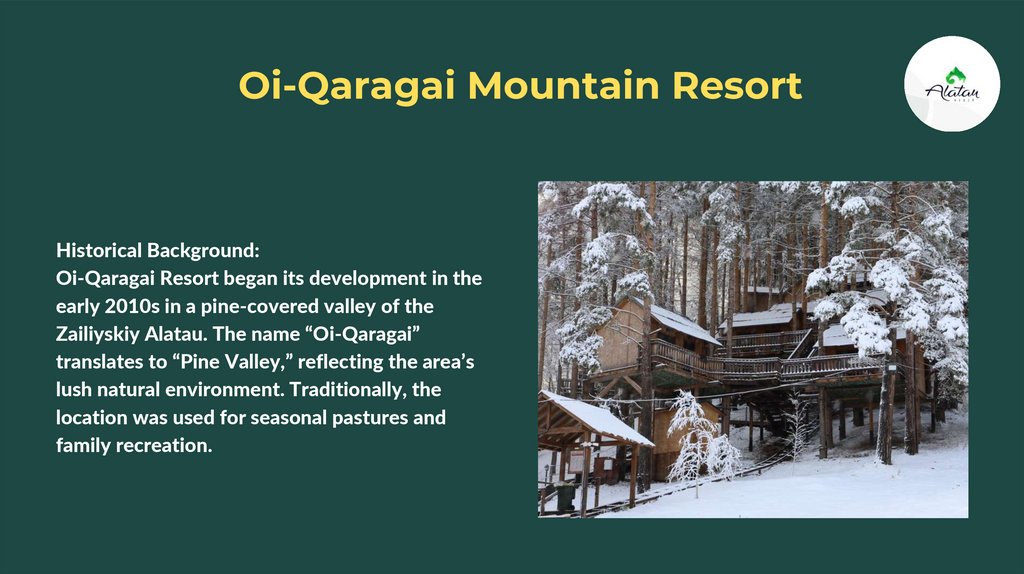
Oi-Qaragai Mountain ResortHistorical Background:
Oi-Qaragai Resort began its development in the
early 2010s in a pine-covered valley of the
Zailiyskiy Alatau. The name “Oi-Qaragai”
translates to “Pine Valley,” reflecting the area’s
lush natural environment. Traditionally, the
location was used for seasonal pastures and
family recreation.
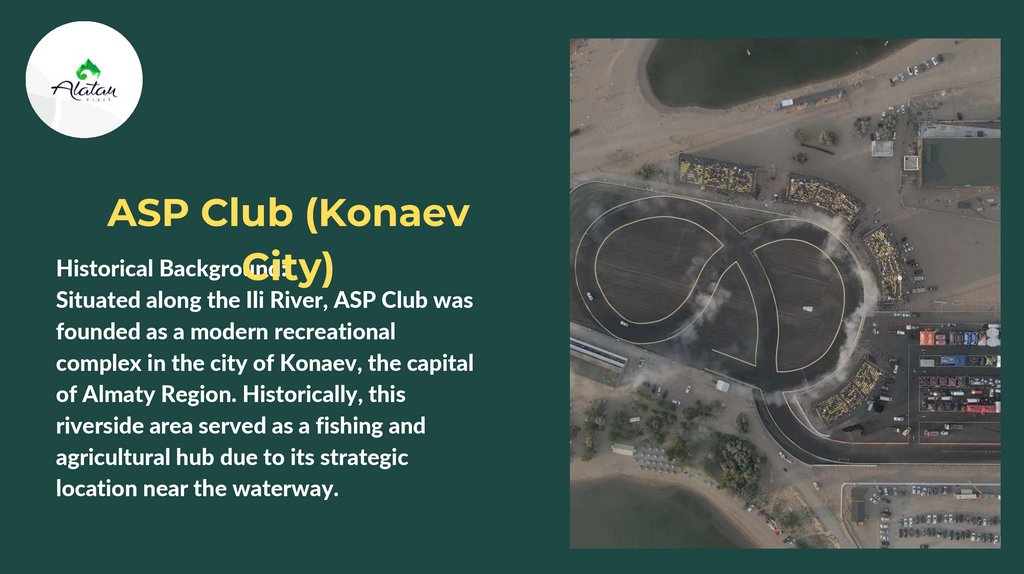
9.
ASP Club (KonaevHistorical Background:
City)
Situated along the Ili River, ASP Club was
founded as a modern recreational
complex in the city of Konaev, the capital
of Almaty Region. Historically, this
riverside area served as a fishing and
agricultural hub due to its strategic
location near the waterway.
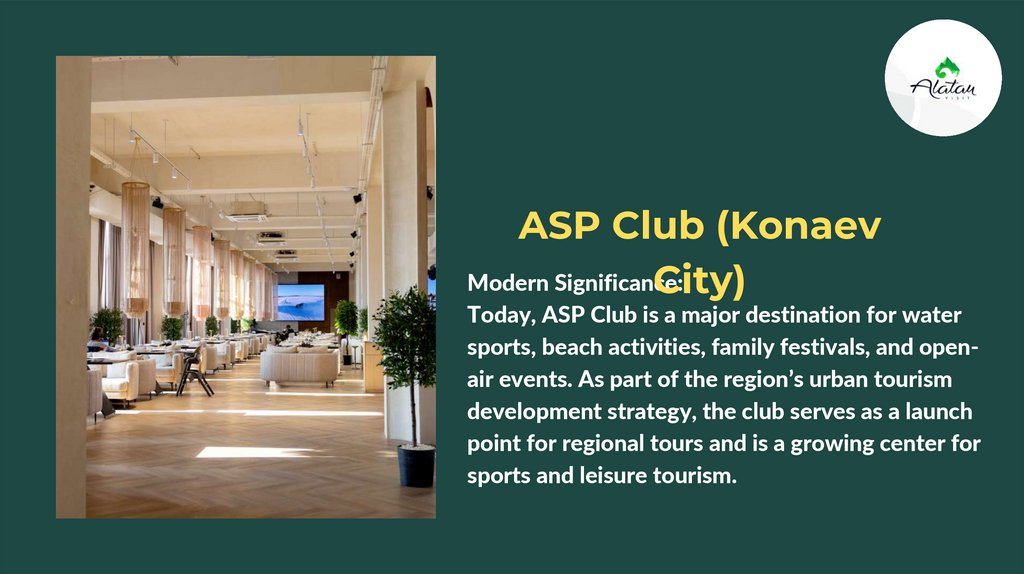
10.
ASP Club (KonaevModern Significance:
City)
Today, ASP Club is a major destination for water
sports, beach activities, family festivals, and openair events. As part of the region’s urban tourism
development strategy, the club serves as a launch
point for regional tours and is a growing center for
sports and leisure tourism.