
 geography
Similar presentations:







The city of Murmansk
1.
2.
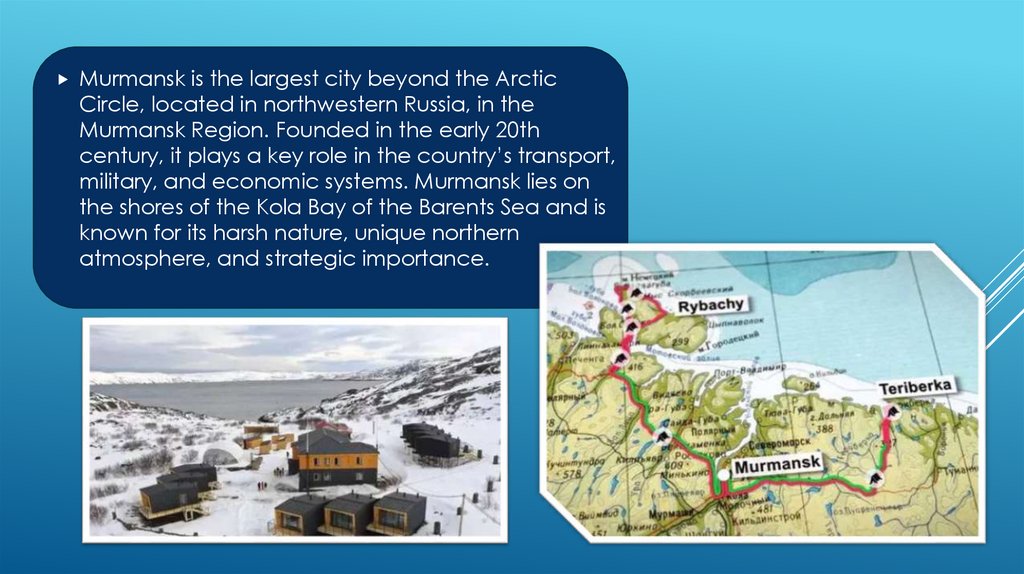
Murmansk is the largest city beyond the ArcticCircle, located in northwestern Russia, in the
Murmansk Region. Founded in the early 20th
century, it plays a key role in the country’s transport,
military, and economic systems. Murmansk lies on
the shores of the Kola Bay of the Barents Sea and is
known for its harsh nature, unique northern
atmosphere, and strategic importance.
3.
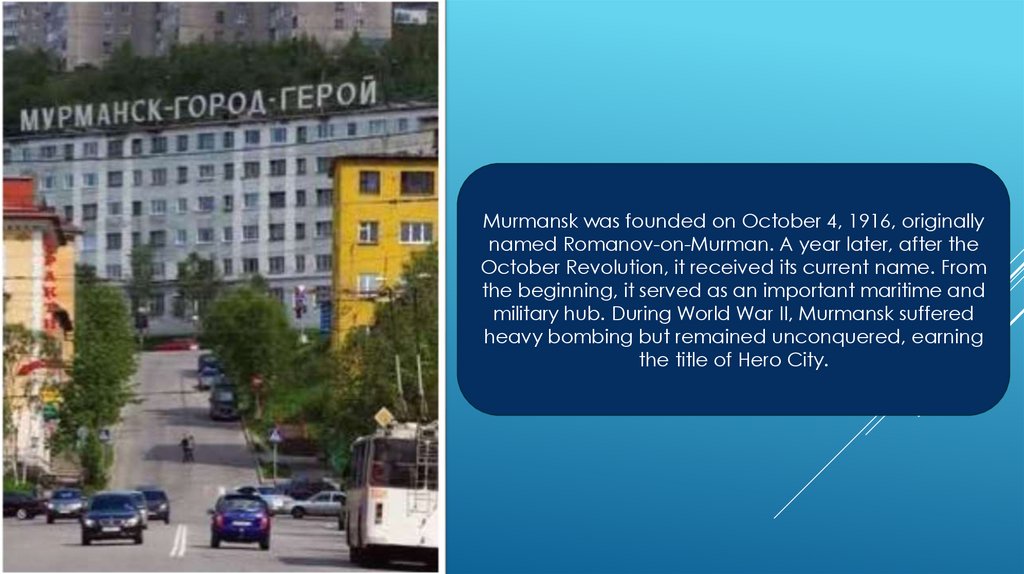
Murmansk was founded on October 4, 1916, originallynamed Romanov-on-Murman. A year later, after the
October Revolution, it received its current name. From
the beginning, it served as an important maritime and
military hub. During World War II, Murmansk suffered
heavy bombing but remained unconquered, earning
the title of Hero City.
4.
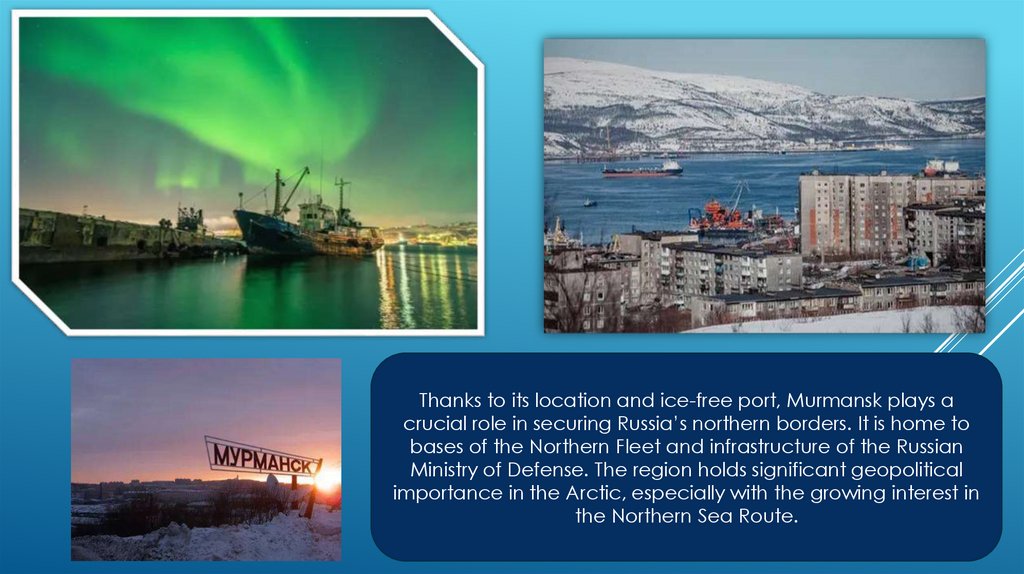
Thanks to its location and ice-free port, Murmansk plays acrucial role in securing Russia’s northern borders. It is home to
bases of the Northern Fleet and infrastructure of the Russian
Ministry of Defense. The region holds significant geopolitical
importance in the Arctic, especially with the growing interest in
the Northern Sea Route.
5.
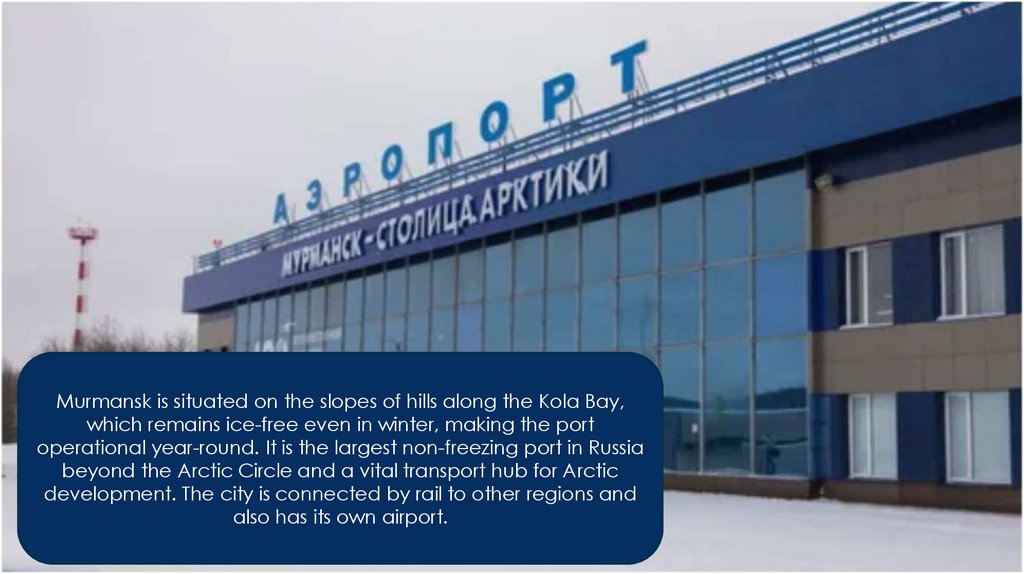
Murmansk is situated on the slopes of hills along the Kola Bay,which remains ice-free even in winter, making the port
operational year-round. It is the largest non-freezing port in Russia
beyond the Arctic Circle and a vital transport hub for Arctic
development. The city is connected by rail to other regions and
also has its own airport.
6.
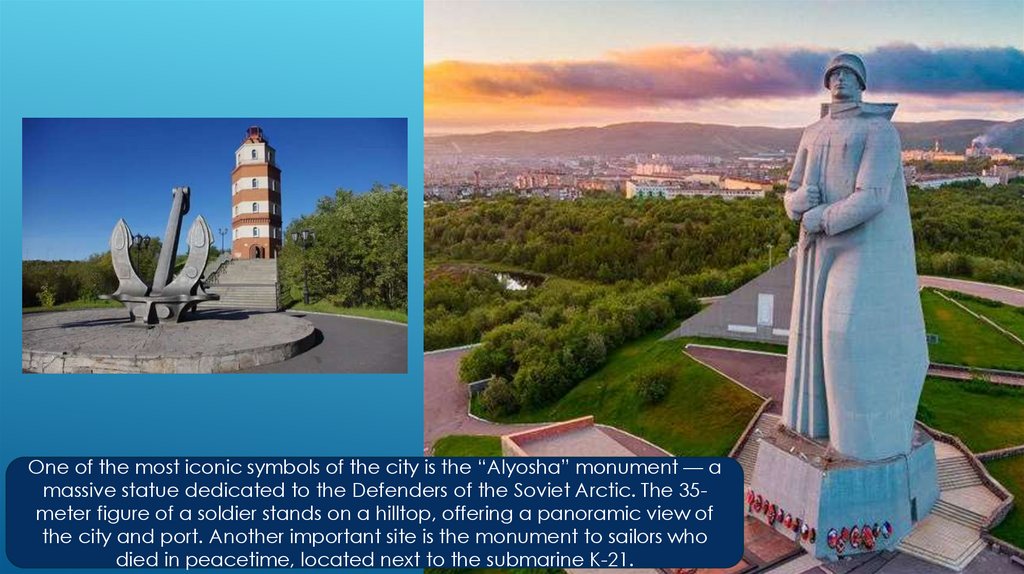
One of the most iconic symbols of the city is the “Alyosha” monument — amassive statue dedicated to the Defenders of the Soviet Arctic. The 35meter figure of a soldier stands on a hilltop, offering a panoramic view of
the city and port. Another important site is the monument to sailors who
died in peacetime, located next to the submarine K-21.
7.
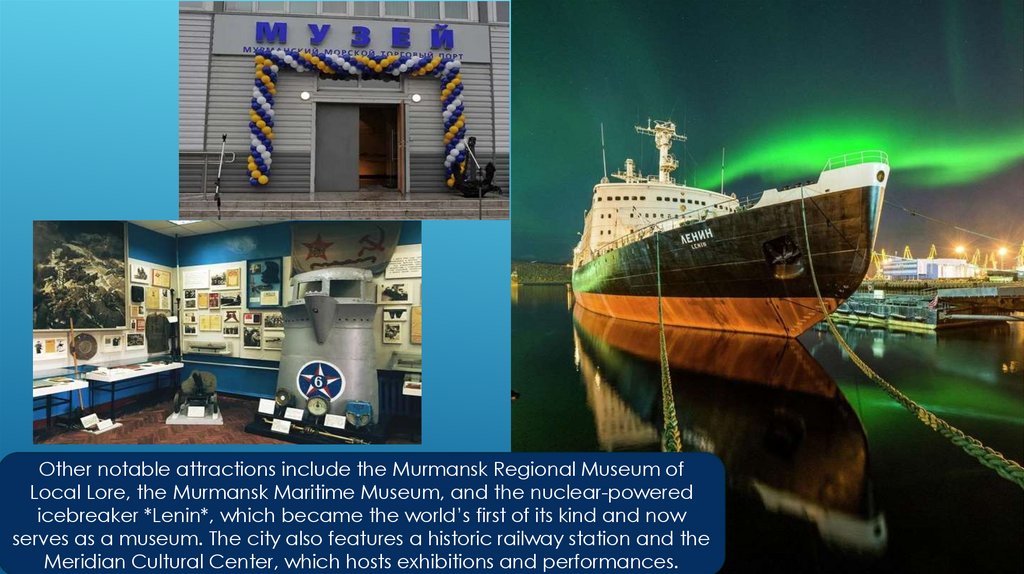
Other notable attractions include the Murmansk Regional Museum ofLocal Lore, the Murmansk Maritime Museum, and the nuclear-powered
icebreaker *Lenin*, which became the world’s first of its kind and now
serves as a museum. The city also features a historic railway station and the
Meridian Cultural Center, which hosts exhibitions and performances.
8.
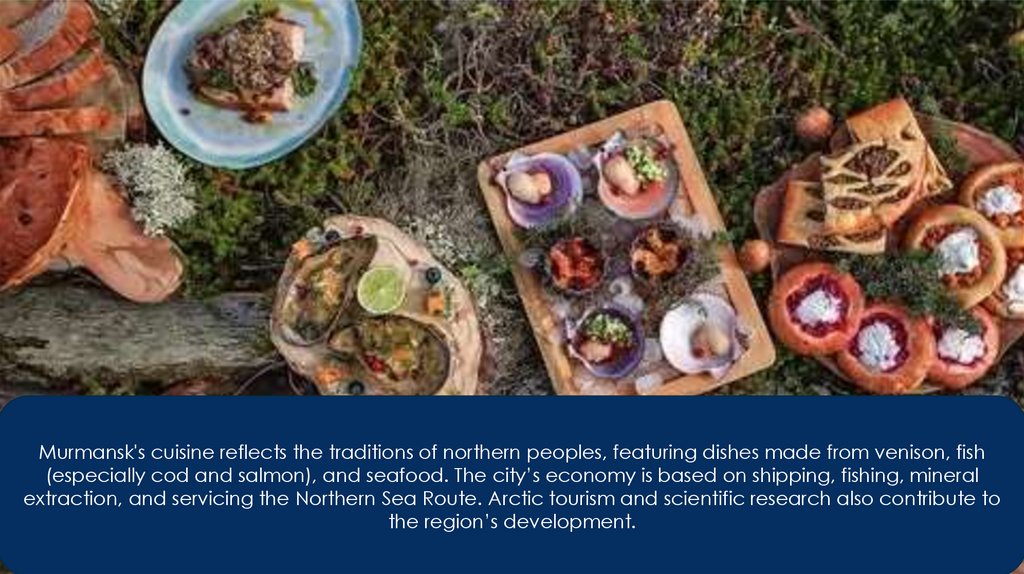
Murmansk's cuisine reflects the traditions of northern peoples, featuring dishes made from venison, fish(especially cod and salmon), and seafood. The city’s economy is based on shipping, fishing, mineral
extraction, and servicing the Northern Sea Route. Arctic tourism and scientific research also contribute to
the region’s development.