










 informatics
Similar presentations:








Mechanics, Dynamics, Aesthetics A Formal Approach to Game Design
1. Is this thing on?
2. Mechanics, Dynamics, Aesthetics
A Formal Approach to Game DesignMarc “MAHK” LeBlanc
April 2004
3. Introduction: The Alien Archeologist
“I have two artifacts from Earth to present tothe Academy.”
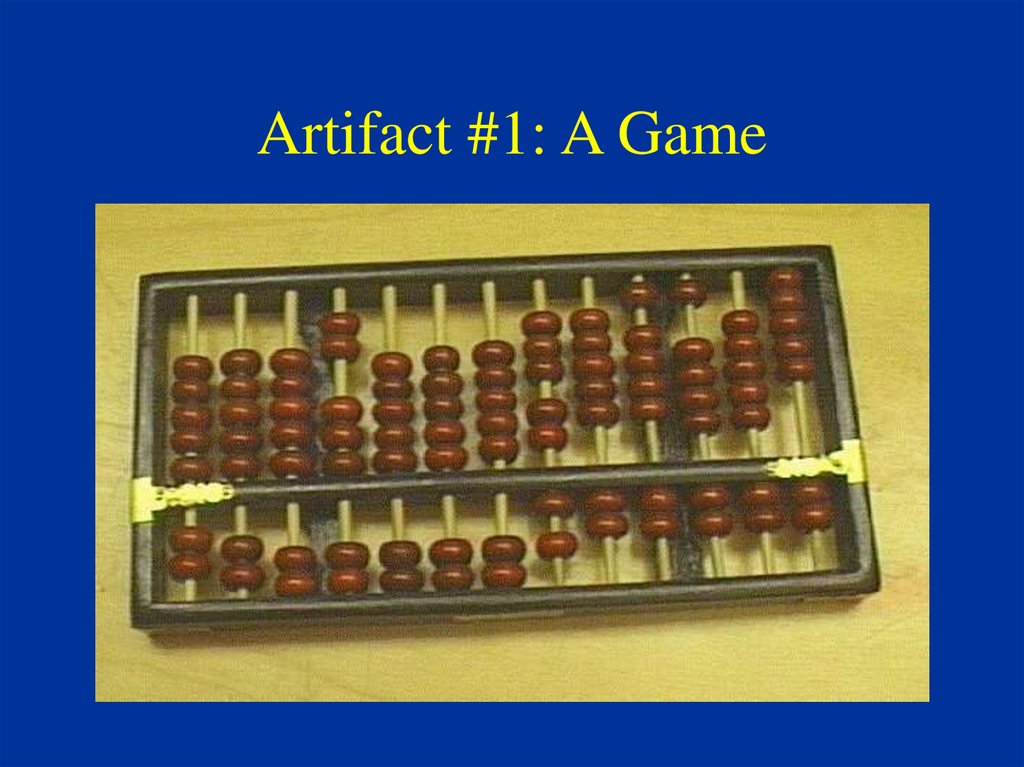
4. Artifact #1: A Game
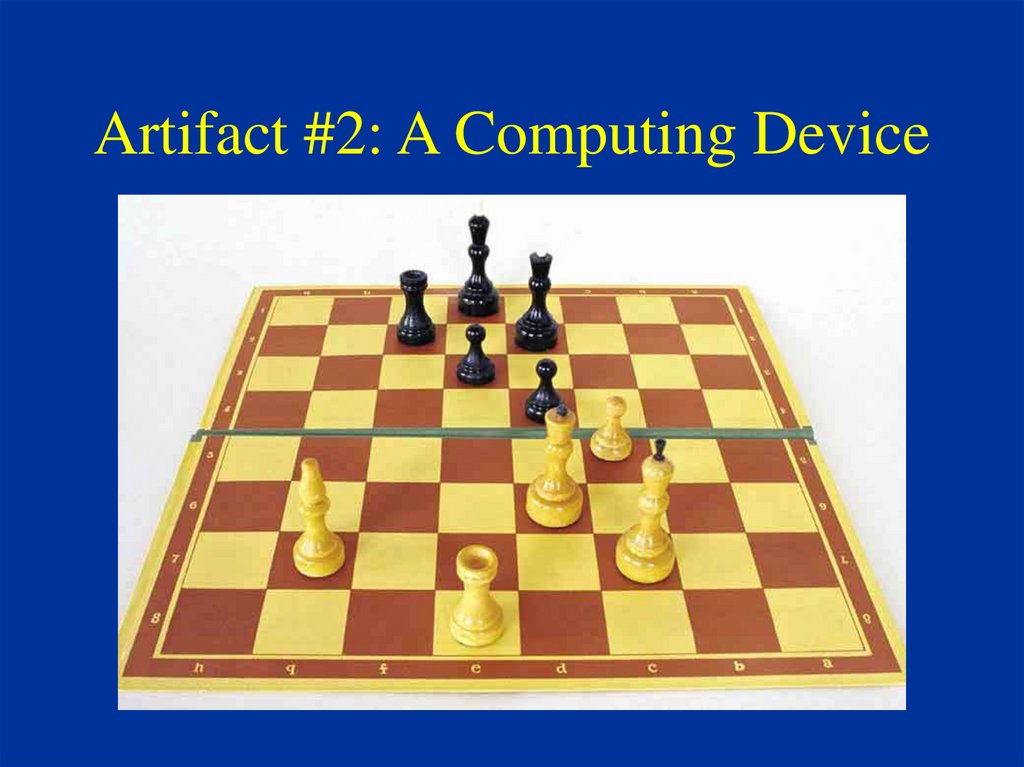
5. Artifact #2: A Computing Device
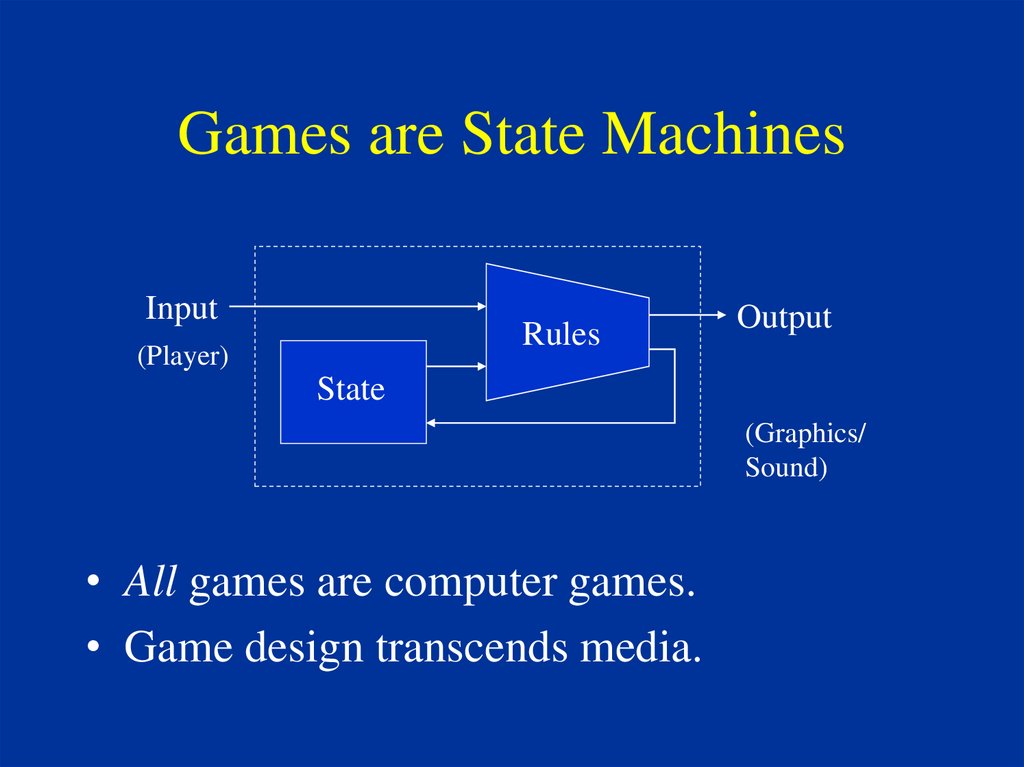
6. Games are State Machines
InputRules
(Player)
Output
State
(Graphics/
Sound)
• All games are computer games.
• Game design transcends media.
7. The Punch Line:
Game design is programming.8. Part I: Games as Software
9. This is Not a Programming Talk
Topics I Won’t Discuss:• Graphics & Sound
• Real-Time Simulation
– Physics
– AI
– Network
– Object Database
• The Console Environment
10. Games vs. Other Software
What makes a “program” a “game?”• Fun!
• That is, games serve an emotional purpose,
not a pragmatic one.
• This isn’t a definition.
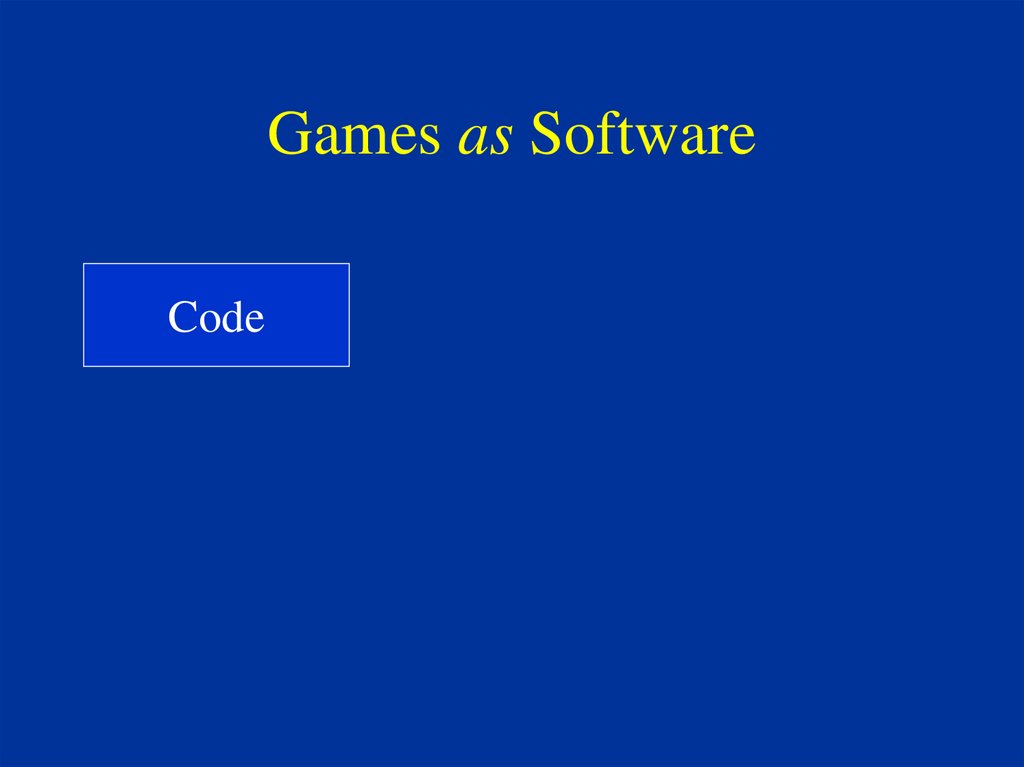
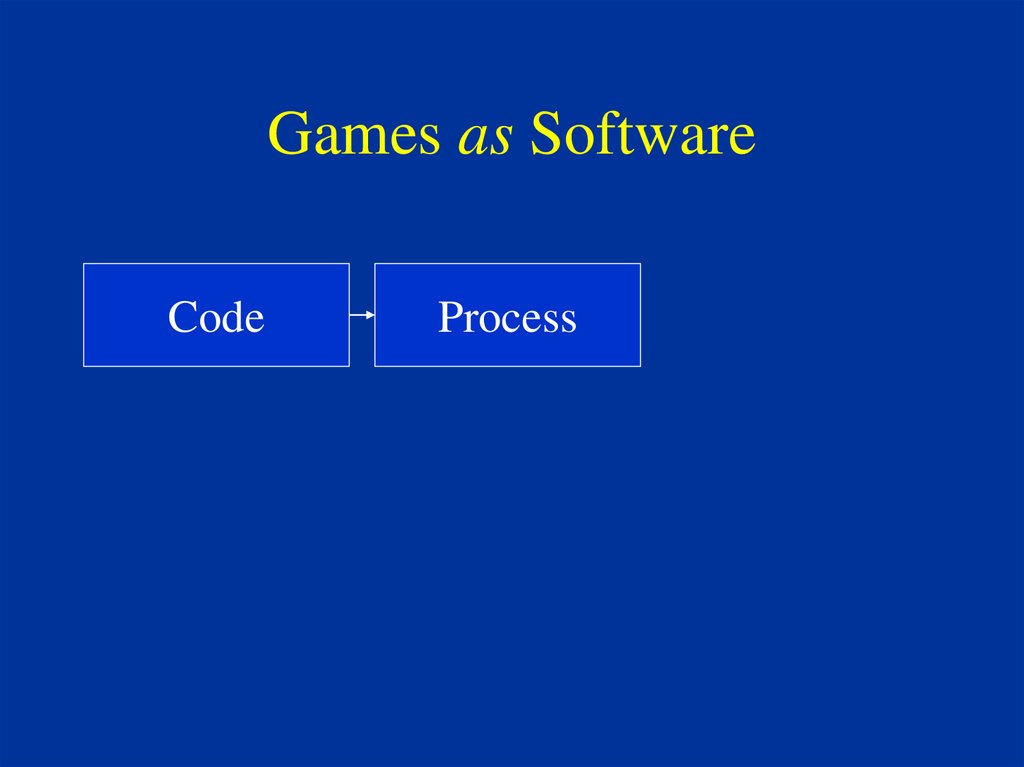
11. Games as Software
Code12. Games as Software
CodeProcess
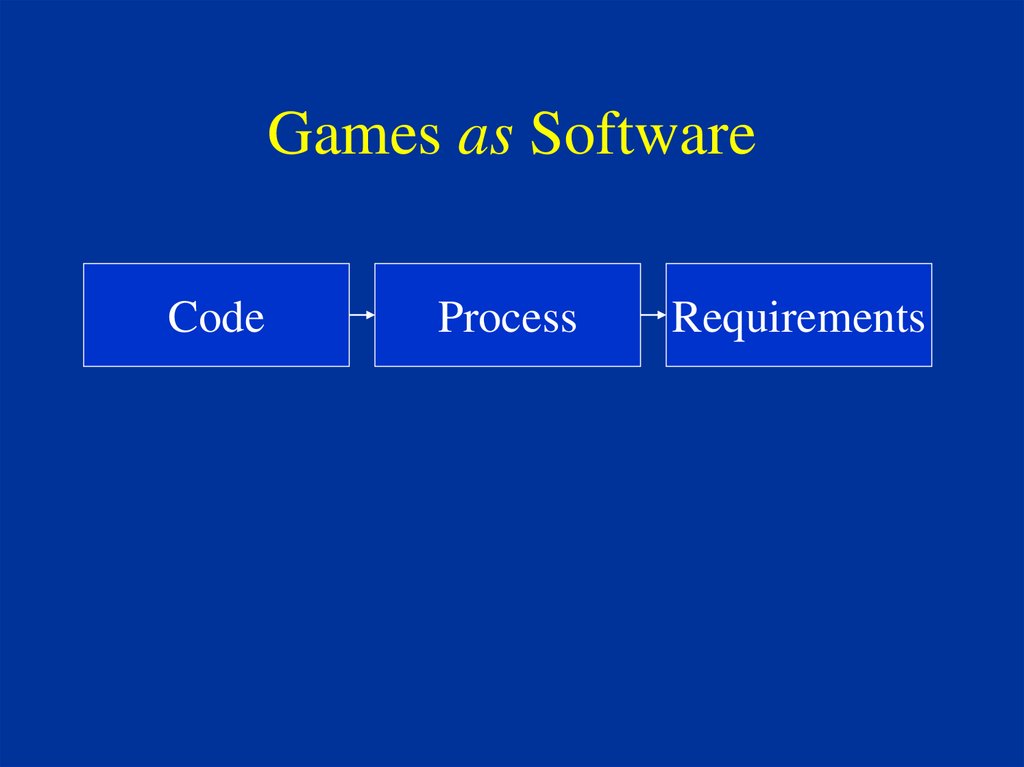
13. Games as Software
CodeProcess
Requirements
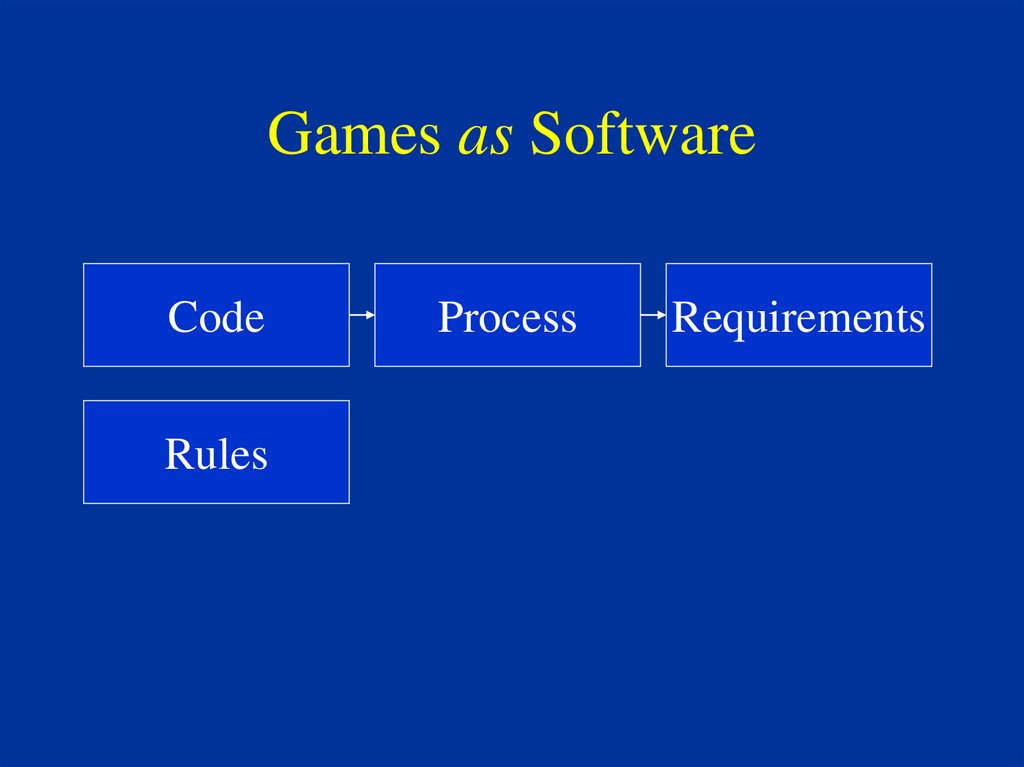
14. Games as Software
CodeRules
Process
Requirements
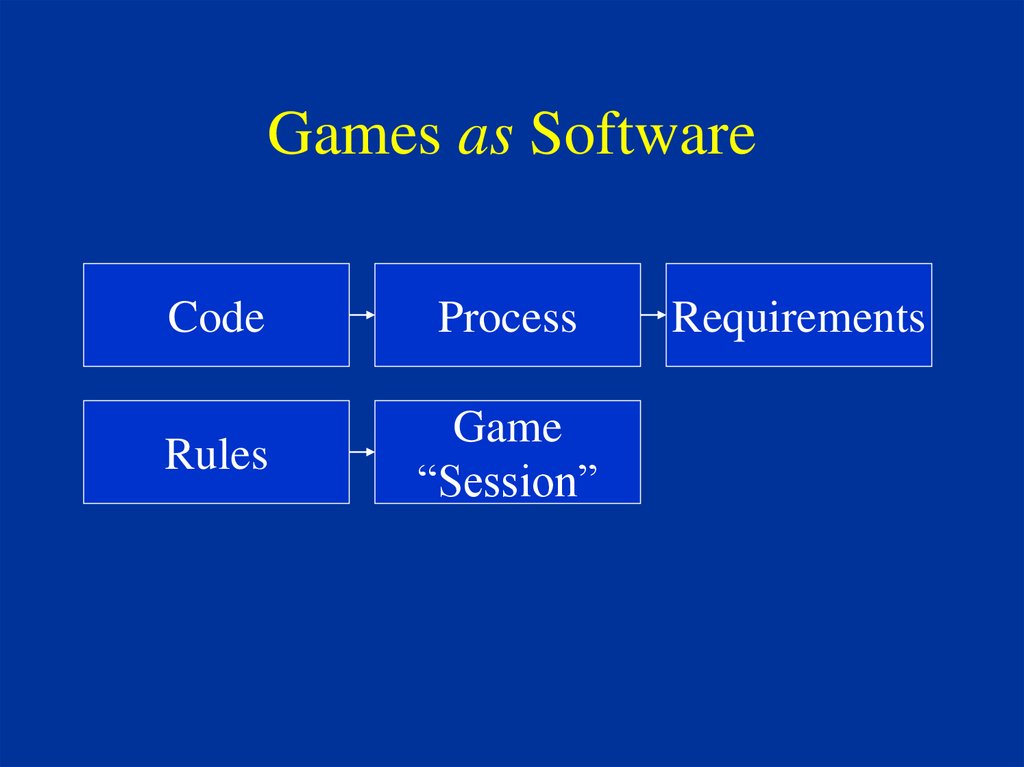
15. Games as Software
CodeProcess
Rules
Game
“Session”
Requirements
16. Games as Software
CodeProcess
Requirements
Rules
Game
“Session”
“Fun”
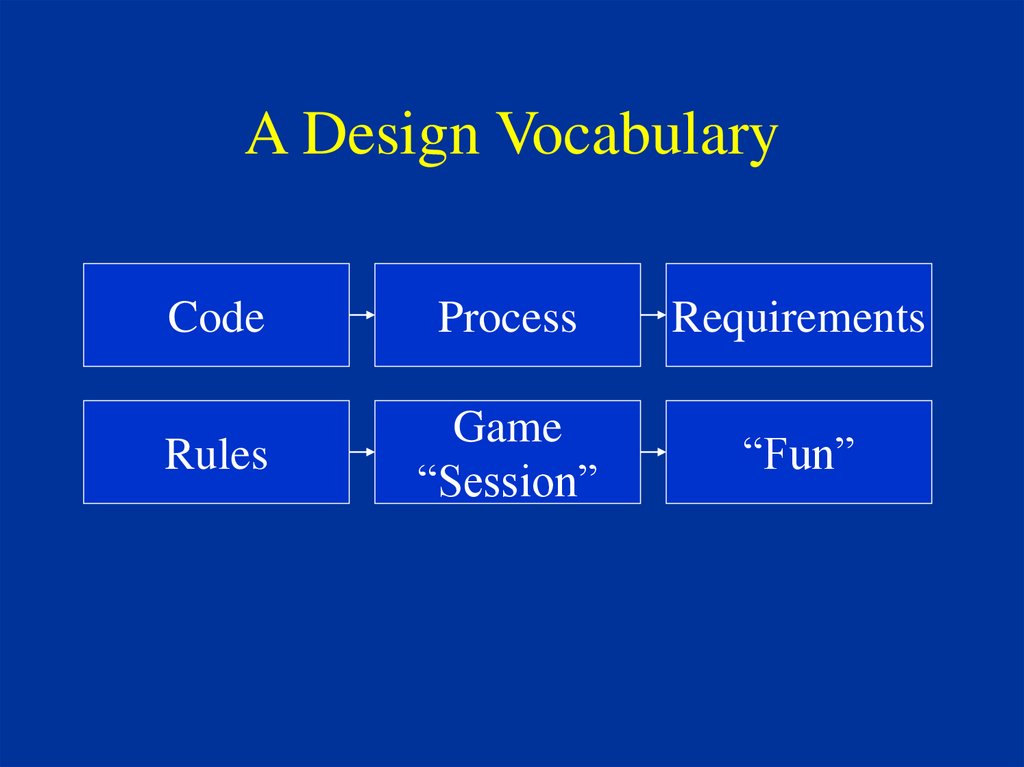
17. A Design Vocabulary
CodeProcess
Requirements
Rules
Game
“Session”
“Fun”
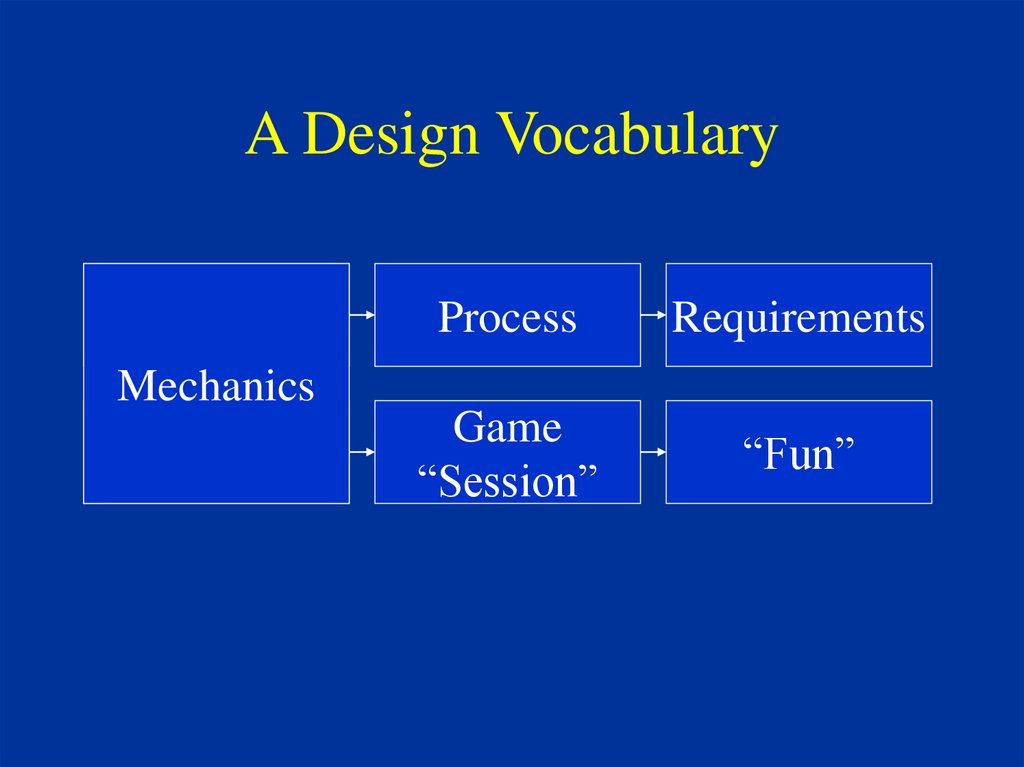
18. A Design Vocabulary
CodeMechanics
Rules
Process
Requirements
Game
“Session”
“Fun”
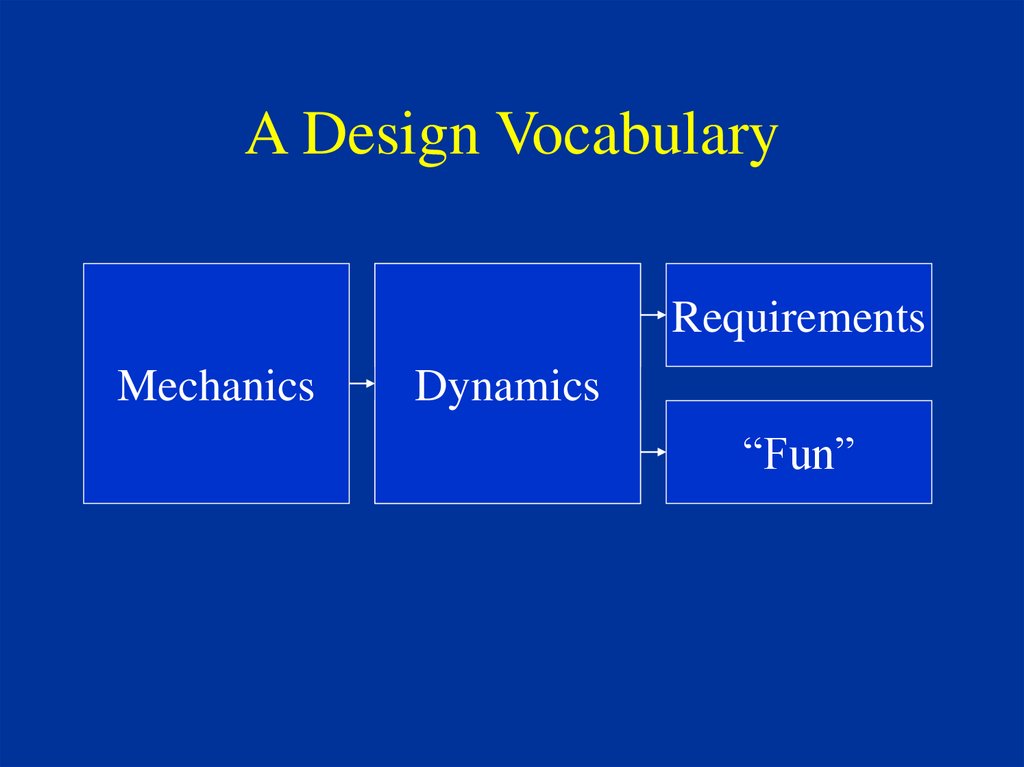
19. A Design Vocabulary
MechanicsProcess
Dynamics
Game
Requirements
“Fun”
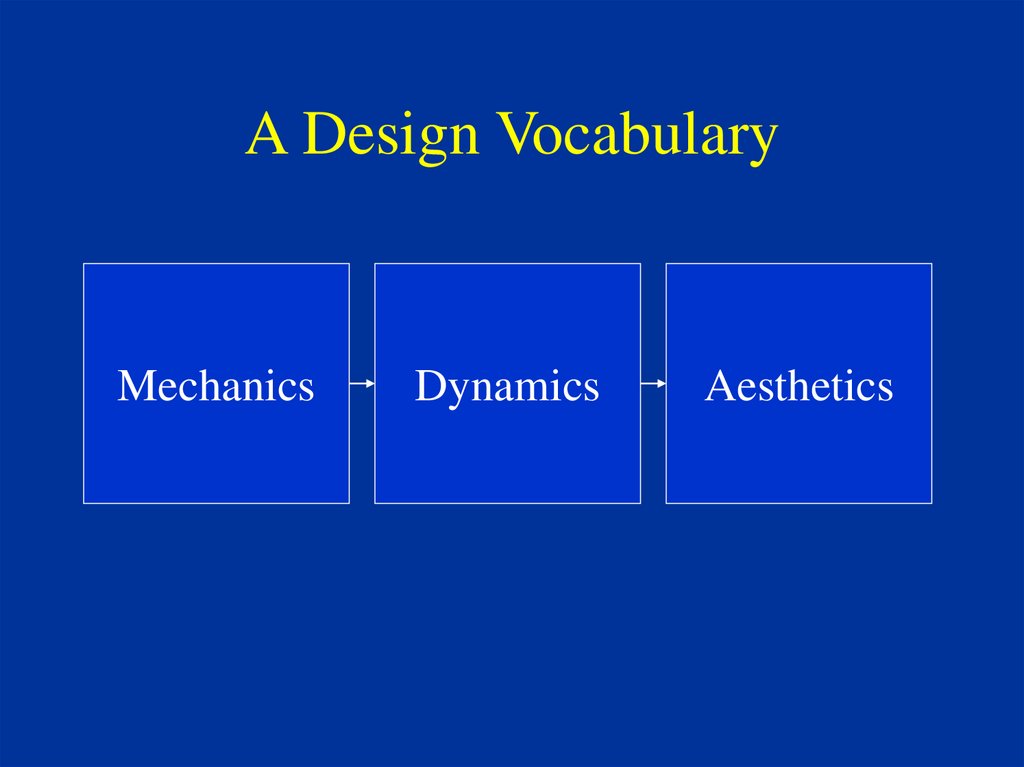
20. A Design Vocabulary
MechanicsDynamics
Aesthetics
21. Definitions
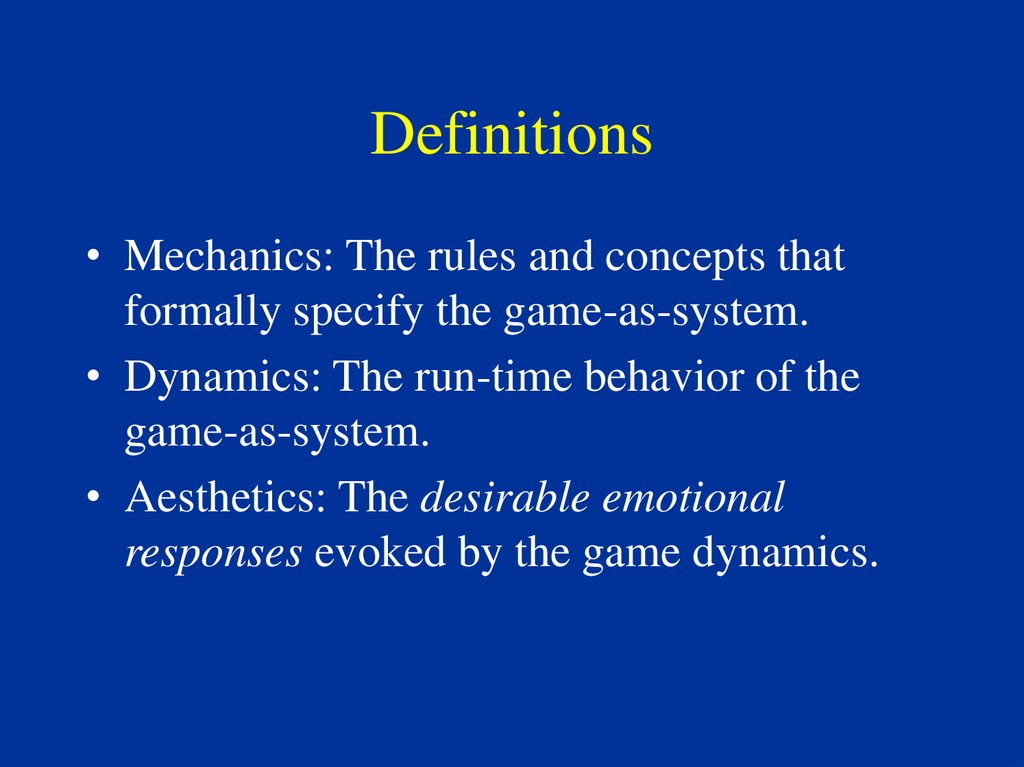
• Mechanics: The rules and concepts thatformally specify the game-as-system.
• Dynamics: The run-time behavior of the
game-as-system.
• Aesthetics: The desirable emotional
responses evoked by the game dynamics.
22. The Designer and The Player
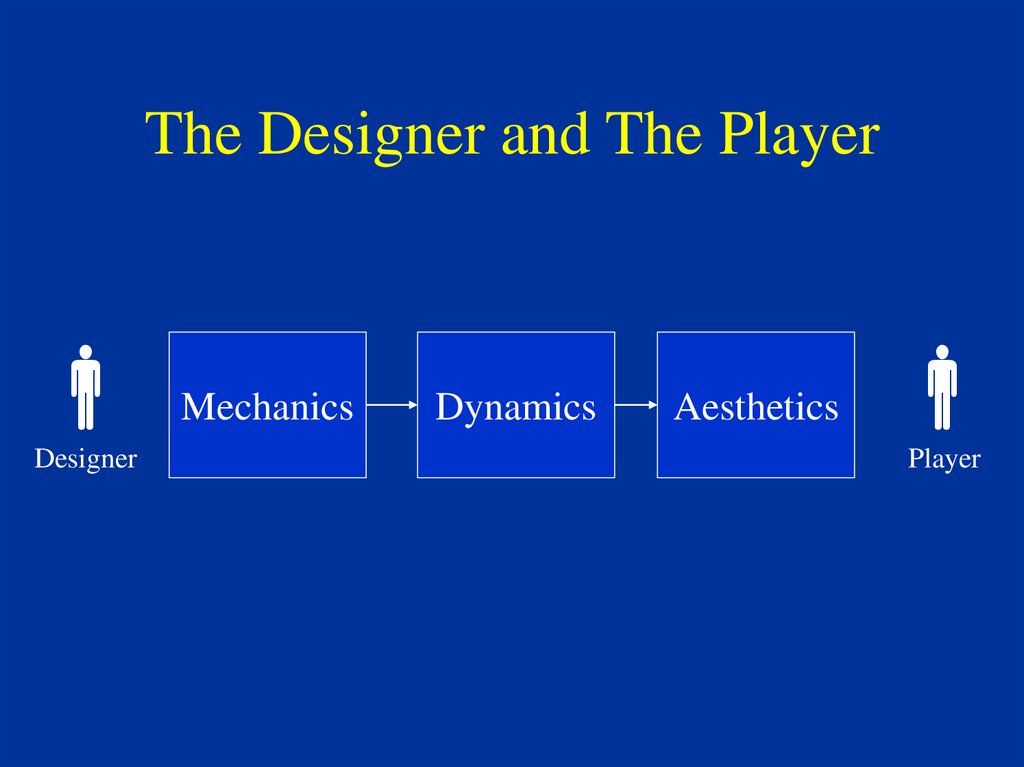
DesignerMechanics
Dynamics
Aesthetics
Player
23. The Player’s Perspective
MechanicsDynamics
Aesthetics
24. The Designer’s Perspective
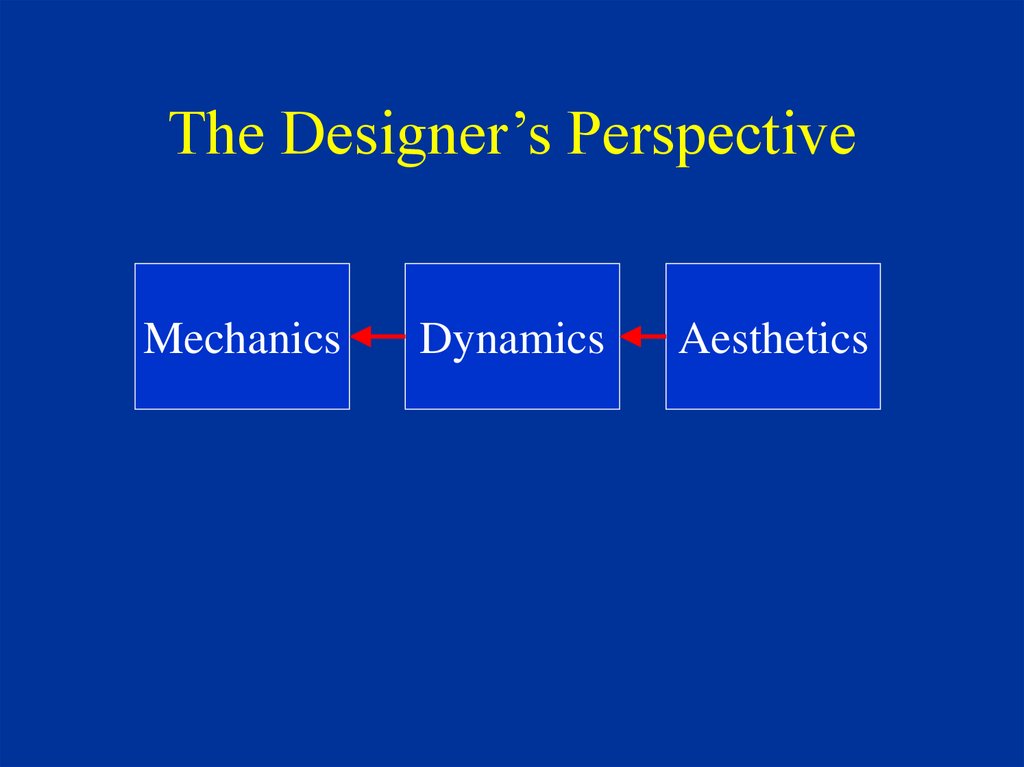
MechanicsDynamics
Aesthetics
25. MDA is a “Taxonomy” of Design Knowledge
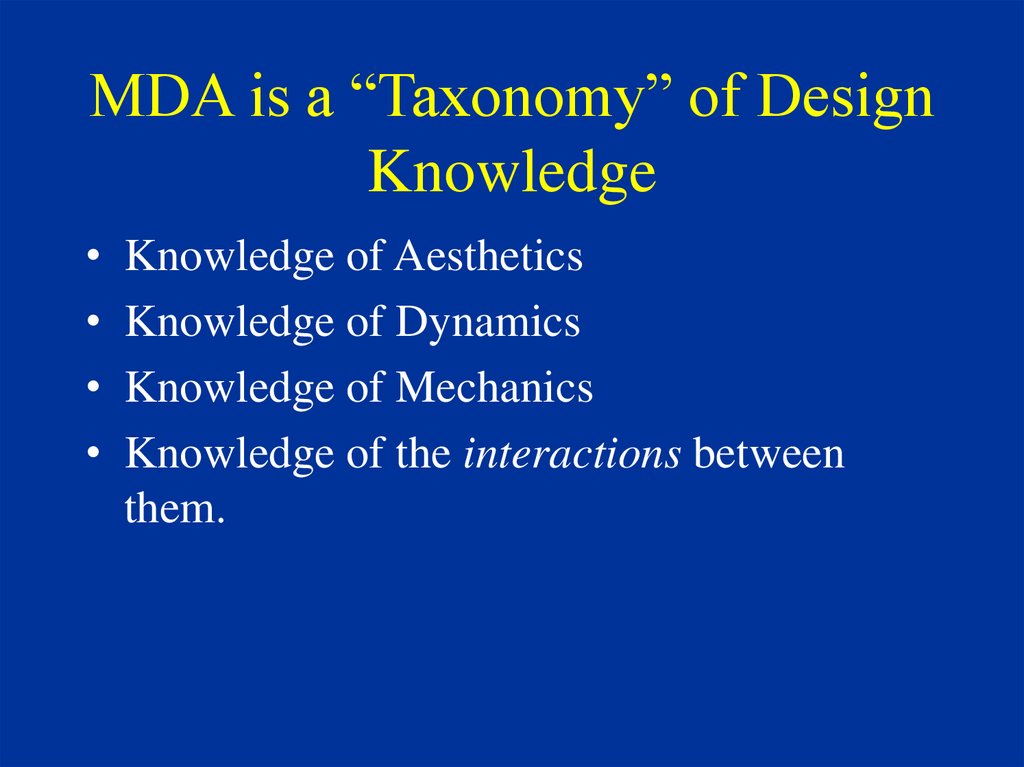
• Knowledge of Aesthetics• Knowledge of Dynamics
• Knowledge of Mechanics
• Knowledge of the interactions between
them.
26. Let’s play a game...
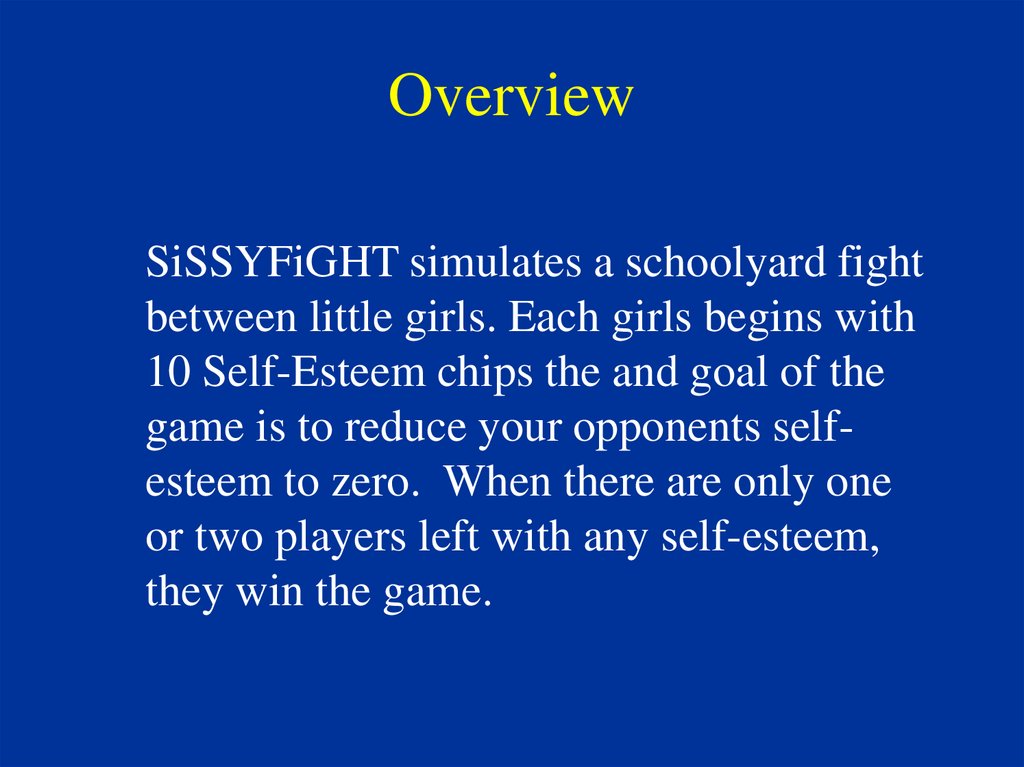
27. Overview
SiSSYFiGHT simulates a schoolyard fightbetween little girls. Each girls begins with
10 Self-Esteem chips the and goal of the
game is to reduce your opponents selfesteem to zero. When there are only one
or two players left with any self-esteem,
they win the game.
28. Setup
Each player starts with:1. Three “Action” cards
2. Six “Target” cards
3. Ten chips.
Everyone should pick one of the six colors.
29. Rules
Each Round:• Everyone picks an “Action” and a “Target” in
secret.
• Reveal cards simultaneously, then resolve actions.
• All communication must be public.
• When you run out of chips, you’re out.
• When one or two people are left, they win.
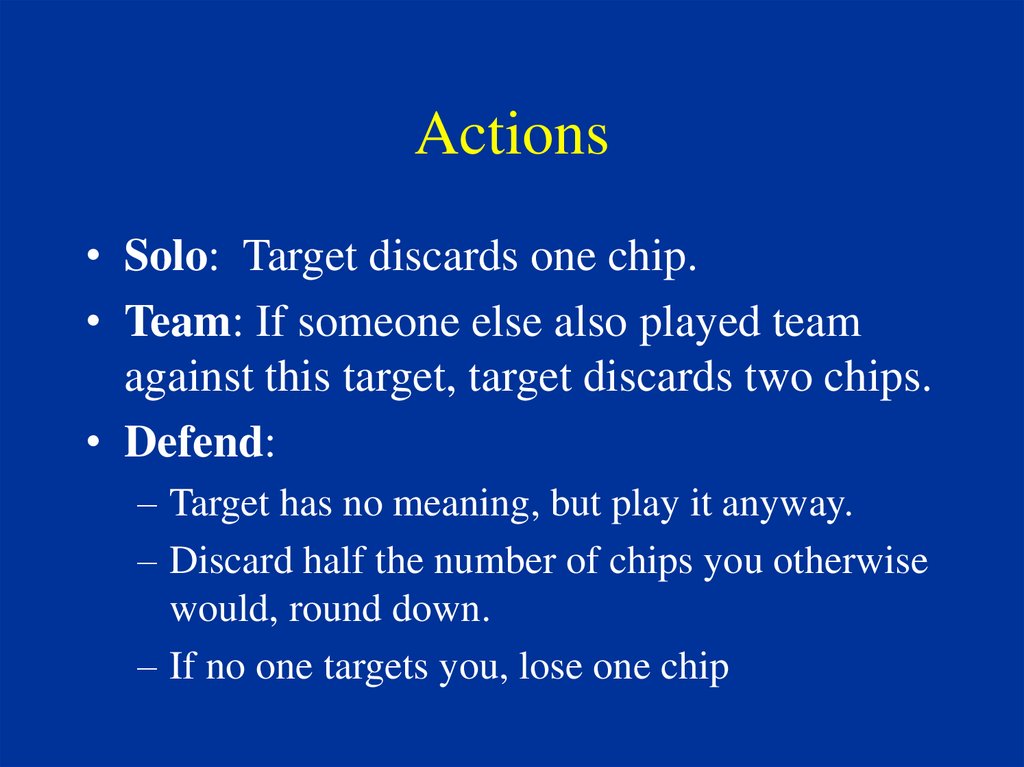
30. Actions
• Solo: Target discards one chip.• Team: If someone else also played team
against this target, target discards two chips.
• Defend:
– Target has no meaning, but play it anyway.
– Discard half the number of chips you otherwise
would, round down.
– If no one targets you, lose one chip
31. Observations?
32. Mechanics
• What are the mechanics of Sissyfight?• Specifically, can we identify any “standard”
mechanics.
33. Aesthetics
• What are the aesthetics of Sissyfight?• That is, what’s so fun about it?
34. Dynamics
• How did the rules create the fun?• What patterns emerged in the dynamics of
the game?
35. Discussion
• What other settings, genres or subjectsmight fit this game?
36. Part II: Aesthetics Explored
37. “Requirements Analysis” for Games
• We need to understand the emotionalrequirements of our software.
38. Requirements Analysis…
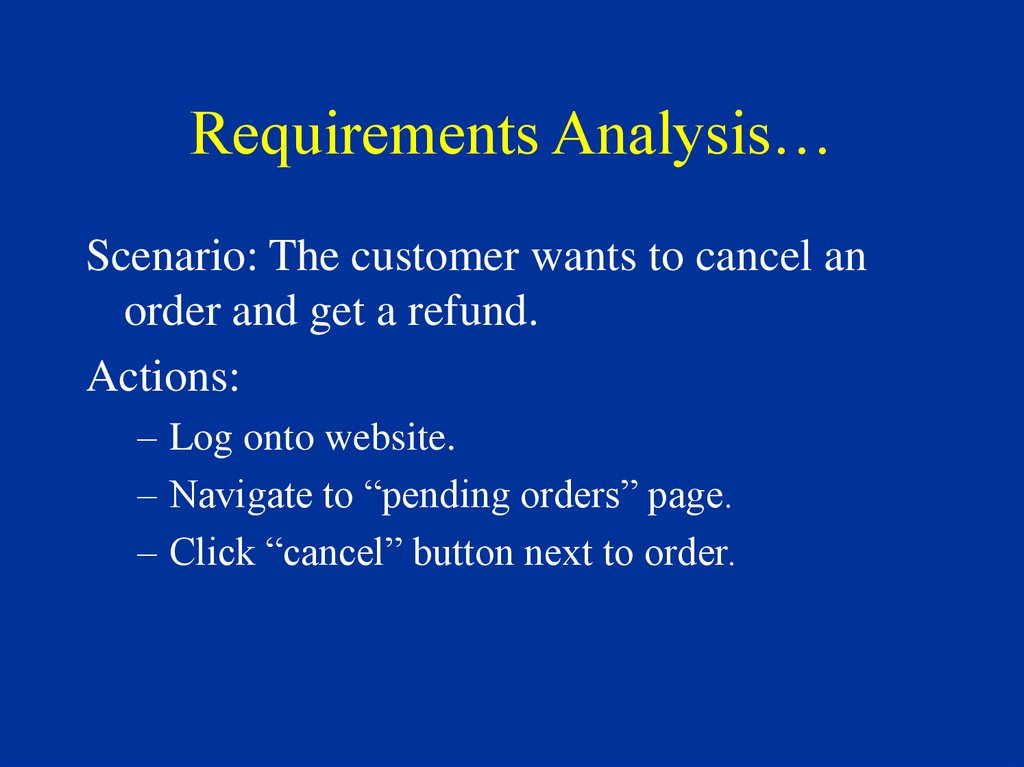
Scenario: The customer wants to cancel anorder and get a refund.
Actions:
– Log onto website.
– Navigate to “pending orders” page.
– Click “cancel” button next to order.
39. …for Games?
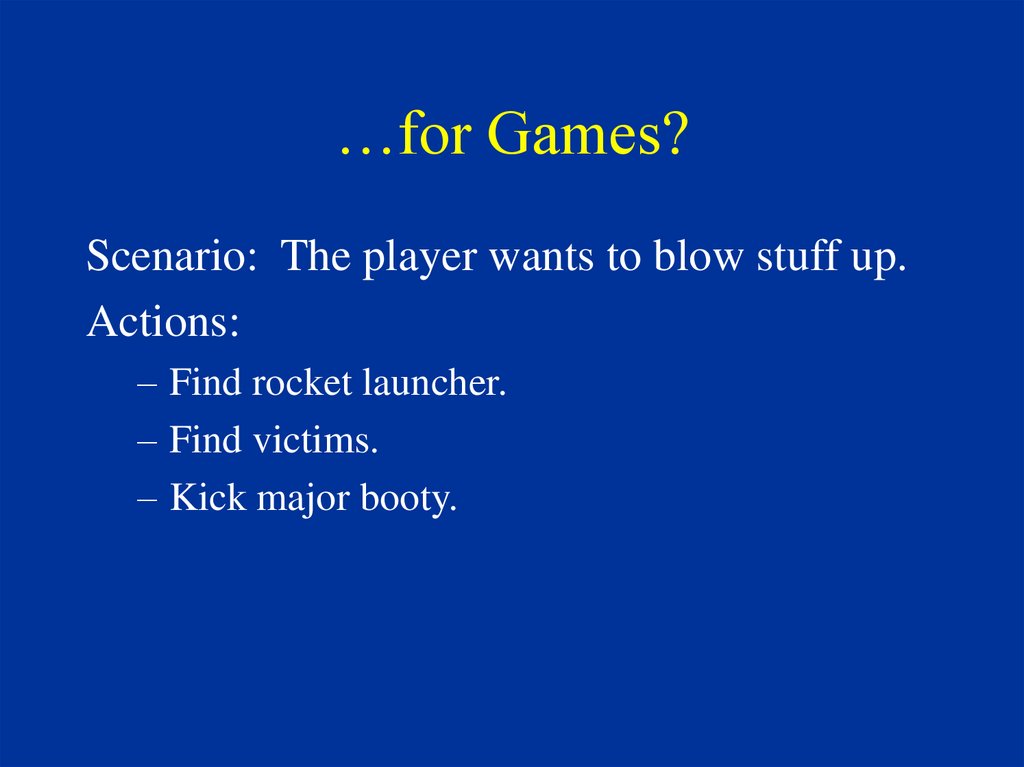
Scenario: The player wants to blow stuff up.Actions:
– Find rocket launcher.
– Find victims.
– Kick major booty.
40. What’s the Difference?
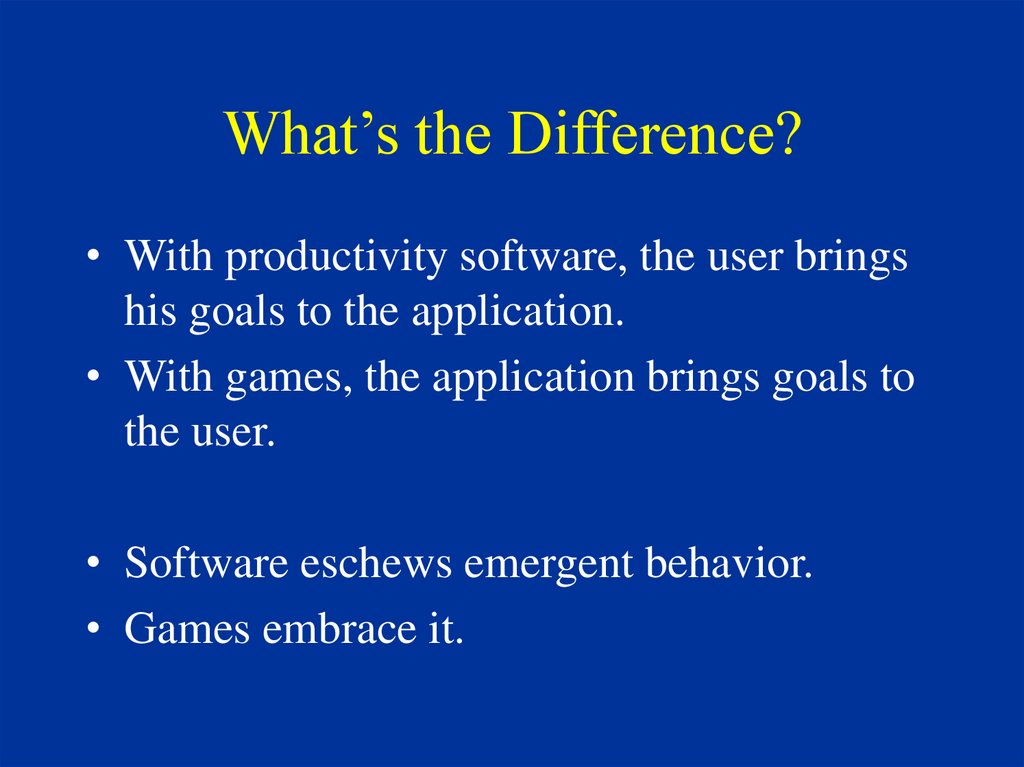
• With productivity software, the user bringshis goals to the application.
• With games, the application brings goals to
the user.
• Software eschews emergent behavior.
• Games embrace it.
41. We Need an Aesthetic Lexicon
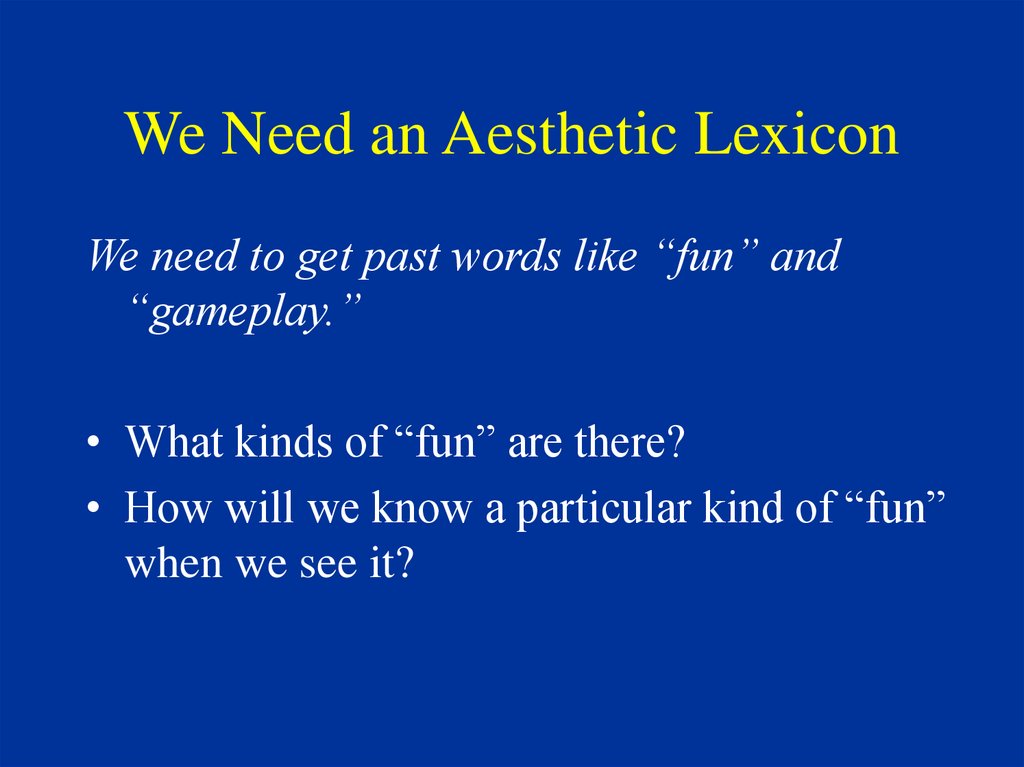
We need to get past words like “fun” and“gameplay.”
• What kinds of “fun” are there?
• How will we know a particular kind of “fun”
when we see it?
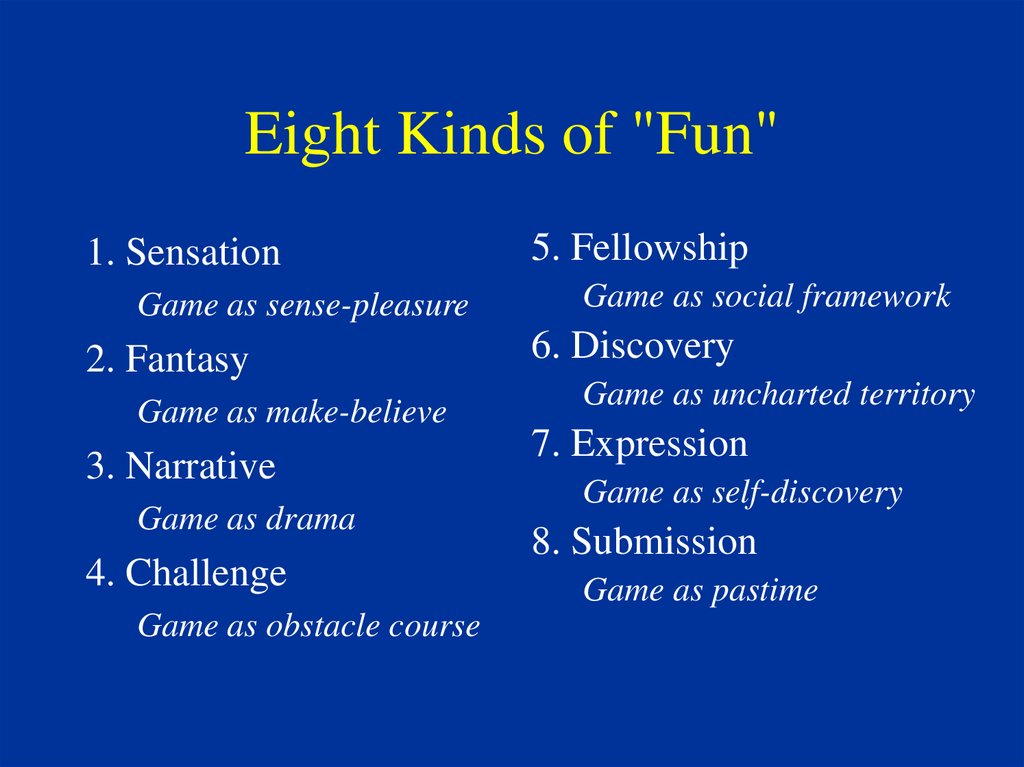
42. Eight Kinds of "Fun"
Eight Kinds of "Fun"1. Sensation
Game as sense-pleasure
2. Fantasy
Game as make-believe
3. Narrative
Game as drama
4. Challenge
Game as obstacle course
43. Eight Kinds of "Fun"
Eight Kinds of "Fun"1. Sensation
Game as sense-pleasure
2. Fantasy
Game as make-believe
3. Narrative
Game as drama
4. Challenge
Game as obstacle course
5. Fellowship
Game as social framework
6. Discovery
Game as uncharted territory
7. Expression
Game as self-discovery
8. Submission
Game as pastime
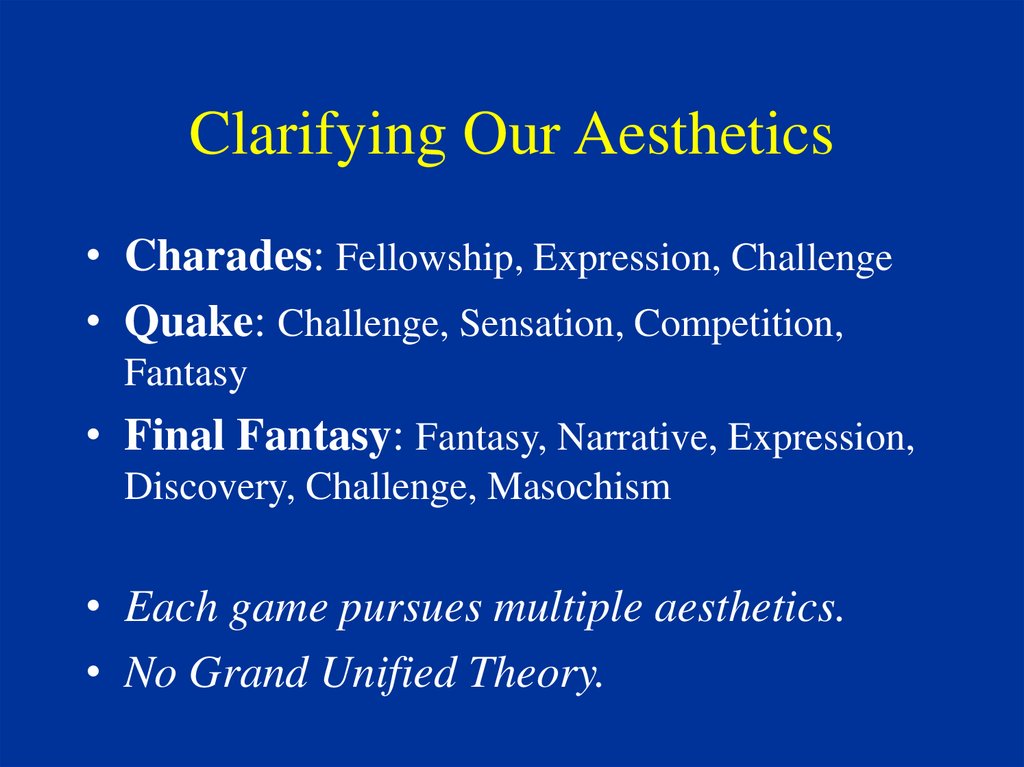
44. Clarifying Our Aesthetics
• Charades is “fun.”• Quake is “fun.”
• Final Fantasy is “fun.”
45. Clarifying Our Aesthetics
• Charades: Fellowship, Expression, Challenge• Quake: Challenge, Sensation, Competition,
Fantasy
• Final Fantasy: Fantasy, Narrative, Expression,
Discovery, Challenge, Masochism
• Each game pursues multiple aesthetics.
• No Grand Unified Theory.
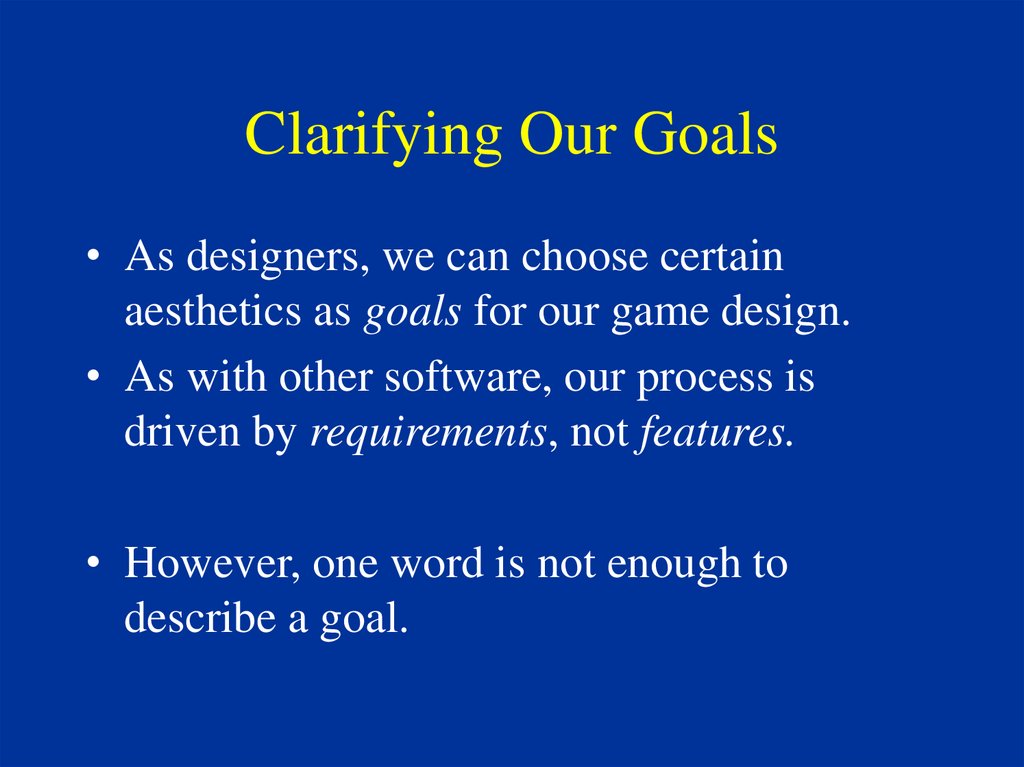
46. Clarifying Our Goals
• As designers, we can choose certainaesthetics as goals for our game design.
• As with other software, our process is
driven by requirements, not features.
• However, one word is not enough to
describe a goal.
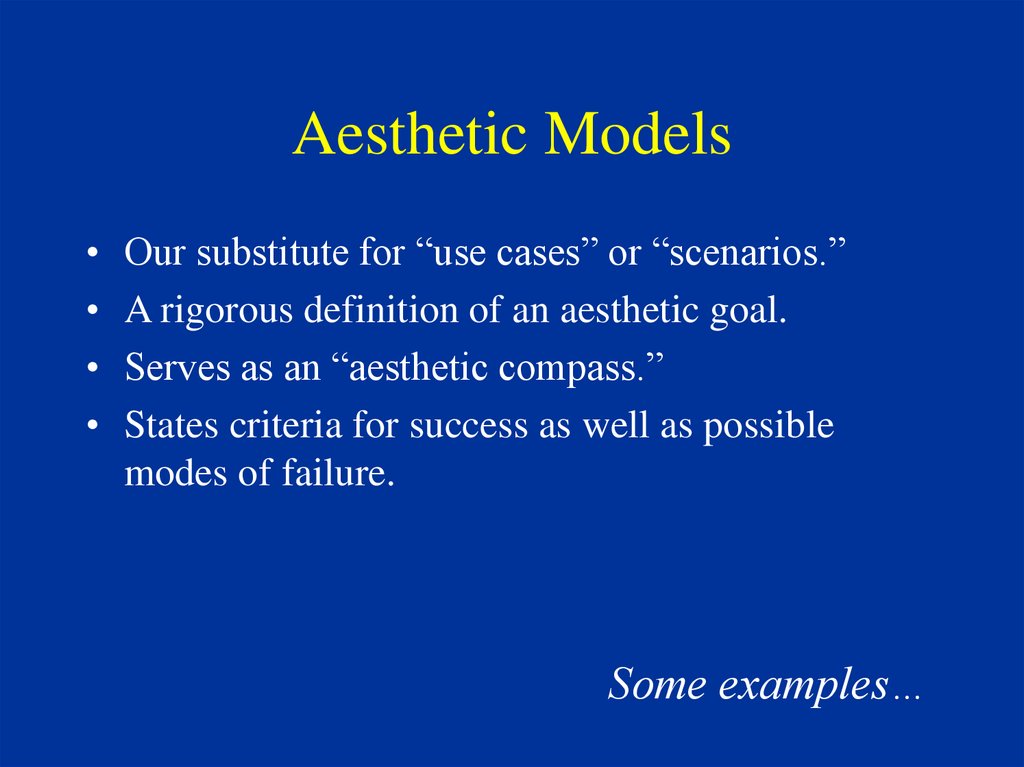
47. Aesthetic Models
• Our substitute for “use cases” or “scenarios.”• A rigorous definition of an aesthetic goal.
• Serves as an “aesthetic compass.”
• States criteria for success as well as possible
modes of failure.
Some examples…
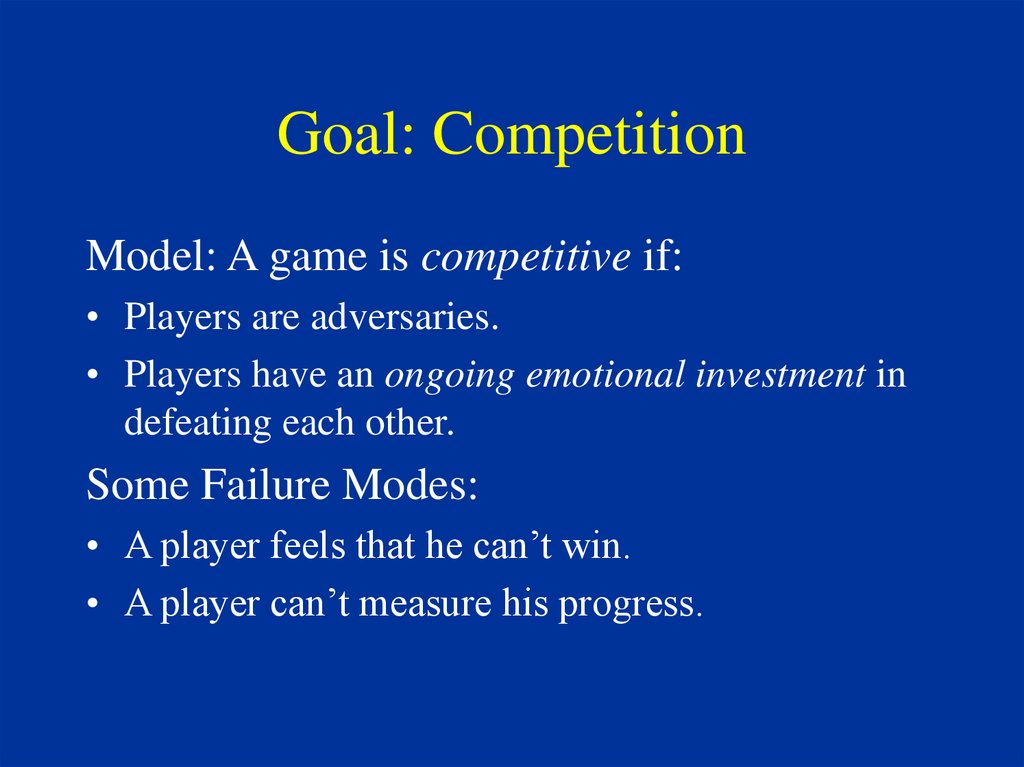
48. Goal: Competition
Model: A game is competitive if:• Players are adversaries.
• Players have an ongoing emotional investment in
defeating each other.
Some Failure Modes:
• A player feels that he can’t win.
• A player can’t measure his progress.
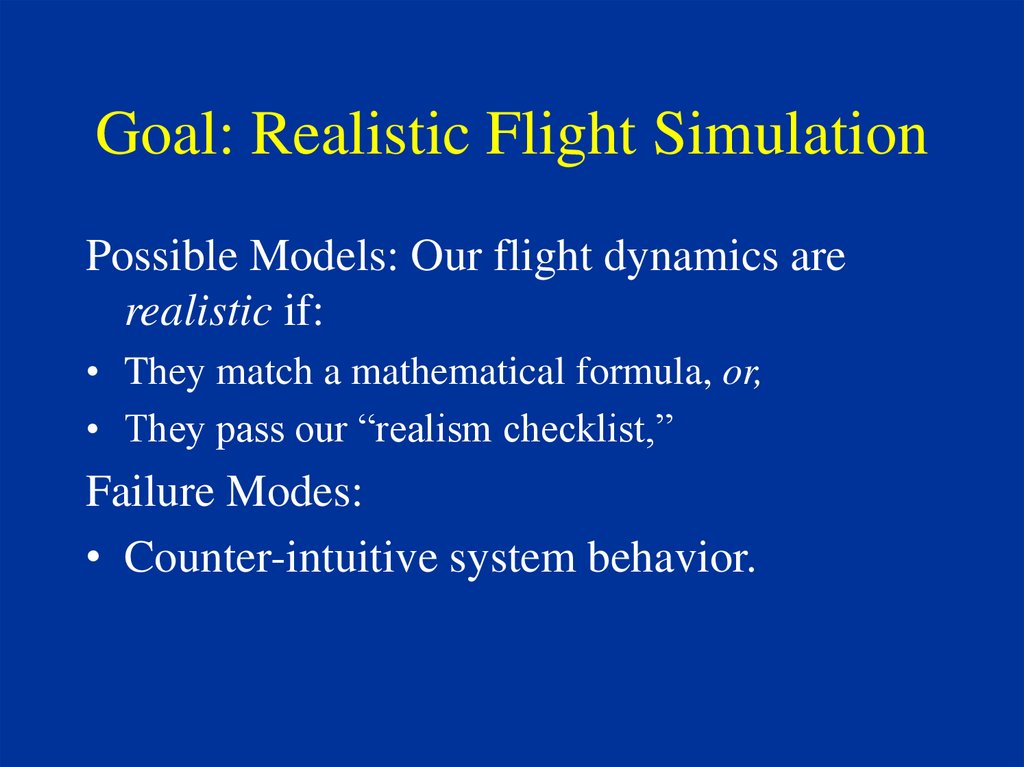
49. Goal: Realistic Flight Simulation
Possible Models: Our flight dynamics arerealistic if:
• They match a mathematical formula, or,
• They pass our “realism checklist,”
Failure Modes:
• Counter-intuitive system behavior.
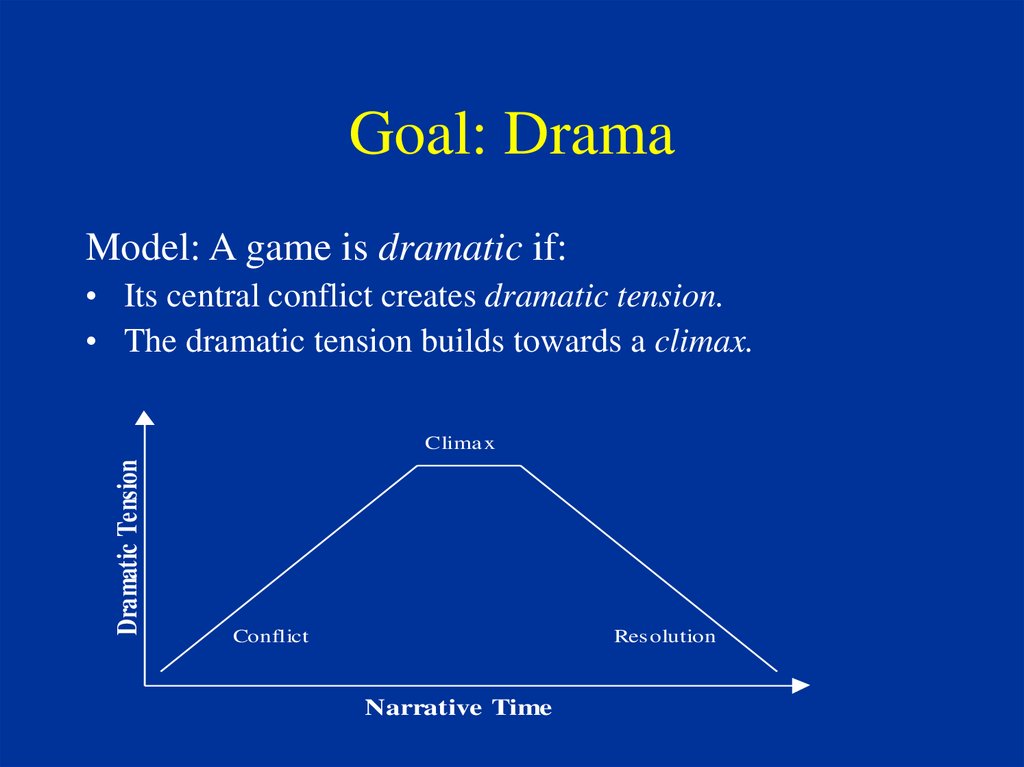
50. Goal: Drama
Model: A game is dramatic if:• Its central conflict creates dramatic tension.
• The dramatic tension builds towards a climax.
Dramatic Tension
Clima x
Conflict
Resolution
Narrative Time
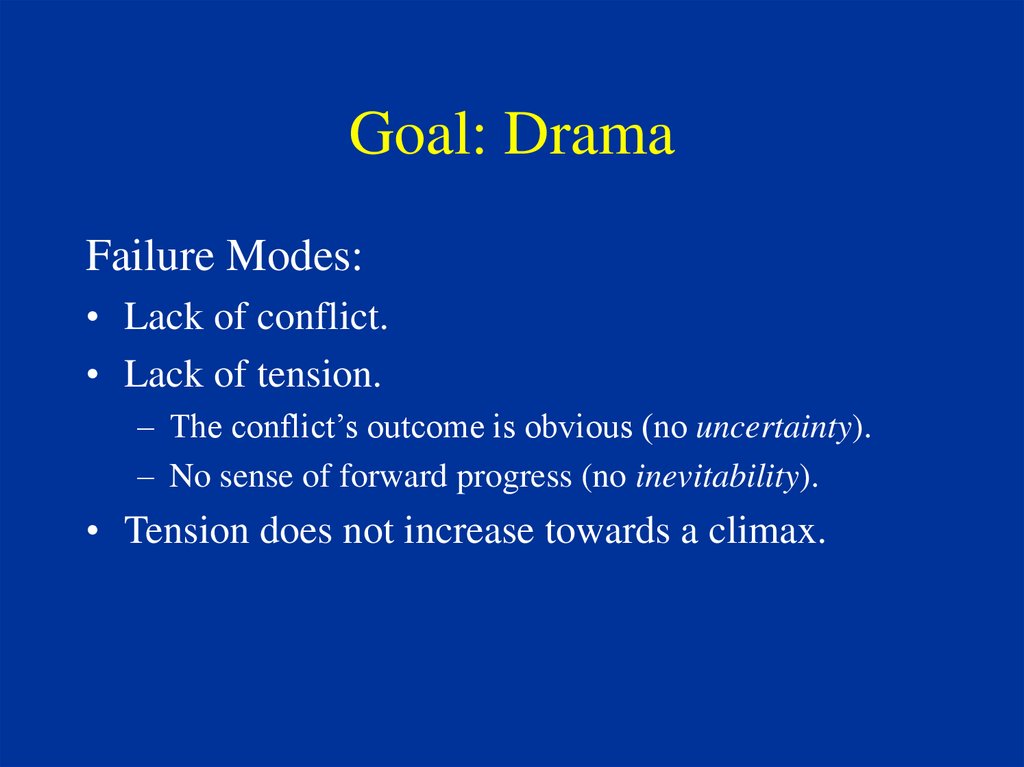
51. Goal: Drama
Failure Modes:• Lack of conflict.
• Lack of tension.
– The conflict’s outcome is obvious (no uncertainty).
– No sense of forward progress (no inevitability).
• Tension does not increase towards a climax.
52. Part III: Dynamics in Detail
53. Understanding Dynamics
• What about the game’s behavior can wepredict before we go to playtest?
• How can we explain the behavior that we
observe?
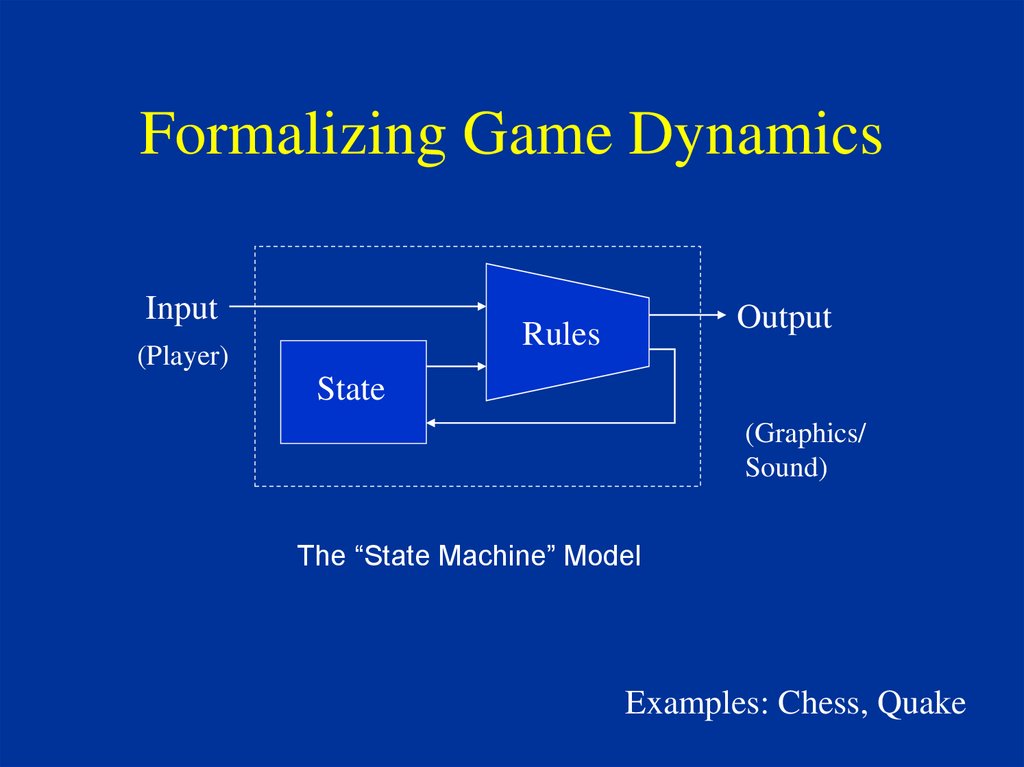
54. Formalizing Game Dynamics
InputOutput
Rules
(Player)
State
(Graphics/
Sound)
The “State Machine” Model
Examples: Chess, Quake
55. Models of Game Dynamics
• Again, no Grand Unified Theory• Instead, a collection of many Dynamic
Models.
• Dynamics models are analytical in nature.
Some examples…
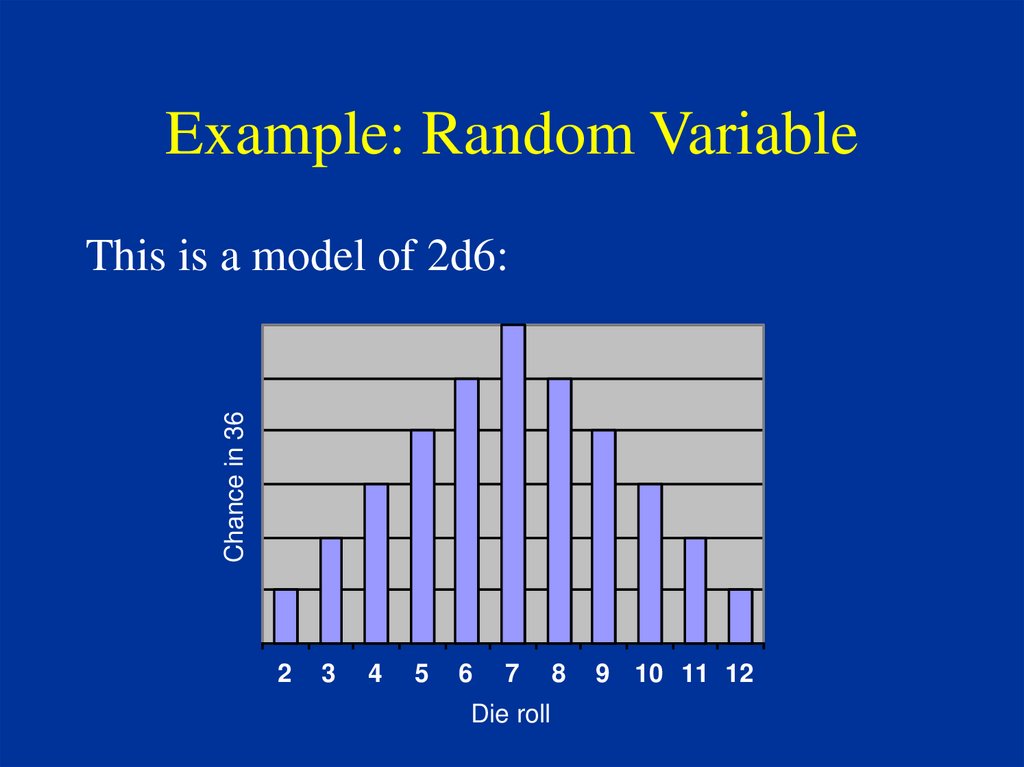
56. Example: Random Variable
Chance in 36This is a model of 2d6:
2
3
4
5
6
7
Die roll
8
9 10 11 12
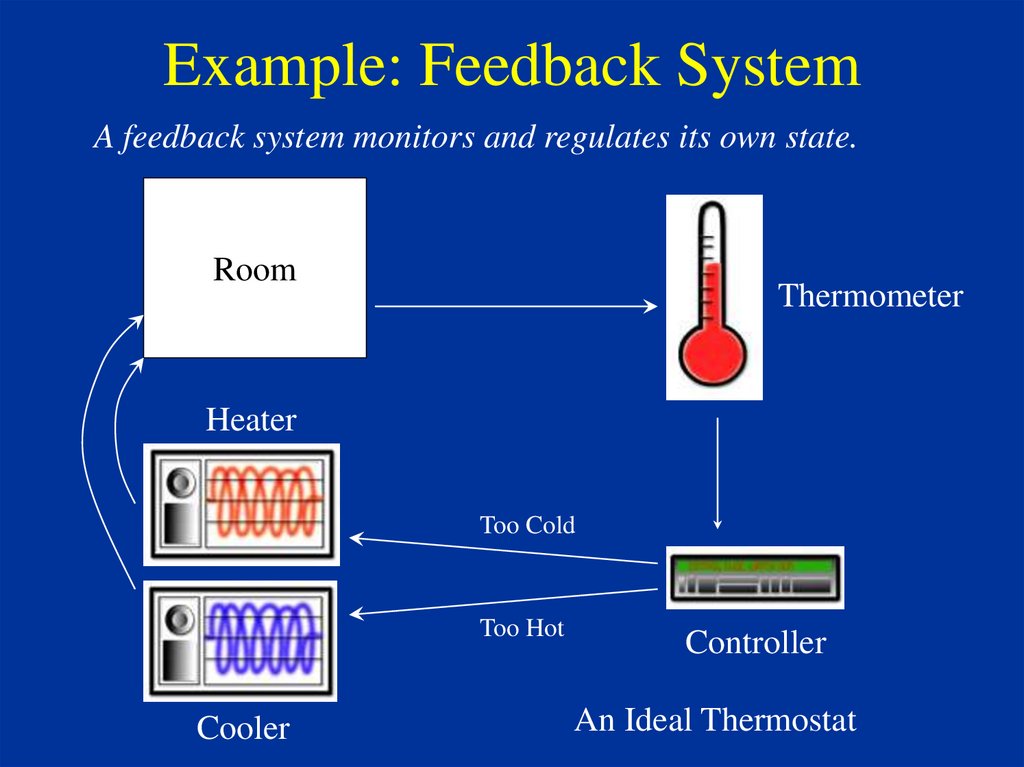
57. Example: Feedback System
A feedback system monitors and regulates its own state.Room
Thermometer
Heater
Too Cold
Too Hot
Cooler
Controller
An Ideal Thermostat
58. Example: Operant Conditioning
• The player is part of the system, too!• Psychology gives us models to explain and
predict the player’s behavior.
59. Where Models Come From
• Analysis of existing games.• Other Fields: Math, Psychology,
Engineering…
• Our own experience.
On to Mechanics...
60. Part IV: Mechanics
61. Understanding Mechanics
• There’s a vast library of common gamemechanics.
62. Examples
• Cards: Shuffling, Trick-Taking, Bidding• Shooters: Ammunition, Spawn Points
• Golf: Sand Traps, Water Hazards
63. Mechanics vs. Dynamics
• There’s a grey area.– Some behaviors are direct consequences of rules.
– Others are indirect.
– “Dynamics” usually means the latter.
64. Mechanics vs. Dynamics
• There’s a grey area.– Some behaviors are direct consequences of rules.
– Others are indirect.
– “Dynamics” usually means the latter.
• Dynamics and Mechanics are different views
of games.
65. Mechanics vs. Dynamics
• There’s a grey area.– Some behaviors are direct consequences of rules.
– Others are indirect.
– “Dynamics” usually means the latter.
• Dynamics and Mechanics are different views
of games.
• Dynamics emerge from Mechanics.
66. Part V: MDA Interactions
67. Interaction Models
• How do specific dynamics emerge fromspecific mechanics?
• How do specific dynamics evoke specific
aesthetics?
68. Example: Time Pressure
• “Time pressure” is a dynamic.• It can create dramatic tension.
• Various mechanics create time pressure:
– Simple time limit
– “Pace” monster
– Depleting resource
69. Back to sissyfight...
70. Exercise
• Choose a fictional genre and/or setting thatmight fit this game.
• Adapt the game to your chosen subject
matter.
• Keep in mind the aesthetic qualities we
identified in the breakdown.
• How can the rules of the game be changed
to best support your fiction?