 education
Similar presentations:







The Education System in the Netherlands
1.
The Education System inthe Netherlands
Made by: Borodkina Irina, Semenova Victoria
2.
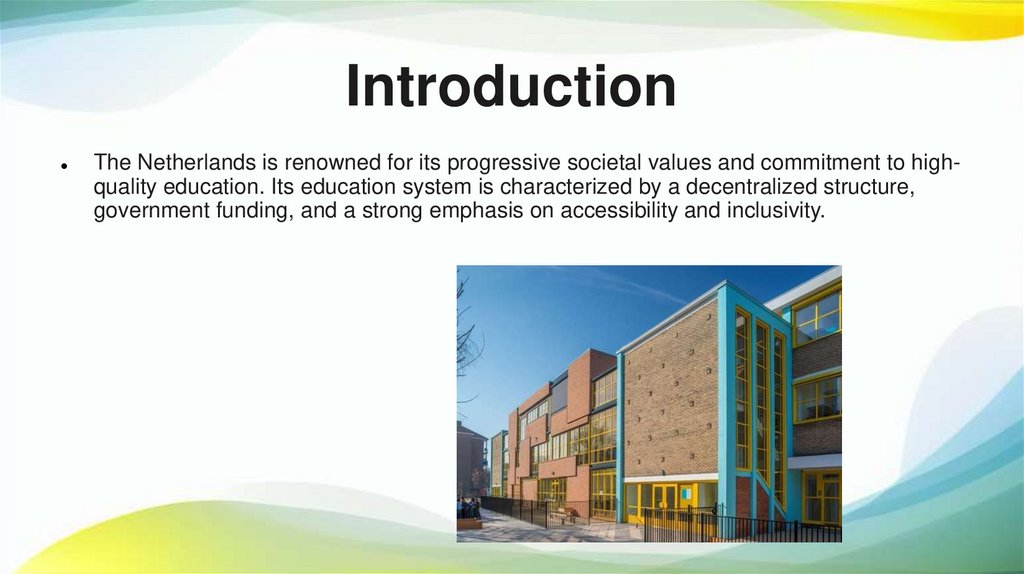
IntroductionThe Netherlands is renowned for its progressive societal values and commitment to highquality education. Its education system is characterized by a decentralized structure,
government funding, and a strong emphasis on accessibility and inclusivity.
3.
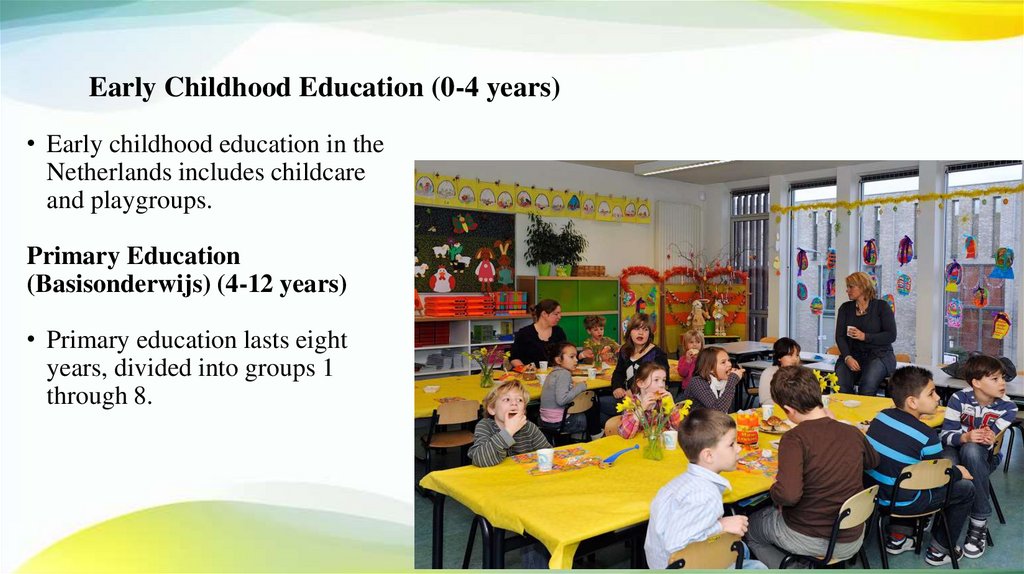
Early Childhood Education (0-4 years)• Early childhood education in the
Netherlands includes childcare
and playgroups.
Primary Education
(Basisonderwijs) (4-12 years)
• Primary education lasts eight
years, divided into groups 1
through 8.
4.
Early Tracking of Students- Children are streamed into different types of secondary schools: vocational education, general
secondary education, or pre-university education.
- This early specialization allows education to be tailored to students' abilities but also draws
criticism for potential social stratification and limiting opportunities for students with lower
scores.
- In most countries, such as Finland or the USA, tracking occurs later to give students more time
to develop.
5.
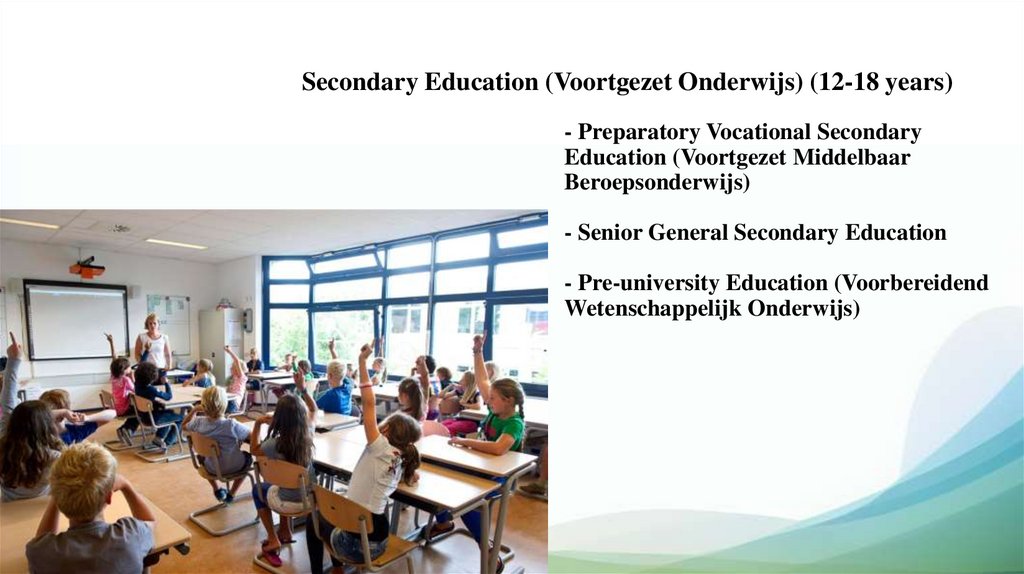
Secondary Education (Voortgezet Onderwijs) (12-18 years)- Preparatory Vocational Secondary
Education (Voortgezet Middelbaar
Beroepsonderwijs)
- Senior General Secondary Education
- Pre-university Education (Voorbereidend
Wetenschappelijk Onderwijs)
6.
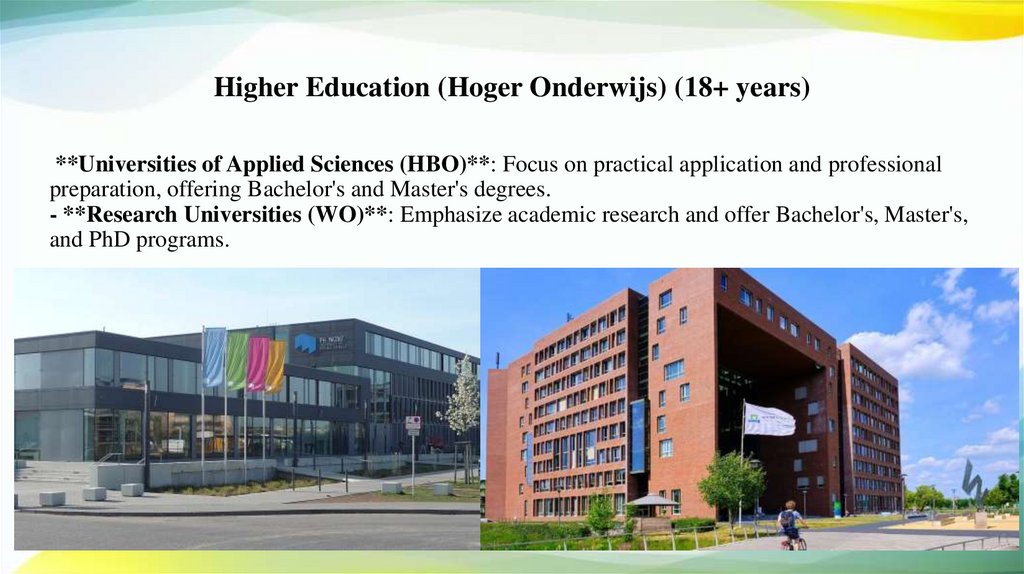
Higher Education (Hoger Onderwijs) (18+ years)**Universities of Applied Sciences (HBO)**: Focus on practical application and professional
preparation, offering Bachelor's and Master's degrees.
- **Research Universities (WO)**: Emphasize academic research and offer Bachelor's, Master's,
and PhD programs.
7.
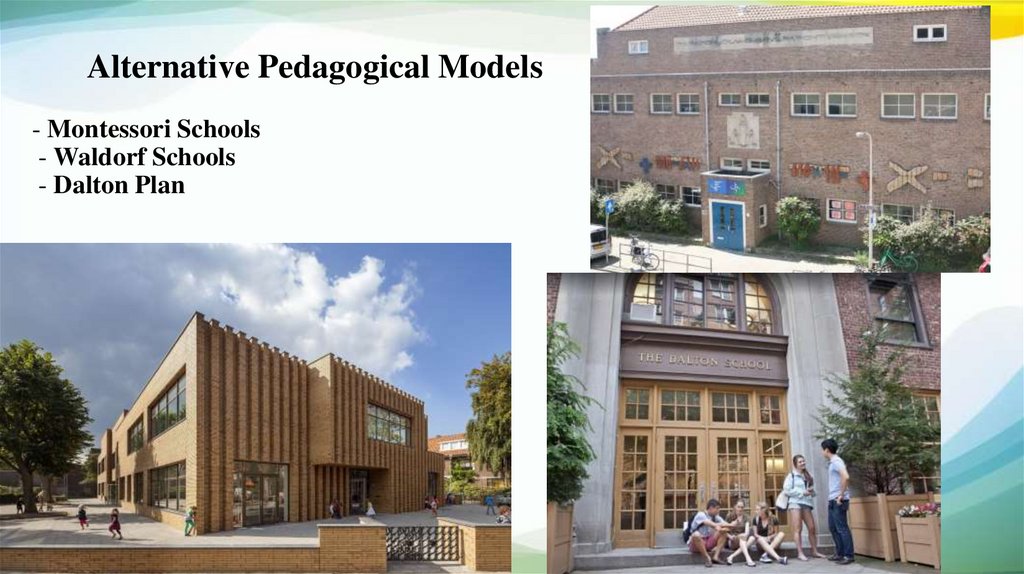
Alternative Pedagogical Models- Montessori Schools
- Waldorf Schools
- Dalton Plan
8.
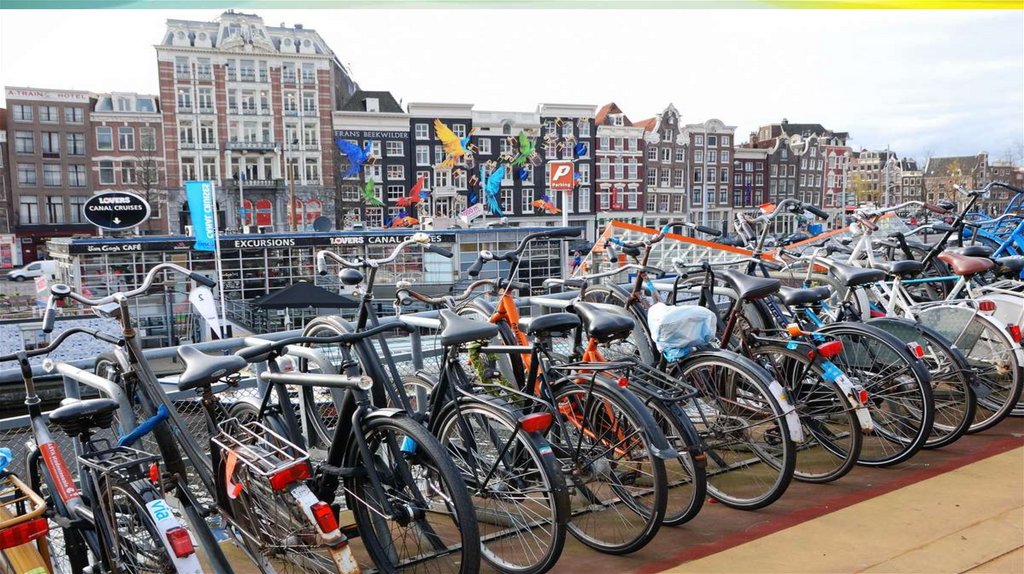
Bicycle Culture and EnvironmentalEducation
Environmental Education
-Studying issues like climate change and sustainable development.
-Practical projects, such as creating school gardens, recycling waste, or fundraising for environmental initiatives.
-Participation in global campaigns, such as reducing plastic use or conserving energy.
-In higher grades, environmental topics are often integrated into subjects like geography, biology, and social studies.
Promotion of Bicycles
— Bicycle culture is an integral part of life in the Netherlands, and schools actively support this tradition. Many students
ride bicycles to school, promoting a healthy lifestyle and reducing carbon emissions.
- As part of school programs, children learn traffic rules and safe cycling practices. Some schools even organize "bicycle
days," where students receive rewards for using bicycles instead of cars.
Sustainable Development in Schools
- Many schools in the Netherlands strive to become "sustainable schools." This means they implement eco-friendly
technologies, such as solar panels, rainwater collection systems, and energy-efficient lighting.
- Students also participate in these initiatives, for example, by creating projects to save energy or developing plans to
reduce the school’s carbon footprint.
9.
10.
ConclusionThe Dutch education system is a model of accessibility, inclusivity, and innovation. Its
decentralized structure and freedom of education empower families and institutions, while
significant government funding ensures broad access.