



 culturology
Similar presentations:







Exploring Japanese Culture
1.
A deep dive into traditions, cuisine, andarts
Exploring
Japanese
Culture
2.
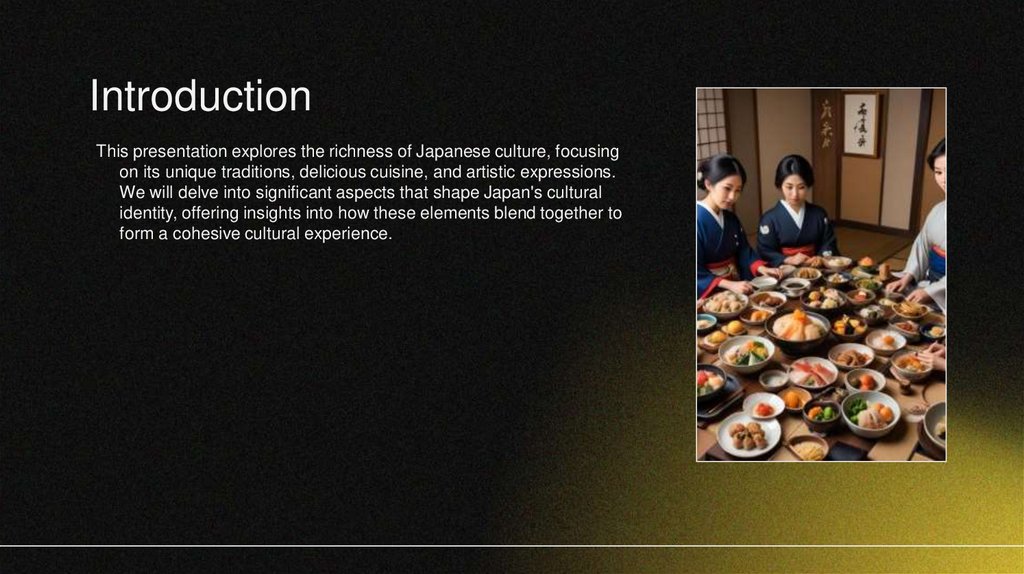
IntroductionThis presentation explores the richness of Japanese culture, focusing
on its unique traditions, delicious cuisine, and artistic expressions.
We will delve into significant aspects that shape Japan's cultural
identity, offering insights into how these elements blend together to
form a cohesive cultural experience.
3.
01 Traditions4.
Festivals andCelebrations
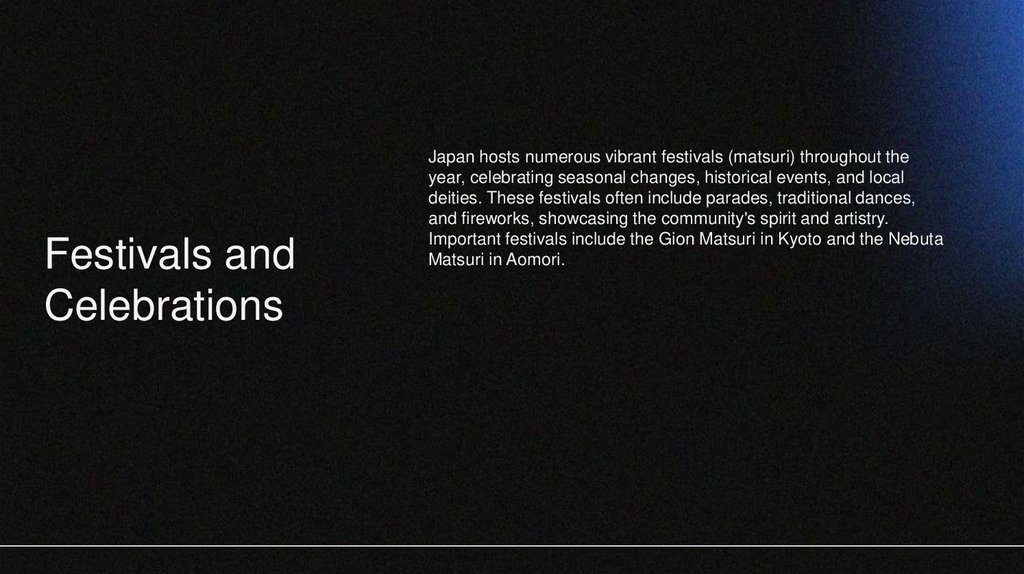
Japan hosts numerous vibrant festivals (matsuri) throughout the
year, celebrating seasonal changes, historical events, and local
deities. These festivals often include parades, traditional dances,
and fireworks, showcasing the community's spirit and artistry.
Important festivals include the Gion Matsuri in Kyoto and the Nebuta
Matsuri in Aomori.
5.
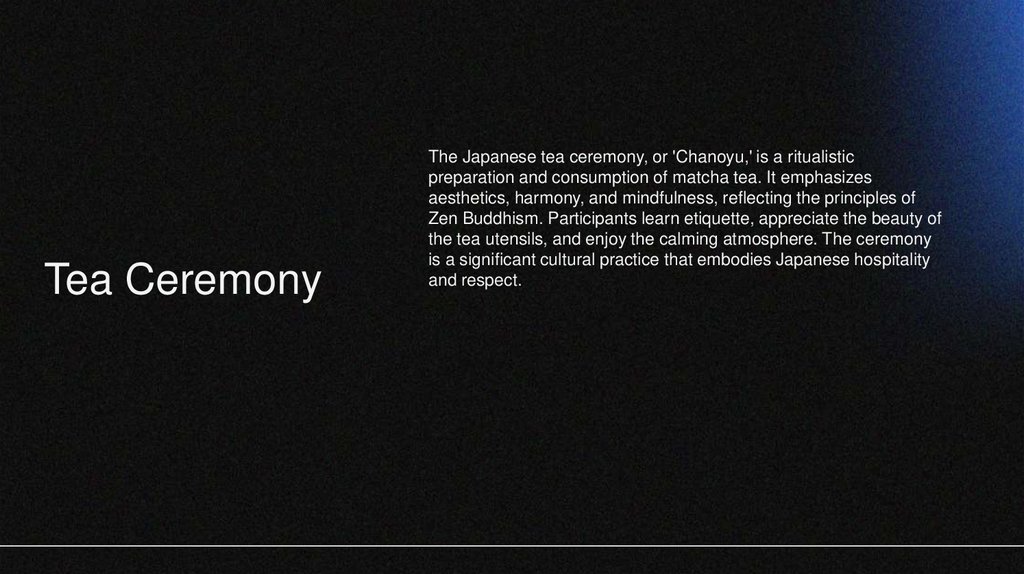
Tea CeremonyThe Japanese tea ceremony, or 'Chanoyu,' is a ritualistic
preparation and consumption of matcha tea. It emphasizes
aesthetics, harmony, and mindfulness, reflecting the principles of
Zen Buddhism. Participants learn etiquette, appreciate the beauty of
the tea utensils, and enjoy the calming atmosphere. The ceremony
is a significant cultural practice that embodies Japanese hospitality
and respect.
6.
Kimono and ClothingCustoms
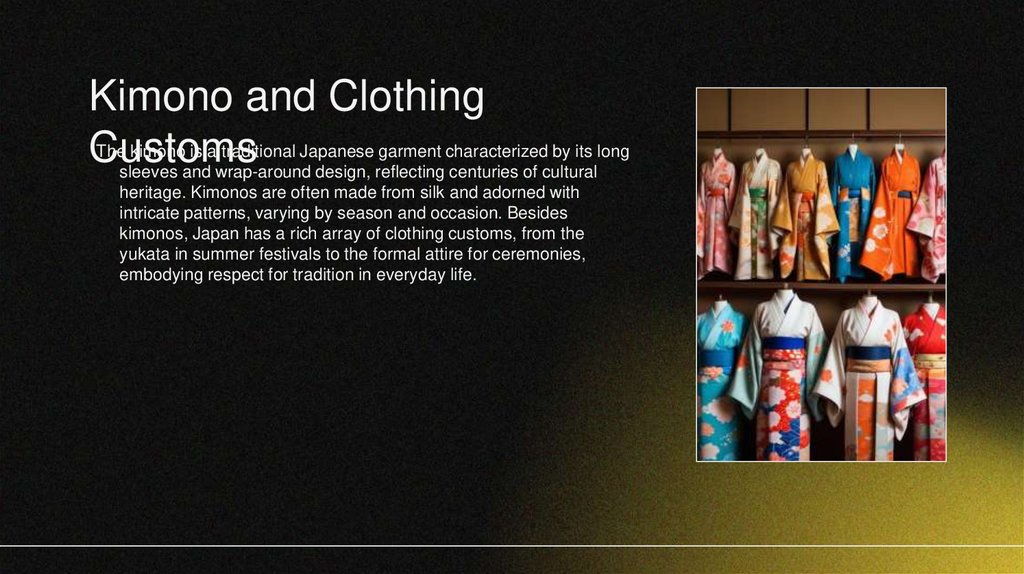
The kimono is a traditional Japanese garment characterized by its long
sleeves and wrap-around design, reflecting centuries of cultural
heritage. Kimonos are often made from silk and adorned with
intricate patterns, varying by season and occasion. Besides
kimonos, Japan has a rich array of clothing customs, from the
yukata in summer festivals to the formal attire for ceremonies,
embodying respect for tradition in everyday life.
7.
02 Cuisine8.
Sushi andSashimi
Sushi is one of Japan's most famous culinary exports, consisting of
vinegared rice paired with fresh fish, vegetables, and sometimes
fruits. Sashimi, on the other hand, refers to thinly sliced raw fish
served without rice, focusing on the purity of the fish's flavor. Both
dishes emphasize freshness and quality ingredients, and they are
often accompanied by soy sauce, wasabi, and pickled ginger,
enhancing the overall dining experience.
9.
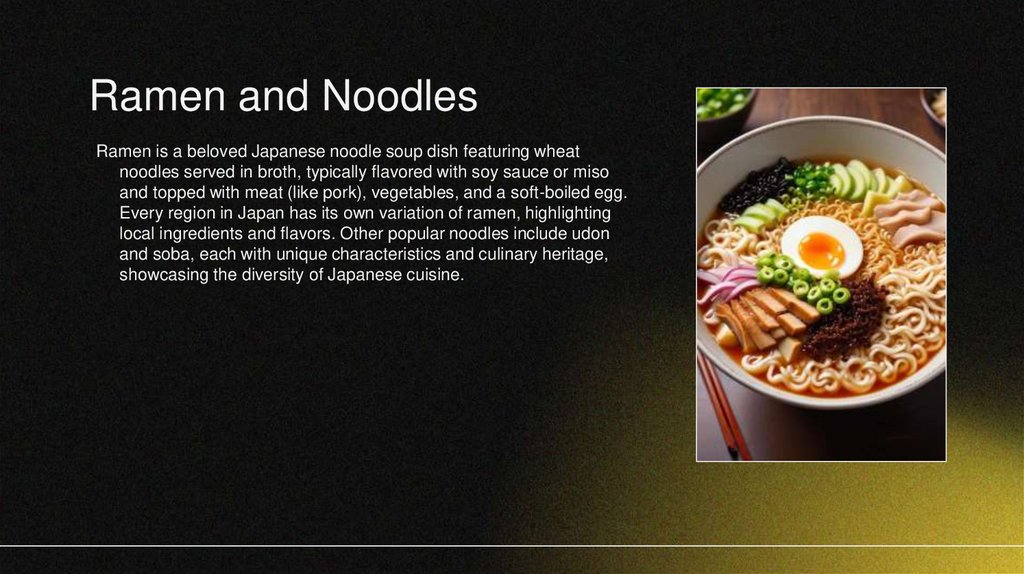
Ramen and NoodlesRamen is a beloved Japanese noodle soup dish featuring wheat
noodles served in broth, typically flavored with soy sauce or miso
and topped with meat (like pork), vegetables, and a soft-boiled egg.
Every region in Japan has its own variation of ramen, highlighting
local ingredients and flavors. Other popular noodles include udon
and soba, each with unique characteristics and culinary heritage,
showcasing the diversity of Japanese cuisine.
10.
TraditionalCooking
Methods
Japanese cuisine employs various traditional cooking techniques
that enhance flavors and textures. Methods like grilling (yakimono),
boiling (nyu shu), and steaming (mushimono) are prevalent, each
emphasizing the seasonal ingredients used. Techniques such as
fermentation are also important, leading to distinctive products like
miso and soy sauce. These methods reflect Japan’s seasonal ethos
and respect for nature, focusing on the quality of ingredients rather
than overpowering flavors.
11.
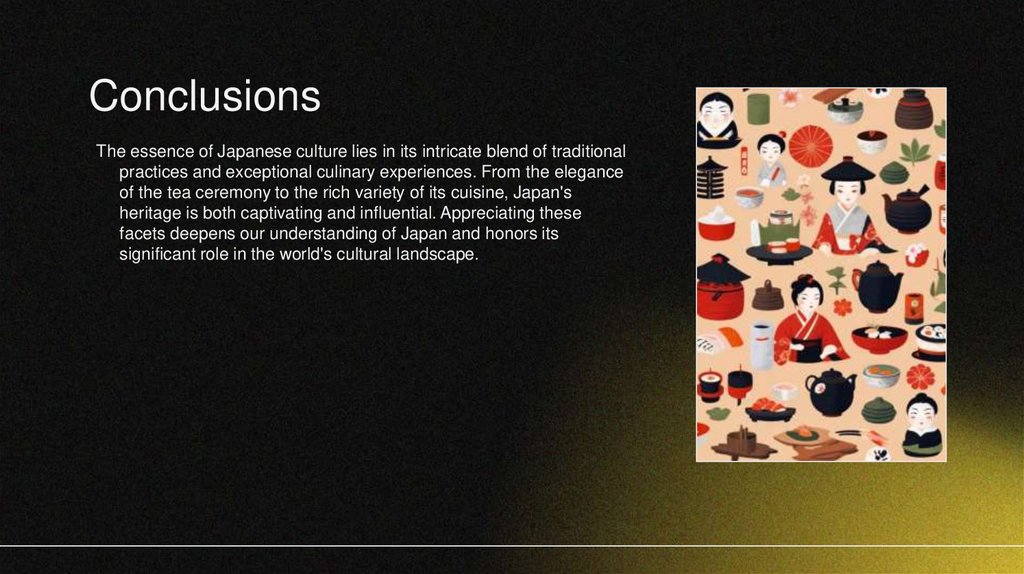
ConclusionsThe essence of Japanese culture lies in its intricate blend of traditional
practices and exceptional culinary experiences. From the elegance
of the tea ceremony to the rich variety of its cuisine, Japan's
heritage is both captivating and influential. Appreciating these
facets deepens our understanding of Japan and honors its
significant role in the world's cultural landscape.
12.
Thank you!Do you have any
questions?
CREDITS: This presentation template was
created by Slidesgo, and includes icons,
infographics & images by Freepik
+
9
1
6
2
0
4
2
1
8
3
8