

 education
Similar presentations:






Comparative analysis of educational programmes in the field of forensic odorology in Russia and post-Soviet territories
1.
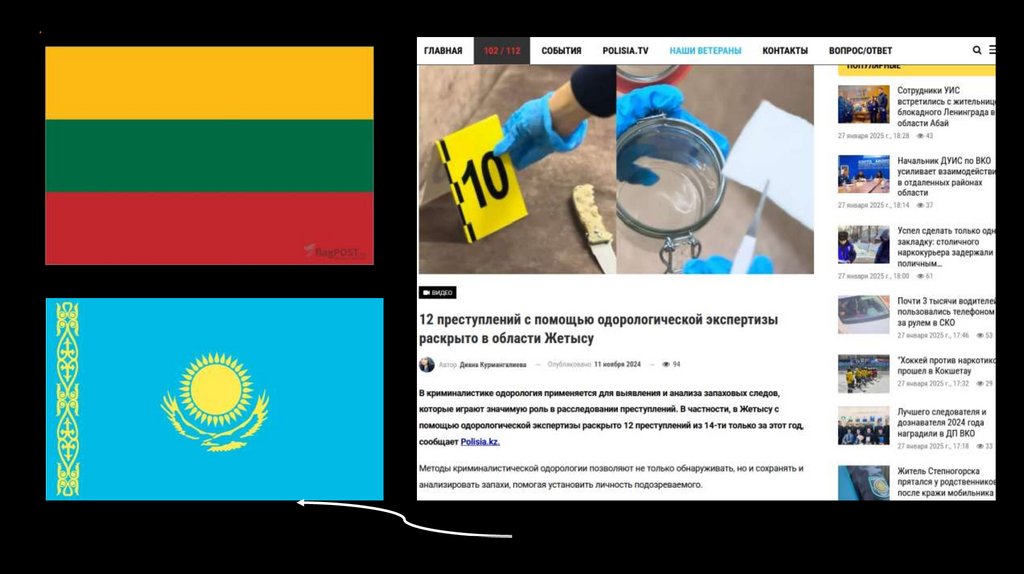
Comparative analysis of educationalprogrammes in the field of forensic
odorology in Russia and post-Soviet
territories picturing Lithuania and
Kazakhstan
Liudvig Viktoria Kutafin Moscow State Law University
January 2025
2.
This word comes from a combination ofthe Latin “odor” (smell, aroma) and the
Greek “logos” (doctrine), that is, it
represents the doctrine of the use of
odors in order to identify a person
3.
4.
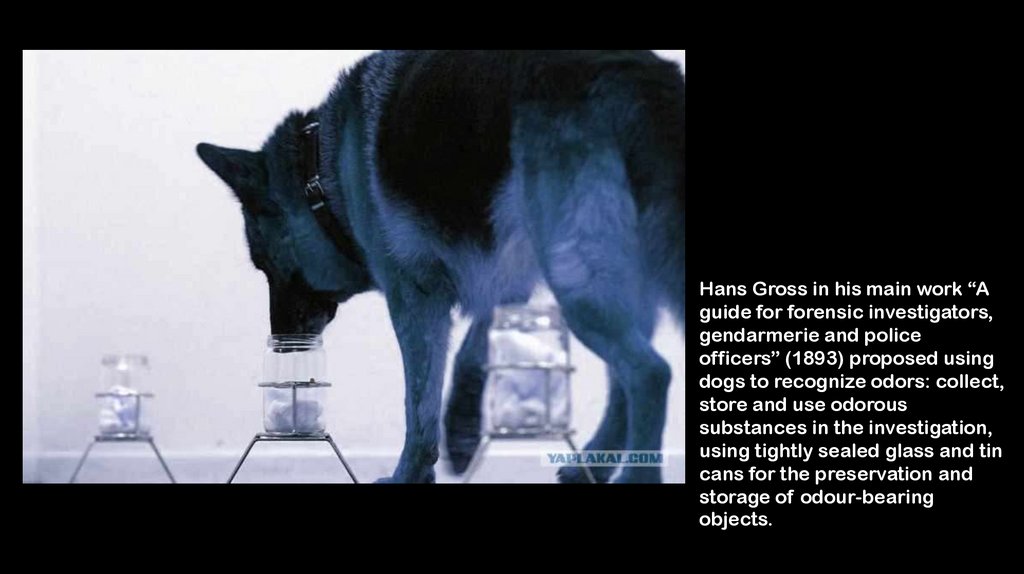
Hans Gross in his main work “Aguide for forensic investigators,
gendarmerie and police
officers” (1893) proposed using
dogs to recognize odors: collect,
store and use odorous
substances in the investigation,
using tightly sealed glass and tin
cans for the preservation and
storage of odour-bearing
objects.
5.
Method for preserving andsubsequent use of odors during the
investigation, which was called
forensic odorology
Vinberg A. I. (1908-1989)
6.
7.
8.
VKTelegram