Similar presentations:






Communication in healthcare
1. Communication in healthcare
2. The Aim
Theaim of the every healthcare
professional is to provide care that is
patient centered and shared in a
partnership with the patient.
The basis of such care is good
communication between a patient and the
professional.
Effective communication develops the
trust and produces better outcomes.
3. Patient centered communicaion
Such communication means discovering andconnecting both the biomedical facts in detail
and the patient’s ideas and feelings.
It is essential for diagnosis and appropriate
management, the trust and the involvement of
the patient.
The traditional approach “doctor knows best”
without patient’s involvement is now outdated.
The change of approaches is to improve health
outcome and it is spreading world wide.
4. Reasons
There are 2 main reasons for the changePatients expect information about
their condition and treatment and
want doctors to take their opinions
into account. They like to be involved.
Patients expect humanity and empathy
from their doctors as well as
competence.
5. Benefits
Improvedhealth outcomes
Increased patient adherence to
therapies
Reduces litigation
Improved time management and costs
Patient safety
6. Failures
54%Failures
of complaints and 45% of concerns
were not elicited
50% of psychological problems not elicited
80% of breast cancer patients’ concerns
remain undisclosed
In 50% of visits, patients and doctors
disagree on the main problem
In 50% of cases, patient’s history was
blocked by interruption within 24 seconds
7. Improvements after the course
Paincontrol
Headache relief
Blood pressure control
Diabetic control
Asthma control
Emotional health
Symptom resolution
Function improvement
8. Barriers and difficulties
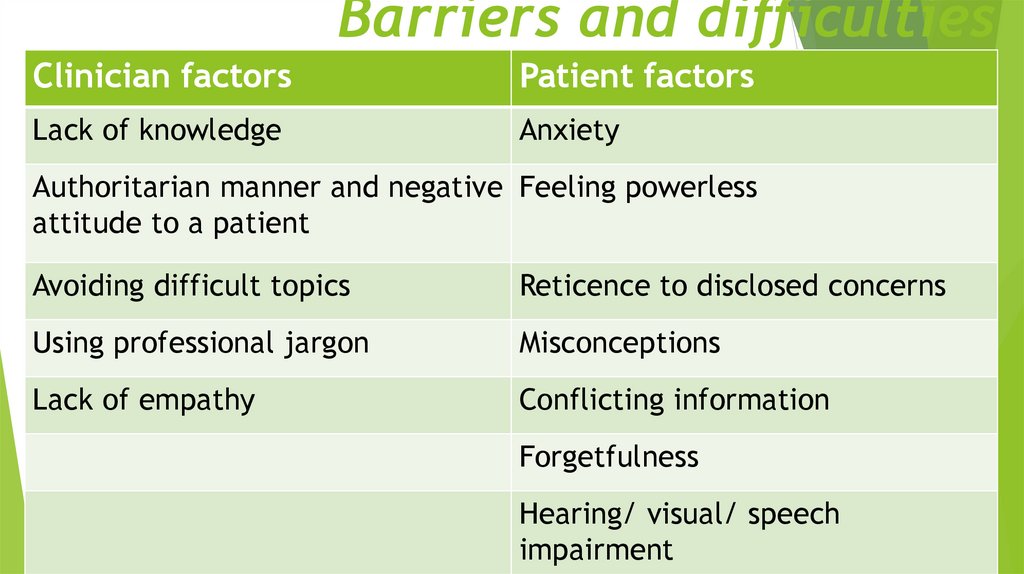
Clinician factorsPatient factors
Lack of knowledge
Anxiety
Authoritarian manner and negative Feeling powerless
attitude to a patient
Avoiding difficult topics
Reticence to disclosed concerns
Using professional jargon
Misconceptions
Lack of empathy
Conflicting information
Forgetfulness
Hearing/ visual/ speech
impairment
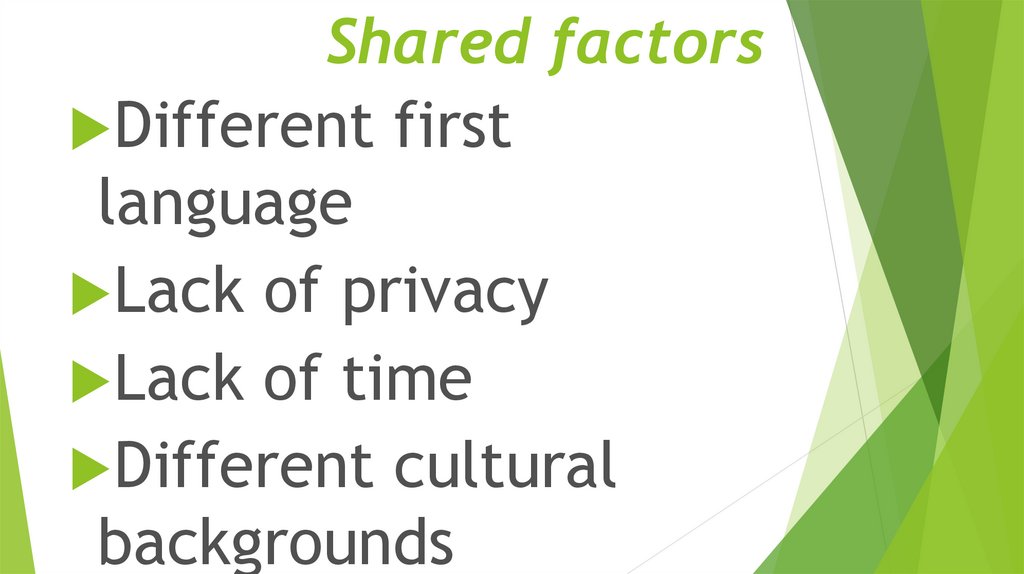
9. Shared factors
Different firstlanguage
Lack of privacy
Lack of time
Different cultural
backgrounds