







 english
Similar presentations:







Learn about rules and rights with the help of modal verbs have to, must and can
1.
LEARN ABOUT RULES ANDRIGHTS WITH THE HELP OF
MODAL VERBS HAVE TO,
MUST AND CAN
2.
LET’S SPEAK ABOUT YOURWORK. IS IT INTERESTING
OR BORING ( TEDIOUS)?
DO YOU HAVE TO
FOLLOW A LOT OF RULES
AT WORK?
3.
TEACHER — Pavel Gibkiy(Гибкий Павел);
STUDENT — Valeriy
Kaminskiy (Каминский
Валерий);
4.
JOIN OUR GROUP —LEARN IT-ENGLISH WITH
PLEASURE;
IT’S A REAL TREASURE —
https://vk.com/club201
487243
5.
You have to be atwork on time.
1. Is it necessary for
you to be at work on
time?
2. Is it possible for you
to avoid this rule( not
to follow)?
6.
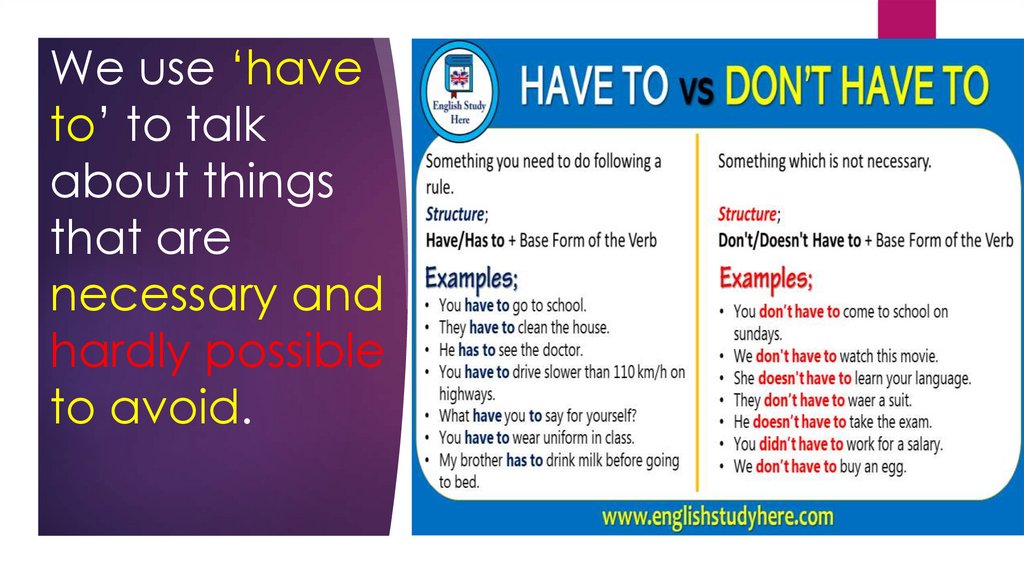
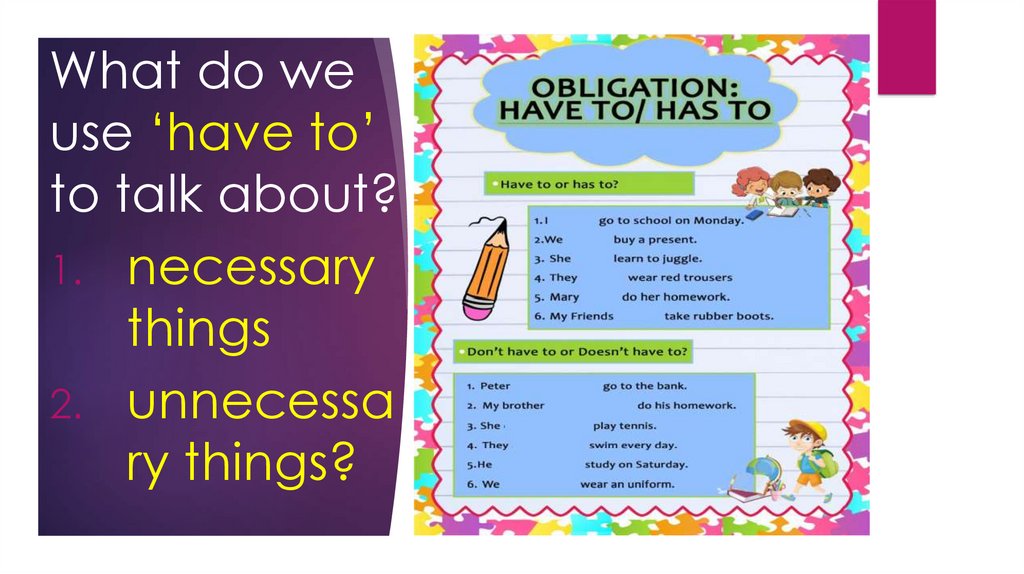
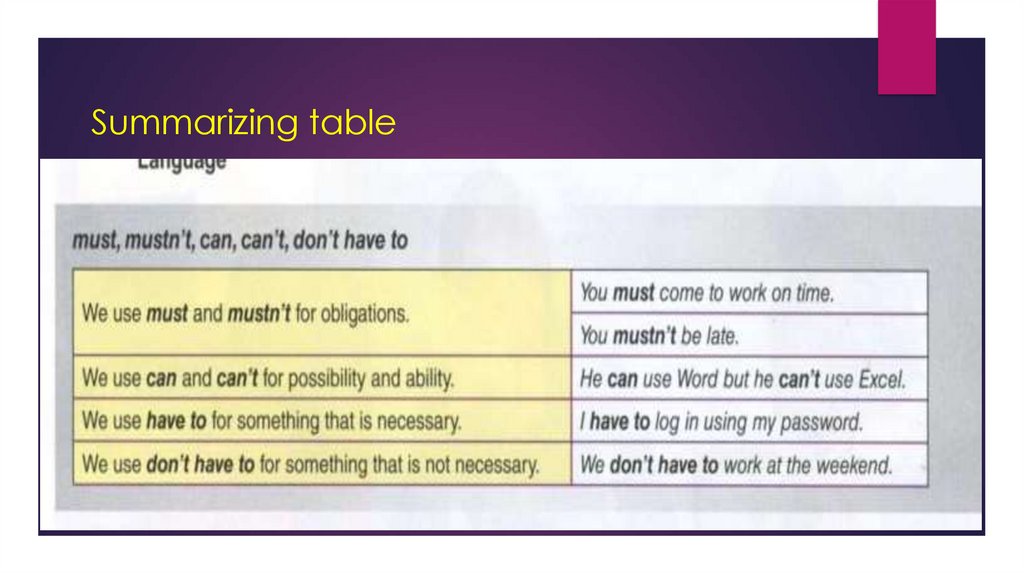
We use ‘haveto’ to talk
about things
that are
necessary and
hardly possible
to avoid.
7.
Is it necessary foryou to play
computer games?
a)
b)
Yes;
NO;
Is it possible for you
not to play them?
8.
We use ‘don’t have
to’ to talk
about
unnecessary
things.
9.
What do weuse ‘have to’
to talk about?
1. necessary
things
2. unnecessa
ry things?
10.
What do weuse ‘ don’t
have to’ to
talk about?
1. necessary
things
2. unnecessa
ry things?
11.
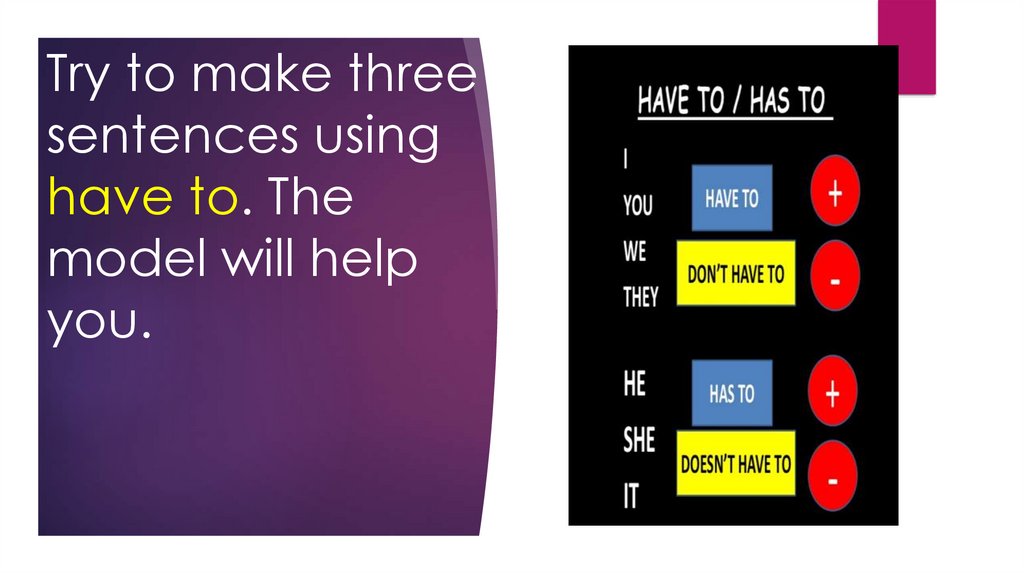
Try to make threesentences using
have to. The
model will help
you.
12.
Imagine that youare the boss in
your company.
What rules your
employees have
to follow?
1. They have to
come to work
on time..
13.
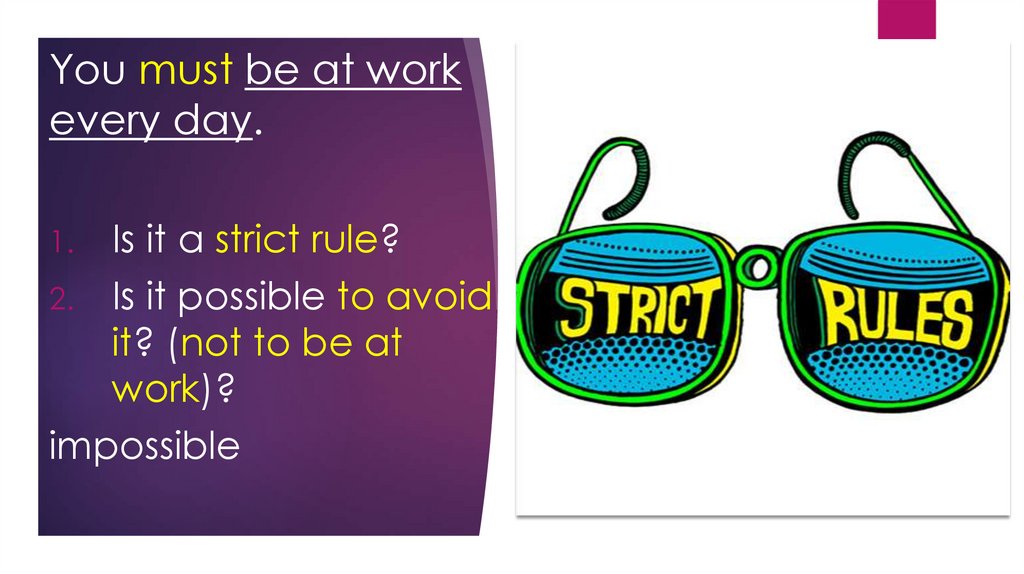
You must be at workevery day.
Is it a strict rule?
2. Is it possible to avoid
it? (not to be at
work)?
impossible
1.
14.
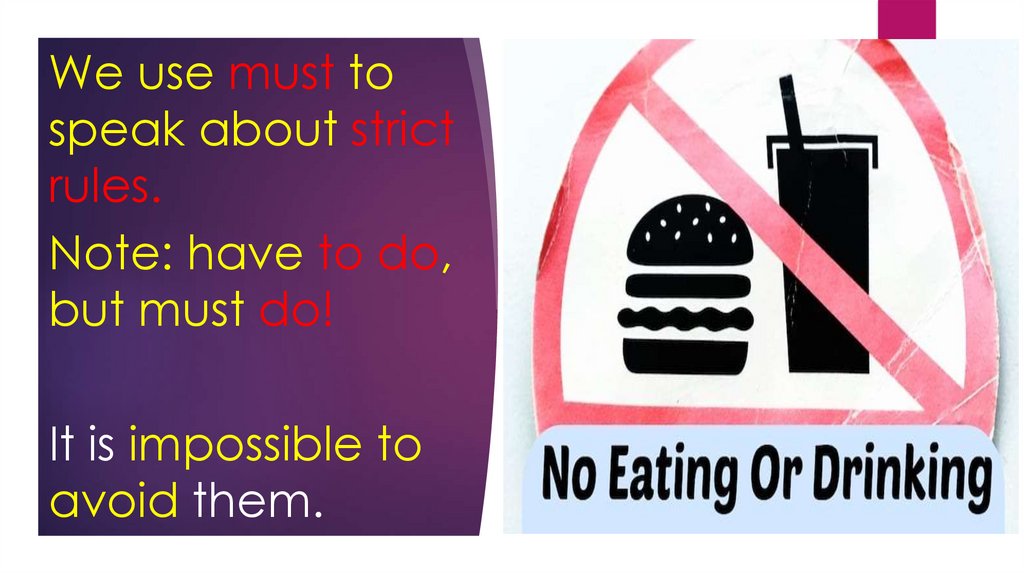
We use must tospeak about strict
rules.
Note: have to do,
but must do!
It is impossible to
avoid them.
15.
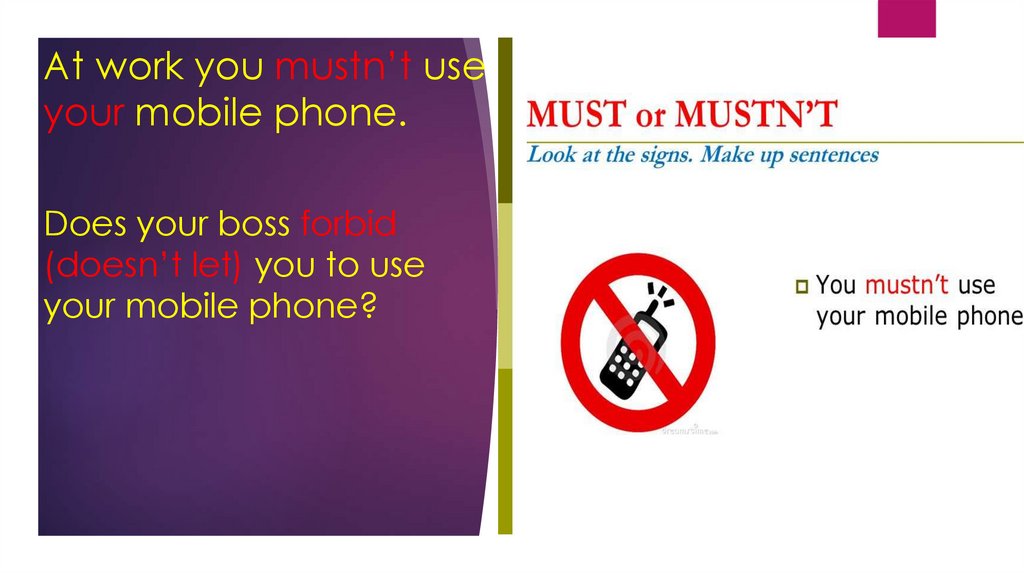
At work you mustn’t useyour mobile phone.
Does your boss forbid
(doesn’t let) you to use
your mobile phone?
16.
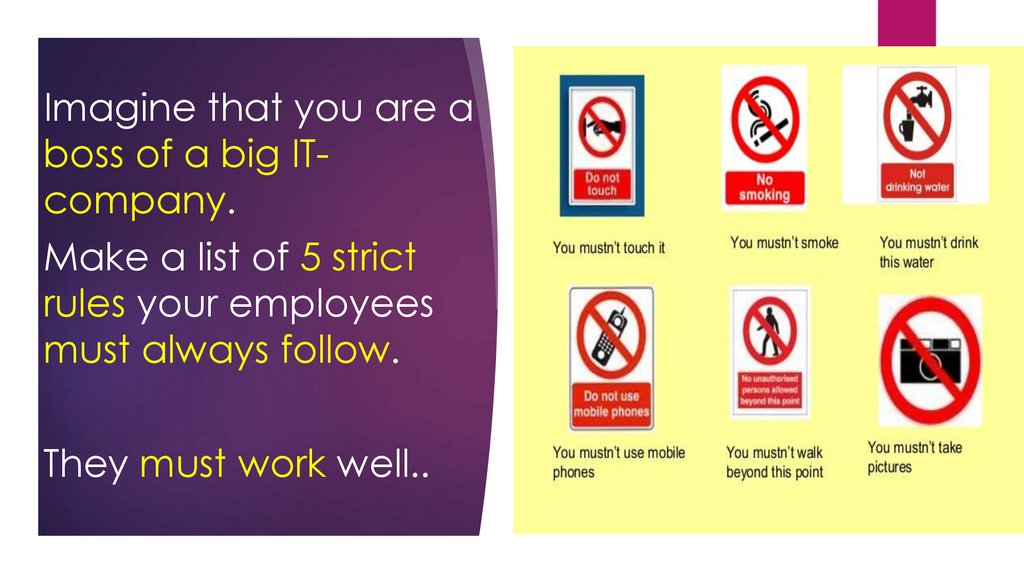
Imagine that you are aboss of a big ITcompany.
Make a list of 5 strict
rules your employees
must always follow.
They must work well..
17.
18.
19.
20.
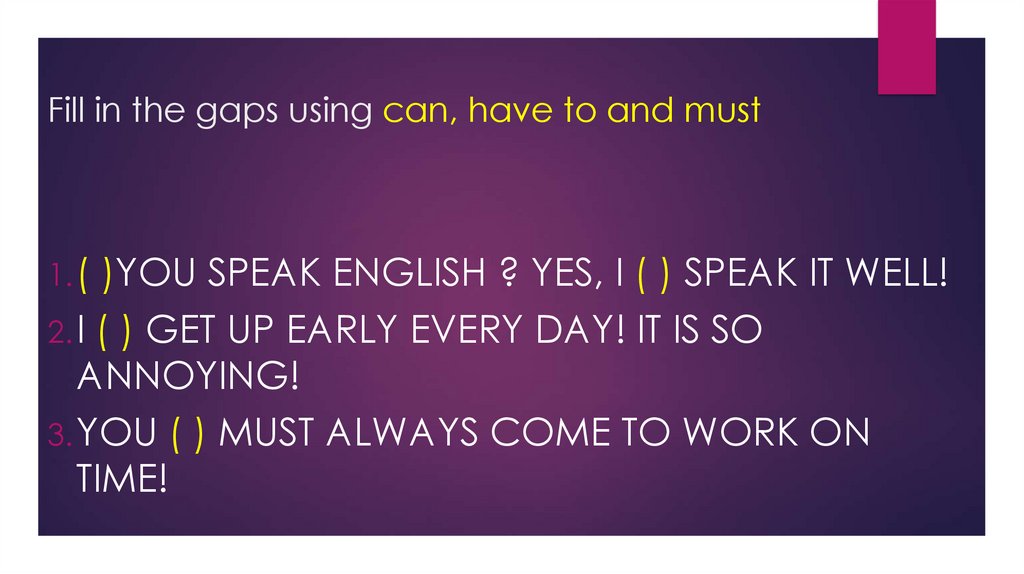
Fill in the gaps using can, have to and must1. (
)YOU SPEAK ENGLISH ? YES, I ( ) SPEAK IT WELL!
2. I ( ) GET UP EARLY EVERY DAY! IT IS SO
ANNOYING!
3. YOU ( ) MUST ALWAYS COME TO WORK ON
TIME!