 english
Similar presentations:




Hamlet
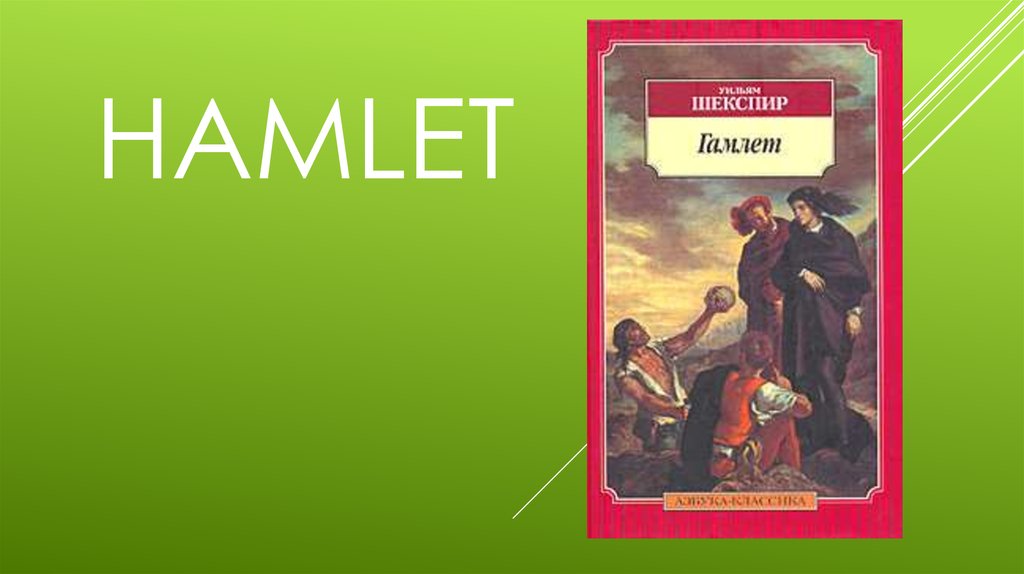
1. HAMLET
2.
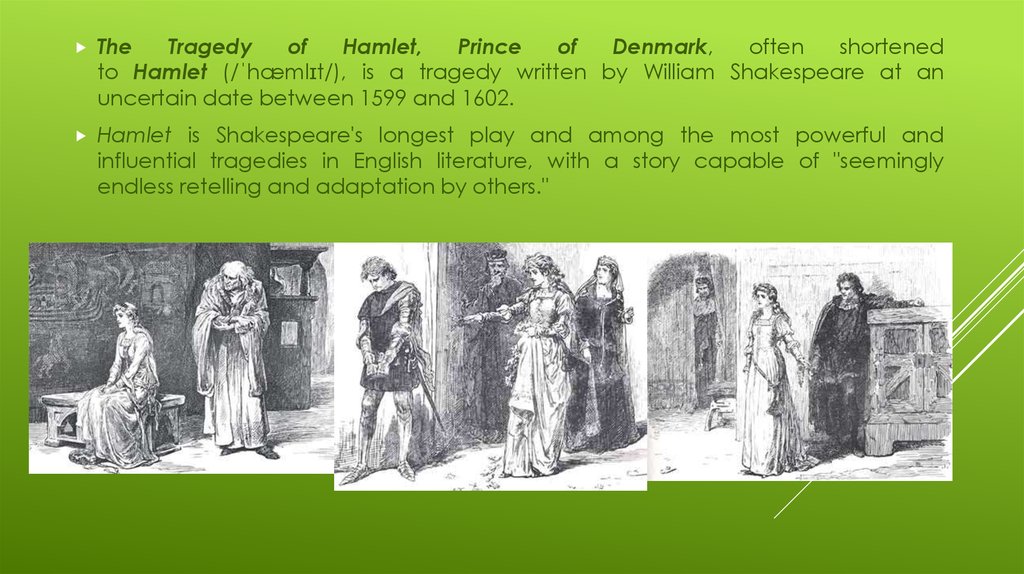
TheTragedy
of
Hamlet,
Prince
of
Denmark,
often
shortened
to Hamlet (/ˈhæmlɪt/), is a tragedy written by William Shakespeare at an
uncertain date between 1599 and 1602.
Hamlet is Shakespeare's longest play and among the most powerful and
influential tragedies in English literature, with a story capable of "seemingly
endless retelling and adaptation by others."
3. TEXTS
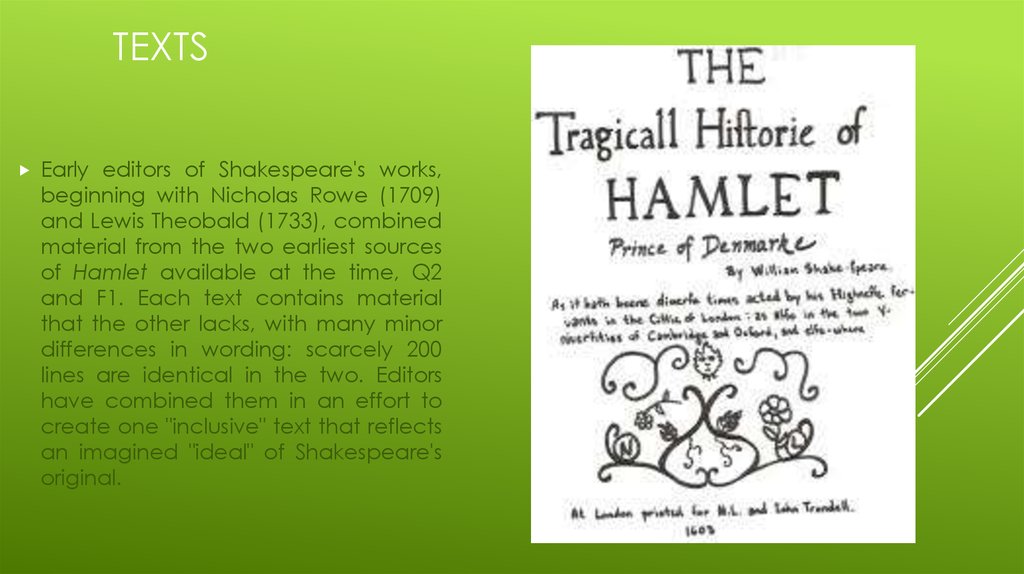
Early editors of Shakespeare's works,beginning with Nicholas Rowe (1709)
and Lewis Theobald (1733), combined
material from the two earliest sources
of Hamlet available at the time, Q2
and F1. Each text contains material
that the other lacks, with many minor
differences in wording: scarcely 200
lines are identical in the two. Editors
have combined them in an effort to
create one "inclusive" text that reflects
an imagined "ideal" of Shakespeare's
original.
4. LANGUAGE
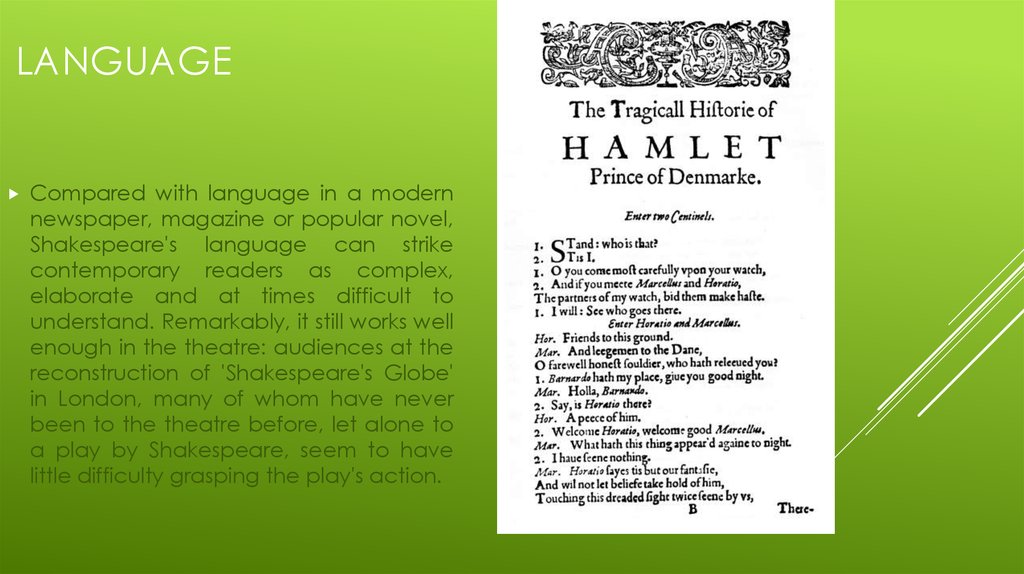
Compared with language in a modernnewspaper, magazine or popular novel,
Shakespeare's language can strike
contemporary readers as complex,
elaborate and at times difficult to
understand. Remarkably, it still works well
enough in the theatre: audiences at the
reconstruction of 'Shakespeare's Globe'
in London, many of whom have never
been to the theatre before, let alone to
a play by Shakespeare, seem to have
little difficulty grasping the play's action.
5.
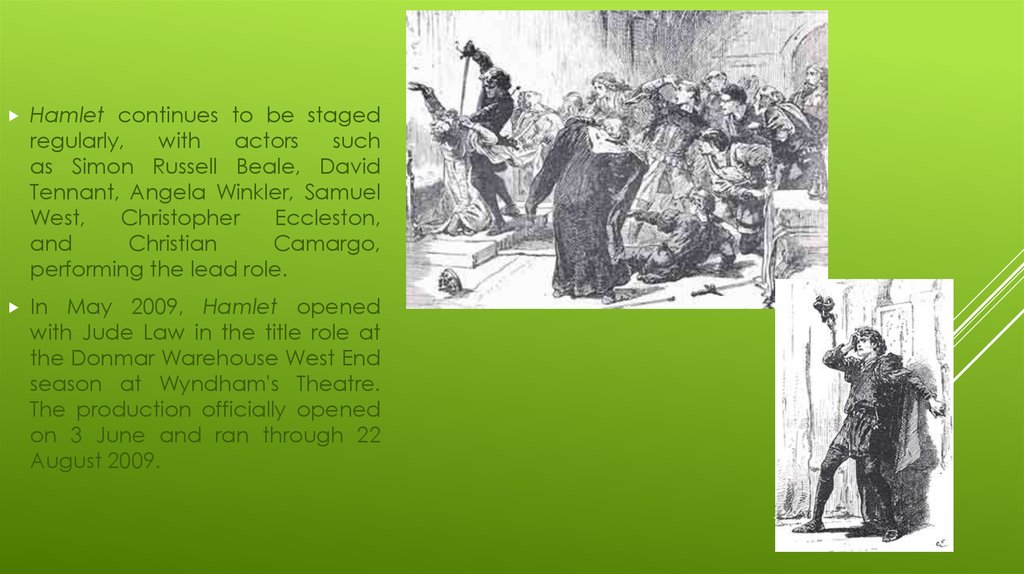
Hamlet continues to be stagedregularly,
with
actors
such
as Simon Russell Beale, David
Tennant, Angela Winkler, Samuel
West,
Christopher
Eccleston,
and
Christian
Camargo,
performing the lead role.
In May 2009, Hamlet opened
with Jude Law in the title role at
the Donmar Warehouse West End
season at Wyndham's Theatre.
The production officially opened
on 3 June and ran through 22
August 2009.