
 medicine
Similar presentations:






Methadone pharmacogenetics
1.
MethadonePharmacogenetics
CYP2B6 Polymorphisms Determine Plasma
Concentrations, Clearance, and Metabolism
Evan D. Kharasch, M.D., Ph.D., Karen J. Regina, M.S., Jane Blood, R.N., Christina
Friedel, B.S.
2.
AbstractInterindividual variability in methadone disposition remains unexplained, and
methadone accidental overdose in pain therapy is a significant public health
problem. Cytochrome P4502B6 (CYP2B6) is the principle determinant of
clinical methadone elimination. The CYP2B6 gene is highly polymorphic, with
several variant alleles. CYP2B6.6, the protein encoded by the CYP2B6*6
polymorphism, deficiently catalyzes methadone metabolism in vitro. This
investigation determined the influence of CYP2B6*6, and other allelic variants
encountered, on methadone concentrations, clearance, and metabolism.
3.
Methadoneis a long-duration opioid
for acute, chronic, perioperative, neuropathic, and cancer pain
Methadone is typically a racemic mixture
R-methadone primarily confers the μ-opioid receptor activity
both enantiomers act at N-methyl-d-aspartate receptors
! In 2009, methadone accounted for only 2% of prescriptions, but 30% of
prescription painkiller deaths !
Understanding methadone disposition is important for reducing adverse
4.
Methadone is cleared by:Hepatic cytochrome P450 (CYP)-catalyzed N-demethylation
to inactive 2-ethyl- 1,5-dimethyl-3,3-diphenylpyrrolidine (EDDP)
some urinary excretion of unchanged drug
5.
The CYP2B6 gene in relation to Methadone.Highly polymorphic (38 variant alleles identified)
CYP2B6*6 is the most common and clinically significant variant allele
The hypothesis:
CYP2B6*6 heterozygotes or homozygotes would have reduced metabolism
and clearance.
Is to evaluate other less common genotypic variants, when encountered.
6.
Materials and MethodsInclusion criteria were:
18- to 50-yr-old normal healthy volunteers
good general health without remarkable medical conditions
and within 30% of ideal body weight (body mass index < 33 kg/m2 )
Exclusion criteria were:
a history of hepatic or renal disease
use of prescription or nonprescription medications, herbals or foods known
7.
Potential subjects provided a venous blood sample, and genomic DNA wasisolated from peripheral blood leukocytes by using the Gentra Puregene
Blood Kit
Genotyping was performed by the Genome Technology Access Center at
Washington University in St. Louis by using the Fluidigm BioMark System
Genotyping results were then used to invite subject participation and create
target cohorts of 20 subjects each with CYP2B6*1/*1, CYP2B6*1/*6, and
CYP2B6*6/*6 genotypes
8.
Subjects were instructed to refrain from:alcohol for 48h before and during the study day
caffeine-containing beverages on the study day
oranges, grapefruit, or apples or their juices for 5 days before and
throughout the 96-h study period
food/liquids after midnight the day before methadone administration
nonstudy medications (including over the counter and/or herbal) for 3 days
before the study day, without previous approval
9.
10.
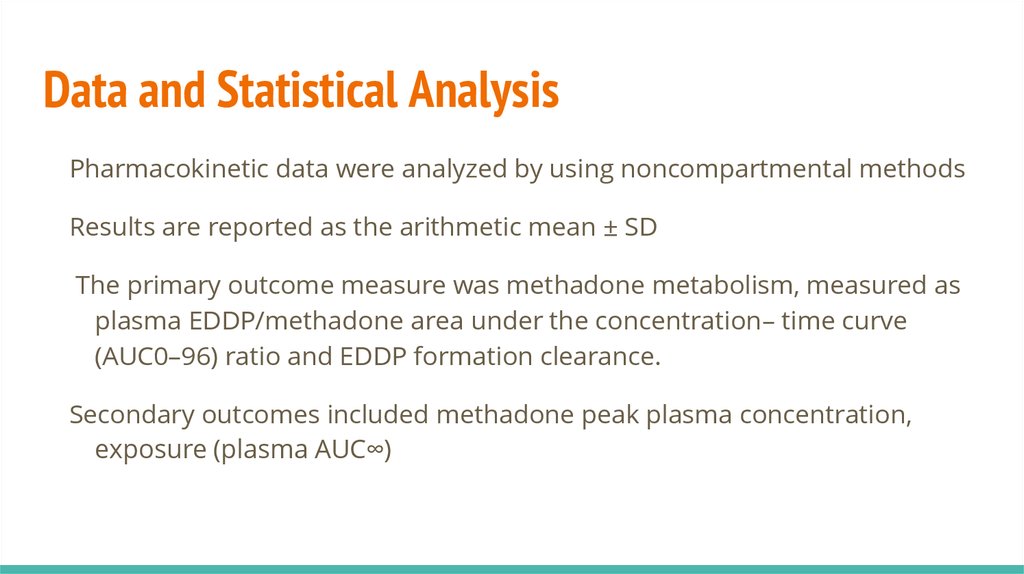
Data and Statistical AnalysisPharmacokinetic data were analyzed by using noncompartmental methods
Results are reported as the arithmetic mean ± SD
The primary outcome measure was methadone metabolism, measured as
plasma EDDP/methadone area under the concentration– time curve
(AUC0–96) ratio and EDDP formation clearance.
Secondary outcomes included methadone peak plasma concentration,
exposure (plasma AUC∞)
11.
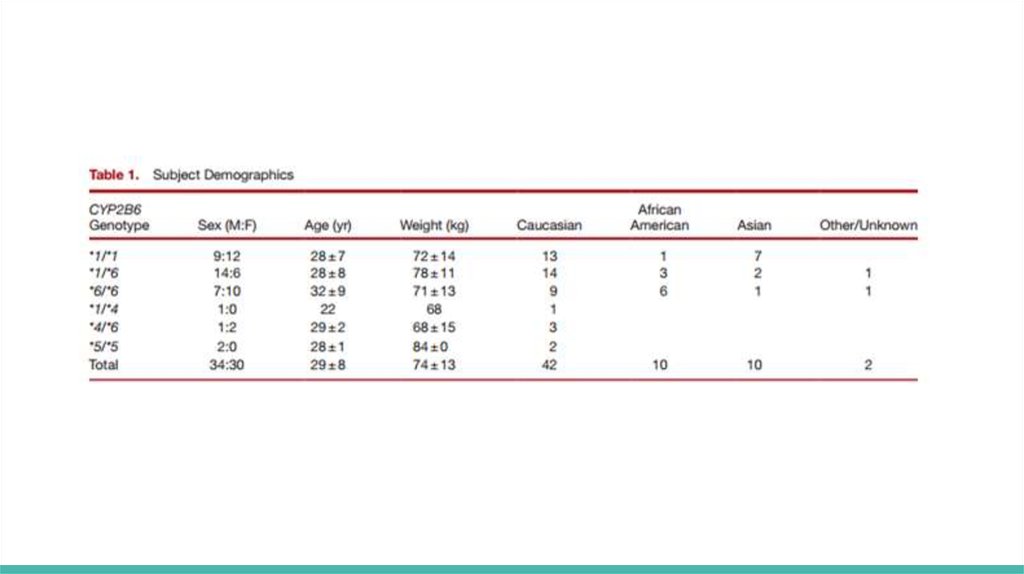
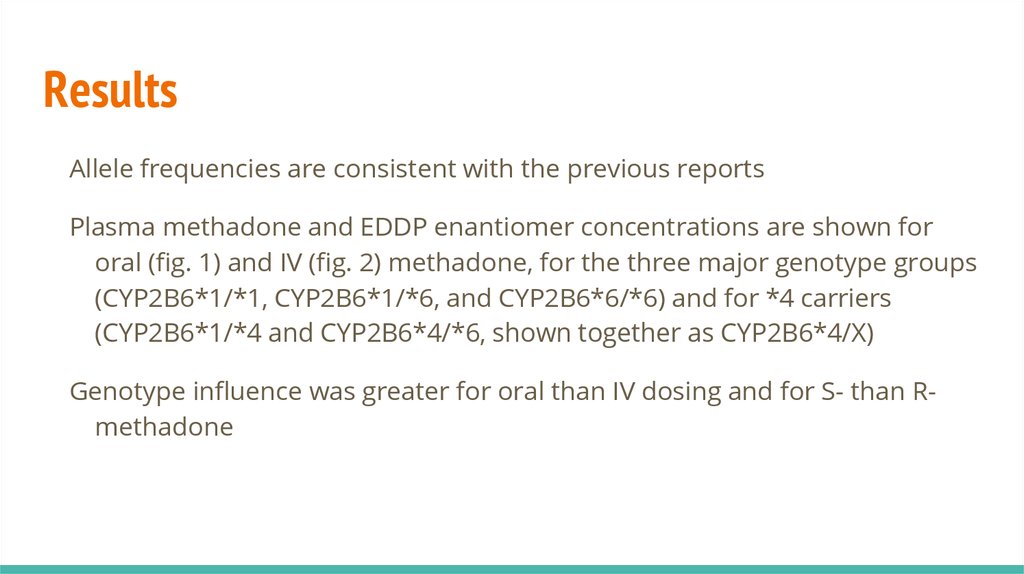
ResultsAllele frequencies are consistent with the previous reports
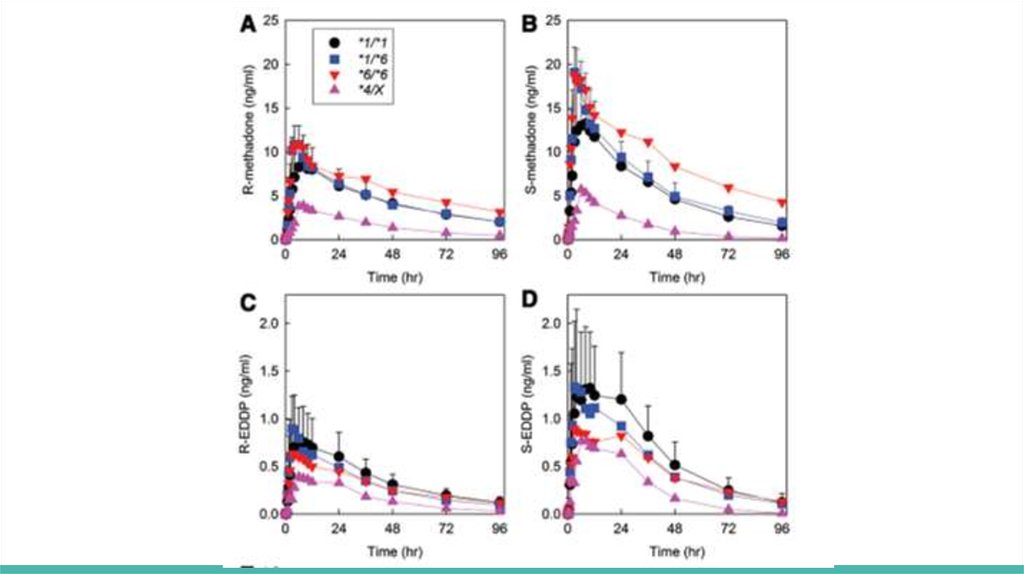
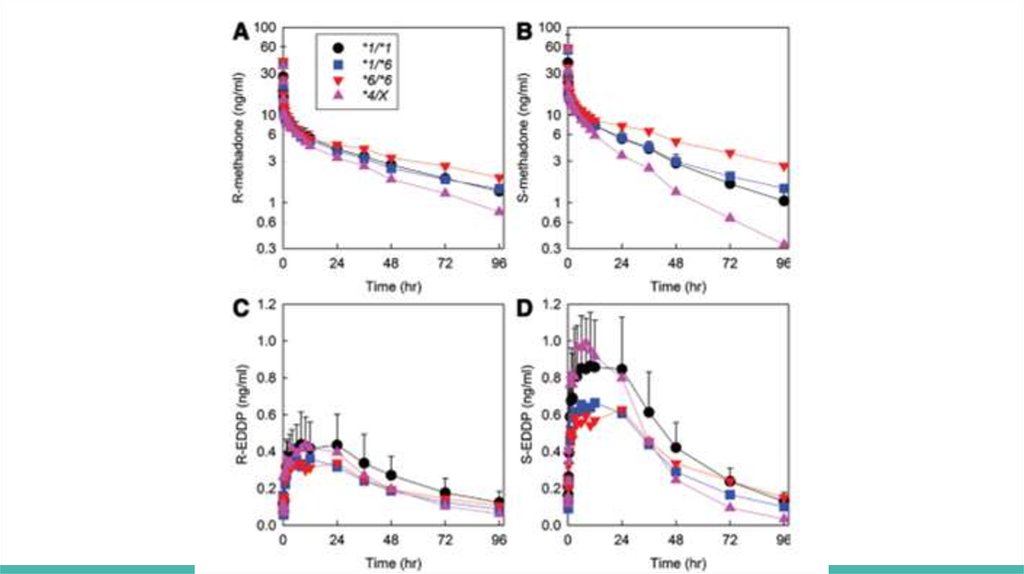
Plasma methadone and EDDP enantiomer concentrations are shown for
oral (fig. 1) and IV (fig. 2) methadone, for the three major genotype groups
(CYP2B6*1/*1, CYP2B6*1/*6, and CYP2B6*6/*6) and for *4 carriers
(CYP2B6*1/*4 and CYP2B6*4/*6, shown together as CYP2B6*4/X)
Genotype influence was greater for oral than IV dosing and for S- than Rmethadone
12.
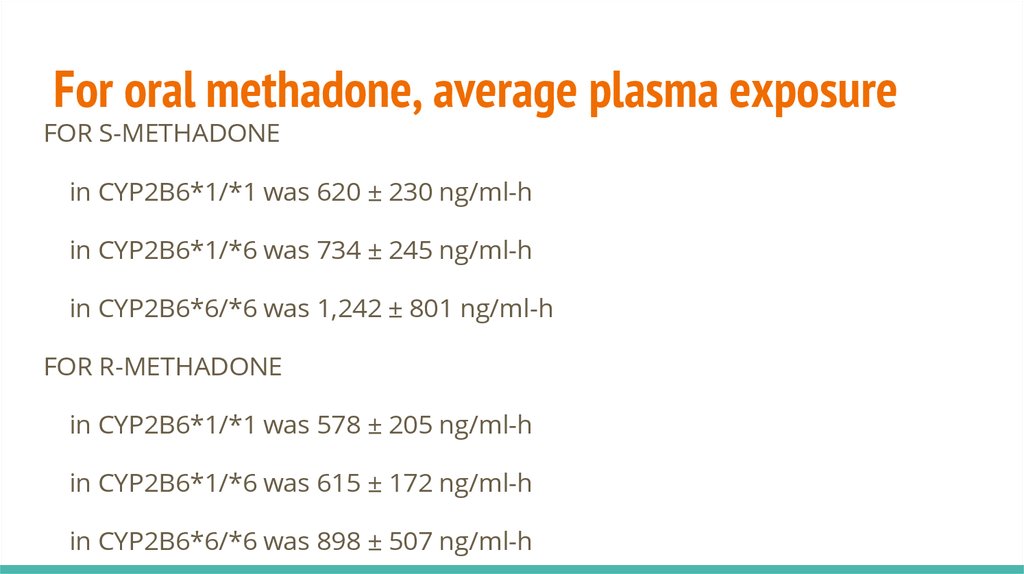
For oral methadone, average plasma exposureFOR S-METHADONE
in CYP2B6*1/*1 was 620 ± 230 ng/ml-h
in CYP2B6*1/*6 was 734 ± 245 ng/ml-h
in CYP2B6*6/*6 was 1,242 ± 801 ng/ml-h
FOR R-METHADONE
in CYP2B6*1/*1 was 578 ± 205 ng/ml-h
in CYP2B6*1/*6 was 615 ± 172 ng/ml-h
in CYP2B6*6/*6 was 898 ± 507 ng/ml-h
13.
14.
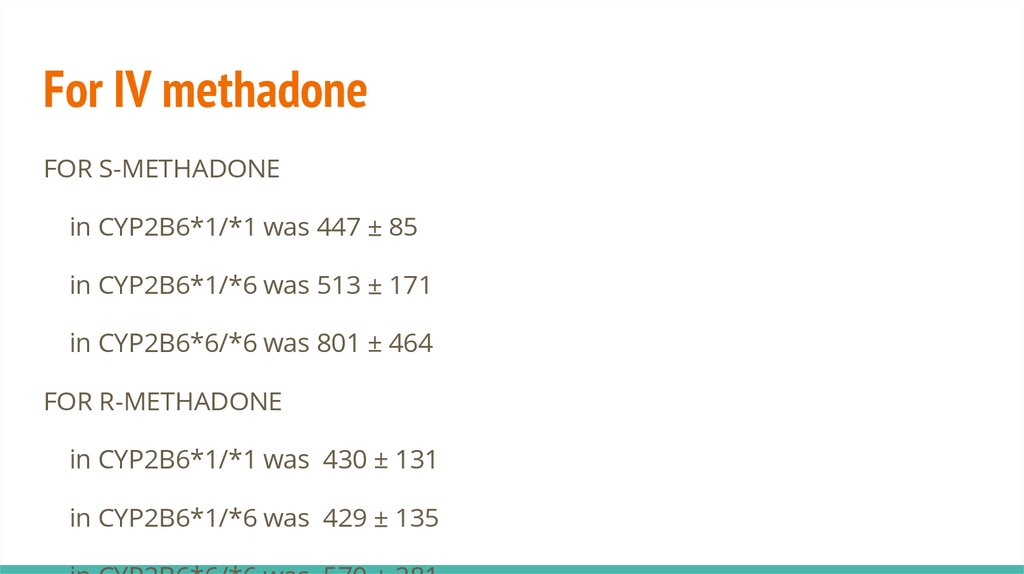
For IV methadoneFOR S-METHADONE
in CYP2B6*1/*1 was 447 ± 85
in CYP2B6*1/*6 was 513 ± 171
in CYP2B6*6/*6 was 801 ± 464
FOR R-METHADONE
in CYP2B6*1/*1 was 430 ± 131
in CYP2B6*1/*6 was 429 ± 135
15.
16.
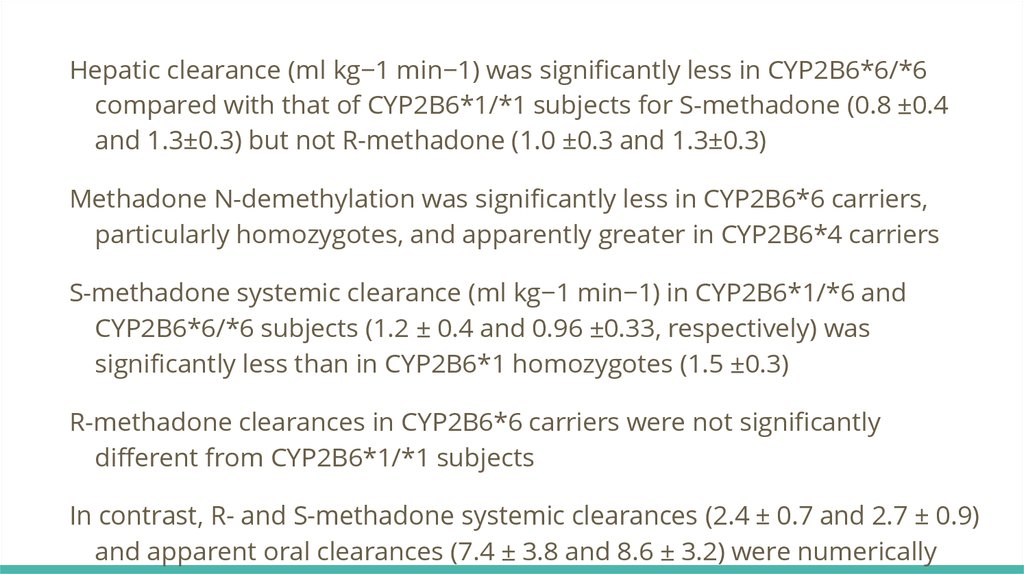
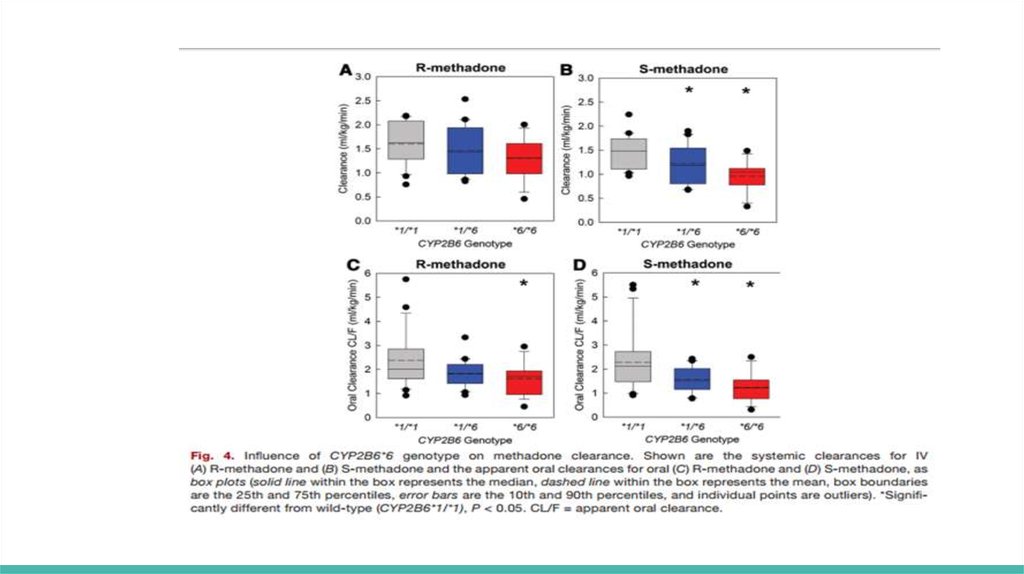
Hepatic clearance (ml kg−1 min−1) was significantly less in CYP2B6*6/*6compared with that of CYP2B6*1/*1 subjects for S-methadone (0.8 ±0.4
and 1.3±0.3) but not R-methadone (1.0 ±0.3 and 1.3±0.3)
Methadone N-demethylation was significantly less in CYP2B6*6 carriers,
particularly homozygotes, and apparently greater in CYP2B6*4 carriers
S-methadone systemic clearance (ml kg−1 min−1) in CYP2B6*1/*6 and
CYP2B6*6/*6 subjects (1.2 ± 0.4 and 0.96 ±0.33, respectively) was
significantly less than in CYP2B6*1 homozygotes (1.5 ±0.3)
R-methadone clearances in CYP2B6*6 carriers were not significantly
different from CYP2B6*1/*1 subjects
In contrast, R- and S-methadone systemic clearances (2.4 ± 0.7 and 2.7 ± 0.9)
and apparent oral clearances (7.4 ± 3.8 and 8.6 ± 3.2) were numerically
17.
18.
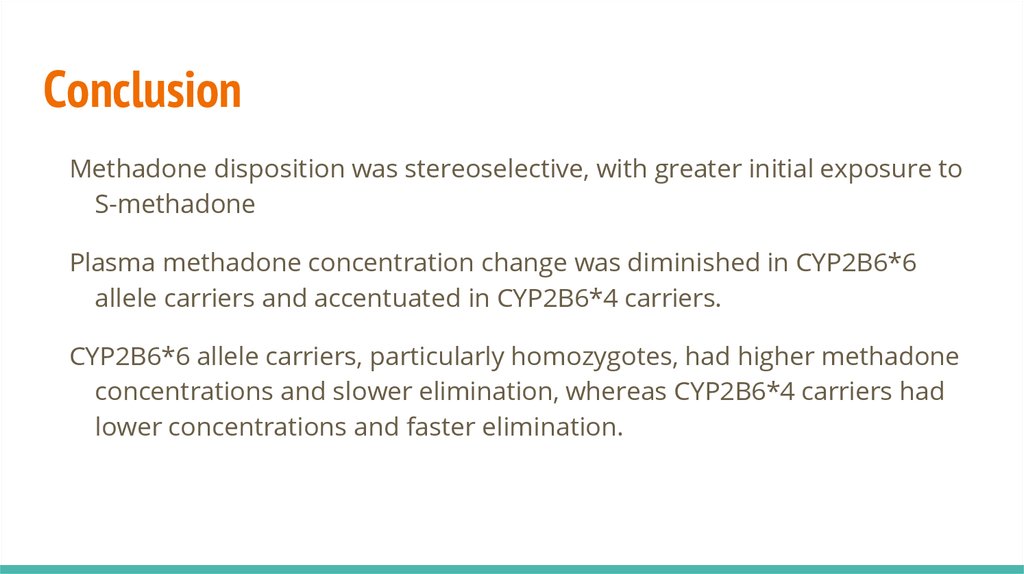
ConclusionMethadone disposition was stereoselective, with greater initial exposure to
S-methadone
Plasma methadone concentration change was diminished in CYP2B6*6
allele carriers and accentuated in CYP2B6*4 carriers.
CYP2B6*6 allele carriers, particularly homozygotes, had higher methadone
concentrations and slower elimination, whereas CYP2B6*4 carriers had
lower concentrations and faster elimination.
19.
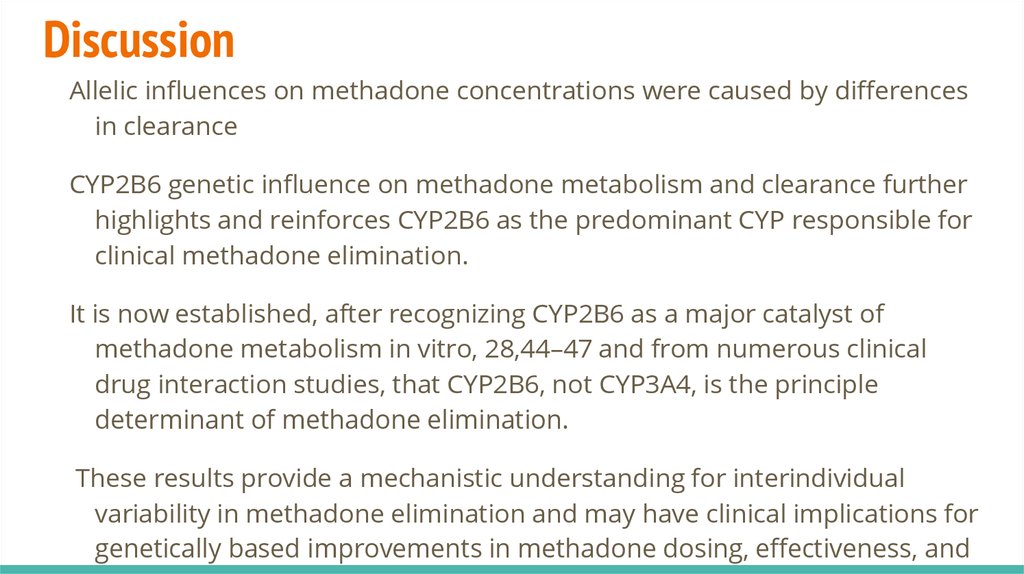
DiscussionAllelic influences on methadone concentrations were caused by differences
in clearance
CYP2B6 genetic influence on methadone metabolism and clearance further
highlights and reinforces CYP2B6 as the predominant CYP responsible for
clinical methadone elimination.
It is now established, after recognizing CYP2B6 as a major catalyst of
methadone metabolism in vitro, 28,44–47 and from numerous clinical
drug interaction studies, that CYP2B6, not CYP3A4, is the principle
determinant of methadone elimination.
These results provide a mechanistic understanding for interindividual
variability in methadone elimination and may have clinical implications for
genetically based improvements in methadone dosing, effectiveness, and