
 culturology
Similar presentations:




Из истории алфавита. Язык протосинайской письменности
1.
Из истории алфавитаЯзык протосинайской письменности
2.
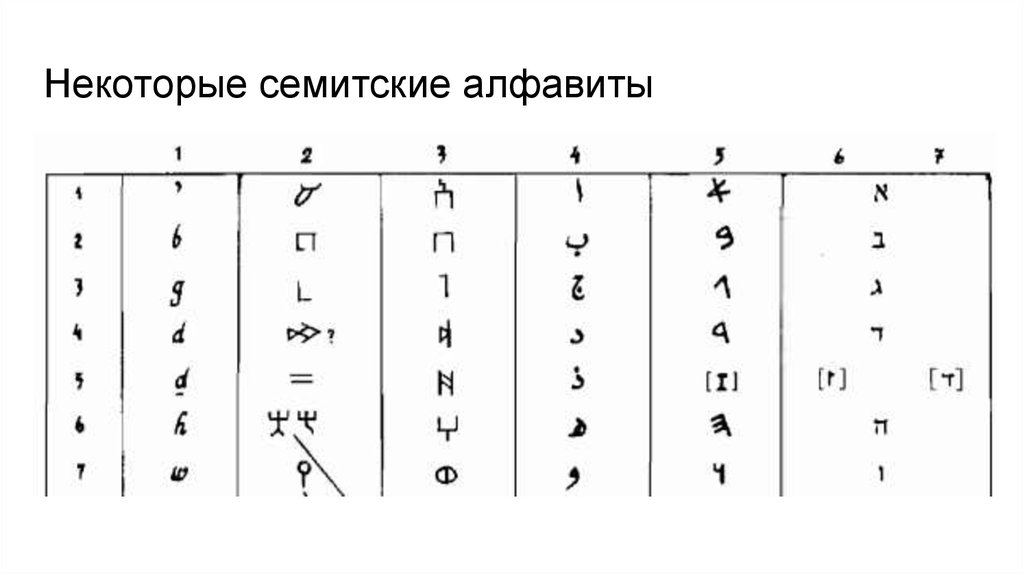
Некоторые семитские алфавиты3.
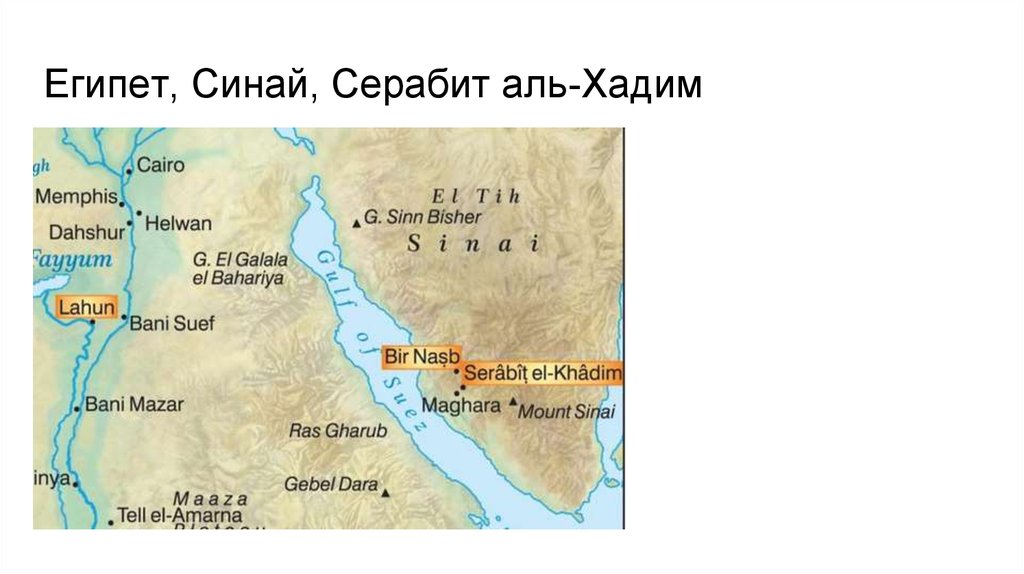
Египет, Синай, Серабит аль-Хадим4.
Дешифровки протосинайского письмаGardiner, Alan H. The Egyptian Origin of the Semitic Alphabet” Journal of Egyptian Archaeology 3
(1916) 1-16
Albright, W. F. The Proto-Sinaitic Inscriptions and Their Decipherment (Harvard Theological
Studies 22). Cambridge, 1966.
Sass, B. The Genesis of the Alphabet and Its Development in the Second Millennium BC, AAT 13.
Wiesbaden, 1988.
Лундин А.Г. Дешифровка протосинайского письма. М. Наука 1991.
5.
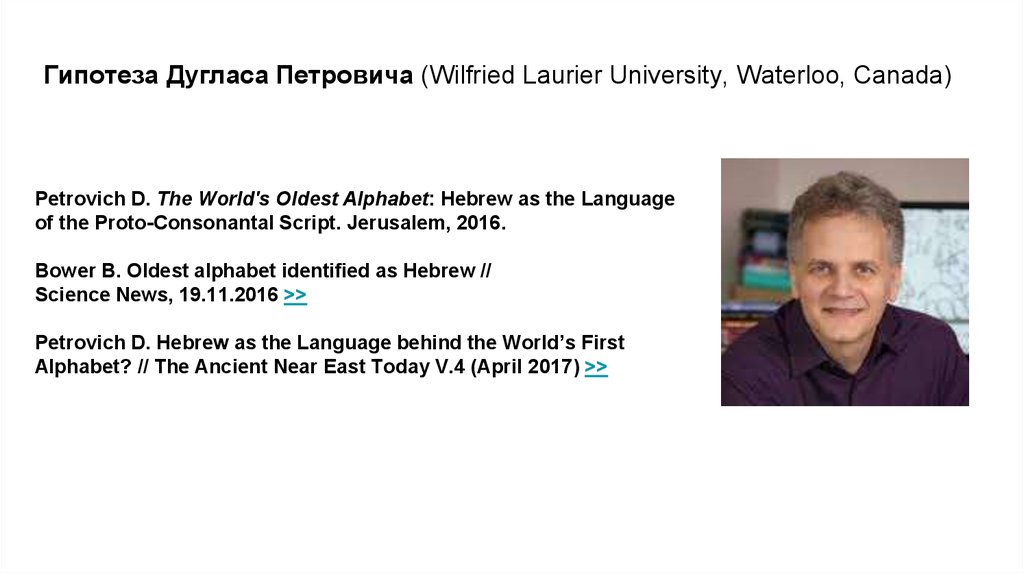
Гипотеза Дугласа Петровича (Wilfried Laurier University, Waterloo, Canada)Petrovich D. The World's Oldest Alphabet: Hebrew as the Language
of the Proto-Consonantal Script. Jerusalem, 2016.
Bower B. Oldest alphabet identified as Hebrew //
Science News, 19.11.2016 >>
Petrovich D. Hebrew as the Language behind the World’s First
Alphabet? // The Ancient Near East Today V.4 (April 2017) >>
6.
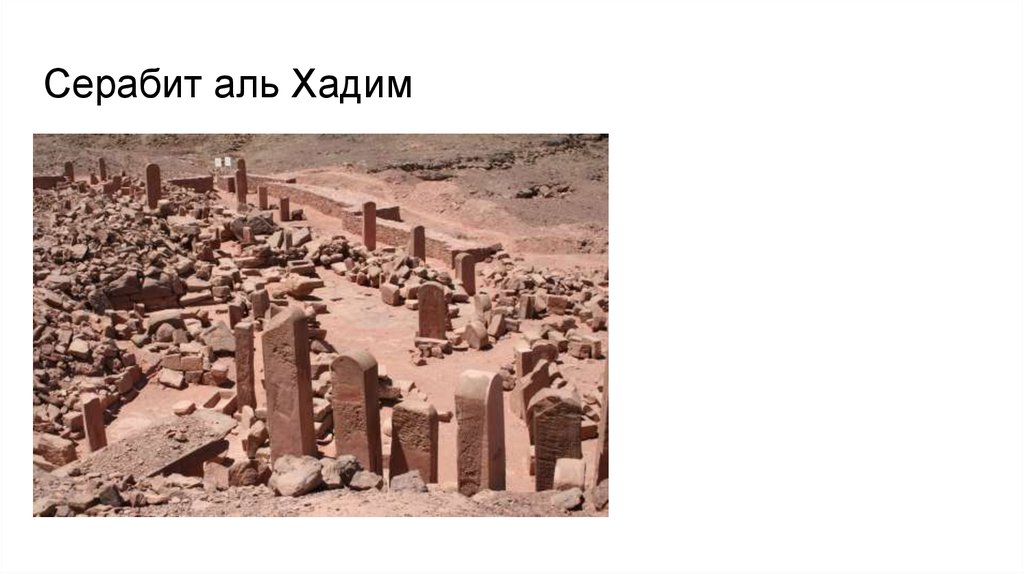
Серабит аль Хадим7.
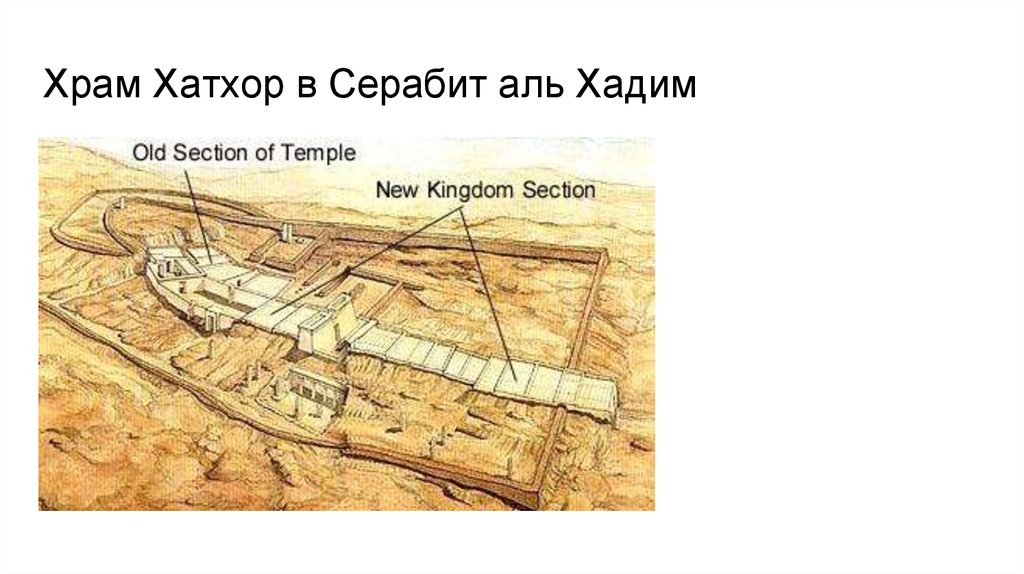
Храм Хатхор в Серабит аль Хадим8.
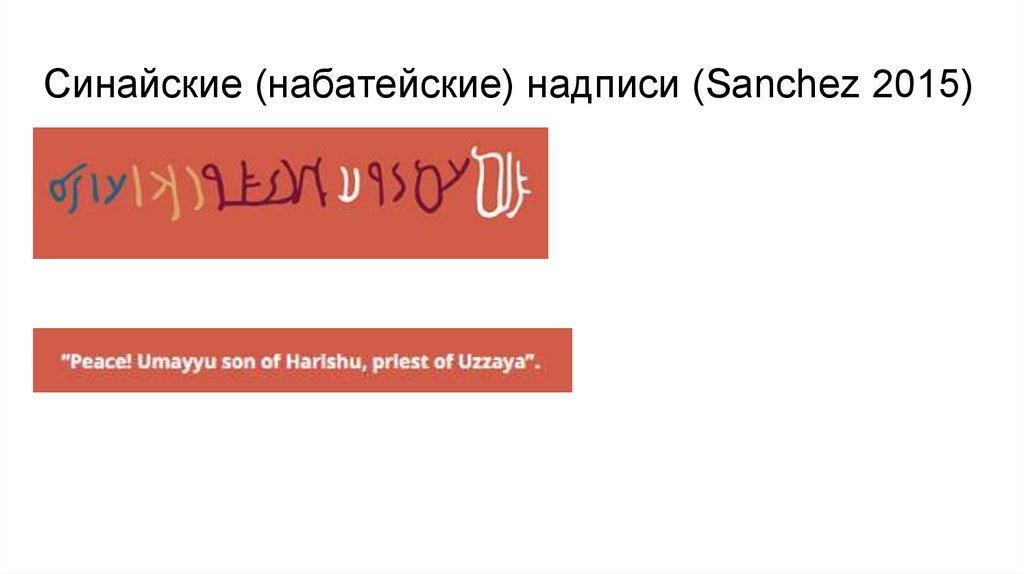
Синайские (набатейские) надписи (Sanchez 2015)šlm ʕmywv br ḥryšw khn ʕzyʔ
9.
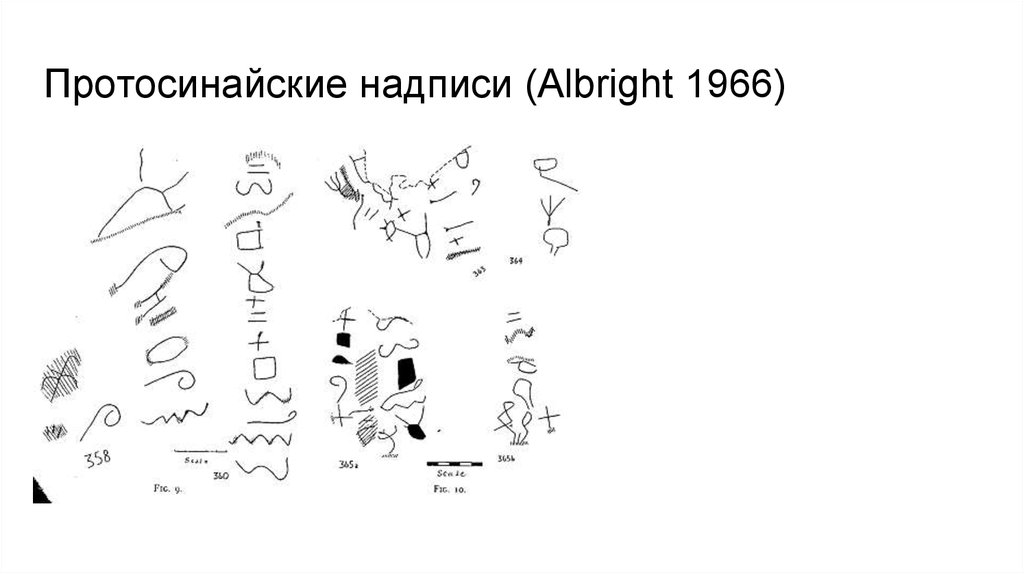
Протосинайские надписи (Albright 1966)10.
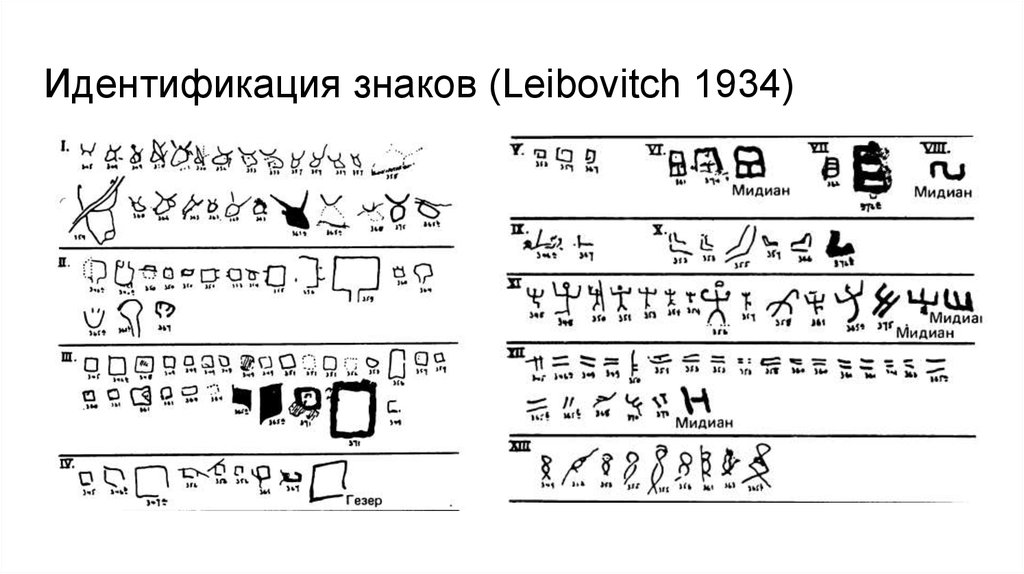
Идентификация знаков (Leibovitch 1934)11.
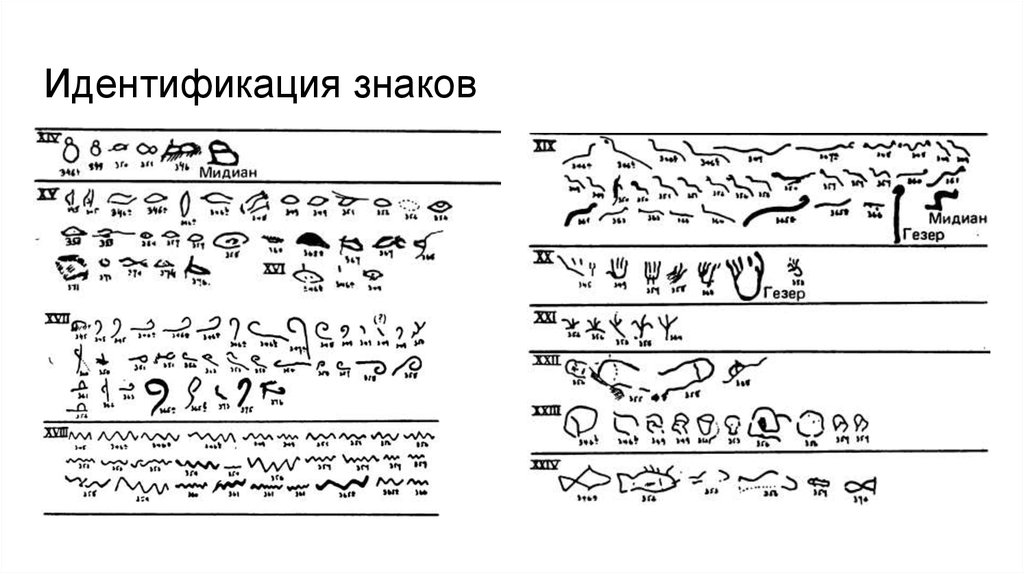
Идентификация знаков12.
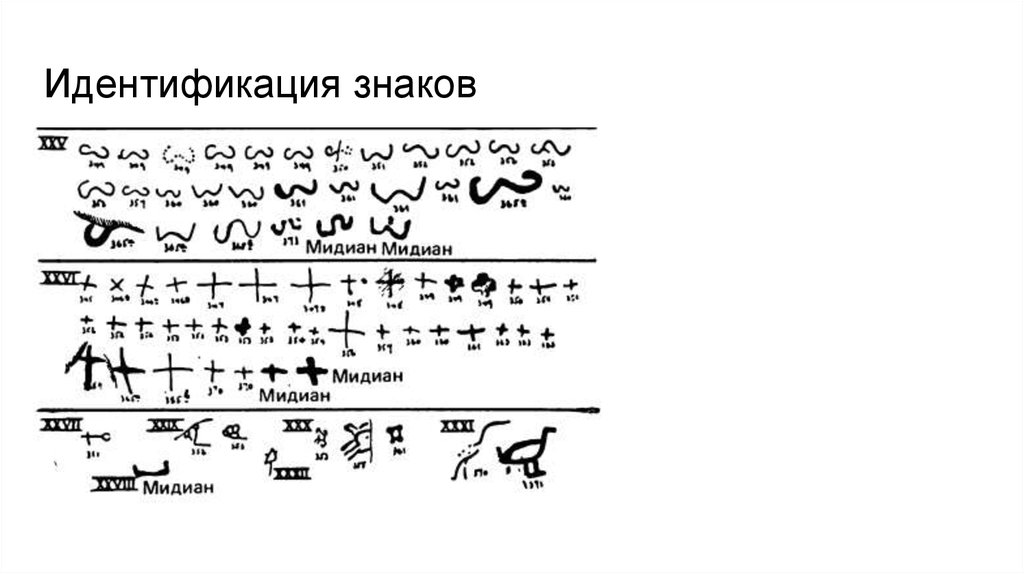
Идентификация знаков13.
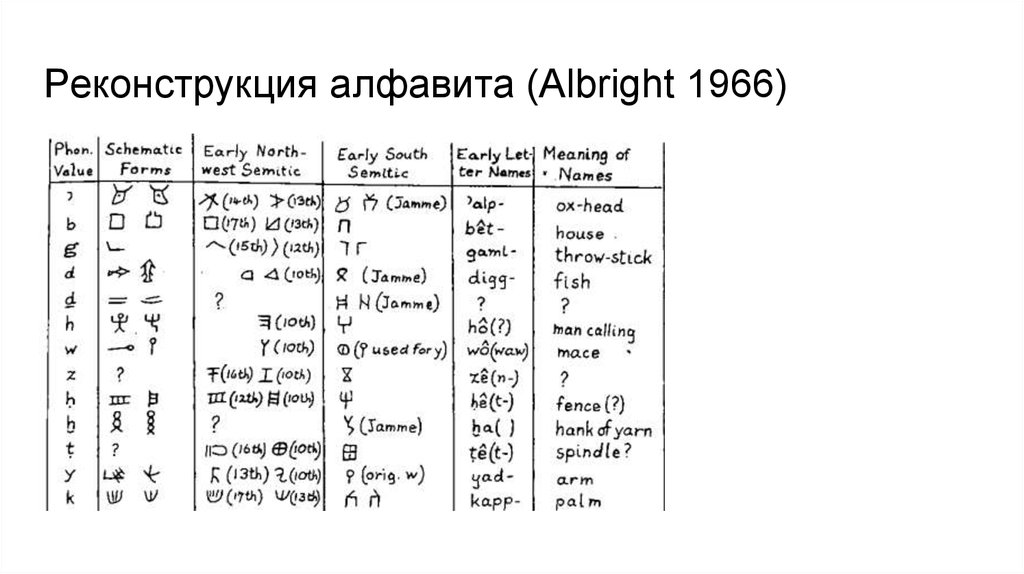
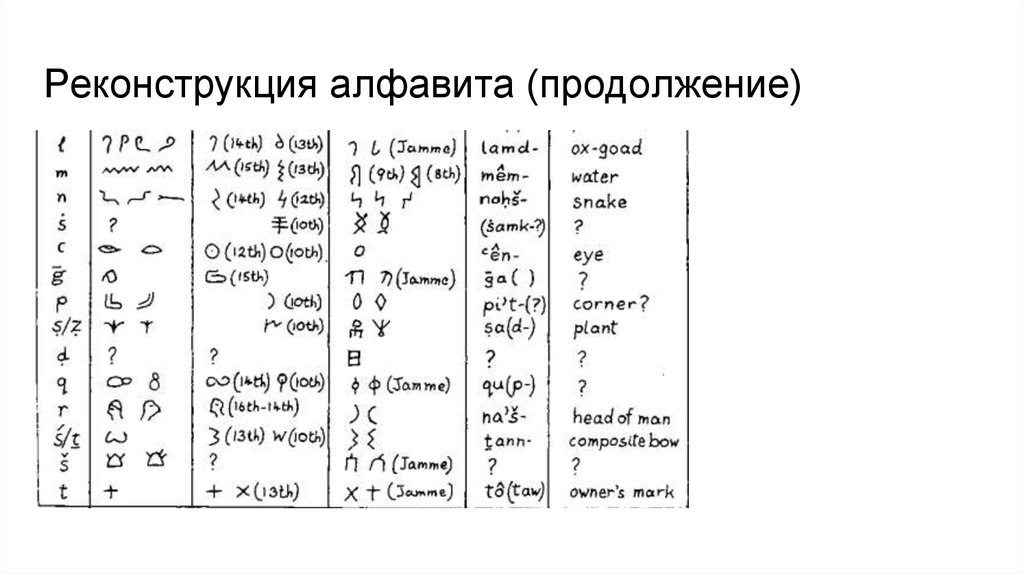
Реконструкция алфавита (Albright 1966)14.
Реконструкция алфавита (продолжение)15.
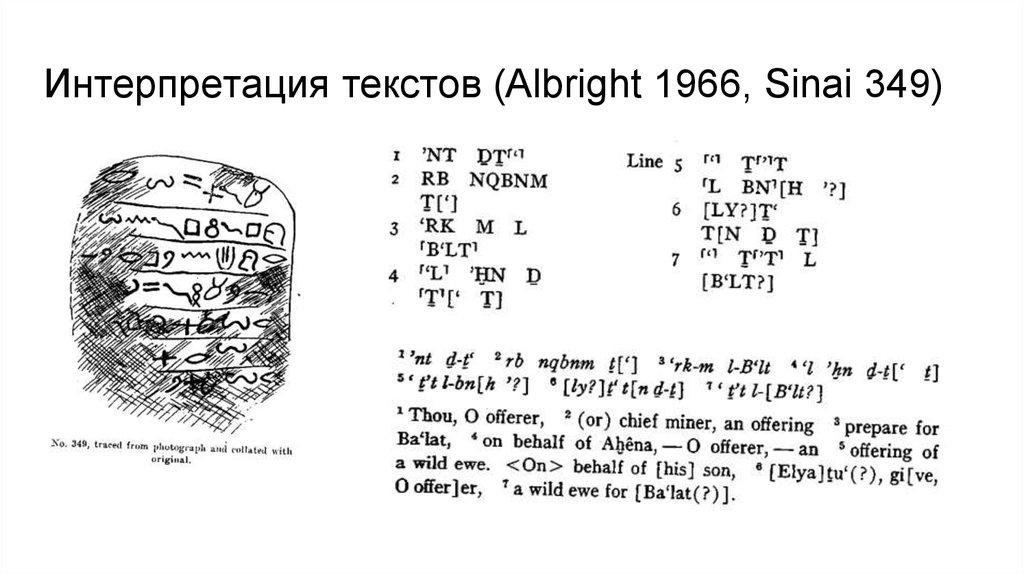
Интерпретация текстов (Albright 1966, Sinai 349)16.
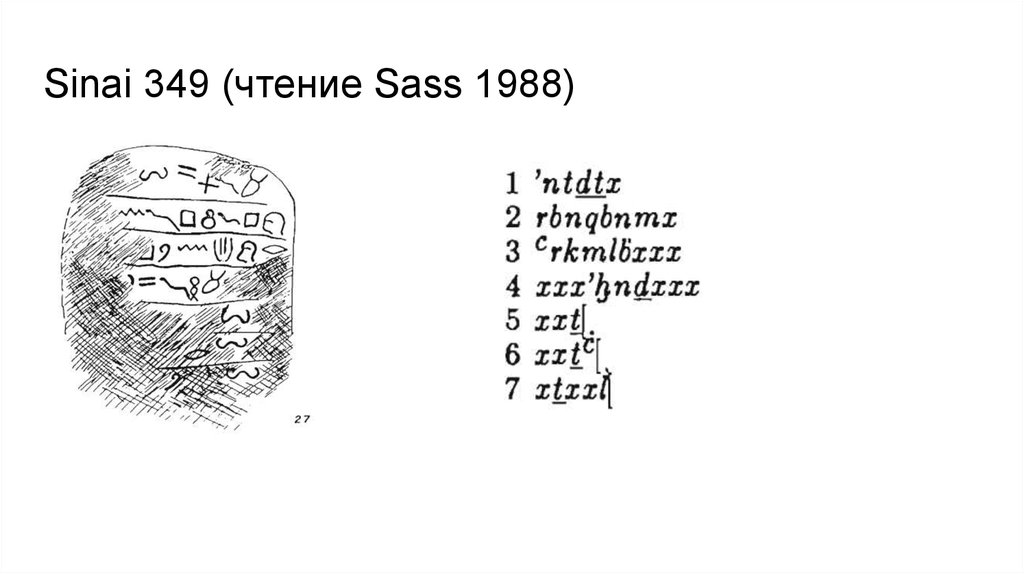
Sinai 349 (чтение Sass 1988)17.
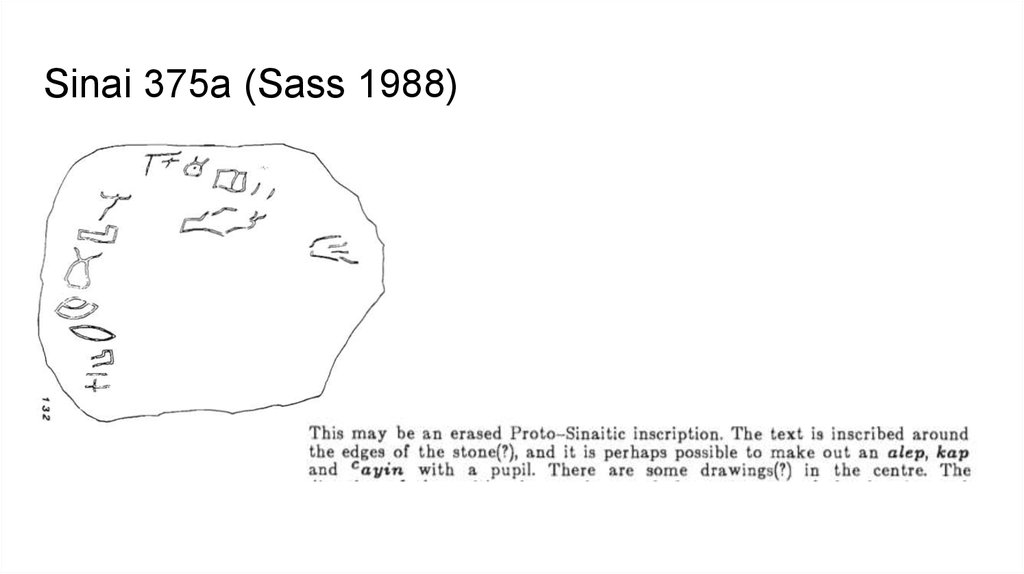
Sinai 375a (Sass 1988)k
18.
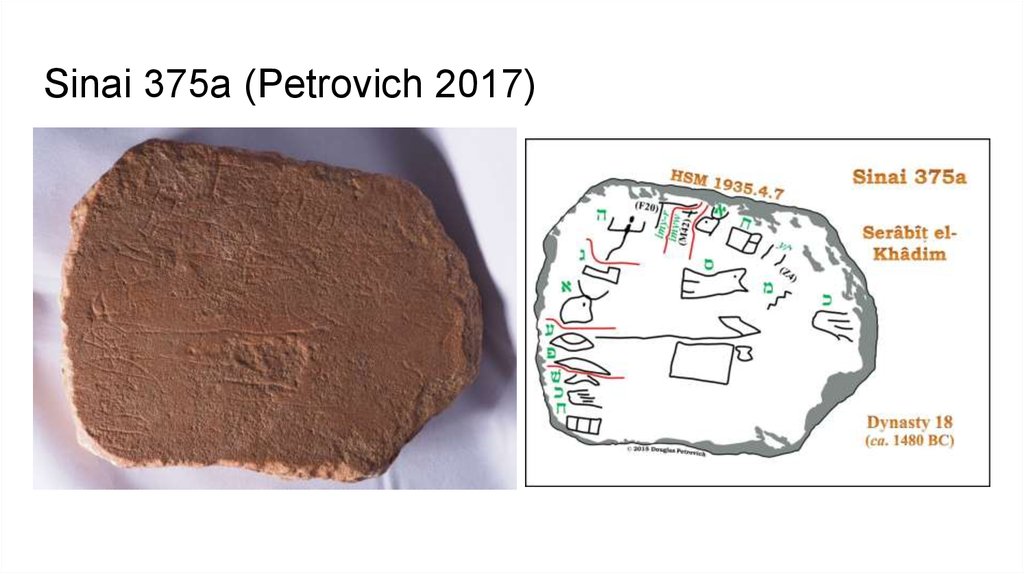
Sinai 375a (Petrovich 2017)19.
Sinai 375a (Petrovich 2016, 2017)12.2016
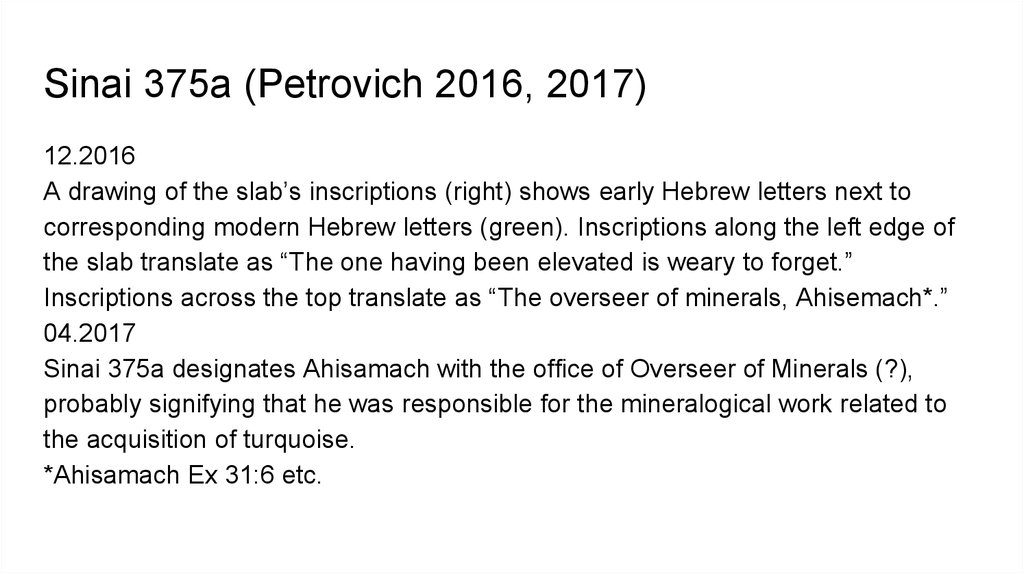
A drawing of the slab’s inscriptions (right) shows early Hebrew letters next to
corresponding modern Hebrew letters (green). Inscriptions along the left edge of
the slab translate as “The one having been elevated is weary to forget.”
Inscriptions across the top translate as “The overseer of minerals, Ahisemach*.”
04.2017
Sinai 375a designates Ahisamach with the office of Overseer of Minerals (?),
probably signifying that he was responsible for the mineralogical work related to
the acquisition of turquoise.
*Ahisamach Ex 31:6 etc.
20.
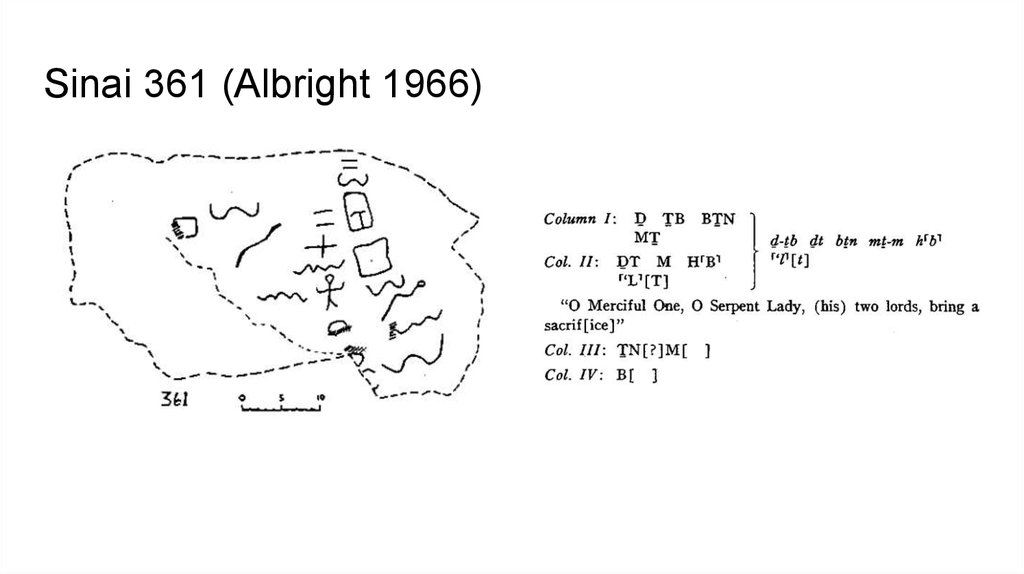
Sinai 361 (Albright 1966)21.
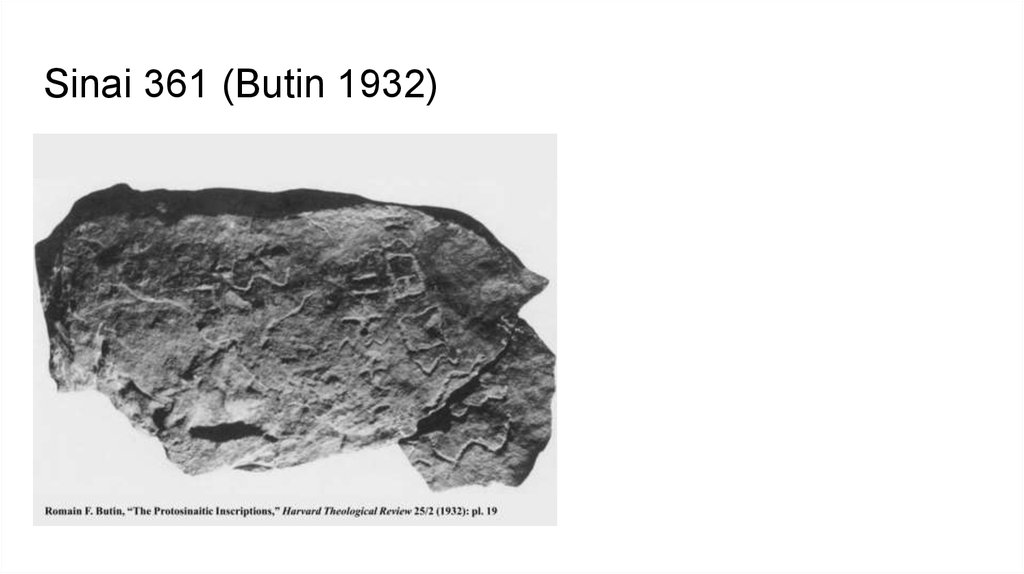
Sinai 361 (Butin 1932)22.
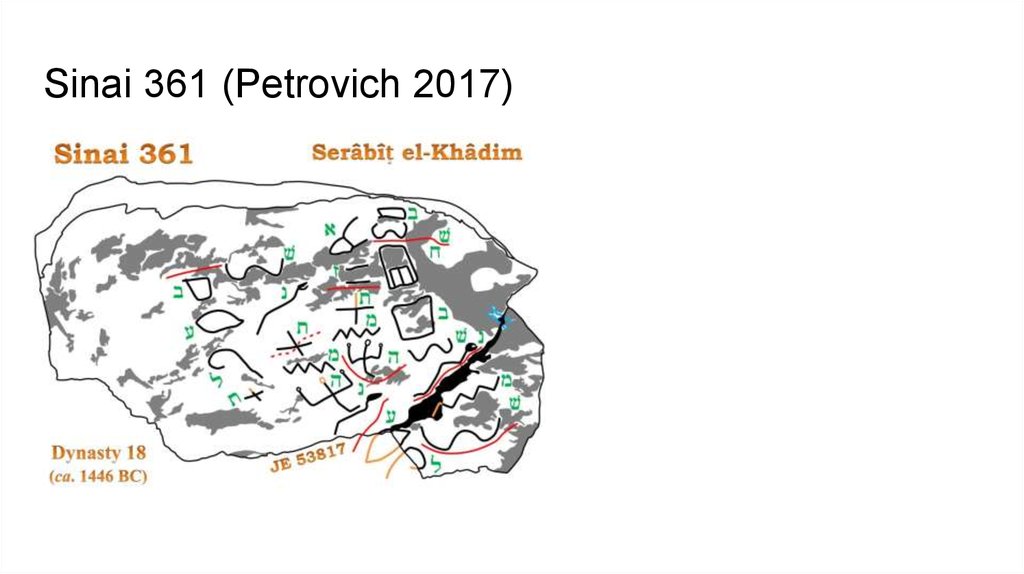
Sinai 361 (Petrovich 2017)bš / ḥbšn / mš
ʔz / tmh
šnt / <t>mhn / ʕl
bʕlt
bš / ḥbšn / mš
ʔz / tmh
šnt / <t>mhn / ʕl
bʕlt
23.
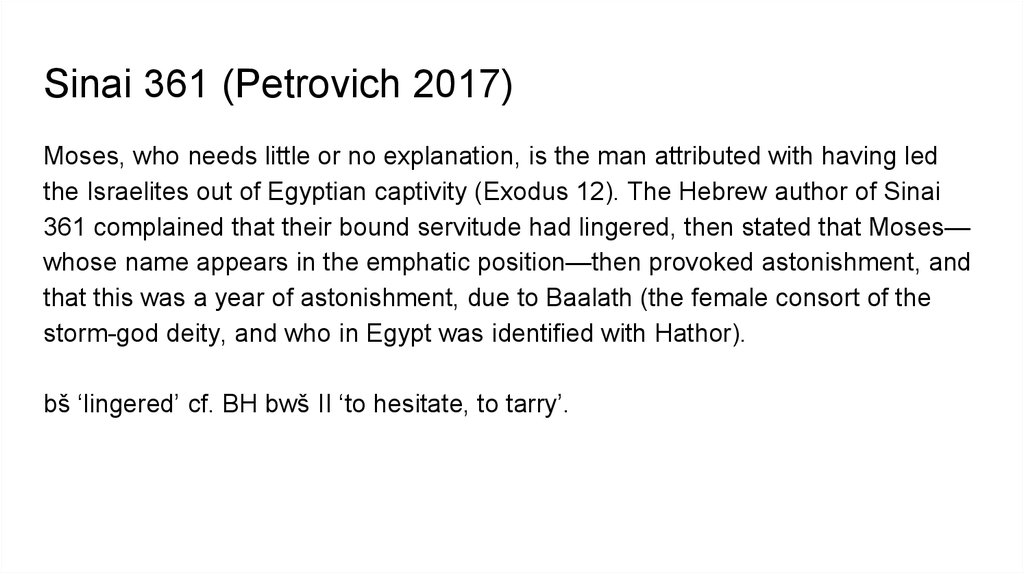
Sinai 361 (Petrovich 2017)Moses, who needs little or no explanation, is the man attributed with having led
the Israelites out of Egyptian captivity (Exodus 12). The Hebrew author of Sinai
361 complained that their bound servitude had lingered, then stated that Moses—
whose name appears in the emphatic position—then provoked astonishment, and
that this was a year of astonishment, due to Baalath (the female consort of the
storm-god deity, and who in Egypt was identified with Hathor).
bš ‘lingered’ cf. BH bwš II ‘to hesitate, to tarry’.