


 industry
Similar presentations:
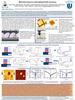








Strain-Based Hydrogen Quantification in a Metal Hydride Vessel
1. by Pyoungjong Lee, Kwangjin Jung, Kyoungsoo Kang, Seonguk Jeong, Ki Bong Lee and Chusik Park
Strain-Based Hydrogen Quantificationin a Metal Hydride Vessel
by Pyoungjong Lee, Kwangjin Jung, Kyoungsoo Kang, Seonguk Jeong, Ki Bong
Lee and Chusik Park
Hydrogen is a promising clean energy carrier,
but its widespread use depends on safe and
efficient storage. Solid-state storage using
metal hydrides offers advantages like high
safety and volumetric density, though it
requires effective thermal management. This
study proposes a simple, reliable strain-based
method that measures the mechanical strain
on the vessel’s outer surface caused by
volumetric changes of the metal hydride
during hydrogen absorption/desorption.
2. Discussion
The study uses an metal hydride mixedwith expanded natural graphite to form a
composite. The composite is loaded into a
stainless-steel vessel. A test rig with all
needed devices controls and records
temperature, pressure, flow, and strain.
Argon pressurization verifies strain gauge
installation. After activation via hydrogen
absorption-desorption cycles, hydrogen
desorption experiments are conducted to
correlate strain with remaining hydrogen.
The strain-based method's accuracy is
evaluated by comparison with
MassFlowControl-based measurements.
3. Results
The material shows a flat plateau pressurein its PCI curve, making conventional
pressure-based methods ineffective. Argon
pressurization tests confirm proper strain
gauge installation, with measured strain
closely matching theoretical values. Initial
activation requires about 20 cycles to
achieve full and stable performance. During
hydrogen desorption in the plateau region,
strain changes significantly while pressure
remains nearly constant. In continuous
desorption tests simulating a fuel cell
system, the strain-based method estimates
hydrogen amount accurately, with
maximum difference of only 4.5%.
4. Conclusions
A strain-based method is proposed to quantify hydrogen in metal hydride vessels,overcoming the limits of pressure-based methods. Activation required 18 cycles; while
temperature and hydrogen amount stabilized after 3 cycles, strain stabilized only after 18
cycles due to metal hydride fragmentation and rearrangement. A clear correlation between
strain and hydrogen amount was established in the desorption plateau region, where
pressure remains nearly constant. In continuous desorption tests the strain-based method
showed good agreement with mass flow controller measurements, with a maximum
difference of 4.5%. This confirms that strain reliably quantifies remaining hydrogen in metal
hydride vessels.