 biography
Similar presentations:



Ernest Hemingway
1. Ernest Hemingway
2.
Ernest Miller Hemingway (July 21,1899 – July 2, 1961) was an
American novelist, short-story
writer, and journalist. He was part of
the 1920s expatriate community in
Paris known as "the Lost
Generation", as described in his
memoir A Moveable Feast.
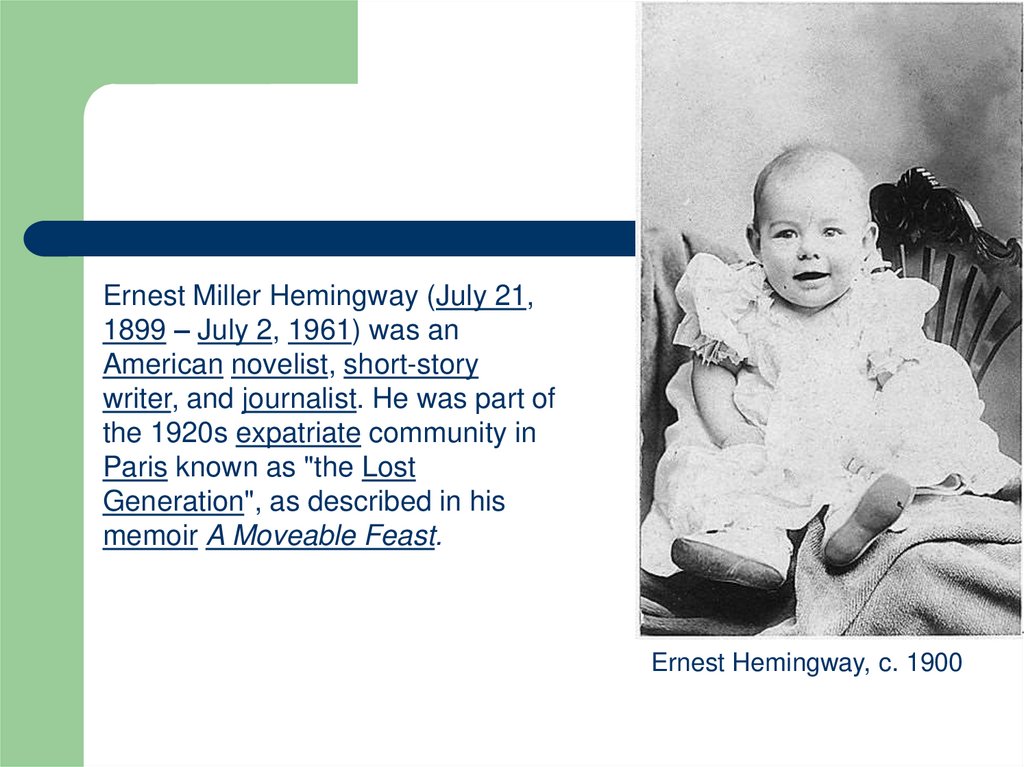
Ernest Hemingway, c. 1900
3. First novels and other early works
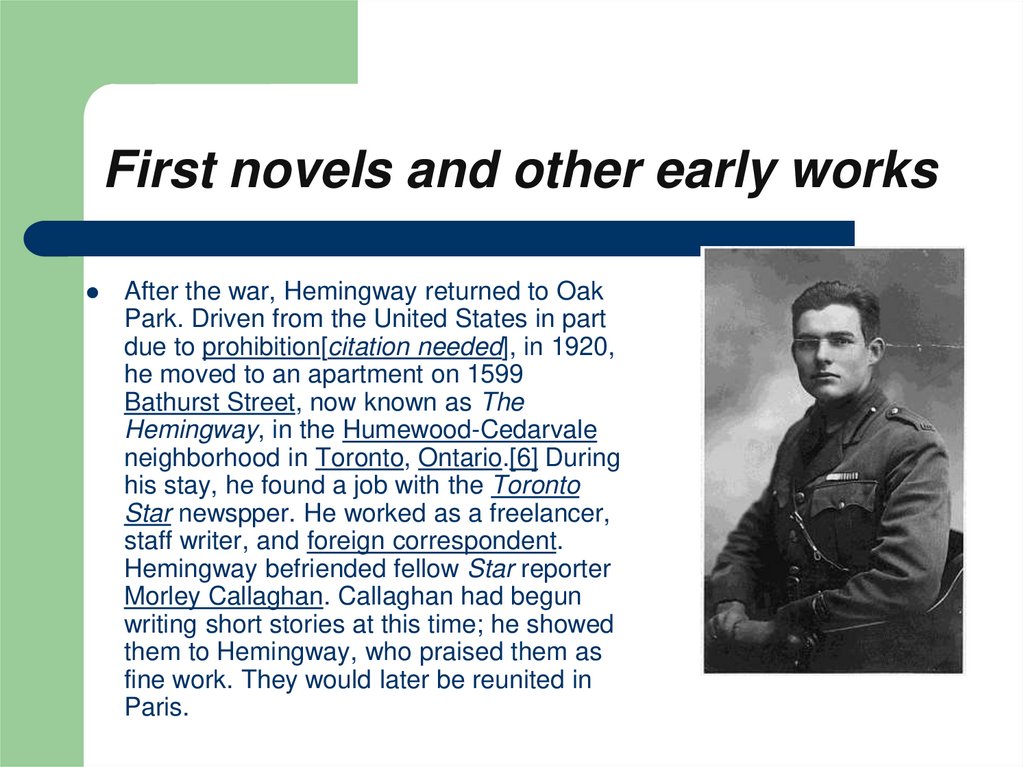
After the war, Hemingway returned to OakPark. Driven from the United States in part
due to prohibition[citation needed], in 1920,
he moved to an apartment on 1599
Bathurst Street, now known as The
Hemingway, in the Humewood-Cedarvale
neighborhood in Toronto, Ontario.[6] During
his stay, he found a job with the Toronto
Star newspper. He worked as a freelancer,
staff writer, and foreign correspondent.
Hemingway befriended fellow Star reporter
Morley Callaghan. Callaghan had begun
writing short stories at this time; he showed
them to Hemingway, who praised them as
fine work. They would later be reunited in
Paris.
4. The Forty-Nine Stories
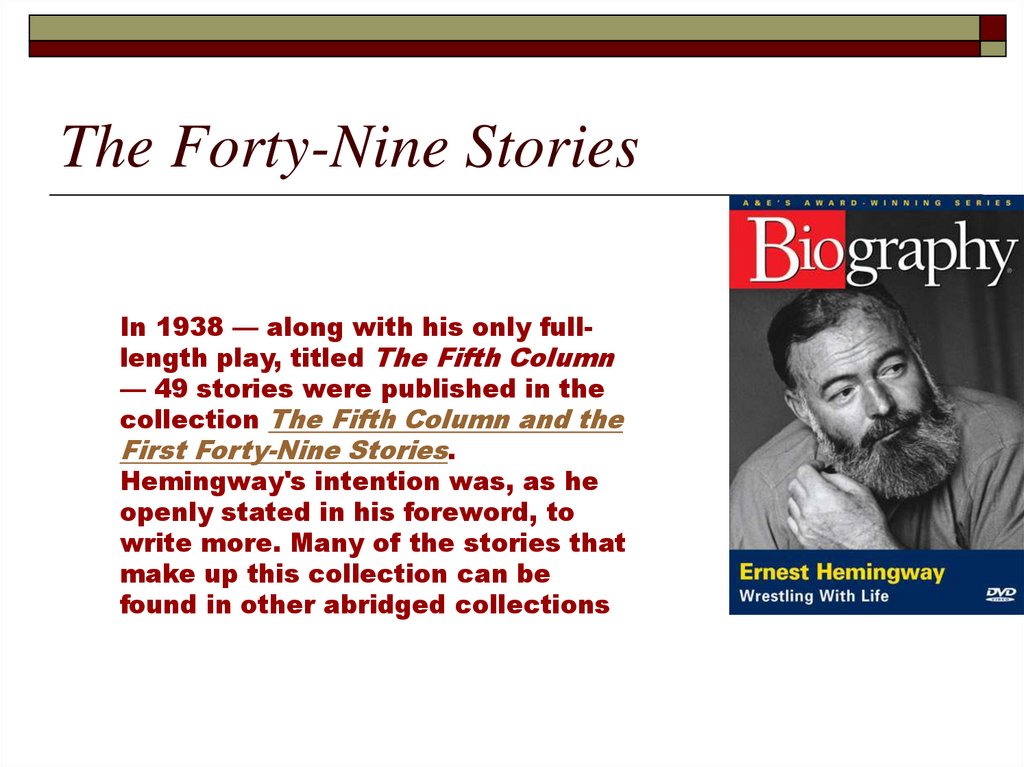
In 1938 — along with his only fulllength play, titled The Fifth Column— 49 stories were published in the
collection The Fifth Column and the
First Forty-Nine Stories.
Hemingway's intention was, as he
openly stated in his foreword, to
write more. Many of the stories that
make up this collection can be
found in other abridged collections
5. Later years
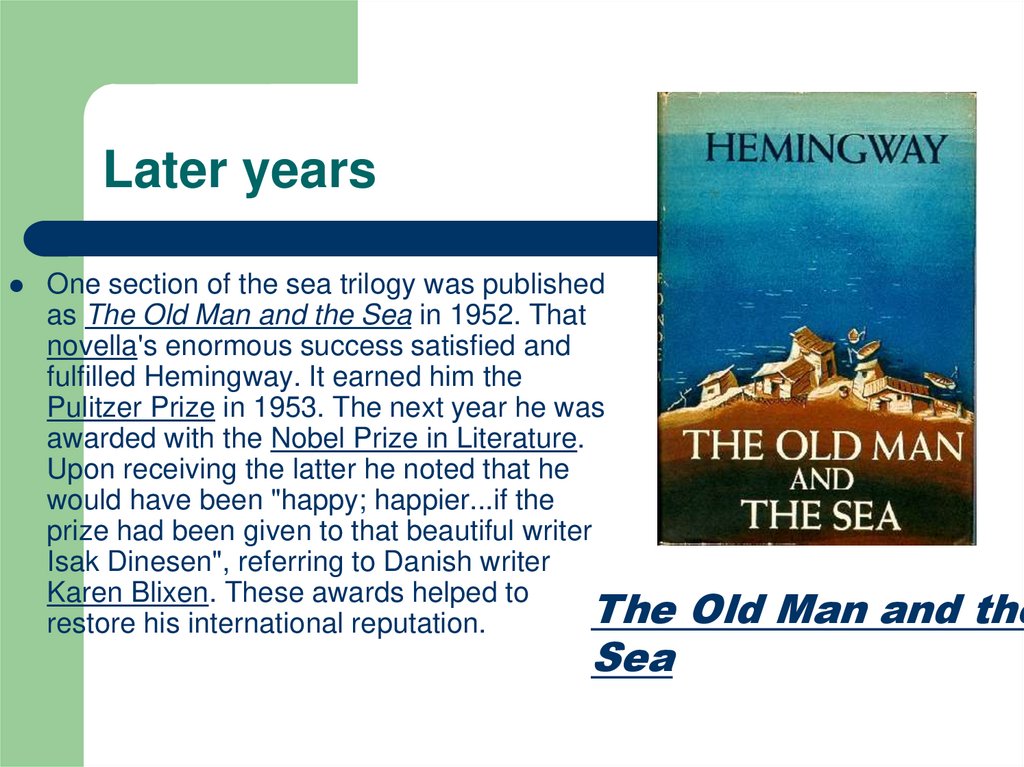
One section of the sea trilogy was publishedas The Old Man and the Sea in 1952. That
novella's enormous success satisfied and
fulfilled Hemingway. It earned him the
Pulitzer Prize in 1953. The next year he was
awarded with the Nobel Prize in Literature.
Upon receiving the latter he noted that he
would have been "happy; happier...if the
prize had been given to that beautiful writer
Isak Dinesen", referring to Danish writer
Karen Blixen. These awards helped to
The Old Man and the
restore his international reputation.
Sea
6.
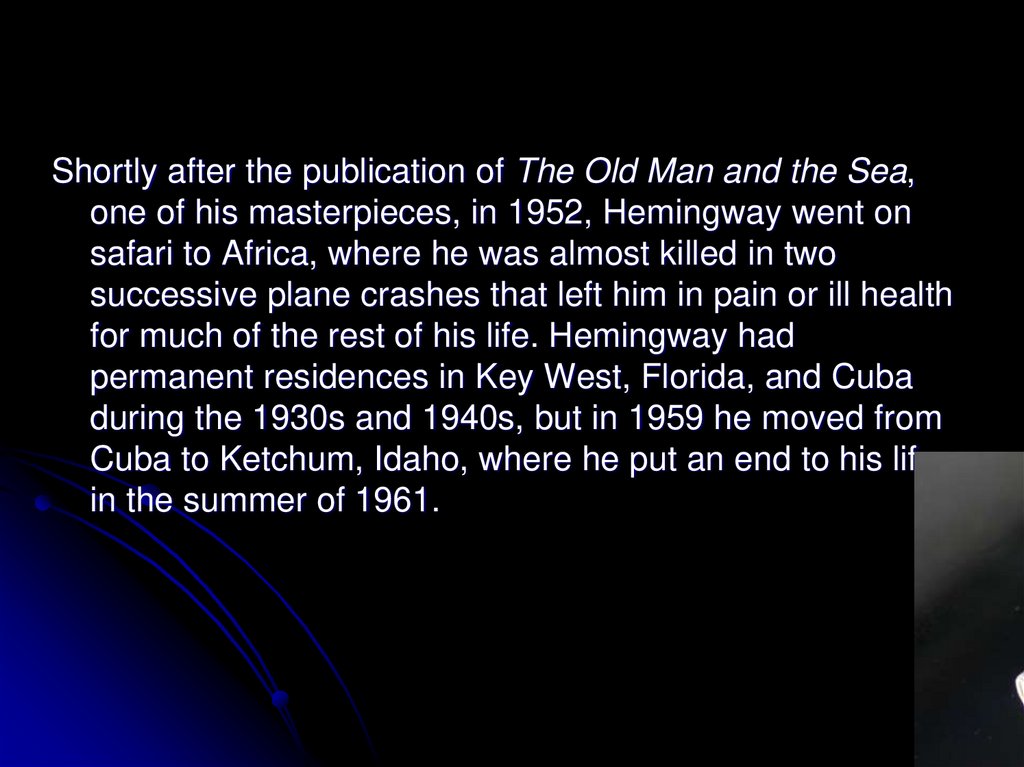
Shortly after the publication of The Old Man and the Sea,one of his masterpieces, in 1952, Hemingway went on
safari to Africa, where he was almost killed in two
successive plane crashes that left him in pain or ill health
for much of the rest of his life. Hemingway had
permanent residences in Key West, Florida, and Cuba
during the 1930s and 1940s, but in 1959 he moved from
Cuba to Ketchum, Idaho, where he put an end to his life
in the summer of 1961.
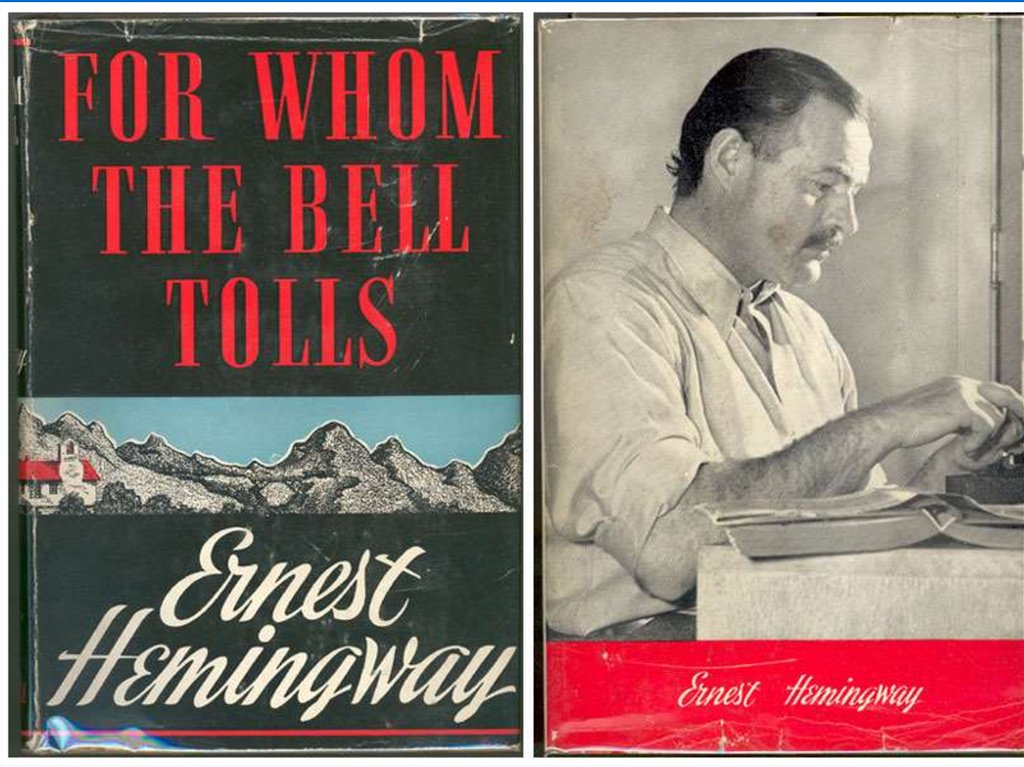
7. For Whom the Bell Tolls
8.
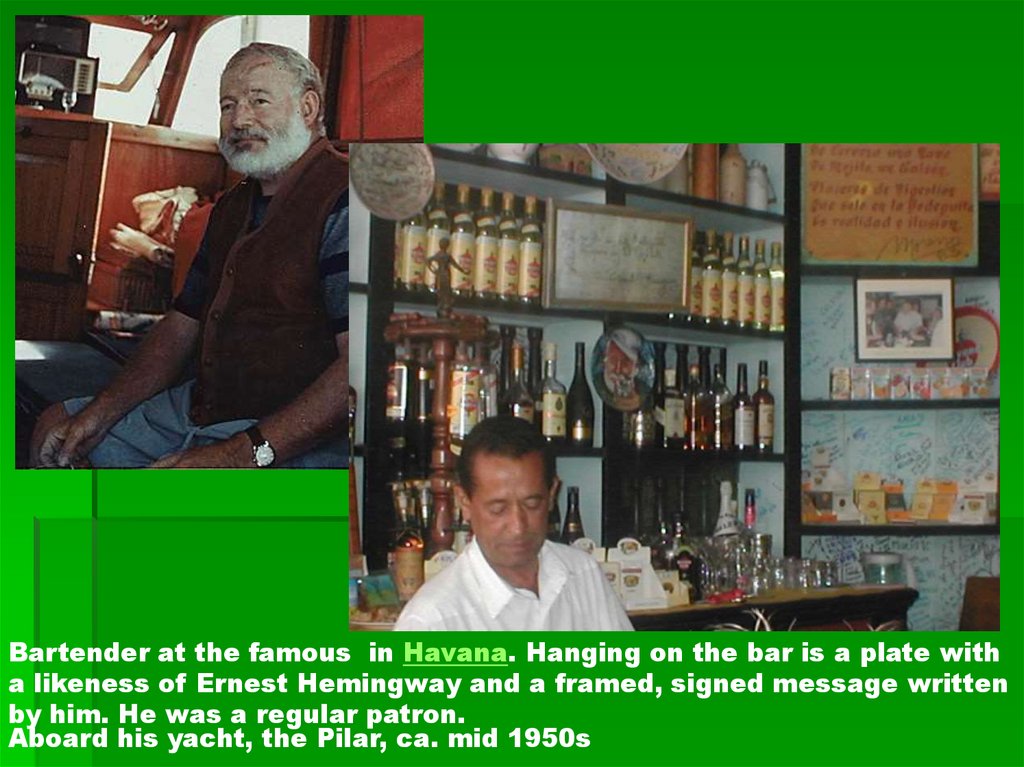
Bartender at the famous in Havana. Hanging on the bar is a plate witha likeness of Ernest Hemingway and a framed, signed message written
by him. He was a regular patron.
Aboard his yacht, the Pilar, ca. mid 1950s
9. Suicide
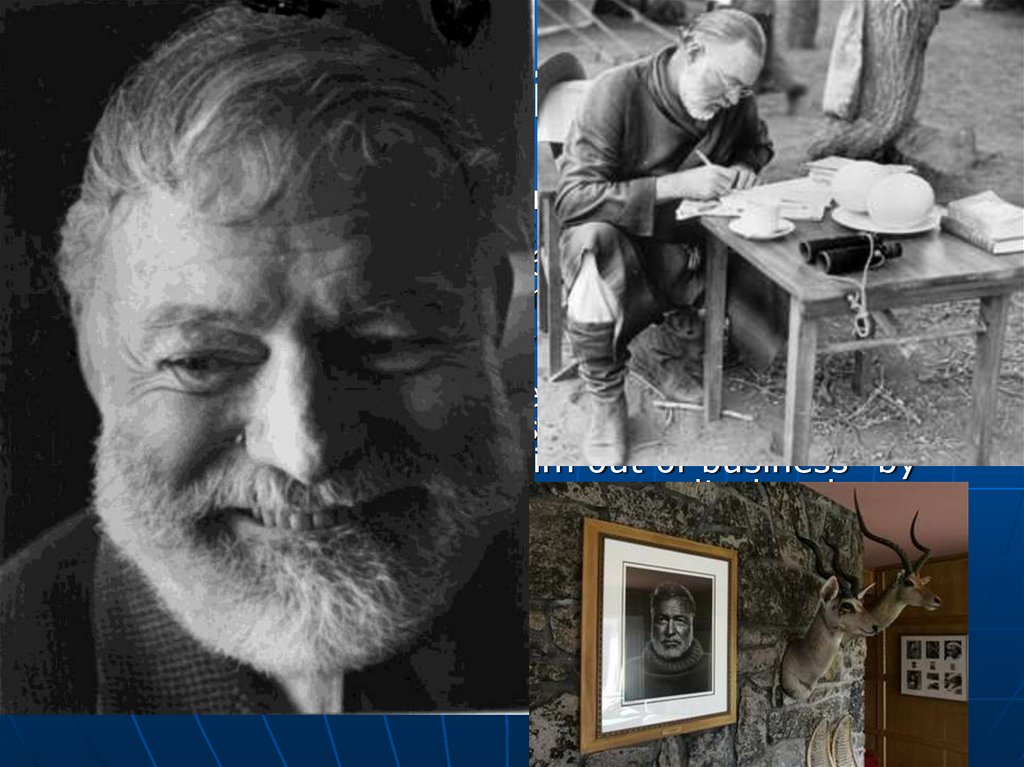
Hemingway attempted suicide in the spring of1961, and received ECT treatment again. Some
three weeks short of his 62nd birthday, he took
his own life on the morning of July 2, 1961 at his
home in Ketchum, Idaho, with a shotgun blast to
the head. Judged not me ntally responsible for
his final act, he was buried in a Roman Catholic
service. Hemingway himself blamed the ECT
treatments for "putting him out of business" by
destroying his memory; some medical and
scholarly opinion has been receptive to this view,
although others, including one of the physicians
who prescribed the electroshock regimen, dispute
that opinion