
 marketing
Similar presentations:






What Makes a Good Advert?
1.
Unit 5. AdvertisingSeminar 1. What makes a good advert? Manipulating Images (Units 5.1 & 5.2)
Seminar 2. Advertising and Children (Unit 5.3)
Seminar 3. Scenario: B-Kool Soft Drinks (Unit 5.4)
Vocabulary:
Adjectives, advertising
Synonyms
Grammar:
Second conditional; comparison
Production:
Giving a presentation
2.
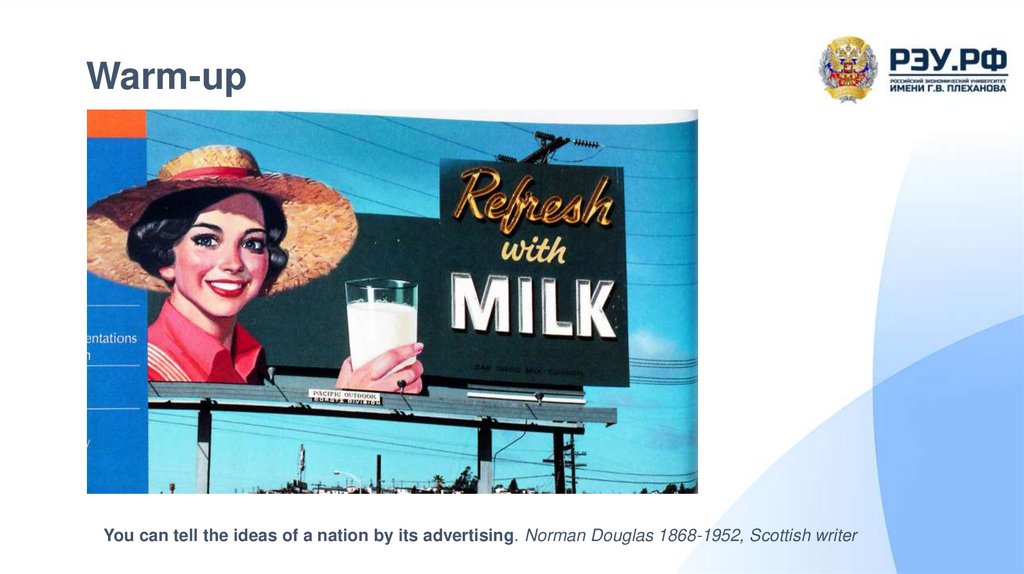
Warm-upYou can tell the ideas of a nation by its advertising. Norman Douglas 1868-1952, Scottish writer
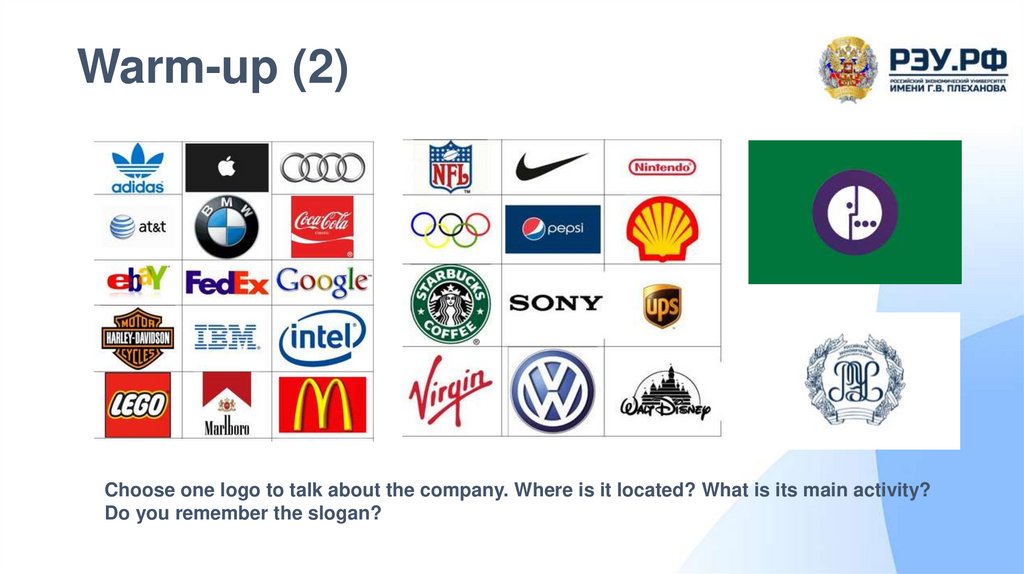
3. Warm-up (2)
Choose one logo to talk about the company. Where is it located? What is its main activity?Do you remember the slogan?
4. Reading
Ex 2a p.46Read three opinions about advertising.
Are the statements true, false or partly
true.
5. Vocabulary Ex.3 p.47*
MeaningAdjectives
Attracting your attention easily
attention-grabbing
Unusual, attractive and noticeable
eye-catching
Amusing and enjoyable, easy to remember
catchy
Very surprising
shocking
Works well and produces the results you want
effective
Able to make people do or believe something
persuasive
Funny and clever
witty
Not interesting or exciting
dull
Imaginative, using completely new and different ideas
original
Unusual and exciting because it comes from a distant country
exotic
6. Vocabulary Ex. 4 p.47
• an advert on TV or radio• financial support a company gives in order to get publicity for themselves
• a short phrase that is easy to remember
• to say publicly that you support or approve of something
• giving the wrong idea or impression
• special design/ symbol that a company puts on all its products or adverts
• to help to sell something, especially by advertising
• a short, easy to remember phase with music
7. Key
• an advert on TV or radio (commercial)• financial support a company gives in order to get publicity for themselves (
sponsorship)
• a short phrase that is easy to remember (slogan)
• to say publicly that you support or approve of something (endorse)
• giving the wrong idea or impression (misleading)
• special design/ symbol that a company puts on all its products or adverts
(logo)
• to help to sell something, especially by advertising (promote)
• a short, easy to remember phase with music (jingle)
8. Warm-up (Unit 5.2)
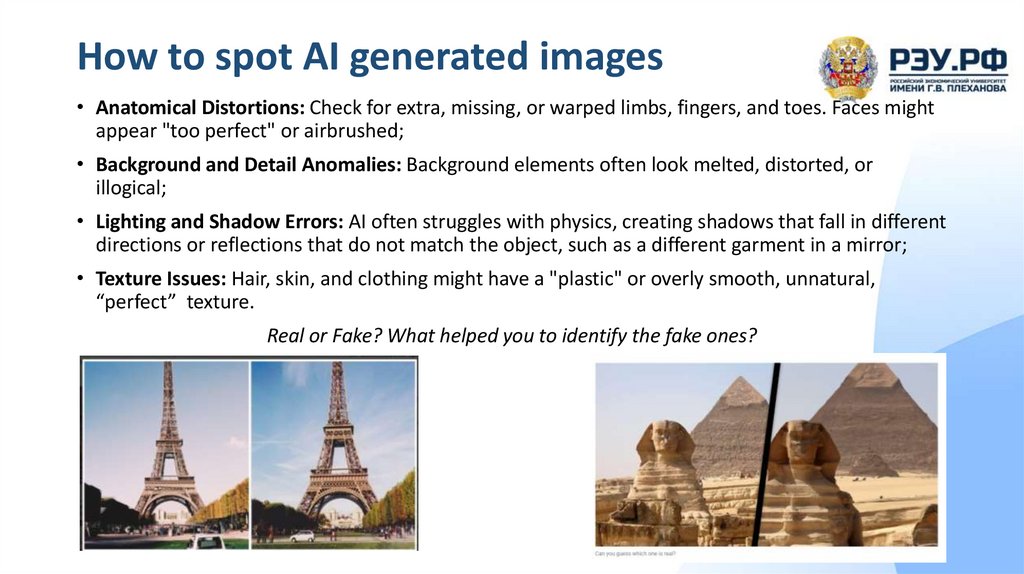
Could you identify which one is real? Why?9. How to spot AI generated images
• Anatomical Distortions: Check for extra, missing, or warped limbs, fingers, and toes. Faces mightappear "too perfect" or airbrushed;
• Background and Detail Anomalies: Background elements often look melted, distorted, or
illogical;
• Lighting and Shadow Errors: AI often struggles with physics, creating shadows that fall in different
directions or reflections that do not match the object, such as a different garment in a mirror;
• Texture Issues: Hair, skin, and clothing might have a "plastic" or overly smooth, unnatural,
“perfect” texture.
Real or Fake? What helped you to identify the fake ones?
10. For & Against Airbrushing
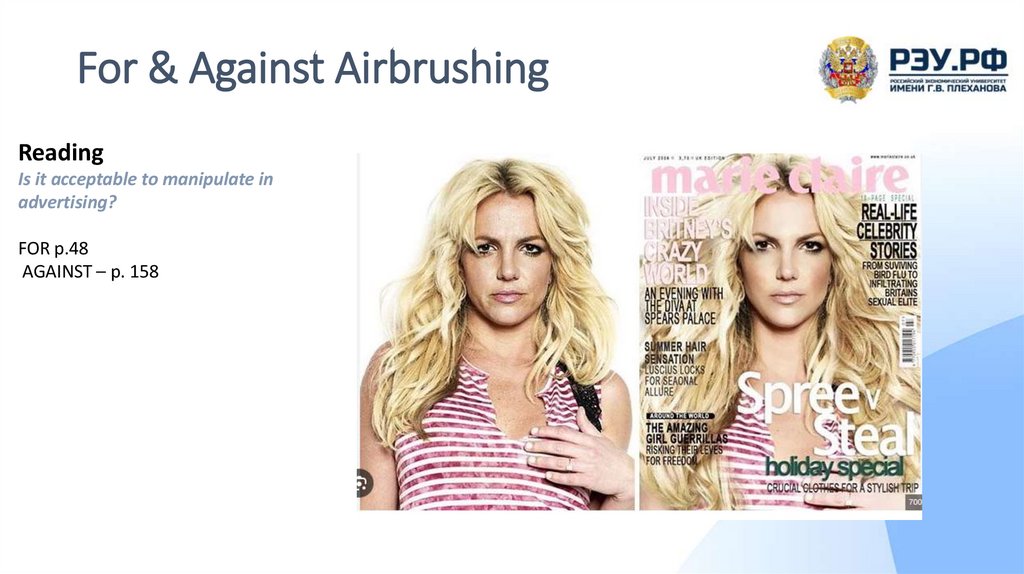
For & Against AirbrushingReading
Is it acceptable to manipulate in
advertising?
FOR p.48
AGAINST – p. 158
11. Using Photoshopped Images in Advertising: For or Against?
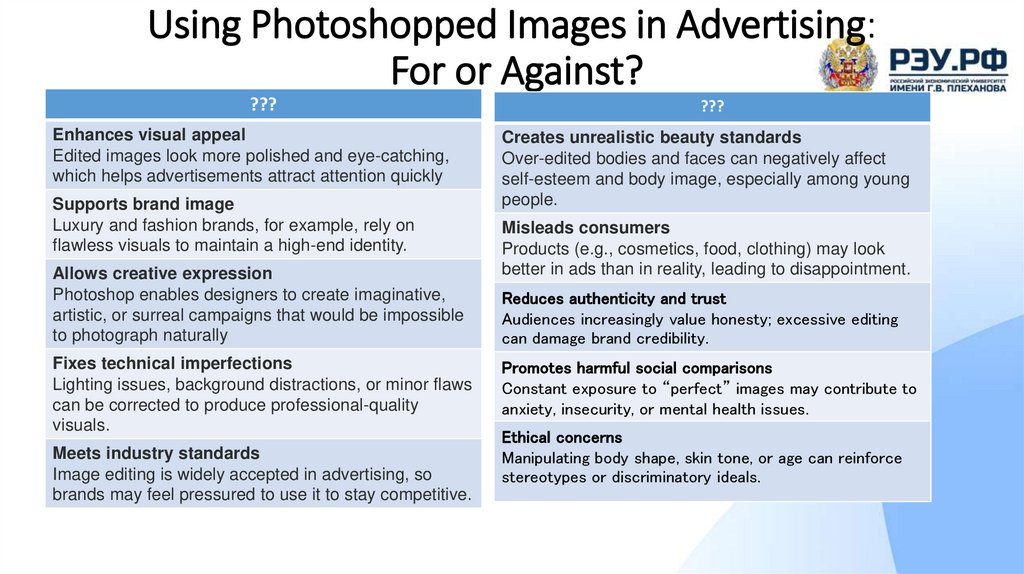
???Enhances visual appeal
Edited images look more polished and eye-catching,
which helps advertisements attract attention quickly
Supports brand image
Luxury and fashion brands, for example, rely on
flawless visuals to maintain a high-end identity.
Allows creative expression
Photoshop enables designers to create imaginative,
artistic, or surreal campaigns that would be impossible
to photograph naturally
Fixes technical imperfections
Lighting issues, background distractions, or minor flaws
can be corrected to produce professional-quality
visuals.
Meets industry standards
Image editing is widely accepted in advertising, so
brands may feel pressured to use it to stay competitive.
???
Creates unrealistic beauty standards
Over-edited bodies and faces can negatively affect
self-esteem and body image, especially among young
people.
Misleads consumers
Products (e.g., cosmetics, food, clothing) may look
better in ads than in reality, leading to disappointment.
Reduces authenticity and trust
Audiences increasingly value honesty; excessive editing
can damage brand credibility.
Promotes harmful social comparisons
Constant exposure to “perfect” images may contribute to
anxiety, insecurity, or mental health issues.
Ethical concerns
Manipulating body shape, skin tone, or age can reinforce
stereotypes or discriminatory ideals.
12. Discussion Questions
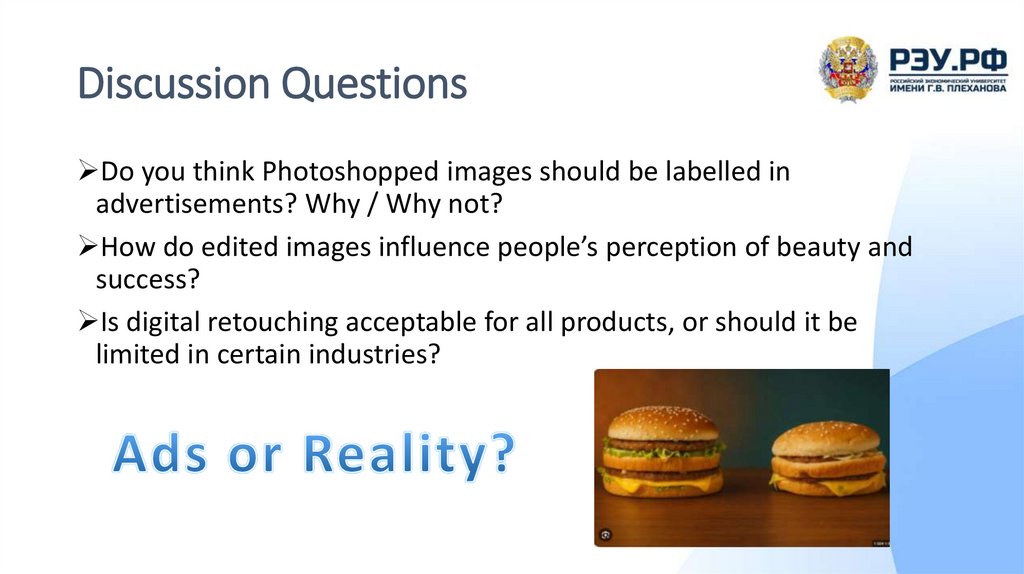
Do you think Photoshopped images should be labelled inadvertisements? Why / Why not?
How do edited images influence people’s perception of beauty and
success?
Is digital retouching acceptable for all products, or should it be
limited in certain industries?
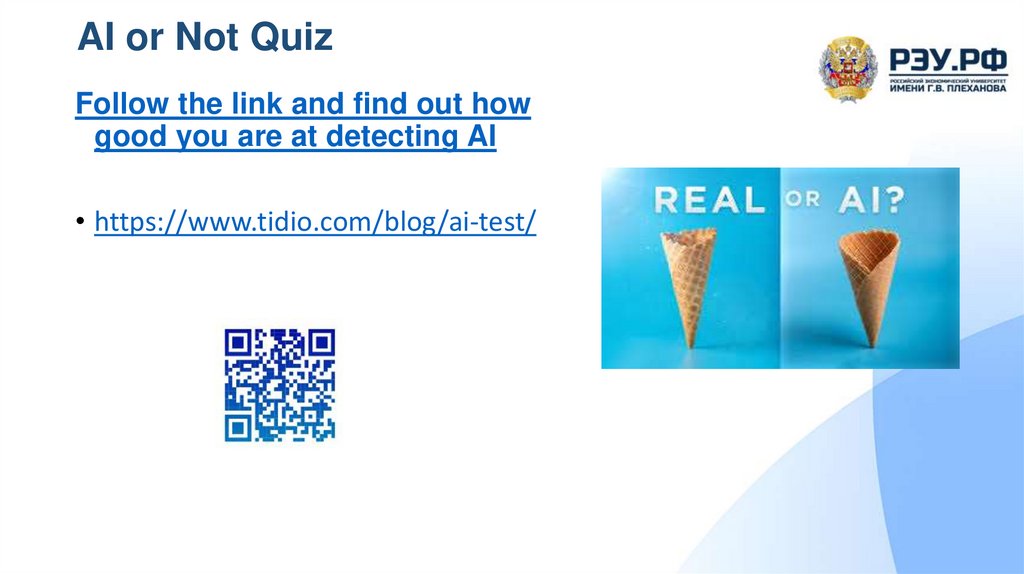
13. AI or Not Quiz
Follow the link and find out howgood you are at detecting AI
• https://www.tidio.com/blog/ai-test/
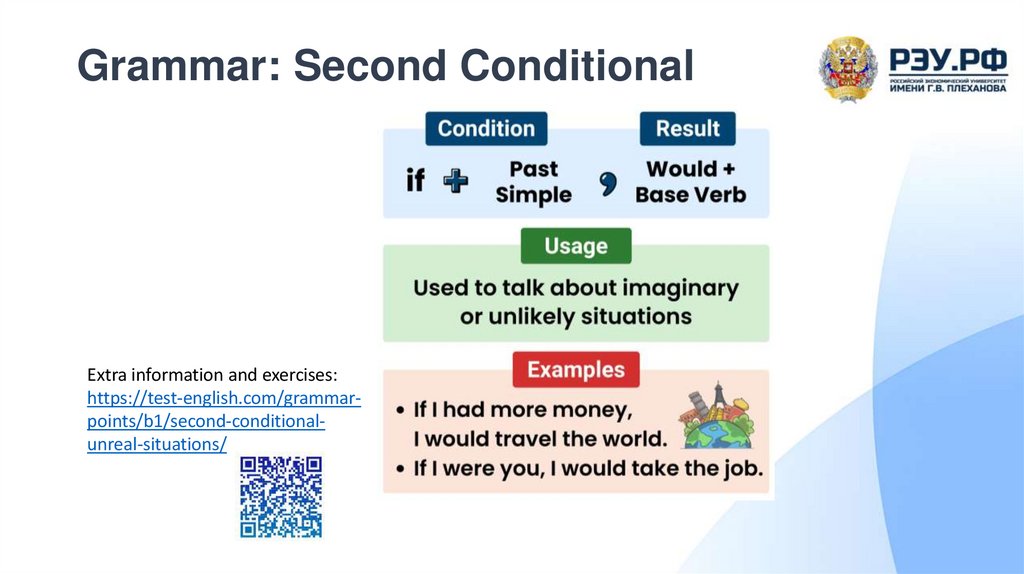
14. Grammar: Second Conditional
Extra information and exercises:https://test-english.com/grammarpoints/b1/second-conditionalunreal-situations/
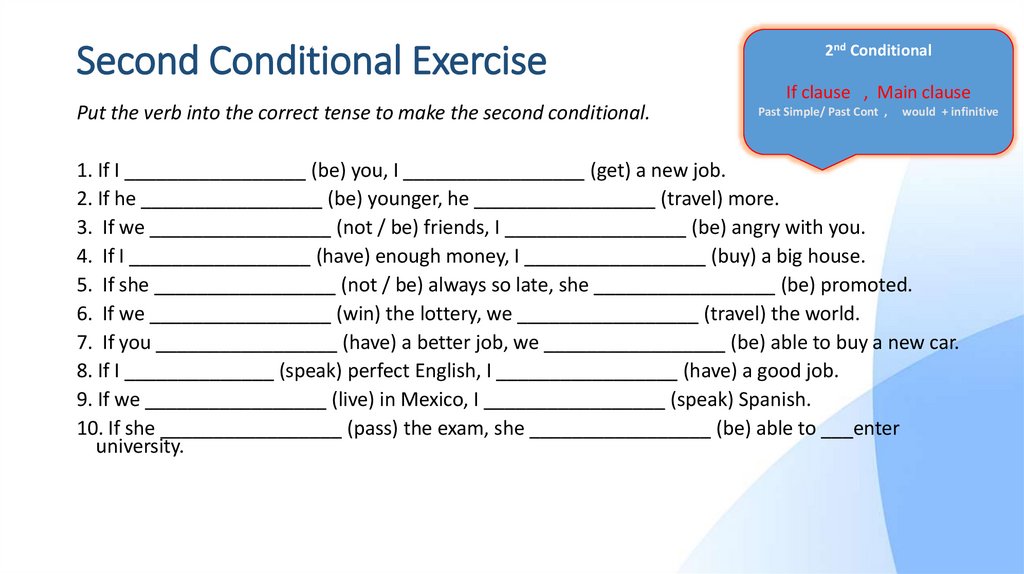
15. Second Conditional Exercise
Put the verb into the correct tense to make the second conditional.2nd Conditional
If clause , Main clause
Past Simple/ Past Cont ,
would + infinitive
1. If I _________________ (be) you, I _________________ (get) a new job.
2. If he _________________ (be) younger, he _________________ (travel) more.
3. If we _________________ (not / be) friends, I _________________ (be) angry with you.
4. If I _________________ (have) enough money, I _________________ (buy) a big house.
5. If she _________________ (not / be) always so late, she _________________ (be) promoted.
6. If we _________________ (win) the lottery, we _________________ (travel) the world.
7. If you _________________ (have) a better job, we _________________ (be) able to buy a new car.
8. If I ______________ (speak) perfect English, I _________________ (have) a good job.
9. If we _________________ (live) in Mexico, I _________________ (speak) Spanish.
10. If she _________________ (pass) the exam, she _________________ (be) able to ___enter
university.