 ecology
Similar presentations:





Air Pollution (What is Air Pollution?)
1. Air Pollution
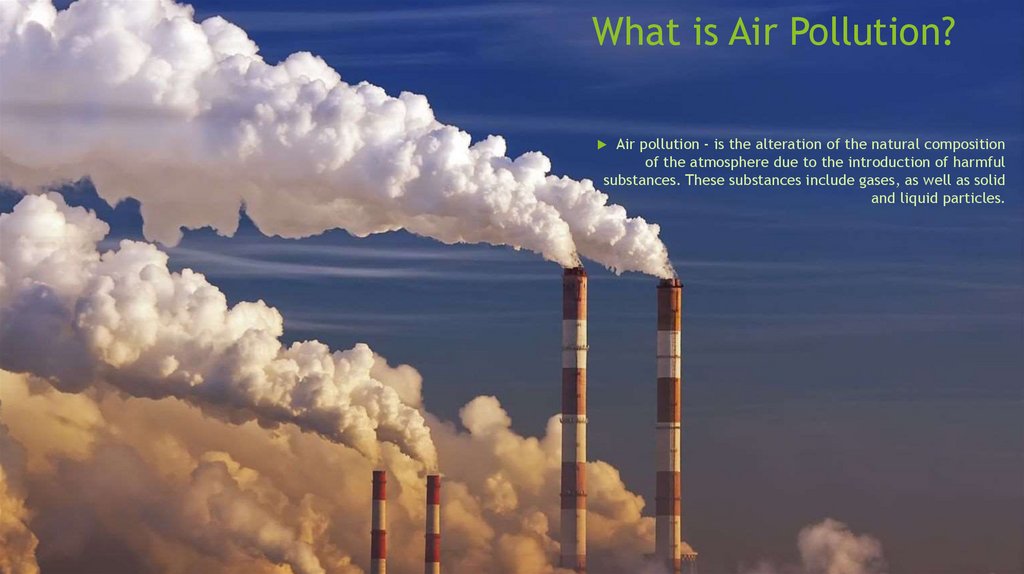
2. What is Air Pollution?
Air pollution - is the alteration of the natural compositionof the atmosphere due to the introduction of harmful
substances. These substances include gases, as well as solid
and liquid particles.
3. Main Causes of Air Pollution
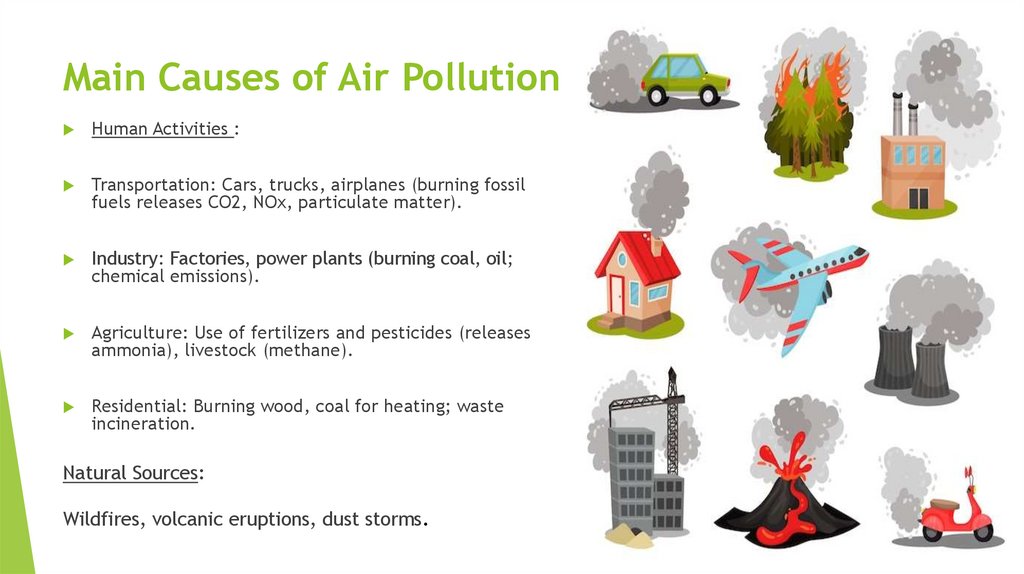
Human Activities :Transportation: Cars, trucks, airplanes (burning fossil
fuels releases CO2, NOx, particulate matter).
Industry: Factories, power plants (burning coal, oil;
chemical emissions).
Agriculture: Use of fertilizers and pesticides (releases
ammonia), livestock (methane).
Residential: Burning wood, coal for heating; waste
incineration.
Natural Sources:
Wildfires, volcanic eruptions, dust storms.
4. How Does It Affect Human Health?
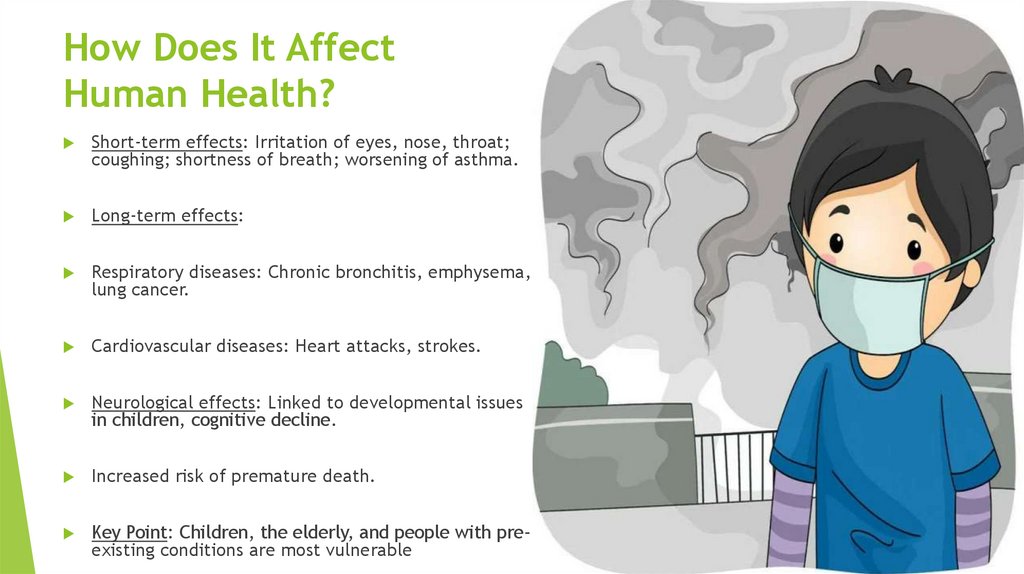
Short-term effects: Irritation of eyes, nose, throat;coughing; shortness of breath; worsening of asthma.
Long-term effects:
Respiratory diseases: Chronic bronchitis, emphysema,
lung cancer.
Cardiovascular diseases: Heart attacks, strokes.
Neurological effects: Linked to developmental issues
in children, cognitive decline.
Increased risk of premature death.
Key Point: Children, the elderly, and people with preexisting conditions are most vulnerable
5. How Does It Affect Animals?
Direct harm: Respiratory problems in animals, similarto humans.
Damages forests and soils, affecting food sources and
habitats.
Toxins in the food chain: Pollutants settle on water
and plants. Small animals ingest them, and toxins
accumulate in predators (bioaccumulation).
Ozone layer depletion: Some pollutants damage the
ozone layer, increasing harmful UV radiation for all
living things.
6. Effects of air pollution
Acid rain occurs when acidic pollutants in theatmosphere, such as sulfur dioxide and nitrogen
oxides, mix with water vapor to form acidic
compounds. Acid rain contributes to the degradation
of water bodies and soil, and can damage plants.
Ozone depletion is caused by ozone-depleting
substances found in firefighting foam, solvents, and
various aerosols. The ozone layer is a physical
barrier that is located at an altitude of 10 to 50 km
above the Earth's surface and protects it from
ultraviolet radiation.
Air pollution increases the intensity of
eutrophication, which is the enrichment of water
with elements such as nitrogen and phosphorus. This
leads to an increase in biological activity in the
water, including the proliferation of blue-green
algae or cyanobacteria, some of which produce
cyanotoxins that are harmful to human and animal
health.