

Similar presentations:







rugpt-io_presentation_26-01-26-23-36-31
1.
New Zealand EnglishAuthor
Date
Author of the presentation
26 January 2026
email@example.com
2.
What is New ZealandEnglish?
New Zealand English (NZE) is the regional variety of English spoken
primarily in New Zealand across diverse communities. It is distinguished by
characteristic vowel developments, generally non-rhotic pronunciation, and a
notable influence from te reo Māori and Pacific languages. NZE is worth
studying because it illustrates how history, contact, and identity shape a
living variety of English.
02
3.
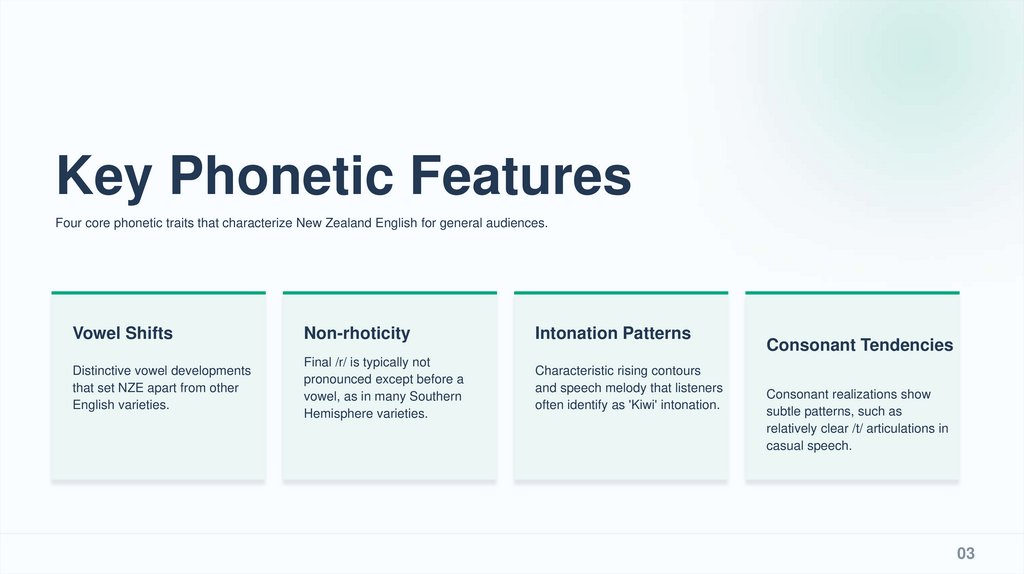
Key Phonetic FeaturesFour core phonetic traits that characterize New Zealand English for general audiences.
Vowel Shifts
Non-rhoticity
Intonation Patterns
Distinctive vowel developments
that set NZE apart from other
English varieties.
Final /r/ is typically not
pronounced except before a
vowel, as in many Southern
Hemisphere varieties.
Characteristic rising contours
and speech melody that listeners
often identify as 'Kiwi' intonation.
Consonant Tendencies
Consonant realizations show
subtle patterns, such as
relatively clear /t/ articulations in
casual speech.
03
4.
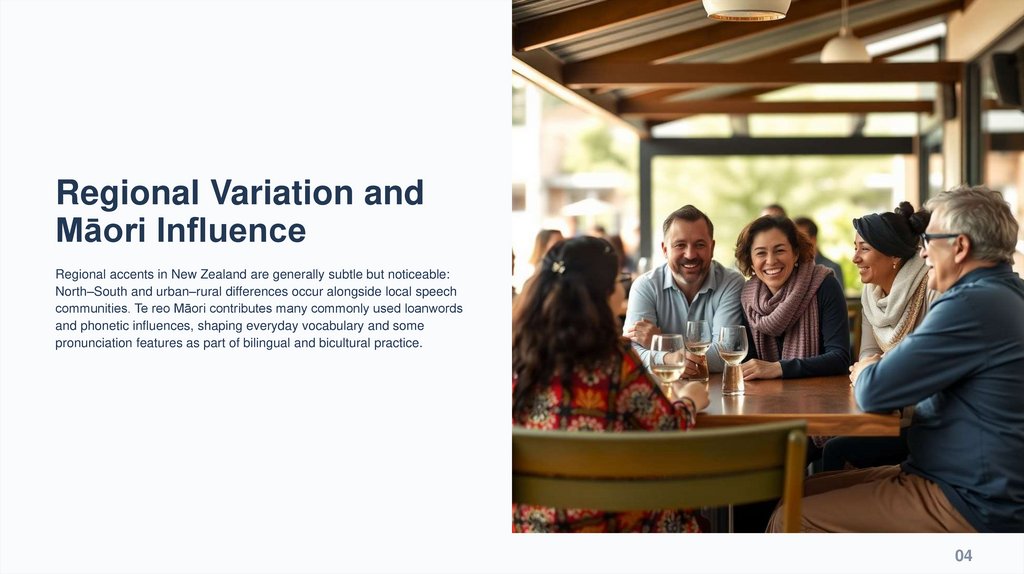
Regional Variation andMāori Influence
Regional accents in New Zealand are generally subtle but noticeable:
North–South and urban–rural differences occur alongside local speech
communities. Te reo Māori contributes many commonly used loanwords
and phonetic influences, shaping everyday vocabulary and some
pronunciation features as part of bilingual and bicultural practice.
04
5.
Section break: Historicalroots
6.
Historical forces shaping NZE include early British settlement patterns thatbrought diverse British dialects, sustained contact and exchange with Māori
and Pacific languages, and later standardizing channels such as schools, print,
and broadcasting. Over time these influences combined with local innovation to
Historical Development
produce distinctive phonetic and lexical features that continue to evolve.
06
7.
DistinctiveVocabulary and
Expressions
Key lexical features that shape everyday NZ speech
and reflect cultural influence.
01
02
Māori Loanwords
Colloquialisms &
Diminutives
Everyday terms from te reo Māori (e.g.,
place names, concepts) widely used
across communities.
Shortened, friendly forms (diminutives)
and local slang that flavor casual speech.
03
04
Regional Terms
Rural & Maritime Terms
Local words and place-based usages that
vary between regions and communities.
Lexicon tied to farming, fishing, and
outdoor life that remains common in
everyday use.
07
8.
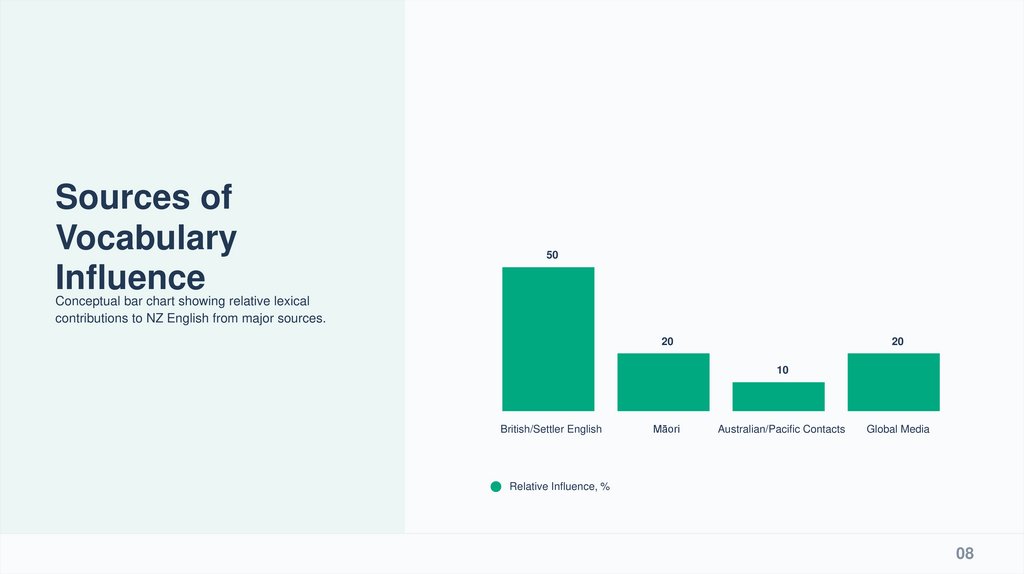
Sources ofVocabulary
Influence
50
Conceptual bar chart showing relative lexical
contributions to NZ English from major sources.
20
20
10
British/Settler English
Māori
Australian/Pacific Contacts
Global Media
Relative Influence, %
08
9.
Pronunciation: EverydayExamples
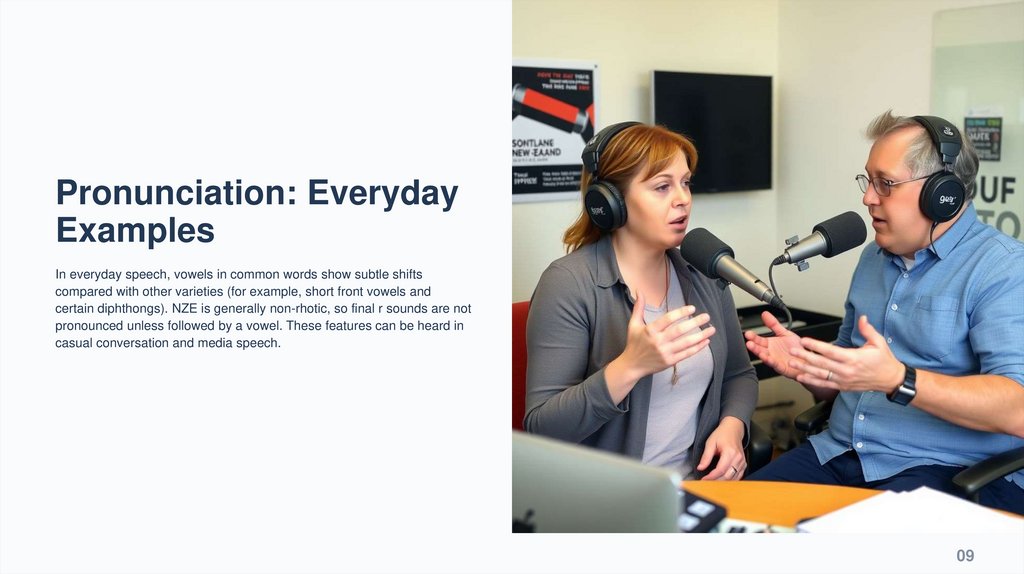
In everyday speech, vowels in common words show subtle shifts
compared with other varieties (for example, short front vowels and
certain diphthongs). NZE is generally non-rhotic, so final r sounds are not
pronounced unless followed by a vowel. These features can be heard in
casual conversation and media speech.
09
10.
Section break: Social andcultural role
11.
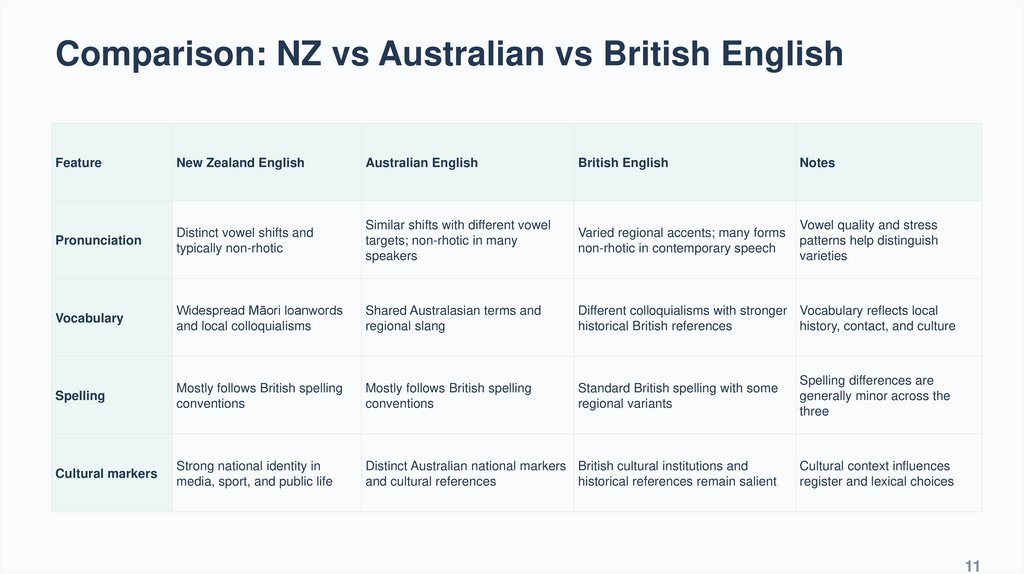
Comparison: NZ vs Australian vs British EnglishFeature
New Zealand English
Australian English
British English
Notes
Pronunciation
Distinct vowel shifts and
typically non-rhotic
Similar shifts with different vowel
targets; non-rhotic in many
speakers
Varied regional accents; many forms
non-rhotic in contemporary speech
Vowel quality and stress
patterns help distinguish
varieties
Vocabulary
Widespread Māori loanwords
and local colloquialisms
Shared Australasian terms and
regional slang
Different colloquialisms with stronger Vocabulary reflects local
historical British references
history, contact, and culture
Spelling
Mostly follows British spelling
conventions
Mostly follows British spelling
conventions
Standard British spelling with some
regional variants
Spelling differences are
generally minor across the
three
Cultural markers
Strong national identity in
media, sport, and public life
Distinct Australian national markers British cultural institutions and
and cultural references
historical references remain salient
Cultural context influences
register and lexical choices
11
12.
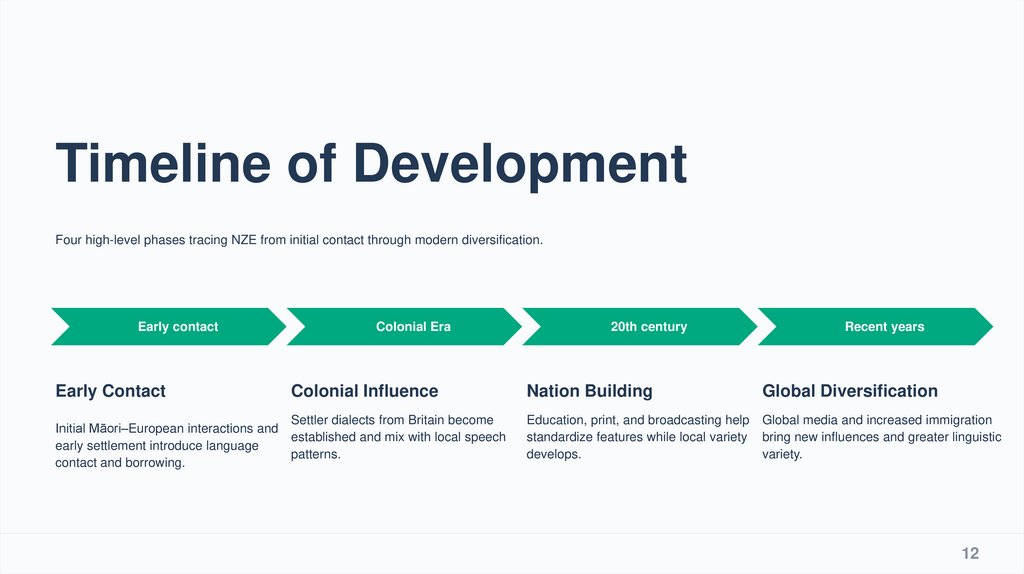
Timeline of DevelopmentFour high-level phases tracing NZE from initial contact through modern diversification.
Early contact
Early Contact
Colonial Era
Colonial Influence
Settler dialects from Britain become
Initial Māori–European interactions and
established and mix with local speech
early settlement introduce language
patterns.
contact and borrowing.
20th century
Nation Building
Recent years
Global Diversification
Education, print, and broadcasting help Global media and increased immigration
standardize features while local variety bring new influences and greater linguistic
develops.
variety.
12