 art
artSimilar presentations:

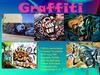




Graffiti: vandalism or street art
1. Бахчисарайский колледж строительства, архитектуры и дизайна (филиал) ФГАОУ ВО «КФУ им. В.И. Вернадского»
Индивидуальный проектТема: «Граффити: вандализм или уличное искусство»
«Graffiti: vandalism or street art»
Выполнил обучающийся
группы Д-14
Петров Игорь Романович
Руководитель проекта
Вознюк Мария Михайловна
2. What is graffiti?
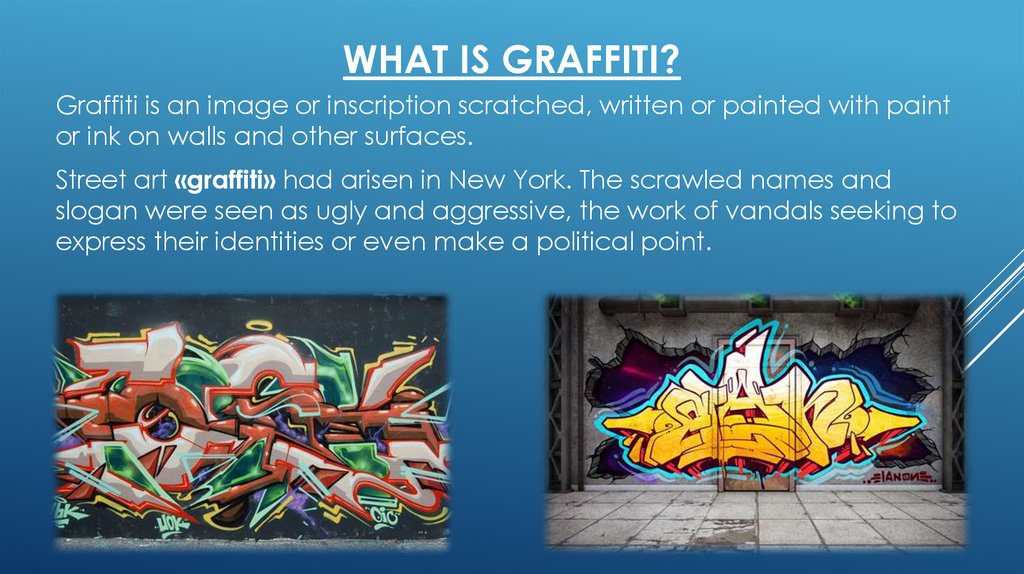
WHAT IS GRAFFITI?Graffiti is an image or inscription scratched, written or painted with paint
or ink on walls and other surfaces.
Street art «graffiti» had arisen in New York. The scrawled names and
slogan were seen as ugly and aggressive, the work of vandals seeking to
express their identities or even make a political point.
3.
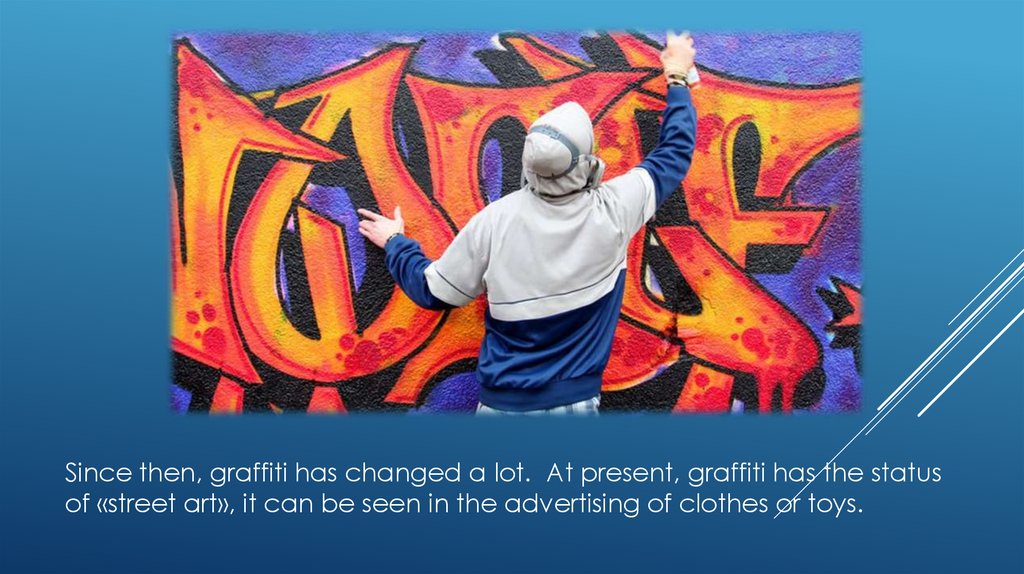
Since then, graffiti has changed a lot. At present, graffiti has the statusof «street art», it can be seen in the advertising of clothes or toys.
4.
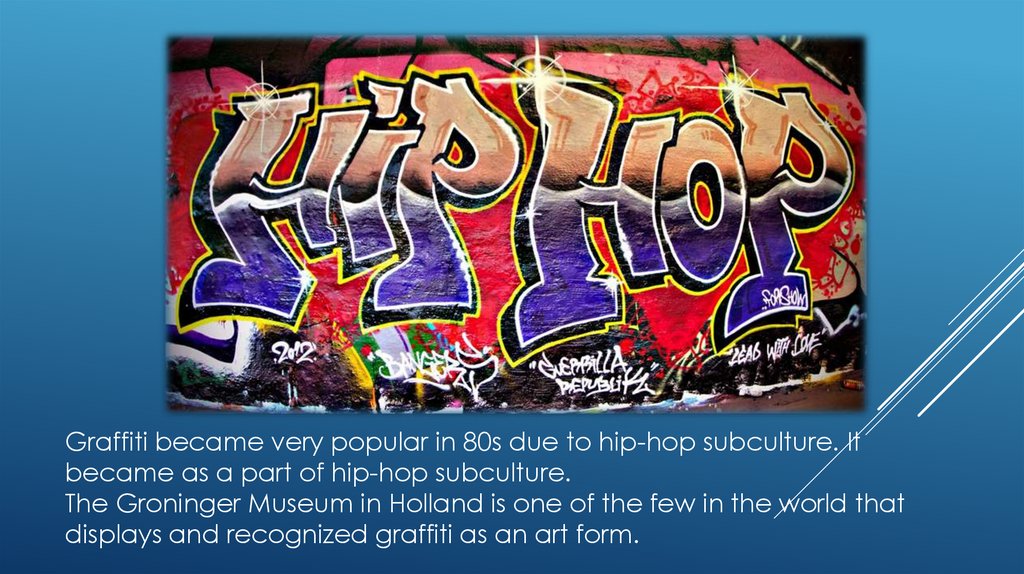
Graffiti became very popular in 80s due to hip-hop subculture. Itbecame as a part of hip-hop subculture.
The Groninger Museum in Holland is one of the few in the world that
displays and recognized graffiti as an art form.
5. Graffiti in Russia
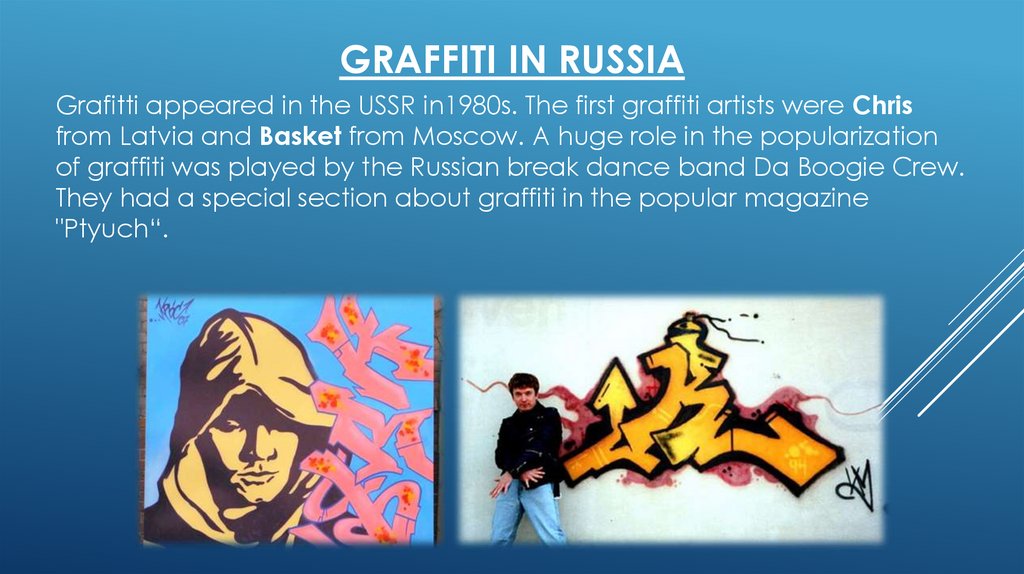
GRAFFITI IN RUSSIAGrafitti appeared in the USSR in1980s. The first graffiti artists were Chris
from Latvia and Basket from Moscow. A huge role in the popularization
of graffiti was played by the Russian break dance band Da Boogie Crew.
They had a special section about graffiti in the popular magazine
"Ptyuch“.
6. Graffiti of Oleg Basket
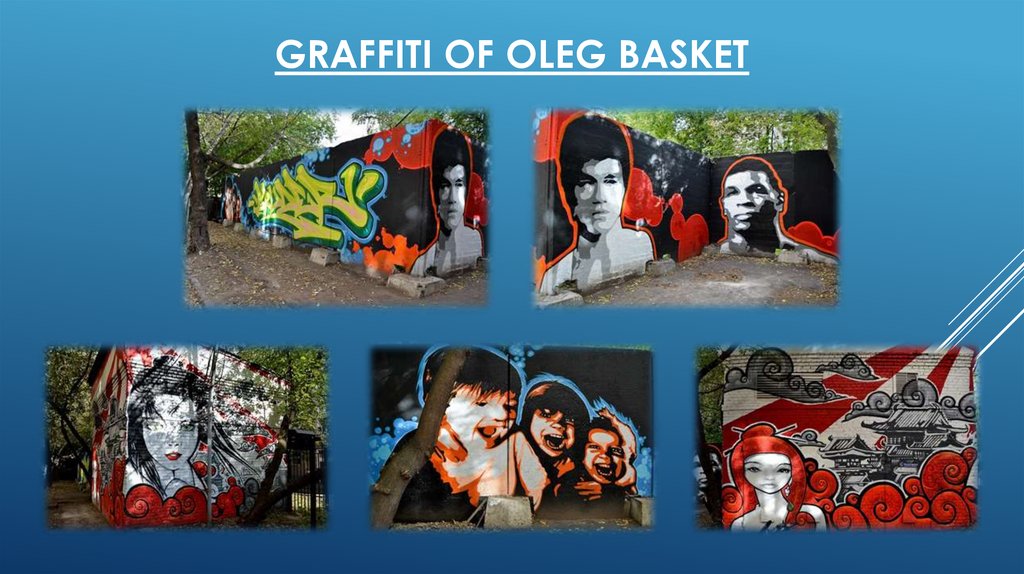
GRAFFITI OF OLEG BASKET7. graffiti styles
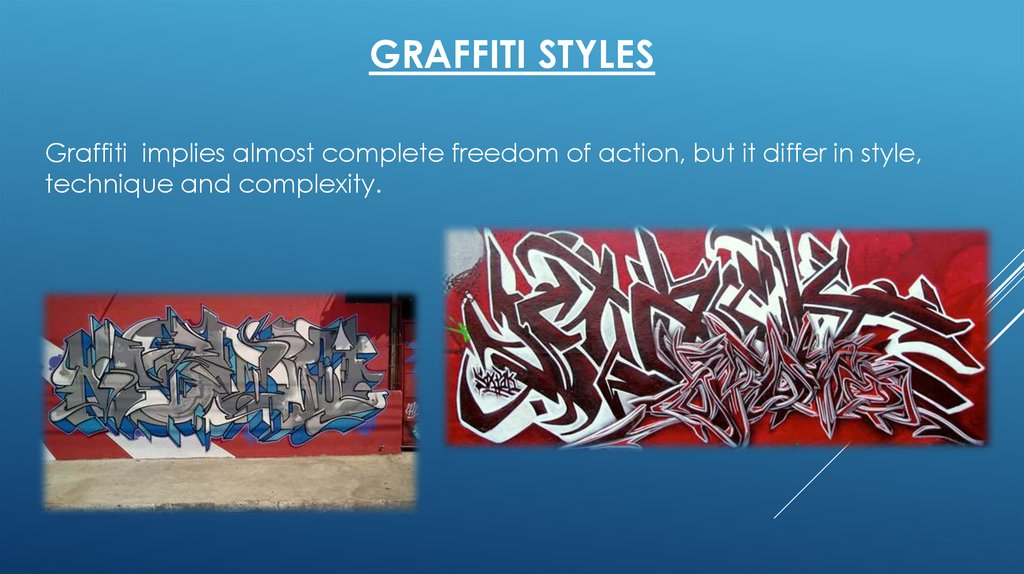
GRAFFITI STYLESGraffiti implies almost complete freedom of action, but it differ in style,
technique and complexity.
8. Throw-Up
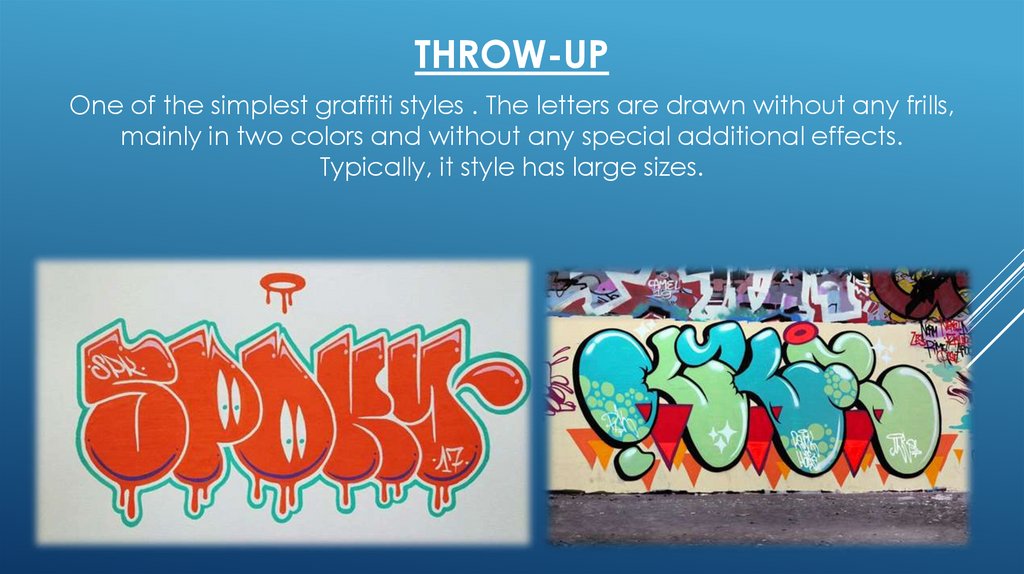
THROW-UPOne of the simplest graffiti styles . The letters are drawn without any frills,
mainly in two colors and without any special additional effects.
Typically, it style has large sizes.
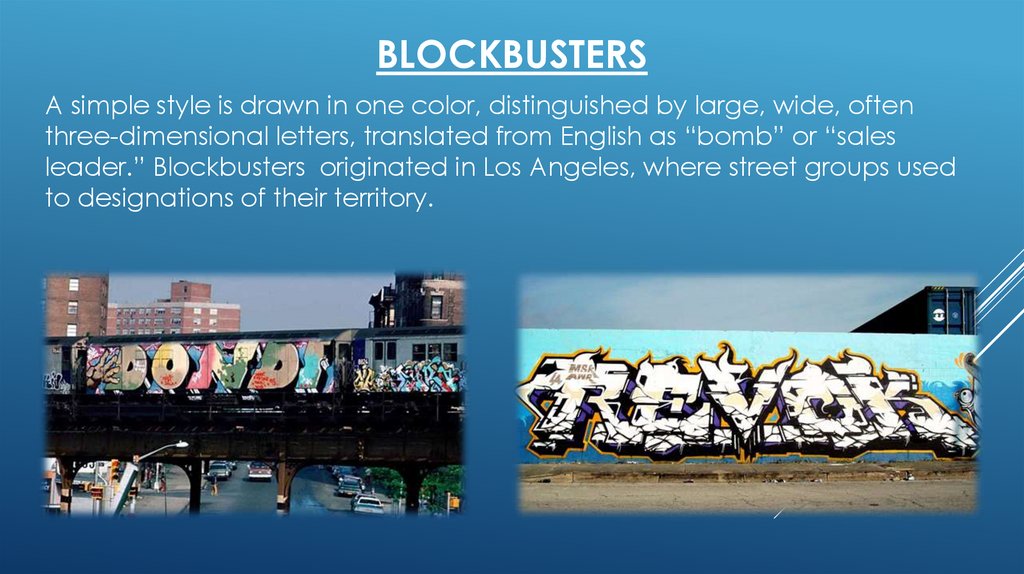
9. Blockbusters
BLOCKBUSTERSA simple style is drawn in one color, distinguished by large, wide, often
three-dimensional letters, translated from English as “bomb” or “sales
leader.” Blockbusters originated in Los Angeles, where street groups used
to designations of their territory.
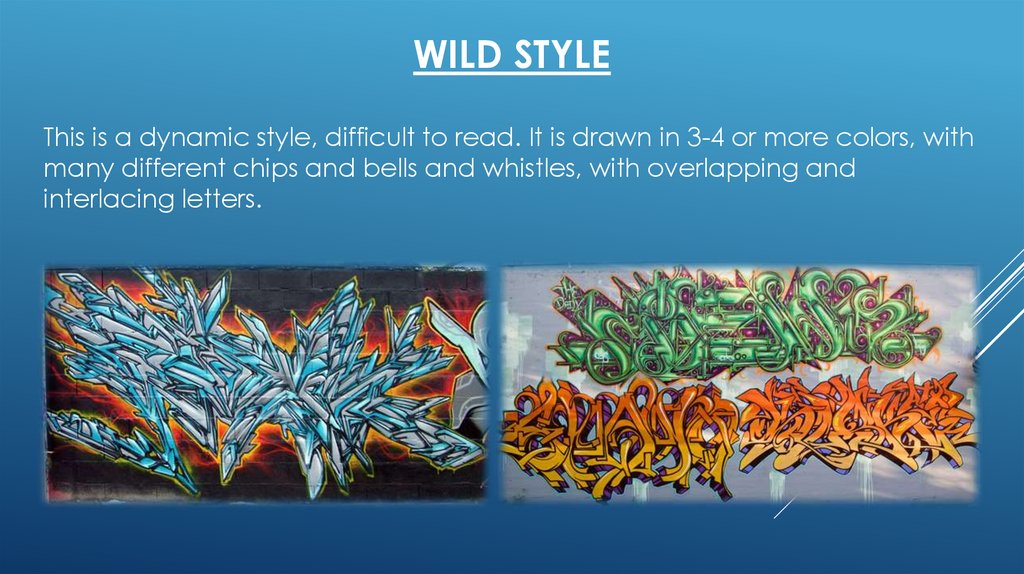
10. Wild Style
WILD STYLEThis is a dynamic style, difficult to read. It is drawn in 3-4 or more colors, with
many different chips and bells and whistles, with overlapping and
interlacing letters.
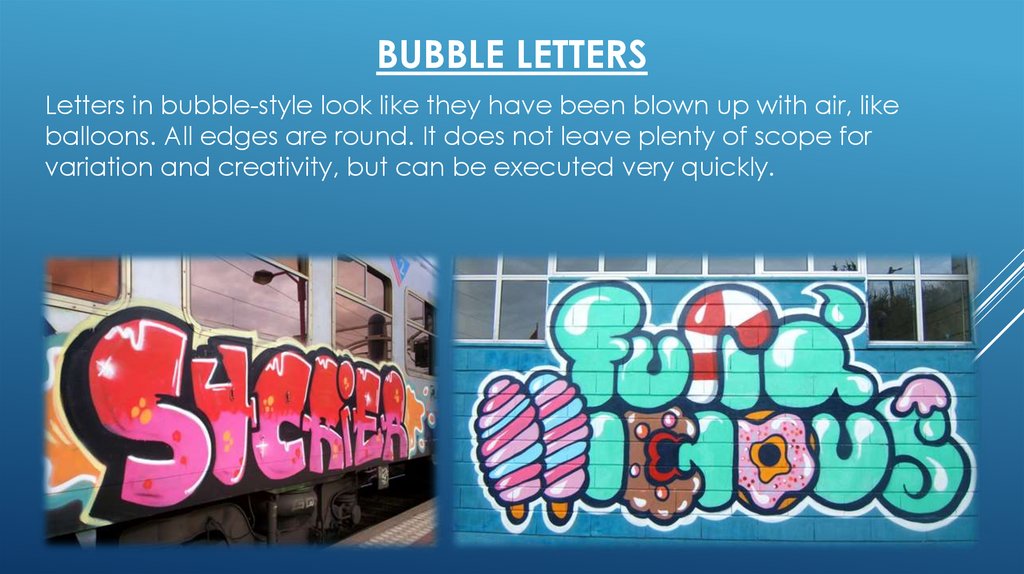
11. Bubble letters
BUBBLE LETTERSLetters in bubble-style look like they have been blown up with air, like
balloons. All edges are round. It does not leave plenty of scope for
variation and creativity, but can be executed very quickly.
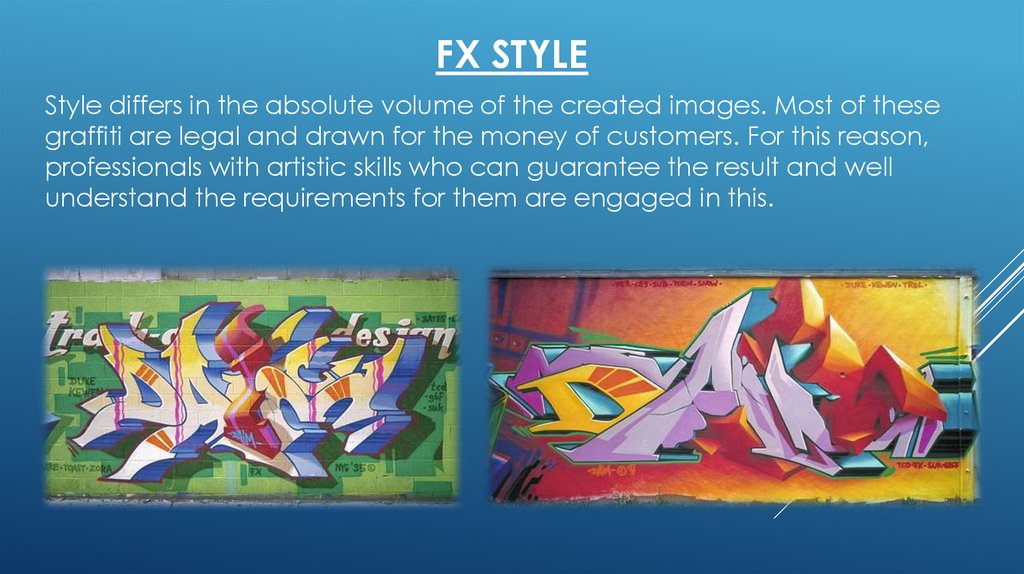
12. FX STYLE
Style differs in the absolute volume of the created images. Most of thesegraffiti are legal and drawn for the money of customers. For this reason,
professionals with artistic skills who can guarantee the result and well
understand the requirements for them are engaged in this.
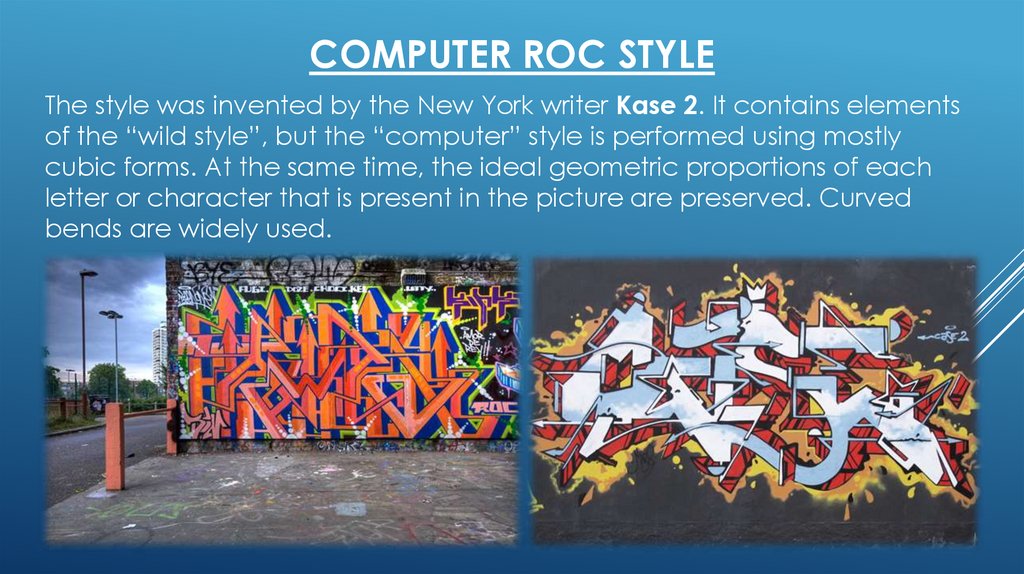
13. Computer Roc Style
COMPUTER ROC STYLEThe style was invented by the New York writer Kase 2. It contains elements
of the “wild style”, but the “computer” style is performed using mostly
cubic forms. At the same time, the ideal geometric proportions of each
letter or character that is present in the picture are preserved. Curved
bends are widely used.
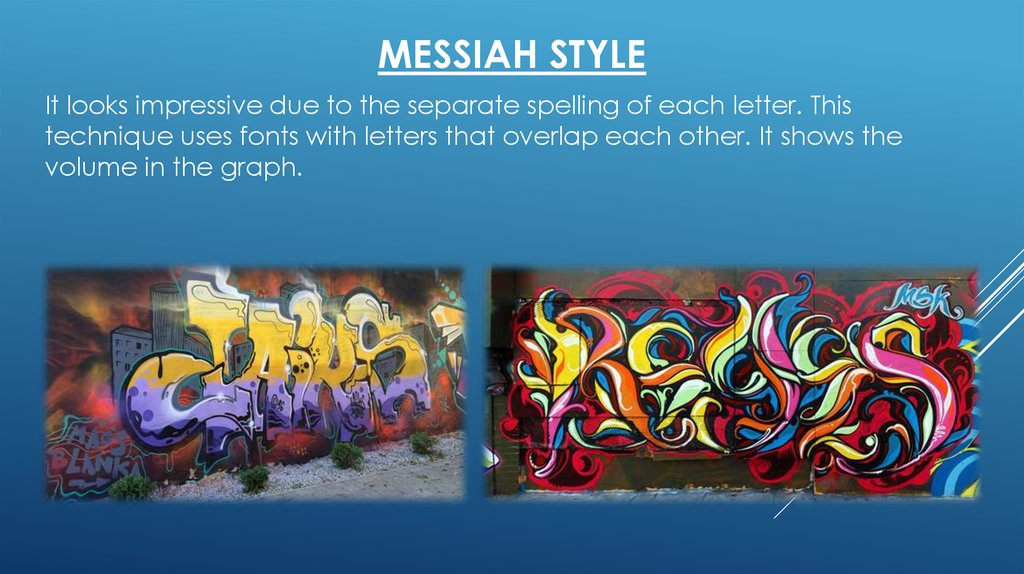
14. Messiah Style
MESSIAH STYLEIt looks impressive due to the separate spelling of each letter. This
technique uses fonts with letters that overlap each other. It shows the
volume in the graph.
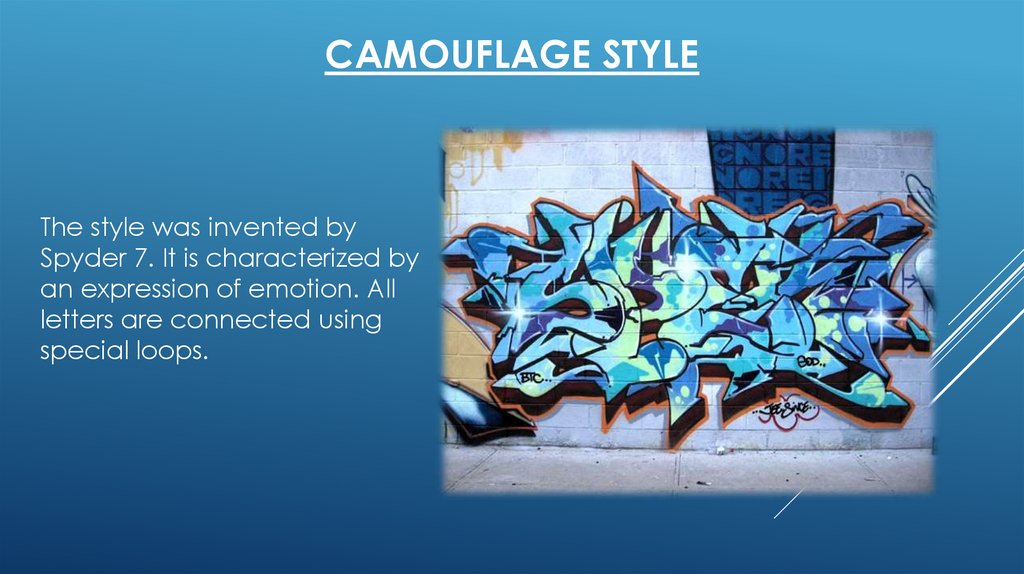
15. Camouflage style
CAMOUFLAGE STYLEThe style was invented by
Spyder 7. It is characterized by
an expression of emotion. All
letters are connected using
special loops.
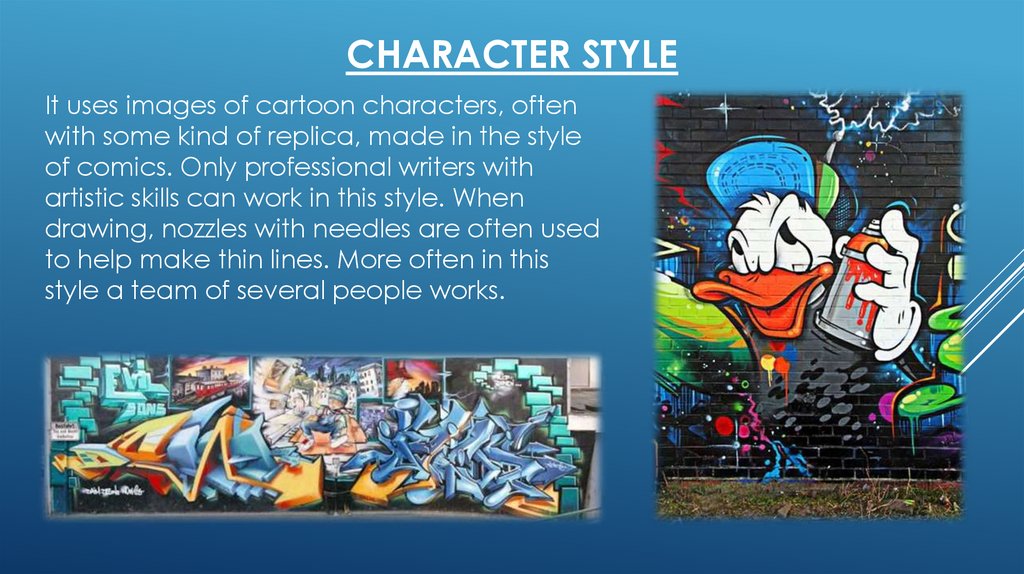
16. Charaсter style
CHARAСTER STYLEIt uses images of cartoon characters, often
with some kind of replica, made in the style
of comics. Only professional writers with
artistic skills can work in this style. When
drawing, nozzles with needles are often used
to help make thin lines. More often in this
style a team of several people works.
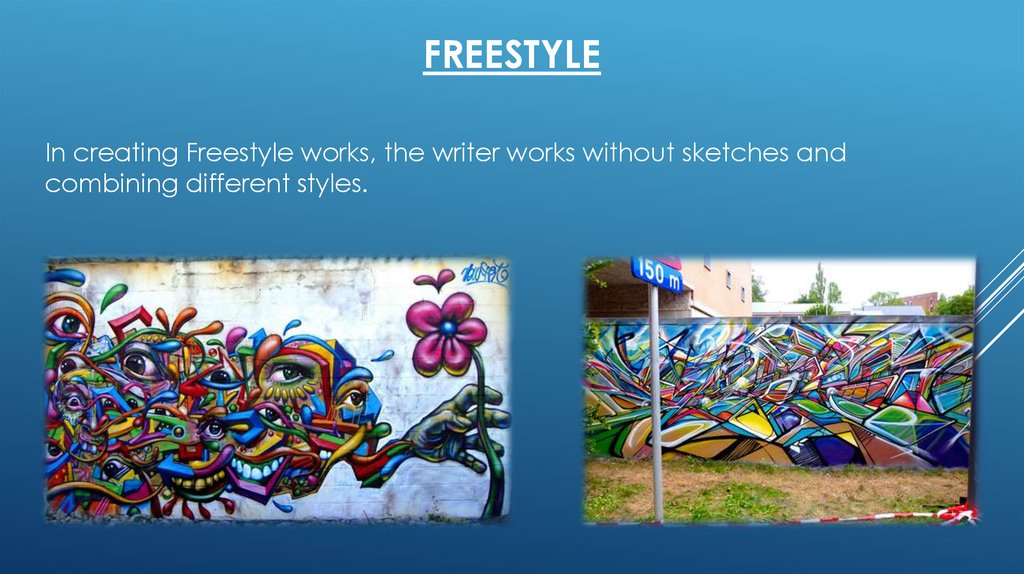
17. Freestyle
FREESTYLEIn creating Freestyle works, the writer works without sketches and
combining different styles.
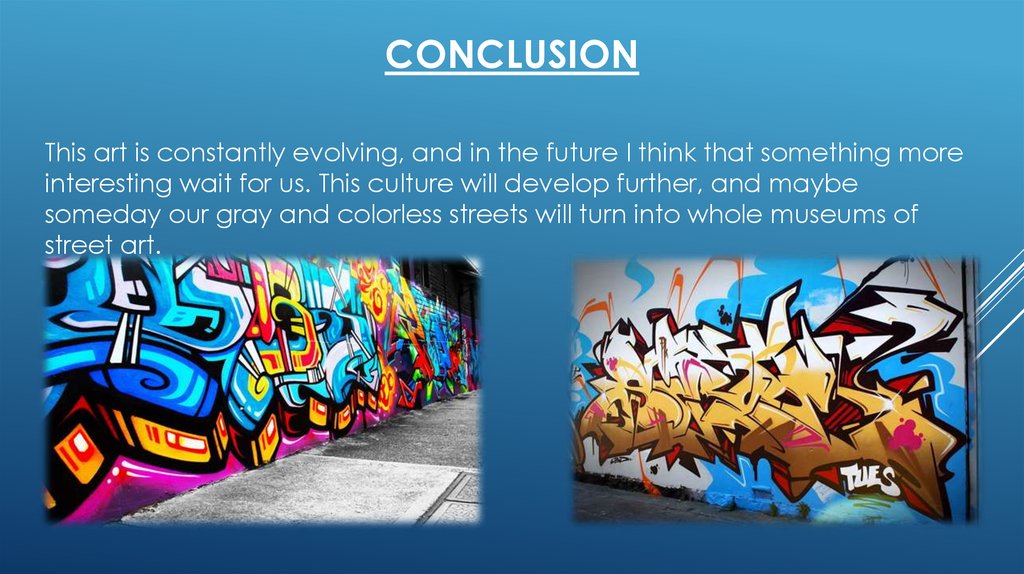
18. Conclusion
CONCLUSIONThis art is constantly evolving, and in the future I think that something more
interesting wait for us. This culture will develop further, and maybe
someday our gray and colorless streets will turn into whole museums of
street art.
19. Список использованной литературы
СПИСОК ИСПОЛЬЗОВАННОЙ ЛИТЕРАТУРЫ1. Луков В. Хип-хоп культура // Знание. Понимание. Умение. — 2005. — № 1.
2. Прохоров, А. М. Советский Энциклопедический Словарь. // Москва 1988 г.
3. http://caitik.ru/1155-style-graffiti.html
4. http://www.furfur.me/furfur/culture/culture/170343-instrumenty-graffiti
5. http://artfan.pro/art/стили-и-направления-стрит-арта-и-графф/