Similar presentations:








Прокрастинация на английском
1.
Procrastination in studentsComplete by Ivanova Ekaterina,
master’s student in psychology
2.
Presentation plan- The importance & conceptions;
- Consequences of procrastination;
- Common myths about procrastination;
- Ways to combat procrastination.
3.
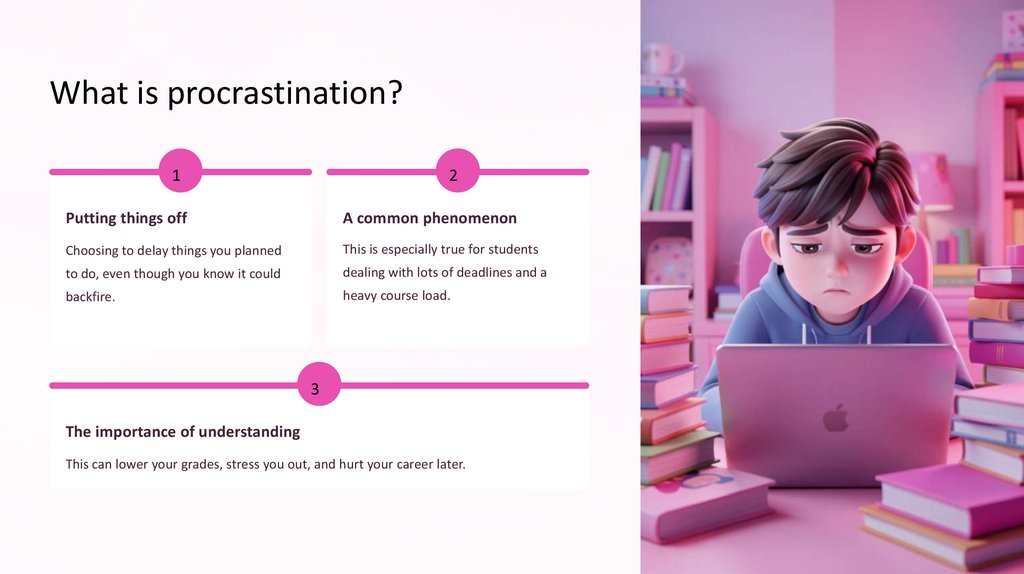
What is procrastination?1
2
Putting things off
A common phenomenon
Choosing to delay things you planned
This is especially true for students
to do, even though you know it could
dealing with lots of deadlines and a
backfire.
heavy course load.
3
The importance of understanding
This can lower your grades, stress you out, and hurt your career later.
4.
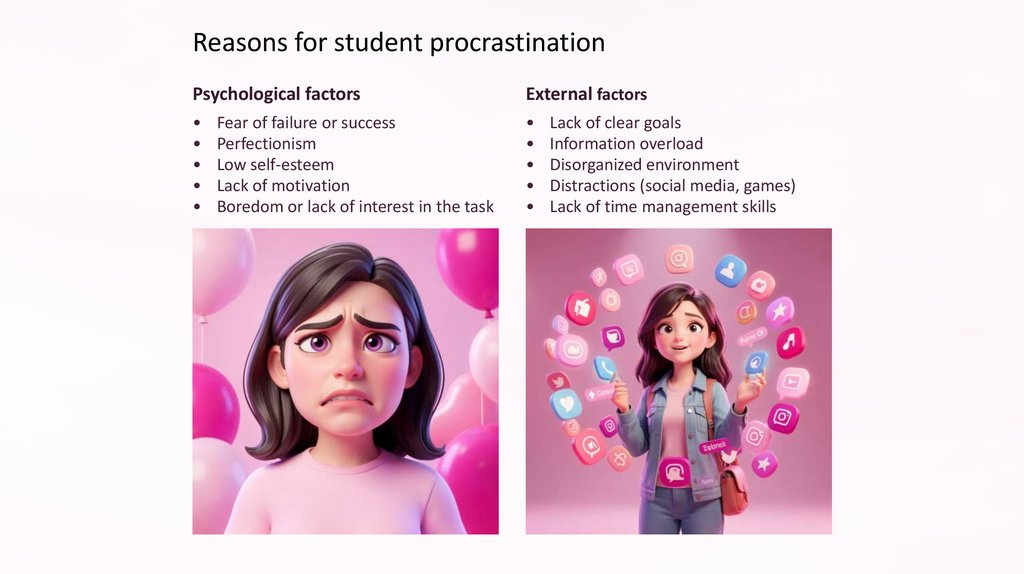
Reasons for student procrastinationPsychological factors
External factors
Fear of failure or success
Perfectionism
Low self-esteem
Lack of motivation
Boredom or lack of interest in the task
Lack of clear goals
Information overload
Disorganized environment
Distractions (social media, games)
Lack of time management skills
5.
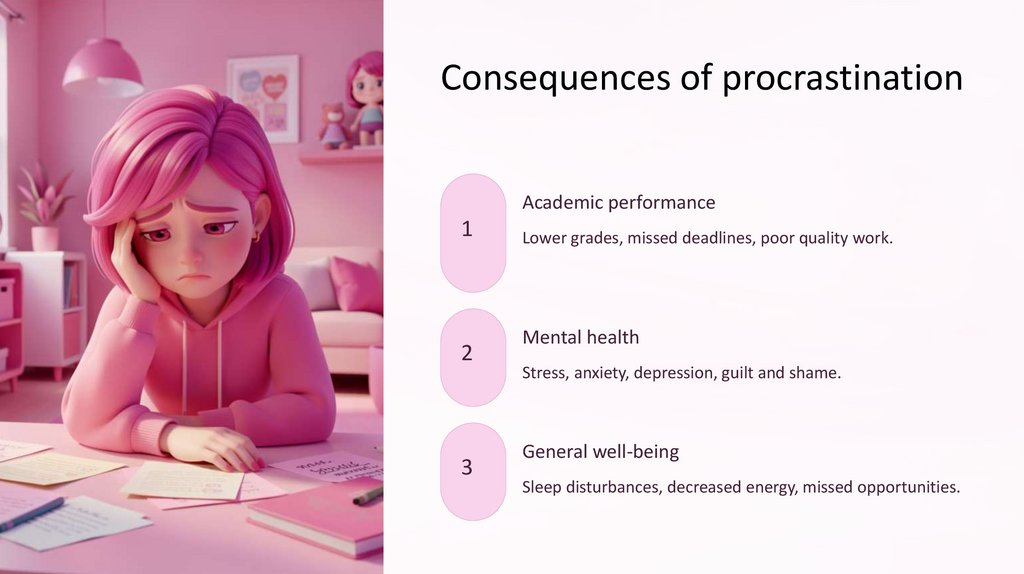
Consequences of procrastinationAcademic performance
1
2
3
Lower grades, missed deadlines, poor quality work.
Mental health
Stress, anxiety, depression, guilt and shame.
General well-being
Sleep disturbances, decreased energy, missed opportunities.
6.
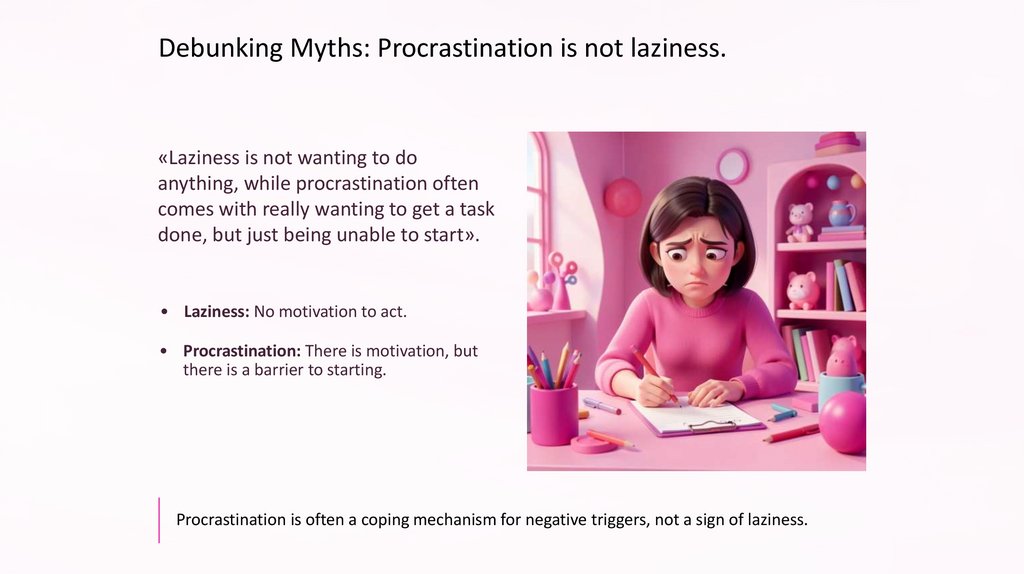
Debunking Myths: Procrastination is not laziness.«Laziness is not wanting to do
anything, while procrastination often
comes with really wanting to get a task
done, but just being unable to start».
• Laziness: No motivation to act.
• Procrastination: There is motivation, but
there is a barrier to starting.
Procrastination is often a coping mechanism for negative triggers, not a sign of laziness.
7.
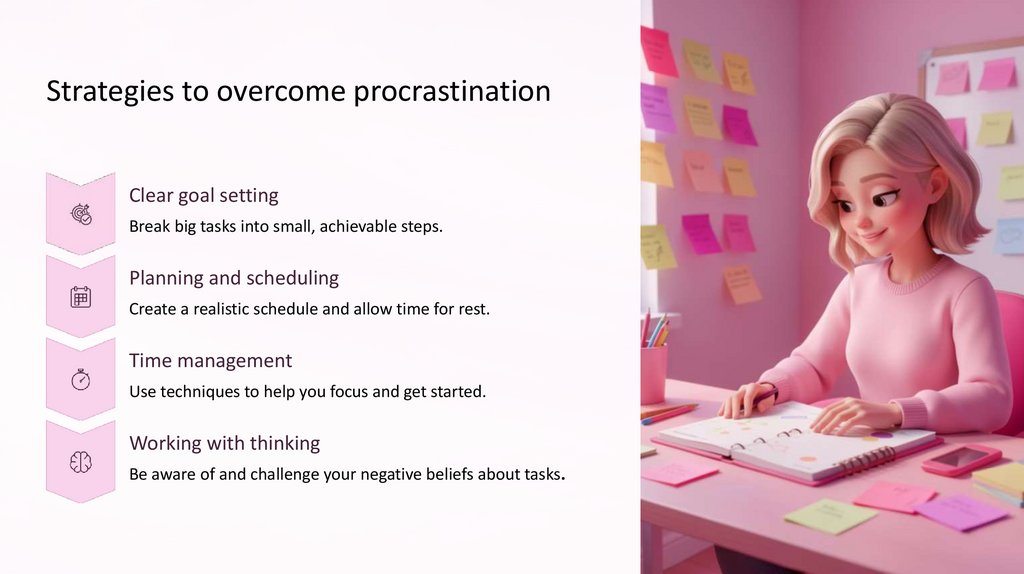
Strategies to overcome procrastinationClear goal setting
Break big tasks into small, achievable steps.
Planning and scheduling
Create a realistic schedule and allow time for rest.
Time management
Use techniques to help you focus and get started.
Working with thinking
Be aware of and challenge your negative beliefs about tasks.
8.
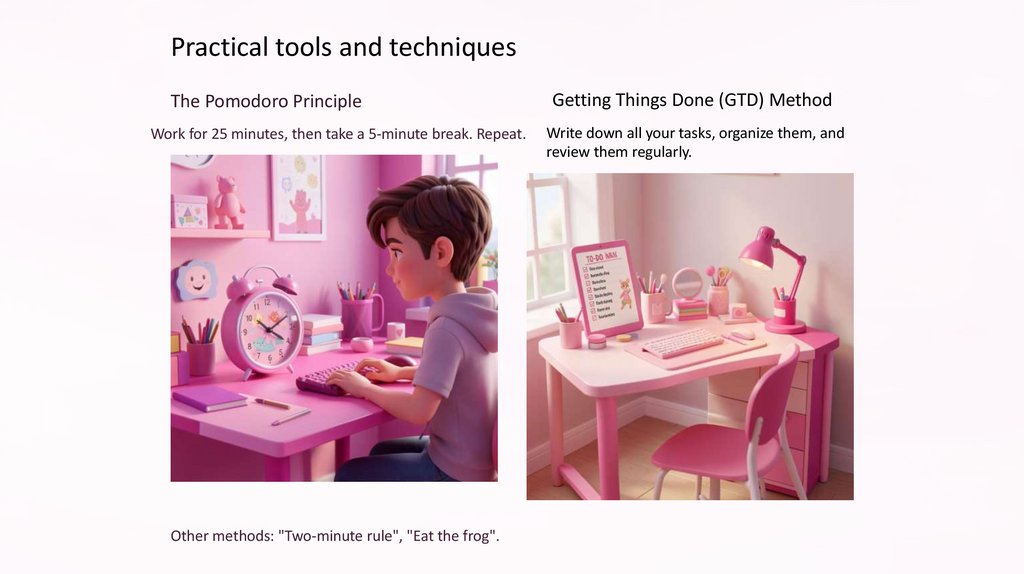
Practical tools and techniquesThe Pomodoro Principle
Work for 25 minutes, then take a 5-minute break. Repeat.
Other methods: "Two-minute rule", "Eat the frog".
Getting Things Done (GTD) Method
Write down all your tasks, organize them, and
review them regularly.
9.
How teachers and universities can support studentsSkills training
Student support
Clear expectations
Conducting seminars on time
Access to psychological help and
Clear definition of deadlines and
management and self-organization.
counseling.
requirements for tasks.
10.
How students overcome procrastinationMany students were able to change their habits, improve their situations, and gain self-confidence by using
a proven strategy and asking for help.
11.
Take the first step todayStart now
Recognize the problem
Choose one strategy
Seek support
Acknowledge procrastination and its
Start small, such as with the Pomodoro
Discuss with friends, teachers or
impact.
principle.
psychologists.