 english
Similar presentations:




Complex Object
1. Complex Object Сложное дополнение
2. Complex Object
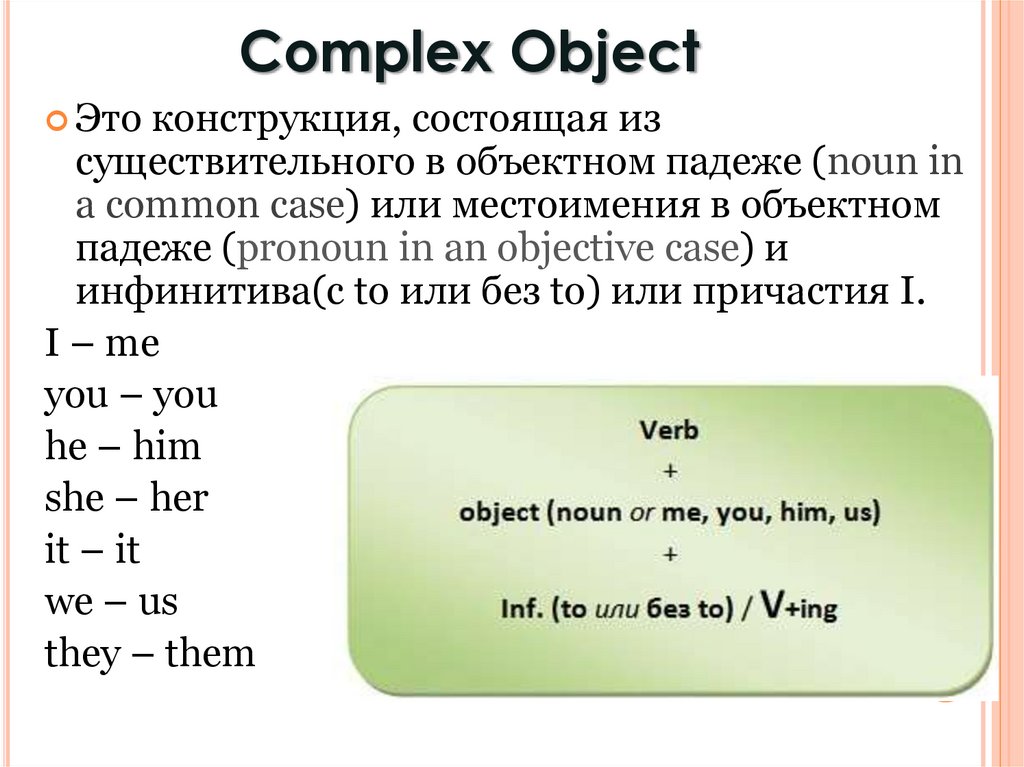
Это конструкция, состоящая изсуществительного в объектном падеже (noun in
a common case) или местоимения в объектном
падеже (pronoun in an objective case) и
инфинитива(с to или без to) или причастия I.
I – me
you – you
he – him
she – her
it – it
we – us
they – them
3. Examples:
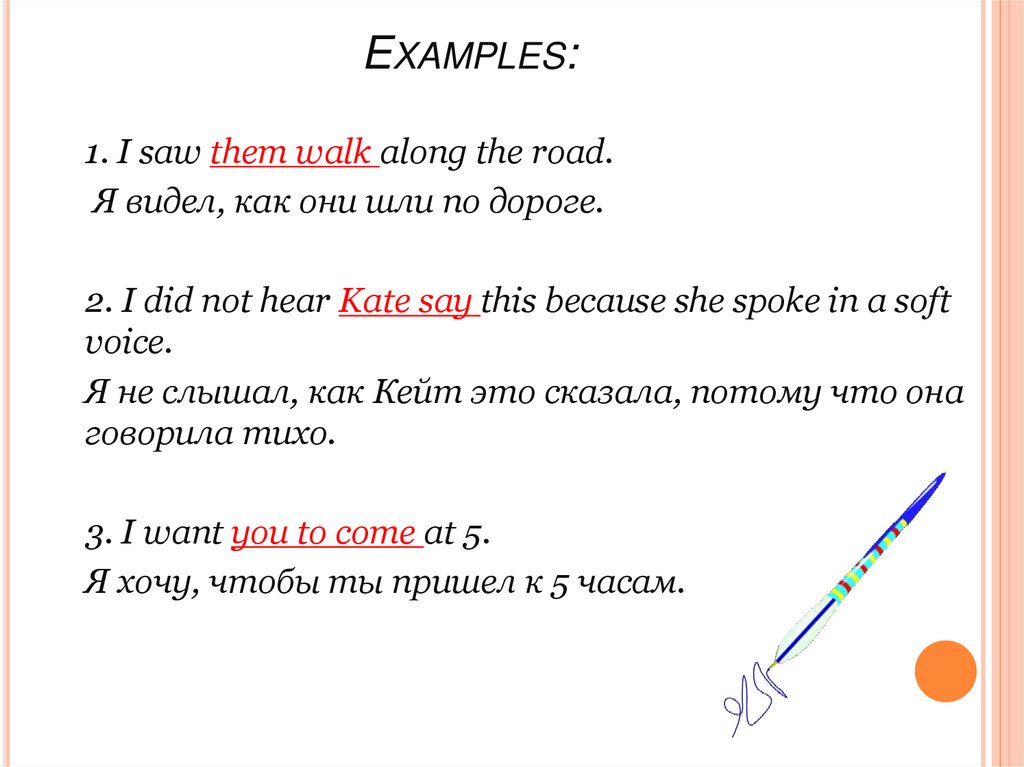
EXAMPLES:1. I saw them walk along the road.
Я видел, как они шли по дороге.
2. I did not hear Kate say this because she spoke in a soft
voice.
Я не слышал, как Кейт это сказала, потому что она
говорила тихо.
3. I want you to come at 5.
Я хочу, чтобы ты пришел к 5 часам.
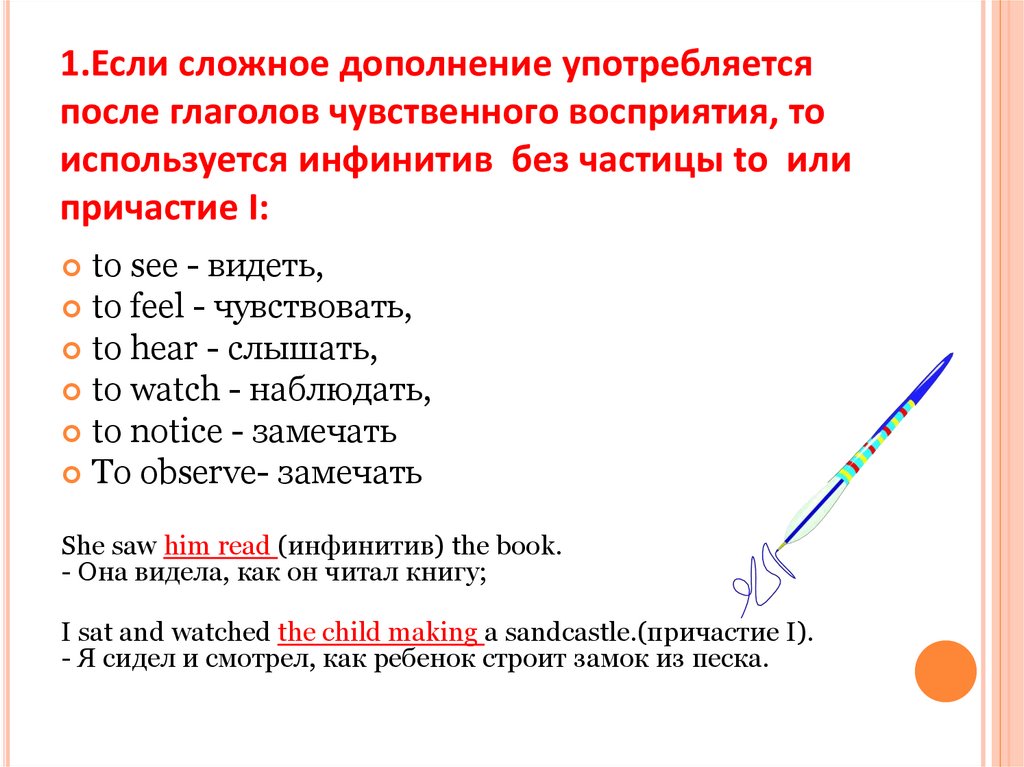
4. 1.Если сложное дополнение употребляется после глаголов чувственного восприятия, то используется инфинитив без частицы to или
причастие I:to see - видеть,
to feel - чувствовать,
to hear - слышать,
to watch - наблюдать,
to notice - замечать
To observe- замечать
She saw him read (инфинитив) the book.
- Она видела, как он читал книгу;
I sat and watched the child making a sandcastle.(причастие I).
- Я сидел и смотрел, как ребенок строит замок из песка.
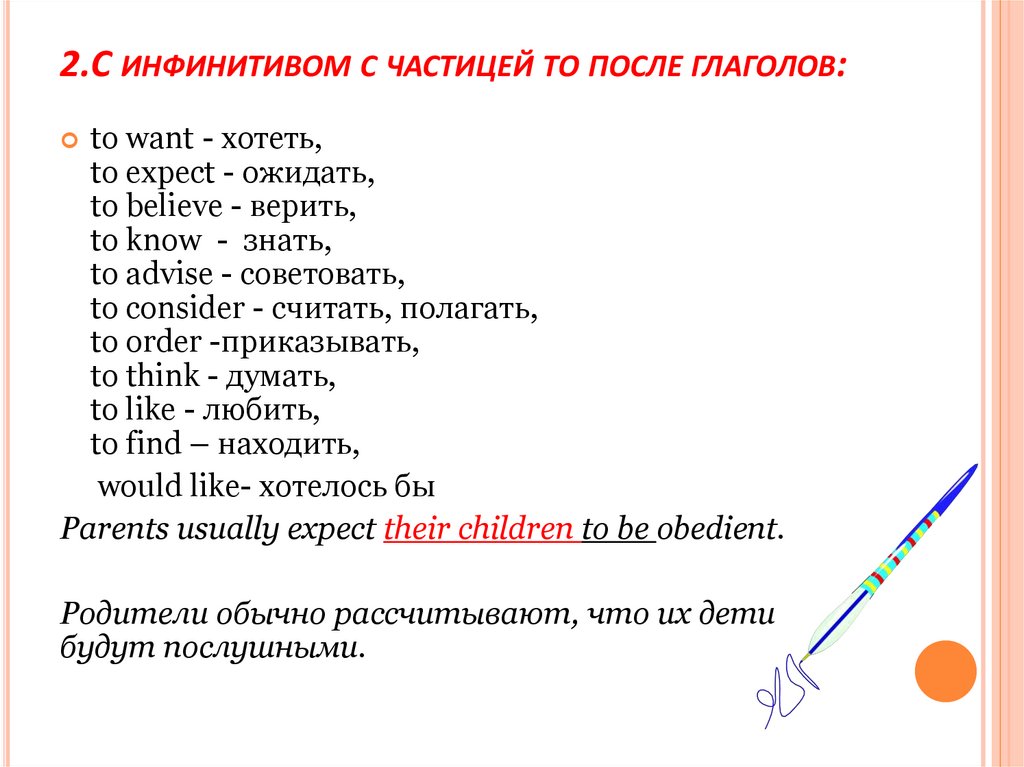
5. 2.С инфинитивом с частицей to после глаголов:
2.С ИНФИНИТИВОМ С ЧАСТИЦЕЙ TO ПОСЛЕ ГЛАГОЛОВ:to want - хотеть,
to expect - ожидать,
to believe - верить,
to know - знать,
to advise - советовать,
to consider - считать, полагать,
to order -приказывать,
to think - думать,
to like - любить,
to find – находить,
would like- хотелось бы
Parents usually expect their children to be obedient.
Родители обычно рассчитывают, что их дети
будут послушными.
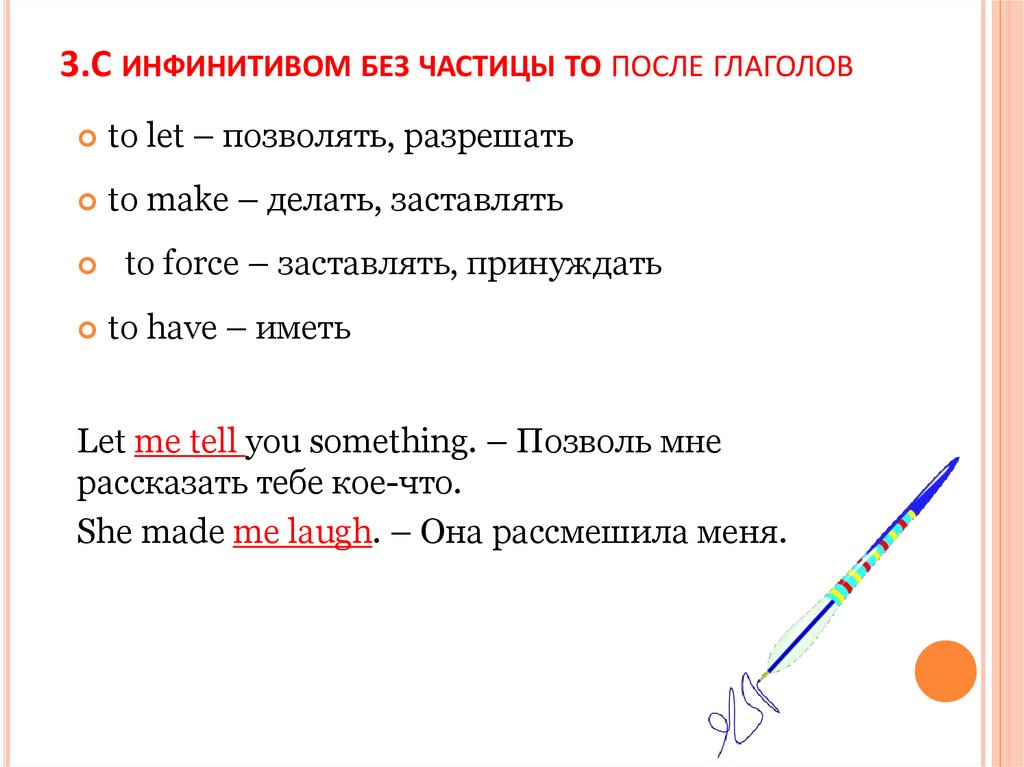
6. 3.С инфинитивом без частицы to после глаголов
3.С ИНФИНИТИВОМ БЕЗ ЧАСТИЦЫ TO ПОСЛЕ ГЛАГОЛОВto let – позволять, разрешать
to make – делать, заставлять
to force – заставлять, принуждать
to have – иметь
Let me tell you something. – Позволь мне
рассказать тебе кое-что.
She made me laugh. – Она рассмешила меня.
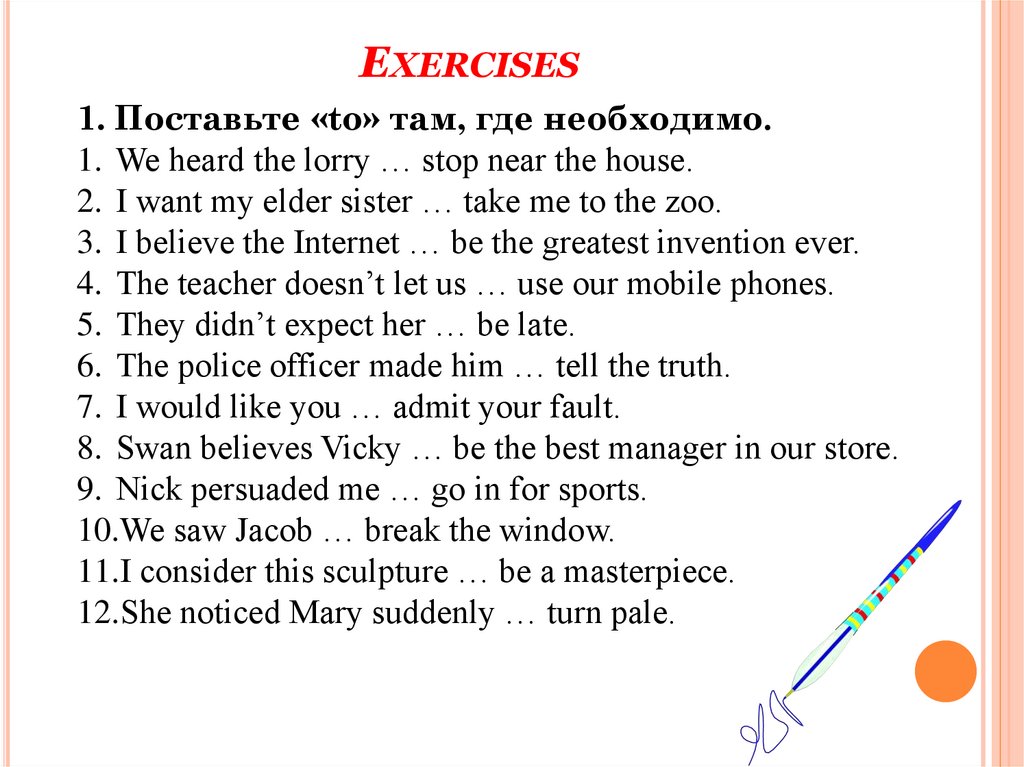
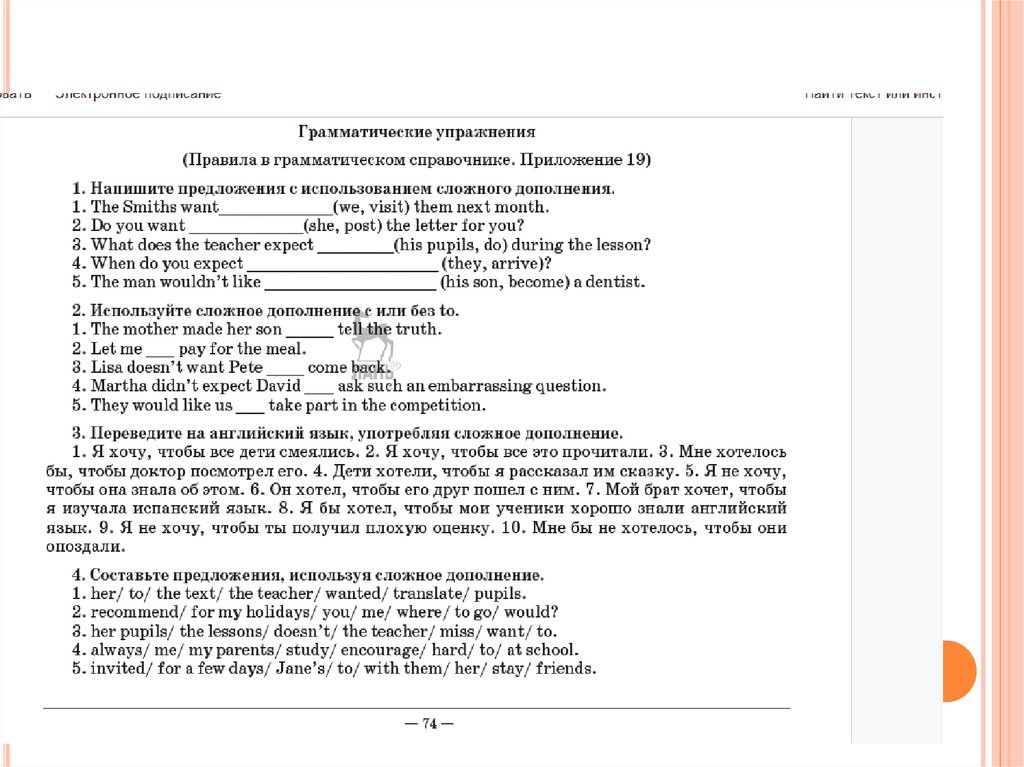
7. Exercises
EXERCISES1. Поставьте «to» там, где необходимо.
1. We heard the lorry … stop near the house.
2. I want my elder sister … take me to the zoo.
3. I believe the Internet … be the greatest invention ever.
4. The teacher doesn’t let us … use our mobile phones.
5. They didn’t expect her … be late.
6. The police officer made him … tell the truth.
7. I would like you … admit your fault.
8. Swan believes Vicky … be the best manager in our store.
9. Nick persuaded me … go in for sports.
10.We saw Jacob … break the window.
11.I consider this sculpture … be a masterpiece.
12.She noticed Mary suddenly … turn pale.
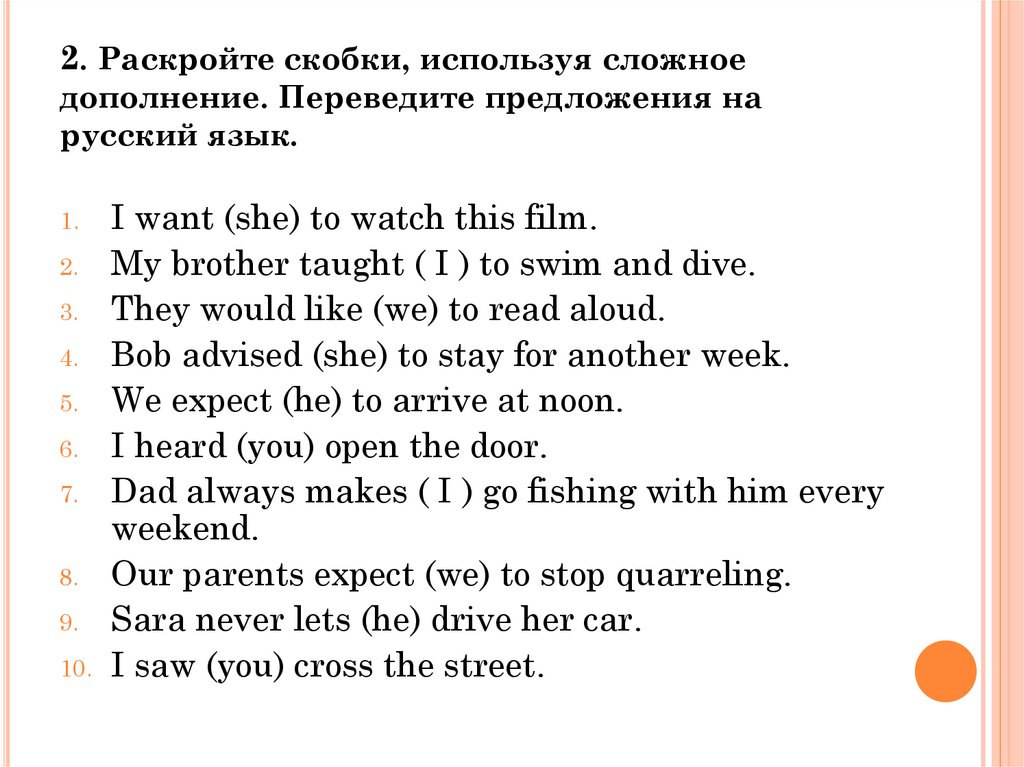
8. 2. Раскройте скобки, используя сложное дополнение. Переведите предложения на русский язык.
I want (she) to watch this film.2. My brother taught ( I ) to swim and dive.
3. They would like (we) to read aloud.
4. Bob advised (she) to stay for another week.
5. We expect (he) to arrive at noon.
6. I heard (you) open the door.
7. Dad always makes ( I ) go fishing with him every
weekend.
8. Our parents expect (we) to stop quarreling.
9. Sara never lets (he) drive her car.
10. I saw (you) cross the street.
1.
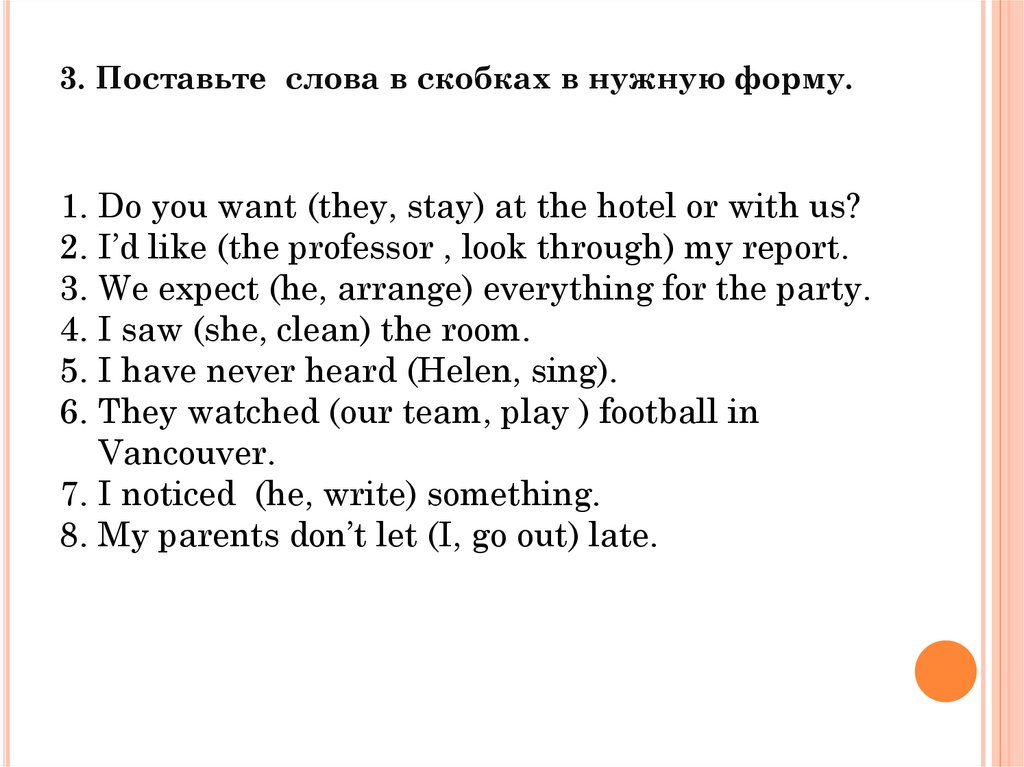
9. 3. Поставьте слова в скобках в нужную форму.
1. Do you want (they, stay) at the hotel or with us?2. I’d like (the professor , look through) my report.
3. We expect (he, arrange) everything for the party.
4. I saw (she, clean) the room.
5. I have never heard (Helen, sing).
6. They watched (our team, play ) football in
Vancouver.
7. I noticed (he, write) something.
8. My parents don’t let (I, go out) late.