 literature
Similar presentations:



Mythorealism. Sergey Teleguin
1. MYTHOREALISM
Sergey Teleguin2. Sergey Teleguin was born on January 1, 1964 in Buenos Aires (Argentina) in the family of a Soviet diplomat. He currently lives
in Moscow (Russia).3.
Sergey Teleguin is a contemporary figure known forhis contributions to literature and art. His work often
explores complex themes, blending traditional
narratives with modern interpretations.
4. Sergey Teleguin is a notable figure associated with various literary and cultural discussions. His work often explores themes
related to mythology andliterature, particularly in the context of Russian
literature.
5.
Sergey Teleguin's work often explores themes relatedto mythology and literature, including references to
"mythorealism". This idea has been interpreted in
various cultural contexts, including literature and
revolution.
6. In summary, Sergey Teleguin's work on mythorealism likely delves into the intersections of myth, literature, and cultural
In summary, Sergey Teleguin's work onmythorealism likely delves into the intersections of
myth, literature, and cultural narratives, providing
insights into how these themes resonate within the
context of Russian literary traditions.
7. Sergey Teleguin is known for developing the method of “mythorestoration“ (1990) and the term “mythorealism,“ (1994) which
relates to the study of myths and theirrestoration in literature and culture. His work often
explores how myths are created and their significance in
society.
8. Mythorealism is a term coined by Teleguin, which combines elements of myth and realism. It explores how myths influence
contemporarynarratives and cultural expressions.
9. The method emphasizes the restoration of myths in modern contexts, examining their relevance and transformation.
10. Applications of Mythorealism
Teleguin's approach can be applied toliterature, art, and cultural studies.
11. It seeks to understand how ancient myths shape modern storytelling and identity.
12. The concept encourages a deeper analysis of cultural artifacts through the lens of mythological frameworks.
13. This framework offers a unique perspective on the interplay between myth and reality in contemporary culture.
14.
Sergey Teleguin is known for his work in the field ofmythopoetics, which explores the relationship
between mythology and poetry. His approach often
involves analyzing how mythological themes and
structures influence literary creation.
15.
Mythopoetic refers to the study or creation of mythswithin poetry and literature. It emphasizes the
significance of mythological elements in storytelling,
often reflecting cultural and philosophical ideas.
16.
Teleguin's approach to mythorealism may involvereinterpreting classic myths or creating new
narratives that resonate with current societal issues.
17. Key Themes in Teleguin's Work
Key Themes in Teleguin's Work• Cultural Reflection: Teleguin's work often mirrors
the cultural landscape, using myth to comment on
contemporary life.
18.
• Philosophical Inquiry: His writings delve intoexistential questions, using myth as a framework
for exploring deeper meanings.
19.
• Artistic Innovation: Teleguin blends various artisticforms, creating a unique voice that challenges
traditional boundaries.
20.
• Teleguin's exploration of mythorealism andmythorestoration contributes to a richer
understanding of how myths shape human
experience and artistic expression.
21.
Sergey Teleguin is an author known for his uniquecontributions to the field of alchemy. His works stand
out because they are based on both theoretical study
and practical experimentation.
22.
Teleguin's approach to alchemy is distinctive becausehe combines traditional alchemical texts with handson experiments. He has engaged in practices such as
using alchemical mirrors and exploring historical
alchemical methods.
23.
Teleguin's writings are valuable for anyone interestedin the practical and theoretical aspects of alchemy,
offering insights that are both scholarly and
experiential.
24.
• С.М. Телегин. Миф, мифореставрация итрансцендентальная филология // Миф – Литература –
Мифореставрация. Сб. статей. М.-Рязань, 2000
Он же:
• Миф // Литература. 1994. № 14
• Мифологема // Литература. 1996. № 37
• Мифореализм // Литература. 1995. № 31
• Мифореставрация // Литература. 1994. № 28
• Мифотворчество // Литература. 1996. № 34
25.
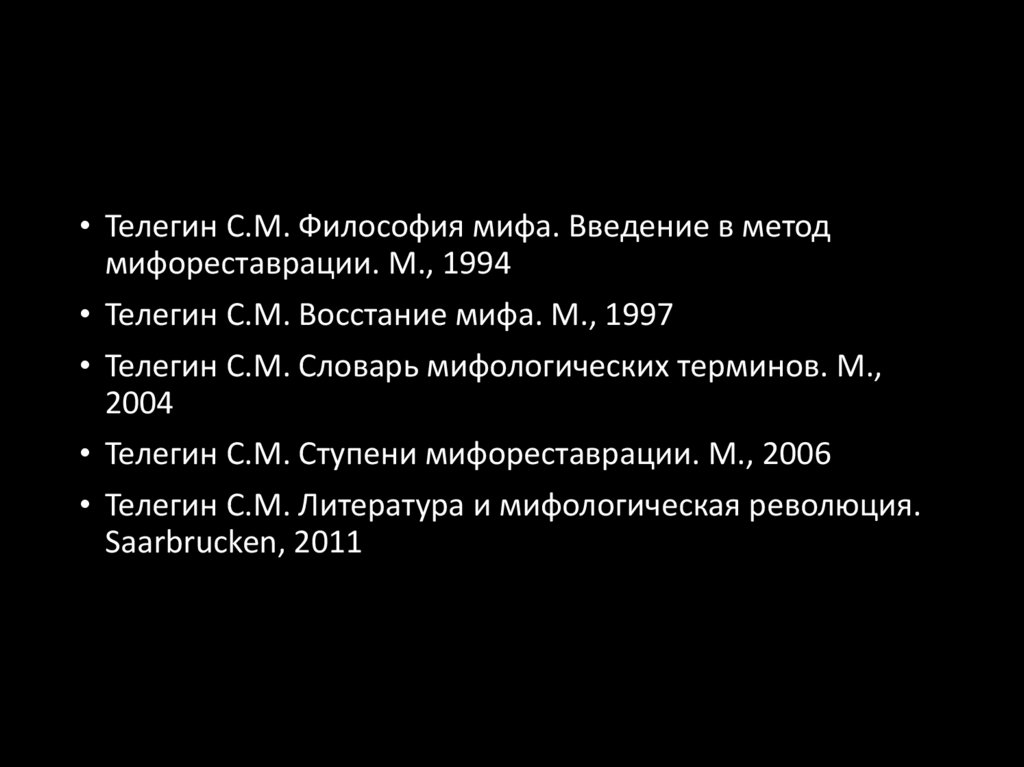
• Телегин С.М. Философия мифа. Введение в методмифореставрации. М., 1994
• Телегин С.М. Восстание мифа. М., 1997
• Телегин С.М. Словарь мифологических терминов. М.,
2004
• Телегин С.М. Ступени мифореставрации. М., 2006
• Телегин С.М. Литература и мифологическая революция.
Saarbrucken, 2011