Similar presentations:








Chinese New Year
1.
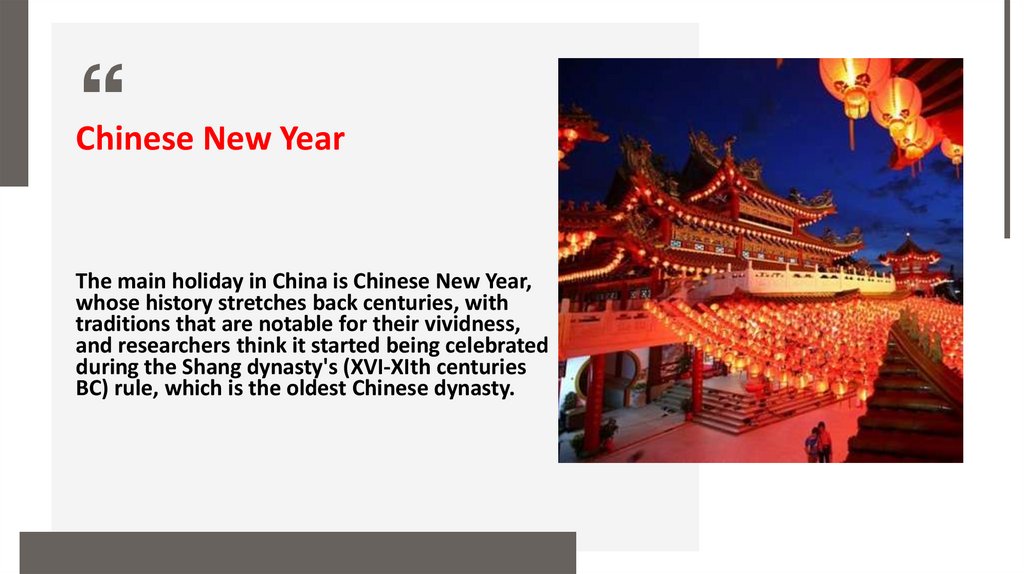
Chinese New YearThe main holiday in China is Chinese New Year,
whose history stretches back centuries, with
traditions that are notable for their vividness,
and researchers think it started being celebrated
during the Shang dynasty's (XVI-XIth centuries
BC) rule, which is the oldest Chinese dynasty.
2.
The date of the celbrationThe date of the celebration is not
fixed: it is timed to coincide with
the second new moon after the
winter solstice and is calculated
according to the lunar calendar.
In 2026, the Chinese New Year
will come on February 17th. The
holiday lasts for 15 days. It is a
time of joy and celebration,
marking the beginning of the new
year and the renewal of life.
3.
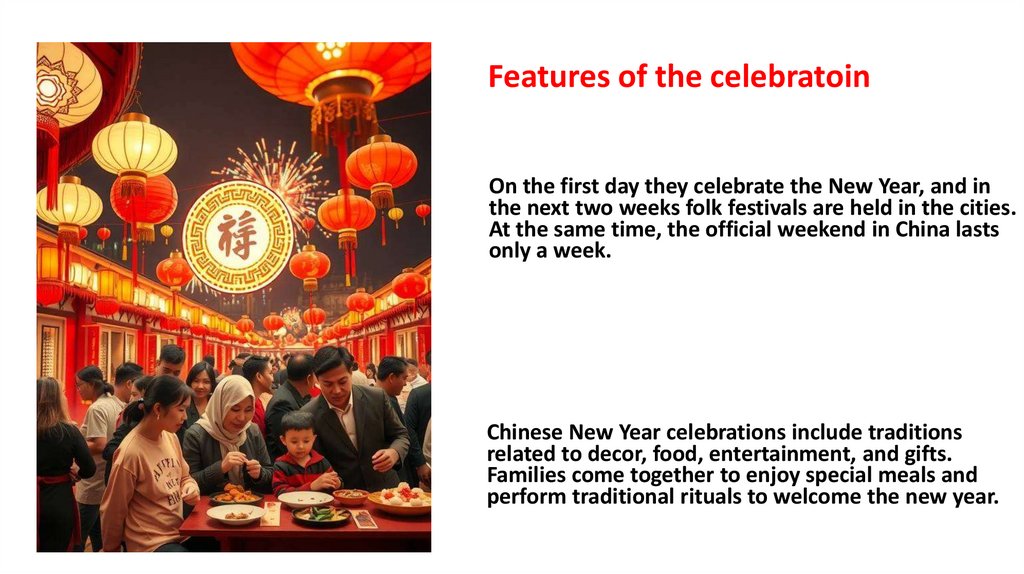
Features of the celebratoinOn the first day they celebrate the New Year, and in
the next two weeks folk festivals are held in the cities.
At the same time, the official weekend in China lasts
only a week.
Chinese New Year celebrations include traditions
related to decor, food, entertainment, and gifts.
Families come together to enjoy special meals and
perform traditional rituals to welcome the new year.
4.
DecorDecorating houses with red decor — red color symbolizes happiness and
good luck.
Paired strips of red paper with New
Year's wishes or an inverted hieroglyph
"happiness" are hung on the doors.
The use of patterns cut from red paper
using the traditional jianzhi technique.
Such decorations are believed to
attract positive energy and
prosperity into the house for the
coming year.
5.
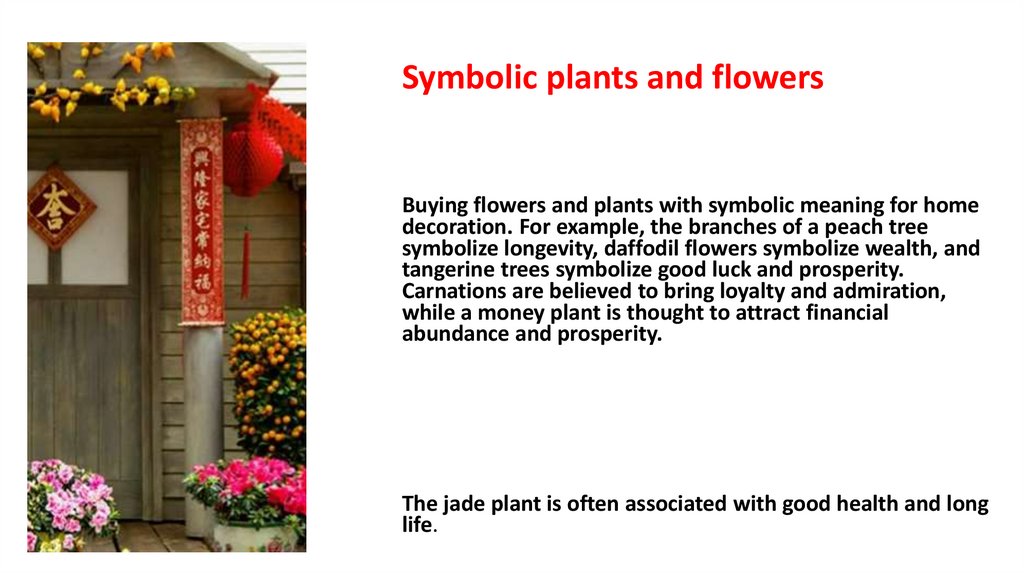
Symbolic plants and flowersBuying flowers and plants with symbolic meaning for home
decoration. For example, the branches of a peach tree
symbolize longevity, daffodil flowers symbolize wealth, and
tangerine trees symbolize good luck and prosperity.
Carnations are believed to bring loyalty and admiration,
while a money plant is thought to attract financial
abundance and prosperity.
The jade plant is often associated with good health and long
life.
6.
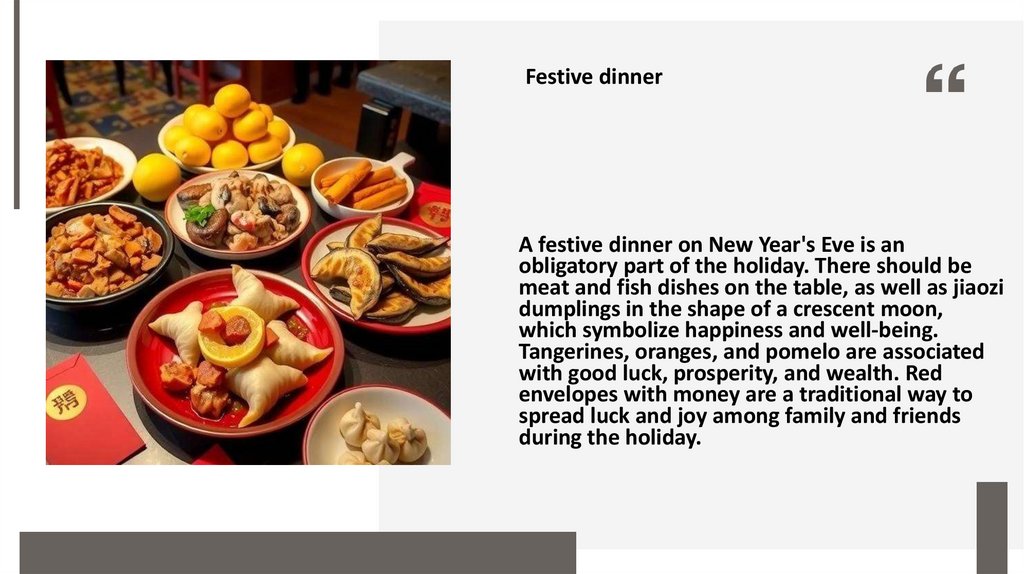
Festive dinnerA festive dinner on New Year's Eve is an
obligatory part of the holiday. There should be
meat and fish dishes on the table, as well as jiaozi
dumplings in the shape of a crescent moon,
which symbolize happiness and well-being.
Tangerines, oranges, and pomelo are associated
with good luck, prosperity, and wealth. Red
envelopes with money are a traditional way to
spread luck and joy among family and friends
during the holiday.
7.
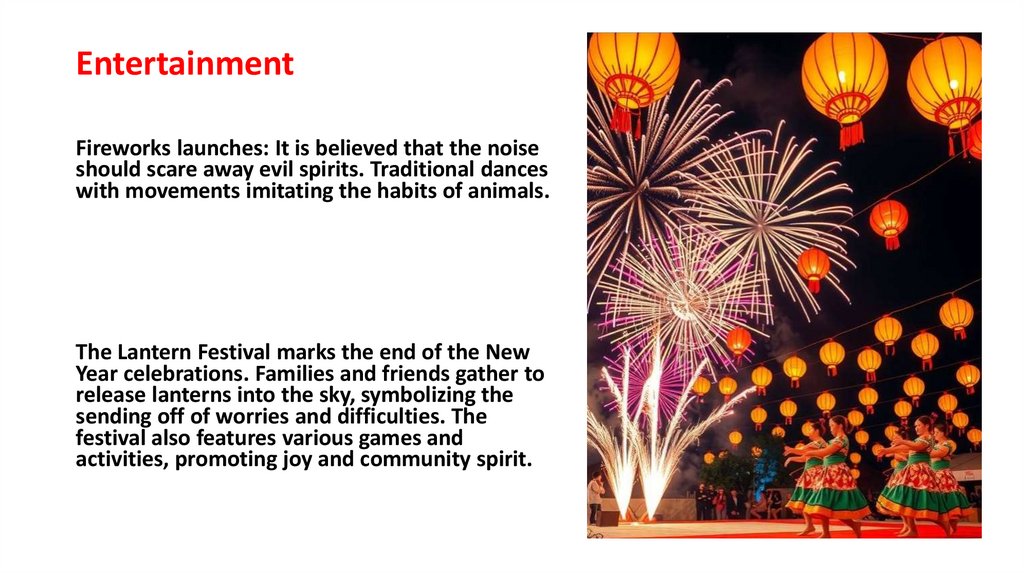
EntertainmentFireworks launches: It is believed that the noise
should scare away evil spirits. Traditional dances
with movements imitating the habits of animals.
The Lantern Festival marks the end of the New
Year celebrations. Families and friends gather to
release lanterns into the sky, symbolizing the
sending off of worries and difficulties. The
festival also features various games and
activities, promoting joy and community spirit.
8.
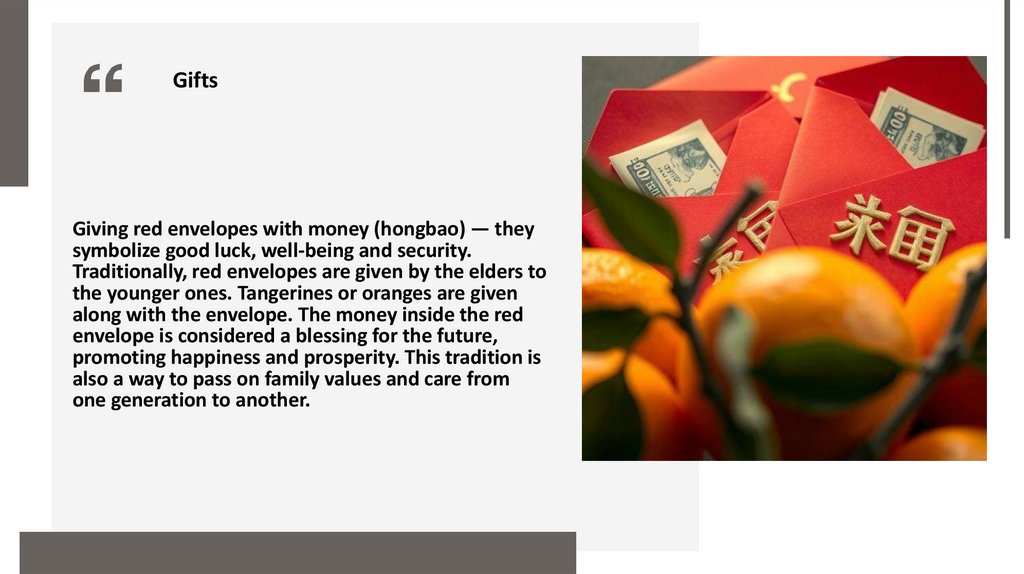
GiftsGiving red envelopes with money (hongbao) — they
symbolize good luck, well-being and security.
Traditionally, red envelopes are given by the elders to
the younger ones. Tangerines or oranges are given
along with the envelope. The money inside the red
envelope is considered a blessing for the future,
promoting happiness and prosperity. This tradition is
also a way to pass on family values and care from
one generation to another.
9.
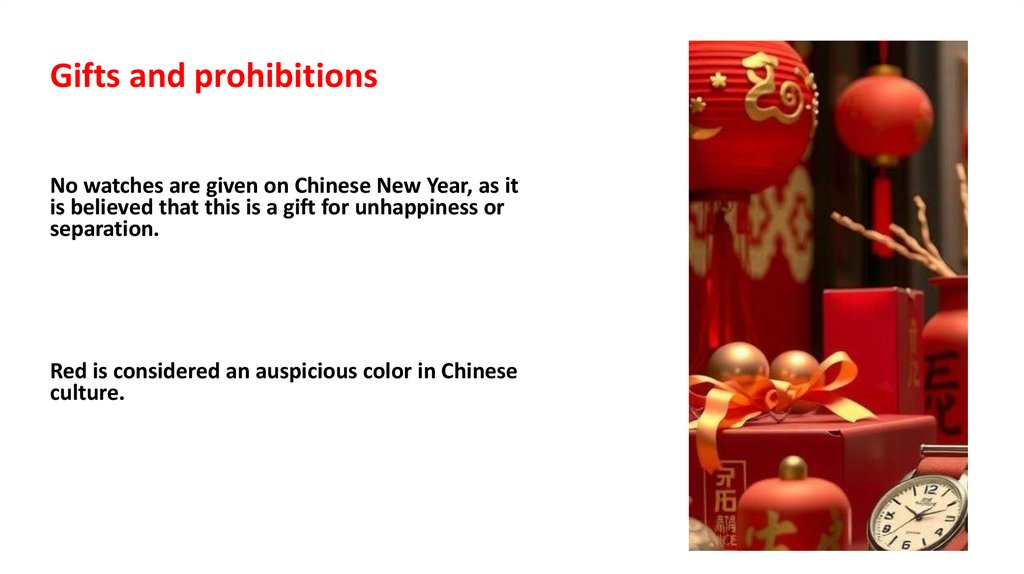
Gifts and prohibitionsNo watches are given on Chinese New Year, as it
is believed that this is a gift for unhappiness or
separation.
Red is considered an auspicious color in Chinese
culture.
10.
Connection with natureNew Year's Eve in China is also a
spring festival.
It is believed that at this time nature wakes
up after winter. People celebrate the
holiday with fireworks and family
gatherings, expressing joy and hope for a
prosperous new year. The festival is also
associated with customs such as red
decorations and special dinners with dishes
symbolizing wealth and good fortune.
11.
Thanks for your attention!In this presentation, we reviewed the history and traditions of the Chinese New
Year, learned about the date of the celebration, features and decorations, as well as
symbolic plants, a festive dinner, traditional entertainment, gifts and nature-related
aspects of this holiday. We hope that the information was useful and interesting.