
 history
Similar presentations:










Russian Holiday History (Ivan Kupala)
1.
ProjectRussian holiday
history
2.
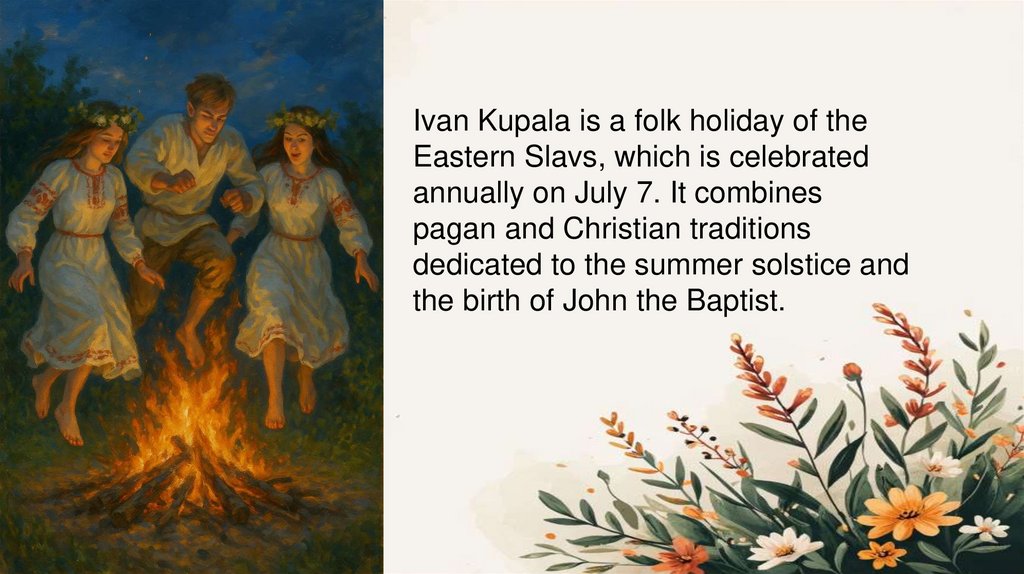
Ivan Kupala is a folk holiday of theEastern Slavs, which is celebrated
annually on July 7. It combines
pagan and Christian traditions
dedicated to the summer solstice and
the birth of John the Baptist.
3.
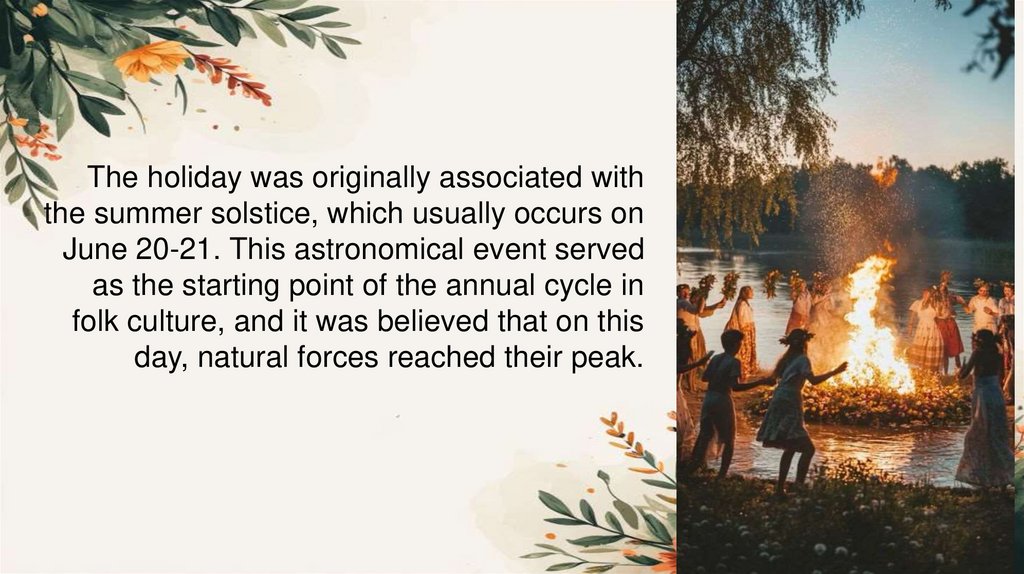
The holiday was originally associated withthe summer solstice, which usually occurs on
June 20-21. This astronomical event served
as the starting point of the annual cycle in
folk culture, and it was believed that on this
day, natural forces reached their peak.
4.
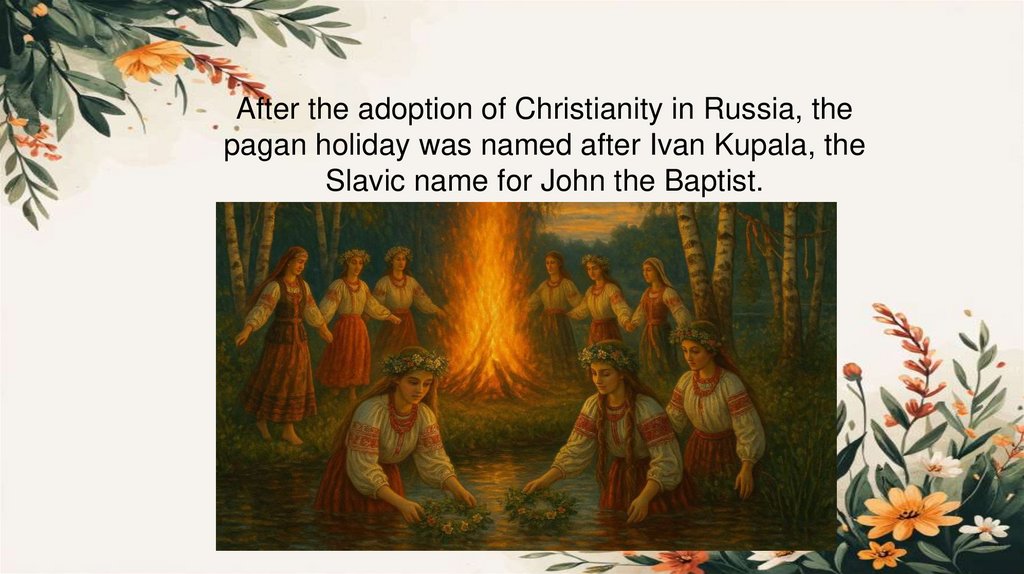
After the adoption of Christianity in Russia, thepagan holiday was named after Ivan Kupala, the
Slavic name for John the Baptist.
5.
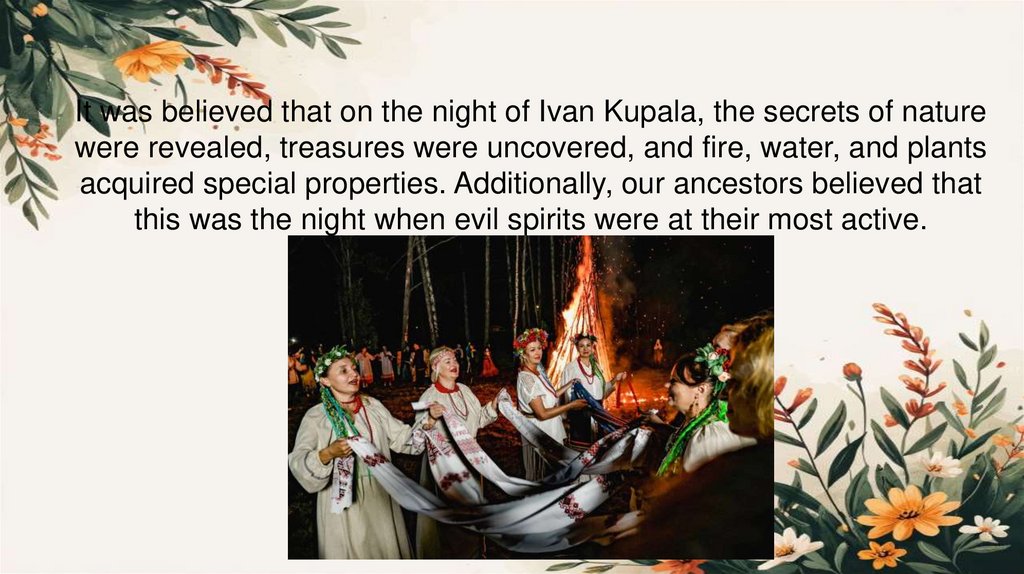
It was believed that on the night of Ivan Kupala, the secrets of naturewere revealed, treasures were uncovered, and fire, water, and plants
acquired special properties. Additionally, our ancestors believed that
this was the night when evil spirits were at their most active.
6.
This holiday has many traditions. Forexample, swimming in water, jumping
over a fire, weaving wreaths, and
collecting herbs.
7.
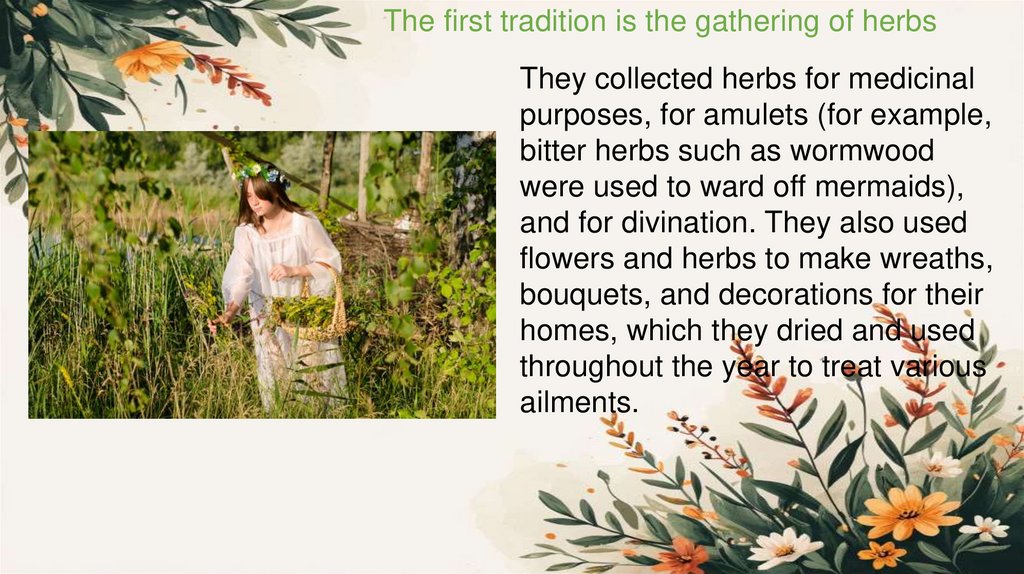
The first tradition is the gathering of herbsThey collected herbs for medicinal
purposes, for amulets (for example,
bitter herbs such as wormwood
were used to ward off mermaids),
and for divination. They also used
flowers and herbs to make wreaths,
bouquets, and decorations for their
homes, which they dried and used
throughout the year to treat various
ailments.
8.
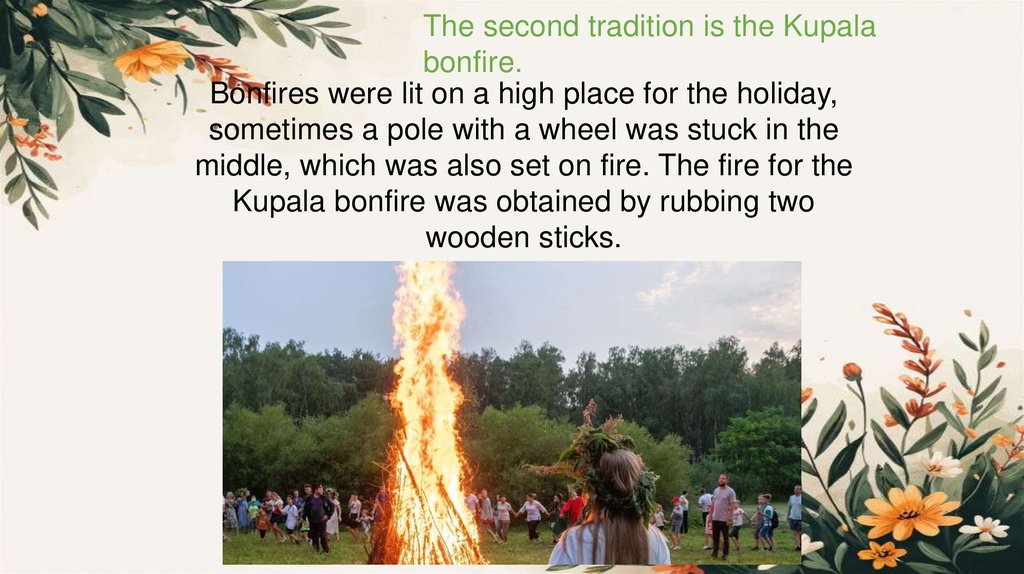
The second tradition is the Kupalabonfire.
Bonfires were lit on a high place for the holiday,
sometimes a pole with a wheel was stuck in the
middle, which was also set on fire. The fire for the
Kupala bonfire was obtained by rubbing two
wooden sticks.
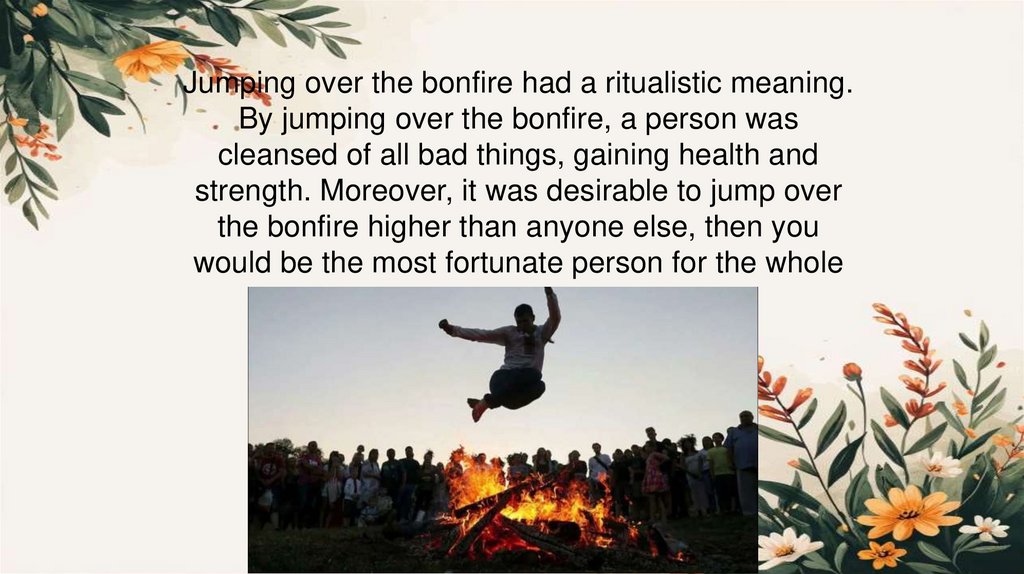
9.
Jumping over the bonfire had a ritualistic meaning.By jumping over the bonfire, a person was
cleansed of all bad things, gaining health and
strength. Moreover, it was desirable to jump over
the bonfire higher than anyone else, then you
would be the most fortunate person for the whole
year.
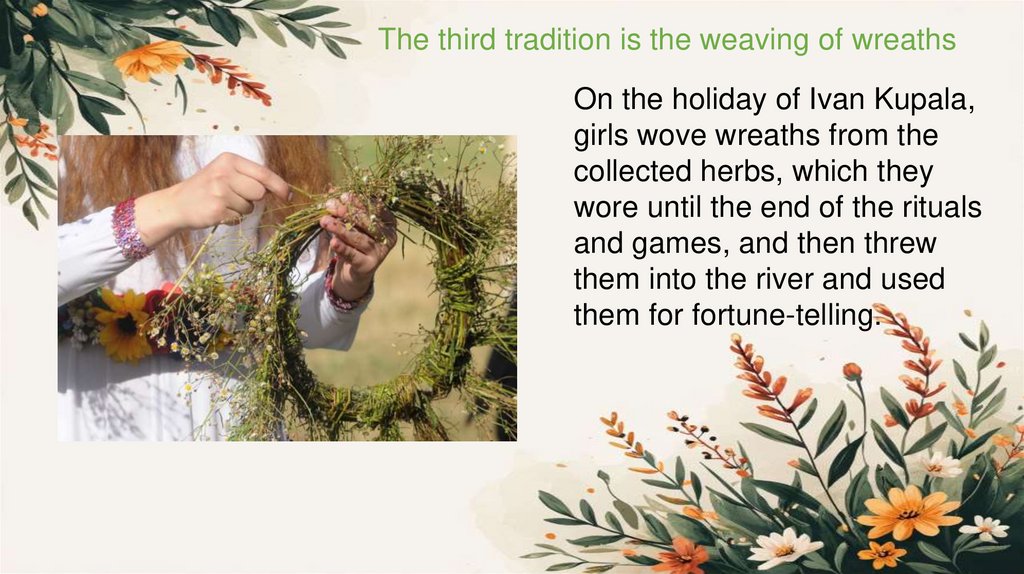
10.
The third tradition is the weaving of wreathsOn the holiday of Ivan Kupala,
girls wove wreaths from the
collected herbs, which they
wore until the end of the rituals
and games, and then threw
them into the river and used
them for fortune-telling.
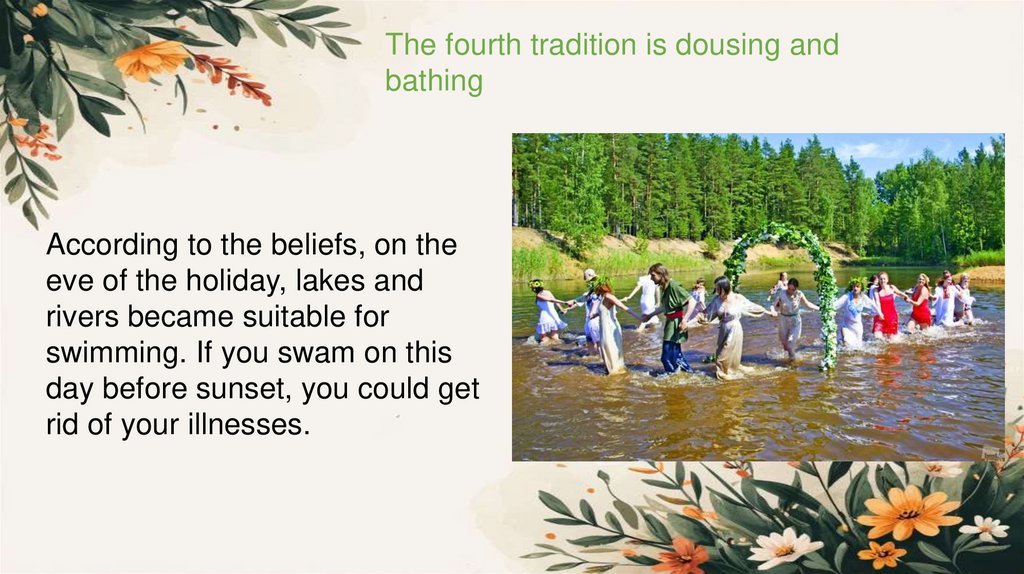
11.
The fourth tradition is dousing andbathing
According to the beliefs, on the
eve of the holiday, lakes and
rivers became suitable for
swimming. If you swam on this
day before sunset, you could get
rid of your illnesses.
12.
There are also many songs dedicated to theholiday