Similar presentations:






The-Global-Impact-of-Alcohol123
1.
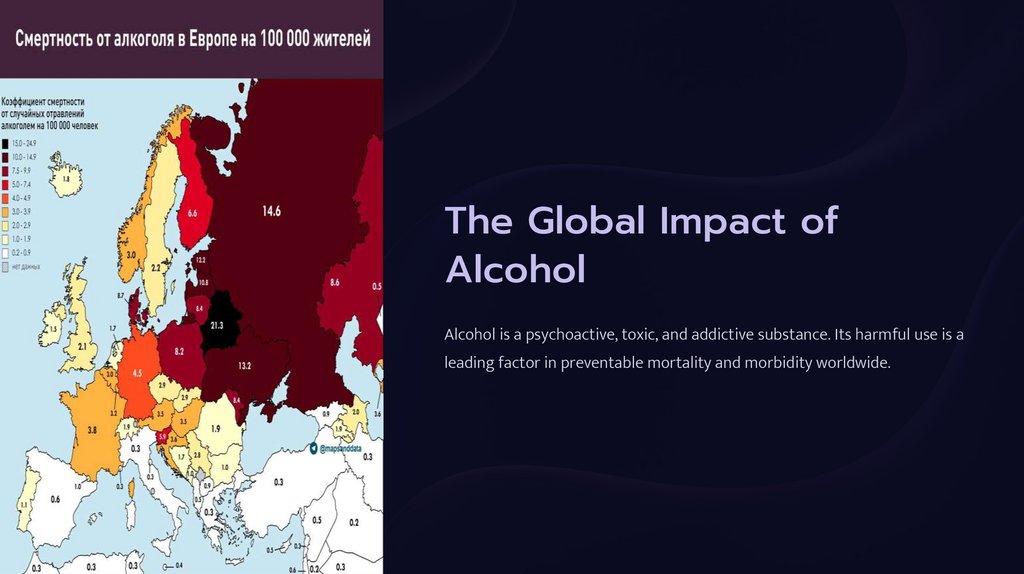
The Global Impact ofAlcohol
Alcohol is a psychoactive, toxic, and addictive substance. Its harmful use is a
leading factor in preventable mortality and morbidity worldwide.
2.
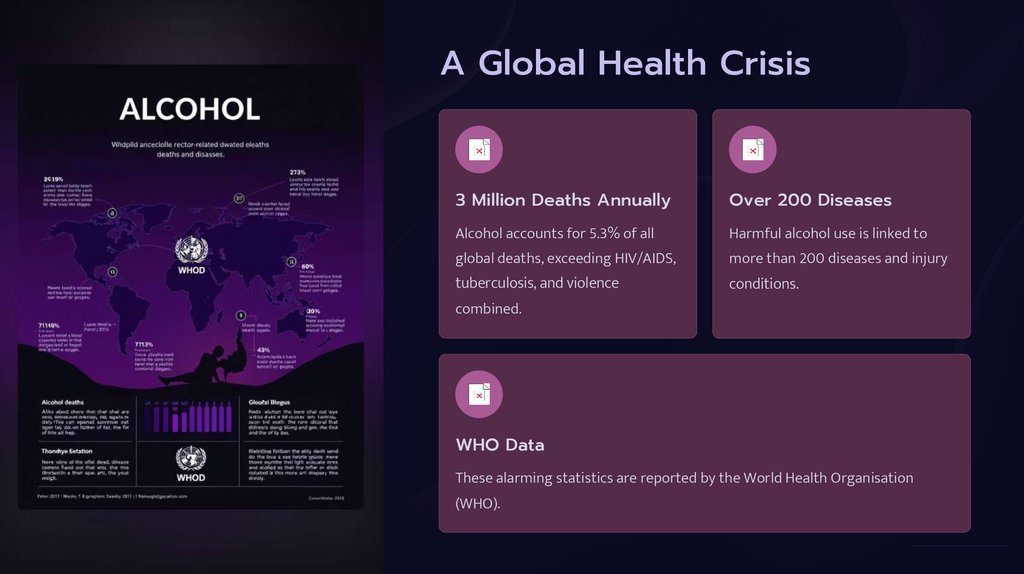
A Global Health Crisis3 Million Deaths Annually
Over 200 Diseases
Alcohol accounts for 5.3% of all
Harmful alcohol use is linked to
tuberculosis, and violence
conditions.
global deaths, exceeding HIV/AIDS,
combined.
more than 200 diseases and injury
WHO Data
These alarming statistics are reported by the World Health Organisation
(WHO).
3.
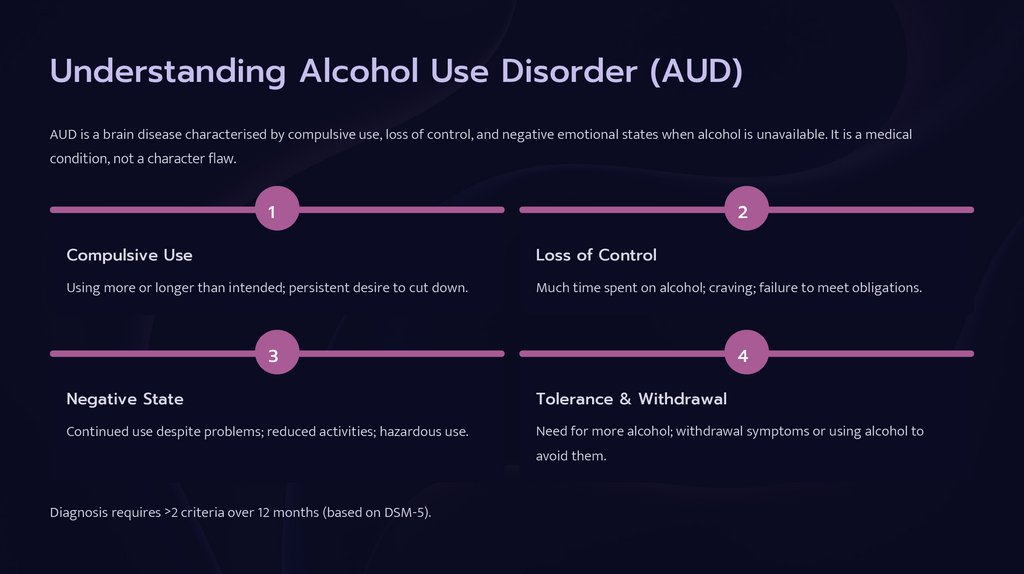
Understanding Alcohol Use Disorder (AUD)AUD is a brain disease characterised by compulsive use, loss of control, and negative emotional states when alcohol is unavailable. It is a medical
condition, not a character flaw.
1
2
Compulsive Use
Loss of Control
Using more or longer than intended; persistent desire to cut down.
Much time spent on alcohol; craving; failure to meet obligations.
3
4
Negative State
Tolerance & Withdrawal
Continued use despite problems; reduced activities; hazardous use.
Need for more alcohol; withdrawal symptoms or using alcohol to
Diagnosis requires ≥2 criteria over 12 months (based on DSM-5).
avoid them.
4.
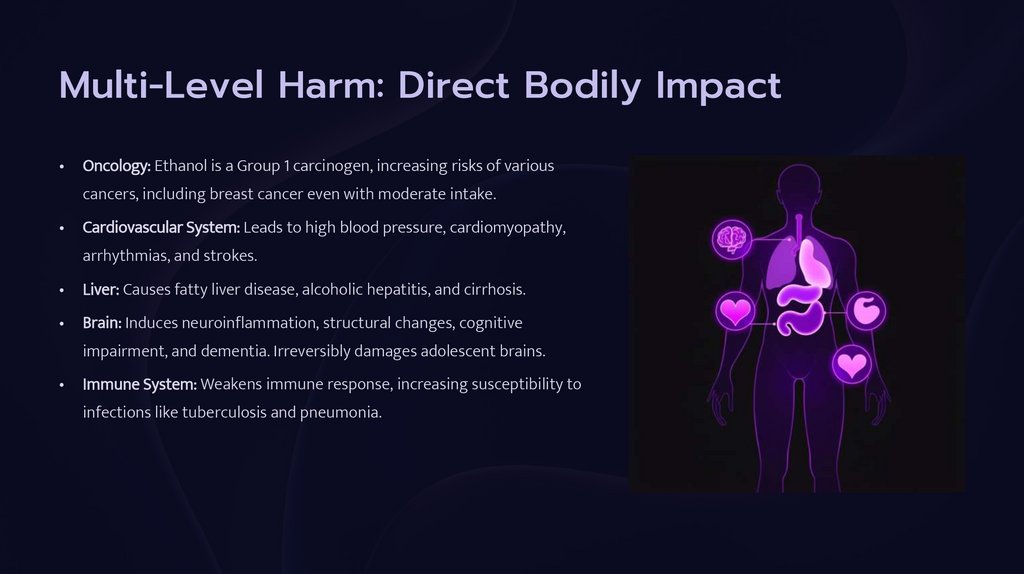
Multi-Level Harm: Direct Bodily ImpactOncology: Ethanol is a Group 1 carcinogen, increasing risks of various
cancers, including breast cancer even with moderate intake.
Cardiovascular System: Leads to high blood pressure, cardiomyopathy,
arrhythmias, and strokes.
Liver: Causes fatty liver disease, alcoholic hepatitis, and cirrhosis.
Brain: Induces neuroinflammation, structural changes, cognitive
impairment, and dementia. Irreversibly damages adolescent brains.
Immune System: Weakens immune response, increasing susceptibility to
infections like tuberculosis and pneumonia.
5.
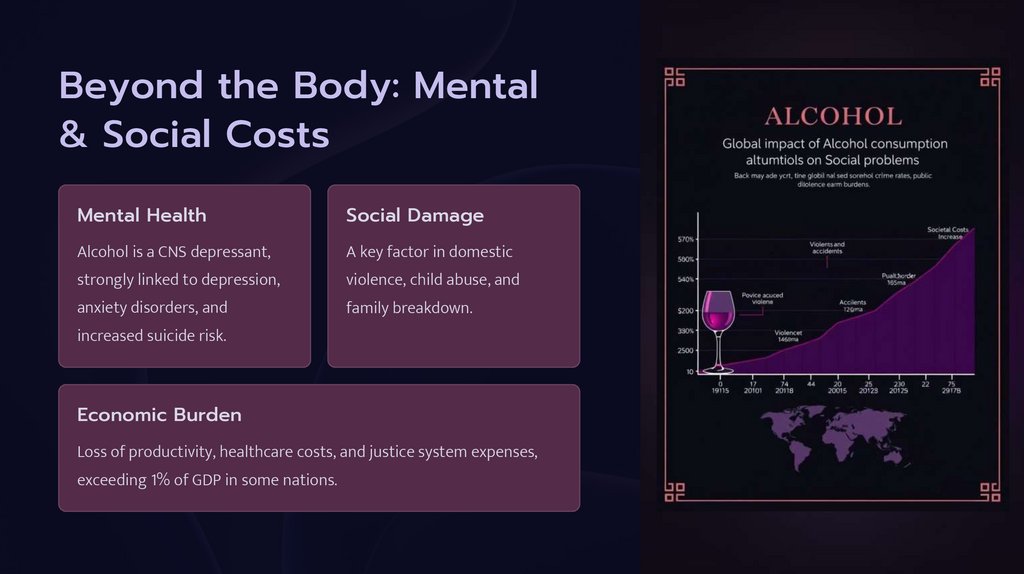
Beyond the Body: Mental& Social Costs
Mental Health
Social Damage
Alcohol is a CNS depressant,
A key factor in domestic
anxiety disorders, and
family breakdown.
strongly linked to depression,
increased suicide risk.
violence, child abuse, and
Economic Burden
Loss of productivity, healthcare costs, and justice system expenses,
exceeding 1% of GDP in some nations.
6.
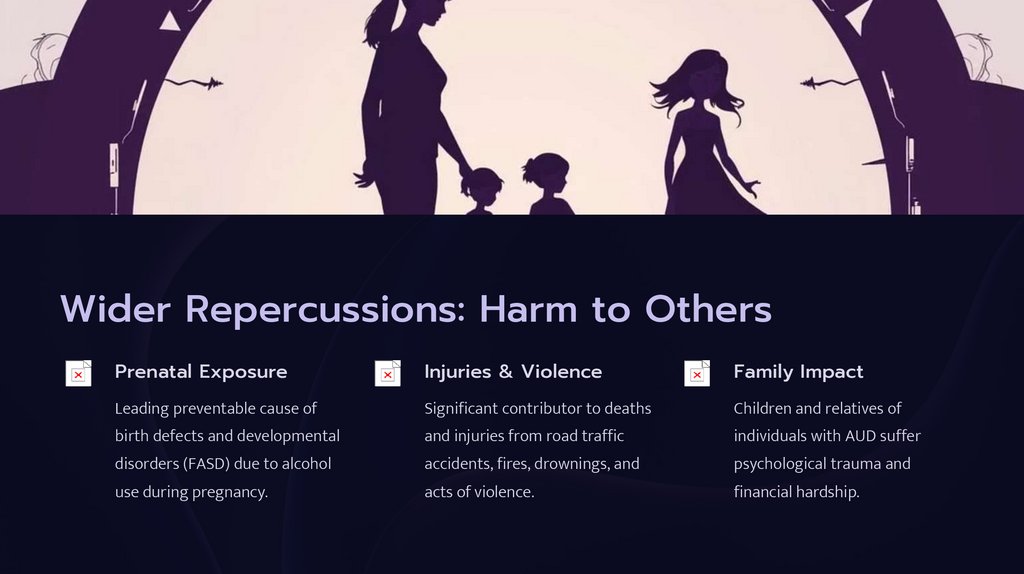
Wider Repercussions: Harm to OthersPrenatal Exposure
Injuries & Violence
Family Impact
Leading preventable cause of
Significant contributor to deaths
Children and relatives of
disorders (FASD) due to alcohol
accidents, fires, drownings, and
psychological trauma and
birth defects and developmental
use during pregnancy.
and injuries from road traffic
acts of violence.
individuals with AUD suffer
financial hardship.
7.
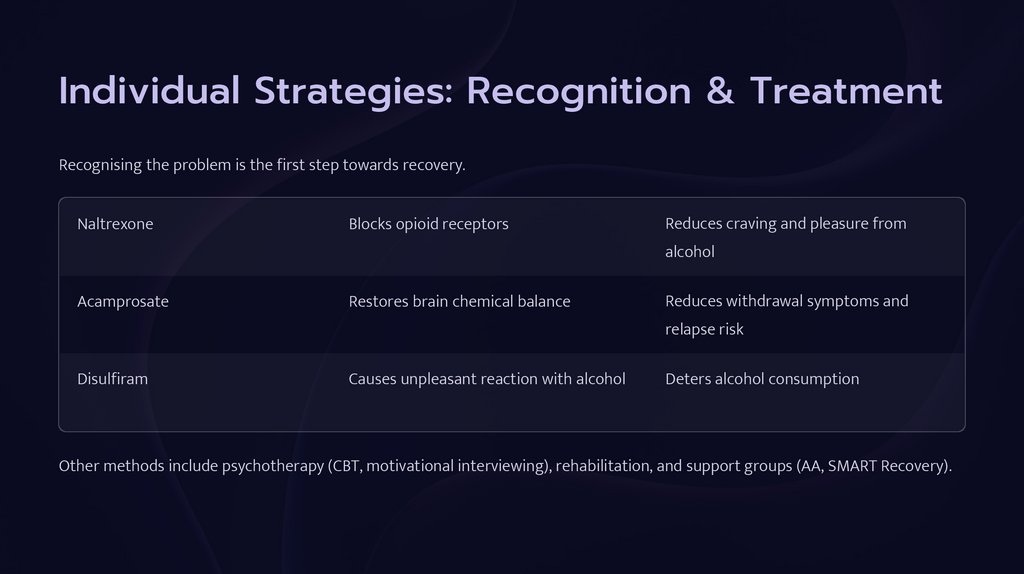
Individual Strategies: Recognition & TreatmentRecognising the problem is the first step towards recovery.
Naltrexone
Blocks opioid receptors
Reduces craving and pleasure from
Acamprosate
Restores brain chemical balance
Reduces withdrawal symptoms and
Disulfiram
Causes unpleasant reaction with alcohol
Deters alcohol consumption
alcohol
relapse risk
Other methods include psychotherapy (CBT, motivational interviewing), rehabilitation, and support groups (AA, SMART Recovery).
8.
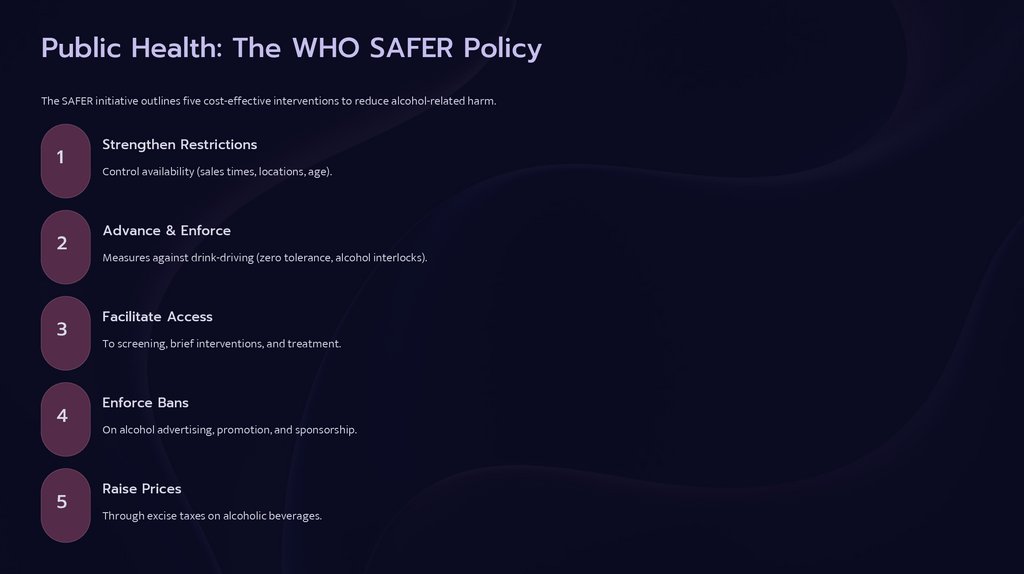
Public Health: The WHO SAFER PolicyThe SAFER initiative outlines five cost-effective interventions to reduce alcohol-related harm.
1
2
3
4
5
Strengthen Restrictions
Control availability (sales times, locations, age).
Advance & Enforce
Measures against drink-driving (zero tolerance, alcohol interlocks).
Facilitate Access
To screening, brief interventions, and treatment.
Enforce Bans
On alcohol advertising, promotion, and sponsorship.
Raise Prices
Through excise taxes on alcoholic beverages.
9.
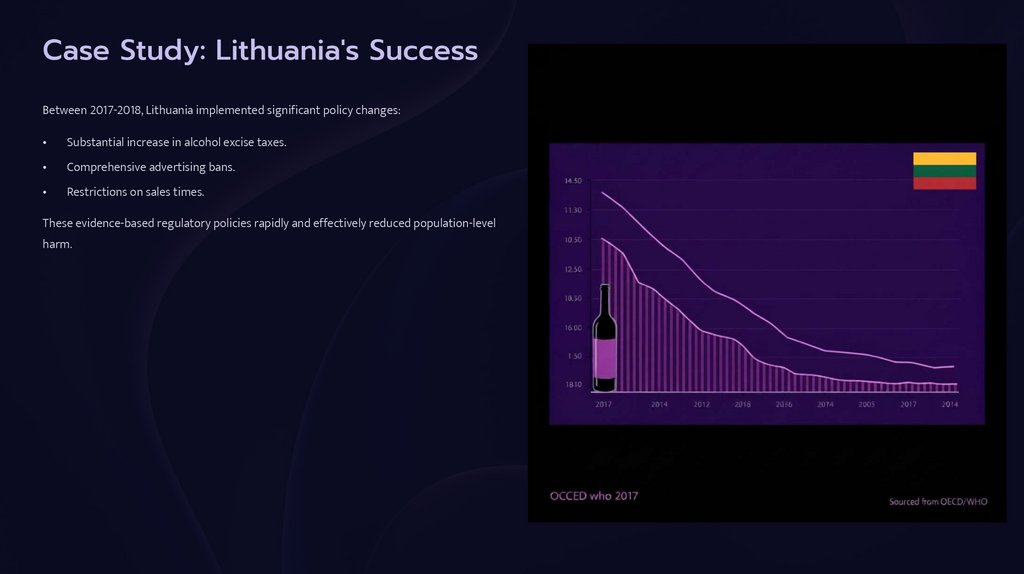
Case Study: Lithuania's SuccessBetween 2017-2018, Lithuania implemented significant policy changes:
Substantial increase in alcohol excise taxes.
Comprehensive advertising bans.
Restrictions on sales times.
These evidence-based regulatory policies rapidly and effectively reduced population-level
harm.
10.
Key Takeaways1
Alcohol is Toxic
A carcinogenic substance causing significant cellular and organic health damage.
2
AUD is Treatable
A brain disease, not a moral failing, requiring medical intervention.
3
Widespread Harm
Alcohol's impact extends beyond the individual, affecting families and society.
4
Effective Policies
Population-level policies (pricing, availability, marketing) are most effective in harm reduction.
5
Inform & Destigmatise
Public awareness and destigmatising help-seeking are crucial for a comprehensive approach.