Similar presentations:




Ecology-in-Russia-Challenges-Consequences-and-the-Path-Forward
1.
Ecology in Russia:Challenges, Consequences,
and the Path Forward
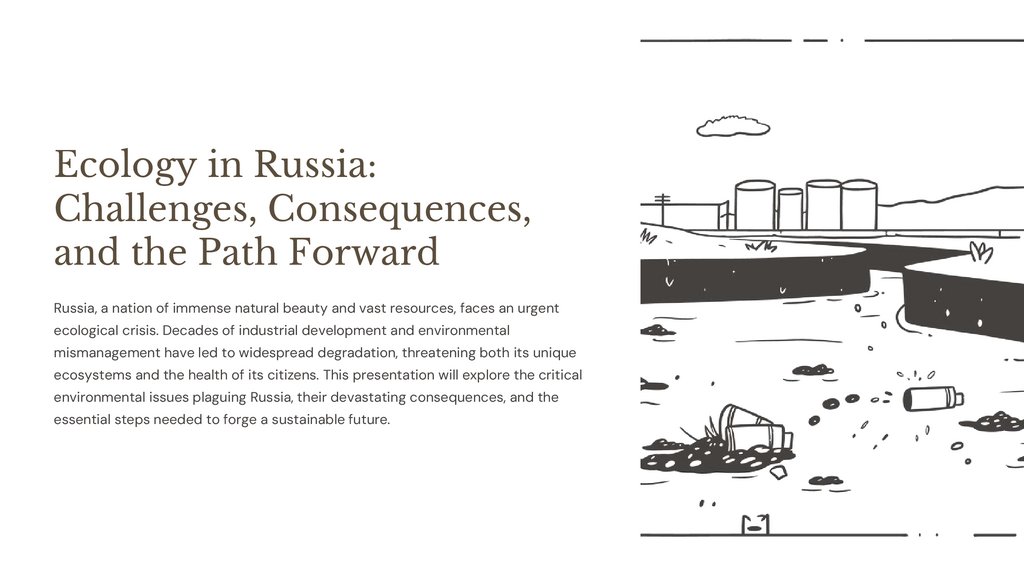
Russia, a nation of immense natural beauty and vast resources, faces an urgent
ecological crisis. Decades of industrial development and environmental
mismanagement have led to widespread degradation, threatening both its unique
ecosystems and the health of its citizens. This presentation will explore the critical
environmental issues plaguing Russia, their devastating consequences, and the
essential steps needed to forge a sustainable future.
2.
The Ecological Problem in Russia: An OverviewThe environmental challenges confronting Russia are a complex tapestry woven from its historical development and current economic
priorities. The legacy of intensive Soviet-era industrialisation, combined with post-Soviet environmental policy shortcomings, has pushed
many ecosystems to their breaking point. These issues span critical areas from pervasive pollution to the alarming impacts of climate change.
Industrial Legacy
Key Environmental Issues
Threatened Ecosystems
Decades of Soviet and post-Soviet
Russia faces critical issues including
Despite its vast natural resources,
industrialisation have caused severe
extensive water and air pollution,
environmental mismanagement
environmental degradation across the
widespread deforestation, hazardous
increasingly threatens Russia's delicate
nation.
waste accumulation, and the profound
ecosystems and the well-being of its
effects of climate change.
public.
3.
Water Pollution: Russia’s Most Pressing ConcernAccess to clean, safe drinking water is a fundamental human right, yet in Russia, fewer than 50% of citizens have reliable access. This alarming
statistic underscores the severity of the nation's water pollution crisis, which is arguably its most critical environmental challenge.
Less than 50% of Russians have access to safe drinking water, posing
significant health risks across the population.
Municipal waste, often inadequately treated, increasingly contaminates
key water sources, jeopardising ecological balance and human health.
The persistent risk of nuclear pollution from historical and current sites
continues to threaten Russia's waterways, with long-term
consequences.
The estimated cost to upgrade Russia's water quality to meet official
standards is substantial, potentially reaching $200 billion.
A stark example of this crisis is the Ambarnaja River near Norilsk, which suffered severe contamination from industrial waste, rendering it
biologically dead in sections. Such incidents highlight the urgent need for comprehensive water management strategies.
4.
Air Pollution and Urban ImpactAcross Russia, more than 200 cities regularly experience air pollution levels that exceed safety limits. This pervasive issue has become a major
public health concern, with significant impacts on daily life and long-term health outcomes. While industrial emissions have historically been a
primary culprit, the landscape of air pollution is rapidly evolving.
1
2
3
Urban Overload
Vehicle Emissions
Health Crisis
Over 200 Russian cities consistently
Due to rapid motorisation, vehicle
Air pollution significantly contributes to
exceed permissible pollution limits,
emissions now surpass industrial
17% of childhood illnesses and 10% of
creating unhealthy urban environments
pollution as the leading cause of urban
adult diseases, highlighting a dire public
for millions.
air degradation.
health crisis.
Major metropolitan centres such as Moscow, St. Petersburg, Yekaterinburg, and Volgograd are particularly affected, where dense populations
and heavy traffic exacerbate the problem. Addressing this requires integrated urban planning, promotion of public transport, and stricter
emission controls.
5.
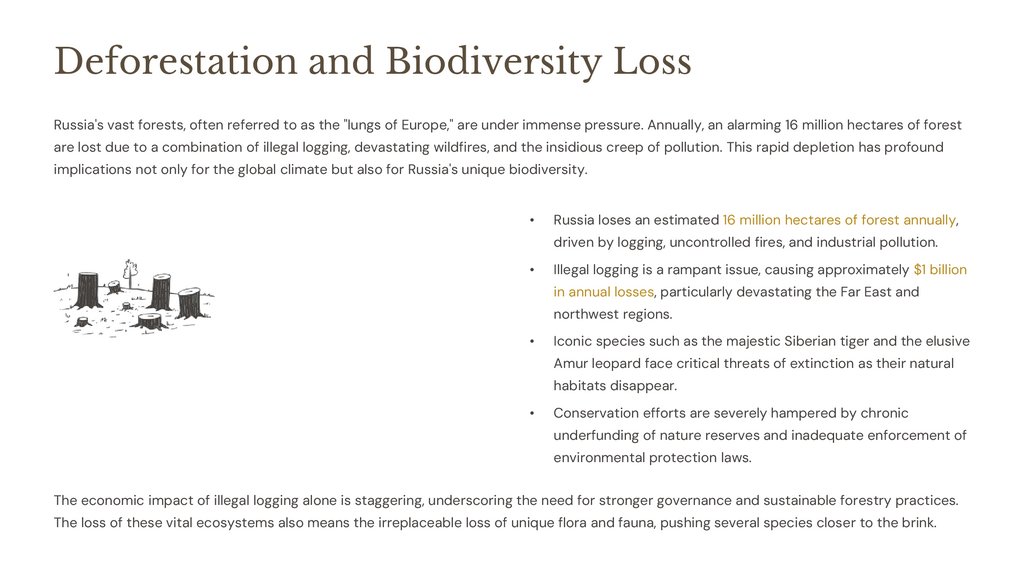
Deforestation and Biodiversity LossRussia's vast forests, often referred to as the "lungs of Europe," are under immense pressure. Annually, an alarming 16 million hectares of forest
are lost due to a combination of illegal logging, devastating wildfires, and the insidious creep of pollution. This rapid depletion has profound
implications not only for the global climate but also for Russia's unique biodiversity.
Russia loses an estimated 16 million hectares of forest annually,
driven by logging, uncontrolled fires, and industrial pollution.
Illegal logging is a rampant issue, causing approximately $1 billion
in annual losses, particularly devastating the Far East and
northwest regions.
Iconic species such as the majestic Siberian tiger and the elusive
Amur leopard face critical threats of extinction as their natural
habitats disappear.
Conservation efforts are severely hampered by chronic
underfunding of nature reserves and inadequate enforcement of
environmental protection laws.
The economic impact of illegal logging alone is staggering, underscoring the need for stronger governance and sustainable forestry practices.
The loss of these vital ecosystems also means the irreplaceable loss of unique flora and fauna, pushing several species closer to the brink.
6.
Hazardous and Nuclear Waste: A Growing ThreatBeyond visible pollution, Russia grapples with a less conspicuous but equally dangerous environmental menace: hazardous and nuclear waste.
The legacy of industrialisation and the Cold War era has left behind numerous sites contaminated with highly toxic materials, posing long-term
risks to both the environment and public health.
Toxic Dumping
Nuclear Contamination
Legacy Waste
Approximately 200 metric tons of highly
Many Soviet-era nuclear contamination
The remnants of Soviet-era chemical
toxic waste are illegally dumped each
sites remain inadequately managed,
munitions and vast quantities of
year, often in unregulated sites, leading
often merely fenced off with limited or no
industrial waste continue to pose
to soil and water contamination.
comprehensive remediation efforts.
significant, long-term environmental and
health risks.
These sites represent ticking environmental time bombs, requiring significant investment and sophisticated technological solutions for safe
clean-up and long-term storage. The lack of proactive remediation perpetuates the threat for future generations.
7.
Consequences: Health, Economy, and Global ImpactThe widespread environmental degradation in Russia is not merely an ecological problem; it manifests as a crisis with profound consequences for human health,
national economic stability, and global environmental efforts. The interconnectedness of these impacts demands immediate and comprehensive attention.
Health Deterioration
Environmental degradation is directly linked to a rising incidence of respiratory, gastrointestinal, and developmental illnesses across the
population, burdening the healthcare system.
Economic Drain
The economic losses stemming from pollution and environmental damage are estimated to be between 10-12% of Russia’s GDP annually, hindering
national development.
Investment & Productivity
Environmental damage deters much-needed foreign investment and significantly reduces labour productivity, impacting long-term economic
growth.
Global Climate Contribution
Russia's current climate policies contribute significantly to global greenhouse gas emissions, undermining international efforts to combat climate
change.
8.
Flawed Solutions and Policy ChallengesDespite the clear and escalating environmental crisis, Russia's current policy framework and proposed solutions are widely regarded as
insufficient. International assessments, such as those by Climate Action Tracker, rate Russia's climate policy as "highly insufficient," highlighting
a critical gap between the problem's scale and the government's response.
1
2
Inadequate Climate Policy
Fossil Fuel Dependency
Russia’s climate policy is rated "highly insufficient,"
The nation's continued high reliance on fossil fuels, with plans to
demonstrating a lack of ambition in addressing environmental
increase oil and gas production by 5% by 2030, hinders
challenges on a national and global scale.
transition to cleaner energy.
3
4
Limited International Commitment
Suppressed Activism
Russia shows minimal commitment to international climate
While local environmental activism is growing, it faces increasing
targets, suggesting that emissions are likely to rise or stabilise
political pressure and receives limited support from the
only slightly in the coming years.
government, stifling progress.
9.
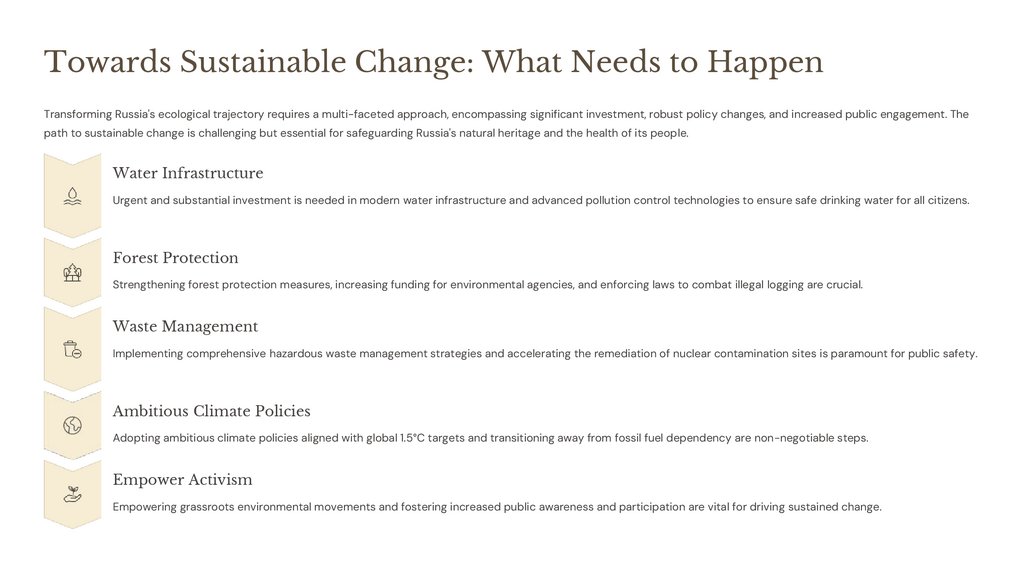
Towards Sustainable Change: What Needs to HappenTransforming Russia's ecological trajectory requires a multi-faceted approach, encompassing significant investment, robust policy changes, and increased public engagement. The
path to sustainable change is challenging but essential for safeguarding Russia's natural heritage and the health of its people.
Water Infrastructure
Urgent and substantial investment is needed in modern water infrastructure and advanced pollution control technologies to ensure safe drinking water for all citizens.
Forest Protection
Strengthening forest protection measures, increasing funding for environmental agencies, and enforcing laws to combat illegal logging are crucial.
Waste Management
Implementing comprehensive hazardous waste management strategies and accelerating the remediation of nuclear contamination sites is paramount for public safety.
Ambitious Climate Policies
Adopting ambitious climate policies aligned with global 1.5°C targets and transitioning away from fossil fuel dependency are non-negotiable steps.
Empower Activism
Empowering grassroots environmental movements and fostering increased public awareness and participation are vital for driving sustained change.
10.
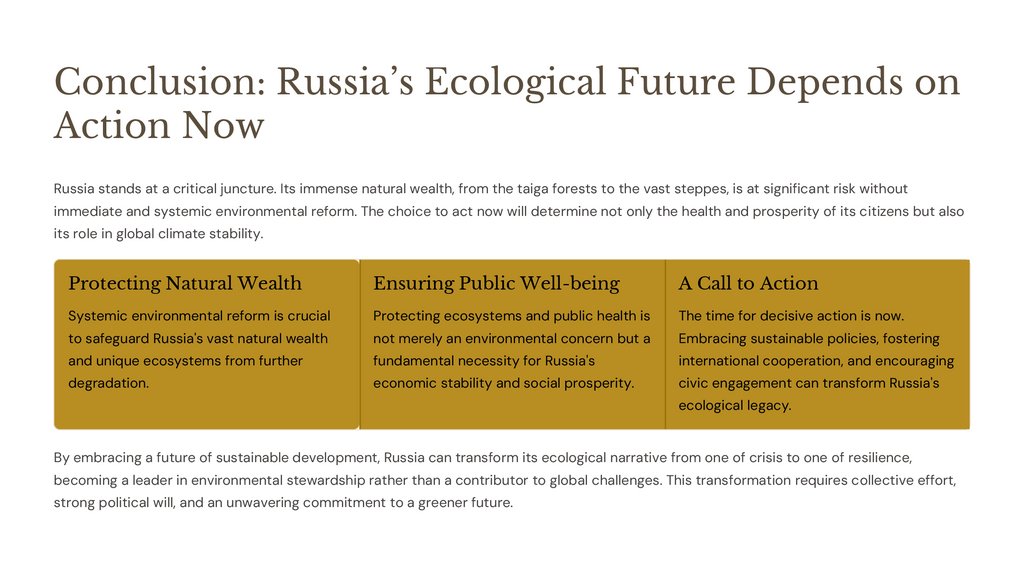
Conclusion: Russia’s Ecological Future Depends onAction Now
Russia stands at a critical juncture. Its immense natural wealth, from the taiga forests to the vast steppes, is at significant risk without
immediate and systemic environmental reform. The choice to act now will determine not only the health and prosperity of its citizens but also
its role in global climate stability.
Protecting Natural Wealth
Ensuring Public Well-being
A Call to Action
Systemic environmental reform is crucial
Protecting ecosystems and public health is
The time for decisive action is now.
to safeguard Russia's vast natural wealth
not merely an environmental concern but a
Embracing sustainable policies, fostering
and unique ecosystems from further
fundamental necessity for Russia's
international cooperation, and encouraging
degradation.
economic stability and social prosperity.
civic engagement can transform Russia's
ecological legacy.
By embracing a future of sustainable development, Russia can transform its ecological narrative from one of crisis to one of resilience,
becoming a leader in environmental stewardship rather than a contributor to global challenges. This transformation requires collective effort,
strong political will, and an unwavering commitment to a greener future.