
Similar presentations:









1.
Vegans & Vegetarians:History & Distinctions
Веганы и вегетарианцы: история и различия
2.
Ancient Roots of VegetarianismPhilosophical Beginnings
Pythagoras' Influence
Vegetarianism emerged in the 6th
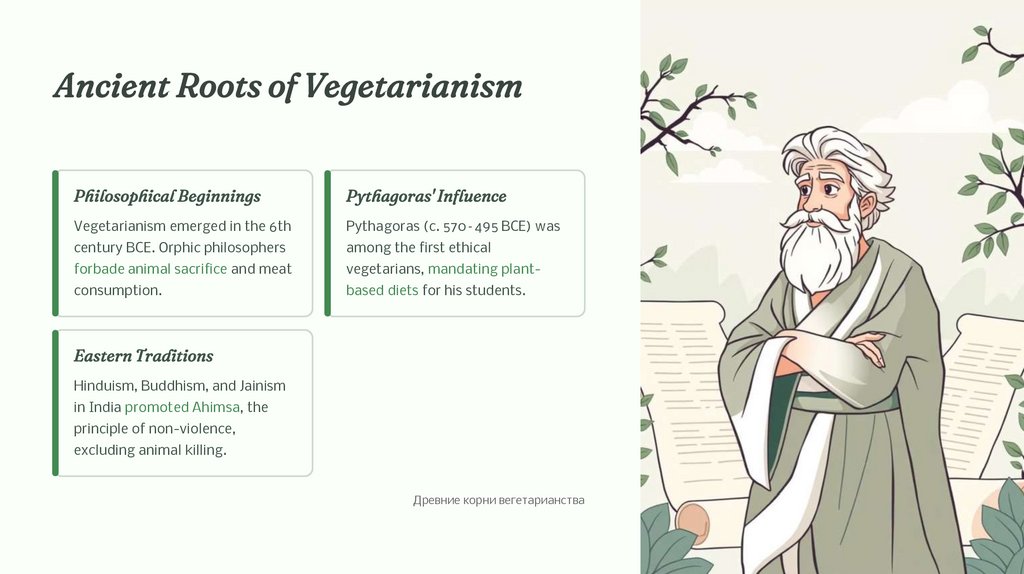
Pythagoras (c. 570–495 BCE) was
century BCE. Orphic philosophers
among the first ethical
forbade animal sacrifice and meat
vegetarians, mandating plant-
consumption.
based diets for his students.
Eastern Traditions
Hinduism, Buddhism, and Jainism
in India promoted Ahimsa, the
principle of non-violence,
excluding animal killing.
Древние корни вегетарианства
3.
The Rise of Veganism1944: The term 'Vegan' coined in the UK
by Donald and Dorothy Watson, who
founded The Vegan Society.
Beyond Diet: A Way of Life. Veganism
extends beyond food, excluding all
animal products and exploitation.
No Animal Products: Meat, dairy,
eggs, honey.
No Animal Use: Leather, wool, silk.
Vegans strive for total animal liberation,
including products often accepted by
vegetarians.
Возникновение веганства
4.
Key Differences: Vegan vs.Vegetarian
Vegetarians
Avoid meat, fish, and seafood.
Often consume: Dairy & eggs (Lacto-ovo vegetarians).
Motivations: Health, religion, environment.
Vegans
Exclude all animal products: Meat, fish, eggs, dairy, honey.
No animal materials: Clothing, household items.
Motivations: Ethical philosophy, animal welfare.
Ключевые различия: веган vs вегетарианец
5.
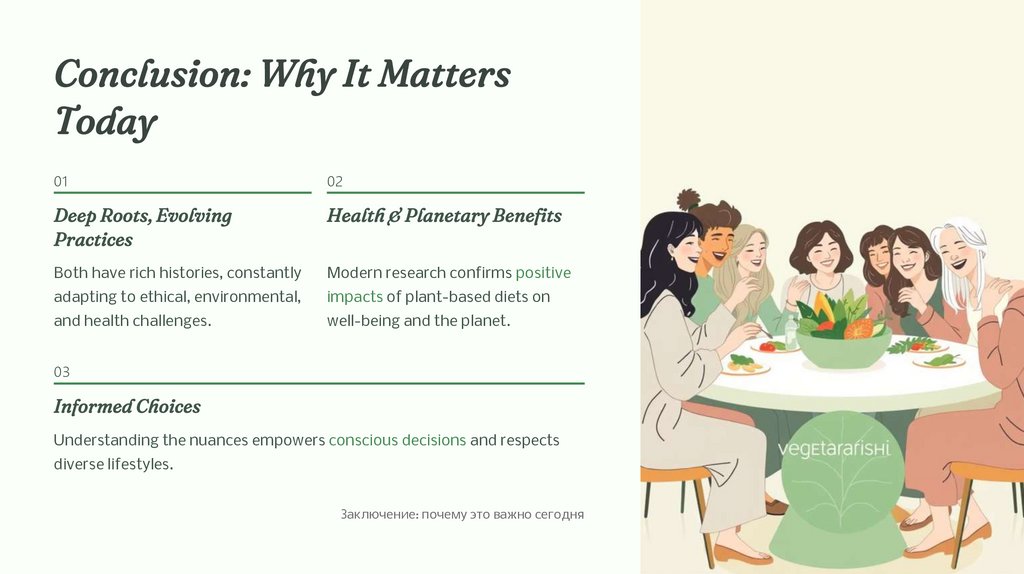
Conclusion: Why It MattersToday
01
02
Deep Roots, Evolving
Practices
Health & Planetary Benefits
Both have rich histories, constantly
Modern research confirms positive
adapting to ethical, environmental,
impacts of plant-based diets on
and health challenges.
well-being and the planet.
03
Informed Choices
Understanding the nuances empowers conscious decisions and respects
diverse lifestyles.
Заключение: почему это важно сегодня