
Similar presentations:









microservices_full_english_final
1.
Financial Impact of Choosing MicroservicesArchitecture
Why architecture must follow business needs, not trends.
2.
Agenda• Real-world engineering example
• Resume-driven development
• Why microservices become expensive
• Cost structure
• Architecture comparison
• Complexity growth
• Case comparison
• Summary
3.
Real Story: Resume-Driven ArchitectureTeam presents: Kubernetes, Istio, Kafka, trendy NoSQL.
Expected load: 50 users per day.
Reason: “We are preparing for scale.”
This is not engineering — this is resume-driven development.
4.
Resume-Driven DevelopmentTechnologies chosen for CV appeal, not for business needs:
• “Looks great on my resume”
• Maintenance is ignored
• Goal: jump jobs for +$100k
• Business gets a complex, expensive system
5.
Why Microservices Become ExpensiveMicroservices require:
• Kubernetes / Istio
• Kafka / message brokers
• API Gateway
• CI/CD for each service
• Logging, metrics, monitoring
• DevOps team
This is building a Death Star to serve 50 daily users.
6.
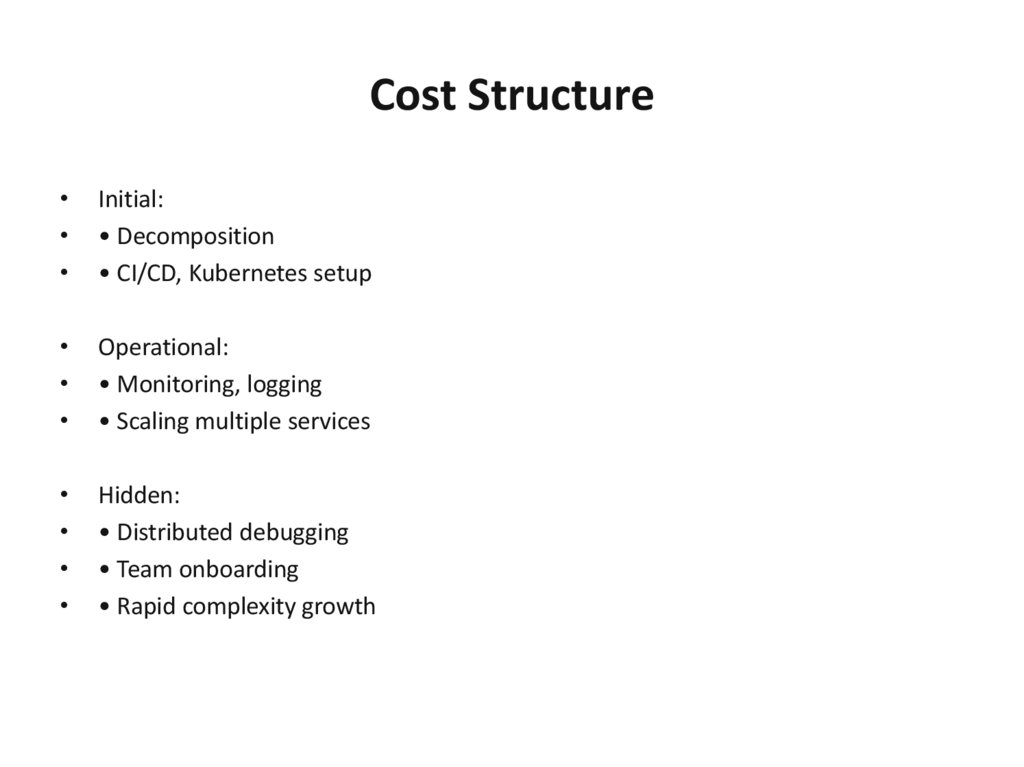
Cost StructureInitial:
• Decomposition
• CI/CD, Kubernetes setup
Operational:
• Monitoring, logging
• Scaling multiple services
Hidden:
• Distributed debugging
• Team onboarding
• Rapid complexity growth
7.
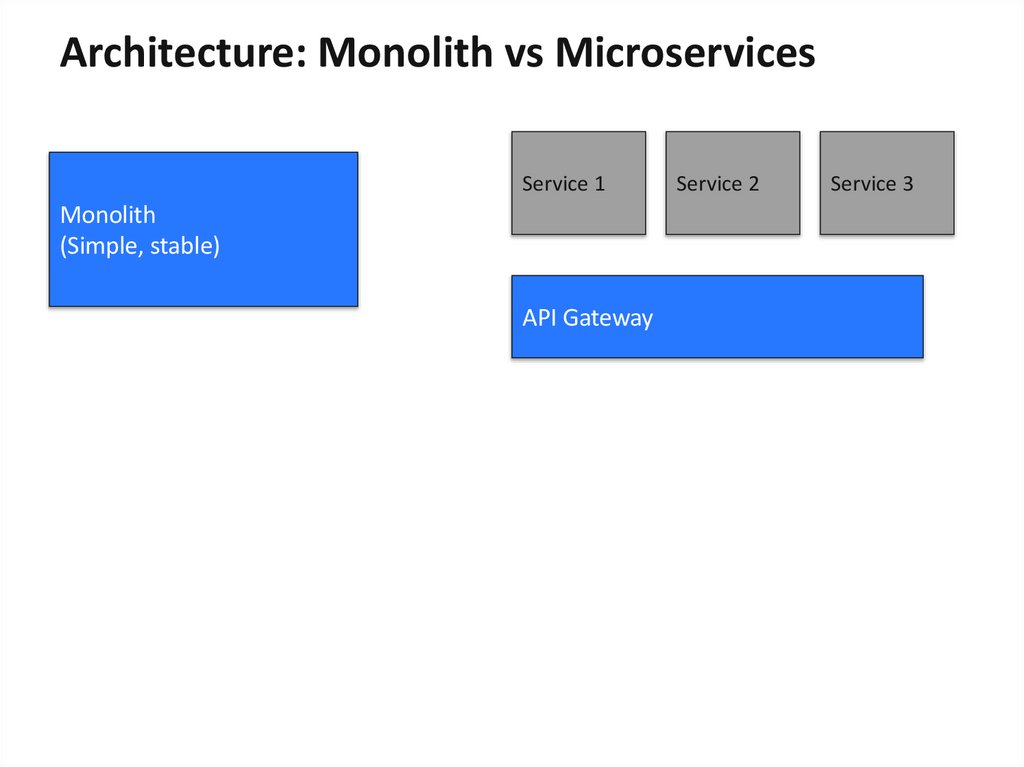
Architecture: Monolith vs MicroservicesService 1
Monolith
(Simple, stable)
API Gateway
Service 2
Service 3
8.
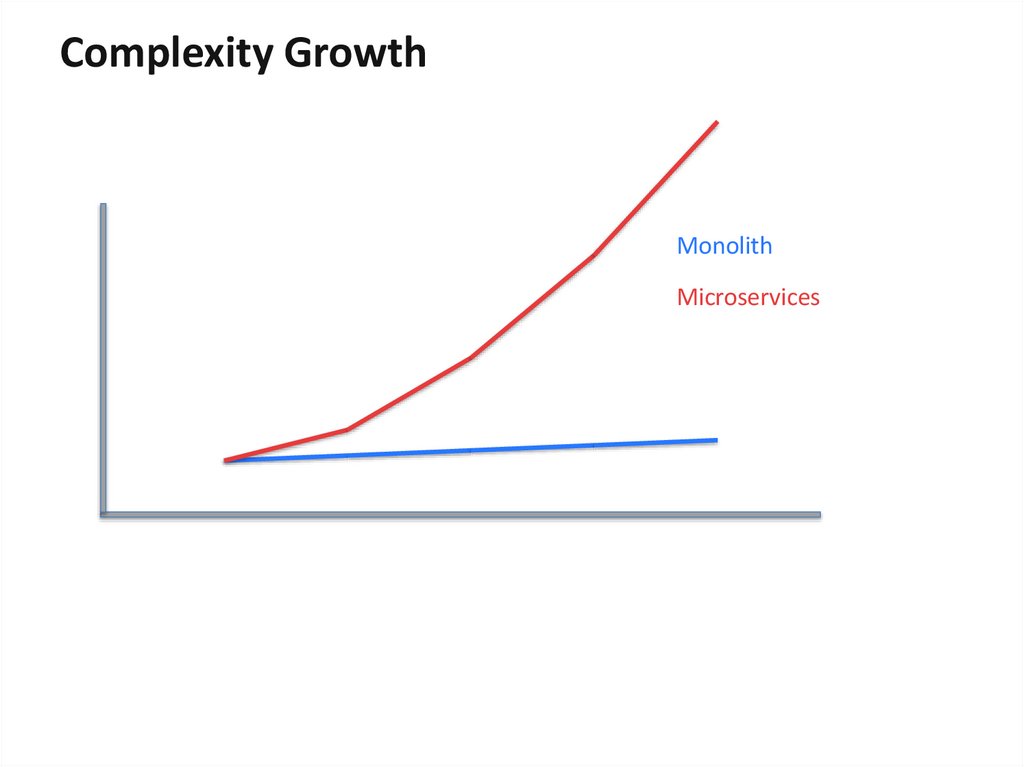
Complexity GrowthMonolith
Microservices
9.
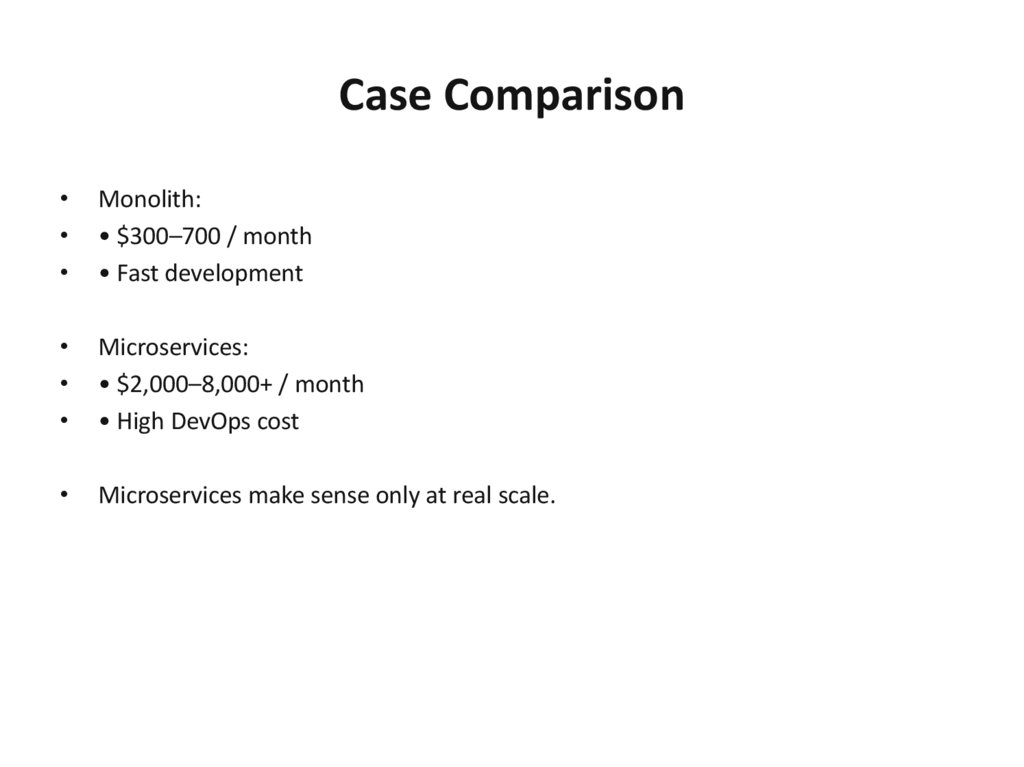
Case ComparisonMonolith:
• $300–700 / month
• Fast development
Microservices:
• $2,000–8,000+ / month
• High DevOps cost
Microservices make sense only at real scale.
10.
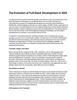
Summary• Architecture must serve business needs
• Microservices = expensive + complex
• Monolith covers 99% of early-stage workloads
• True senior engineers choose simplicity
• Use complex tools only when justified