Similar presentations:










microservices_fully_designed_extended
1.
Financial Impact of ChoosingMicroservices Architecture
• Cloud / DevOps Style — Expanded Version with Charts &
Architecture Schemes
2.
Agenda• Problem
• Why Microservices Are Expensive
• Architecture Comparison
• Cost Breakdown
• Financial Risk Model
• Architecture Scheme (Monolith vs Microservices)
• Cost Bar Chart
• Summary
3.
ProblemCompanies often adopt microservices too early.
This leads to:
• High infrastructure spending
• Unnecessary DevOps hiring
• Slower MVP development
• Increased architectural complexity
• Longer time to ROI
4.
Why Microservices Are ExpensiveMicroservices require:
• Kubernetes / Orchestration
• CI/CD per service
• API gateway, service mesh
• Distributed logging & monitoring
• Scaling multiple instances
These factors multiply infrastructure and engineering costs.
5.
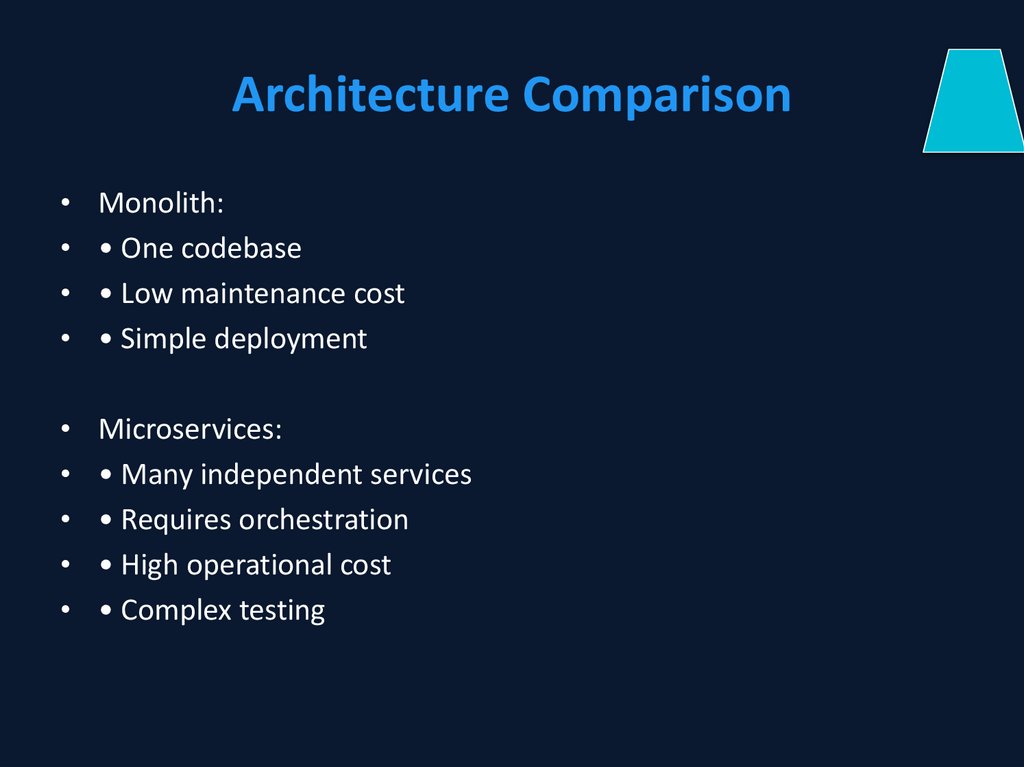
Architecture ComparisonMonolith:
• One codebase
• Low maintenance cost
• Simple deployment
Microservices:
• Many independent services
• Requires orchestration
• High operational cost
• Complex testing
6.
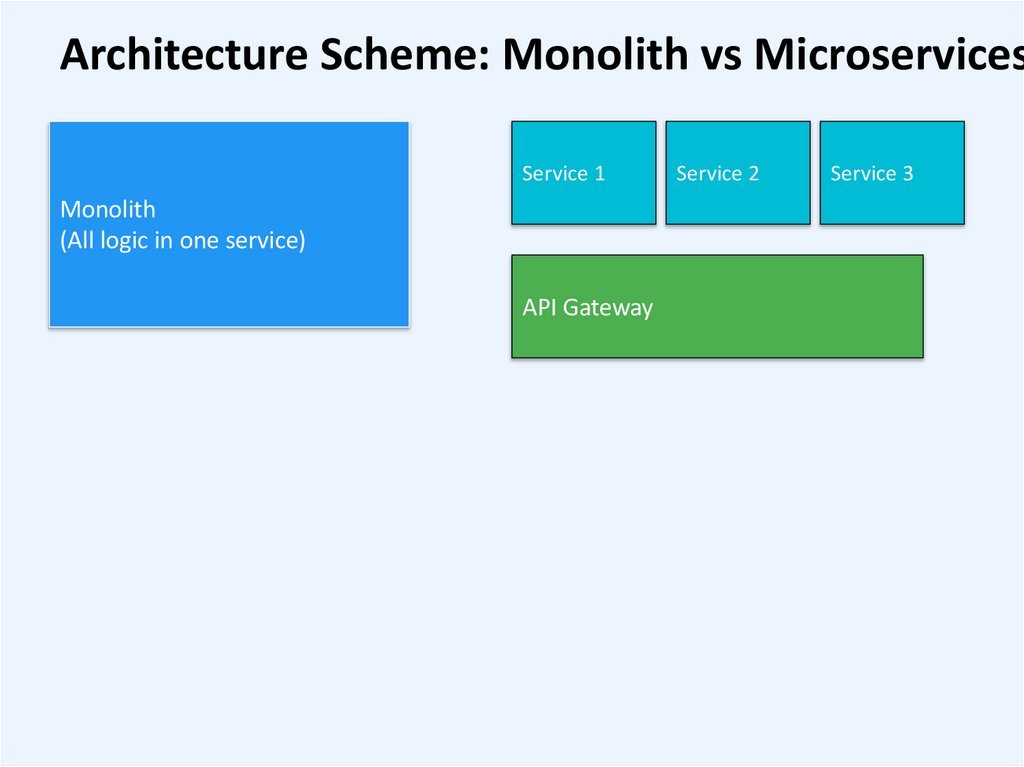
Architecture Scheme: Monolith vs MicroservicesService 1
Monolith
(All logic in one service)
API Gateway
Service 2
Service 3
7.
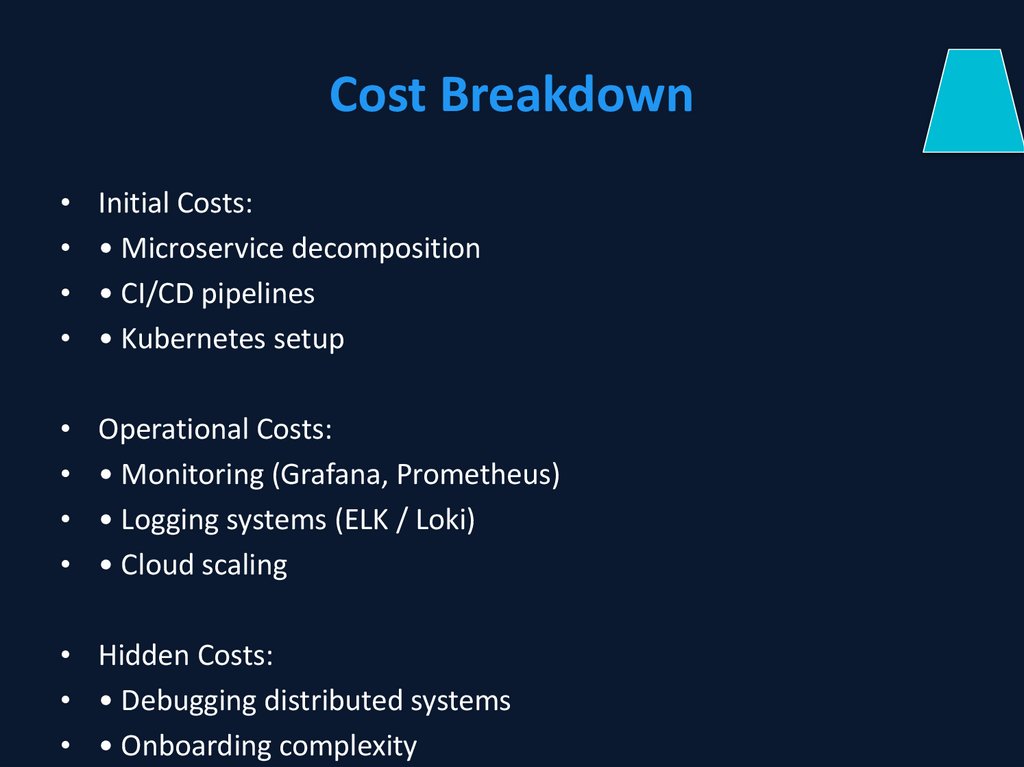
Cost BreakdownInitial Costs:
• Microservice decomposition
• CI/CD pipelines
• Kubernetes setup
Operational Costs:
• Monitoring (Grafana, Prometheus)
• Logging systems (ELK / Loki)
• Cloud scaling
• Hidden Costs:
• • Debugging distributed systems
• • Onboarding complexity
8.
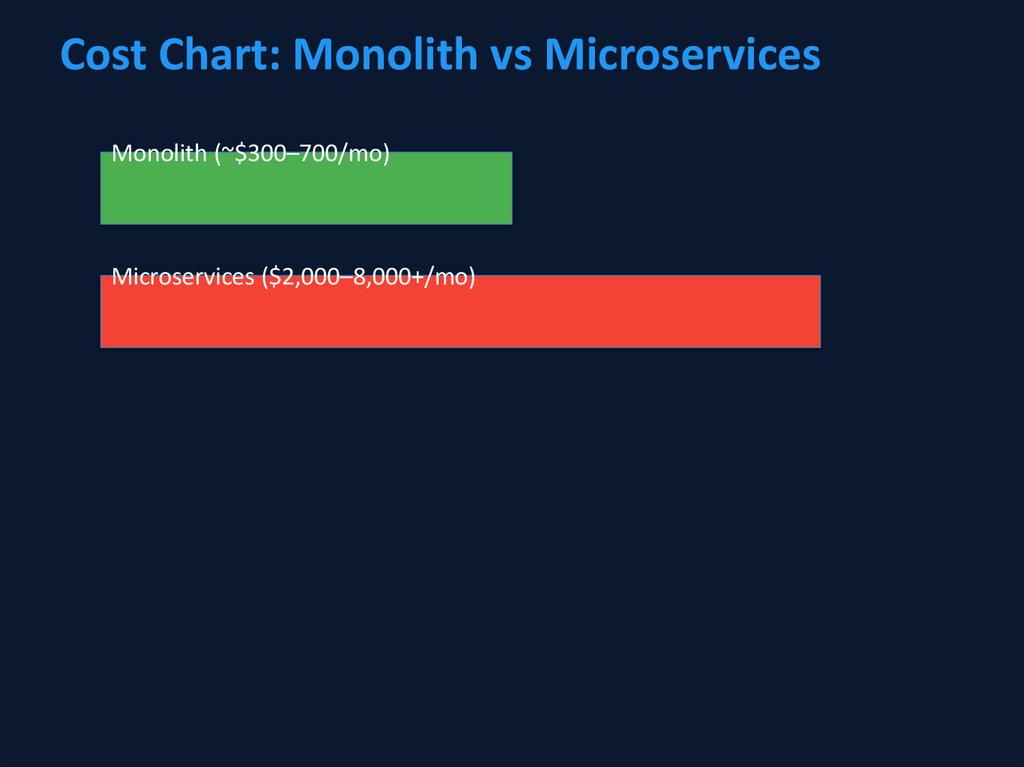
Cost Chart: Monolith vs MicroservicesMonolith (~$300–700/mo)
Microservices ($2,000–8,000+/mo)
9.
Summary• Microservices are powerful but costly
• Monolith is financially superior for early-stage products
• Microservices shine at scale and high load
• Architecture should match business maturity