Similar presentations:


Neurobiology_of_Addiction_Presentation
1.
The Neurobiology of Addiction• Understanding the Brain's Reward System and
Recovery Models
2.
What Is Addiction?• Addiction is when a person loses control over
using something that brings pleasure, even
when it harms them.
• It happens because the brain changes and
starts depending on that substance or
behavior.
3.
The Brain's Reward System• • Ventral Tegmental Area (VTA)
• • Nucleus Accumbens
• • Prefrontal Cortex
• These areas control pleasure, motivation, and
decision-making.
4.
Dopamine: The Key Chemical• Dopamine creates pleasure. Addictive
substances cause unusually high dopamine
levels, making the brain crave more.
5.
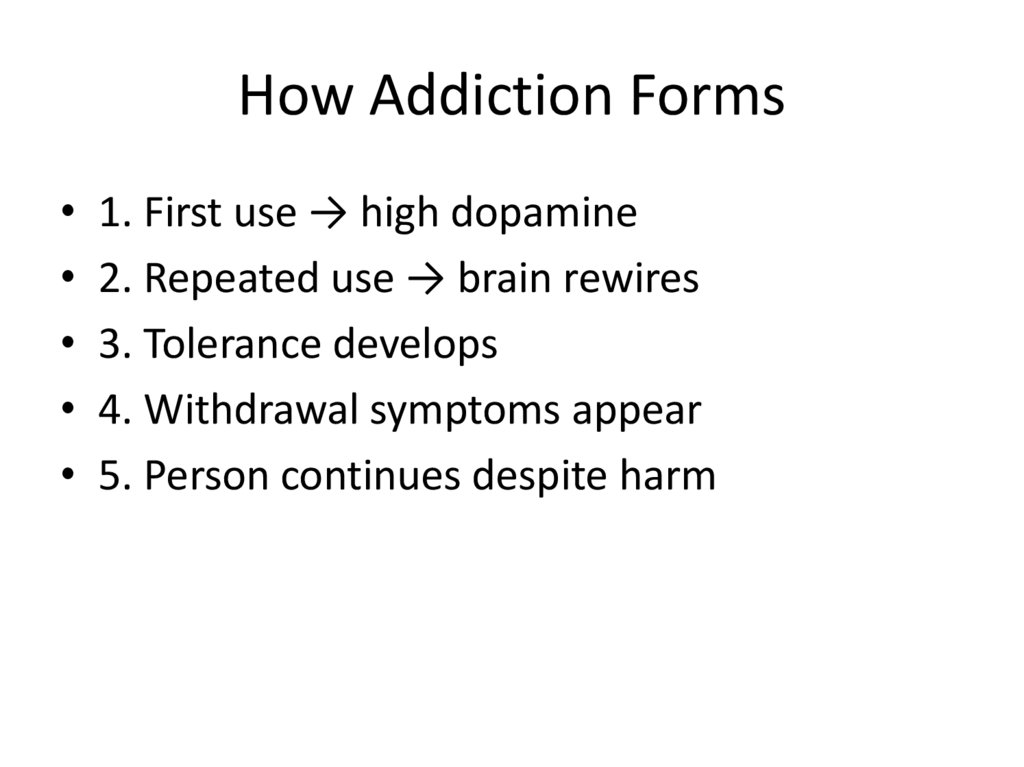
How Addiction Forms• 1. First use → high dopamine
• 2. Repeated use → brain rewires
• 3. Tolerance develops
• 4. Withdrawal symptoms appear
• 5. Person continues despite harm
6.
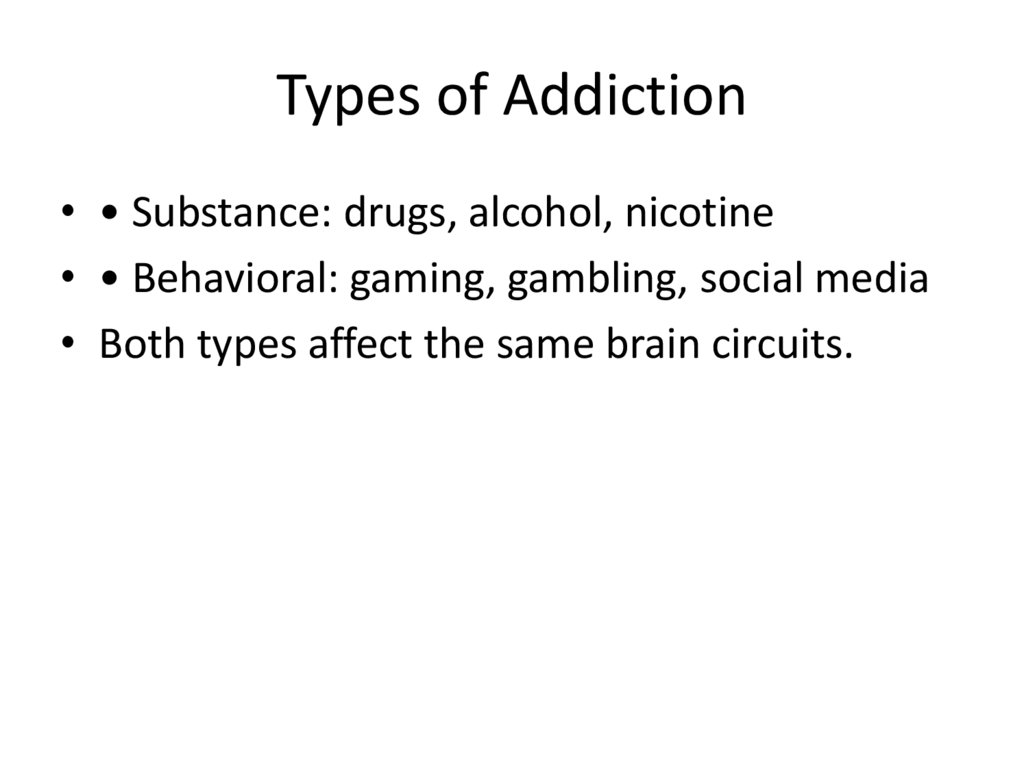
Types of Addiction• • Substance: drugs, alcohol, nicotine
• • Behavioral: gaming, gambling, social media
• Both types affect the same brain circuits.
7.
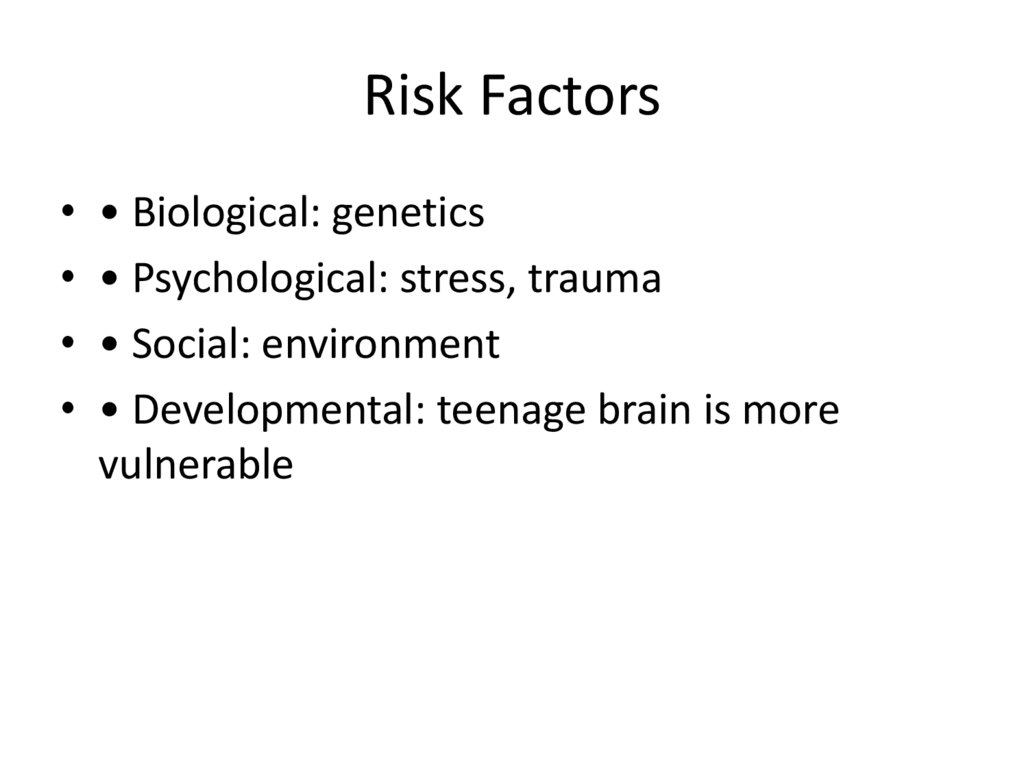
Risk Factors• • Biological: genetics
• • Psychological: stress, trauma
• • Social: environment
• • Developmental: teenage brain is more
vulnerable
8.
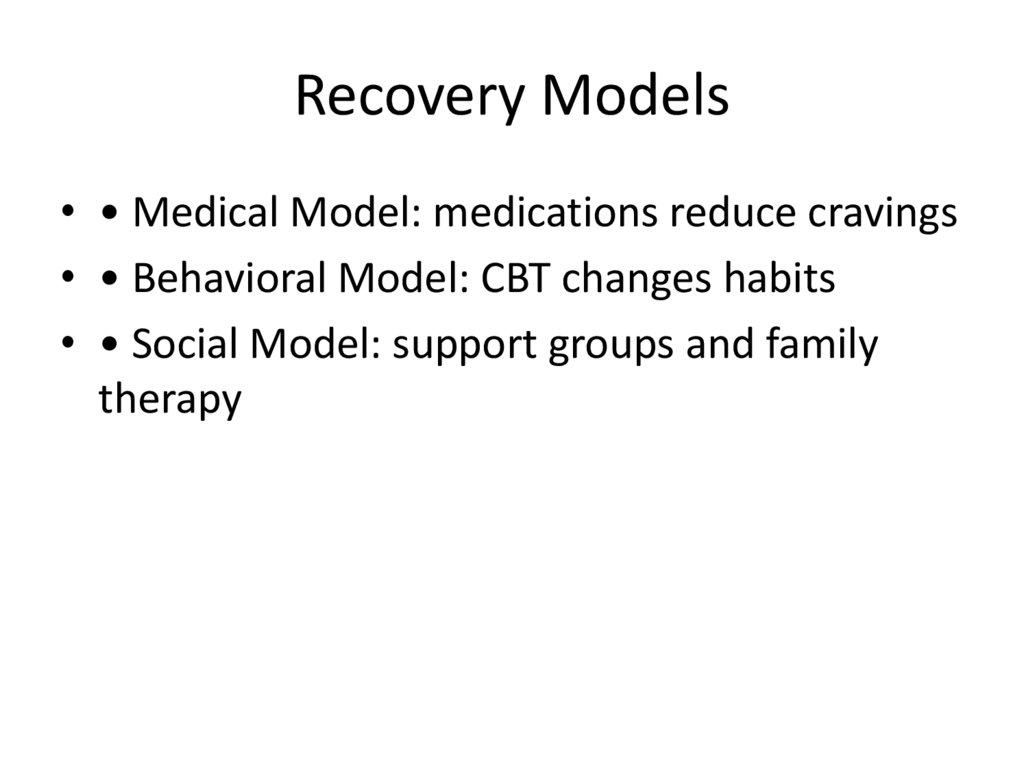
Recovery Models• • Medical Model: medications reduce cravings
• • Behavioral Model: CBT changes habits
• • Social Model: support groups and family
therapy
9.
Can the Brain Recover?• Yes. With time, healthy habits, and support,
the brain can heal and rebuild pathways.
10.
Conclusion• Addiction is a brain disorder. It affects reward
circuits, involves dopamine, and has effective
recovery methods.