 policy
Similar presentations:






Welcome to Number 10, Downing Street!
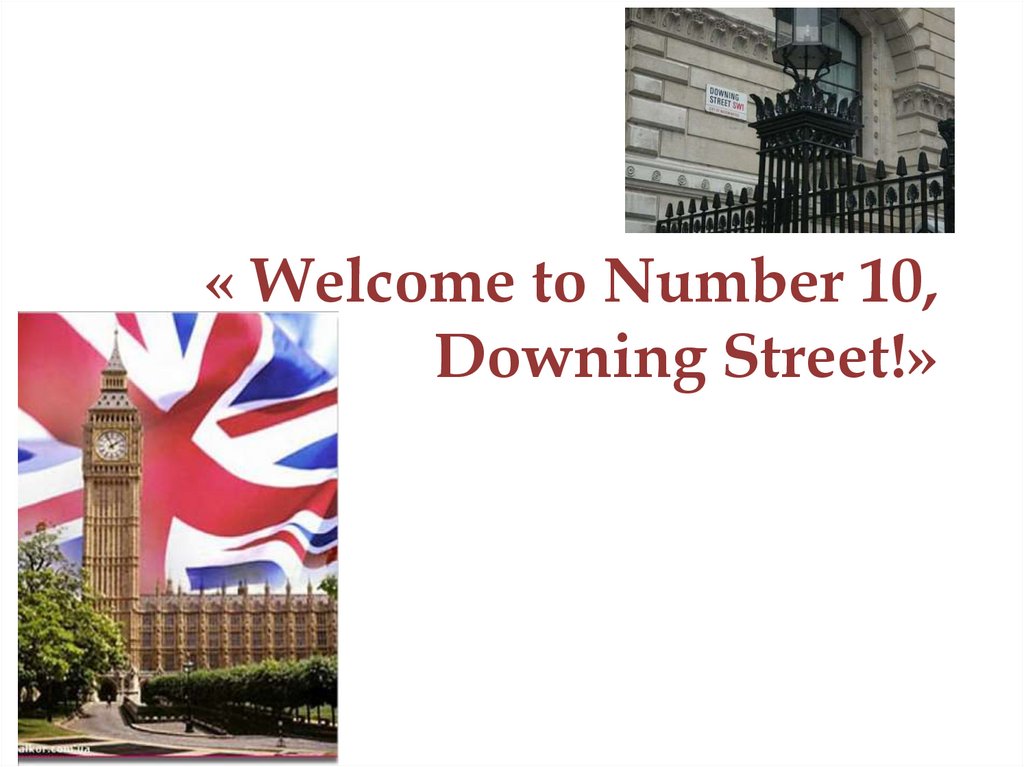
1. « Welcome to Number 10, Downing Street!»
2.
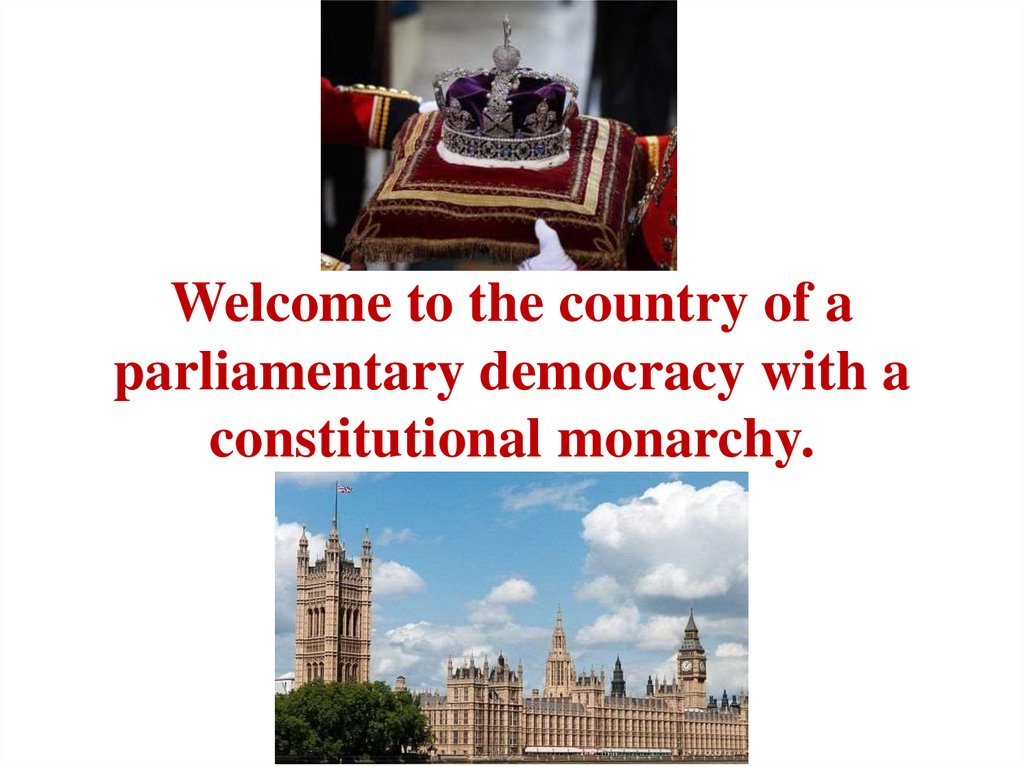
Welcome to the country of aparliamentary democracy with a
constitutional monarchy.
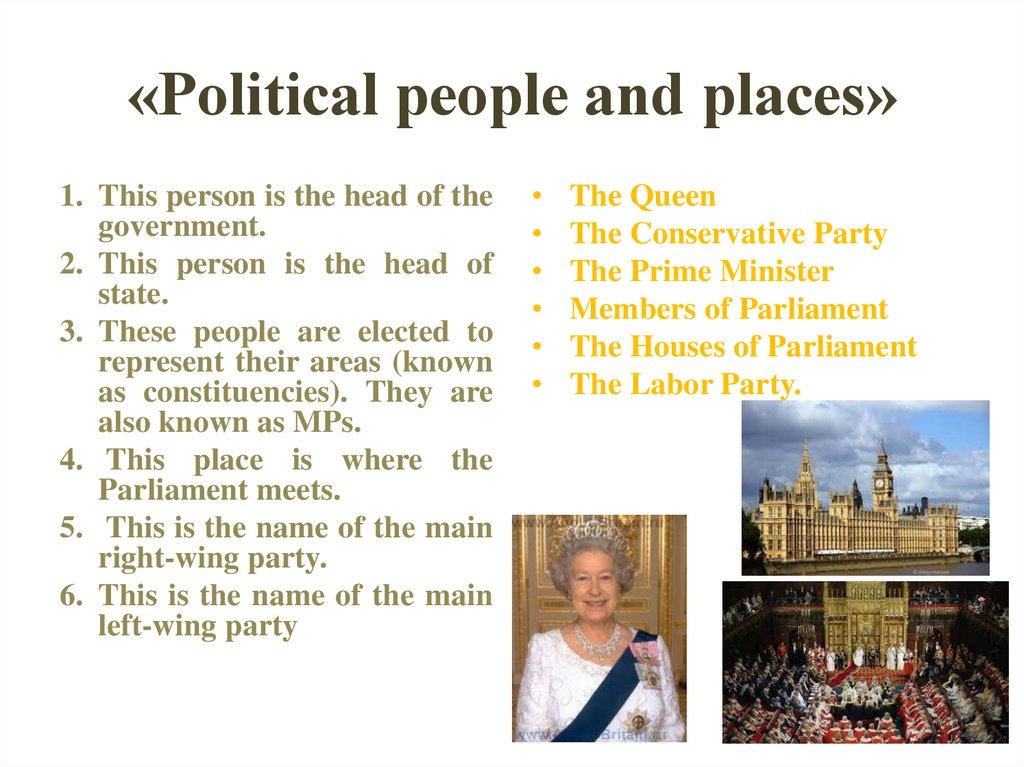
3. «Political people and places»
1. This person is the head of thegovernment.
2. This person is the head of
state.
3. These people are elected to
represent their areas (known
as constituencies). They are
also known as MPs.
4. This place is where the
Parliament meets.
5. This is the name of the main
right-wing party.
6. This is the name of the main
left-wing party
The Queen
The Conservative Party
The Prime Minister
Members of Parliament
The Houses of Parliament
The Labor Party.
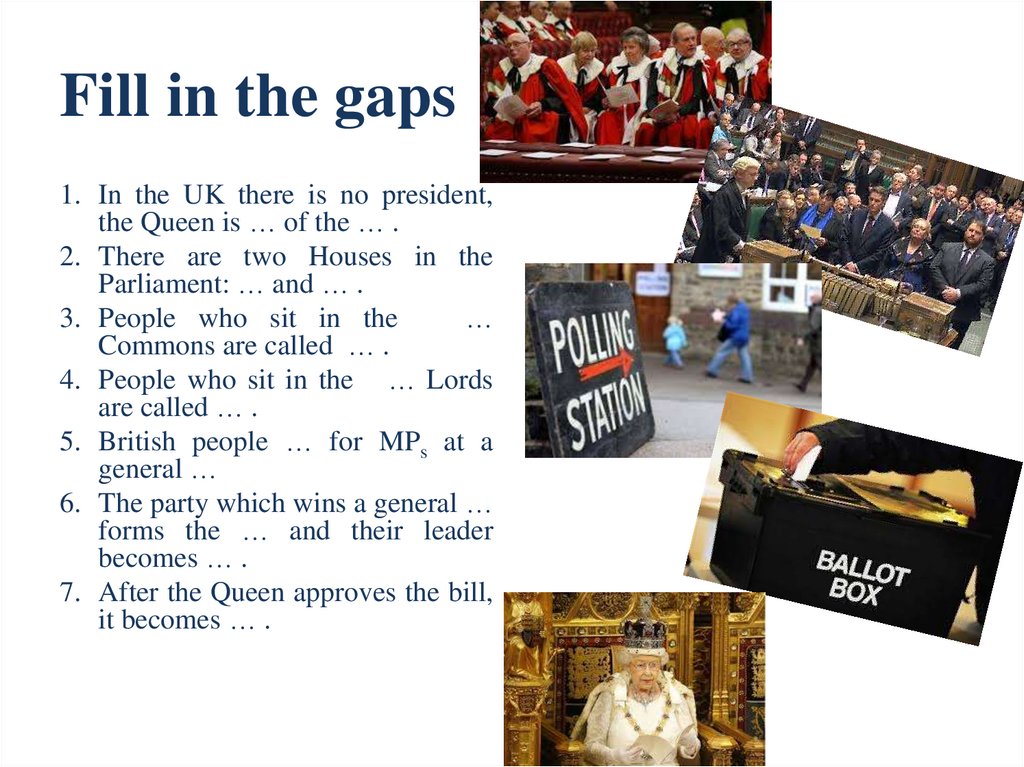
4. Fill in the gaps
1. In the UK there is no president,the Queen is … of the … .
2. There are two Houses in the
Parliament: … and … .
3. People who sit in the
…
Commons are called … .
4. People who sit in the … Lords
are called … .
5. British people … for MPs at a
general …
6. The party which wins a general …
forms the … and their leader
becomes … .
7. After the Queen approves the bill,
it becomes … .
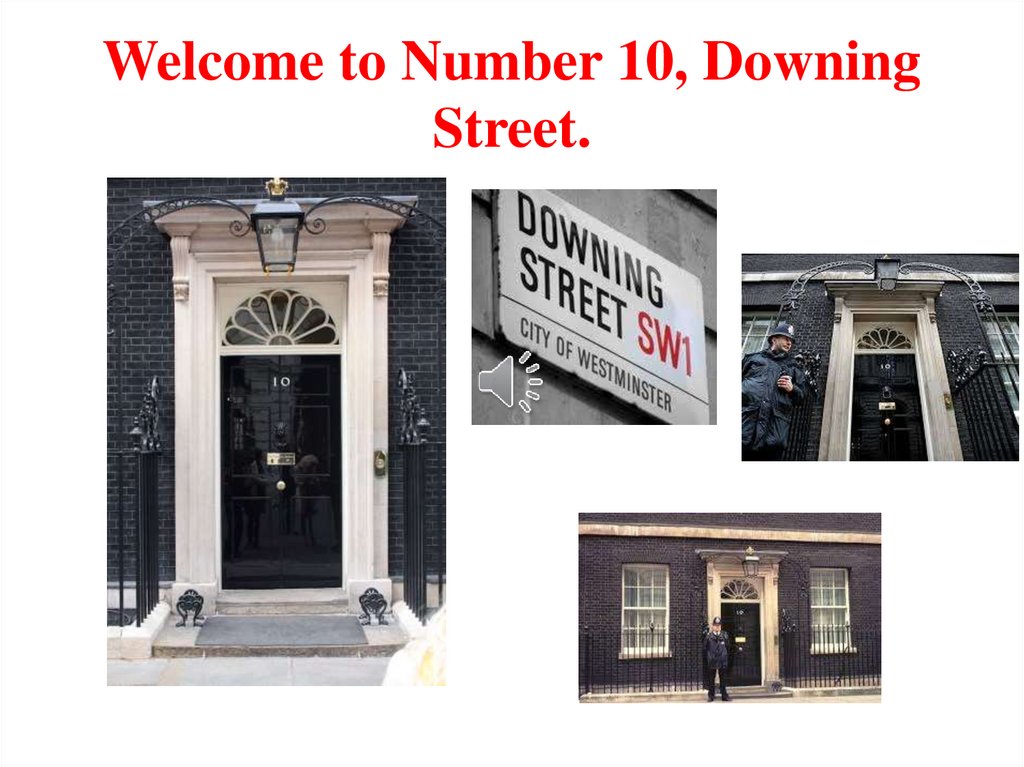
5. Welcome to Number 10, Downing Street.
6.
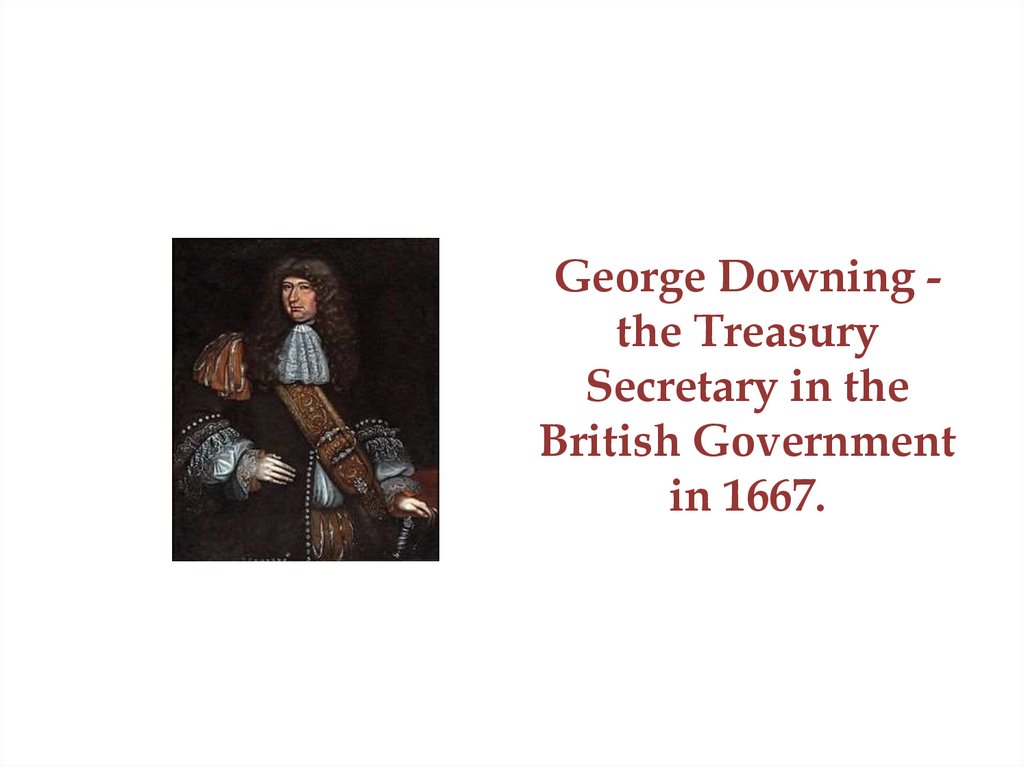
George Downing the TreasurySecretary in the
British Government
in 1667.
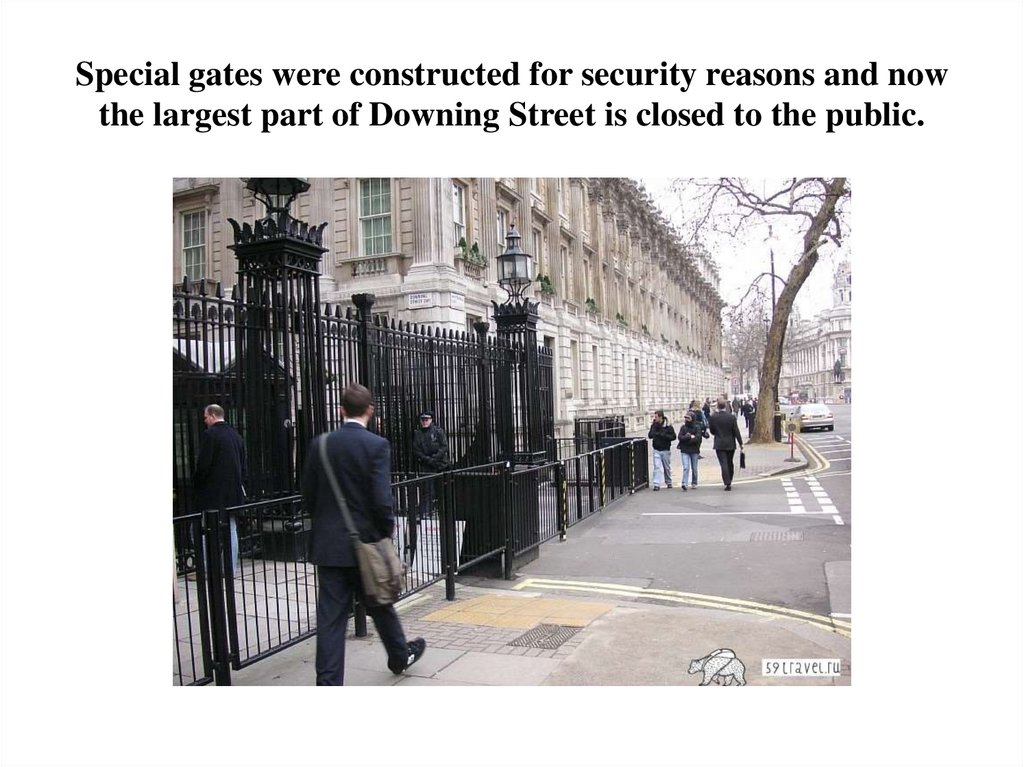
7. Special gates were constructed for security reasons and now the largest part of Downing Street is closed to the public.
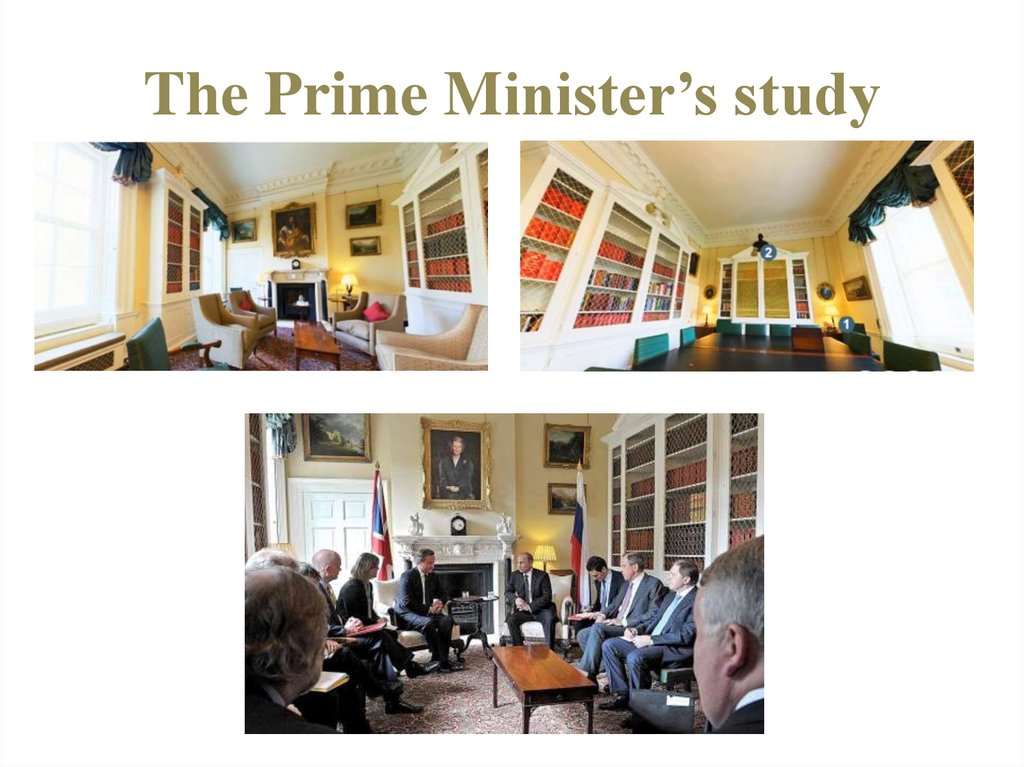
8. The Prime Minister’s study
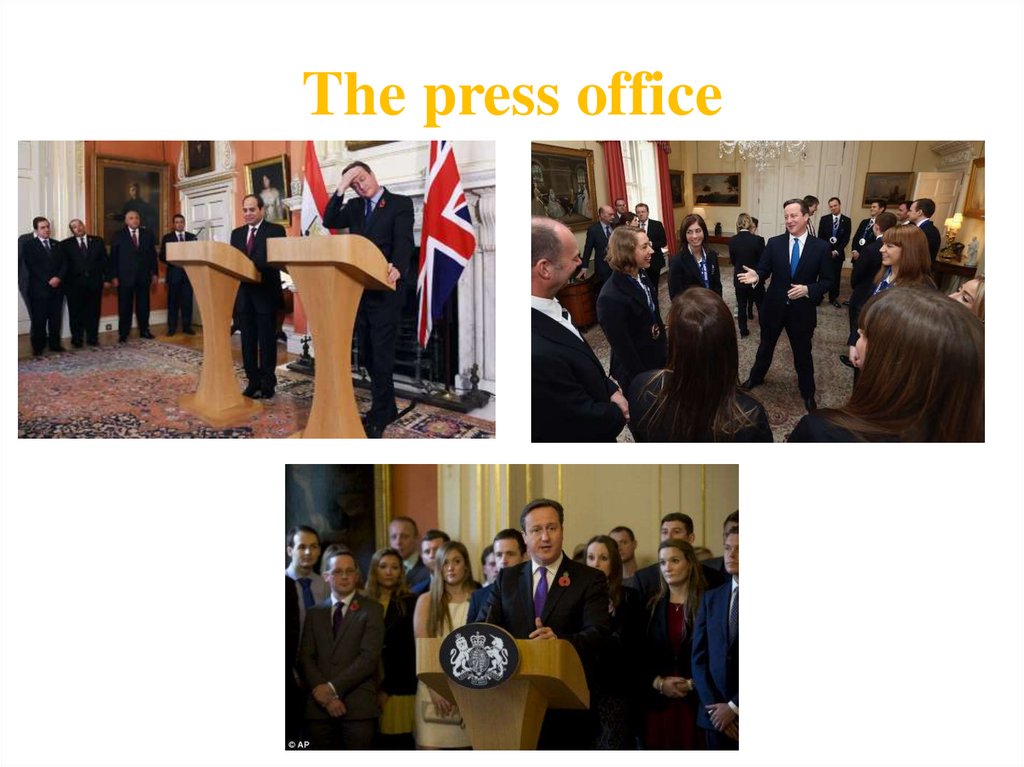
9. The press office
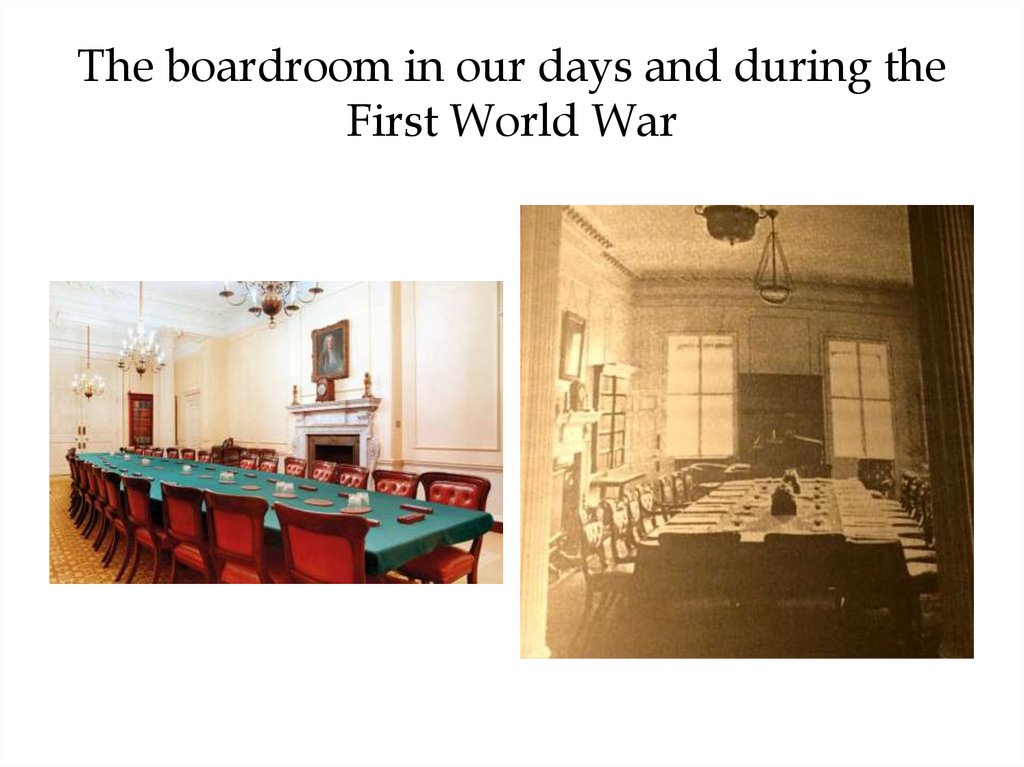
10. The boardroom in our days and during the First World War
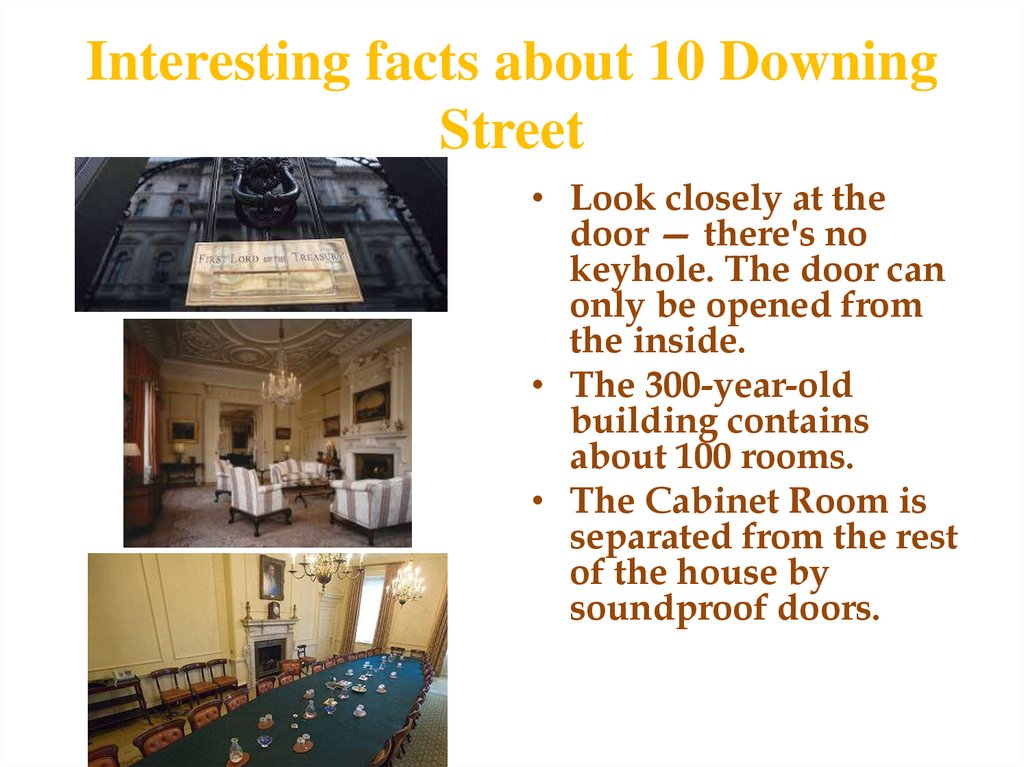
11. Interesting facts about 10 Downing Street
• Look closely at thedoor — there's no
keyhole. The door can
only be opened from
the inside.
• The 300-year-old
building contains
about 100 rooms.
• The Cabinet Room is
separated from the rest
of the house by
soundproof doors.
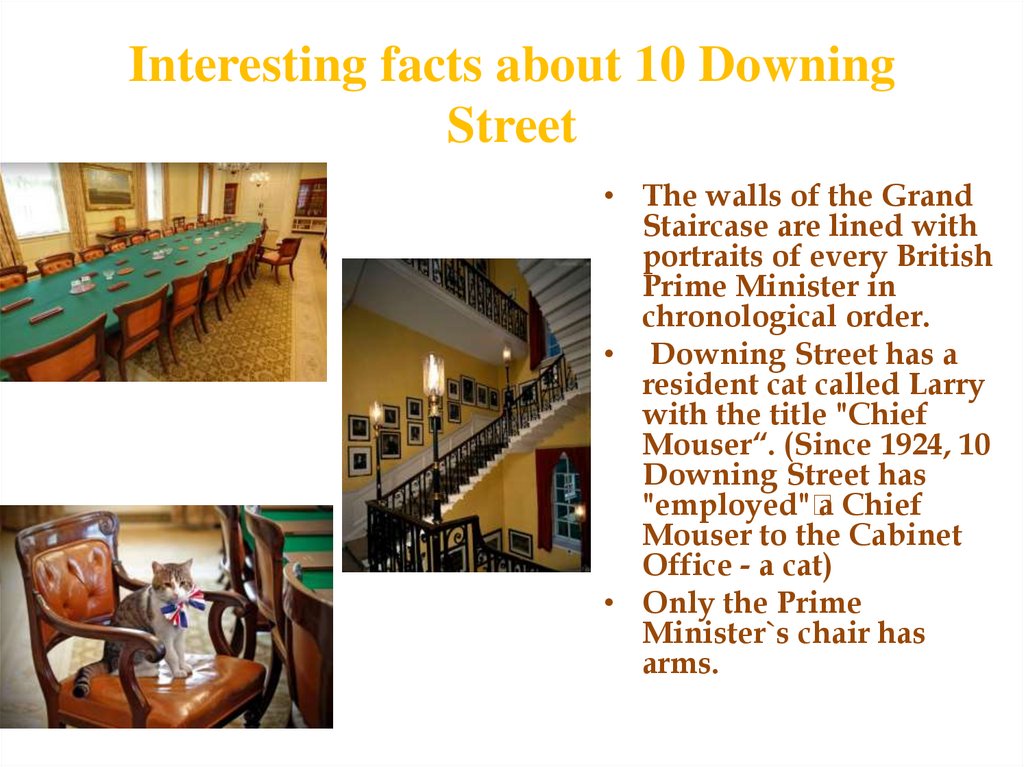
12. Interesting facts about 10 Downing Street
• The walls of the GrandStaircase are lined with
portraits of every British
Prime Minister in
chronological order.
• Downing Street has a
resident cat called Larry
with the title "Chief
Mouser“. (Since 1924, 10
Downing Street has
"employed"
a Chief
Mouser to the Cabinet
Office - a cat)
• Only the Prime
Minister`s chair has
arms.
13. Answer the questions:
• Does it take long to get to Downing Streetfrom the Houses of Parliament?
• How did this street get its name?
• When did Number 10, Downing Street become
the residence of the Prime Minister?
• Can you visit the Prime Minister residence?
14. Answer the questions:
• Where do prime ministers usually live?• Did the government always furnish the residence for
the prime minister or did they have to do it
themselves?
• How often does the Cabinet meet?
• Do the ministers use the books and maps during their
meetings?
• How old is the furniture that is in the Cabinet Room?
15. React to my statements – agree or disagree with me.
• Downing Street was named in honour of theBritish prime minister.
• Downing Street is a synonym of the
Government.
• The security gates were built in the street in
1991.
• Before 1990 tourists could enter the residence of
the prime minister and tour it.
• The Prime Minister works and meets with other
ministers in the same room.
16. React to my statements – agree or disagree with me.
• The Prime Minister lives on the second floor.• The government meetings take place every
Tuesday.
• The residence of the Prime Minister is not
large.
• The people who help the Prime Minister also
live in Downing Street.
• You cannot smoke at Number 10, Downing
Street.
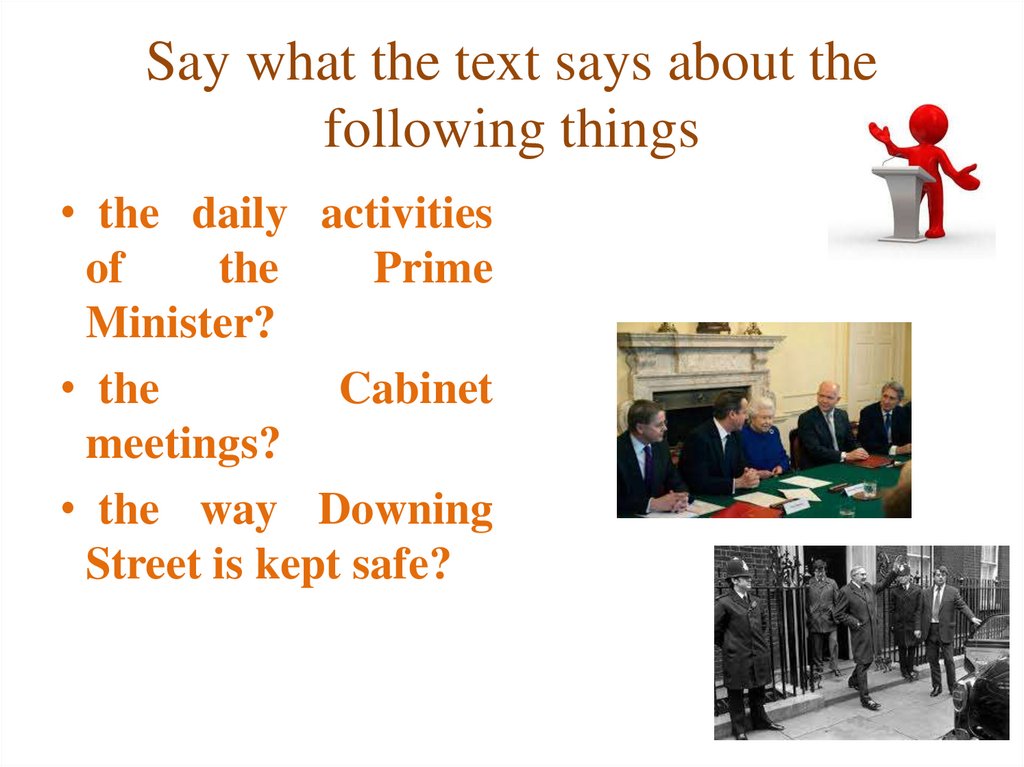
17. Say what the text says about the following things
• the daily activitiesof
the
Prime
Minister?
• the
Cabinet
meetings?
• the way Downing
Street is kept safe?