Similar presentations:





ASD_and_Cognitive_Communication_Deficit
1.
ASD and CognitiveCommunication DeficitBiological Basis of Behavior
Student: [Your Name]
Instructor: [Professor’s Name]
Date: [Insert Date]
2.
Introduction• Autism Spectrum Disorder (ASD) is a
neurodevelopmental condition characterized
by difficulties in social interaction,
communication, and restricted or repetitive
behaviors. This presentation explores the
biological mechanisms—especially genetic
and neurophysiological factors—underlying
cognitive and communication deficits in ASD.
3.
Key Terminology• • ASD (Autism Spectrum Disorder) –
developmental disorder affecting social
communication and behavior
• • Cognitive control – ability to regulate
thoughts and actions in accordance with
internal goals
• • Executive functions – working memory,
inhibition, flexibility (prefrontal cortex)
• • Theory of Mind (ToM) – ability to attribute
mental states to self and others
4.
Neural Correlates of ASD• • Prefrontal Cortex (PFC): reduced activity and
connectivity; affects planning and inhibition
• • Temporal and Frontal Lobes: poor
integration of language and emotional
information
• • Amygdala & STS: difficulties in interpreting
social cues
• • Cerebellum & Basal Ganglia: atypical motor
control and timing
• • Neurochemistry: altered dopamine,
5.
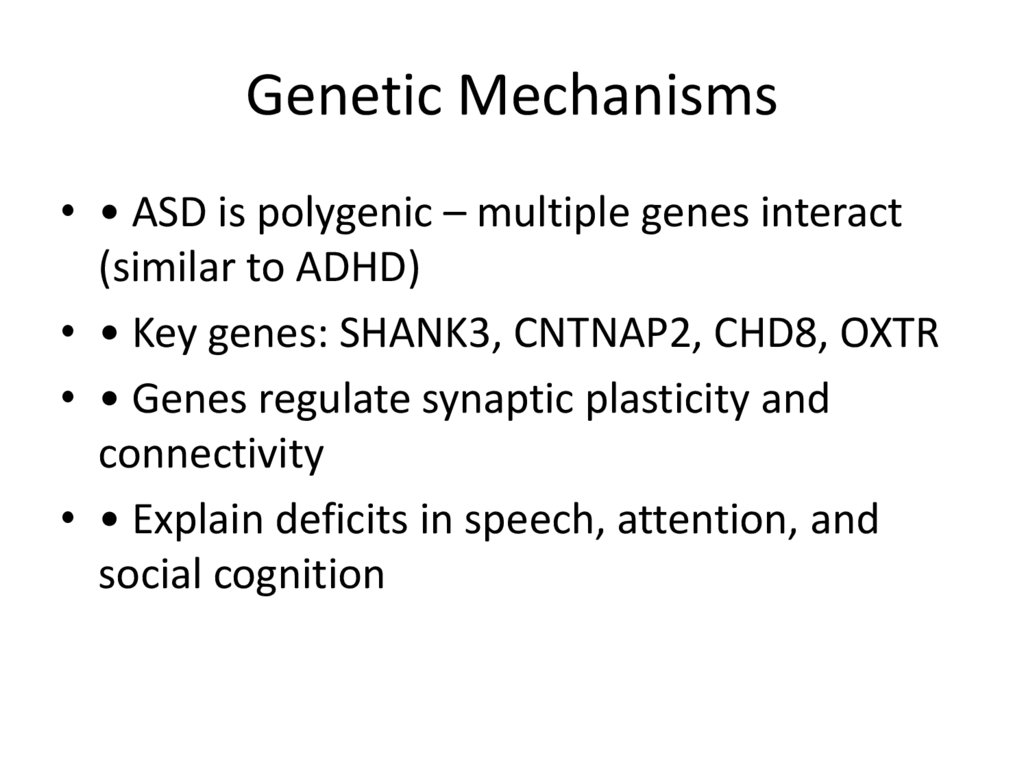
Genetic Mechanisms• • ASD is polygenic – multiple genes interact
(similar to ADHD)
• • Key genes: SHANK3, CNTNAP2, CHD8, OXTR
• • Genes regulate synaptic plasticity and
connectivity
• • Explain deficits in speech, attention, and
social cognition
6.
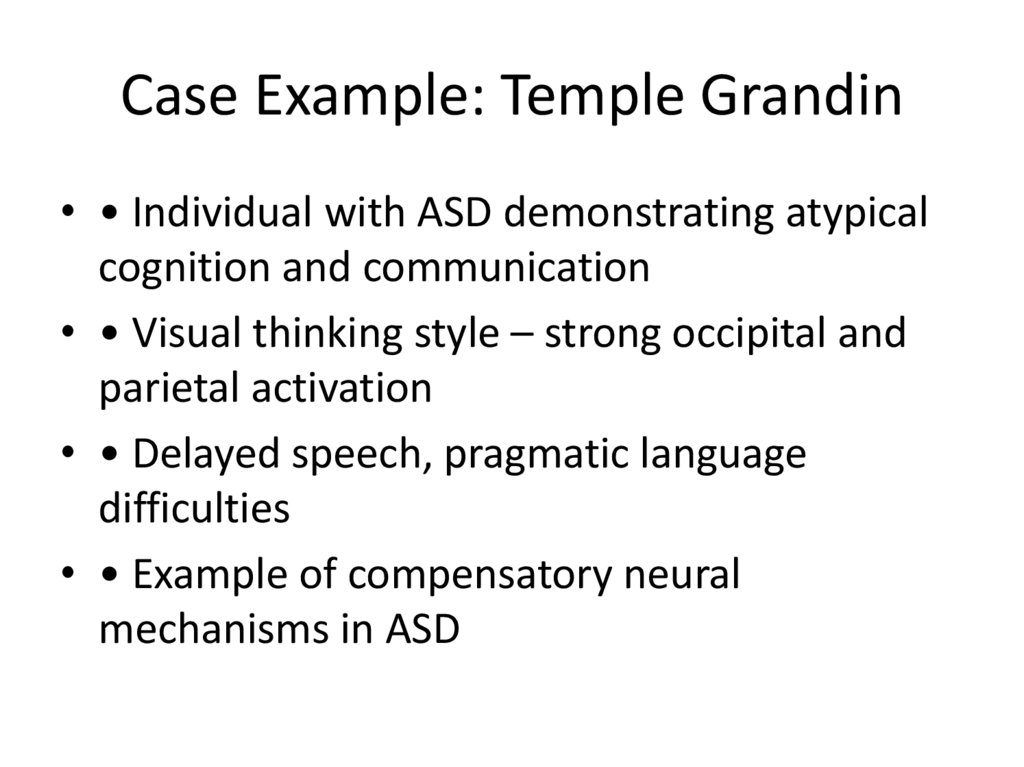
Case Example: Temple Grandin• • Individual with ASD demonstrating atypical
cognition and communication
• • Visual thinking style – strong occipital and
parietal activation
• • Delayed speech, pragmatic language
difficulties
• • Example of compensatory neural
mechanisms in ASD
7.
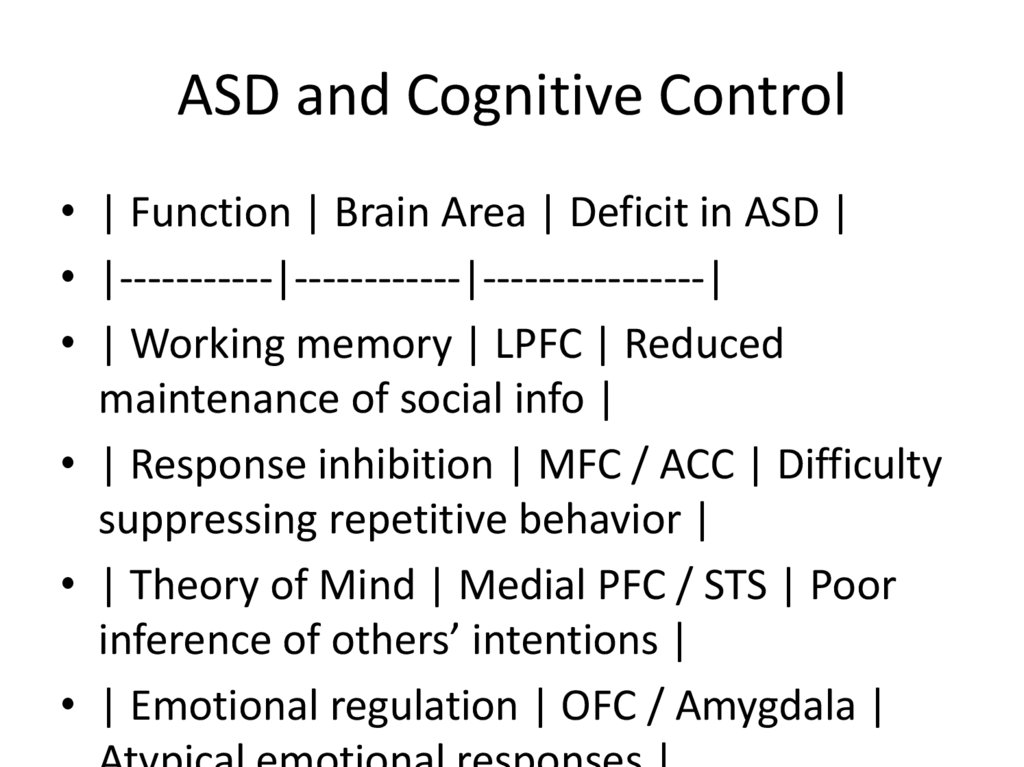
ASD and Cognitive Control• | Function | Brain Area | Deficit in ASD |
• |-----------|------------|----------------|
• | Working memory | LPFC | Reduced
maintenance of social info |
• | Response inhibition | MFC / ACC | Difficulty
suppressing repetitive behavior |
• | Theory of Mind | Medial PFC / STS | Poor
inference of others’ intentions |
• | Emotional regulation | OFC / Amygdala |
8.
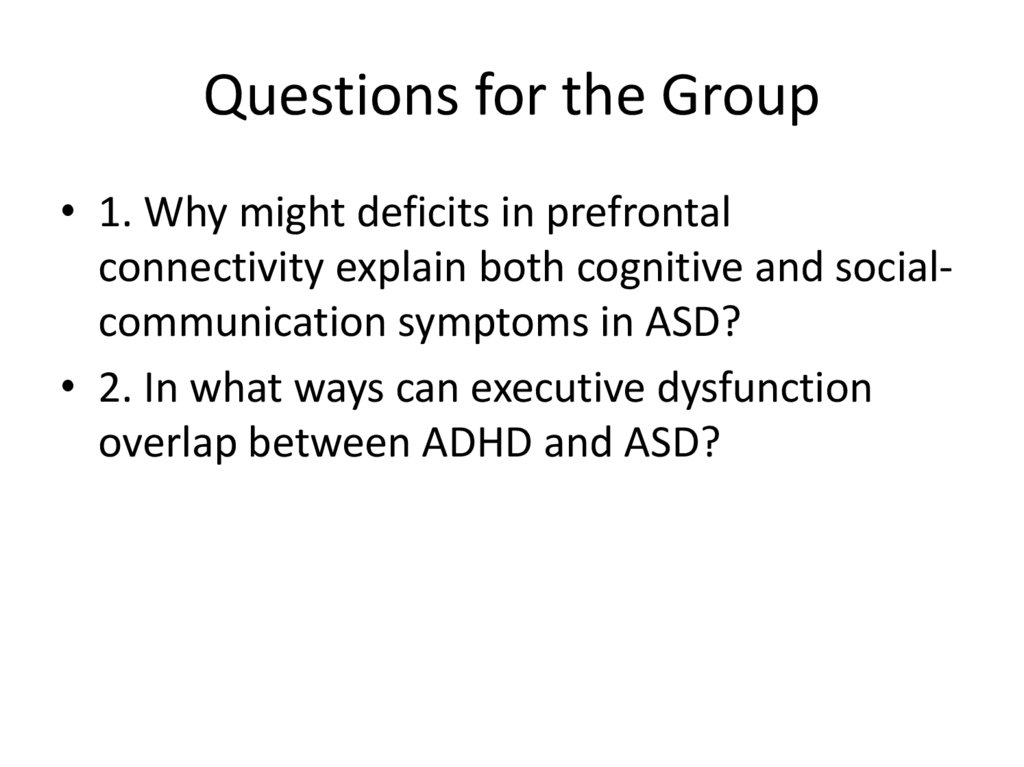
Questions for the Group• 1. Why might deficits in prefrontal
connectivity explain both cognitive and socialcommunication symptoms in ASD?
• 2. In what ways can executive dysfunction
overlap between ADHD and ASD?
9.
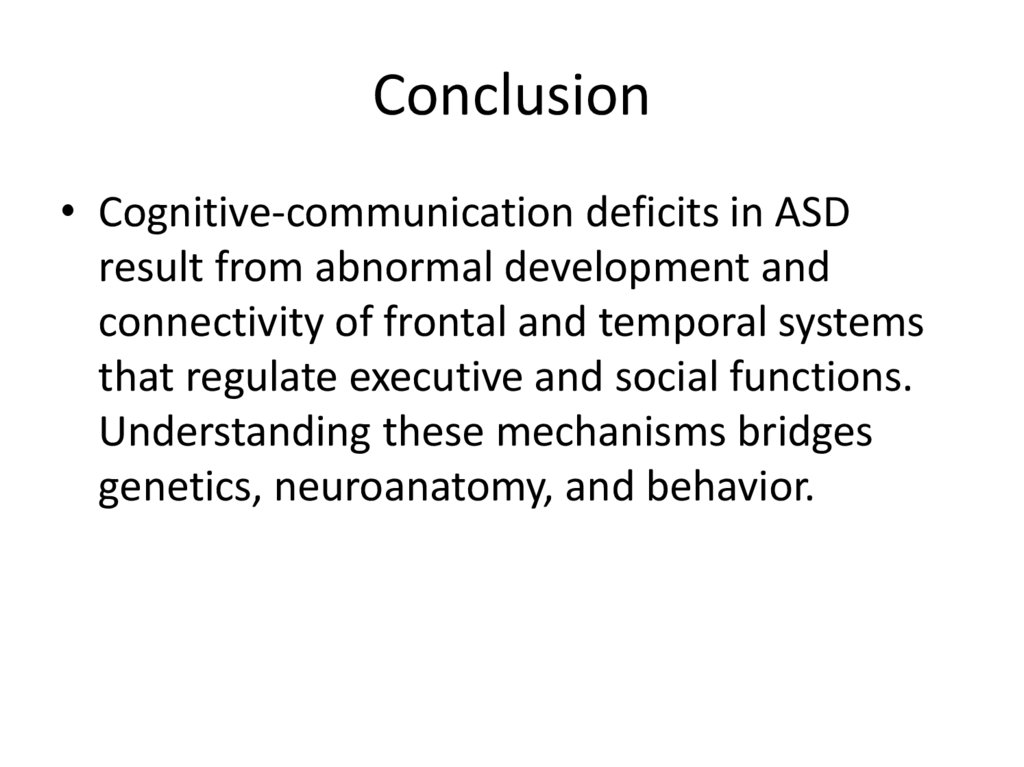
Conclusion• Cognitive-communication deficits in ASD
result from abnormal development and
connectivity of frontal and temporal systems
that regulate executive and social functions.
Understanding these mechanisms bridges
genetics, neuroanatomy, and behavior.
10.
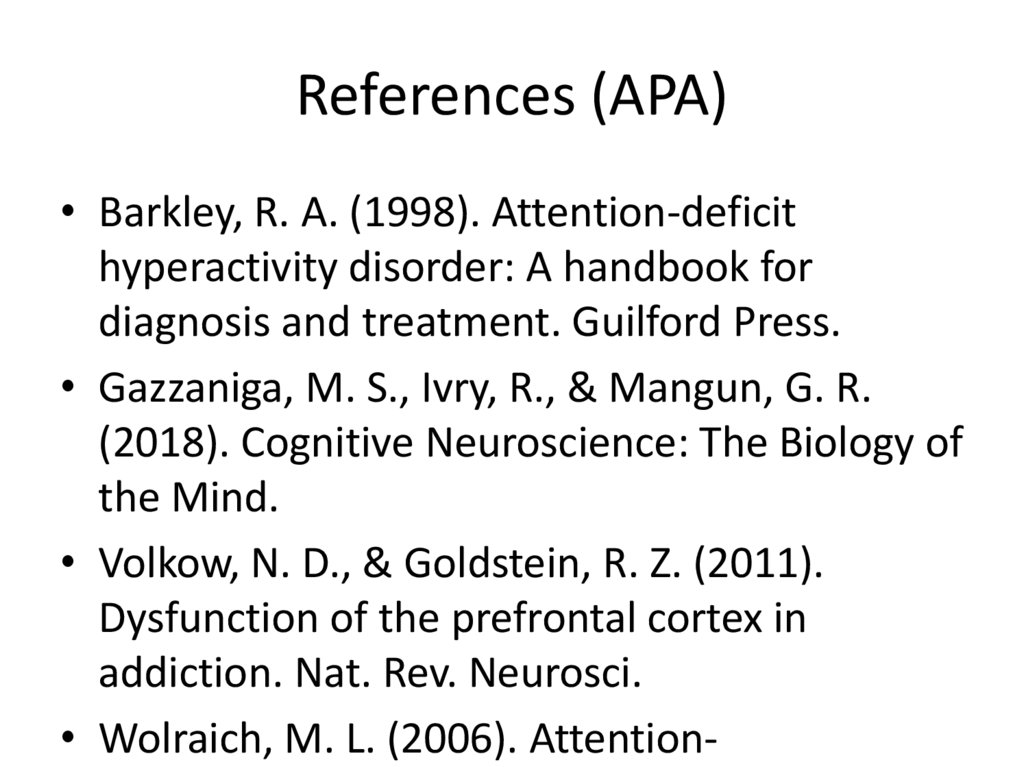
References (APA)• Barkley, R. A. (1998). Attention-deficit
hyperactivity disorder: A handbook for
diagnosis and treatment. Guilford Press.
• Gazzaniga, M. S., Ivry, R., & Mangun, G. R.
(2018). Cognitive Neuroscience: The Biology of
the Mind.
• Volkow, N. D., & Goldstein, R. Z. (2011).
Dysfunction of the prefrontal cortex in
addiction. Nat. Rev. Neurosci.
• Wolraich, M. L. (2006). Attention-