

 english
Similar presentations:






The category of mood in English
1. The category of mood in English
THE CATEGORY OFMOOD IN ENGLISH
C
2. What is mood?
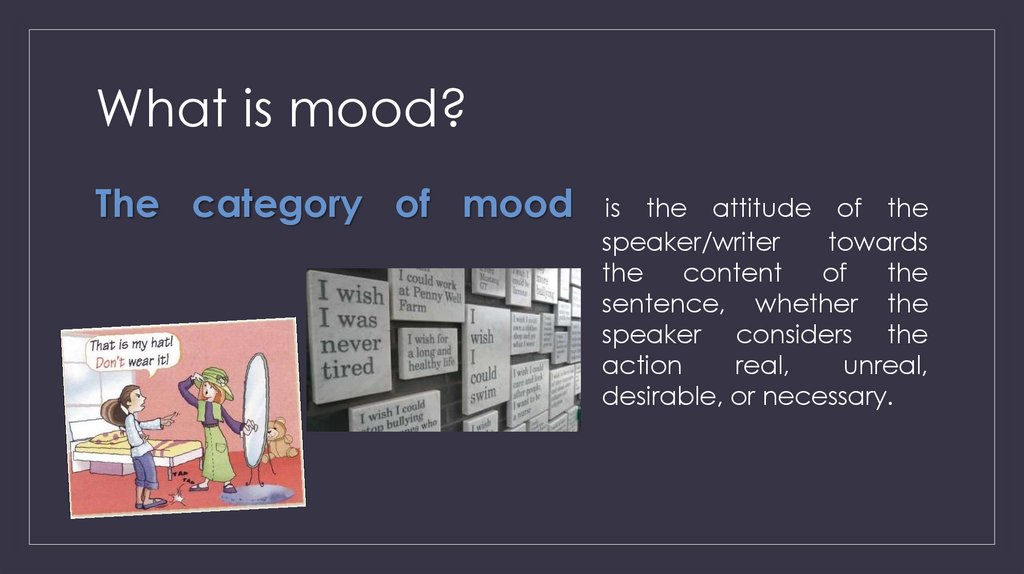
The category of moodis the attitude of the
speaker/writer
towards
the
content
of
the
sentence, whether the
speaker considers the
action
real,
unreal,
desirable, or necessary.
3.
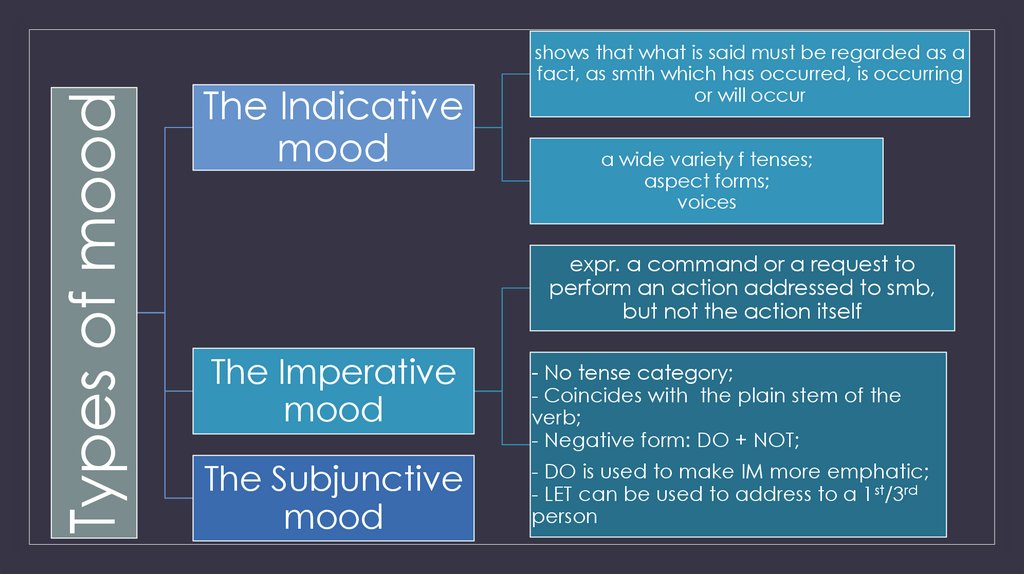
Types of moodThe Indicative
mood
shows that what is said must be regarded as a
fact, as smth which has occurred, is occurring
or will occur
a wide variety f tenses;
aspect forms;
voices
expr. a command or a request to
perform an action addressed to smb,
but not the action itself
The Imperative
mood
- No tense category;
- Coincides with the plain stem of the
verb;
- Negative form: DO + NOT;
The Subjunctive
mood
- DO is used to make IM more emphatic;
- LET can be used to address to a 1st/3rd
person
4. The Subjunctive mood
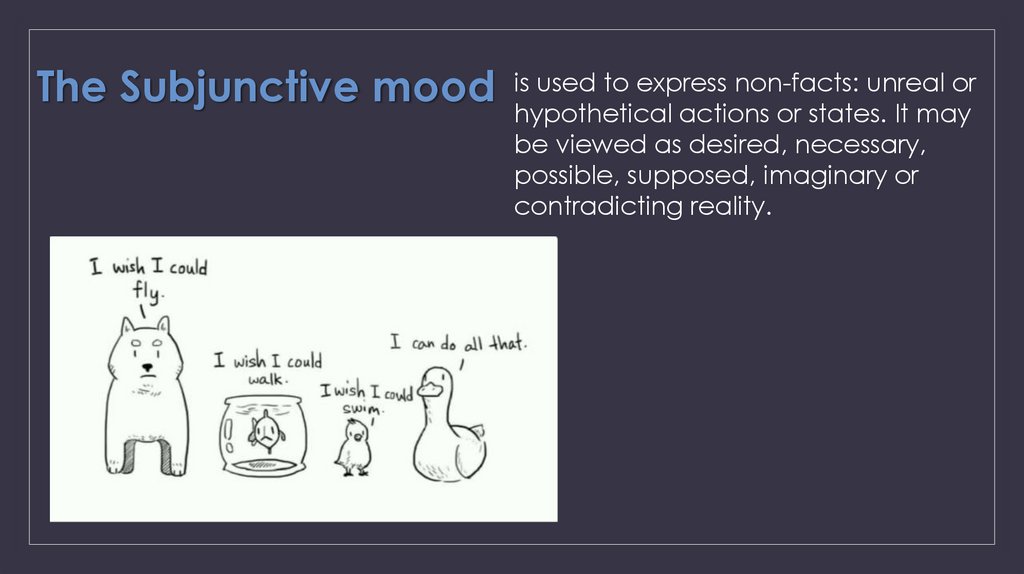
used to express non-facts: unreal orThe Subjunctive mood ishypothetical
actions or states. It may
be viewed as desired, necessary,
possible, supposed, imaginary or
contradicting reality.
5.
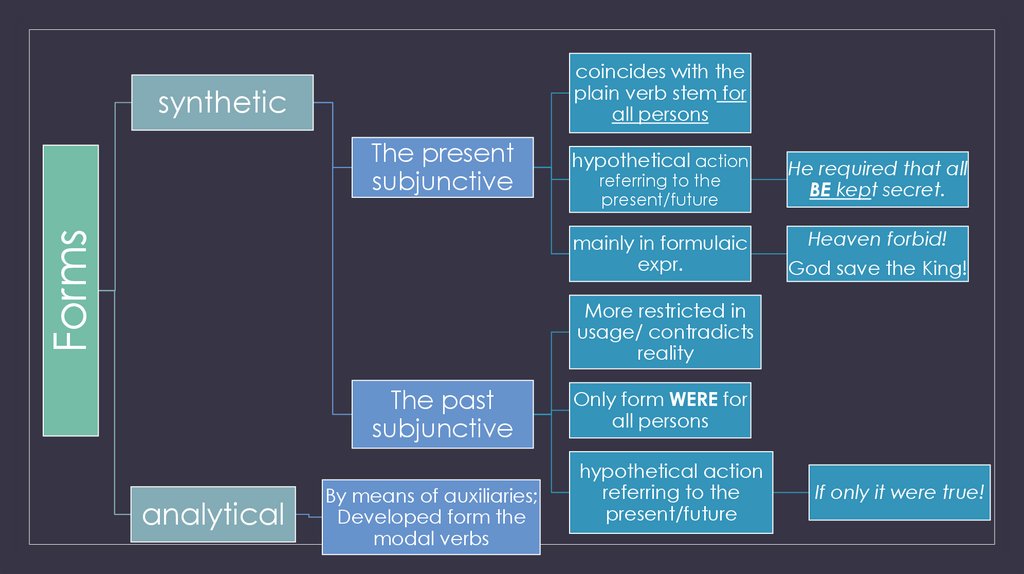
coincides with theplain verb stem for
all persons
synthetic
Forms
The present
subjunctive
hypothetical action
He required that all
BE kept secret.
mainly in formulaic
expr.
Heaven forbid!
referring to the
present/future
God save the King!
More restricted in
usage/ contradicts
reality
The past
subjunctive
analytical
By means of auxiliaries;
Developed form the
modal verbs
Only form WERE for
all persons
hypothetical action
referring to the
present/future
If only it were true!
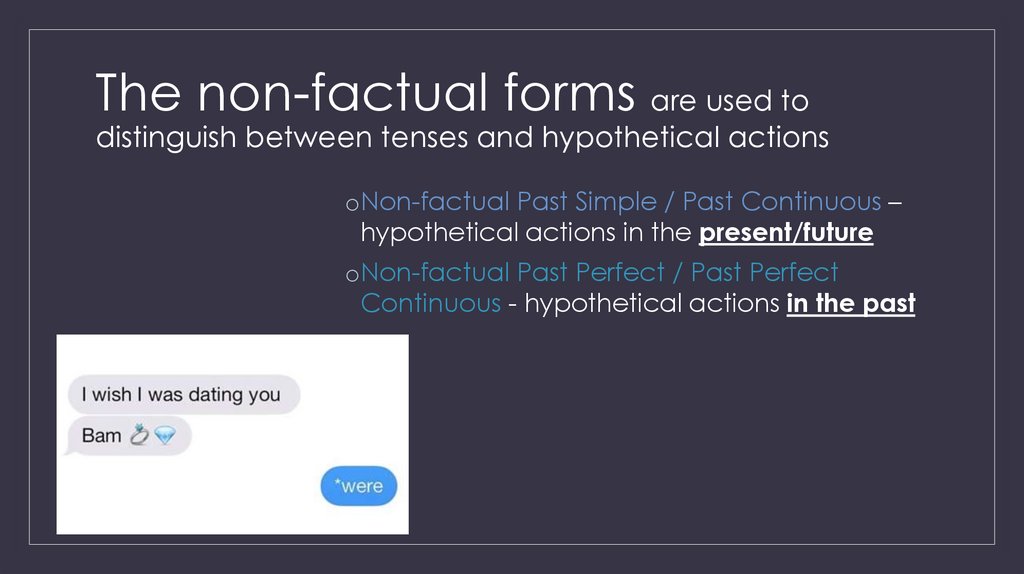
6. The non-factual forms are used to distinguish between tenses and hypothetical actions
oNon-factual Past Simple / Past Continuous –hypothetical actions in the present/future
oNon-factual Past Perfect / Past Perfect
Continuous - hypothetical actions in the past
7. SM in subject clause
SM IN SUBJECTCLAUSE
C
8.
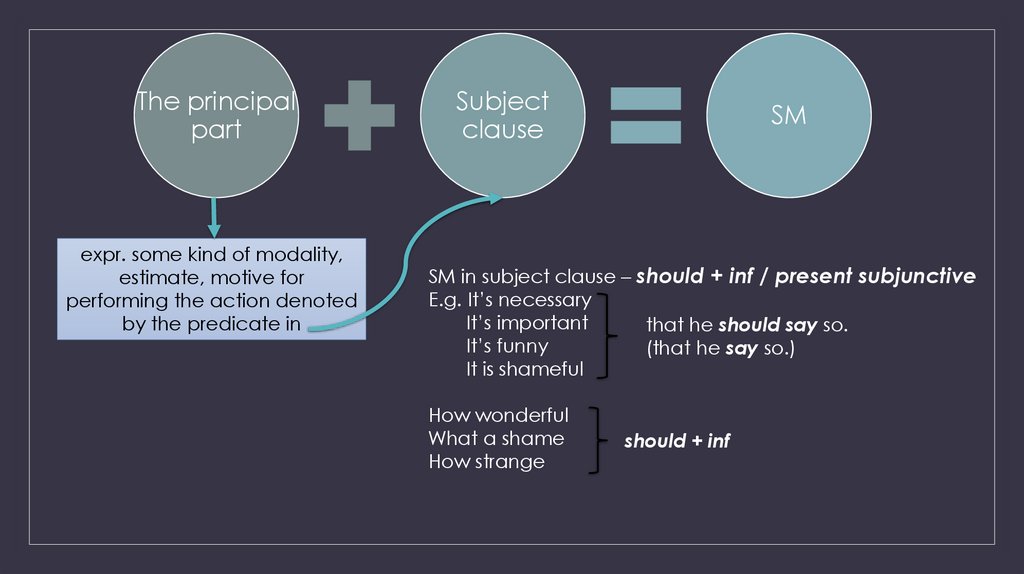
The principalpart
expr. some kind of modality,
estimate, motive for
performing the action denoted
by the predicate in
Subject
clause
SM
SM in subject clause – should + inf / present subjunctive
E.g. It’s necessary
It’s important
that he should say so.
It’s funny
(that he say so.)
It is shameful
How wonderful
What a shame
How strange
should + inf
9.
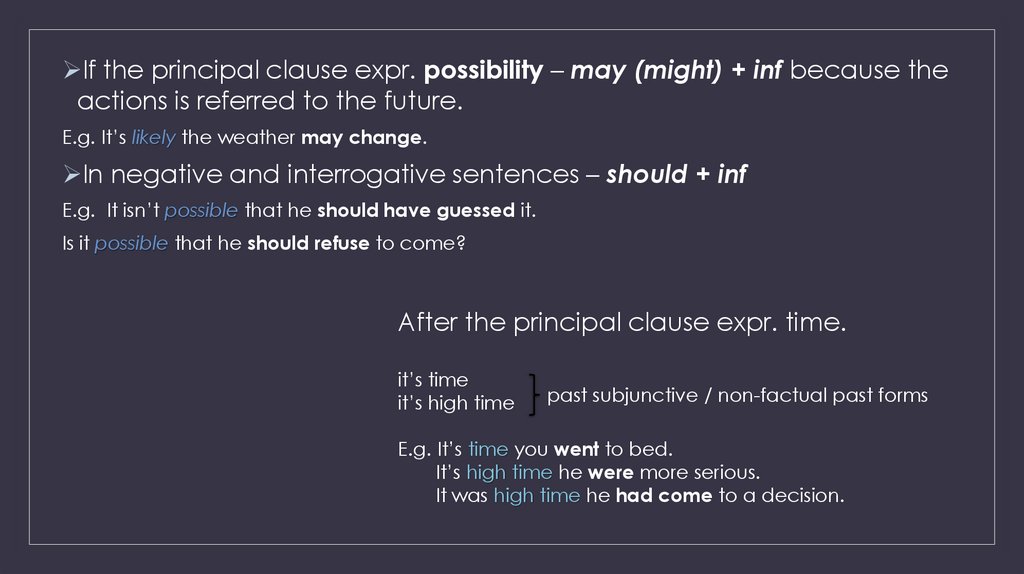
If the principal clause expr. possibility – may (might) + inf because theactions is referred to the future.
E.g. It’s likely the weather may change.
In negative and interrogative sentences – should + inf
E.g. It isn’t possible that he should have guessed it.
Is it possible that he should refuse to come?
After the principal clause expr. time.
it’s time
it’s high time
past subjunctive / non-factual past forms
E.g. It’s time you went to bed.
It’s high time he were more serious.
It was high time he had come to a decision.
10. SM in object clause
SM IN OBJECTCLAUSE
C
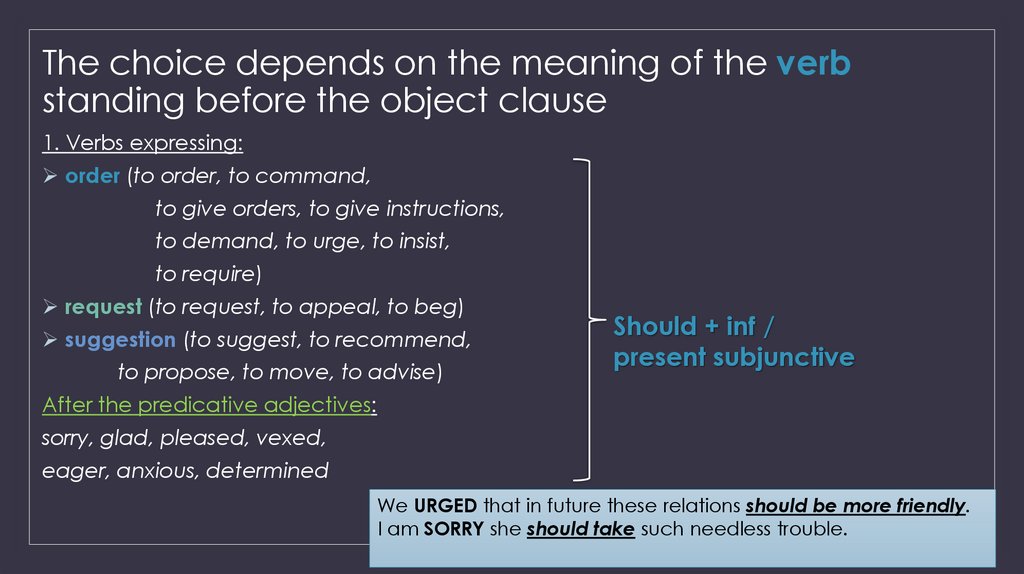
11. The choice depends on the meaning of the verb standing before the object clause
1. Verbs expressing:order (to order, to command,
to give orders, to give instructions,
to demand, to urge, to insist,
to require)
request (to request, to appeal, to beg)
suggestion (to suggest, to recommend,
to propose, to move, to advise)
Should + inf /
present subjunctive
After the predicative adjectives:
sorry, glad, pleased, vexed,
eager, anxious, determined
We URGED that in future these relations should be more friendly.
I am SORRY she should take such needless trouble.
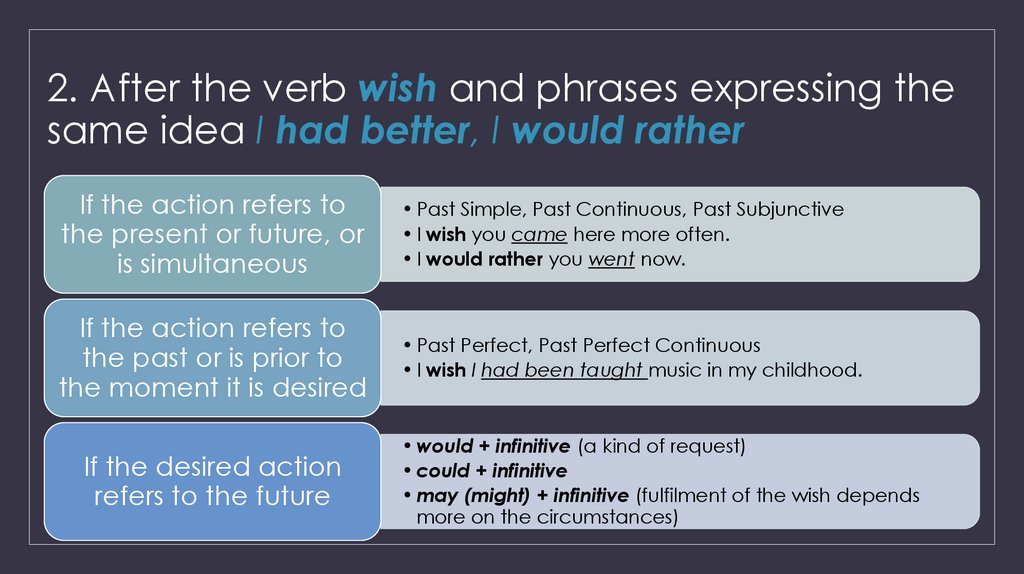
12. 2. After the verb wish and phrases expressing the same idea I had better, I would rather
If the action refers tothe present or future, or
is simultaneous
• Past Simple, Past Continuous, Past Subjunctive
• I wish you came here more often.
• I would rather you went now.
If the action refers to
the past or is prior to
the moment it is desired
• Past Perfect, Past Perfect Continuous
• I wish I had been taught music in my childhood.
If the desired action
refers to the future
• would + infinitive (a kind of request)
• could + infinitive
• may (might) + infinitive (fulfilment of the wish depends
more on the circumstances)
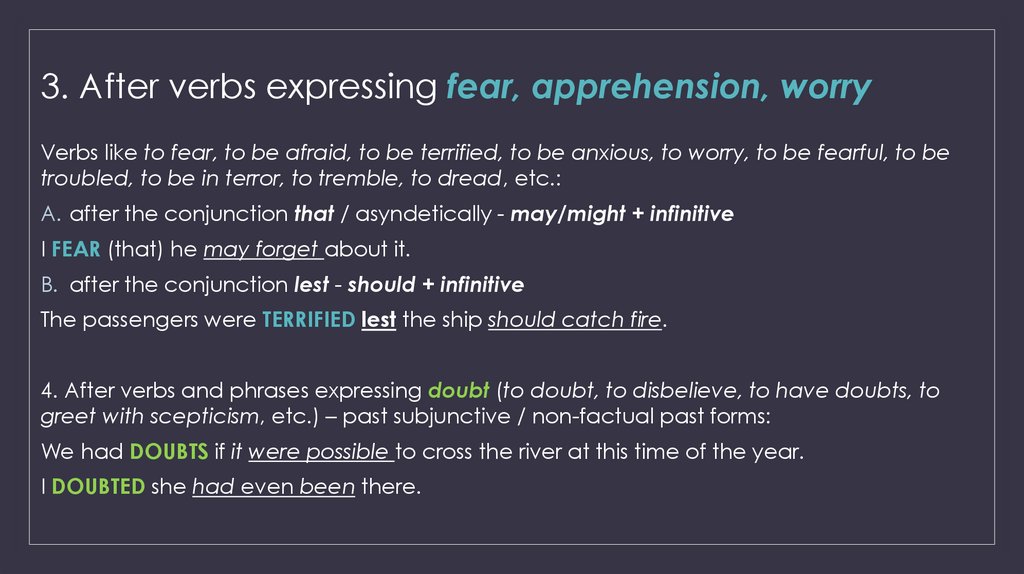
13. 3. After verbs expressing fear, apprehension, worry
Verbs like to fear, to be afraid, to be terrified, to be anxious, to worry, to be fearful, to betroubled, to be in terror, to tremble, to dread, etc.:
A. after the conjunction that / asyndetically - may/might + infinitive
I FEAR (that) he may forget about it.
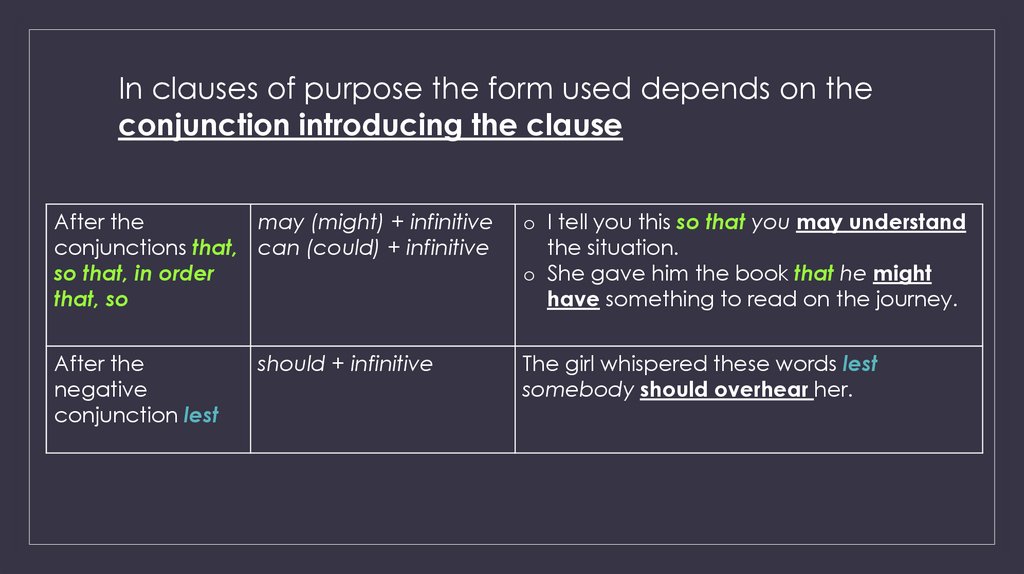
B. after the conjunction lest - should + infinitive
The passengers were TERRIFIED lest the ship should catch fire.
4. After verbs and phrases expressing doubt (to doubt, to disbelieve, to have doubts, to
greet with scepticism, etc.) – past subjunctive / non-factual past forms:
We had DOUBTS if it were possible to cross the river at this time of the year.
I DOUBTED she had even been there.
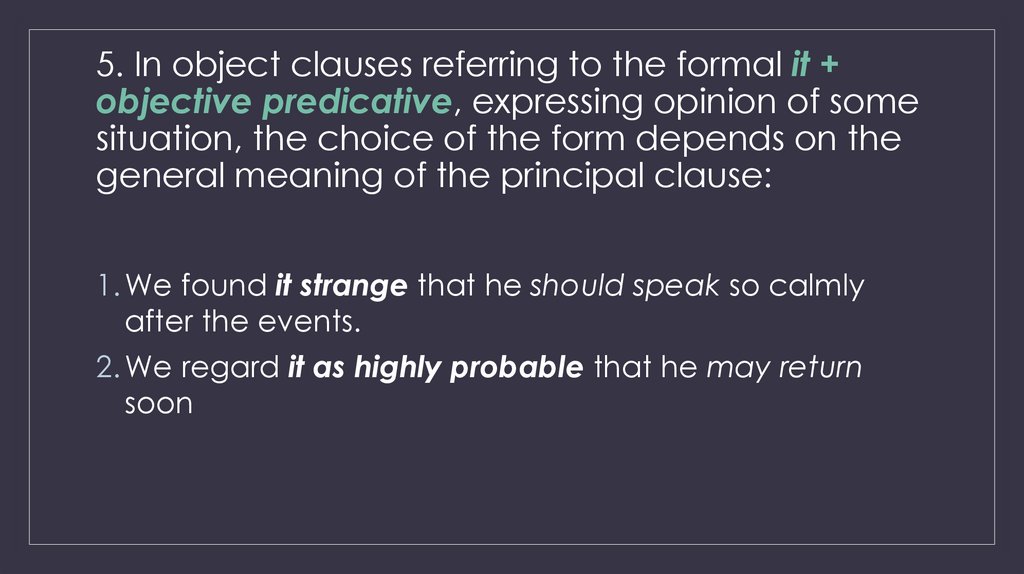
14. 5. In object clauses referring to the formal it + objective predicative, expressing opinion of some situation, the choice of
the form depends on thegeneral meaning of the principal clause:
1. We found it strange that he should speak so calmly
after the events.
2. We regard it as highly probable that he may return
soon
15. SM in appositive and predicative clauses
SM IN APPOSITIVEAND PREDICATIVE
CLAUSES
C
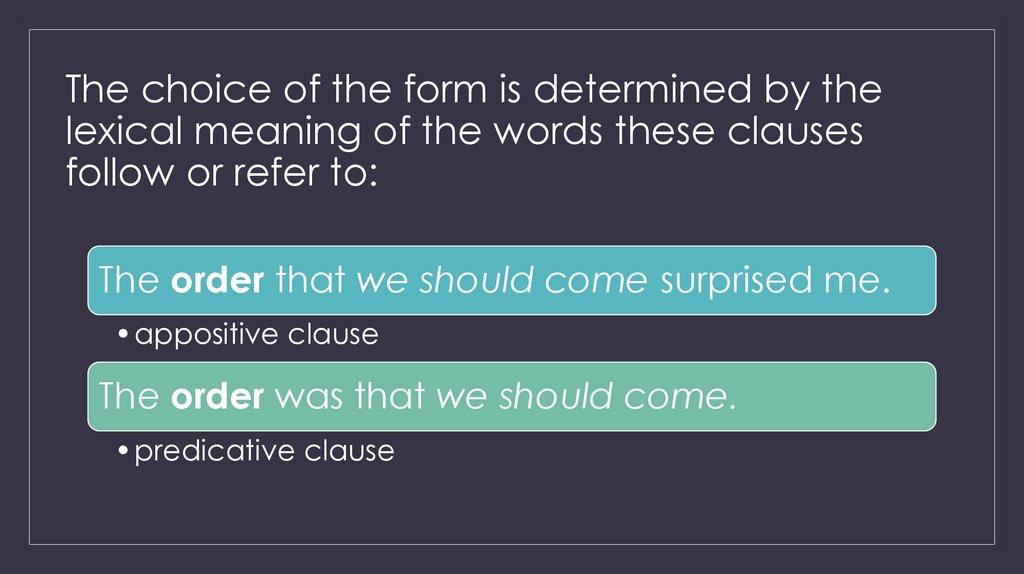
16. The choice of the form is determined by the lexical meaning of the words these clauses follow or refer to:
The order that we should come surprised me.•appositive clause
The order was that we should come.
•predicative clause
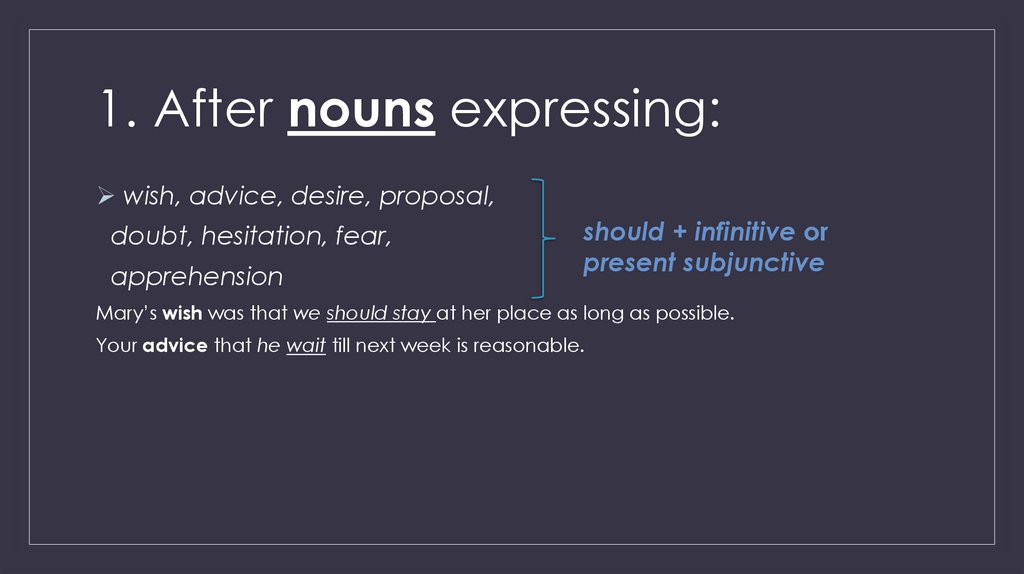
17. 1. After nouns expressing:
wish, advice, desire, proposal,doubt, hesitation, fear,
apprehension
should + infinitive or
present subjunctive
Mary’s wish was that we should stay at her place as long as possible.
Your advice that he wait till next week is reasonable.
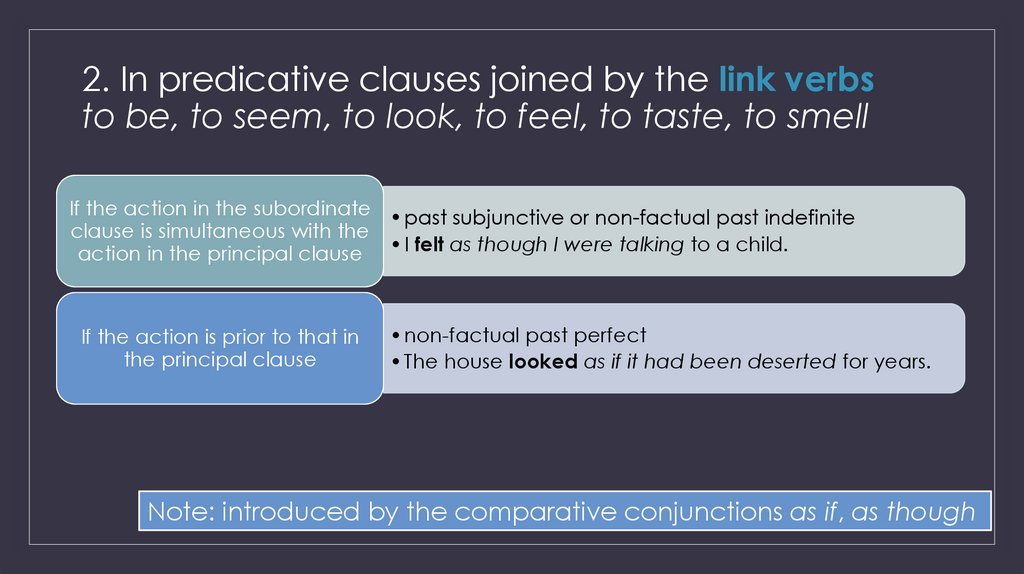
18. 2. In predicative clauses joined by the link verbs to be, to seem, to look, to feel, to taste, to smell
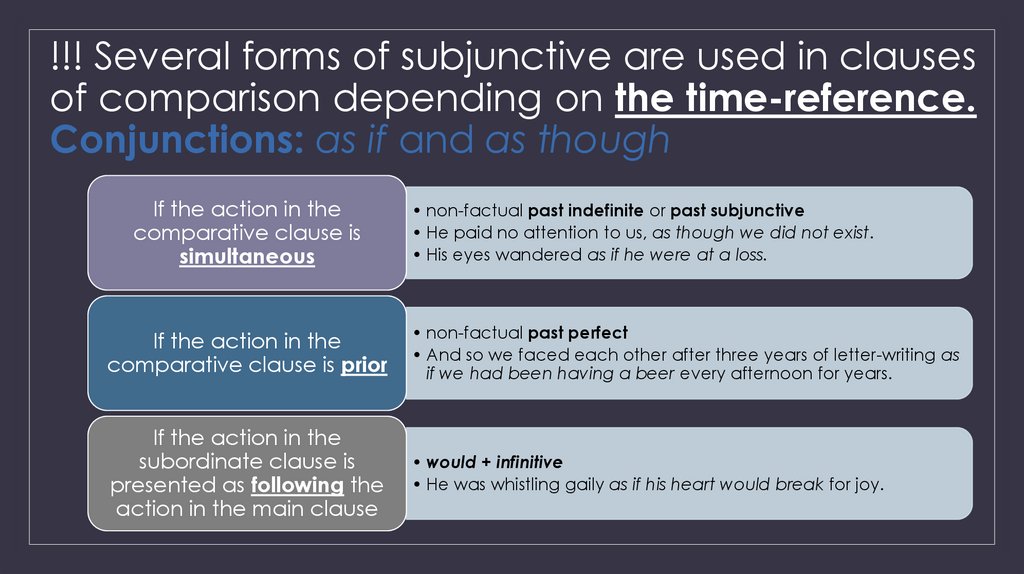
If the action in the subordinate • past subjunctive or non-factual past indefiniteclause is simultaneous with the
action in the principal clause • I felt as though I were talking to a child.
If the action is prior to that in
the principal clause
• non-factual past perfect
• The house looked as if it had been deserted for years.
Note: introduced by the comparative conjunctions as if, as though
19. SM in in complex sentences with adverbial clauses of condition
SM IN IN COMPLEXSENTENCES WITH
ADVERBIAL CLAUSES OF
CONDITION
C
20.
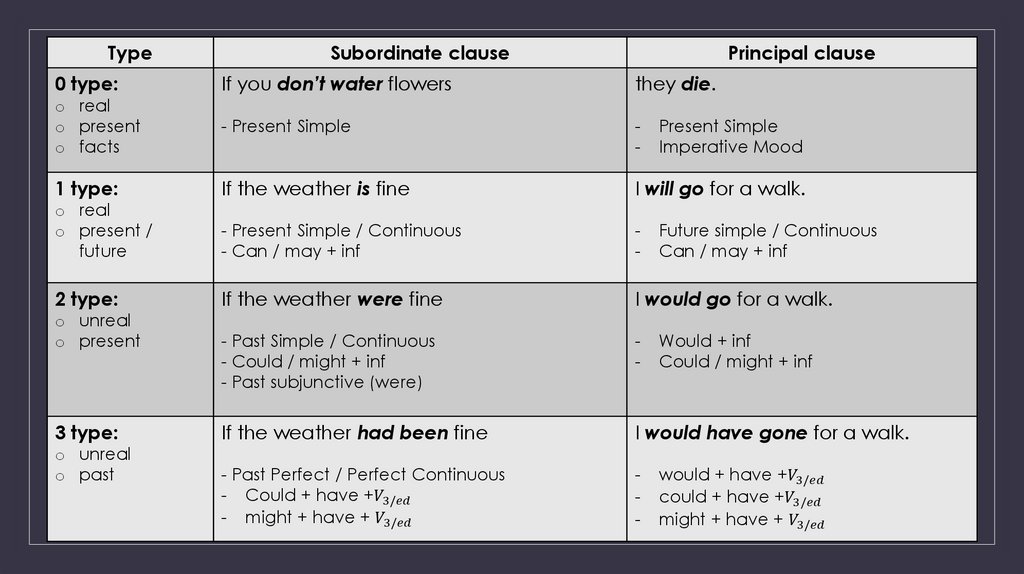
Type0 type:
o real
o present
o facts
1 type:
o real
o present /
future
2 type:
o unreal
o present
3 type:
o unreal
o past
Subordinate clause
Principal clause
If you don’t water flowers
they die.
- Present Simple
-
If the weather is fine
I will go for a walk.
- Present Simple / Continuous
- Can / may + inf
-
If the weather were fine
I would go for a walk.
- Past Simple / Continuous
- Could / might + inf
- Past subjunctive (were)
-
If the weather had been fine
I would have gone for a walk.
- Past Perfect / Perfect Continuous
- Could + have +