 industry
Similar presentations:










Scrapedown Limited PresentatiAnalysis of Scrapedown Cylinder Oils ExxonMobil Proprietaryon
1.
Analysis of Scrapedown Cylinder OilsExxonMobil Proprietary
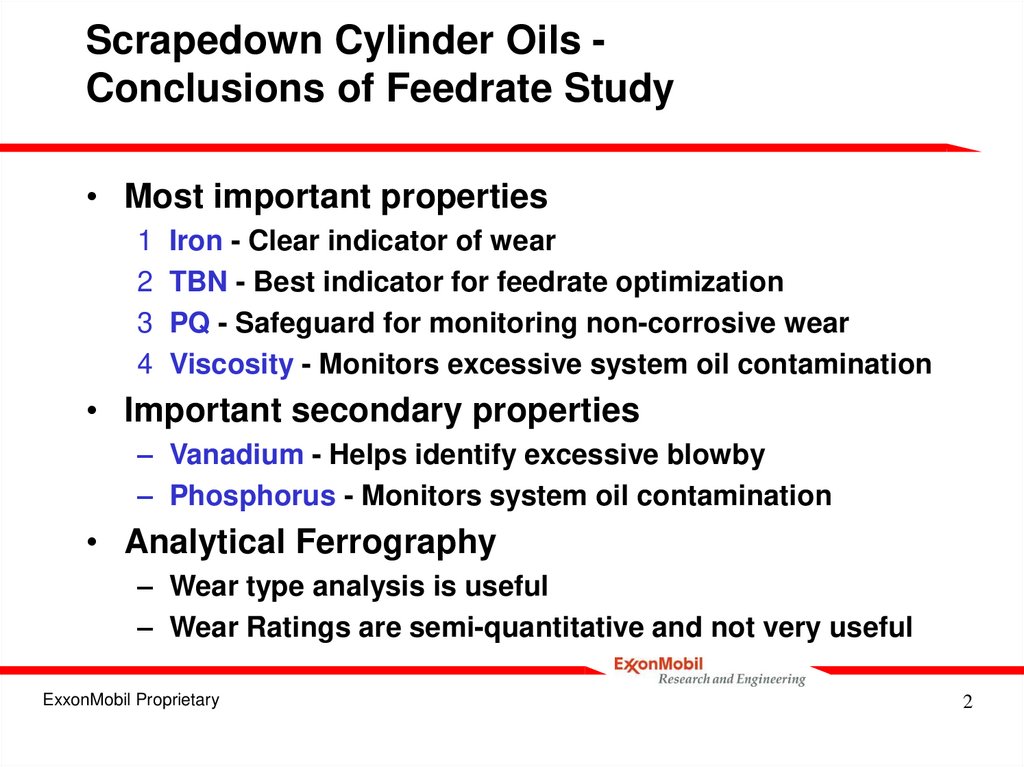
2. Scrapedown Cylinder Oils - Conclusions of Feedrate Study
Scrapedown Cylinder Oils Conclusions of Feedrate Study• Most important properties
1 Iron - Clear indicator of wear
2 TBN - Best indicator for feedrate optimization
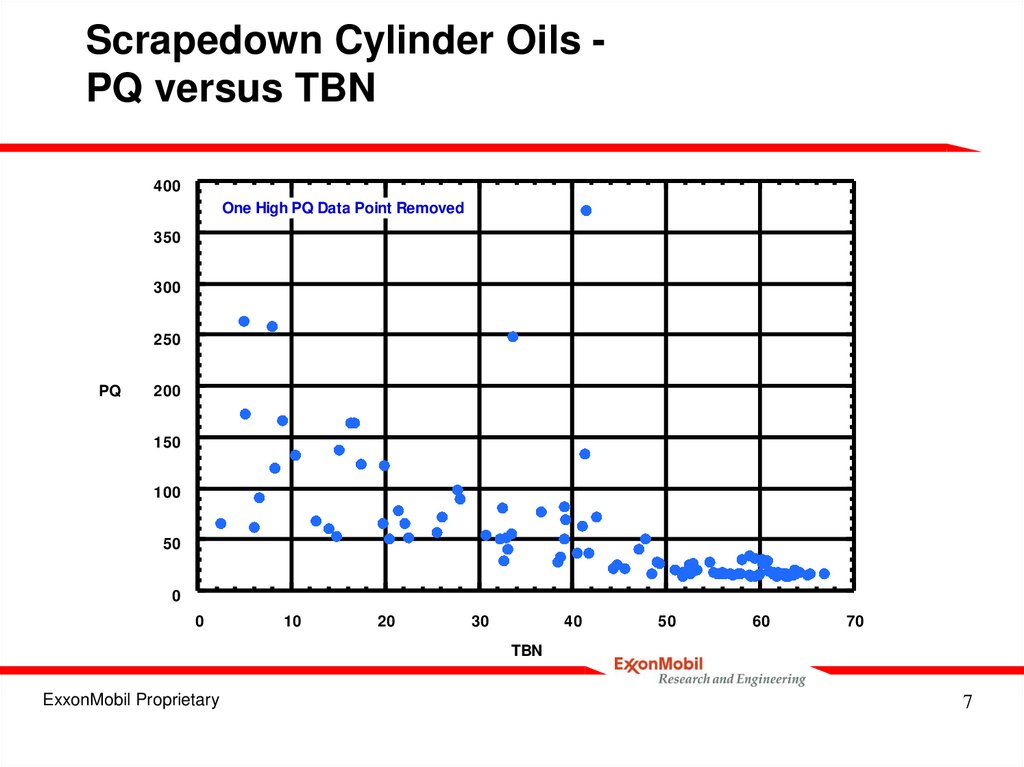
3 PQ - Safeguard for monitoring non-corrosive wear
4 Viscosity - Monitors excessive system oil contamination
• Important secondary properties
– Vanadium - Helps identify excessive blowby
– Phosphorus - Monitors system oil contamination
• Analytical Ferrography
– Wear type analysis is useful
– Wear Ratings are semi-quantitative and not very useful
ExxonMobil Proprietary
2
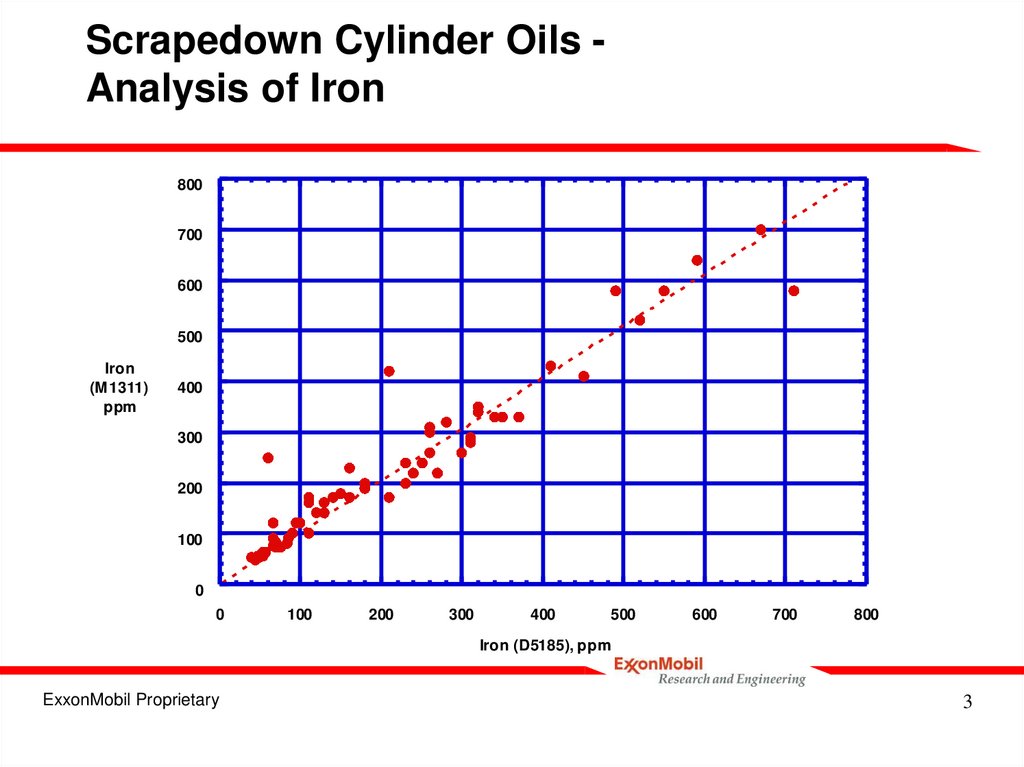
3. Scrapedown Cylinder Oils - Analysis of Iron
Scrapedown Cylinder Oils Analysis of Iron800
700
600
500
Iron
(M1311)
ppm
400
300
200
100
0
0
100
200
300
400
500
600
700
800
Iron (D5185), ppm
ExxonMobil Proprietary
3
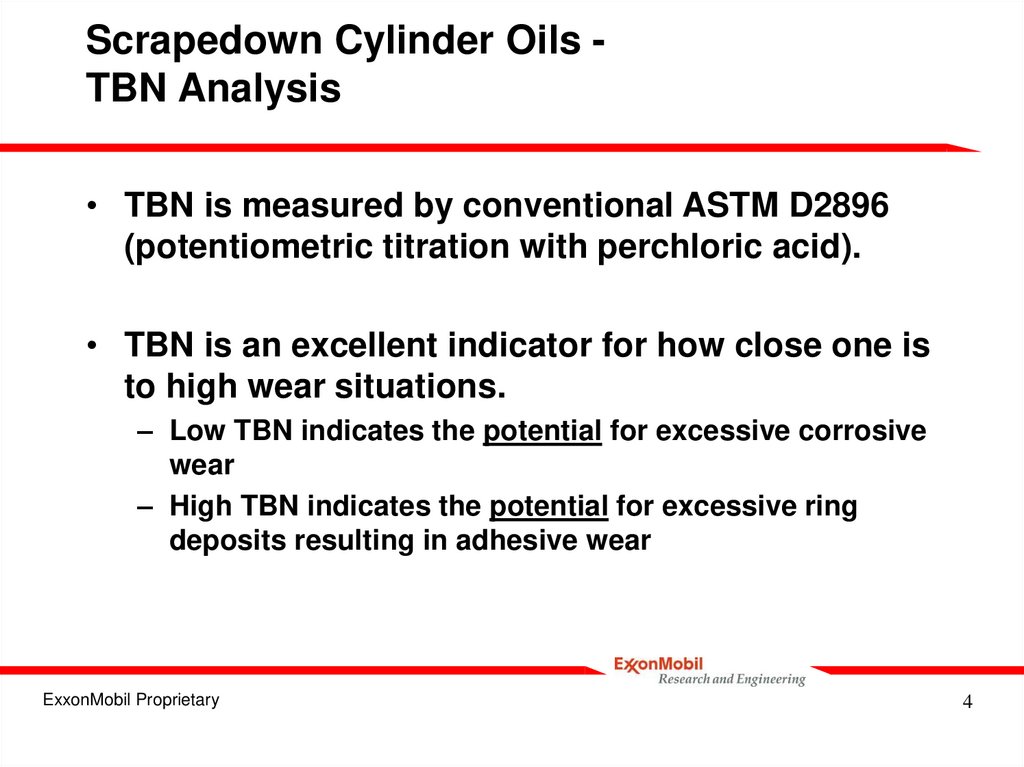
4. Scrapedown Cylinder Oils - TBN Analysis
Scrapedown Cylinder Oils TBN Analysis• TBN is measured by conventional ASTM D2896
(potentiometric titration with perchloric acid).
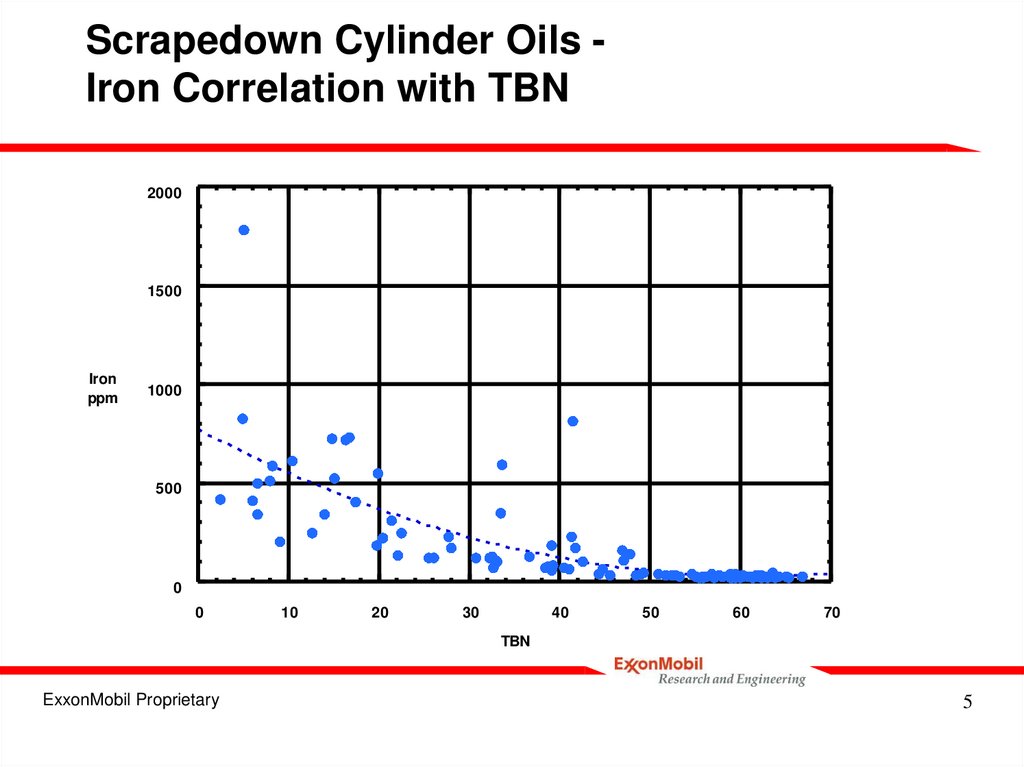
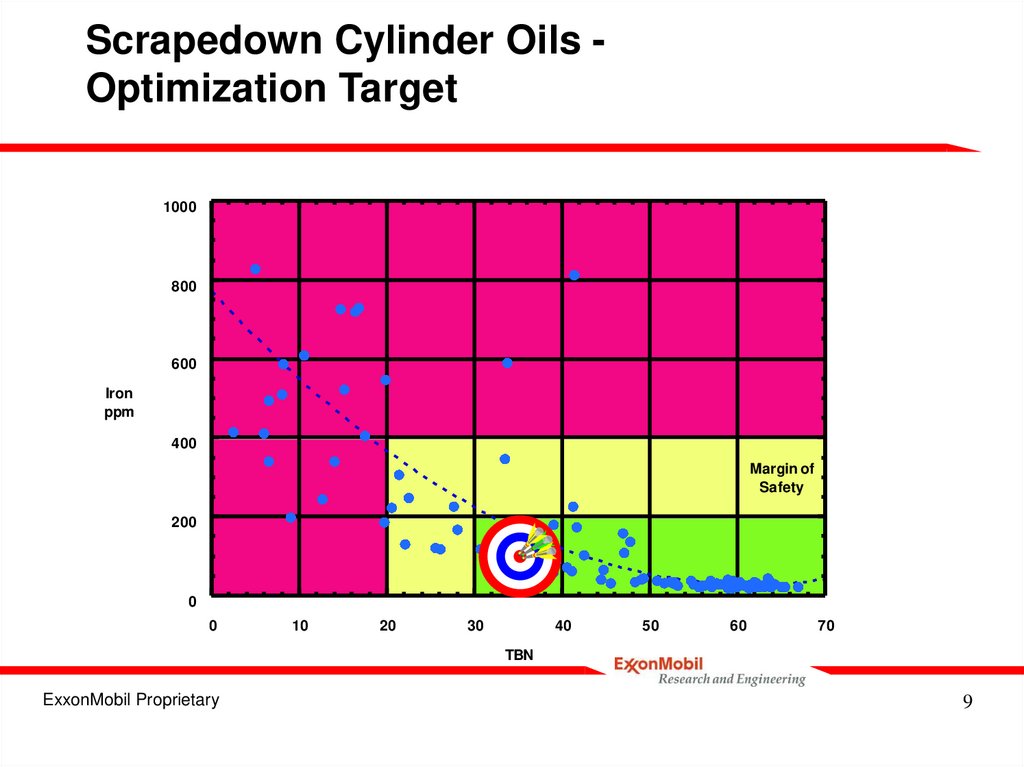
• TBN is an excellent indicator for how close one is
to high wear situations.
– Low TBN indicates the potential for excessive corrosive
wear
– High TBN indicates the potential for excessive ring
deposits resulting in adhesive wear
ExxonMobil Proprietary
4
5. Scrapedown Cylinder Oils - Iron Correlation with TBN
Scrapedown Cylinder Oils Iron Correlation with TBN2000
1500
Iron
ppm
1000
500
0
0
10
20
30
40
50
60
70
TBN
ExxonMobil Proprietary
5
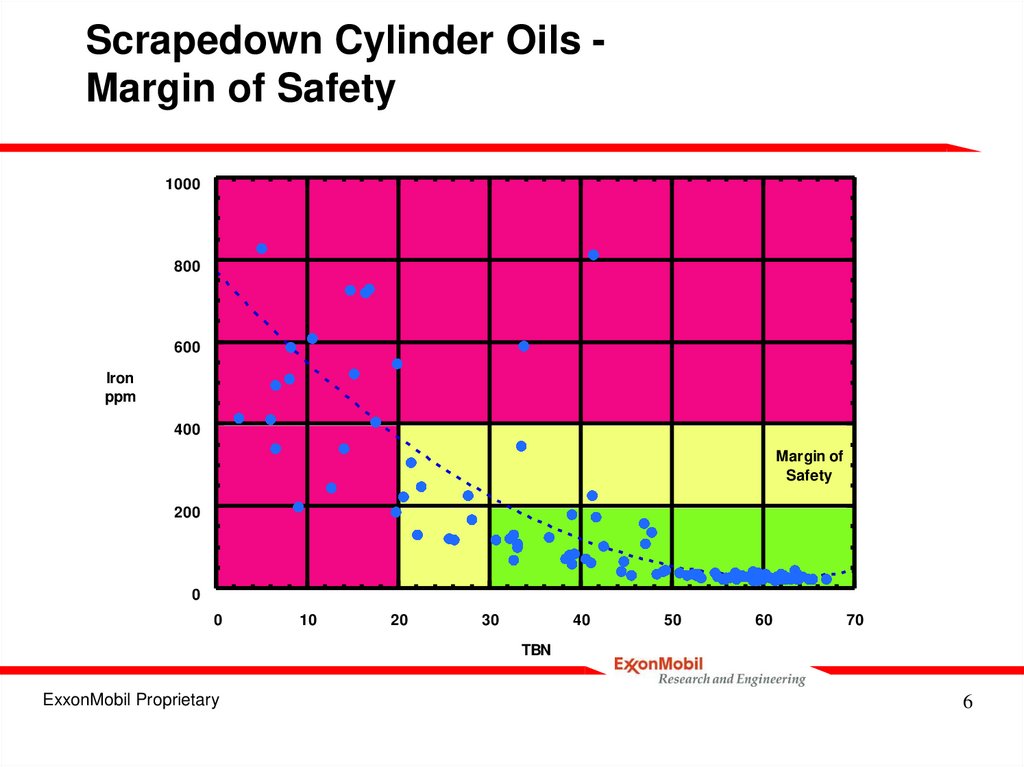
6. Scrapedown Cylinder Oils - Margin of Safety
Scrapedown Cylinder Oils Margin of Safety1000
800
600
Iron
ppm
400
Margin of
Safety
200
0
0
10
20
30
40
50
60
70
TBN
ExxonMobil Proprietary
6
7. Scrapedown Cylinder Oils - PQ versus TBN
Scrapedown Cylinder Oils PQ versus TBN400
One High PQ Data Point Removed
350
300
250
PQ
200
150
100
50
0
0
10
20
30
40
50
60
70
TBN
ExxonMobil Proprietary
7
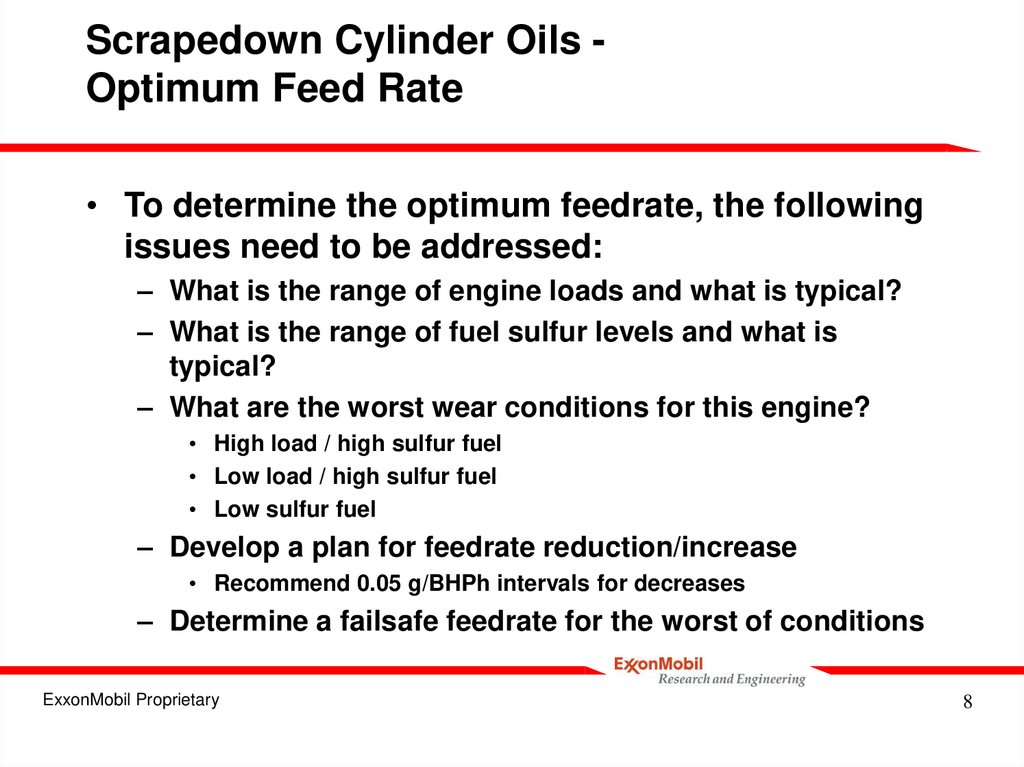
8. Scrapedown Cylinder Oils - Optimum Feed Rate
Scrapedown Cylinder Oils Optimum Feed Rate• To determine the optimum feedrate, the following
issues need to be addressed:
– What is the range of engine loads and what is typical?
– What is the range of fuel sulfur levels and what is
typical?
– What are the worst wear conditions for this engine?
• High load / high sulfur fuel
• Low load / high sulfur fuel
• Low sulfur fuel
– Develop a plan for feedrate reduction/increase
• Recommend 0.05 g/BHPh intervals for decreases
– Determine a failsafe feedrate for the worst of conditions
ExxonMobil Proprietary
8
9. Scrapedown Cylinder Oils - Optimization Target
Scrapedown Cylinder Oils Optimization Target1000
800
600
Iron
ppm
400
Margin of
Safety
200
0
0
10
20
30
40
50
60
70
TBN
ExxonMobil Proprietary
9
10. Scrapedown Cylinder Oils - Analytical Ferrography
Scrapedown Cylinder Oils Analytical FerrographyAnalytical Ferrography
• Monitors sizes and
types of wear debris
present in oils
• Estimates relative
amounts of each wear
type (Wear Rating)
ExxonMobil Proprietary
10
11. Scrapedown Cylinder Oils - Analytical Ferrography Results
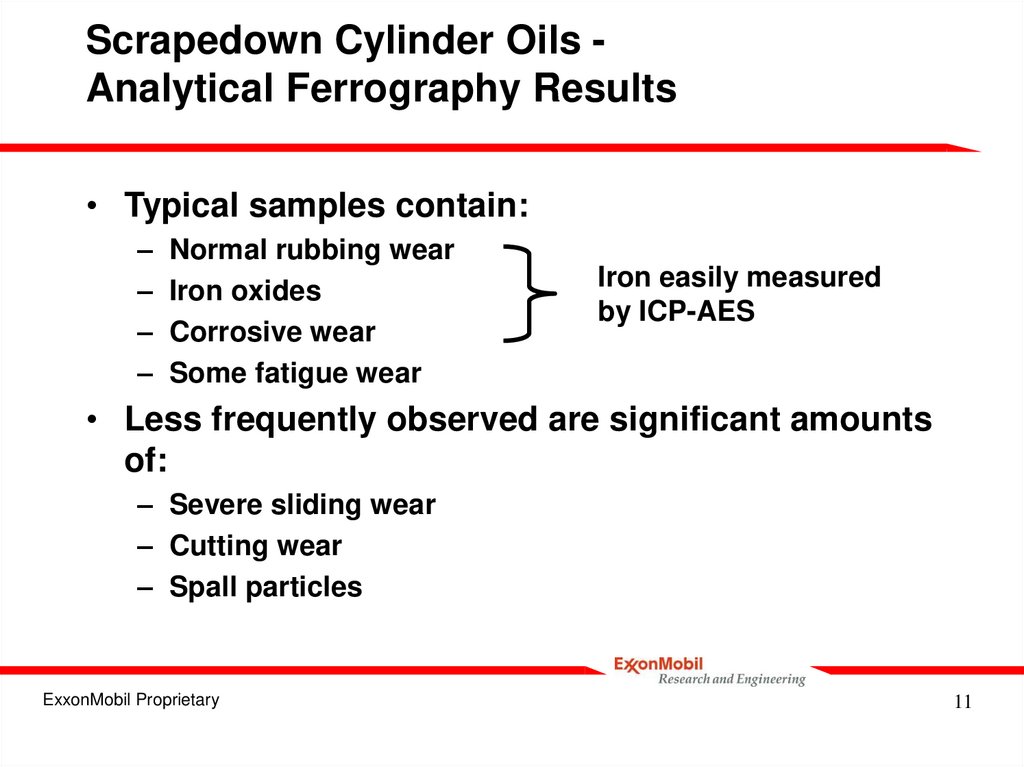
Scrapedown Cylinder Oils Analytical Ferrography Results• Typical samples contain:
– Normal rubbing wear
– Iron oxides
– Corrosive wear
– Some fatigue wear
Iron easily measured
by ICP-AES
• Less frequently observed are significant amounts
of:
– Severe sliding wear
– Cutting wear
– Spall particles
ExxonMobil Proprietary
11
12. Scrapedown Cylinder Oils - Analytical Ferrography Results
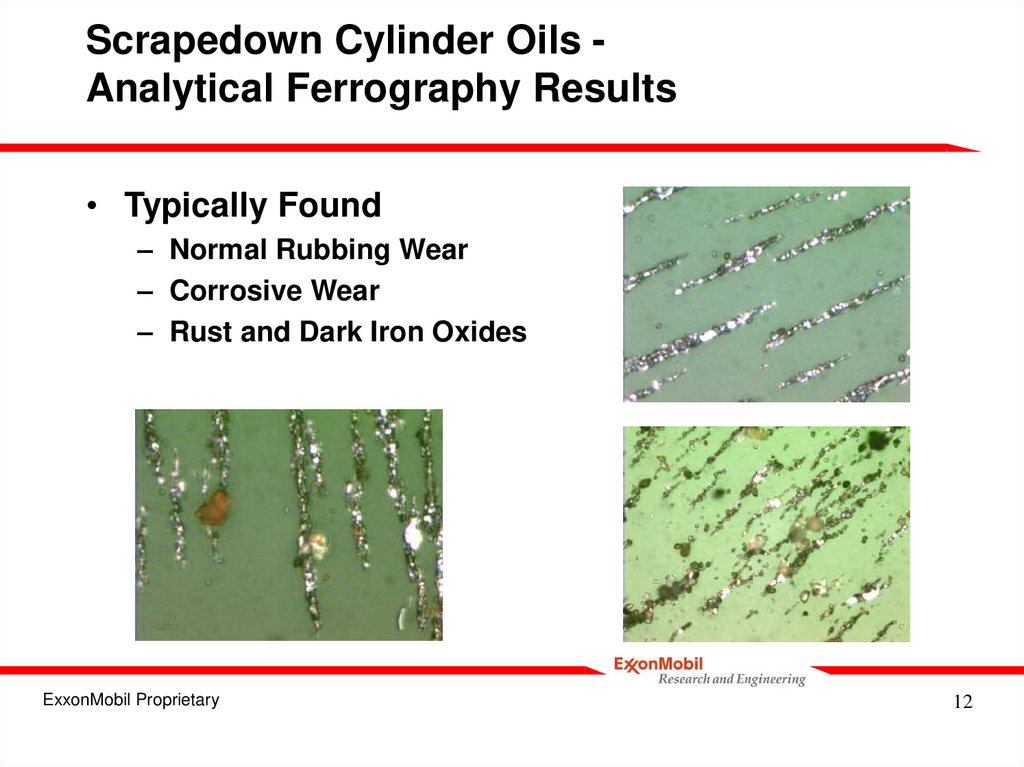
Scrapedown Cylinder Oils Analytical Ferrography Results• Typically Found
– Normal Rubbing Wear
– Corrosive Wear
– Rust and Dark Iron Oxides
ExxonMobil Proprietary
12
13. Scrapedown Cylinder Oils - Analytical Ferrography Results
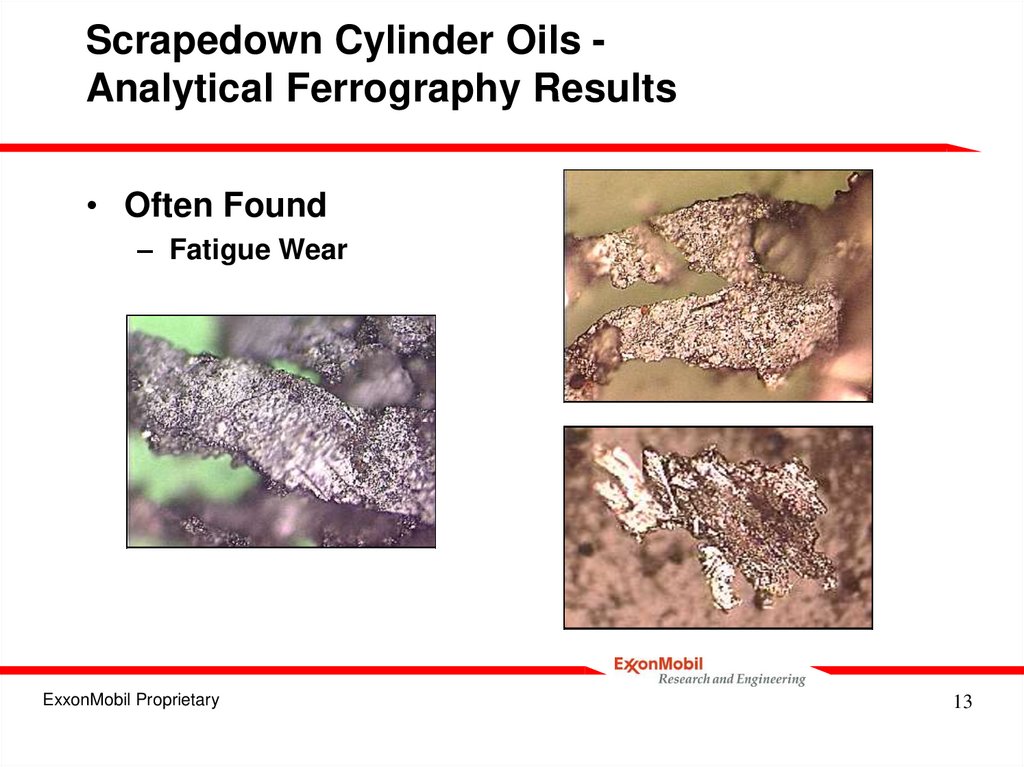
Scrapedown Cylinder Oils Analytical Ferrography Results• Often Found
– Fatigue Wear
ExxonMobil Proprietary
13
14. Scrapedown Cylinder Oils - Analytical Ferrography Results
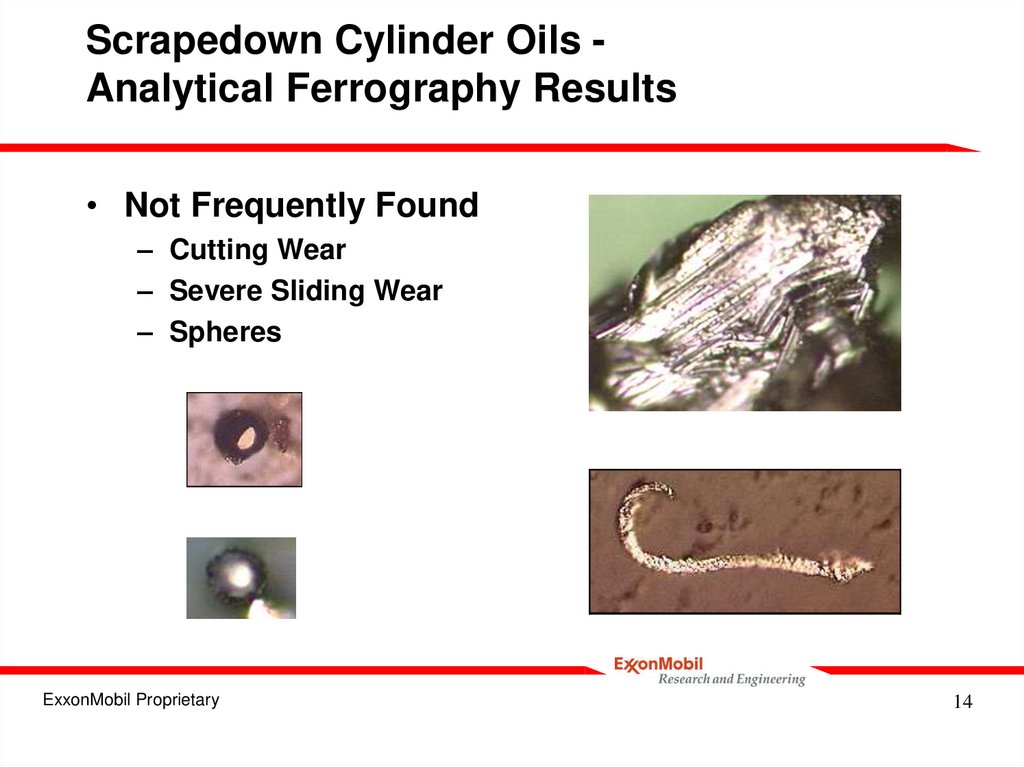
Scrapedown Cylinder Oils Analytical Ferrography Results• Not Frequently Found
– Cutting Wear
– Severe Sliding Wear
– Spheres
ExxonMobil Proprietary
14
15. Scrapedown Cylinder Oils - Analytical Ferrography Results
Scrapedown Cylinder Oils Analytical Ferrography Results• Wear types can be useful to help identify the
primary wear mechanism.
• Wear Ratings do not adequately distinguish low
from high wear.
– Subjective
– No standard reference has been established
– Scrapedown oils contain many wear particles and wear
particle types
ExxonMobil Proprietary
15