


 history
Similar presentations:






Who Was Kay Kāvus?
1.
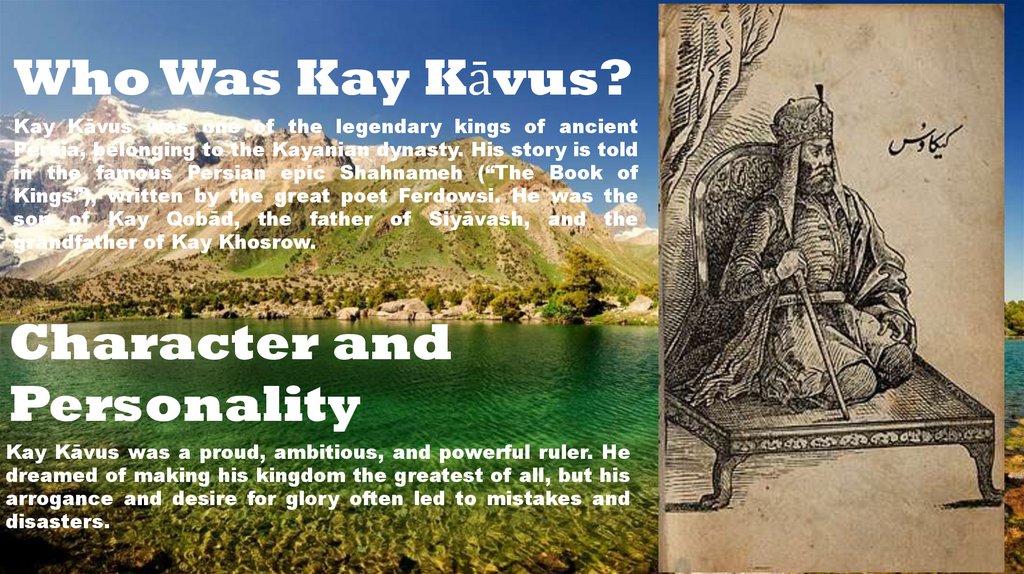
Who Was Kay Kāvus?Kay Kāvus was one of the legendary kings of ancient
Persia, belonging to the Kayanian dynasty. His story is told
in the famous Persian epic Shahnameh (“The Book of
Kings”), written by the great poet Ferdowsi. He was the
son of Kay Qobād, the father of Siyāvash, and the
grandfather of Kay Khosrow.
Character and
Personality
Kay Kāvus was a proud, ambitious, and powerful ruler. He
dreamed of making his kingdom the greatest of all, but his
arrogance and desire for glory often led to mistakes and
disasters.
2.
3.
The FlyingThrone Story
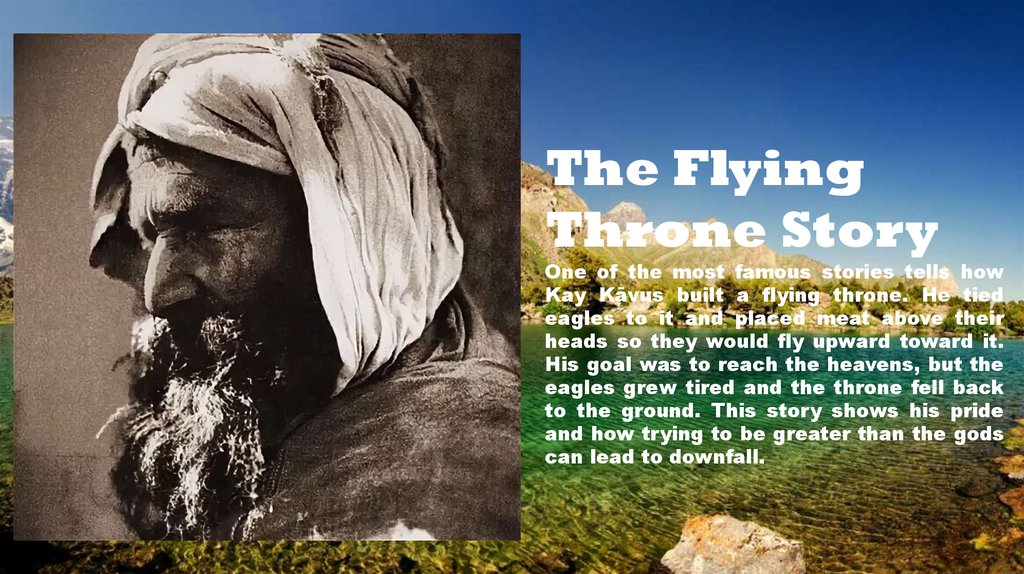
One of the most famous stories tells how
Kay Kāvus built a flying throne. He tied
eagles to it and placed meat above their
heads so they would fly upward toward it.
His goal was to reach the heavens, but the
eagles grew tired and the throne fell back
to the ground. This story shows his pride
and how trying to be greater than the gods
can lead to downfall.
4.
5.
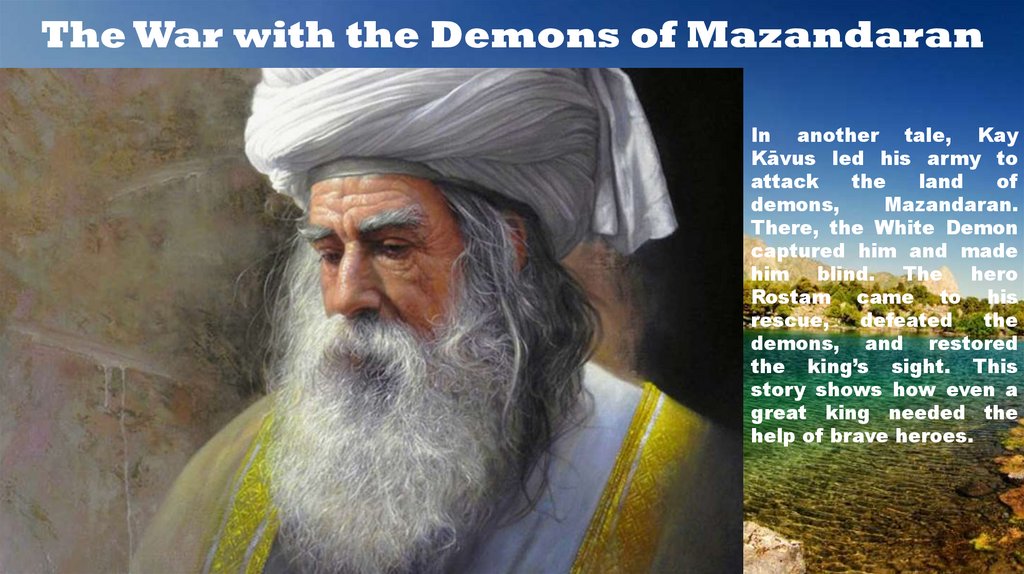
The War with the Demons of MazandaranIn another tale, Kay
Kāvus led his army to
attack
the
land
of
demons,
Mazandaran.
There, the White Demon
captured him and made
him blind. The hero
Rostam came to his
rescue,
defeated
the
demons, and restored
the king’s sight. This
story shows how even a
great king needed the
help of brave heroes.
6.
7.
His Family and theTragedy of Siyāvash
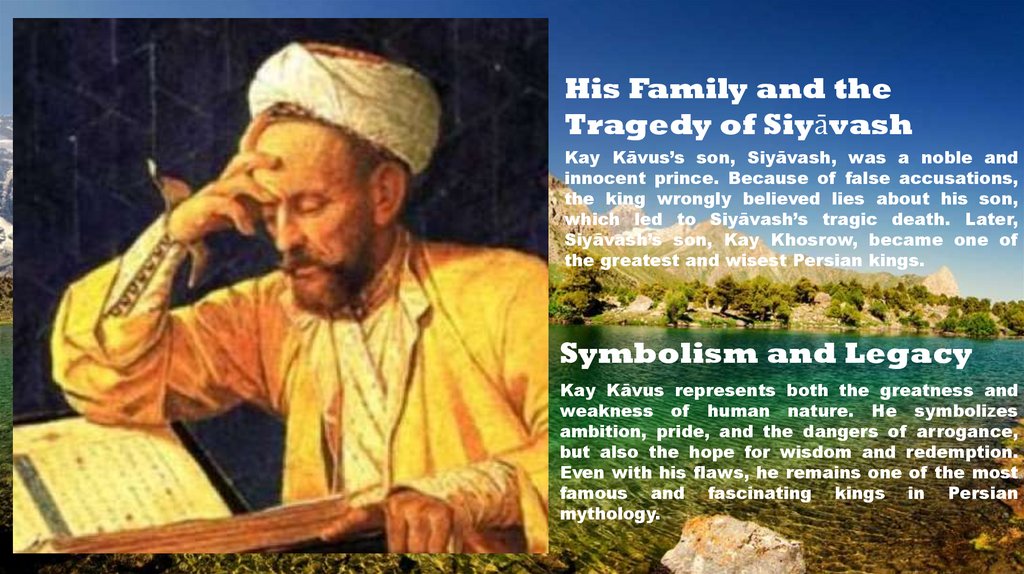
Kay Kāvus’s son, Siyāvash, was a noble and
innocent prince. Because of false accusations,
the king wrongly believed lies about his son,
which led to Siyāvash’s tragic death. Later,
Siyāvash’s son, Kay Khosrow, became one of
the greatest and wisest Persian kings.
Symbolism and Legacy
Kay Kāvus represents both the greatness and
weakness of human nature. He symbolizes
ambition, pride, and the dangers of arrogance,
but also the hope for wisdom and redemption.
Even with his flaws, he remains one of the most
famous and fascinating kings in Persian
mythology.