 english
Similar presentations:





Meaning, naming and methods of semantic analysis
1. MEANING, NAMING AND METHODS OF SEMANTIC ANALYSIS
- - the structure of lexical meaning- - prototypical semantics: lexical prototype
- - methods of semantic analysis (componential, contextual)
2. Cognitive and pragmatic meanings
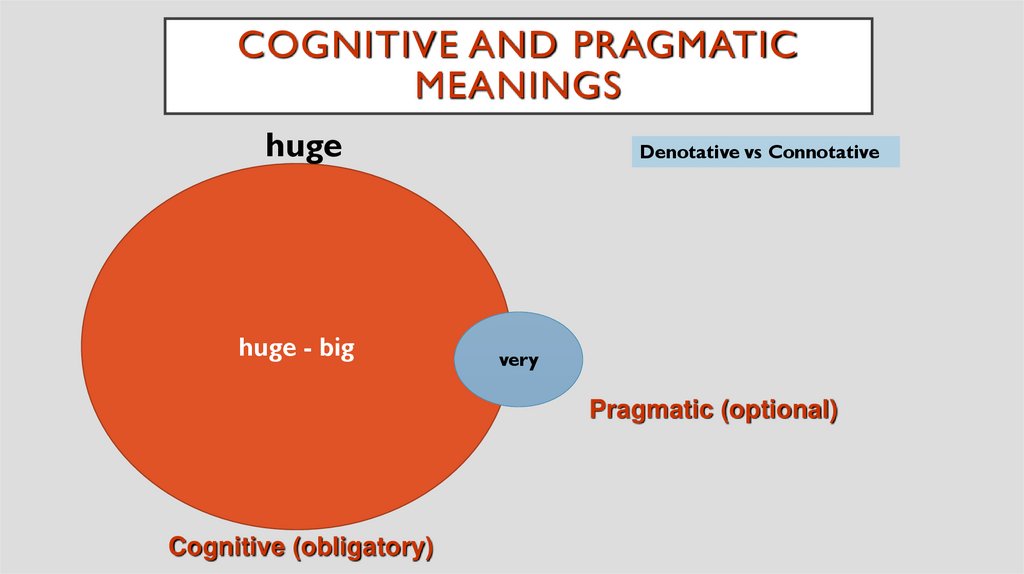
COGNITIVE AND PRAGMATICMEANINGS
huge
huge - big
Denotative vs Connotative
very
Pragmatic (optional)
Cognitive (obligatory)
3. Cognitive and Pragmatic Meanings
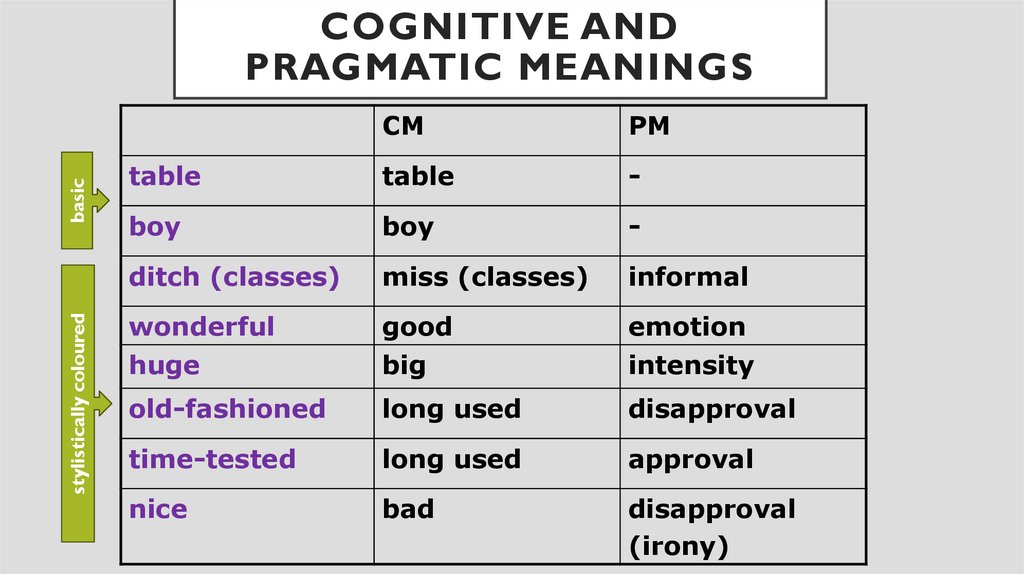
stylistically colouredbasic
COGNITIVE AND
PRAGMATIC MEANINGS
CM
PM
table
table
-
boy
boy
-
ditch (classes)
miss (classes)
informal
wonderful
huge
good
big
emotion
intensity
old-fashioned
long used
disapproval
time-tested
long used
approval
nice
bad
disapproval
(irony)
4. Cognitive Meaning M.V. Nikitin
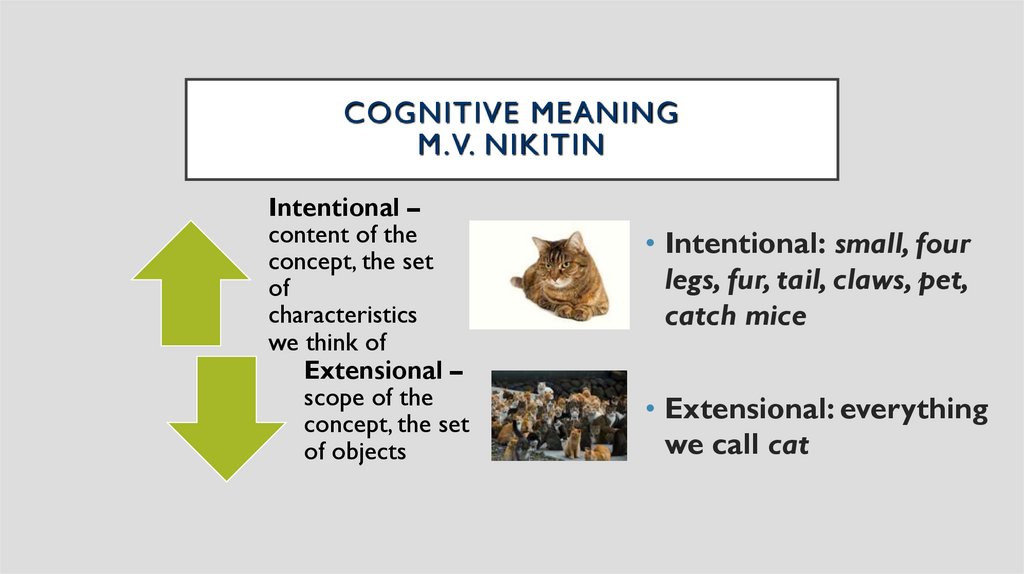
COGNITIVE MEANINGM.V. NIKITIN
Intentional –
content of the
concept, the set
of
characteristics
we think of
Extensional –
scope of the
concept, the set
of objects
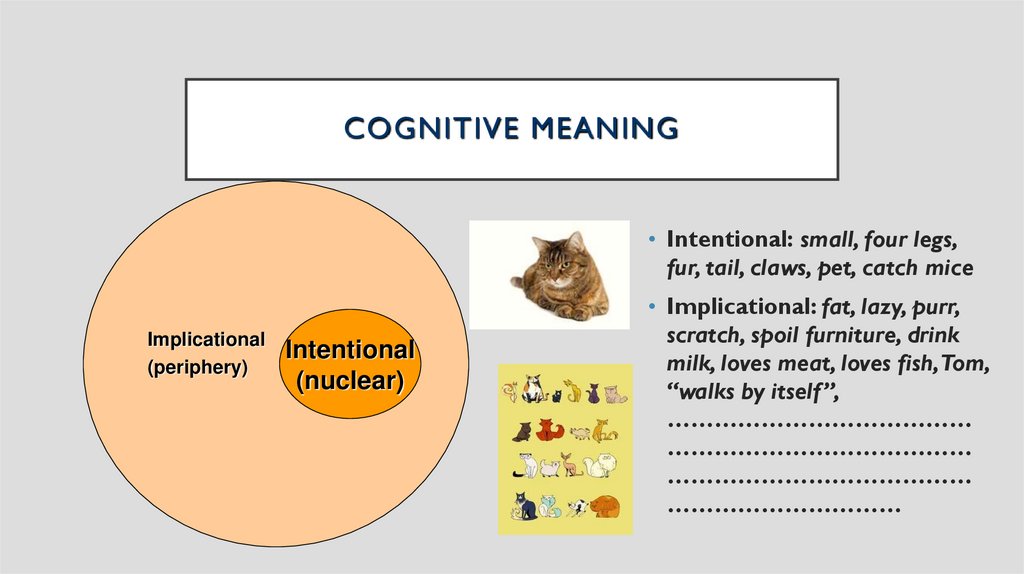
• Intentional: small, four
legs, fur, tail, claws, pet,
catch mice
• Extensional: everything
we call cat
5. Cognitive Meaning
COGNITIVE MEANING• Intentional: small, four legs,
fur, tail, claws, pet, catch mice
Implicational
(periphery)
Intentional
(nuclear)
• Implicational: fat, lazy, purr,
scratch, spoil furniture, drink
milk, loves meat, loves fish,Tom,
“walks by itself ”,
…………………………………
…………………………………
…………………………………
…………………………
6. Intentional Characteristics
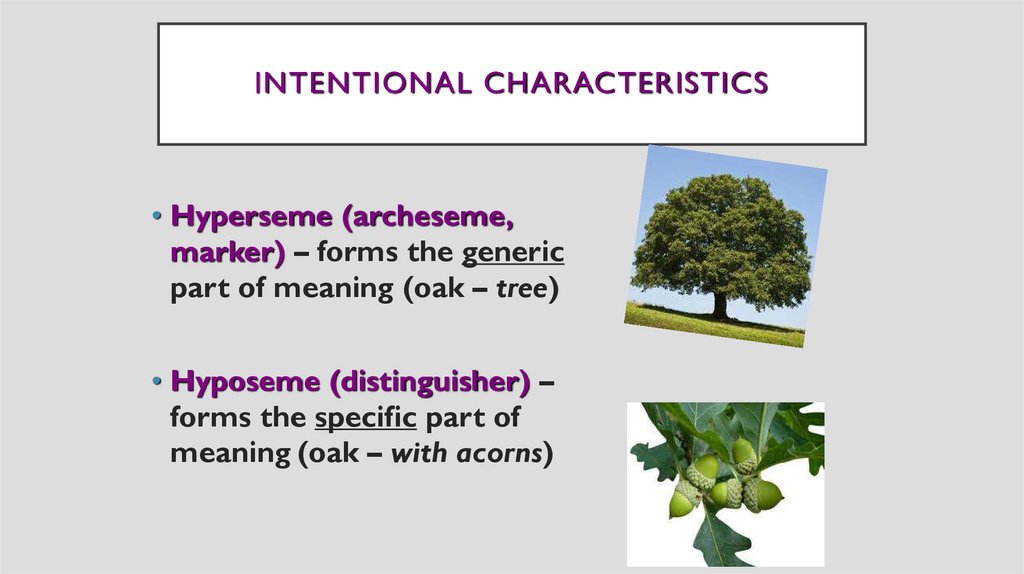
INTENTIONAL CHARACTERISTICS• Hyperseme (archeseme,
marker) – forms the generic
part of meaning (oak – tree)
• Hyposeme (distinguisher) –
forms the specific part of
meaning (oak – with acorns)
7. Hyperseme - Hyposeme
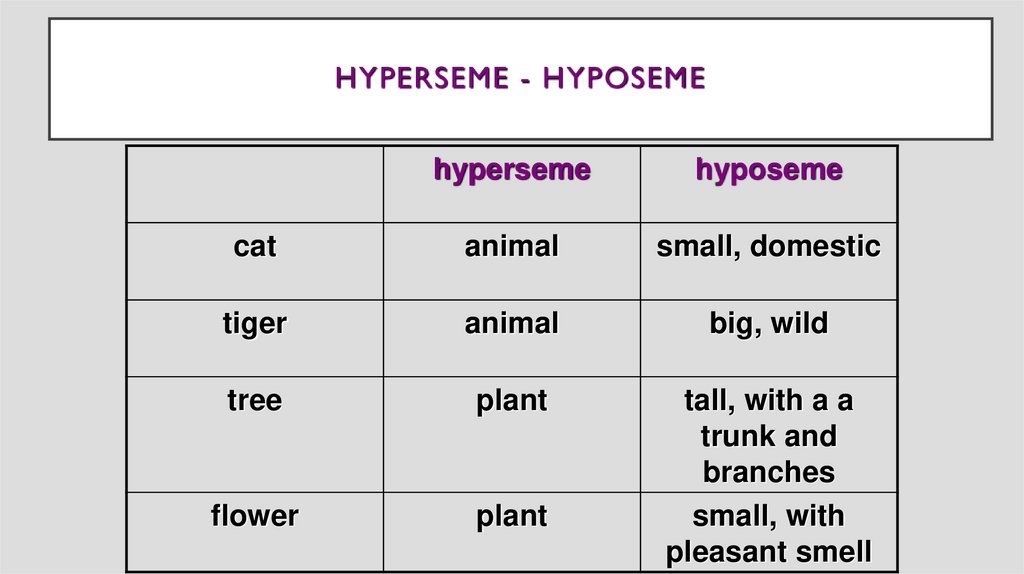
HYPERSEME - HYPOSEMEhyperseme
hyposeme
cat
animal
small, domestic
tiger
animal
big, wild
tree
plant
flower
plant
tall, with a a
trunk and
branches
small, with
pleasant smell
8. Hyperseme / Hyposeme
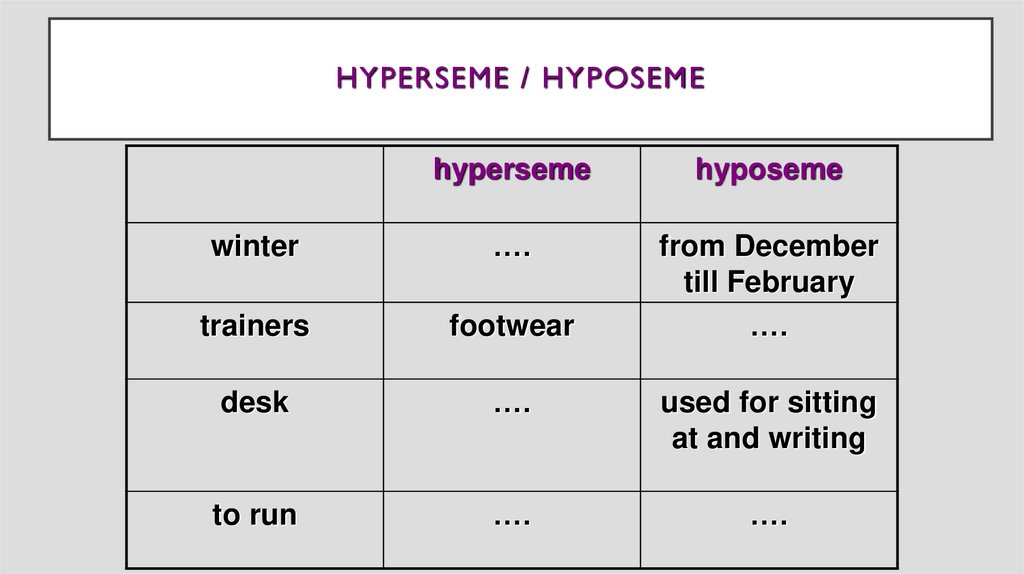
HYPERSEME / HYPOSEMEhyperseme
hyposeme
winter
….
trainers
footwear
from December
till February
….
desk
….
used for sitting
at and writing
to run
….
….
9. Implicational Characteristics
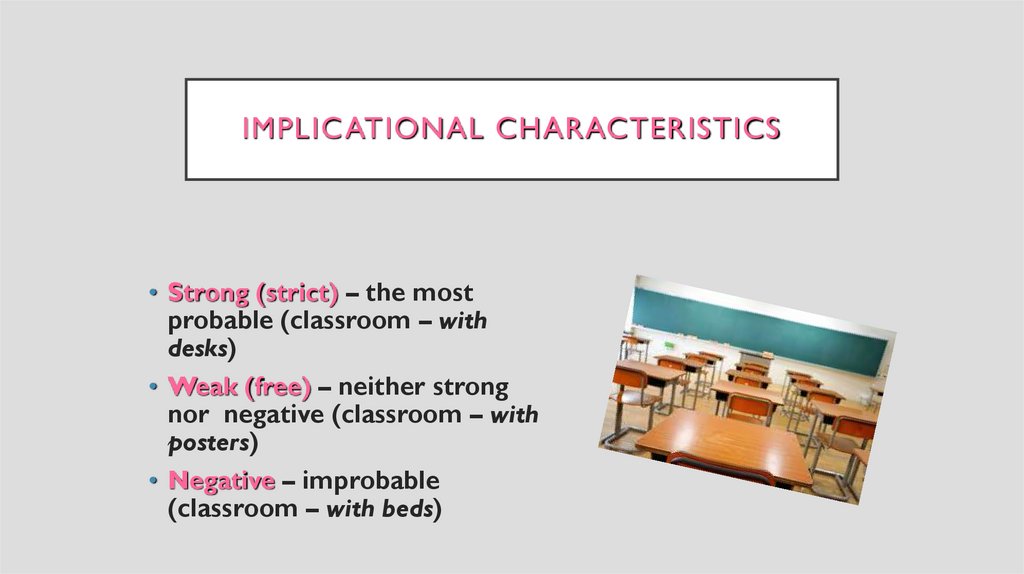
IMPLICATIONAL CHARACTERISTICS• Strong (strict) – the most
probable (classroom – with
desks)
• Weak (free) – neither strong
nor negative (classroom – with
posters)
• Negative – improbable
(classroom – with beds)
10. Implicational Characteristics
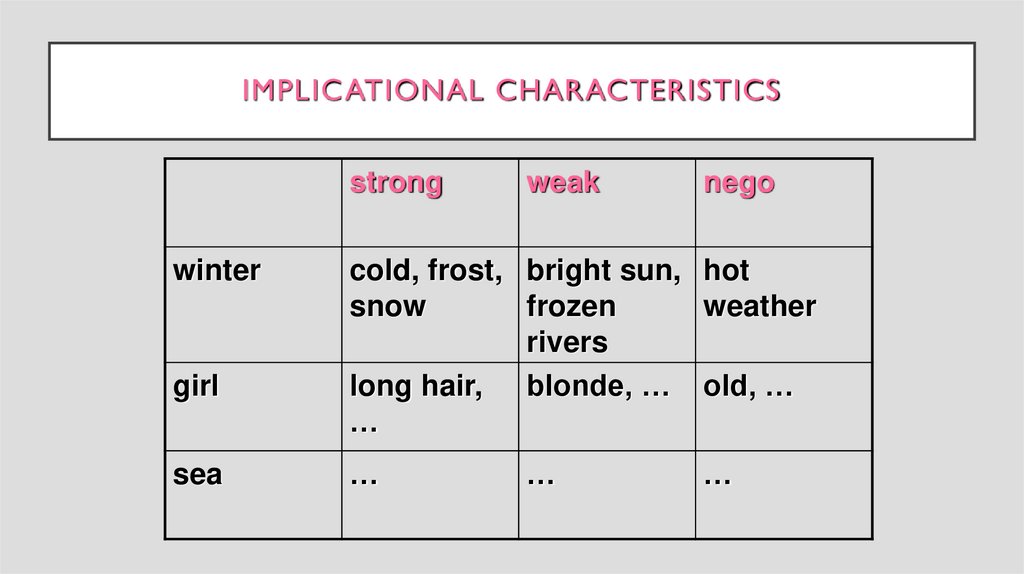
IMPLICATIONAL CHARACTERISTICSstrong
winter
girl
sea
weak
nego
cold, frost, bright sun, hot
snow
frozen
weather
rivers
long hair, blonde, … old, …
…
…
…
…
11. Pragmatic meaning Types of Connotations
PRAGMATIC MEANINGTYPES OF CONNOTATIONS
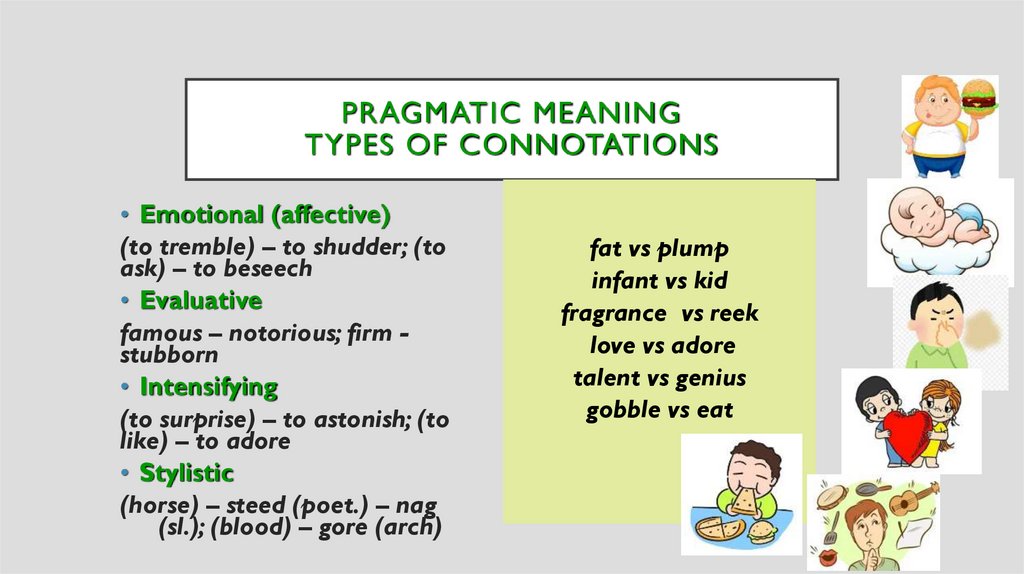
• Emotional (affective)
(to tremble) – to shudder; (to
ask) – to beseech
• Evaluative
famous – notorious; firm stubborn
• Intensifying
(to surprise) – to astonish; (to
like) – to adore
• Stylistic
(horse) – steed (poet.) – nag
(sl.); (blood) – gore (arch)
fat vs plump
infant vs kid
fragrance vs reek
love vs adore
talent vs genius
gobble vs eat
12. Lexical Prototype
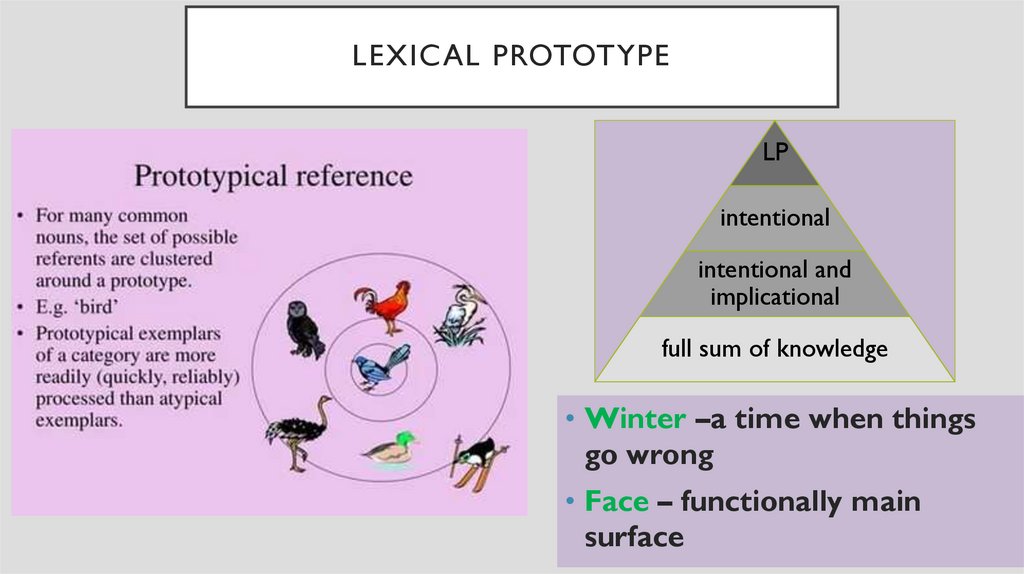
LEXICAL PROTOTYPELP
intentional
intentional and
implicational
full sum of knowledge
• Winter –a time when things
go wrong
• Face – functionally main
surface
13. Componential analysis
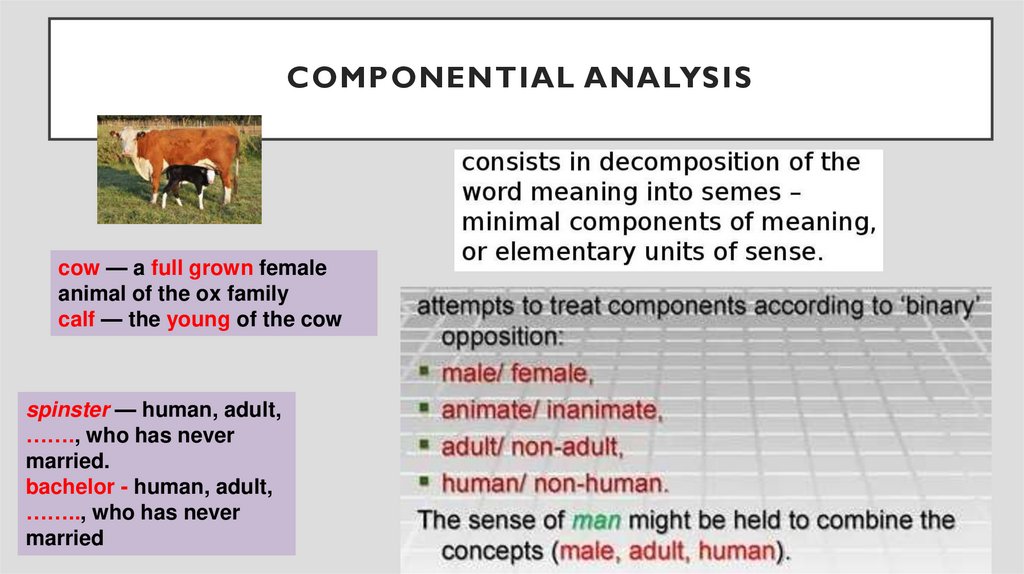
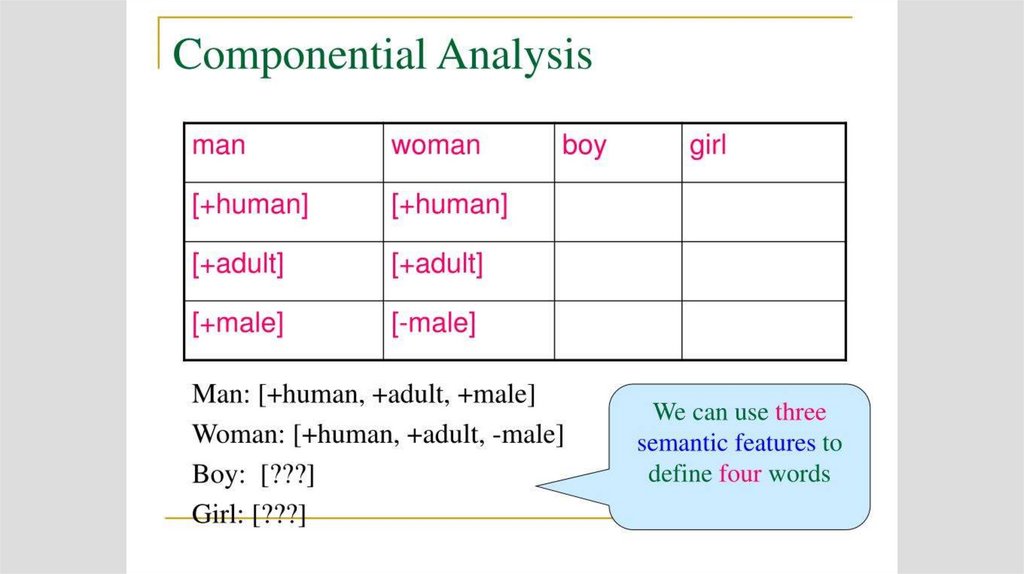
COMPONENTIAL ANALYSIScow — a full grown female
animal of the ox family
calf — the young of the cow
spinster — human, adult,
……., who has never
married.
bachelor - human, adult,
…….., who has never
married
14.
15. Contextual analysis
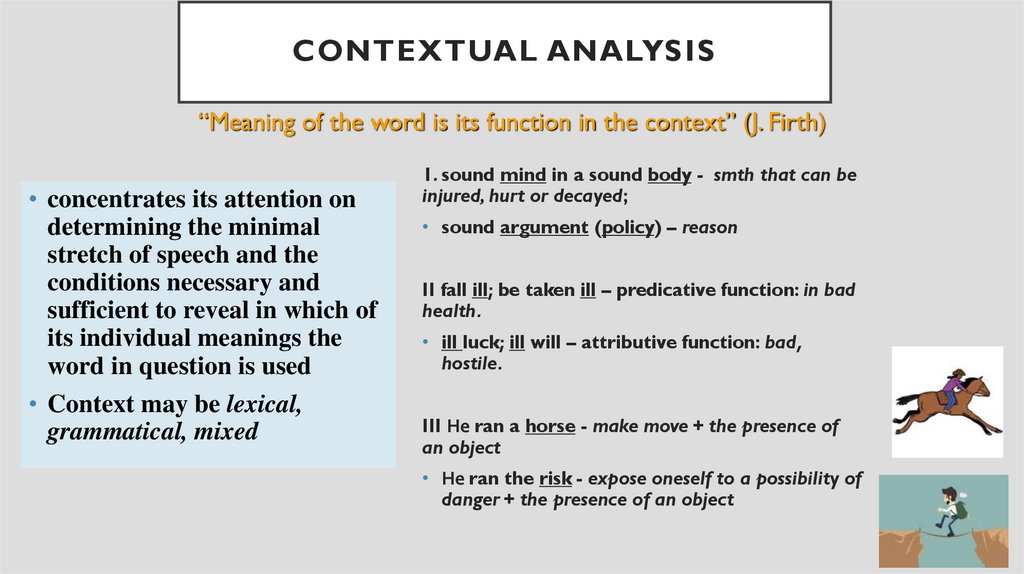
CONTEXTUAL ANALYSIS“Meaning of the word is its function in the context” (J. Firth)
• concentrates its attention on
determining the minimal
stretch of speech and the
conditions necessary and
sufficient to reveal in which of
its individual meanings the
word in question is used
• Context may be lexical,
grammatical, mixed
1. sound mind in a sound body - smth that can be
injured, hurt or decayed;
• sound argument (policy) – reason
II fall ill; be taken ill – predicative function: in bad
health.
• ill luck; ill will – attributive function: bad,
hostile.
III Не ran a horse - make move + the presence of
an object
• Не ran the risk - expose oneself to a possibility of
danger + the presence of an object