 education
Similar presentations:










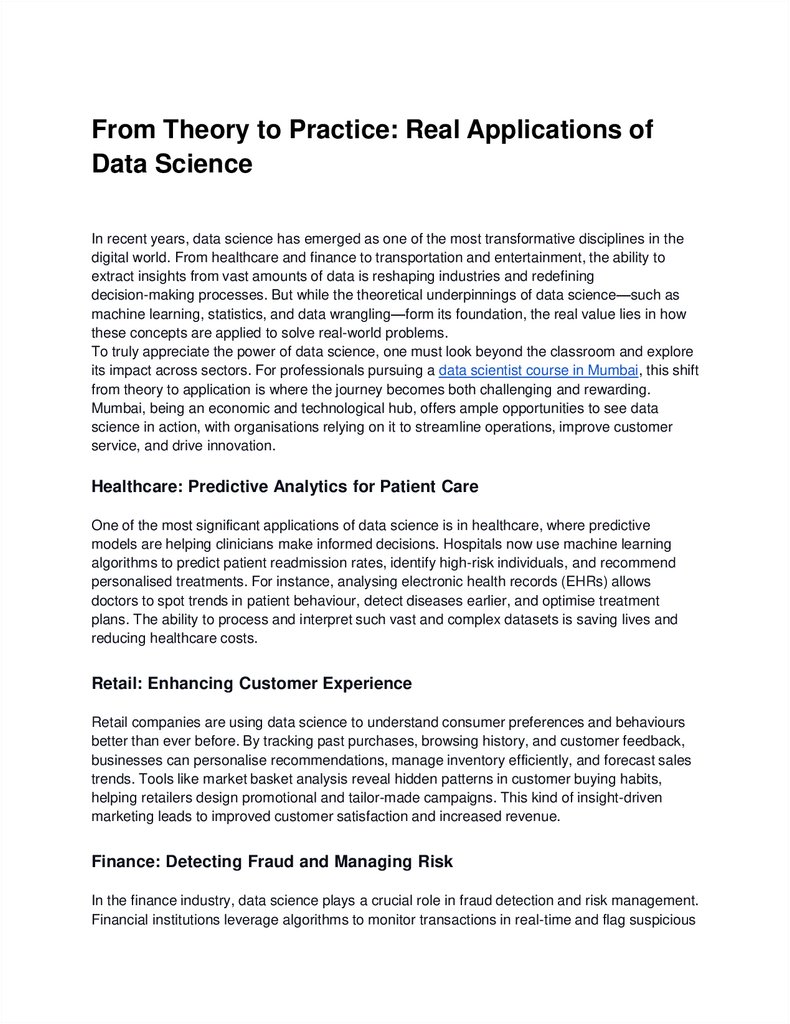
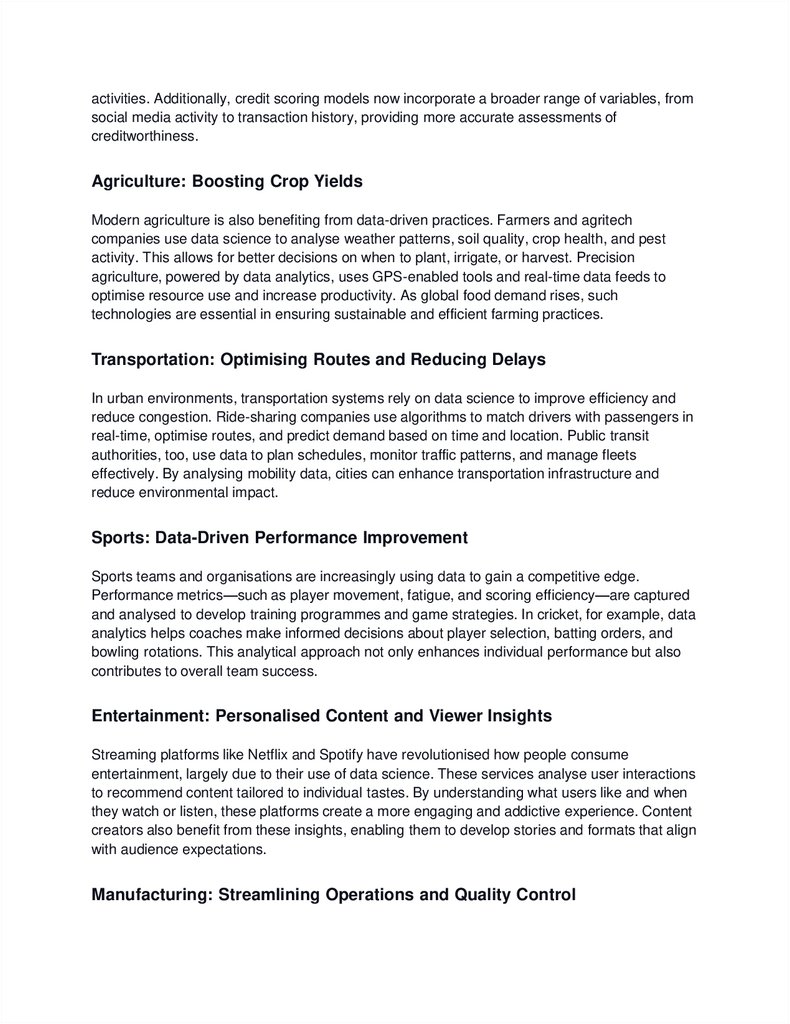
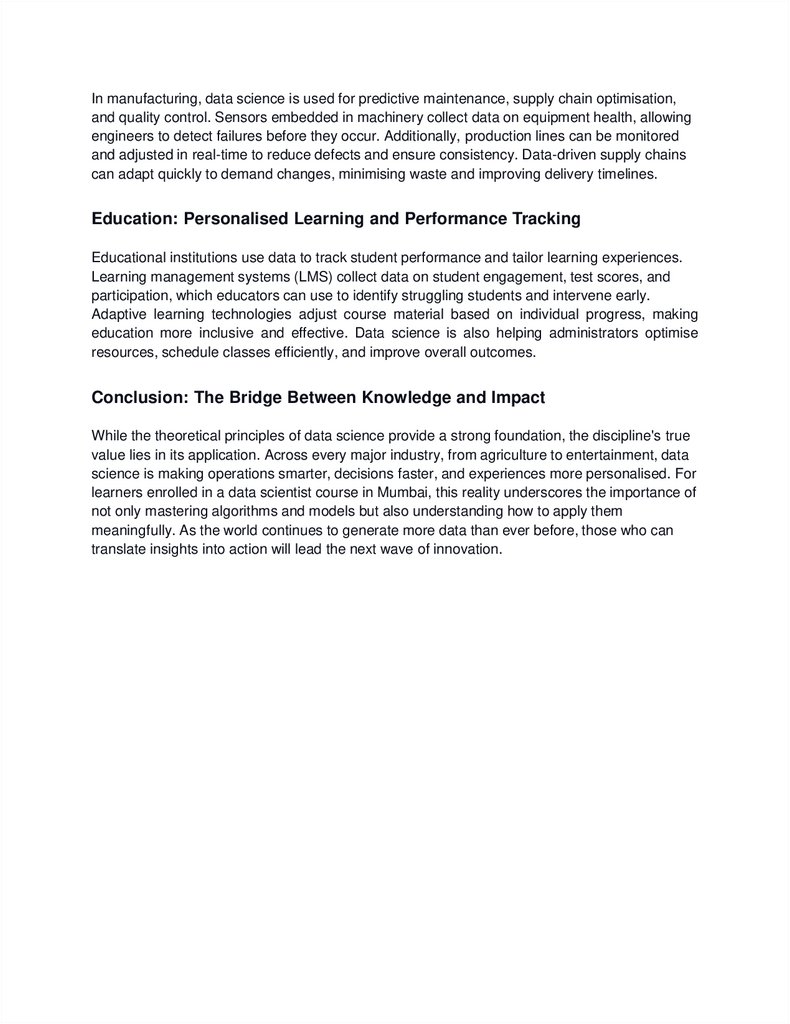
From Theory to Practice: Real Applications of Data Science
1.
From Theory to Practice: Real Applications ofData Science
In recent years, data science has emerged as one of the most transformative disciplines in the
digital world. From healthcare and finance to transportation and entertainment, the ability to
extract insights from vast amounts of data is reshaping industries and redefining
decision-making processes. But while the theoretical underpinnings of data science—such as
machine learning, statistics, and data wrangling—form its foundation, the real value lies in how
these concepts are applied to solve real-world problems.
To truly appreciate the power of data science, one must look beyond the classroom and explore
its impact across sectors. For professionals pursuing a data scientist course in Mumbai, this shift
from theory to application is where the journey becomes both challenging and rewarding.
Mumbai, being an economic and technological hub, offers ample opportunities to see data
science in action, with organisations relying on it to streamline operations, improve customer
service, and drive innovation.
Healthcare: Predictive Analytics for Patient Care
One of the most significant applications of data science is in healthcare, where predictive
models are helping clinicians make informed decisions. Hospitals now use machine learning
algorithms to predict patient readmission rates, identify high-risk individuals, and recommend
personalised treatments. For instance, analysing electronic health records (EHRs) allows
doctors to spot trends in patient behaviour, detect diseases earlier, and optimise treatment
plans. The ability to process and interpret such vast and complex datasets is saving lives and
reducing healthcare costs.
Retail: Enhancing Customer Experience
Retail companies are using data science to understand consumer preferences and behaviours
better than ever before. By tracking past purchases, browsing history, and customer feedback,
businesses can personalise recommendations, manage inventory efficiently, and forecast sales
trends. Tools like market basket analysis reveal hidden patterns in customer buying habits,
helping retailers design promotional and tailor-made campaigns. This kind of insight-driven
marketing leads to improved customer satisfaction and increased revenue.
Finance: Detecting Fraud and Managing Risk
In the finance industry, data science plays a crucial role in fraud detection and risk management.
Financial institutions leverage algorithms to monitor transactions in real-time and flag suspicious
2.
activities. Additionally, credit scoring models now incorporate a broader range of variables, fromsocial media activity to transaction history, providing more accurate assessments of
creditworthiness.
Agriculture: Boosting Crop Yields
Modern agriculture is also benefiting from data-driven practices. Farmers and agritech
companies use data science to analyse weather patterns, soil quality, crop health, and pest
activity. This allows for better decisions on when to plant, irrigate, or harvest. Precision
agriculture, powered by data analytics, uses GPS-enabled tools and real-time data feeds to
optimise resource use and increase productivity. As global food demand rises, such
technologies are essential in ensuring sustainable and efficient farming practices.
Transportation: Optimising Routes and Reducing Delays
In urban environments, transportation systems rely on data science to improve efficiency and
reduce congestion. Ride-sharing companies use algorithms to match drivers with passengers in
real-time, optimise routes, and predict demand based on time and location. Public transit
authorities, too, use data to plan schedules, monitor traffic patterns, and manage fleets
effectively. By analysing mobility data, cities can enhance transportation infrastructure and
reduce environmental impact.
Sports: Data-Driven Performance Improvement
Sports teams and organisations are increasingly using data to gain a competitive edge.
Performance metrics—such as player movement, fatigue, and scoring efficiency—are captured
and analysed to develop training programmes and game strategies. In cricket, for example, data
analytics helps coaches make informed decisions about player selection, batting orders, and
bowling rotations. This analytical approach not only enhances individual performance but also
contributes to overall team success.
Entertainment: Personalised Content and Viewer Insights
Streaming platforms like Netflix and Spotify have revolutionised how people consume
entertainment, largely due to their use of data science. These services analyse user interactions
to recommend content tailored to individual tastes. By understanding what users like and when
they watch or listen, these platforms create a more engaging and addictive experience. Content
creators also benefit from these insights, enabling them to develop stories and formats that align
with audience expectations.
Manufacturing: Streamlining Operations and Quality Control
3.
In manufacturing, data science is used for predictive maintenance, supply chain optimisation,and quality control. Sensors embedded in machinery collect data on equipment health, allowing
engineers to detect failures before they occur. Additionally, production lines can be monitored
and adjusted in real-time to reduce defects and ensure consistency. Data-driven supply chains
can adapt quickly to demand changes, minimising waste and improving delivery timelines.
Education: Personalised Learning and Performance Tracking
Educational institutions use data to track student performance and tailor learning experiences.
Learning management systems (LMS) collect data on student engagement, test scores, and
participation, which educators can use to identify struggling students and intervene early.
Adaptive learning technologies adjust course material based on individual progress, making
education more inclusive and effective. Data science is also helping administrators optimise
resources, schedule classes efficiently, and improve overall outcomes.
Conclusion: The Bridge Between Knowledge and Impact
While the theoretical principles of data science provide a strong foundation, the discipline's true
value lies in its application. Across every major industry, from agriculture to entertainment, data
science is making operations smarter, decisions faster, and experiences more personalised. For
learners enrolled in a data scientist course in Mumbai, this reality underscores the importance of
not only mastering algorithms and models but also understanding how to apply them
meaningfully. As the world continues to generate more data than ever before, those who can
translate insights into action will lead the next wave of innovation.