 finance
Similar presentations:










Initial Analysis of a BlockchainBased Financial System: Ethereum
1.
Initial Analysis of a BlockchainBased Financial System: EthereumTeam Members: [List Names]
Course: Introduction to Finance
Instructor: [Instructor's Name]
Date: [Submission Date]
2.
IntroductionEthereum = decentralized blockchain with smart contracts and dApps.
Launched in 2015 by Vitalik Buterin and team.
Powers DeFi, NFTs, stablecoins, DAOs.
3.
Why Ethereum? (PlatformSelection)
Largest smart contract platform.
Second-largest cryptocurrency by market cap.
Wide developer adoption, thousands of active applications.
Ongoing innovations (Ethereum 2.0 upgrades).
4.
Technical FoundationSmart contracts run on Ethereum Virtual Machine (EVM).
Transactions are paid in Ether (ETH).
Consensus: Proof-of-Stake since 2022.
Gas fees: transaction costs vary with network demand.
Scalability challenges during high usage periods.
5.
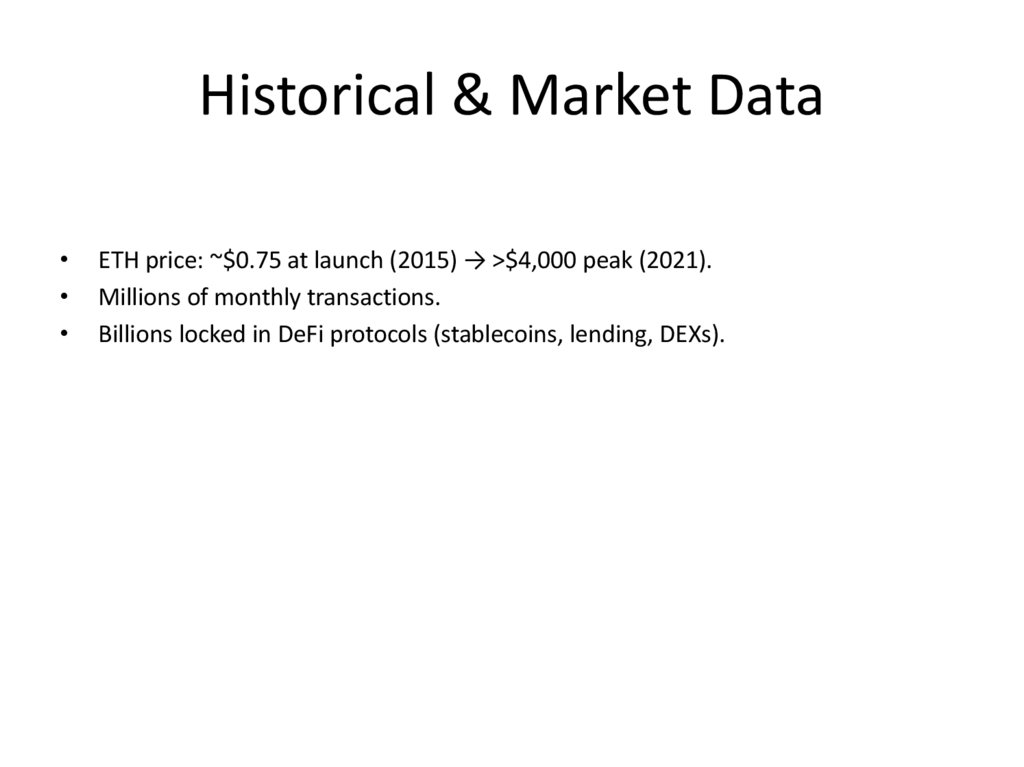
Historical & Market DataETH price: ~$0.75 at launch (2015) → >$4,000 peak (2021).
Millions of monthly transactions.
Billions locked in DeFi protocols (stablecoins, lending, DEXs).
6.
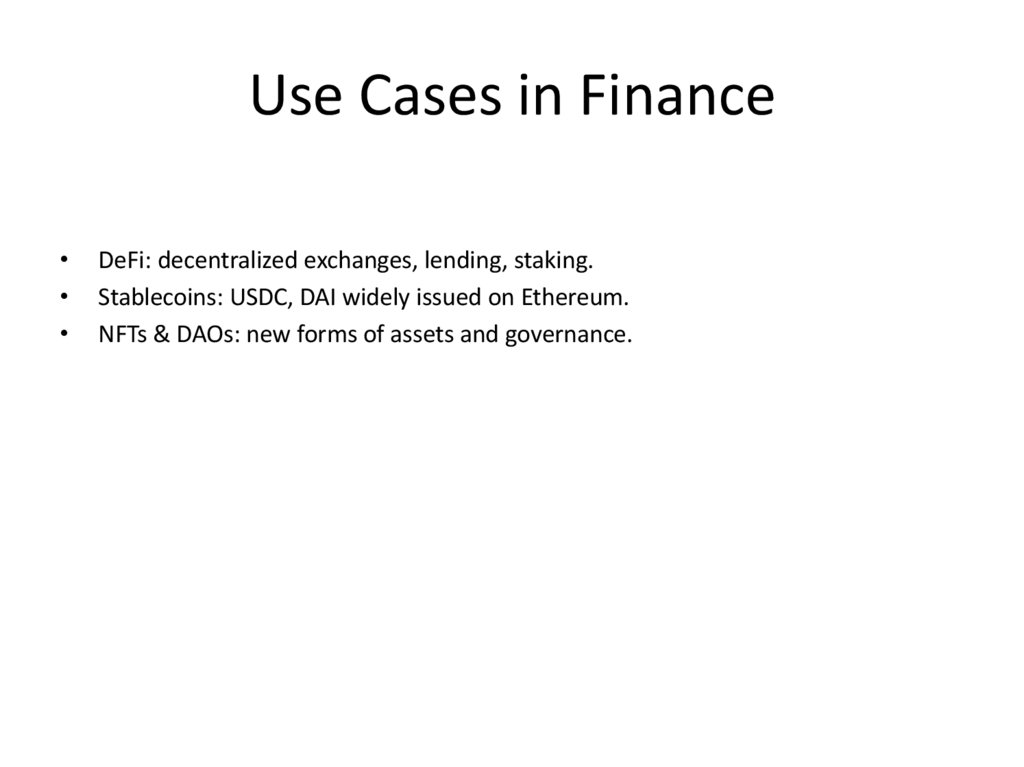
Use Cases in FinanceDeFi: decentralized exchanges, lending, staking.
Stablecoins: USDC, DAI widely issued on Ethereum.
NFTs & DAOs: new forms of assets and governance.
7.
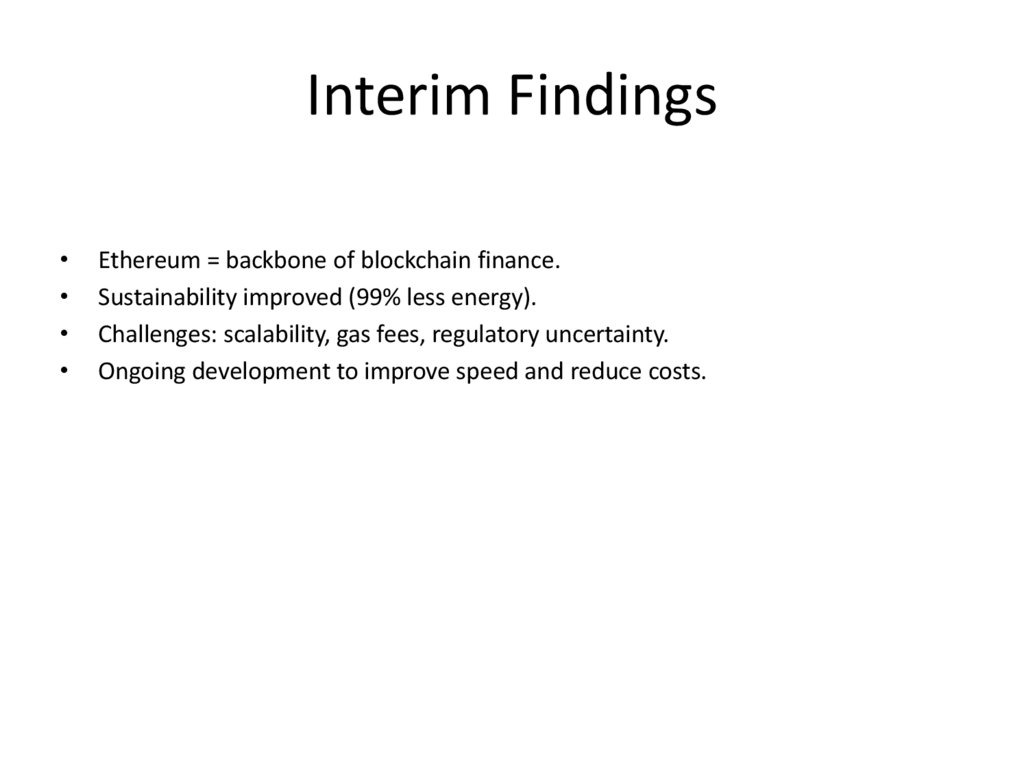
Interim FindingsEthereum = backbone of blockchain finance.
Sustainability improved (99% less energy).
Challenges: scalability, gas fees, regulatory uncertainty.
Ongoing development to improve speed and reduce costs.
8.
Next Steps & Q&AFuture analysis: scalability solutions, competition, regulation.
Comparative study with Solana, Avalanche, etc.
Open for Q&A.