





 psychology
Similar presentations:






Communication Skills
1. Communication Skills
2. Who am I?
Tatyana SokhrannayaLeading Lecturer
Head of School of Language and Communication
a PhD candidate in Management
tsokhrannaya@mdist.uz
3.
Communication Skills Moduleintroduces students to foundations of good communication in various business organizations and
settings
provides essential knowledge and skills on transmitting messages in an effective and clear way
4.
By the end of the Communication Skills Module you will be able to:1. Understand the communication process
2. Prepare various forms of communication: interview, business letters, oral presentation, and others
3. Develop an ability to speak effectively, with confidence and clarity (present information and persuasive appeals)
4. Perfect writing skills with emphasis on editing, paraphrasing, and correct citing of one’s sources
5. Enhance effectiveness in study, job search, and work-related activities through application of communication skills
6. Use communication technology appropriately and effectively
7. Appreciate the diversity and inter-cultural differences as part of the communication process.
5. How am I going to be graded?
• Class test (Mid-Term) – 20%• Group presentation - 20 %
• Final exam – 50 %
• Class participation – 10 %
6. Ground Rules
• Respect• No Food
• Be on time
• Take active part in the lecture
• ALWAYS bring your notebook and stationery as lecture notes will
affect your class participation mark
7. The process of lecture comprehension
You need to prepare for the lecture by doing some pre-lecture activities;you need to be active during the lecture by listening for the main points and making
notes;
You need to do follow-up work after the lecture has finished to consolidate
(strengthen) your understanding.
https://youtu.be/CX7-6kIXyk4?si=hDQeE8FF-0OJG-LD
8. K E Y T A K E A W A Y
KEYTAKEAWAY
• What is a lecture?
• How do you prepare for a lecture?
• What are the follow-up activities after the lecture is over?
9.
Chapter 1:Effective Business Communication
• Communication forms a part of your self-concept, and it helps you understand
yourself and others, solve problems and learn new things, and build your career.
• self-concept: What we perceive ourselves to be
10.
• Watch a short video about self-concept.• Think of what your self-concept is.
• Can your self-concept help you build a successful career?
11.
• E ective communication takes preparation, practice, andpersistence. There are many ways to learn communication
skills; the school of experience, or “hard knocks,” is one of
them.
Hard Knocks is an idiomatic phrase meaning the education one gets from life's usually negative experiences, often
contrasted with formal education.
12. Why Is It Important To Communicate Well?
• Communication is key to your success—in relationships, in the workplace, as a citizen ofyour country, and across your lifetime. Your ability to communicate comes from
experience.
• Communication Influences Your Thinking about Yourself and Others
• We may lack the words, the expressions, or the experiences to communicate e ectively.
Our perception of our ability to communicate can influence how and when we
communicate.
13. Communication Skills Are Desired by Business and Industry
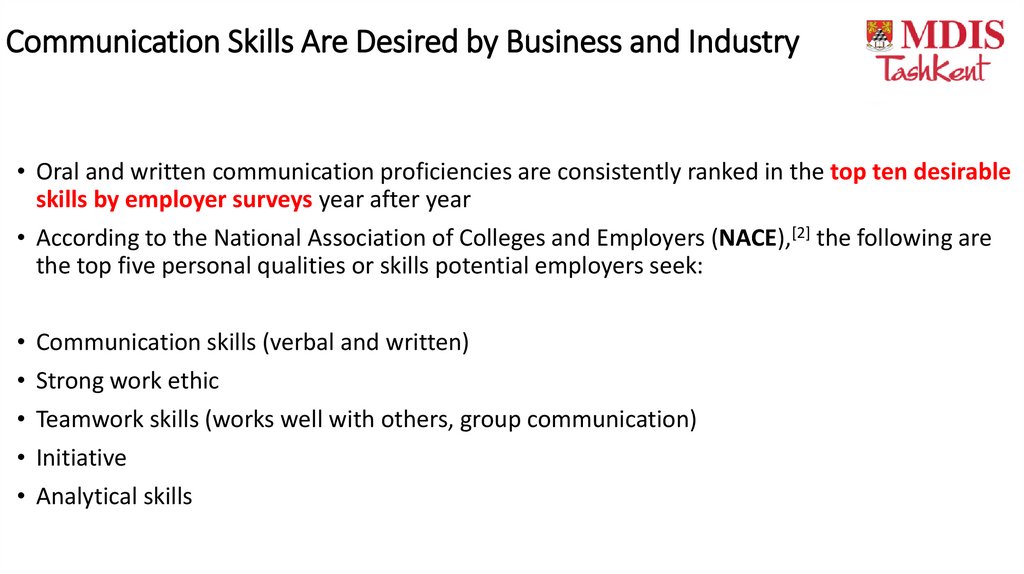
• Oral and written communication proficiencies are consistently ranked in the top ten desirableskills by employer surveys year after year
• According to the National Association of Colleges and Employers (NACE),[2] the following are
the top five personal qualities or skills potential employers seek:
• Communication skills (verbal and written)
• Strong work ethic
• Teamwork skills (works well with others, group communication)
• Initiative
• Analytical skills
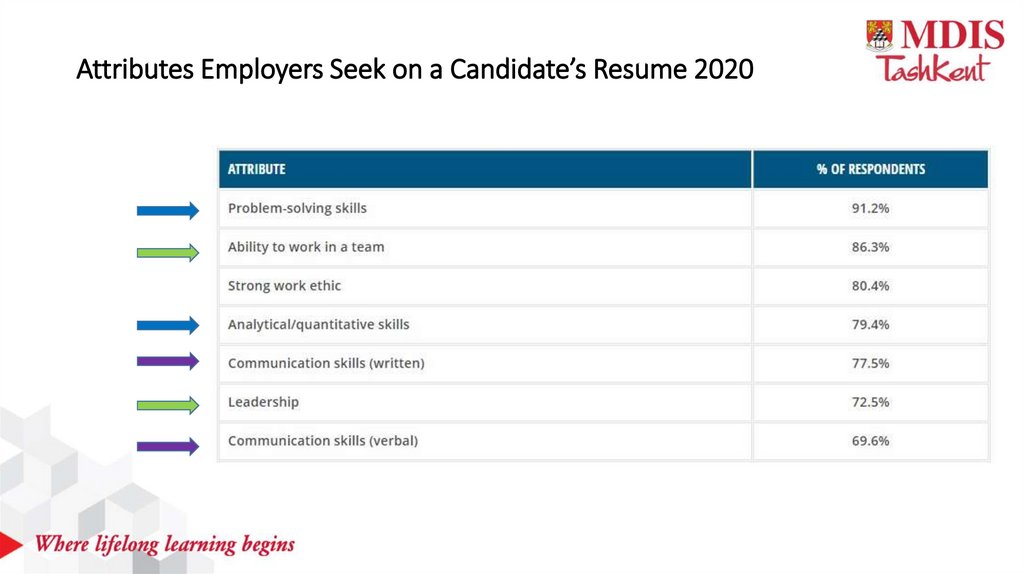
14. Attributes Employers Seek on a Candidate’s Resume 2020
15. K E Y T A K E A W A Y
KEYTAKEAWAY
• Communication forms a part of your self-concept, and it helps you
understand yourself and others, solve problems and learn new things,
and build your career.
• self-concept: What we perceive ourselves to be
16. Defining Communication
• The root of the word “communication” in Latin is communicare, which means to share, orto make common.
• Communication is defined as the process of understanding and sharing meaning.
• E ective communication is a learned skill.
• You learned what to say and when to say it by the people who surrounded you from early
on, from family and friends to the television and the Internet.
• Words that became popular may have become your words, or not. Communication habits
that others expressed may have become your habits, or not
17.
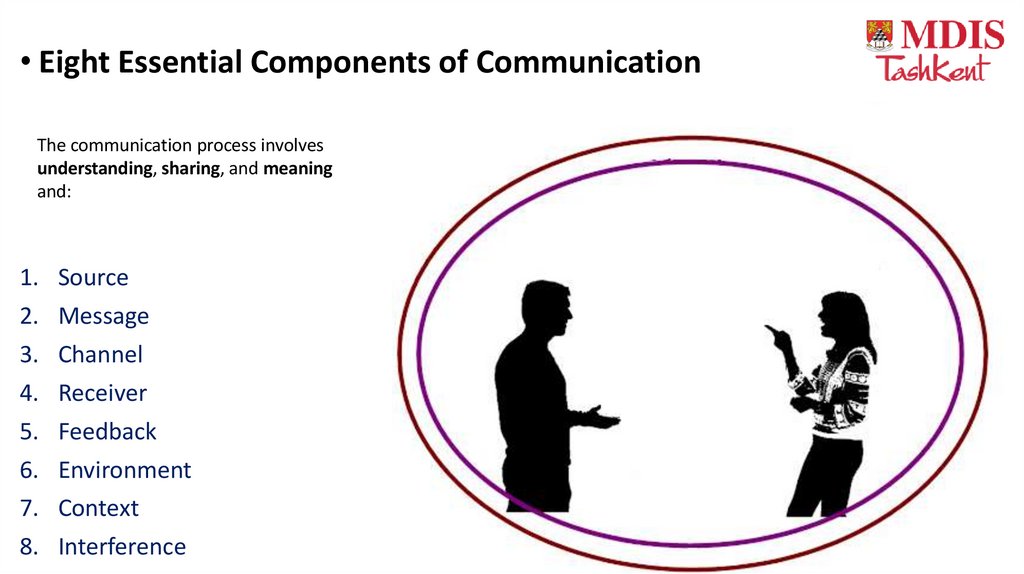
• Eight Essential Components of CommunicationThe communication process involves
understanding, sharing, and meaning
and:
1.
2.
3.
4.
5.
6.
7.
8.
Source
Message
Channel
Receiver
Feedback
Environment
Context
Interference
18.
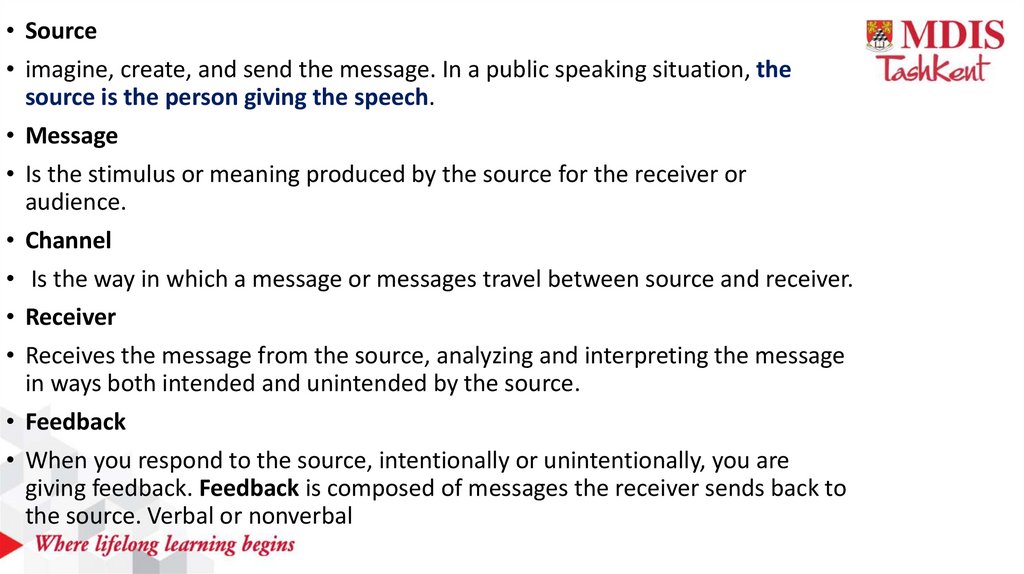
• Source• imagine, create, and send the message. In a public speaking situation, the
source is the person giving the speech.
• Message
• Is the stimulus or meaning produced by the source for the receiver or
audience.
• Channel
• Is the way in which a message or messages travel between source and receiver.
• Receiver
• Receives the message from the source, analyzing and interpreting the message
in ways both intended and unintended by the source.
• Feedback
• When you respond to the source, intentionally or unintentionally, you are
giving feedback. Feedback is composed of messages the receiver sends back to
the source. Verbal or nonverbal
19.
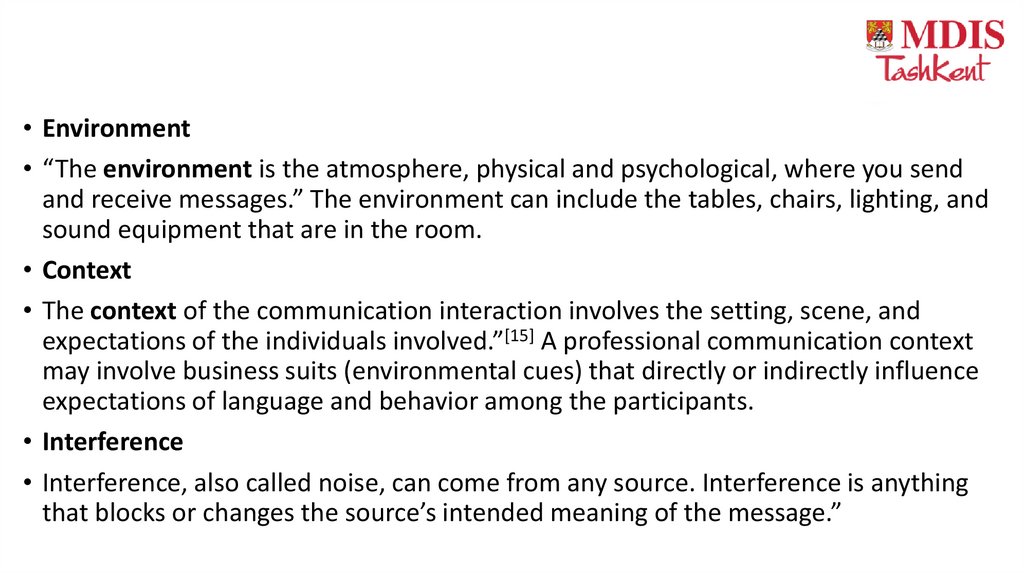
• Environment• “The environment is the atmosphere, physical and psychological, where you send
and receive messages.” The environment can include the tables, chairs, lighting, and
sound equipment that are in the room.
• Context
• The context of the communication interaction involves the setting, scene, and
expectations of the individuals involved.”[15] A professional communication context
may involve business suits (environmental cues) that directly or indirectly influence
expectations of language and behavior among the participants.
• Interference
• Interference, also called noise, can come from any source. Interference is anything
that blocks or changes the source’s intended meaning of the message.”
20.
21.
22. Models of Communication
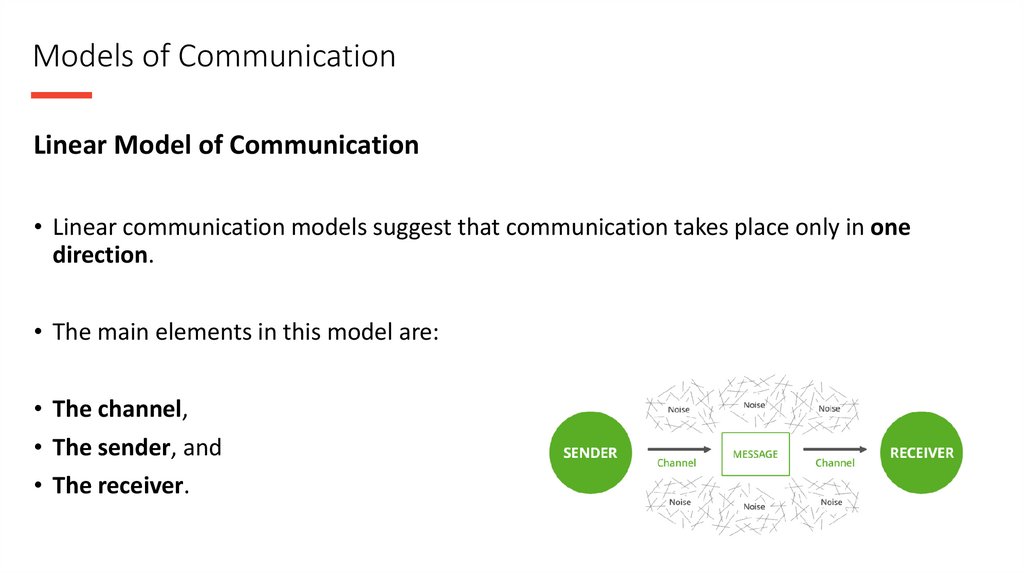
Linear Model of Communication• Linear communication models suggest that communication takes place only in one
direction.
• The main elements in this model are:
• The channel,
• The sender, and
• The receiver.
02
23. Models of Communication
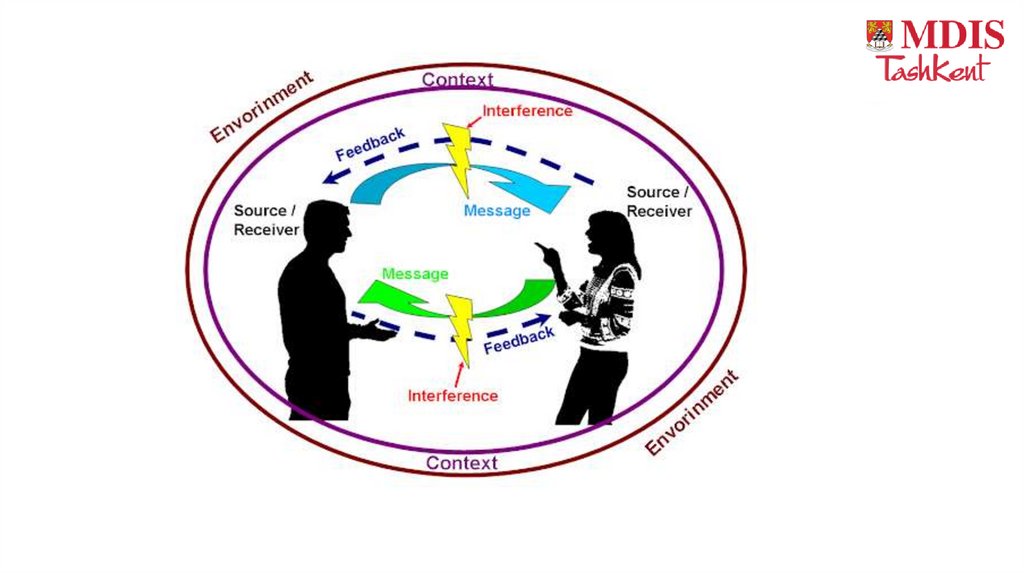
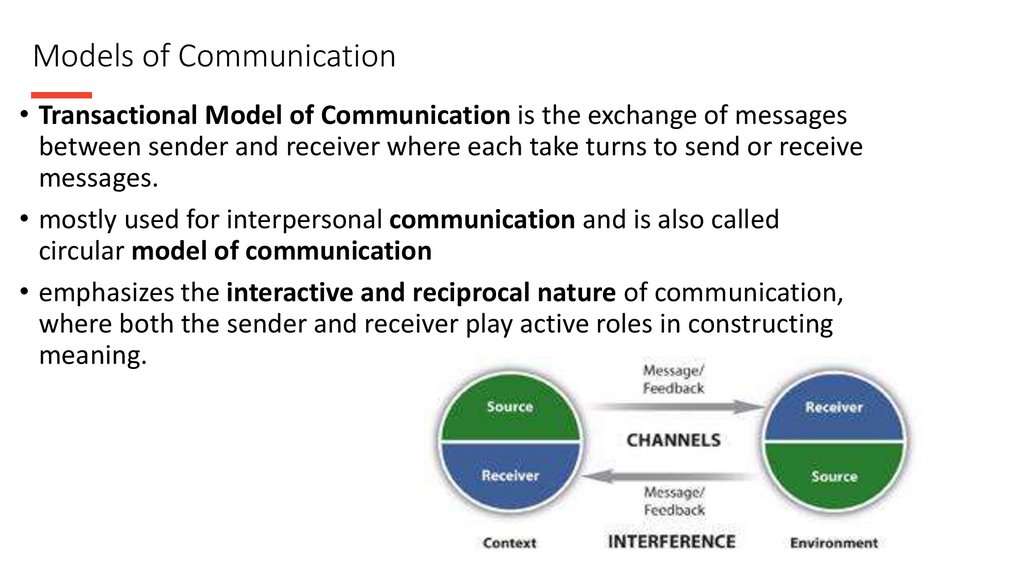
• Transactional Model of Communication is the exchange of messagesbetween sender and receiver where each take turns to send or receive
messages.
• mostly used for interpersonal communication and is also called
circular model of communication
• emphasizes the interactive and reciprocal nature of communication,
where both the sender and receiver play active roles in constructing
meaning.
24. Models of Communication
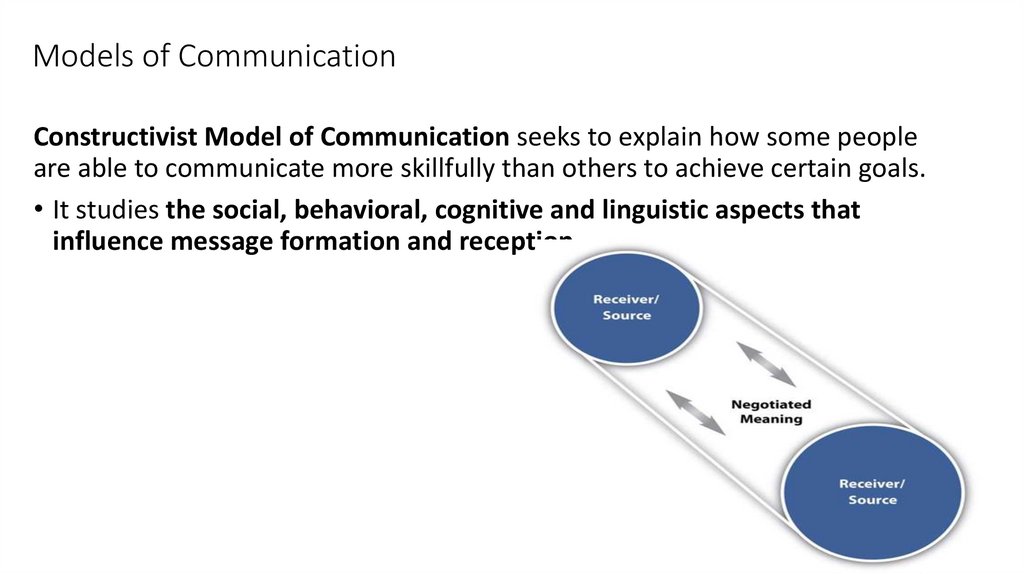
Constructivist Model of Communication seeks to explain how some peopleare able to communicate more skillfully than others to achieve certain goals.
• It studies the social, behavioral, cognitive and linguistic aspects that
influence message formation and reception.
02
25. K E Y T A K E A W A Y
KEYTAKEAWAY
• The communication process involves understanding, sharing, and
meaning, and it consists of eight essential elements: source, message,
channel, receiver, feedback, environment, context, and interference.
• Among the models of communication are the transactional process,
in which actions happen simultaneously, and the constructivist
model, which focuses on shared meaning.
26. COMMUNICATION IN CONTEXT
• Context influences the communication process.• Contexts can overlap, creating an even more dynamic process.
• You have been communicating in many of these contexts across your lifetime, and you’ll be able
to apply what you’ve learned through experience in each context to business communication.
• Context: the situation within which something exists or happens, and that can help explain it
27. Intrapersonal communication
Involves one person; it is often called “self-talk.”Communication with yourself.
Interpersonal Communication
Normally involves two people, and can range from intimate and very personal to formal
and impersonal.
Group Communication
A dynamic process where a small number of people engage in a conversation. Group
communication is generally defined as involving three to eight people.
28.
Public communicationCommunication in which one person speaks or writes a message to a group of people.
It is sender focused and typically occurs when one person conveys information to an
audience.
Mass communication
Involves sending a single message to a group. It occurs when messages are sent to large
audiences using print or electronic media.
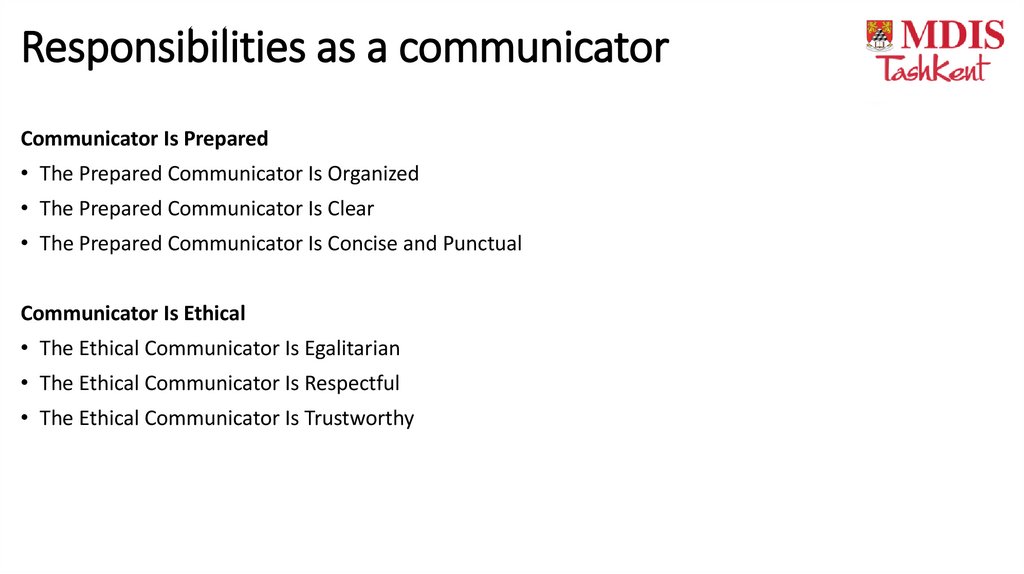
29. Responsibilities as a communicator
Communicator Is Prepared• The Prepared Communicator Is Organized
• The Prepared Communicator Is Clear
• The Prepared Communicator Is Concise and Punctual
Communicator Is Ethical
• The Ethical Communicator Is Egalitarian
• The Ethical Communicator Is Respectful
• The Ethical Communicator Is Trustworthy
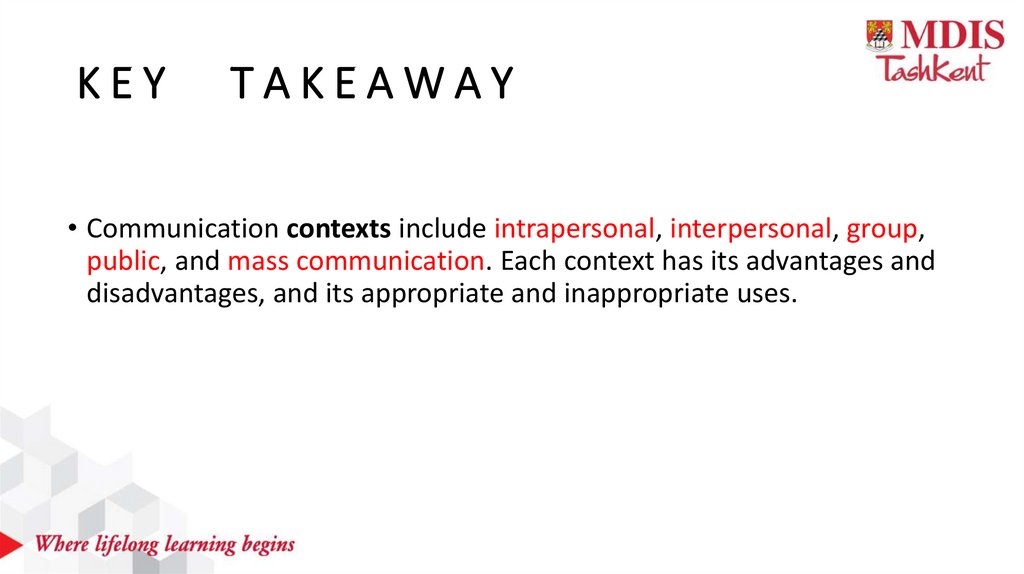
30. K E Y T A K E A W A Y
KEYTAKEAWAY
• Communication contexts include intrapersonal, interpersonal, group,
public, and mass communication. Each context has its advantages and
disadvantages, and its appropriate and inappropriate uses.