
 finance
Similar presentations:







Problems and Countermeasures in Financial Accounting of Publicly Financed Institutions
1. Problems and Countermeasures in Financial Accounting of Publicly Financed Institutions
Guo LongchaoMaster's Thesis Defense – Belarus State
Economic University, 2025
z
Problems and
Countermeasures in
Financial Accounting of
Publicly Financed
Institutions
2.
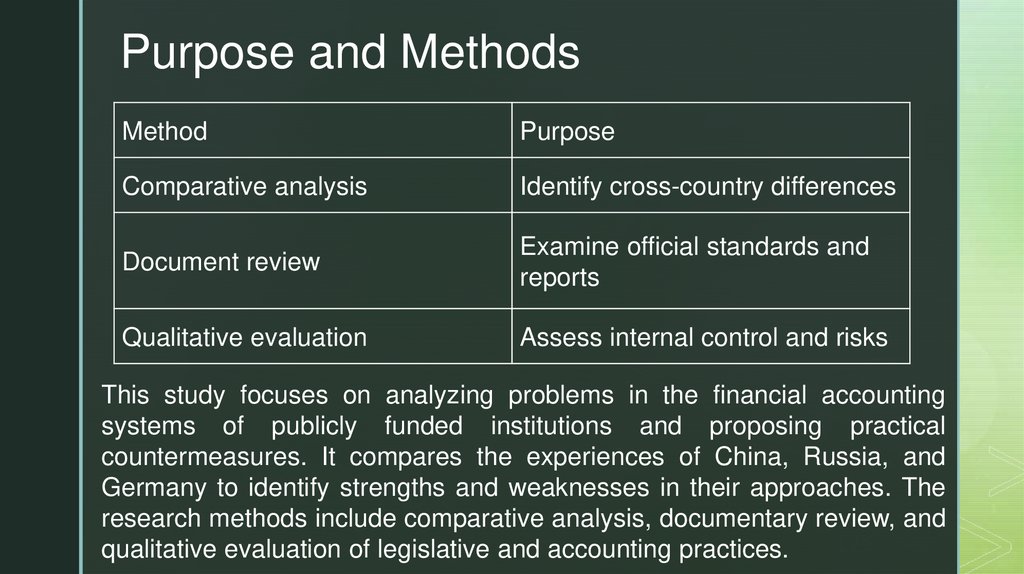
Purpose and MethodsMethod
Purpose
Comparative analysis
Identify cross-country differences
Document review
Examine official standards and
reports
Qualitative evaluation
Assess internal control and risks
This study focuses on analyzing problems in the financial accounting
systems of publicly funded institutions and proposing practical
countermeasures. It compares the experiences of China, Russia, and
Germany to identify strengths and weaknesses in their approaches. The
research methods include comparative analysis, documentary review, and
qualitative evaluation of legislative and accounting practices.
3.
The Role of Public Sector AccountingFinancial accounting in publicly funded institutions
ensures transparency, accountability, and effective
use of budgetary resources.
Unlike commercial entities, these institutions are
responsible not to shareholders, but to the public.
Their accounting must comply with strict legal and
regulatory frameworks to guarantee the proper use
of funds.
4.
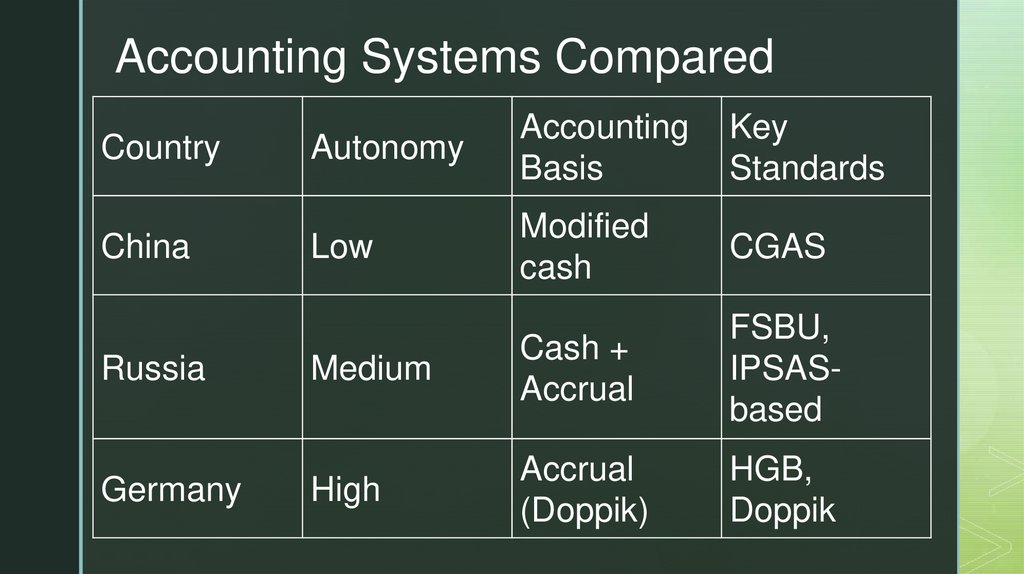
Accounting Systems ComparedCountry
China
Russia
Germany
Autonomy
Accounting
Basis
Key
Standards
Low
Modified
cash
CGAS
Medium
Cash +
Accrual
FSBU,
IPSASbased
High
Accrual
(Doppik)
HGB,
Doppik
5.
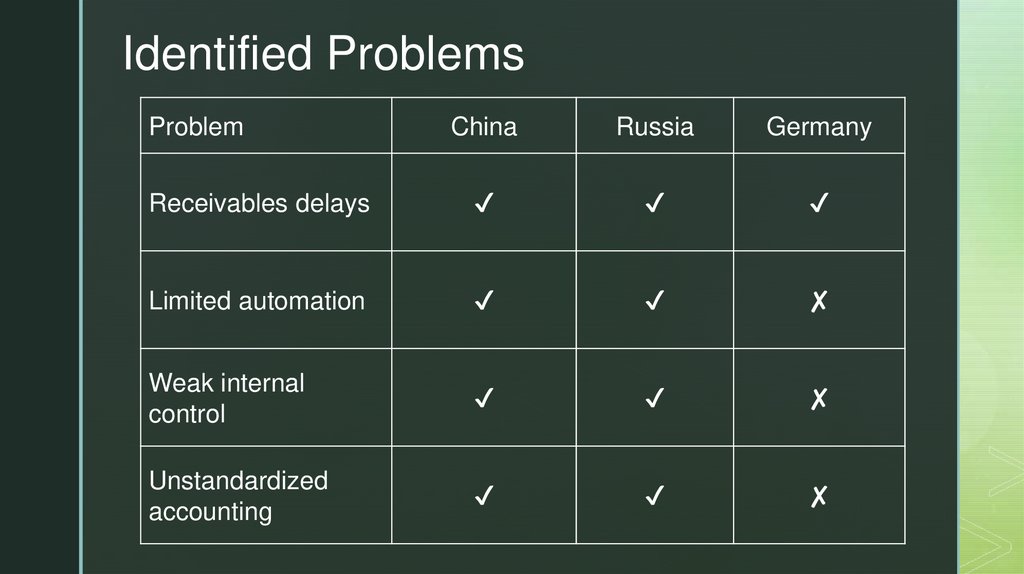
Identified ProblemsProblem
China
Russia
Germany
Receivables delays
✔
✔
✔
Limited automation
✔
✔
✘
Weak internal
control
✔
✔
✘
Unstandardized
accounting
✔
✔
✘
6.
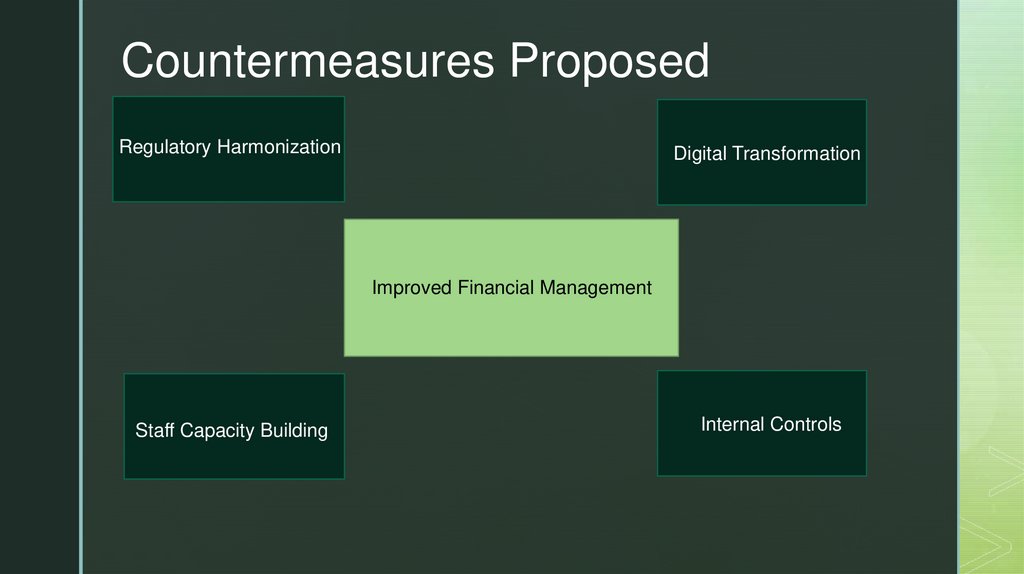
Countermeasures ProposedRegulatory Harmonization
Digital Transformation
Improved Financial Management
Staff Capacity Building
Internal Controls
7.
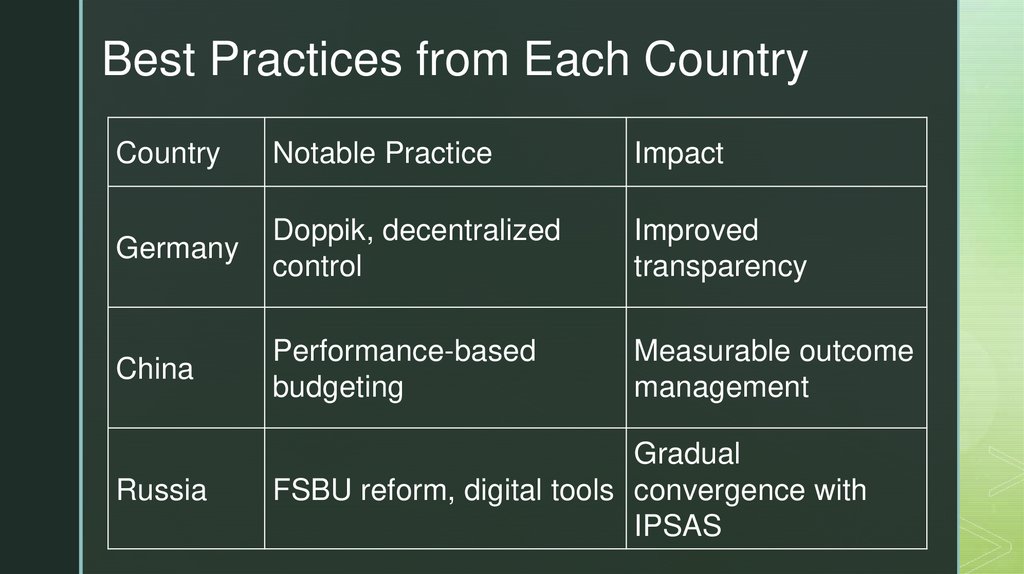
Best Practices from Each CountryCountry
Notable Practice
Impact
Germany
Doppik, decentralized
control
Improved
transparency
China
Performance-based
budgeting
Measurable outcome
management
Russia
Gradual
FSBU reform, digital tools convergence with
IPSAS