 english
Similar presentations:



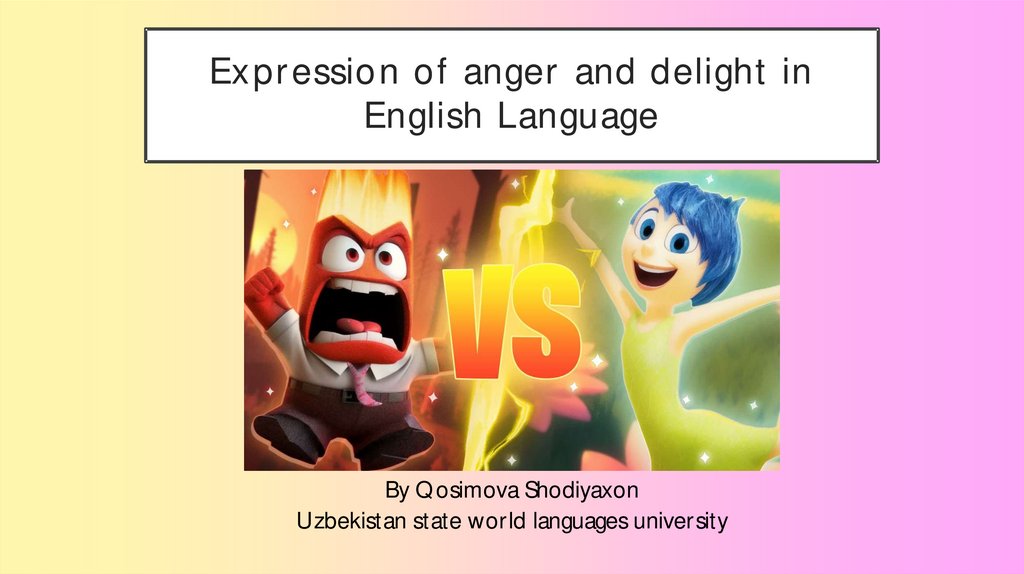
Expression of anger and delight in English Language
1.
Expression of anger and delight inEnglish Language
By Qosimova Shodiyaxon
Uzbekistan state world languages university
2.
INTRODUCTION⚬
basically, our emotions drive us
(Paul Ekman 1970)
⚬Understanding emotional expression is crucial for communication and social interaction. It also reveals deep
insights into human psychology
⚬This study focuses on two contrasting emotions: ANGER and DELIGHT
3.
RELEVANCE OF THE TOPIC⚬Emotions shape tone, intent, and clarity in communication
⚬Understanding emotive language helps in:
- Translation and interpretation
- Language learning and teaching
- Cross-cultural communication
⚬Increase relevance of emotional intelligence in communication studies
4.
AN OBJECT AND A SUBJECT OF THERESEARCH
Object: two conrtrasting emotions as ANGER and DELIGHT
Subject:
-lexical units ( emotionally loaded adjectives, idioms and interjections)
-syntactic structures( imperative, exclamatory sentences and rhetorical devices)
-prosodic features( intonation, stress, pitch)
-discourse level (sarcasm, irony, intensification, mitigation)
5.
AIM OF THE SUBJECT1.analyze and classify the linguistic strategies used to express anger and delight in English
2.compare the stylistic and pragmatic features of these emotional expressions in spoken and written forms.
3.assess how social context (formal vs. informal, public vs. private) influences the choice of language in emotional
expression.
4.consider the role of cultural conventions and norms in shaping the expression of these emotions in Englishspeaking environments.
5.compile and categorize a corpus of authentic language data illustrating expressions of anger and delight.
6.
STRUCTURE OF THE WORK⚬Introduction
⚬Chapter 1: Theoretical Bases
⚬Chapter 2: Linguistic features
⚬Chapter 3: Anger and Delight in Literary Text
⚬Conclusion
7.
THEORETICAL FRAMEWORK⚬Based on theories by:
-Paul Ekman (basic emotions)
- Wierzbicka (emotions in language and culture)
- Lakoff&Johnson (conceptual metaphors)
⚬Emotive language includes lexis, syntax, intonation, and pragmatics
8.
EMPTIONS AS A PSYCOLOGICALPHENOMENON
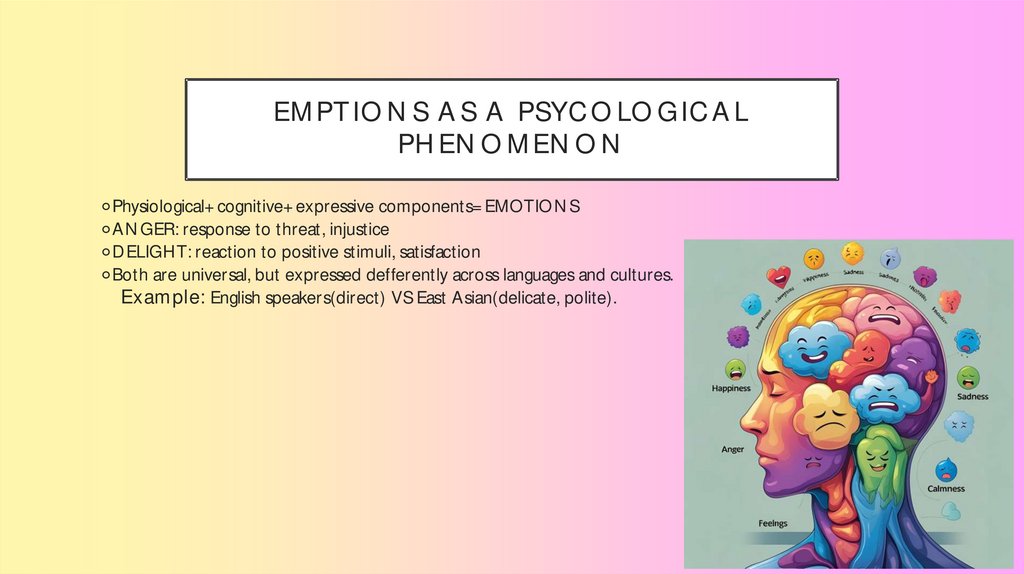
⚬Physiological+cognitive+expressive components=EMOTIONS
⚬ANGER: response to threat, injustice
⚬DELIGHT: reaction to positive stimuli, satisfaction
⚬Both are universal, but expressed defferently across languages and cultures.
Example: English speakers(direct) VS East Asian(delicate, polite).
9.
LINGUISTIC EXPRESSION OF ANGER⚬
⚬
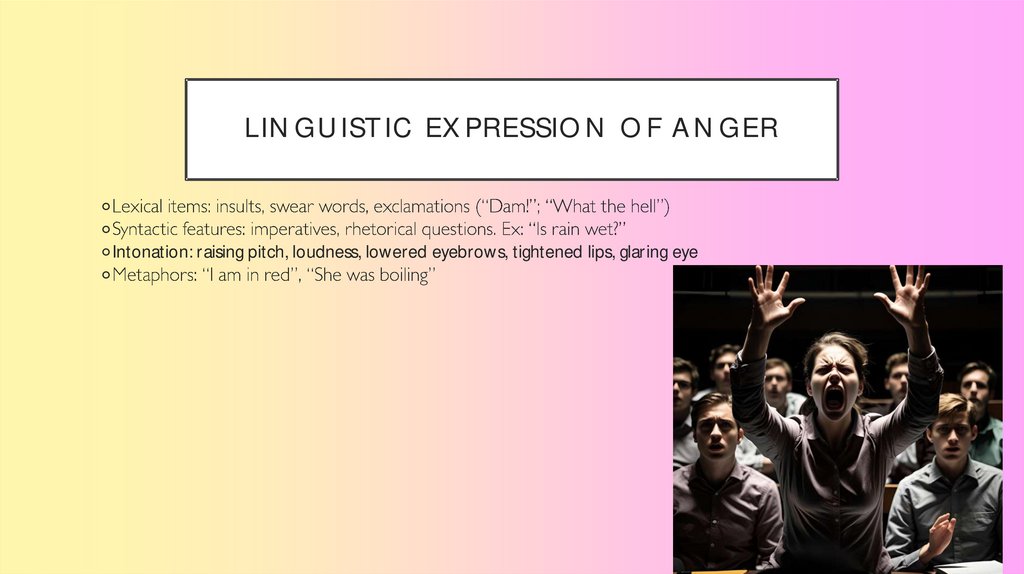
⚬Intonation: raising pitch, loudness, lowered eyebrows, tightened lips, glaring eye
⚬
10.
LINGUISTIC EXPRESSION OF DELIGHT⚬
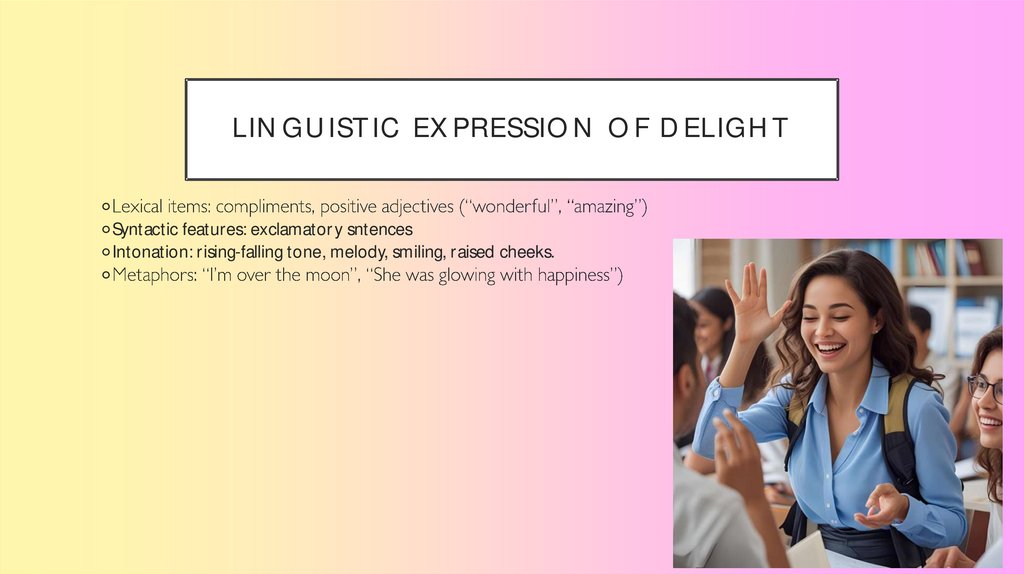
⚬Syntactic features: exclamatory sntences
⚬Intonation: rising-falling tone, melody, smiling, raised cheeks.
⚬
11.
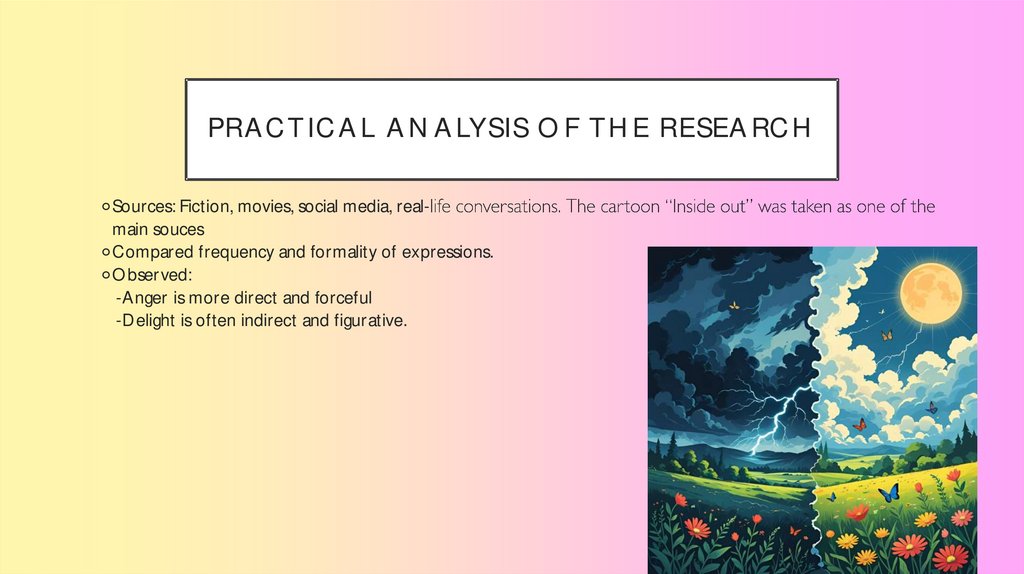
PRACTICAL ANALYSIS OF THE RESEARCH⚬Sources: Fiction, movies, social media, realmain souces
⚬Compared frequency and formality of expressions.
⚬Observed:
-Anger is more direct and forceful
-Delight is often indirect and figurative.
12.
BEYOND THE LITERAL: METAPHORS ANDMETONYMIES
Anger Metaphors:
⚬A Volcano (this emphasizes the build-up of
pressure and the eventual eruption of anger. )
⚬A raging storm (highlights the destructive
and overwhelming nature of anger, suggesting it
can be chaotic and uncontrollable).
⚬A caged animal (his metaphor highlights the
feeling of being trapped or restricted, which
can lead to anger. )
Delight Metaphors
⚬A heart-stopping moment (Highlights
the intensity of the emotion)
⚬Brightened up (Indicates a sudden
increase in happiness)
⚬Heart overflowing (Suggests a feeling of
intense happiness that is almost too much to
contain)
13.
KEY FINDINGS OF THE RESEARCHWhat was achieved?
⚬Linguistic strategies used to express anger and delight in English
⚬Comparison of stylistic and idiomatic features of these emotional expressions
⚬Emotions as a psychological phenomenon
⚬What is Emotional Intelligence?
⚬Assessement of how social context and culture influence the choice of language
in emotional expression
14.
CONCLUSION⚬The expression of anger and delight in English is a rich
linguistic phenomenon that reveals not only the structure of
the language but also the values, emotional tendencies, and
cultural norms of its speakers.
15.
THANK YOU FOR YOUR ATTENTION!ANY QUESTIONS ARE WELCOMED!