

 informatics
Similar presentations:









Deepfakes: Threats and Solutions
1.
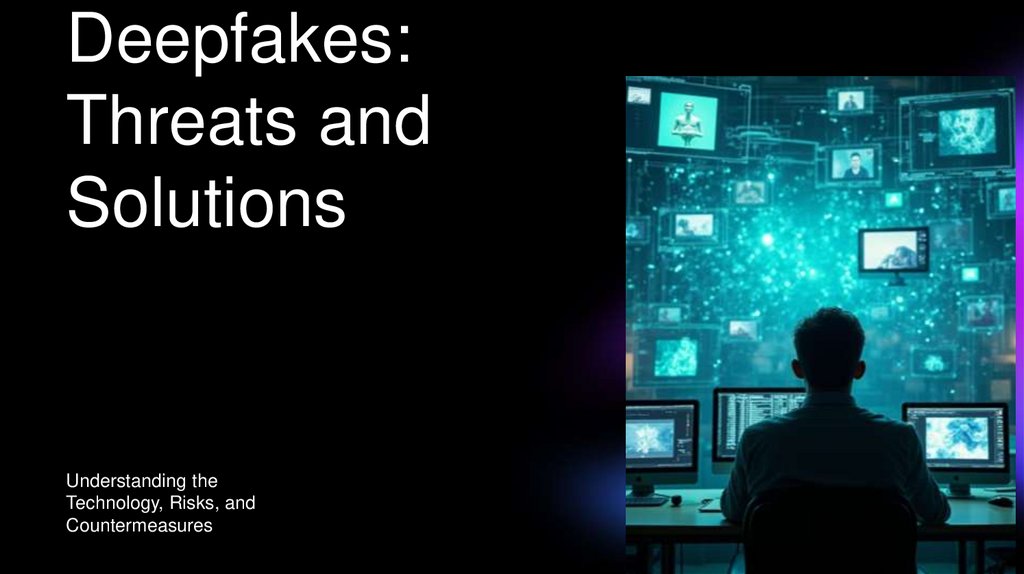
Deepfakes:Threats and
Solutions
Understanding the
Technology, Risks, and
Countermeasures
2.
Introduction3.
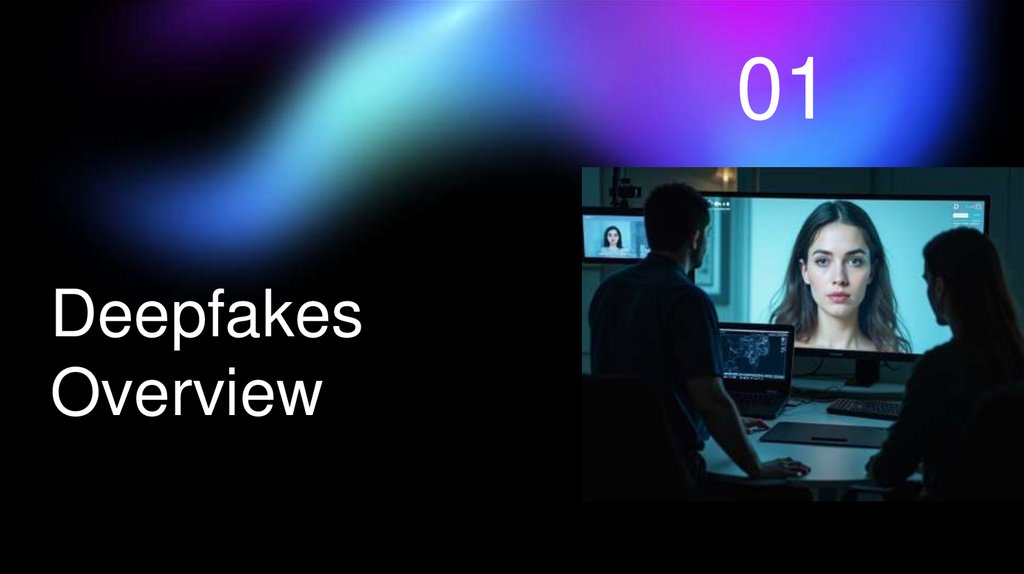
01Deepfakes
Overview
4.
Definition and ExplanationDeepfakes refer to AI-generated synthetic media that can create
realistic videos or audio of individuals saying or doing things they
have never actually said or done. The technology typically utilizes
deep learning and artificial intelligence to produce these alterations,
often making it increasingly difficult for viewers to discern authenticity.
5.
Mechanism Behind DeepfakesThe process of creating deepfakes massively relies on
Generative Adversarial Networks (GANs). These networks
consist of two neural networks: a 'generator' that creates fake
content and a 'discriminator' that evaluates its authenticity.
Additionally, methods like facial mapping and voice synthesis
are often employed to enhance the realism of the output,
allowing for the seamless integration of manipulated images
and sounds.
6.
Impactful ExamplesNotable instances of deepfakes include manipulated videos of
politicians making controversial statements, which have led to
widespread misinformation. Additionally, deepfakes have been used
to create non-consensual explicit content featuring celebrities,
resulting in severe personal and professional repercussions. These
examples underscore the potential for deepfakes to cause significant
harm to reputation and trust in public figures.
7.
02Challenges and
Solutions
8.
Negative ApplicationsDeepfakes pose serious threats across various domains. They are
frequently used in misinformation campaigns to create false
narratives, particularly in politics, where fabricated speeches can
influence public opinion. In business, deepfakes have been tied to
fraud, with criminals impersonating executives to manipulate
stakeholders or misappropriate funds. Furthermore, deepfakes
jeopardize personal privacy and consent, complicating the landscape
of media ethics.
9.
Detection MethodsDetecting deepfakes involves identifying visual and audio
irregularities. Key indicators include inconsistent lighting, unnatural
facial movements, or discrepancies in voice synchronization. Tools
such as AI-driven detection algorithms, including Microsoft Video
Authenticator and other forensic technologies, are vital in recognizing
manipulated media. Furthermore, enhancing digital literacy and
awareness among the public can empower individuals to better
evaluate media authenticity.
10.
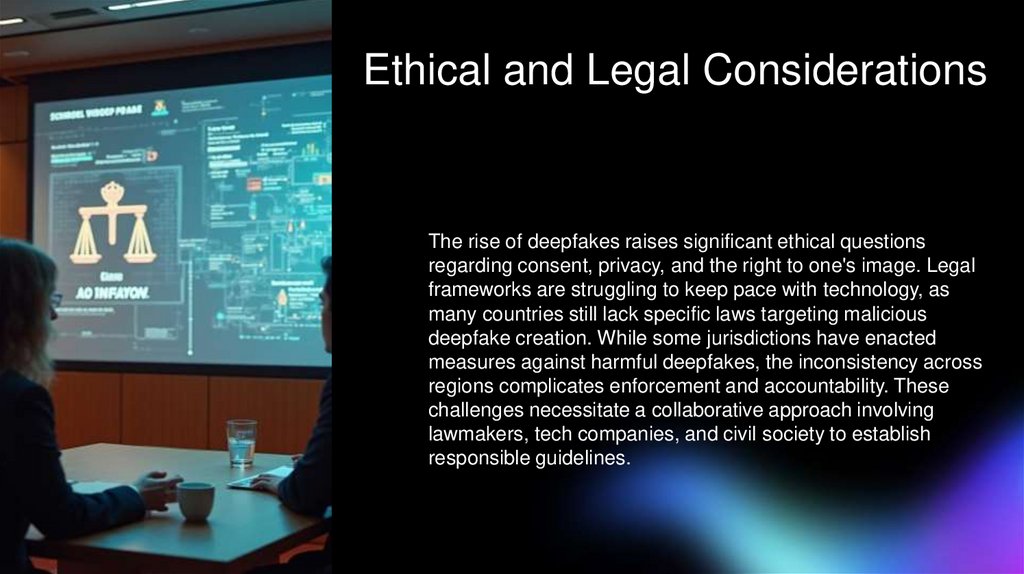
Ethical and Legal ConsiderationsThe rise of deepfakes raises significant ethical questions
regarding consent, privacy, and the right to one's image. Legal
frameworks are struggling to keep pace with technology, as
many countries still lack specific laws targeting malicious
deepfake creation. While some jurisdictions have enacted
measures against harmful deepfakes, the inconsistency across
regions complicates enforcement and accountability. These
challenges necessitate a collaborative approach involving
lawmakers, tech companies, and civil society to establish
responsible guidelines.
11.
ConclusionsIn summary, deepfakes represent a dual-edged sword, offering both
innovative applications and substantial risks. As technology
advances, ongoing vigilance is essential to mitigate the adverse
effects of deepfakes while harnessing their potential for positive use.
Establishing ethical guidelines and effective detection methods is
crucial in navigating the challenges posed by this technology.
12.
Thank you!Do you have any questions?
CREDITS: This presentation template was
created by Slidesgo, and includes icons,
infographics & images by Freepik
+00 000 000 000