

 marketing
Similar presentations:








The Impact of Privacy Infringement in Digital Marketing on Brand Image
1.
The Impact of PrivacyInfringement in Digital
Marketing on Brand Image
In today's data-driven marketing landscape, consumer concerns over privacy
infringement have become critical factors shaping brand perceptions and loyalty.
This research examines how perceived misuse of consumer data triggers emotional
reactions that subsequently harm brand image through the mediating effect of
negative word-of-mouth (NWOM).
By integrating the Stimulus-Organism-Response (S-O-R) framework with Attribution
Theory, this study explores the process linking privacy violations to broader brand
reputation damage via consumer communication behaviors. The research also
incorporates a cross-cultural perspective by comparing reactions from consumers in
the USA and Europe, where regulatory environments and cultural attitudes toward
privacy differ significantly.
2.
3.
Theoretical Significance and Practical ValueTheoretical Contributions
Practical Applications
This research addresses a crucial gap by examining how privacy
From a managerial perspective, this study provides actionable
violations trigger emotional reactions that harm brand image
insights for brands operating in digitally intensive markets. The
through NWOM. While prior studies have explored privacy and
findings will help organizations recognize the critical
trust, relatively few have systematically investigated the process
importance of privacy protection not only as a compliance
linking privacy violations to brand reputation damage via
requirement but as a key driver of consumer trust and brand
consumer communication behaviors.
loyalty.
By applying established psychological theories in a digital
Understanding the role of NWOM in amplifying the
marketing context, this study contributes to a deeper
consequences of privacy breaches allows companies to design
understanding of the emotional and communicative
more effective crisis management and communication
mechanisms that drive consumer responses to privacy
strategies, including transparent data policies and quick
infringements.
response mechanisms.
4.
Literature review1. Privacy Infringement in Digital Marketing
Refers to unauthorized use or mishandling of
consumer data.
Studies show it reduces consumer trust and
leads to negative reactions (Martin & Murphy,
2017; Okazaki et al., 2009).
2. Negative Word of Mouth (NWOM)
Occurs when consumers share unfavorable
experiences with others.
Triggered by unethical practices like privacy
violations (Wetzer et al., 2007).
NWOM spreads quickly through digital
platforms and strongly influences brand
perception.
3. Brand Image
Represents consumers’ perceptions and attitudes
toward a brand.
Affected by both direct experiences and external
opinions (Keller, 1993).
Negative events or public complaints can damage
brand image (Lau & Lee, 1999).
4. Mediating Role of NWOM
NWOM often acts as a channel through which
privacy issues affect brand reputation.
Prior studies support the mediating effect of word
of mouth in similar contexts (Cheung & Thadani,
2012).
5.
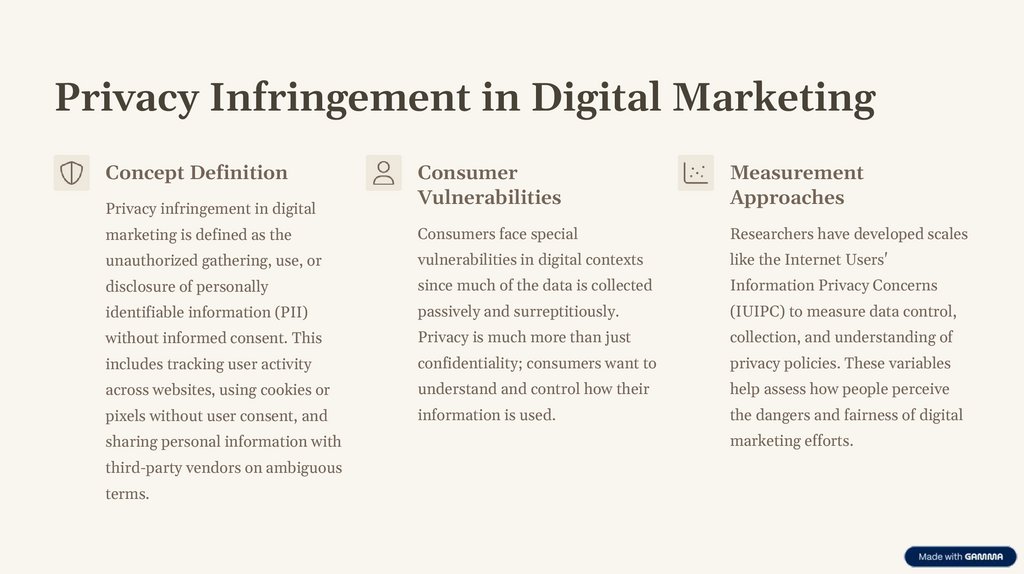
Privacy Infringement in Digital MarketingConcept Definition
Consumer
Vulnerabilities
Measurement
Approaches
marketing is defined as the
Consumers face special
Researchers have developed scales
unauthorized gathering, use, or
vulnerabilities in digital contexts
like the Internet Users'
disclosure of personally
since much of the data is collected
Information Privacy Concerns
identifiable information (PII)
passively and surreptitiously.
(IUIPC) to measure data control,
without informed consent. This
Privacy is much more than just
collection, and understanding of
includes tracking user activity
confidentiality; consumers want to
privacy policies. These variables
across websites, using cookies or
understand and control how their
help assess how people perceive
pixels without user consent, and
information is used.
the dangers and fairness of digital
Privacy infringement in digital
sharing personal information with
third-party vendors on ambiguous
terms.
marketing efforts.
6.
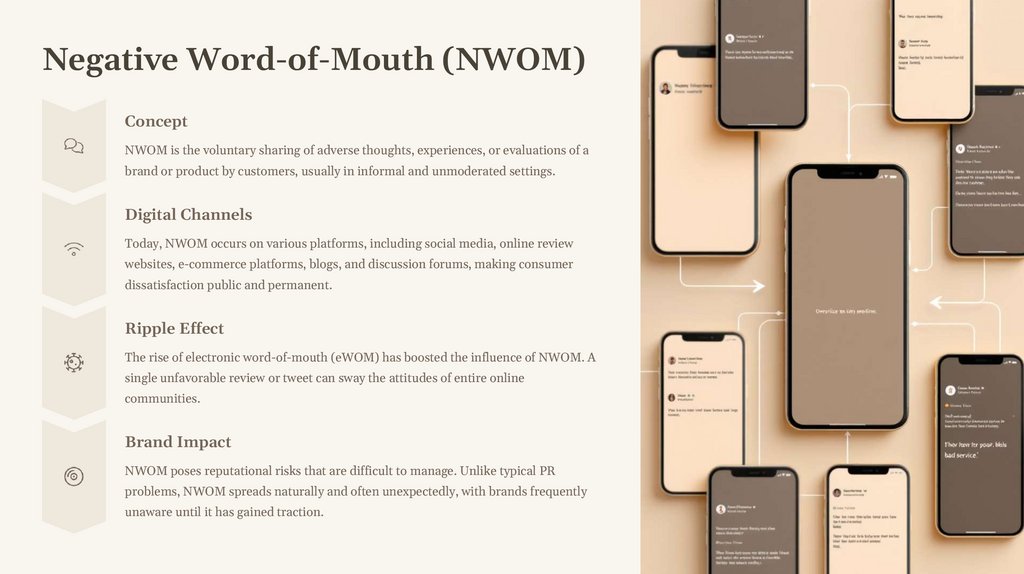
Negative Word-of-Mouth (NWOM)Concept
NWOM is the voluntary sharing of adverse thoughts, experiences, or evaluations of a
brand or product by customers, usually in informal and unmoderated settings.
Digital Channels
Today, NWOM occurs on various platforms, including social media, online review
websites, e-commerce platforms, blogs, and discussion forums, making consumer
dissatisfaction public and permanent.
Ripple Effect
The rise of electronic word-of-mouth (eWOM) has boosted the influence of NWOM. A
single unfavorable review or tweet can sway the attitudes of entire online
communities.
Brand Impact
NWOM poses reputational risks that are difficult to manage. Unlike typical PR
problems, NWOM spreads naturally and often unexpectedly, with brands frequently
unaware until it has gained traction.
7.
Brand Image in the Digital AgeBrand Differentiation
Symbolic and emotional values create competitive advantage
Co-creation by Consumers
Social media enables consumer participation in brand narratives
Emotional Associations
Subjective perceptions based on values and experiences
Mental Representation
Combined experiences, marketing messages, and social impact
Brand image serves as a shortcut in consumer decision-making, allowing people to rely on familiar associations rather than weighing all options from scratch. In
the digital age, brand image is increasingly co-created by consumers rather than businesses. This democratization introduces complexity but also opportunity: if
handled well, it may foster authenticity and community around a brand.
8.
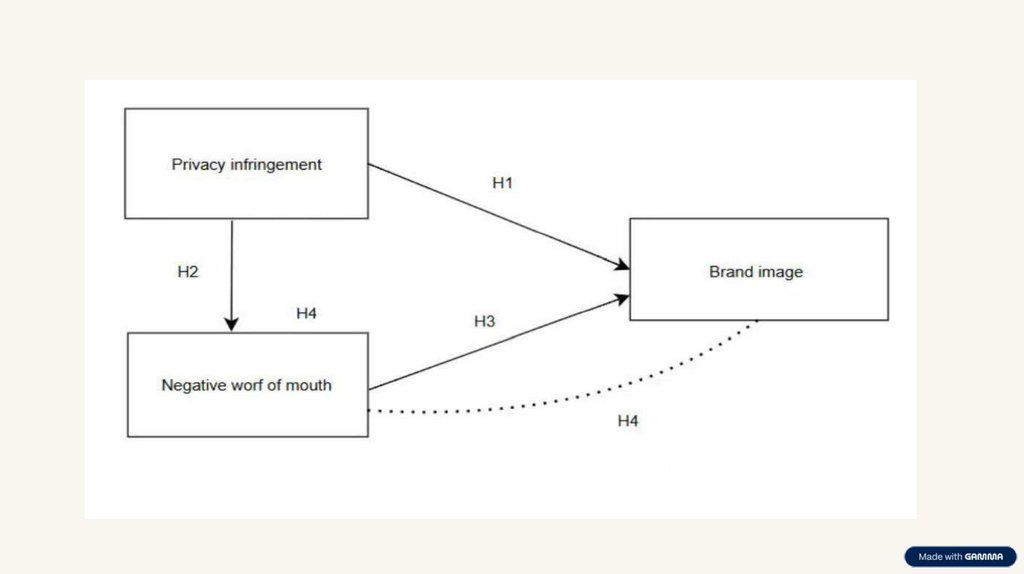
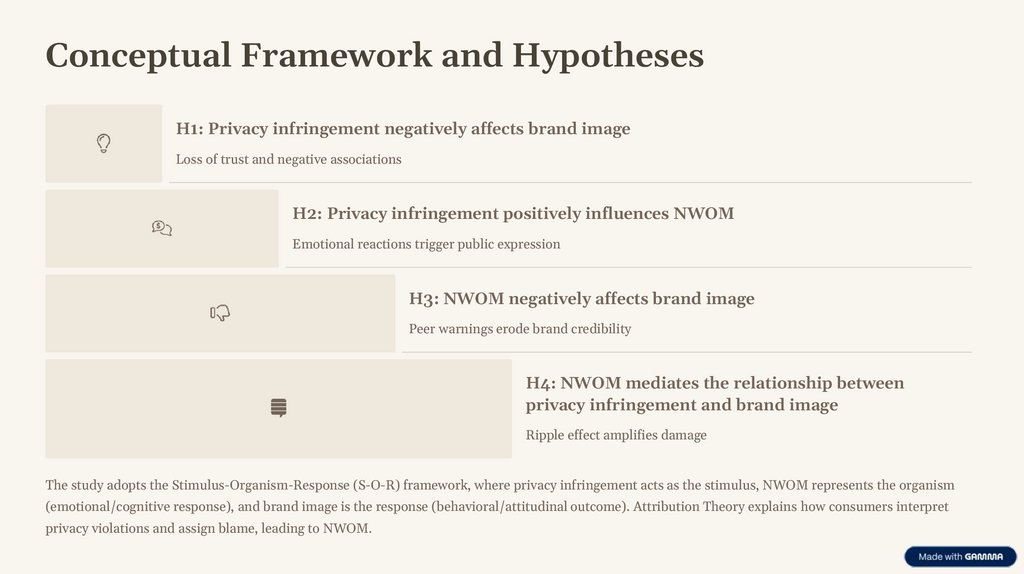
Conceptual Framework and HypothesesH1: Privacy infringement negatively affects brand image
Loss of trust and negative associations
H2: Privacy infringement positively influences NWOM
Emotional reactions trigger public expression
H3: NWOM negatively affects brand image
Peer warnings erode brand credibility
H4: NWOM mediates the relationship between
privacy infringement and brand image
Ripple effect amplifies damage
The study adopts the Stimulus-Organism-Response (S-O-R) framework, where privacy infringement acts as the stimulus, NWOM represents the organism
(emotional/cognitive response), and brand image is the response (behavioral/attitudinal outcome). Attribution Theory explains how consumers interpret
privacy violations and assign blame, leading to NWOM.
9.
Research MethodologyResearch Design
Measurement Tools
A quantitative, cross-sectional
The survey will include validated
approach using a structured
instruments such as the Internet
questionnaire distributed online to
Users' Information Privacy Concerns
consumers familiar with digital
(IUIPC) scale, alongside measures
marketing and privacy concerns. The
for NWOM frequency and brand
study targets approximately 300
image perceptions. 5- or 7-point
participants from the USA and
Likert scale responses will be used
Europe to ensure a diverse and
with reliability and validity checks.
representative sample.
Data Analysis Techniques
Structural Equation Modeling (SEM) will be employed to test complex models
involving multiple mediating relationships. This enables simultaneous
assessment of direct and indirect effects, providing a comprehensive
understanding of the relationships between variables.
10.
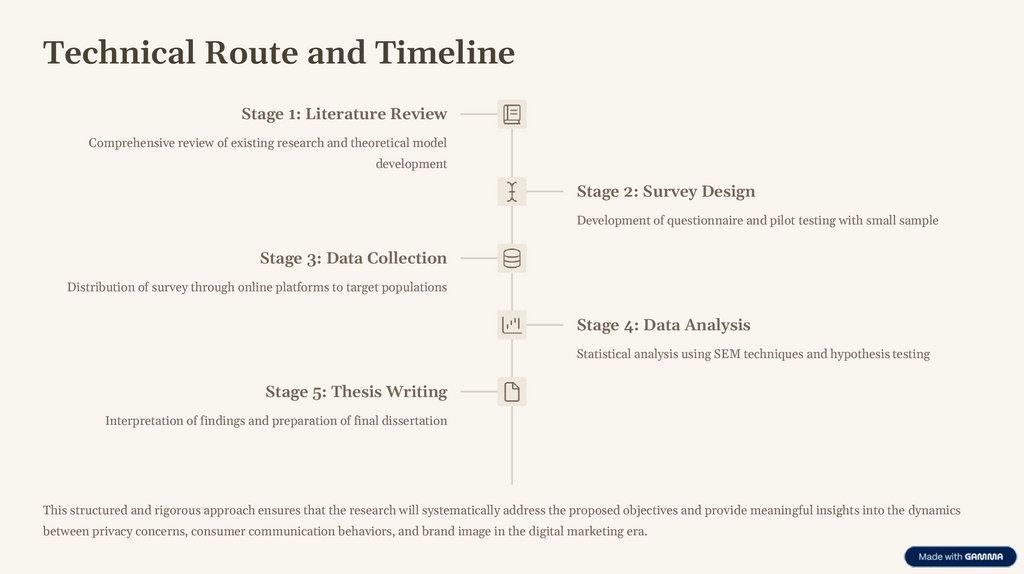
Technical Route and TimelineStage 1: Literature Review
Comprehensive review of existing research and theoretical model
development
Stage 2: Survey Design
Development of questionnaire and pilot testing with small sample
Stage 3: Data Collection
Distribution of survey through online platforms to target populations
Stage 4: Data Analysis
Statistical analysis using SEM techniques and hypothesis testing
Stage 5: Thesis Writing
Interpretation of findings and preparation of final dissertation
This structured and rigorous approach ensures that the research will systematically address the proposed objectives and provide meaningful insights into the dynamics
between privacy concerns, consumer communication behaviors, and brand image in the digital marketing era.
11.
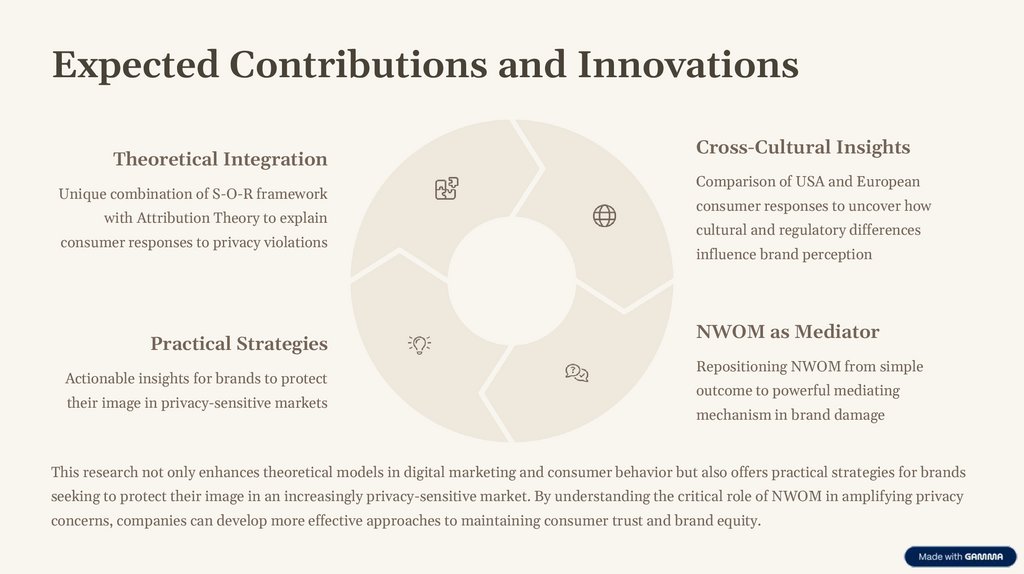
Expected Contributions and InnovationsTheoretical Integration
Unique combination of S-O-R framework
with Attribution Theory to explain
consumer responses to privacy violations
Practical Strategies
Actionable insights for brands to protect
their image in privacy-sensitive markets
Cross-Cultural Insights
Comparison of USA and European
consumer responses to uncover how
cultural and regulatory differences
influence brand perception
NWOM as Mediator
Repositioning NWOM from simple
outcome to powerful mediating
mechanism in brand damage
This research not only enhances theoretical models in digital marketing and consumer behavior but also offers practical strategies for brands
seeking to protect their image in an increasingly privacy-sensitive market. By understanding the critical role of NWOM in amplifying privacy
concerns, companies can develop more effective approaches to maintaining consumer trust and brand equity.