
 art
artSimilar presentations:





Skeletons and Skulls in Art
1.
Skeletons andSkulls in Art
2.
IntroductionThis presentation explores the profound impact of skeletons and
skulls in art, revealing their historical significance and metaphorical
significance.
3.
01History
4.
Ancient CulturesIn ancient civilizations, skeletons and skulls were vital in religious
rituals and artistic expressions. In Ancient Egypt, mummies and
skulls were central to beliefs about the afterlife, portraying the cycle
of life and death. Mesopotamian and Mayan representations of
skulls symbolized sacrifice and the forces of life.
5.
Medieval TimesDuring the Medieval period, the imagery of skulls emerged in
engravings and paintings as a reminder of mortality. Works like
"Danse Macabre" reflected the notion of death's equality across
social classes, compelling viewers to confront their own mortality.
6.
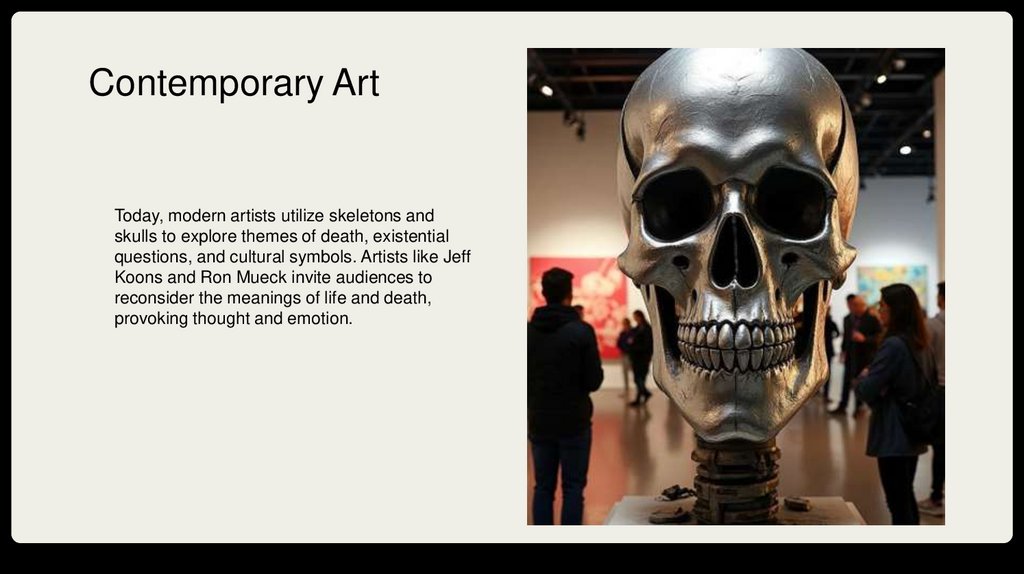
Contemporary ArtToday, modern artists utilize skeletons and
skulls to explore themes of death, existential
questions, and cultural symbols. Artists like Jeff
Koons and Ron Mueck invite audiences to
reconsider the meanings of life and death,
provoking thought and emotion.
7.
02Metaphors
8.
Symbolism of SkullsSkulls serve as powerful symbols in art, representing not just death
but revival, rebirth, and the cyclical nature of life. Their presence in
Renaissance works emphasizes the awareness of human destiny
and the gravity of mortality.
9.
Skeletons as Symbols of DeathSkeletons often embody the essence of mortality and the transition
to an afterlife. In artwork, they remind viewers of the fragility of life
and the inevitability of death, inspiring deep reflection on existence.
10.
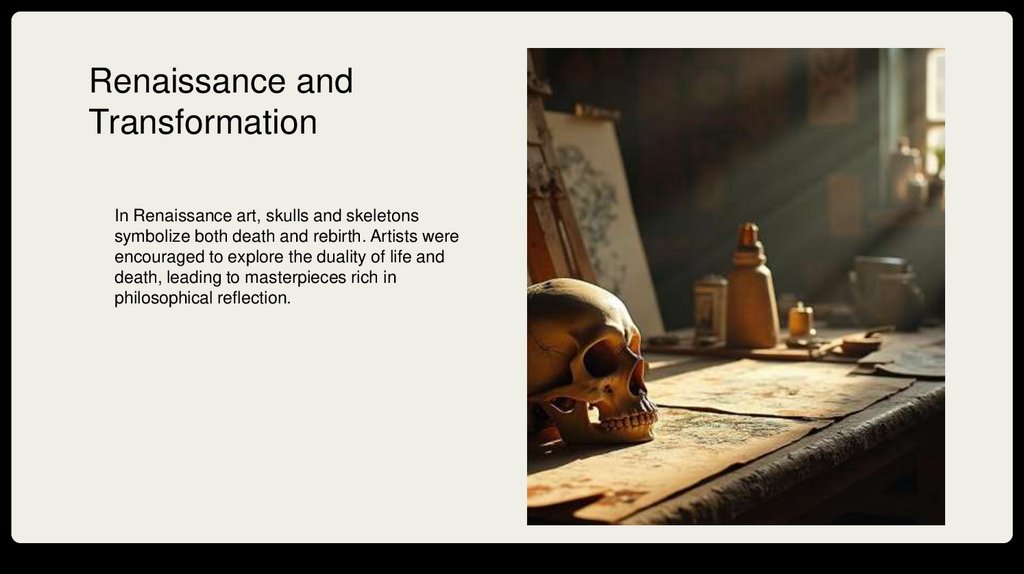
Renaissance andTransformation
In Renaissance art, skulls and skeletons
symbolize both death and rebirth. Artists were
encouraged to explore the duality of life and
death, leading to masterpieces rich in
philosophical reflection.
11.
03Unexpected
Meanings
12.
Skeletons in Pop CultureIn pop culture, skeletons bring humor and parody, showcased in
carnival traditions and popular films. Their use in musicals and
contemporary media shows their capacity to evoke positive feelings
while making social commentary.
13.
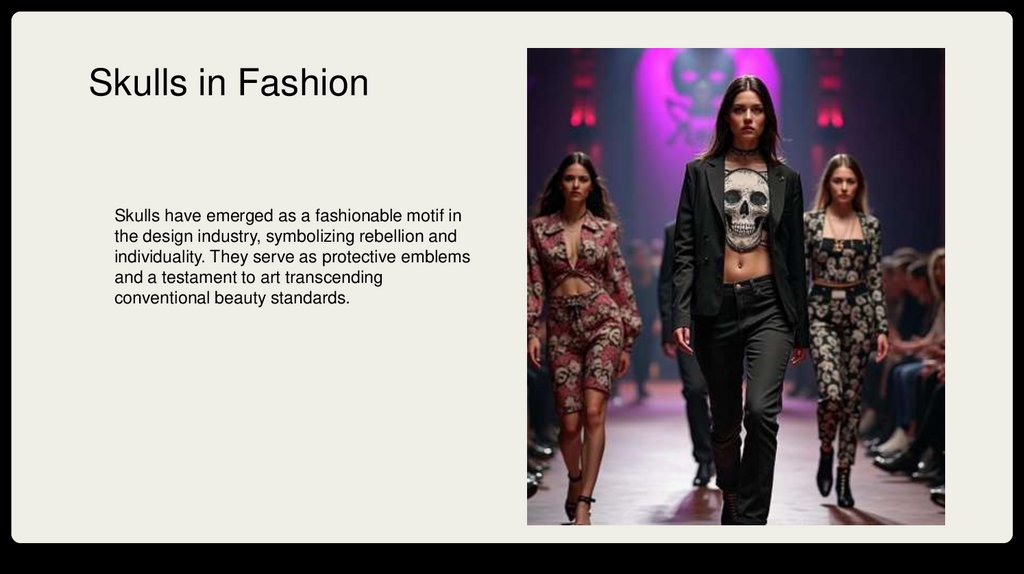
Skulls in FashionSkulls have emerged as a fashionable motif in
the design industry, symbolizing rebellion and
individuality. They serve as protective emblems
and a testament to art transcending
conventional beauty standards.
14.
Contemporary ArtistsContemporary artists like KAITEN ARANATELLI and TRACEY
EMIN use skulls and skeletons to explore themes of identity and
cultural biases. Their works challenge audiences to rethink
traditional perspectives on life, death, and the nature of art.
15.
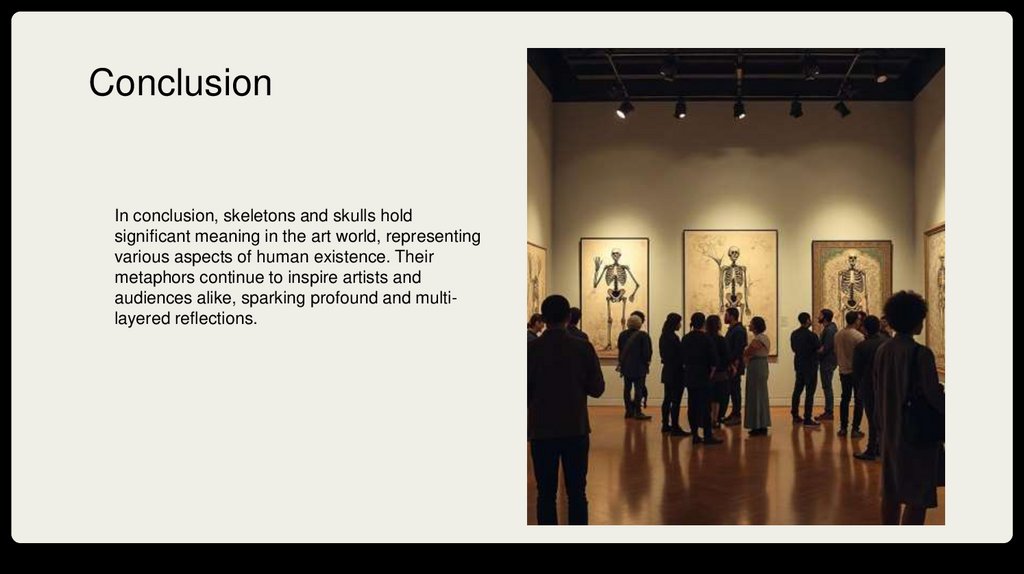
ConclusionIn conclusion, skeletons and skulls hold
significant meaning in the art world, representing
various aspects of human existence. Their
metaphors continue to inspire artists and
audiences alike, sparking profound and multilayered reflections.
16.
Thank you!Do you have any questions?
CREDITS: This presentation template was created
by Slidesgo, and includes icons, infographics &
images by Freepik
+
9
1
6
2
0
4
2
1
8
3
8
w