

 english
Similar presentations:







Conference. What is conference?
1.
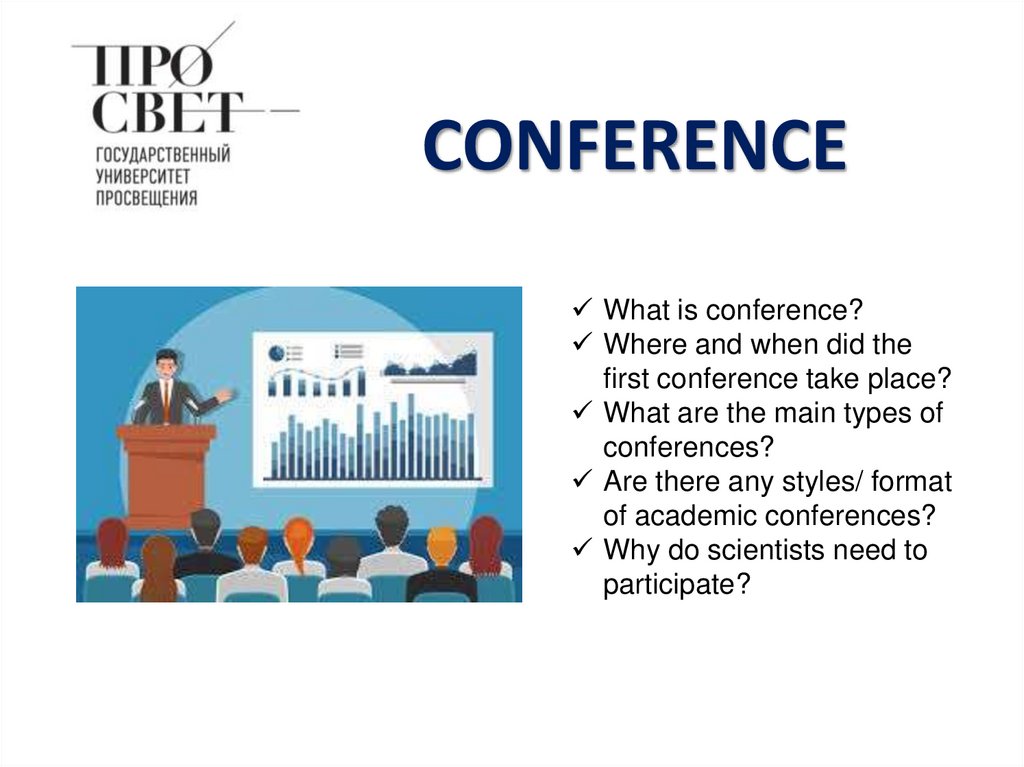
CONFERENCEWhat is conference?
Where and when did the
first conference take place?
What are the main types of
conferences?
Are there any styles/ format
of academic conferences?
Why do scientists need to
participate?
2. WHAT IS CONFERENCE?
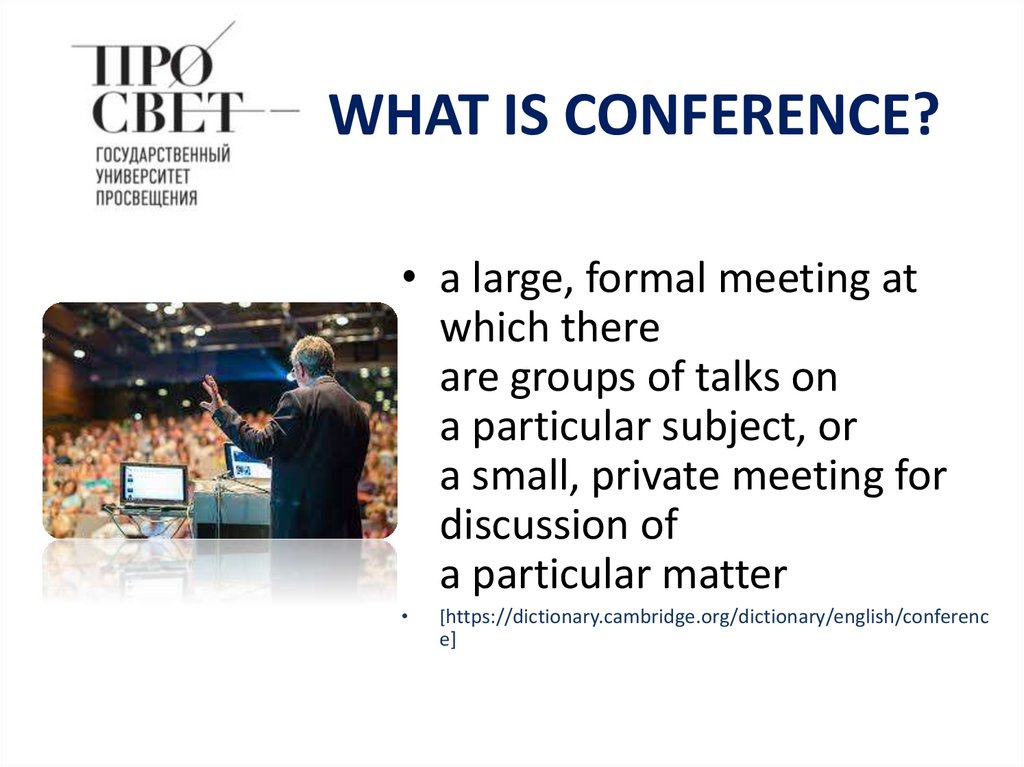
• a large, formal meeting atwhich there
are groups of talks on
a particular subject, or
a small, private meeting for
discussion of
a particular matter
[https://dictionary.cambridge.org/dictionary/english/conferenc
e]
3. HISTORY OF CONFERENCES
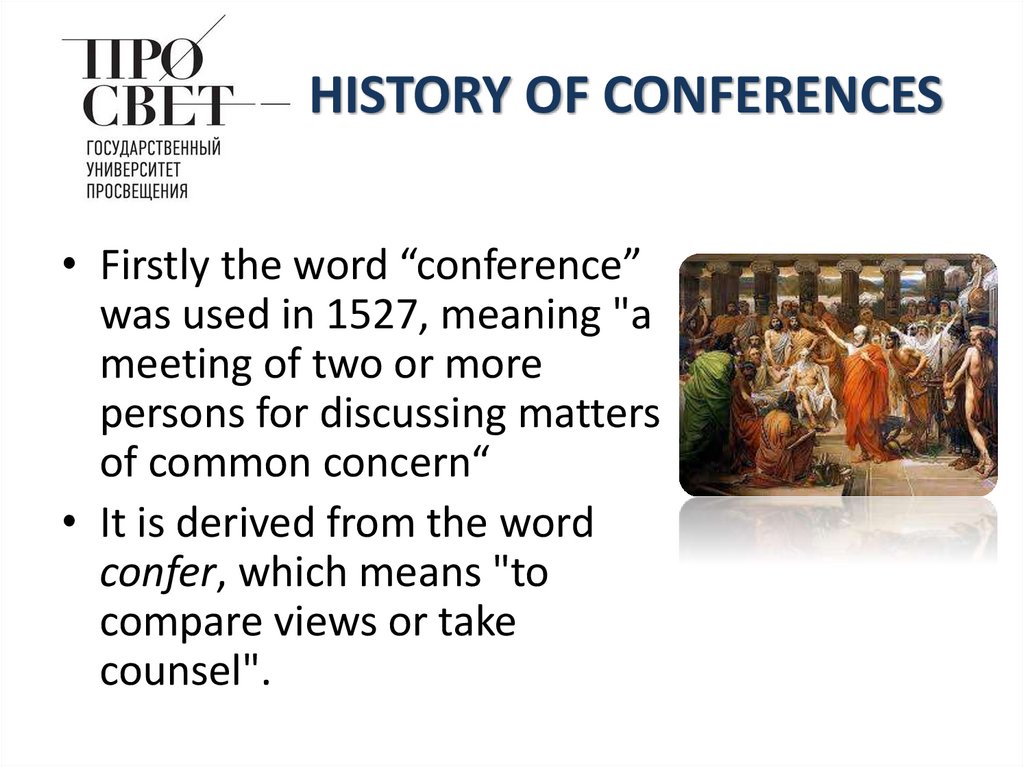
• Firstly the word “conference”was used in 1527, meaning "a
meeting of two or more
persons for discussing matters
of common concern“
• It is derived from the word
confer, which means "to
compare views or take
counsel".
4. TYPOLOGY
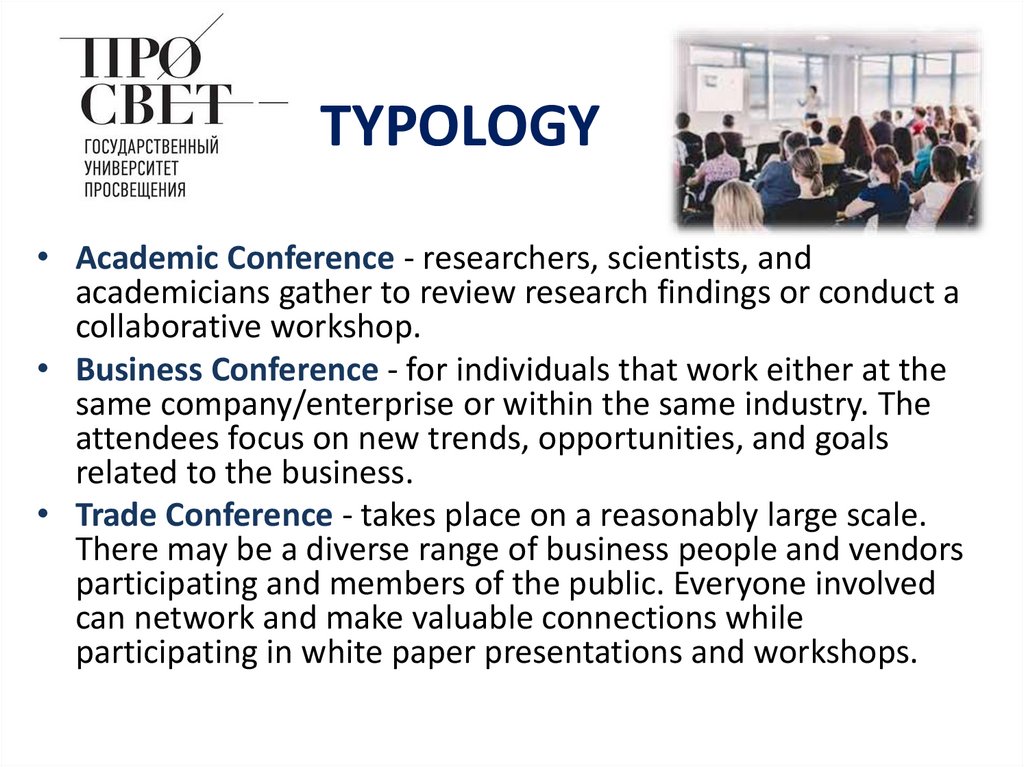
• Academic Conference - researchers, scientists, andacademicians gather to review research findings or conduct a
collaborative workshop.
• Business Conference - for individuals that work either at the
same company/enterprise or within the same industry. The
attendees focus on new trends, opportunities, and goals
related to the business.
• Trade Conference - takes place on a reasonably large scale.
There may be a diverse range of business people and vendors
participating and members of the public. Everyone involved
can network and make valuable connections while
participating in white paper presentations and workshops.
5. TYPES OF ACADEMIC CONFERENCES
Academic conferences provide a forum forresearchers to share their work, exchange ideas,
and collaborate with others in their field.
• In-person conferences – traditional face-to-face
format held in person at a physical location
• Virtual conferences - online or web-based
conferences, are held entirely online
• Hybrid conferences - combine the benefits of inperson conferences with the convenience of
virtual ones
6. CONFERENCE STYLES
• Symposium - a very casual event, usually includingentertainment and refreshments.
• Seminar - are educational and promote the discussion of a
specific topic and send attendees home with new
information.
• Workshop - zeroes in on hands-on experiences, frequently
featuring demonstrations and activities versus extended
presentations from a speaker.
• Round-table - gathers peers who often share ideas and
thoughts on political or commercial topics. The name
comes from the physical set-up of the event, which often
relies on a round table to create a collaborative
environment.
7. SPEAKERS -PILLARS OF CONFERENCE
• Keynote speakers - set the tone for the entireevent, usually open or close the conference
• Professional speakers - make a living by sharing
their expertise
• Seminar speakers -focus on a narrow subject
matter and go deep
• Workshop facilitators -guide attendees through
interactive sessions
• Trainers - provide educational content, often with
a focus on skill development
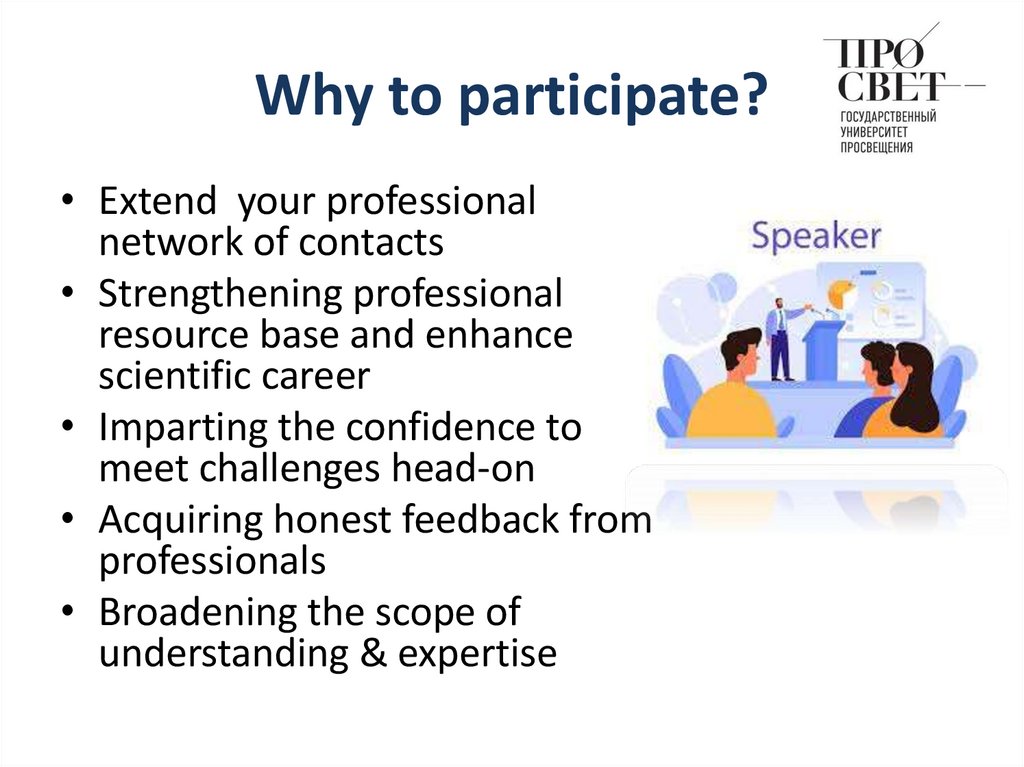
8. Why to participate?
• Extend your professionalnetwork of contacts
• Strengthening professional
resource base and enhance
scientific career
• Imparting the confidence to
meet challenges head-on
• Acquiring honest feedback from
professionals
• Broadening the scope of
understanding & expertise