 english
Similar presentations:






General character of english intonation
1.
A COURSEIN THEORETICAL PHONETICS
LECTURE 6:
GENERAL CHARACTER OF
ENGLISH INTONATION
Part 1
2.
Structure and FunctionThe flow of speech does not consist of
single segmental units (speech
sounds)but is organized into sequence
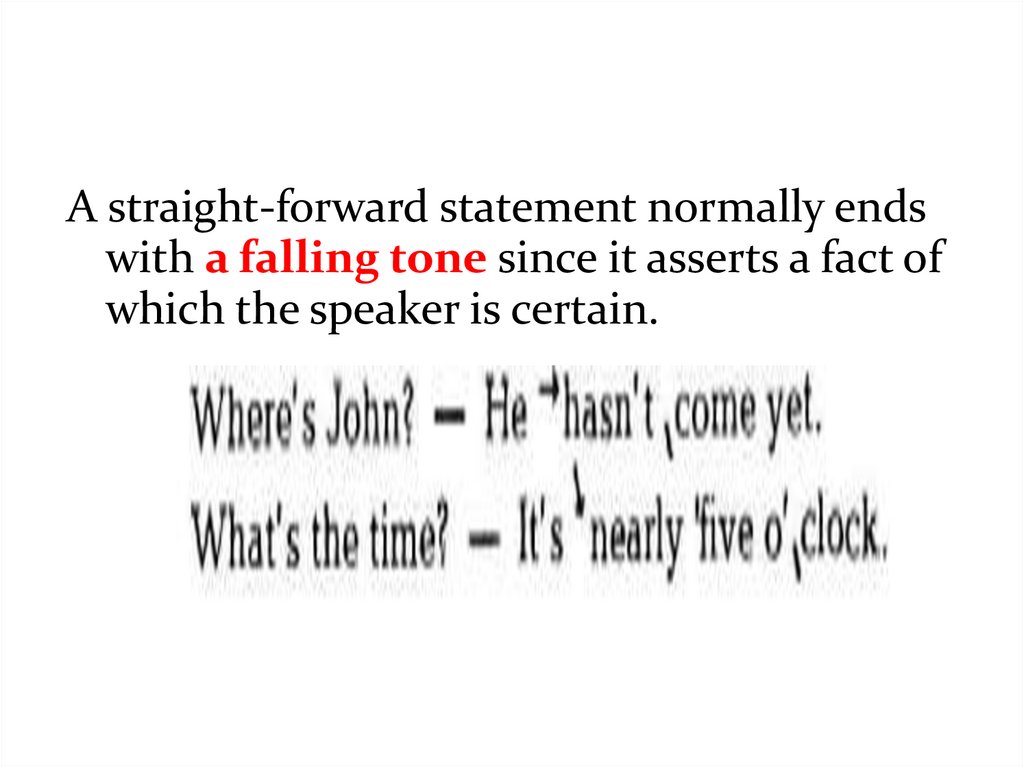
where intonation is presented as
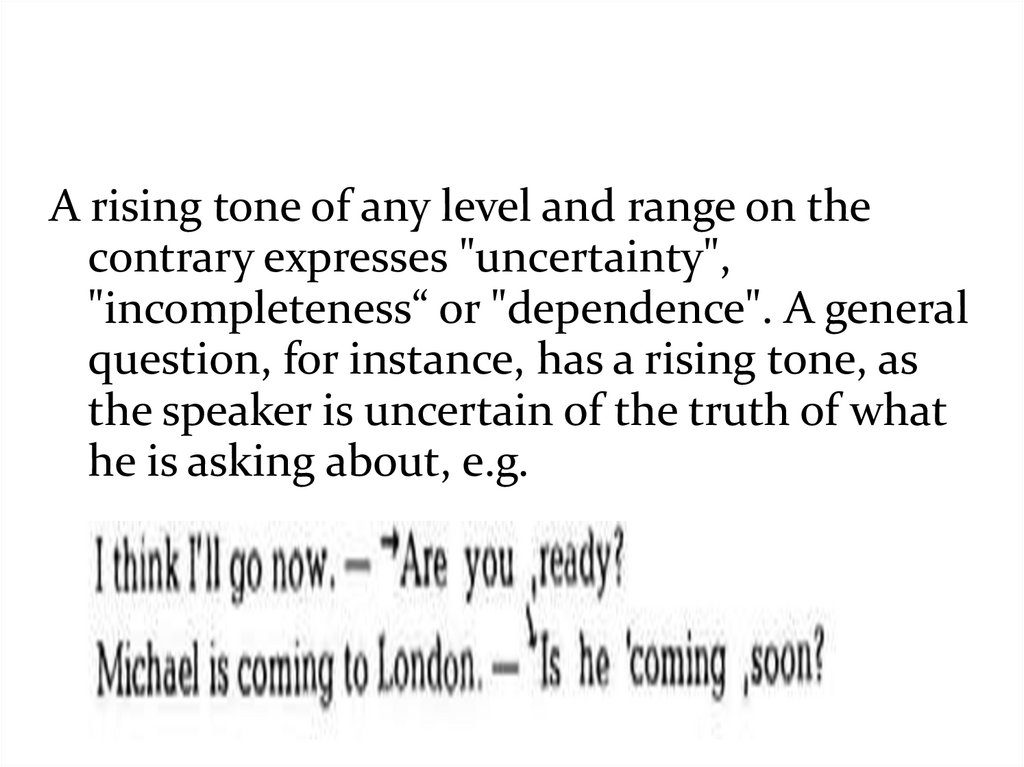
language universal. There are no
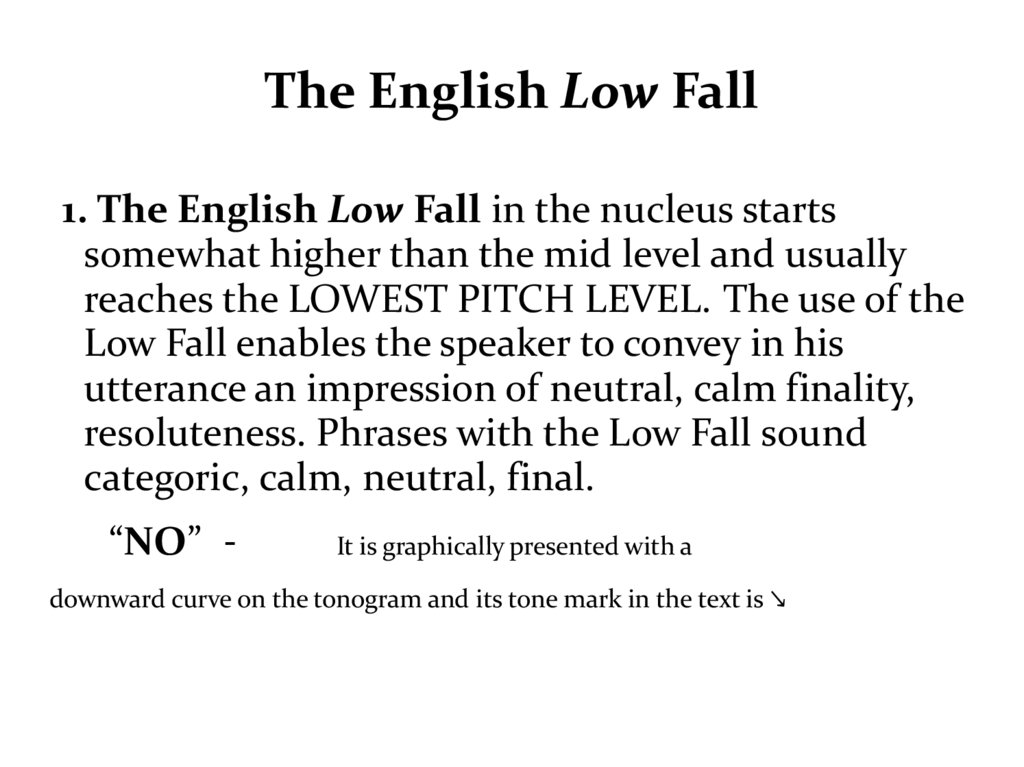
languages which are spoken as a
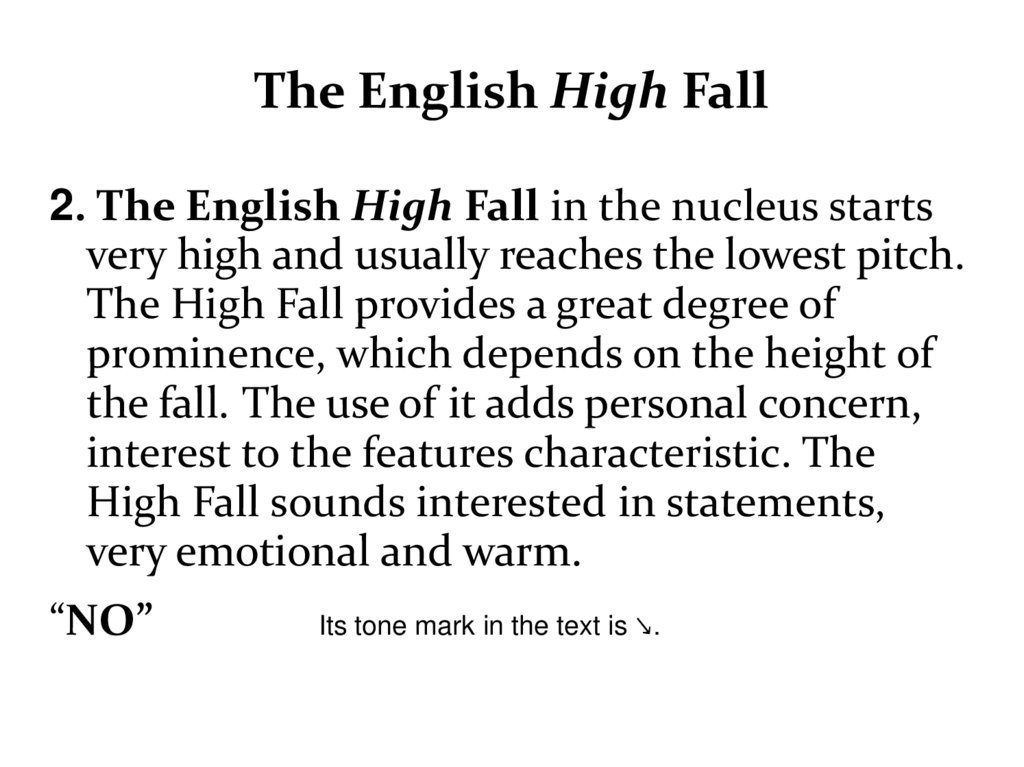
monotone. On perception level prosody is a
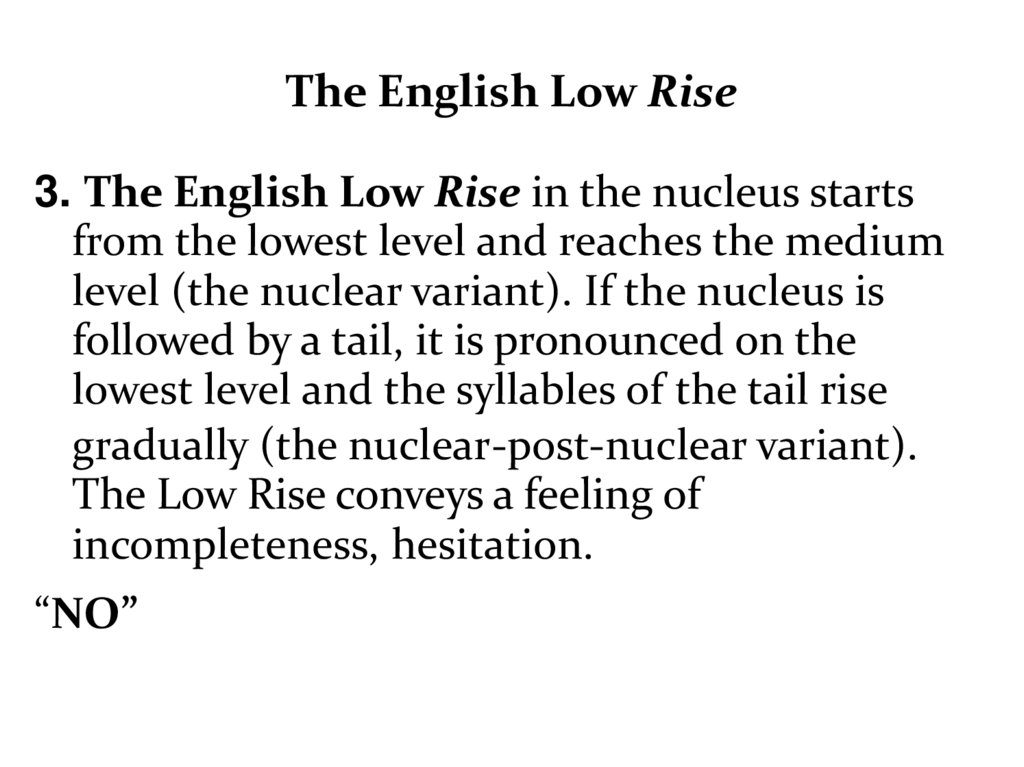
complex, formed by significant variations of
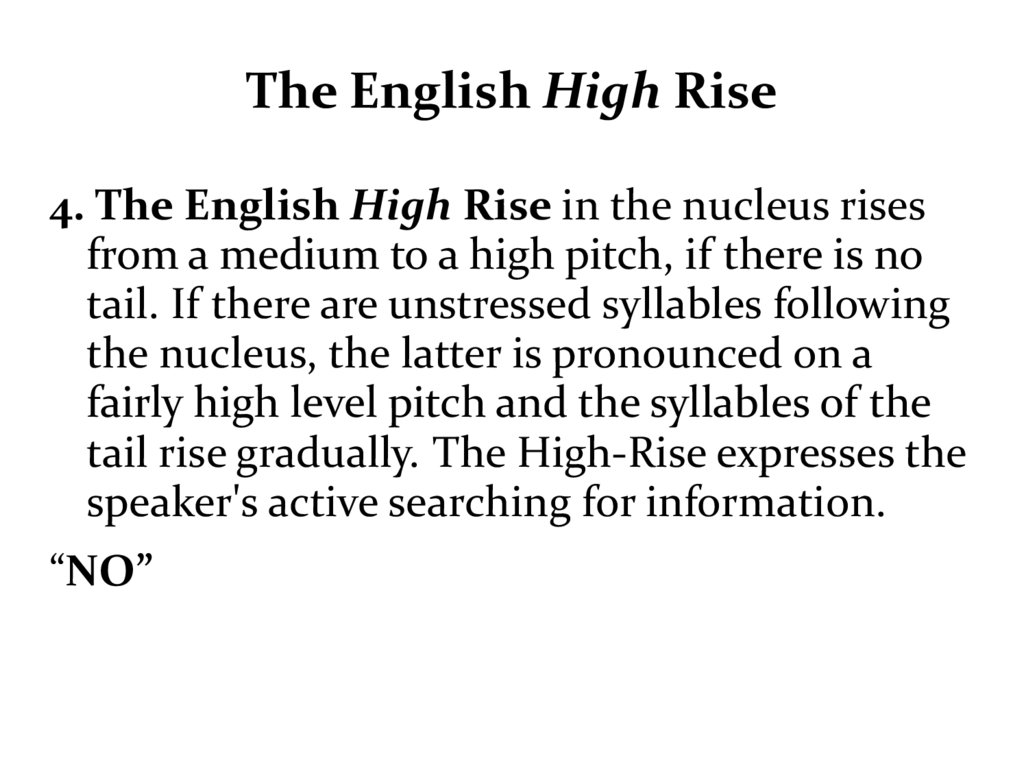
pitch, loudness, tempo and rhythm.
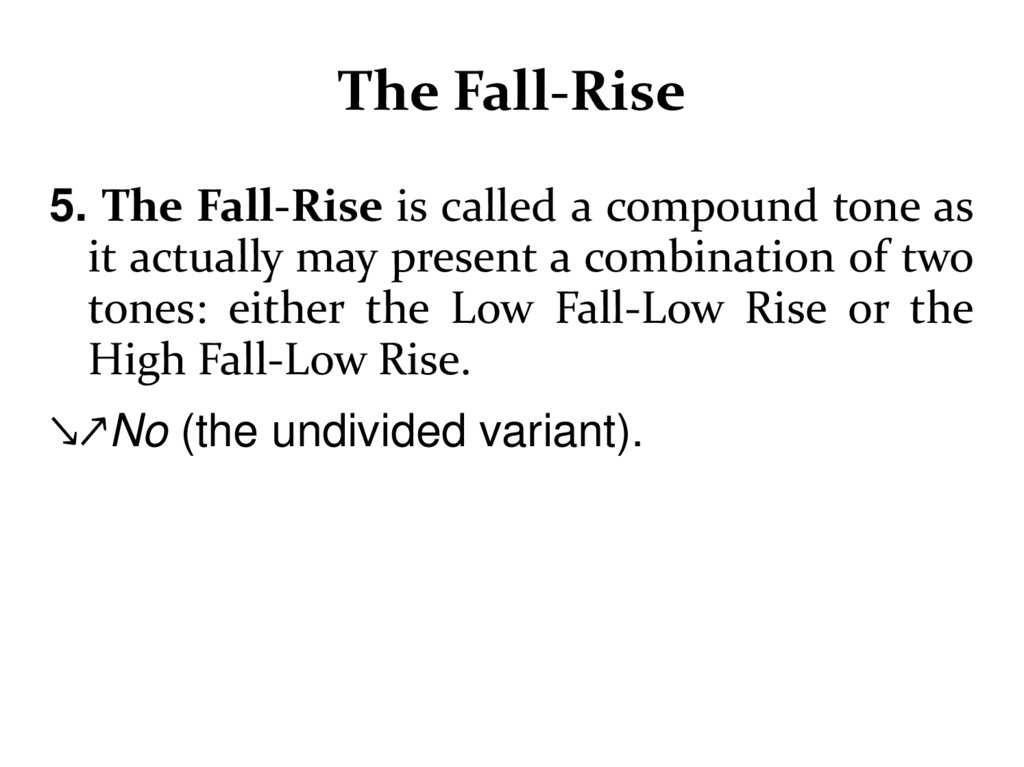
3.
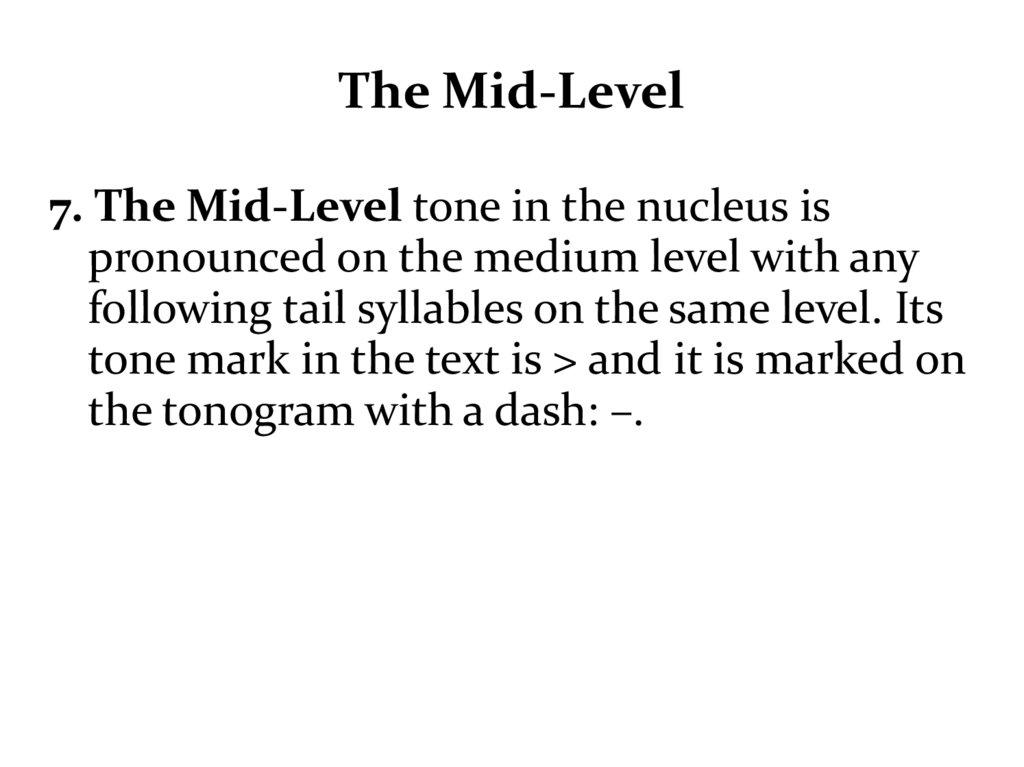
Оn perception level intonation is calleda complex unity which is formed by
significant variations of 1) pitch, 2)
loudness (force) and 3) tempo (i.e. the
rate of speech and pausation).
4.
On the acoustic level pitch correlateswith the fundamental frequency of the
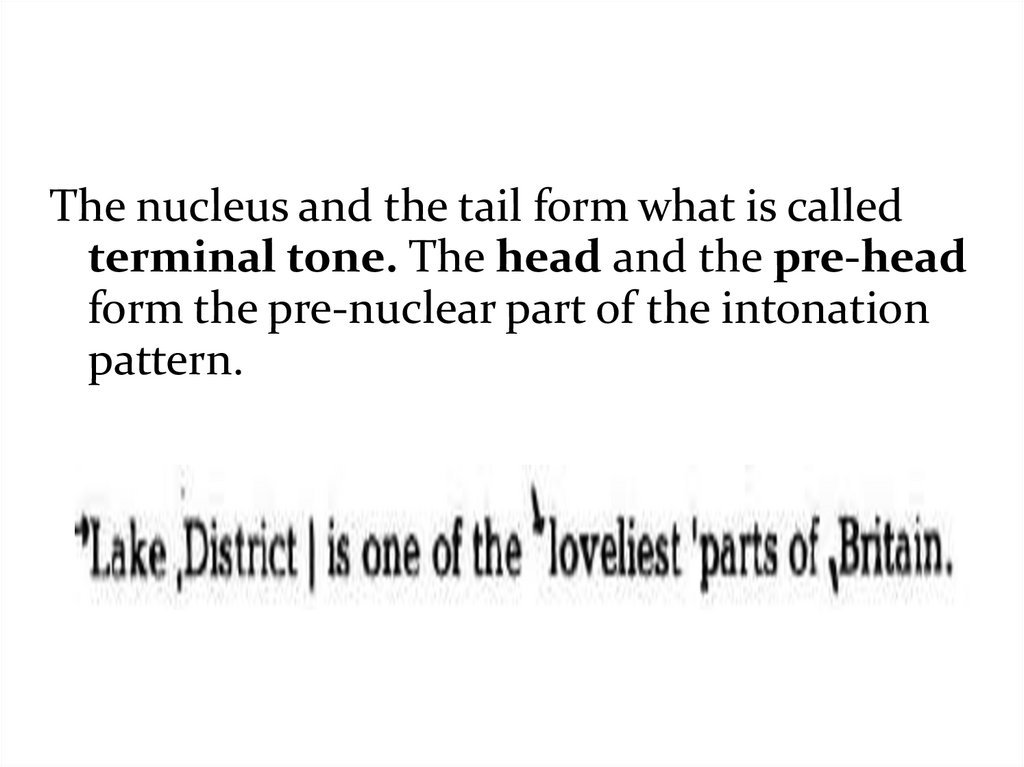
vibration of the vocal cords; loudness
correlates with the amplitude of
vibrations; tempo is a correlate of time
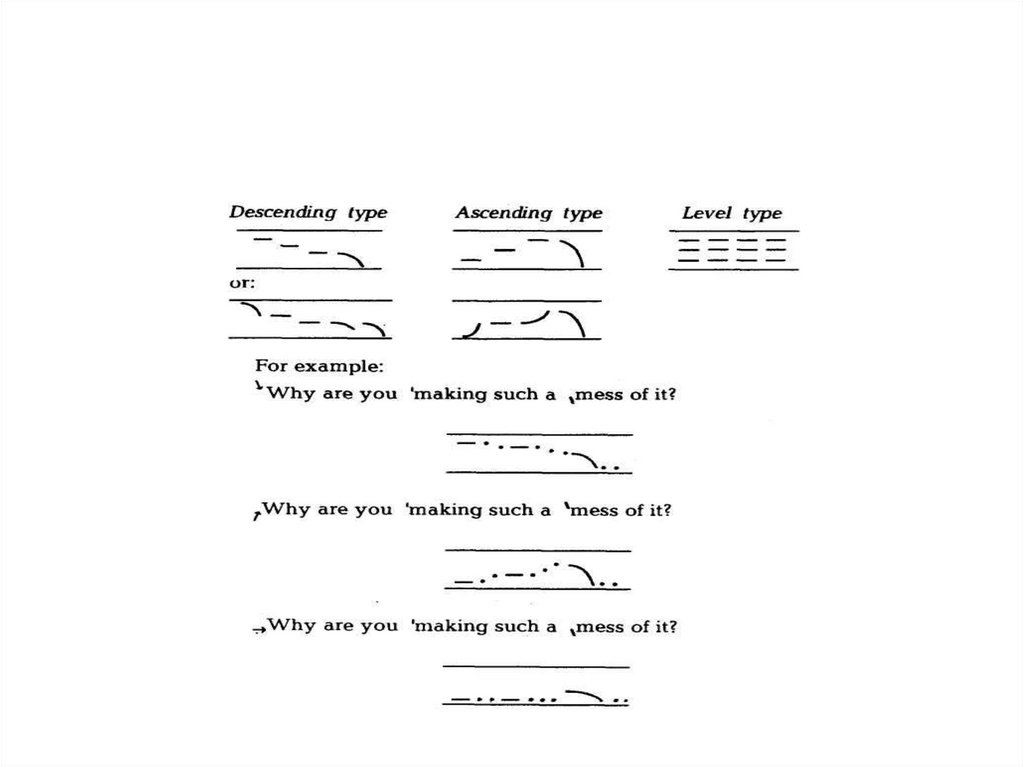
during which a speech unit lasts.
5.
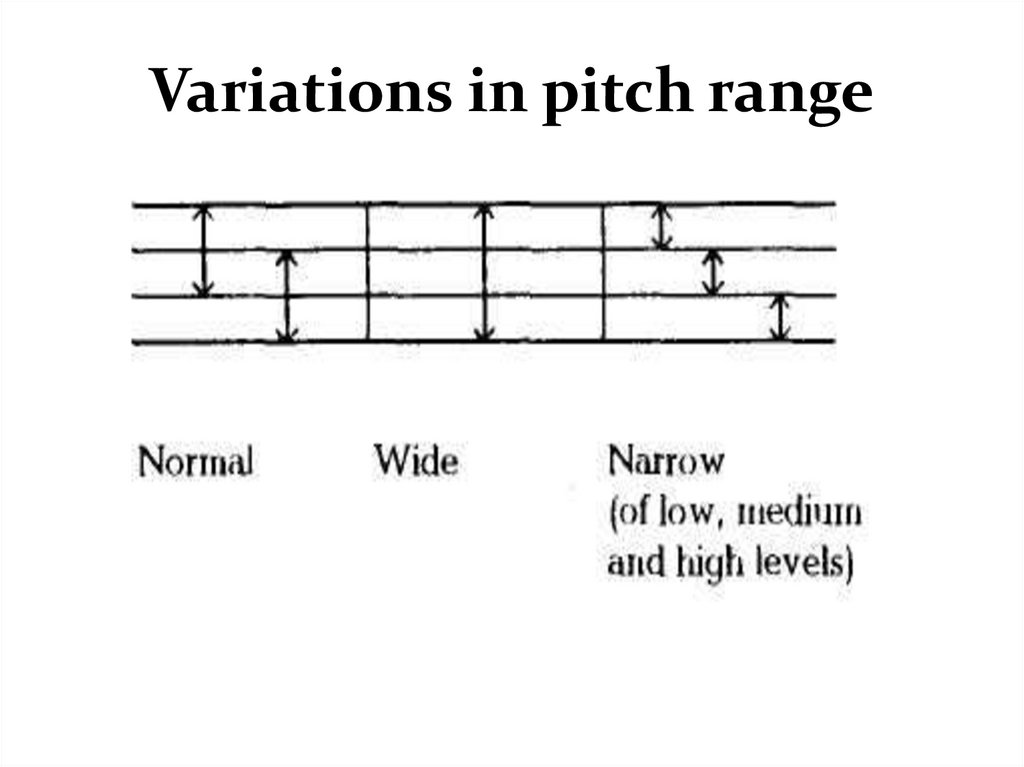
Each syllable of the speech chain has a special pitchcolouring.
Some of the syllables have significant moves of tone
up and down and each syllable bears a definite
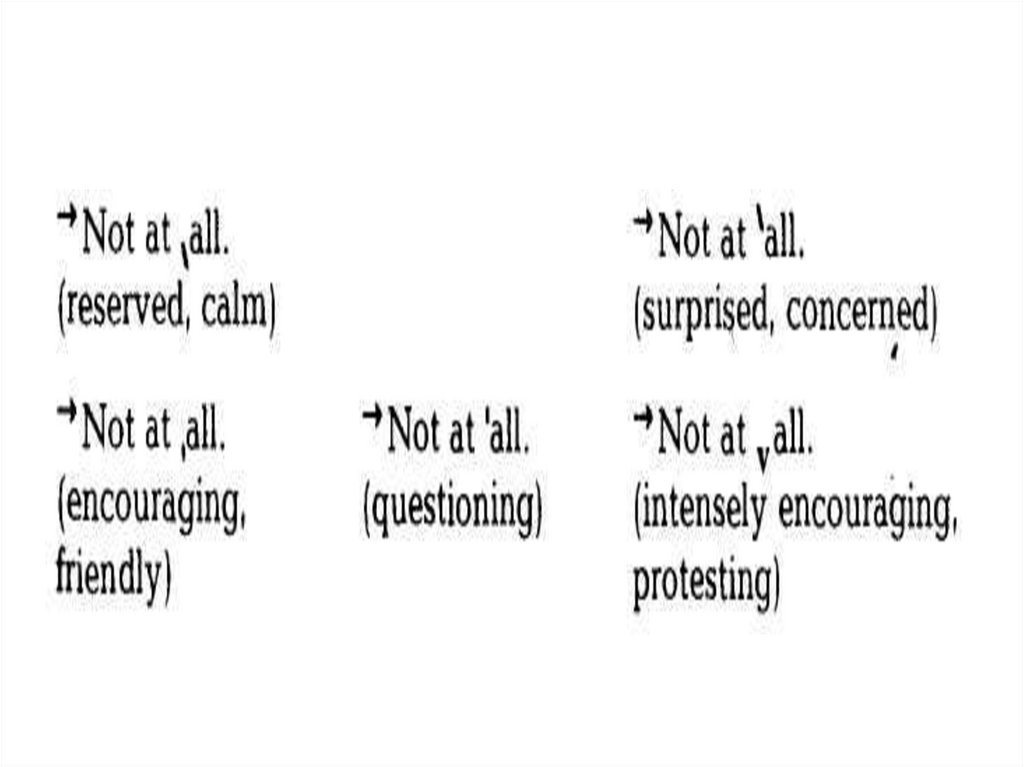
amount of loudness. Pitch movements are
inseparably connected with loudness.
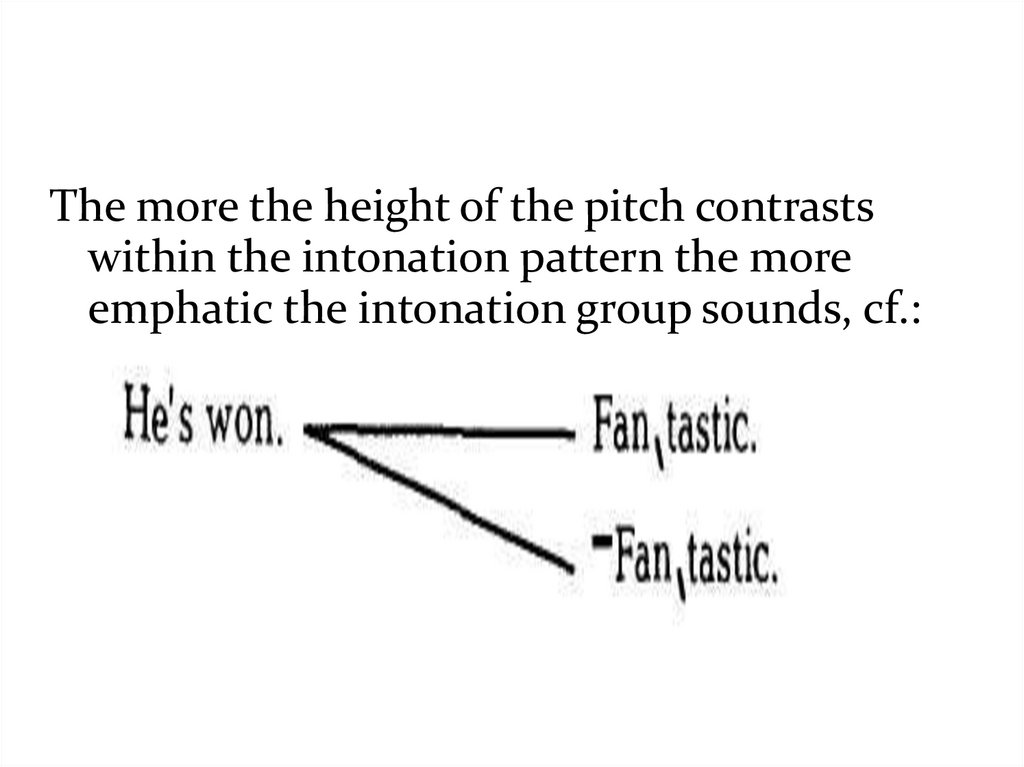
Together with the tempo of speech pitch movements
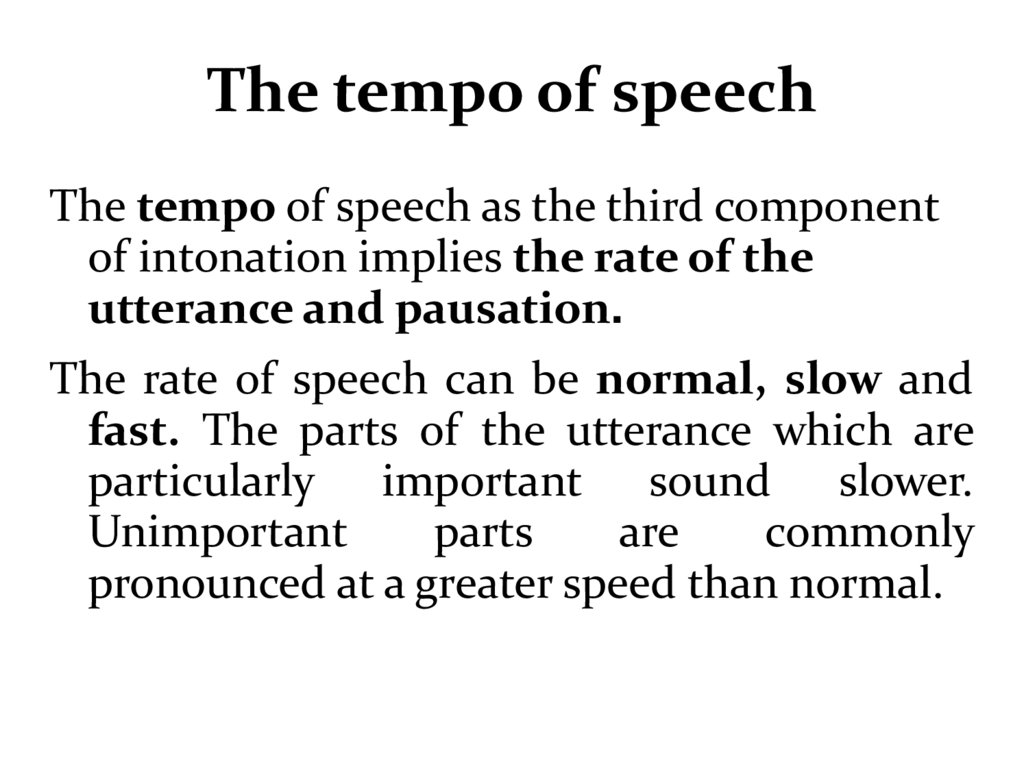
form an intonation pattern which is the basic
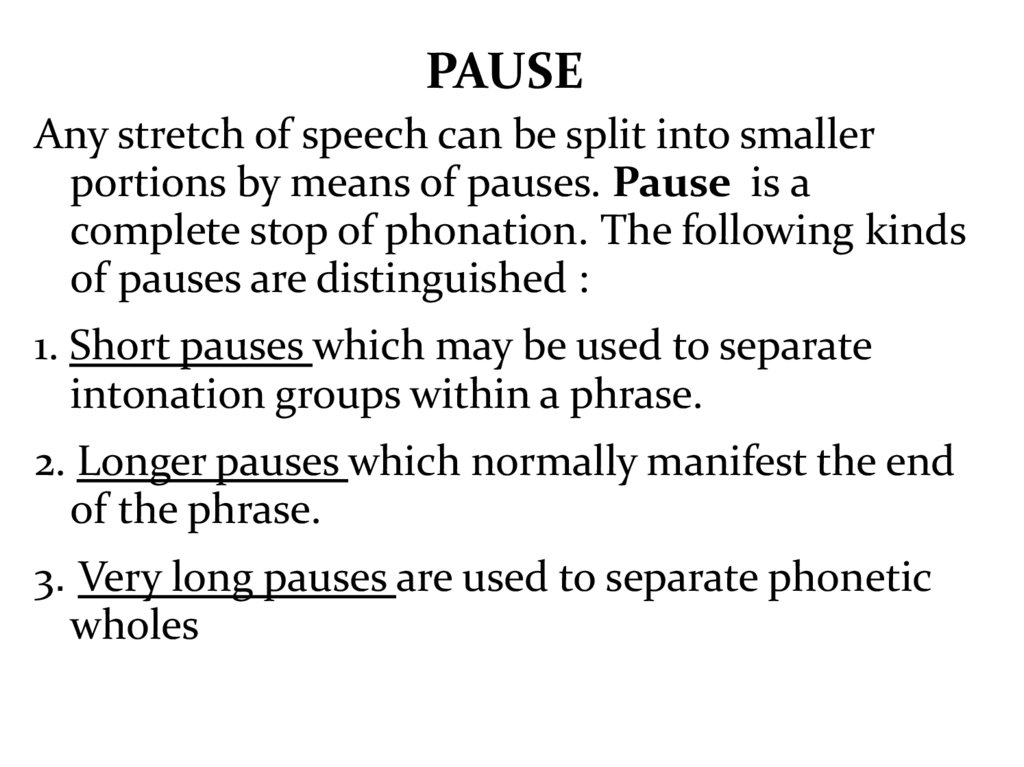
unit of intonation.
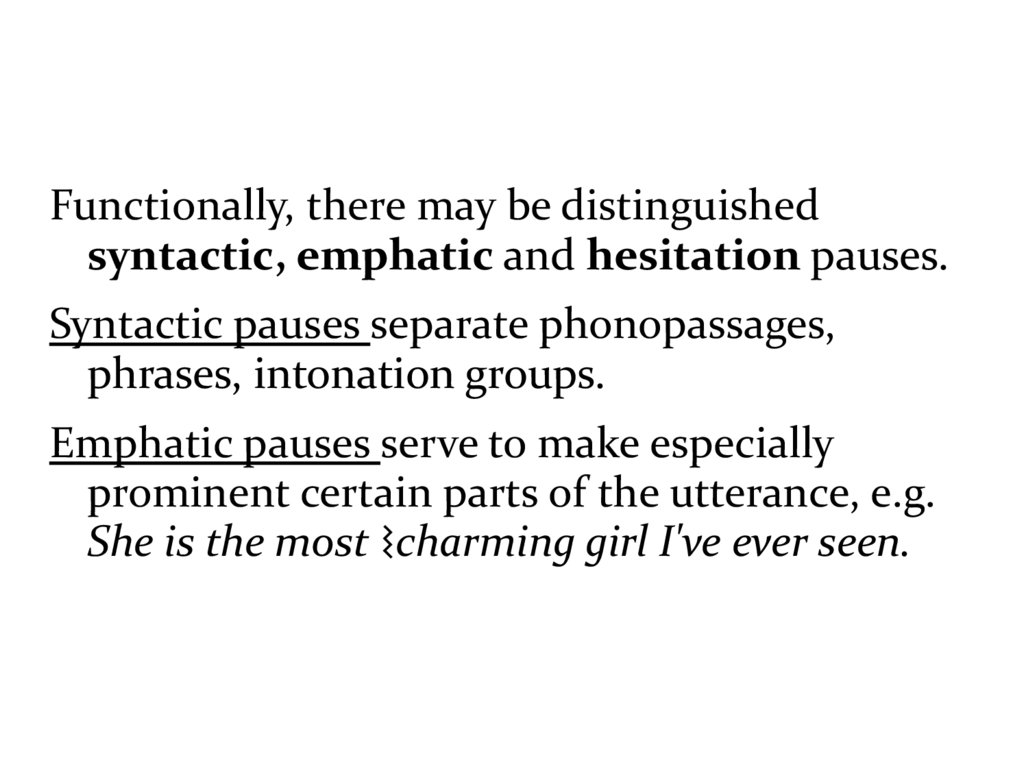
6.
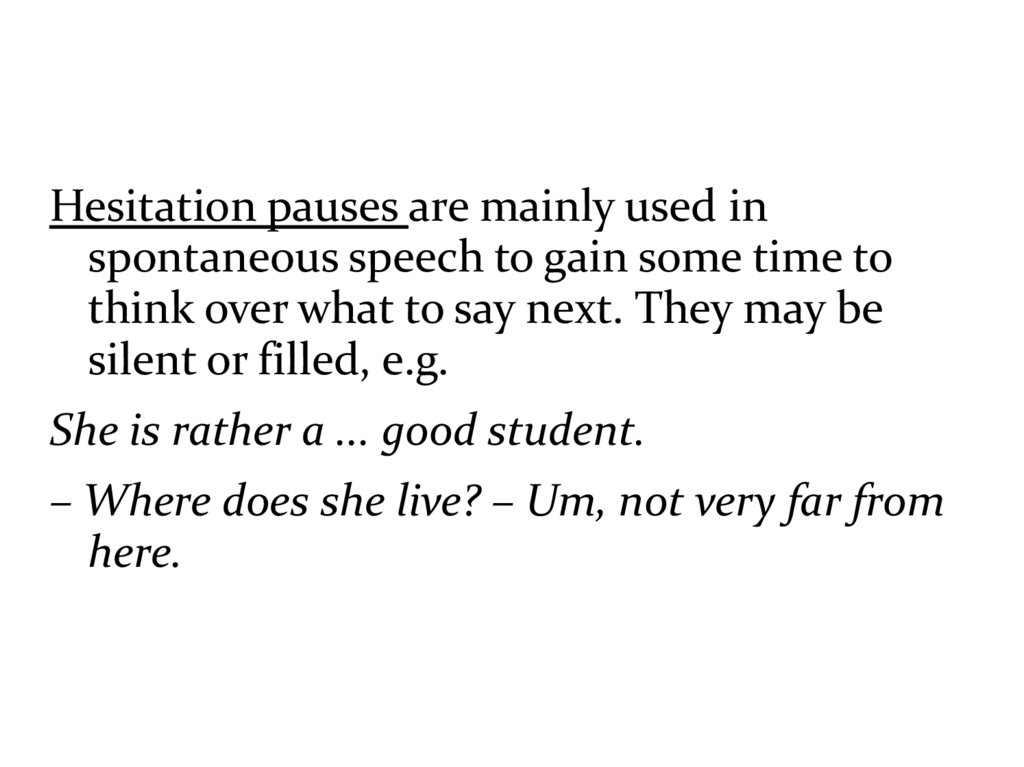
An intonation pattern contains onenucleus and may contain other stressed
or
unstressed
syllables
normally
preceding or following the nucleus. The
boundaries of an intonation pattern may
be marked by stops of phonation, that is
temporal pauses.
7.
Intonation patterns serve to actualizesyntagms in oral speech. The syntagm is a
group of words which is semantically and
syntactically complete.
In phonetics actualized syntagms are called
intonation groups.
8.
Not all stressed syllables are of equalimportance in the flow of speech. One of the
syllables always has the greater prominence
than the others and forms the nucleus
(focal point, semantic centre, focus,
prominence) of an intonation pattern.
9.
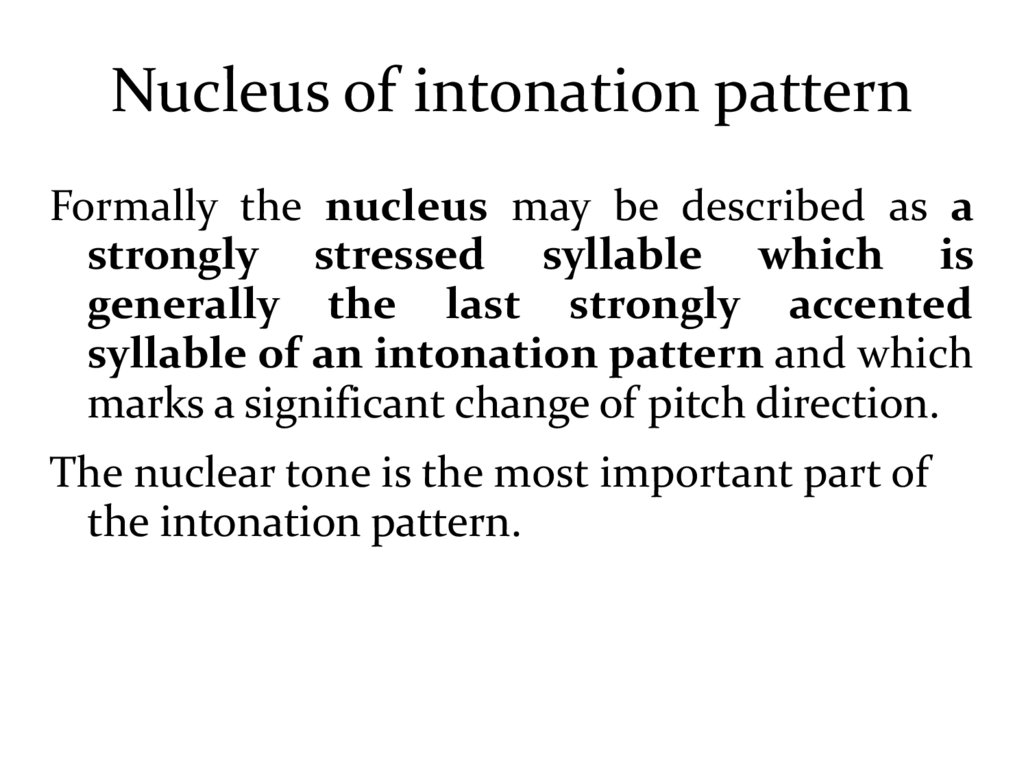
Nucleus of intonation patternFormally the nucleus may be described as a
strongly stressed syllable which is
generally the last strongly accented
syllable of an intonation pattern and which
marks a significant change of pitch direction.
The nuclear tone is the most important part of
the intonation pattern.
10.
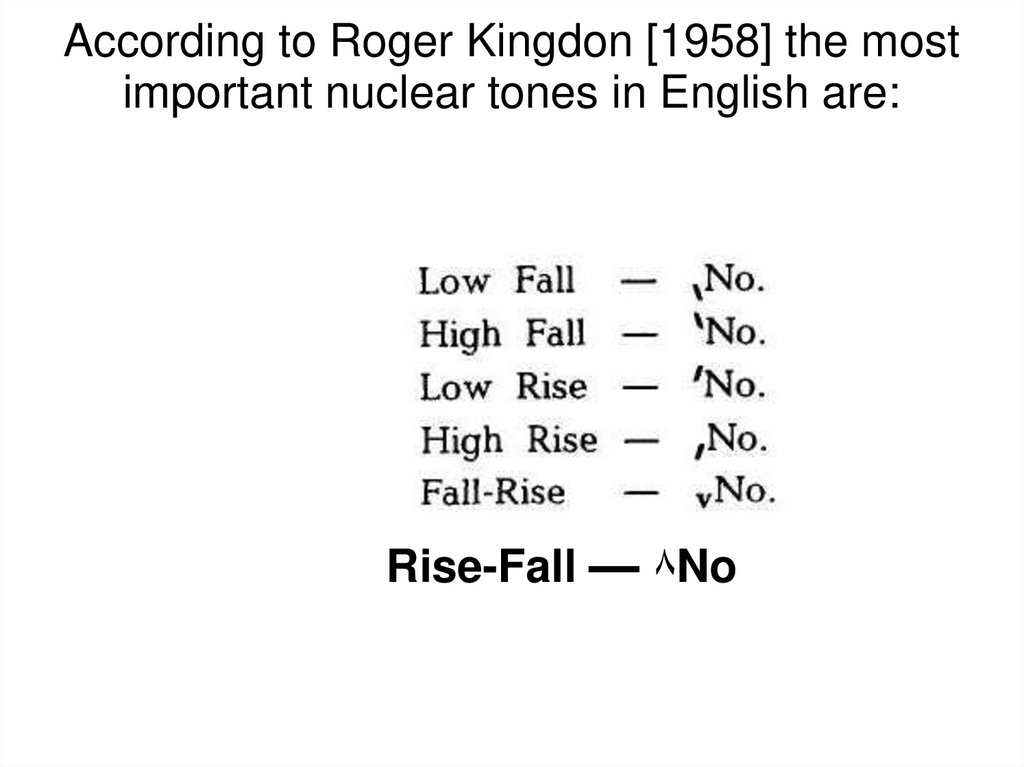
According to Roger Kingdon [1958] the mostimportant nuclear tones in English are:
Rise-Fall –– ٨No
11.
KINETIC vs STATIC TONESThese tones are called KINETIC or MOVING
because the pitch the voice moves upwards
or downwards.
Roger Kingdon also distinguishes STATIC
TONES, in which the voice remains steady
on a given pitch throughout the duration of
the tone: the HIGH LEVEL TONE, the LOW
LEVEL TONE.
12.
Moreover the pitch can change either in onedirection only (a SIMPLE TONE) and more
than one direction (a COMPLEX TONE).
The meanings of the nuclear tones are difficult
to specify in general terms. Roughly speaking
the falling tone of any level and range
expresses "certainty", "completeness",
"independence".
13.
A straight-forward statement normally endswith a falling tone since it asserts a fact of
which the speaker is certain.
14.
A rising tone of any level and range on thecontrary expresses "uncertainty",
"incompleteness“ or "dependence". A general
question, for instance, has a rising tone, as
the speaker is uncertain of the truth of what
he is asking about, e.g.
15.
The English Low Fall1. The English Low Fall in the nucleus starts
somewhat higher than the mid level and usually
reaches the LOWEST PITCH LEVEL. The use of the
Low Fall enables the speaker to convey in his
utterance an impression of neutral, calm finality,
resoluteness. Phrases with the Low Fall sound
categoric, calm, neutral, final.
“NO” -
It is graphically presented with a
downward curve on the tonogram and its tone mark in the text is ↘
16.
The English High Fall2. The English High Fall in the nucleus starts
very high and usually reaches the lowest pitch.
The High Fall provides a great degree of
prominence, which depends on the height of
the fall. The use of it adds personal concern,
interest to the features characteristic. The
High Fall sounds interested in statements,
very emotional and warm.
“NO”
Its tone mark in the text is ↘.
17.
The English Low Rise3. The English Low Rise in the nucleus starts
from the lowest level and reaches the medium
level (the nuclear variant). If the nucleus is
followed by a tail, it is pronounced on the
lowest level and the syllables of the tail rise
gradually (the nuclear-post-nuclear variant).
The Low Rise conveys a feeling of
incompleteness, hesitation.
“NO”
18.
The English High Rise4. The English High Rise in the nucleus rises
from a medium to a high pitch, if there is no
tail. If there are unstressed syllables following
the nucleus, the latter is pronounced on a
fairly high level pitch and the syllables of the
tail rise gradually. The High-Rise expresses the
speaker's active searching for information.
“NO”
19.
The Fall-Rise5. The Fall-Rise is called a compound tone as
it actually may present a combination of two
tones: either the Low Fall-Low Rise or the
High Fall-Low Rise.
↘↗No (the undivided variant).
20.
The Mid-Level7. The Mid-Level tone in the nucleus is
pronounced on the medium level with any
following tail syllables on the same level. Its
tone mark in the text is > and it is marked on
the tonogram with a dash: –.
21.
The Mid-Level is usually used in non-finalintonation groups expressing non-finality
without any expression of expectancy. E. g.:
Couldn't you help me ? >At present | I'm too
busy.
What did Tom say? >Naturally, | he was
delighted.
22.
The English dialogic speech is highlyemotional, that's why such emphatic
tones as the High Fall and the Fall-Rise
prevail in it.
In English there is often clear evidence of
an intonation-group boundary, but no
audible nuclear tone movement
preceding.
23.
Low-Level tone is very characteristic ofreading poetry.
Though occasionally heard in reading MidLevel tone is particularly common in
spontaneous speech functionally replacing
the rising tone.
24.
The change in the pitch of the word which ismost important semantically, is called a
nuclear tone. The nucleus may be
preceded or followed by stressed and
unstressed syllables. Stressed syllables
preceding the nucleus form the head of a
tone unit.
25.
Initial unstressed syllables make the prehead. Unstressed and half-stressed syllablesfollowing the nucleus are called the tail.
The tone of a nucleus determines the pitch of
the rest of the intonation pattern following
it.
26.
The nucleus and the tail form what is calledterminal tone. The head and the pre-head
form the pre-nuclear part of the intonation
pattern.
27.
Usually a nucleus will be present in a tone unit;other elements may not be realized, i. e. the
possibilities for combining the elements of a
tone unit may be as follows:
(Pre-head ) + Head + Nucleus + Tail
28.
29.
The pre-nuclear part can take a variety of pitchpatterns. Variation within the prenucleus
does not usually affect the grammatical
meaning of the utterance, though it often
conveys meanings associated with attitude or
phonetic styles.
30.
There are three common types of pre-nucleus:a descending type in which the pitch
gradually descends (often in “steps”) to the
nucleus; an ascending type in which the
syllables form an ascending sequence and a
level type when all the syllables stay more or
less on the same level:
31.
Variations in pitch range occur withinthe normal range of the human voice,
i.e. within its upper and lower limits.
Three pitch ranges are generally
distinguished: normal, wide, narrow:
32.
Variations in pitch range33.
Pitch levels may be high, medium and low.The meaning of the intonation group is the
combination of the "meaning" of the
terminal tone and the pre-nuclear part
combined with the "meaning" of pitch range
and pitch level.
34.
The parts of the intonation pattern can becombined in various ways manifesting
changes in meaning, cf.: the High Head
combined with the Low Fall, the High Fall,
the Low Rise, the High Rise, the Fall-Rise in
the phrase "Not at all!"
35.
36.
The more the height of the pitch contrastswithin the intonation pattern the more
emphatic the intonation group sounds, cf.:
37.
The tempo of speechThe tempo of speech as the third component
of intonation implies the rate of the
utterance and pausation.
The rate of speech can be normal, slow and
fast. The parts of the utterance which are
particularly important sound slower.
Unimportant
parts
are
commonly
pronounced at a greater speed than normal.
38.
PAUSEAny stretch of speech can be split into smaller
portions by means of pauses. Pause is a
complete stop of phonation. The following kinds
of pauses are distinguished :
1. Short pauses which may be used to separate
intonation groups within a phrase.
2. Longer pauses which normally manifest the end
of the phrase.
3. Very long pauses are used to separate phonetic
wholes
39.
Functionally, there may be distinguishedsyntactic, emphatic and hesitation pauses.
Syntactic pauses separate phonopassages,
phrases, intonation groups.
Emphatic pauses serve to make especially
prominent certain parts of the utterance, e.g.
She is the most ⌇charming girl I've ever seen.
40.
Hesitation pauses are mainly used inspontaneous speech to gain some time to
think over what to say next. They may be
silent or filled, e.g.
She is rather a ... good student.
– Where does she live? – Um, not very far from
here.
41.
Questions1. Define prosody.
2. Define intonation pattern.
3. What is nucleus? What other synonymic terms do
you know?
4. What tones are called kinetic or moving? How do
they differ from static tones?
5. Characterize each of the nuclear tones in English.
What are their meanings? What do
they express?
42.
6. Characterize the level nuclear tone.7. What are the components of the intonation pattern
in English?
8. What are the types of pre-nucleus?
9. What pitch ranges are distinguished?
10. What pitch levels are there in English?
11. Define the tempo of speech.
12. What kind of pauses are there in English?