









 sport
sportSimilar presentations:










Extreme kinds of sport
1.
Extremekinds of
sport
2.
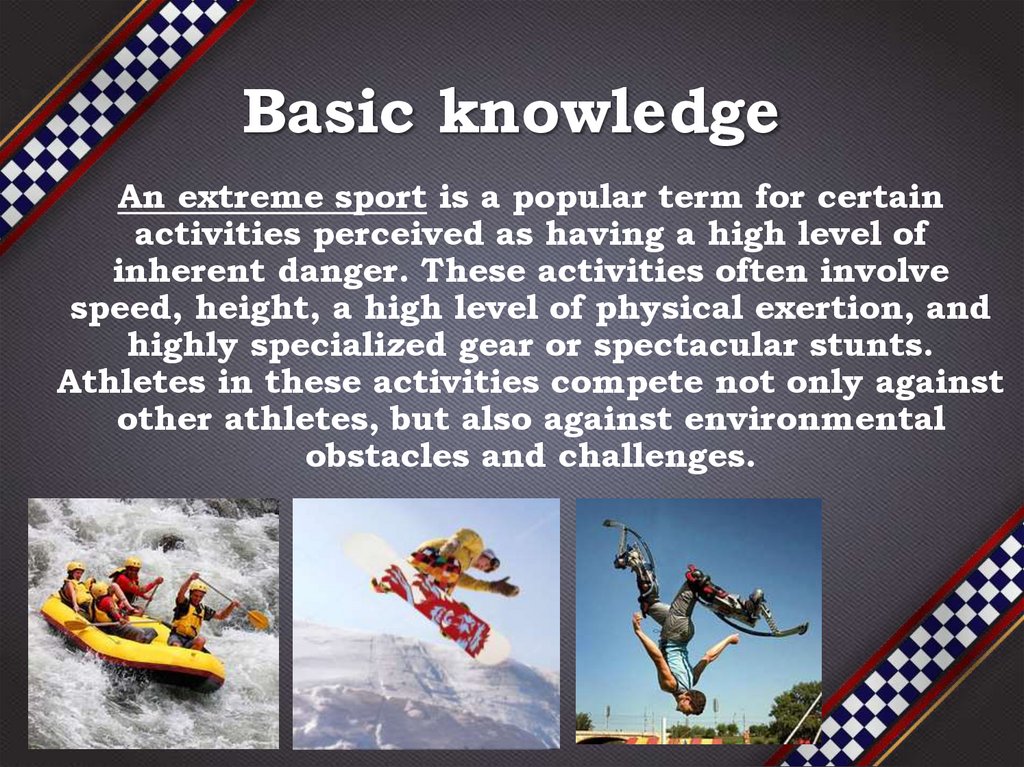
Basic knowledgeAn extreme sport is a popular term for certain
activities perceived as having a high level of
inherent danger. These activities often involve
speed, height, a high level of physical exertion, and
highly specialized gear or spectacular stunts.
Athletes in these activities compete not only against
other athletes, but also against environmental
obstacles and challenges.
3.
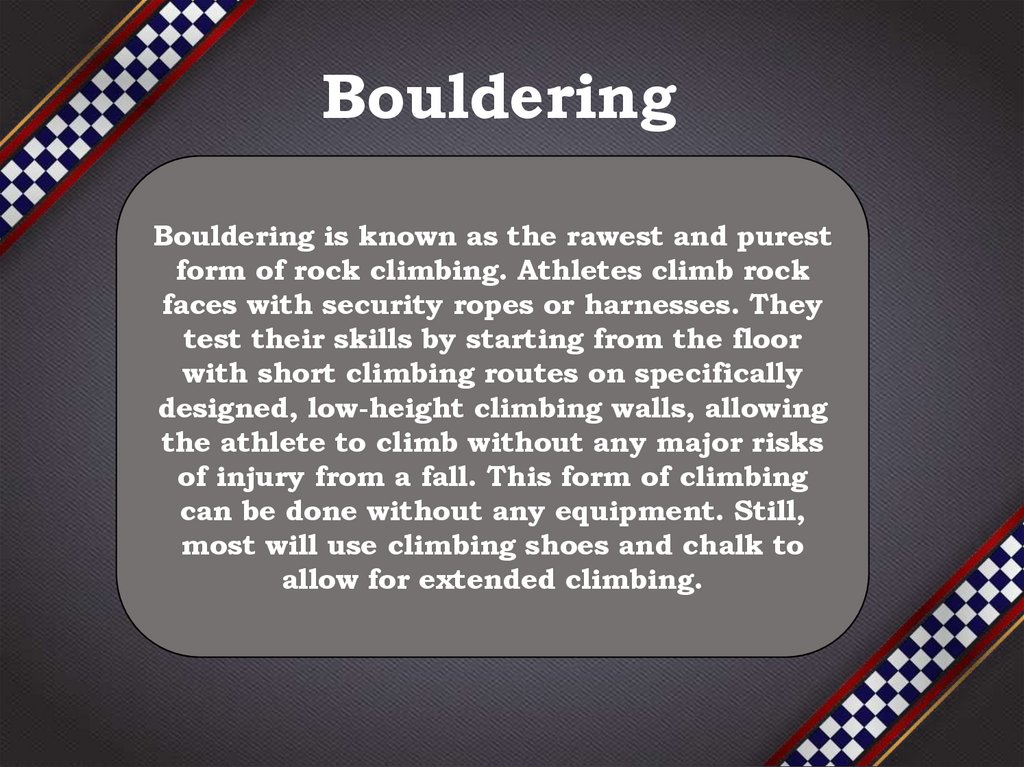
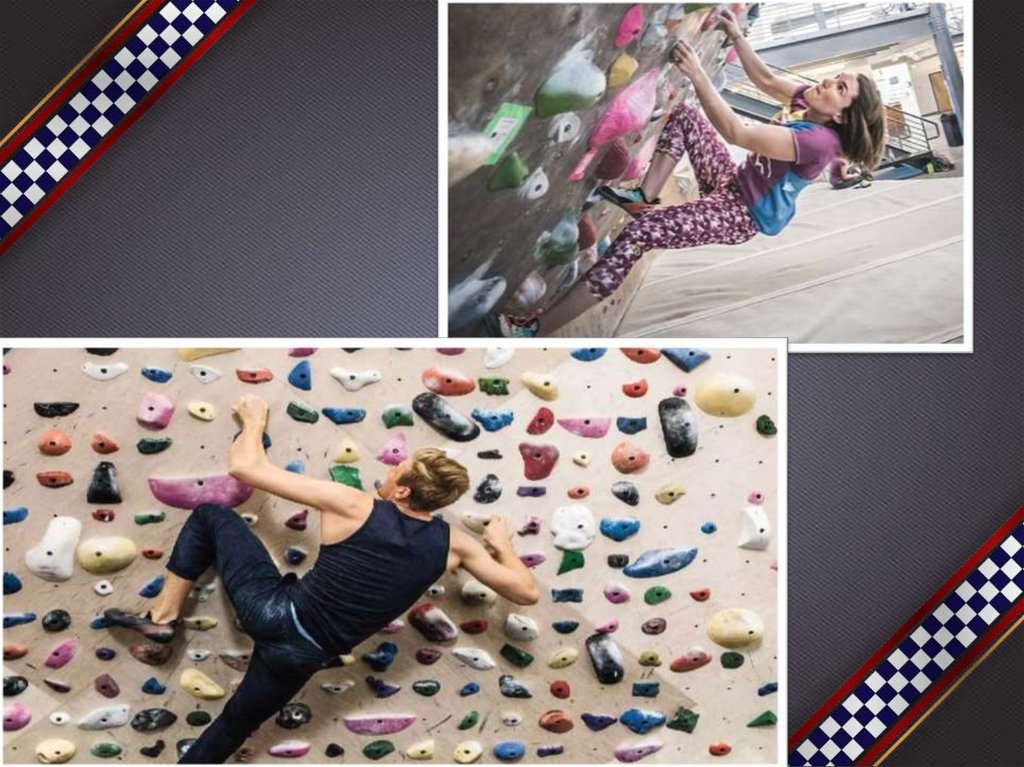
BoulderingBouldering is known as the rawest and purest
form of rock climbing. Athletes climb rock
faces with security ropes or harnesses. They
test their skills by starting from the floor
with short climbing routes on specifically
designed, low-height climbing walls, allowing
the athlete to climb without any major risks
of injury from a fall. This form of climbing
can be done without any equipment. Still,
most will use climbing shoes and chalk to
allow for extended climbing.
4.
5.
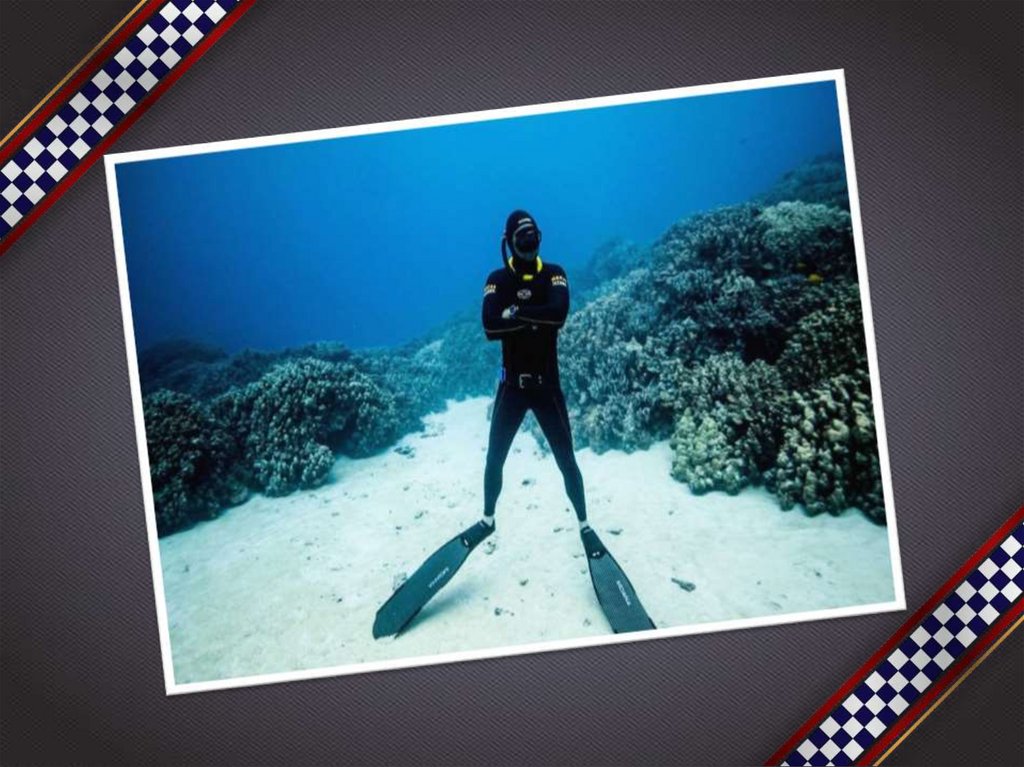
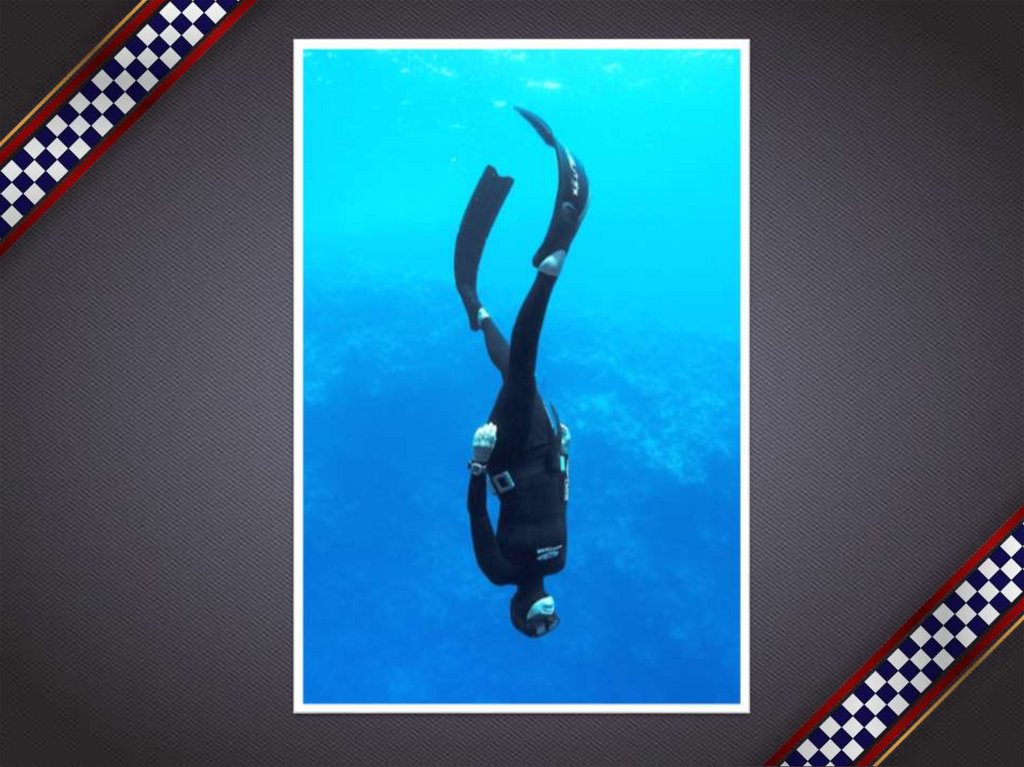
FreedivingWhen you’re scuba diving, you’re literally in a
situation where you could be physically unable to
breathe if something goes wrong. Most divers have
oxygen tanks with them, but some athletes disregard
this normal equipment and opt to freedive.
Like many of these top extreme sports, freediving is
exactly what it sounds like – a diver goes down with
no survival equipment other than flippers. They plan
on making the descent and ascent on a single breath
of air. The pressure changes of deep diving, physical
exertion it takes to climb back to the surface and
mental panic that can set in make this more than
just holding your breath for a really long time.
6.
7.
8.
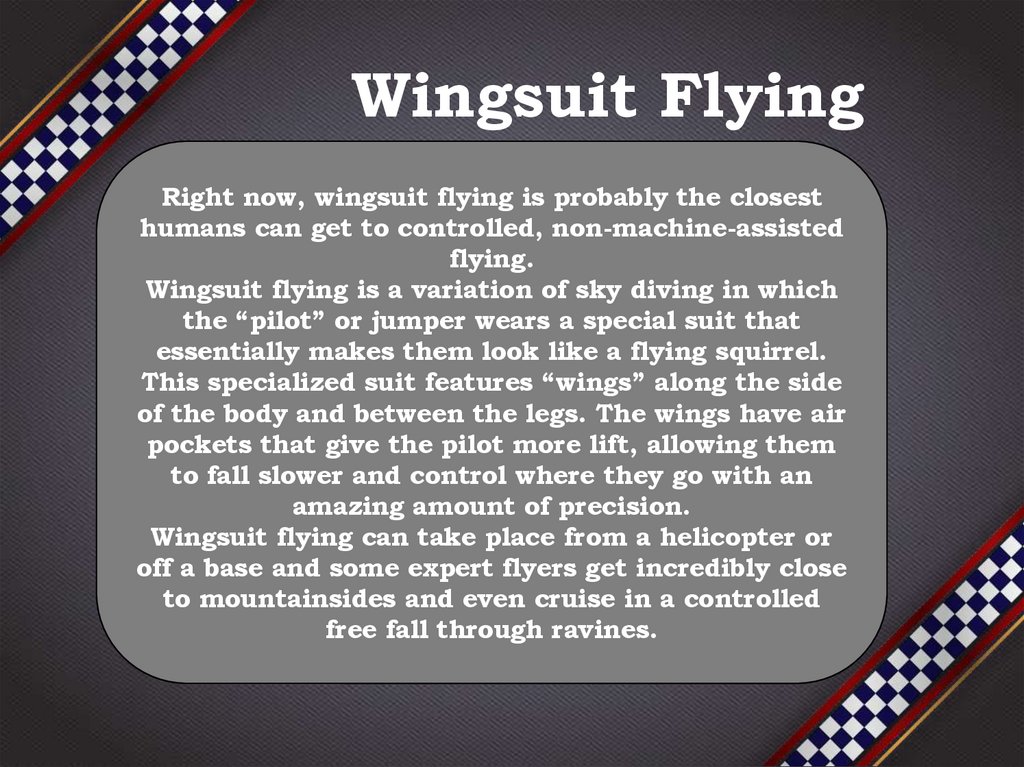
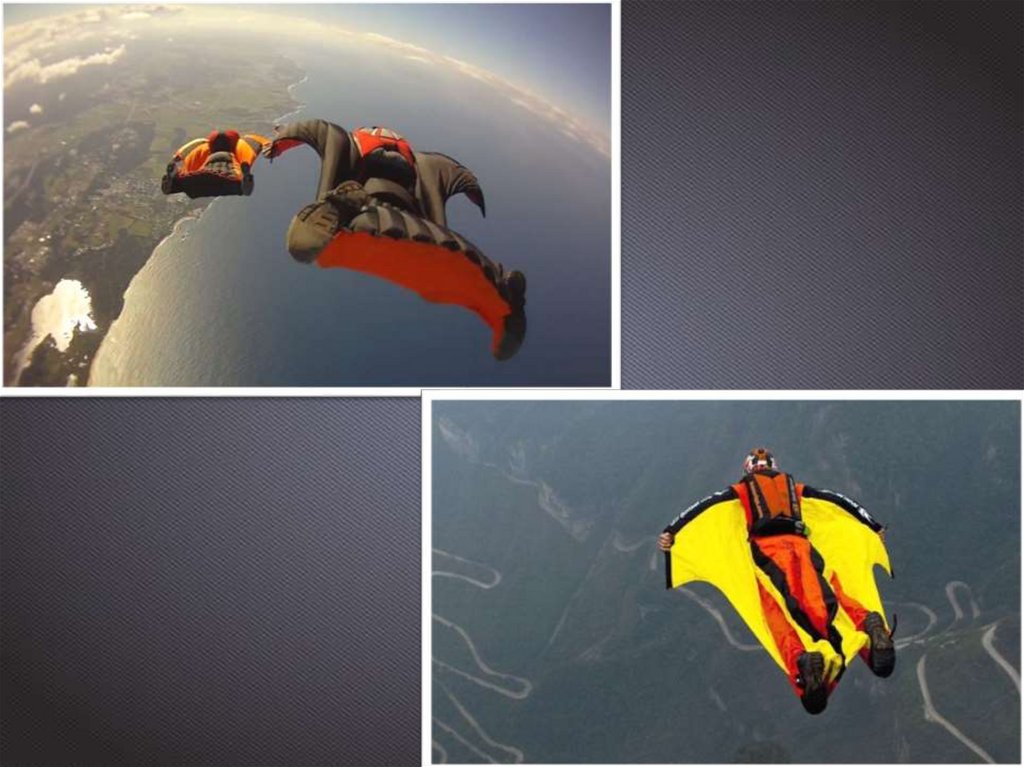
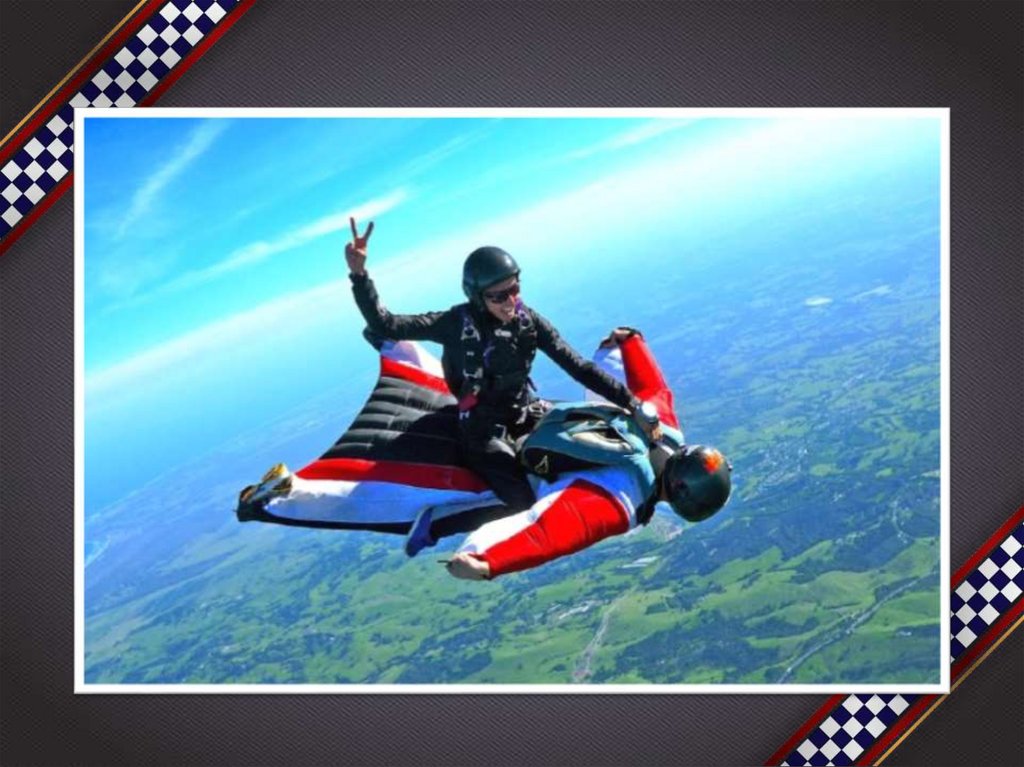
Wingsuit FlyingRight now, wingsuit flying is probably the closest
humans can get to controlled, non-machine-assisted
flying.
Wingsuit flying is a variation of sky diving in which
the “pilot” or jumper wears a special suit that
essentially makes them look like a flying squirrel.
This specialized suit features “wings” along the side
of the body and between the legs. The wings have air
pockets that give the pilot more lift, allowing them
to fall slower and control where they go with an
amazing amount of precision.
Wingsuit flying can take place from a helicopter or
off a base and some expert flyers get incredibly close
to mountainsides and even cruise in a controlled
free fall through ravines.
9.
10.
11.
CurlingCurling is a type of extreme sport where players
slide stones on a sheet of ice towards a target area
which is segmented into four concentric circles. It
is related to bowls and shuffleboard. Two teams,
each with four players, take turns sliding heavy,
polished granite stones, also called rocks, across
the ice curling sheet towards the house, a circular
target marked on the ice.
Each team has eight stones. The purpose is to
accumulate the highest score for a game; points
are scored for the stones resting closest to the
center of the house at the conclusion of each end,
which is completed when both teams have thrown
all of their stones. A game usually consists of eight
or ten ends.
12.
13.
14.
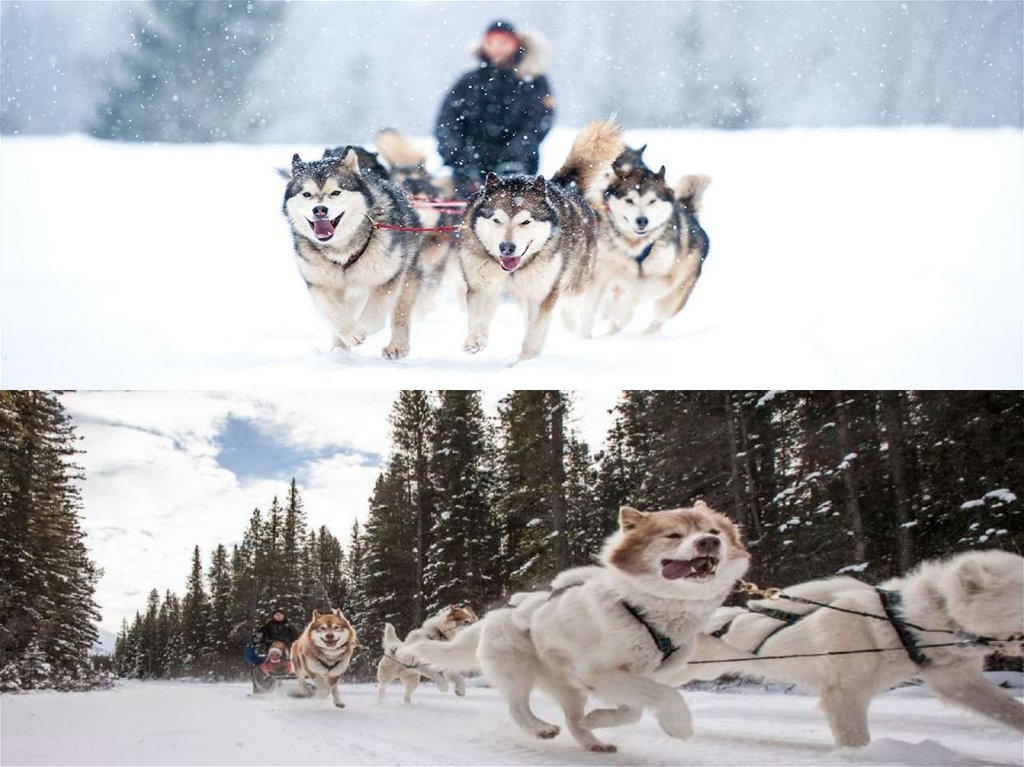
Dog SleddingEven though widely used as a means of
transportation, dog sledding can also be a type of
extreme sport, also known as dog sled racing. It
includes a sled that is pulled by one or more sled
dogs traveling over ice and through the snow.
There is a great number of different types of sleds
used, depending on their function. In Greenland,
the dogs pull in a fan shape in front of the sled
opposed to other regions where to dogs pull side
by side in pairs.
15.
16.
What are theadvantages and
disadvantages of doing
extreme sports?
17.
AdvantagesHelp:
• to vary our monotonous life;
• to escape from daily routine;
• to learn valuable skills;
• to work as a team;
• to study first aid and rescue;
• to stay calm in emergency;
• to deal with problems;
• to overcome fears;
18.
Advantages• give an opportunity to feel
excitement;
• make us more self-confident
and self-disciplined;
• give a chance to be close to
nature;
• make us understand the role of
human being on the earth;
• help us become more
independent
19.
Disadvantages• carry great risk of being seriously
injured;
• you may have health problems in
later life;
• require a lot of exhausting practice,
take much energy;
• are expensive;
• require reliable equipment;
• are addictive
20.
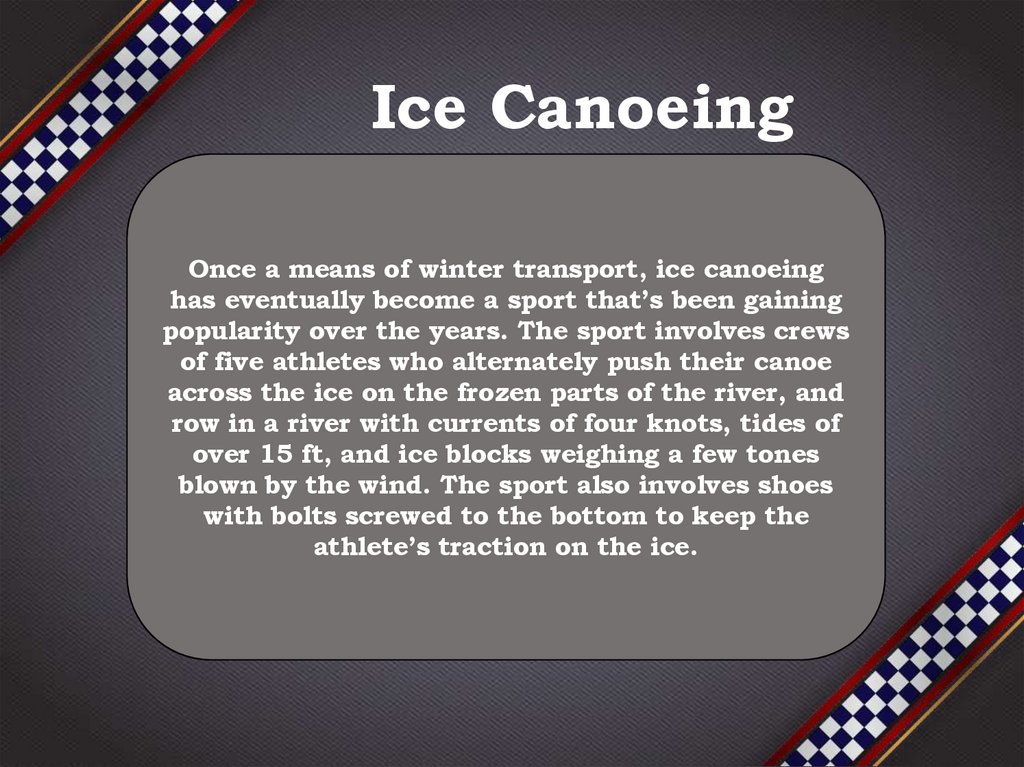
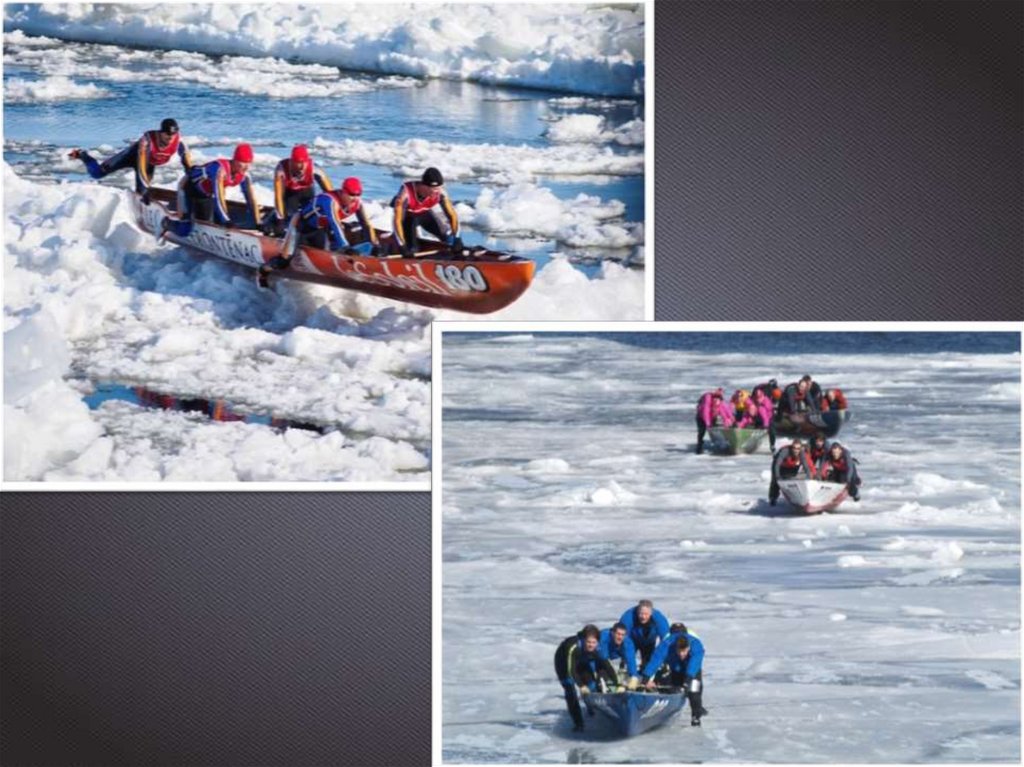
Ice CanoeingOnce a means of winter transport, ice canoeing
has eventually become a sport that’s been gaining
popularity over the years. The sport involves crews
of five athletes who alternately push their canoe
across the ice on the frozen parts of the river, and
row in a river with currents of four knots, tides of
over 15 ft, and ice blocks weighing a few tones
blown by the wind. The sport also involves shoes
with bolts screwed to the bottom to keep the
athlete’s traction on the ice.
21.
22.
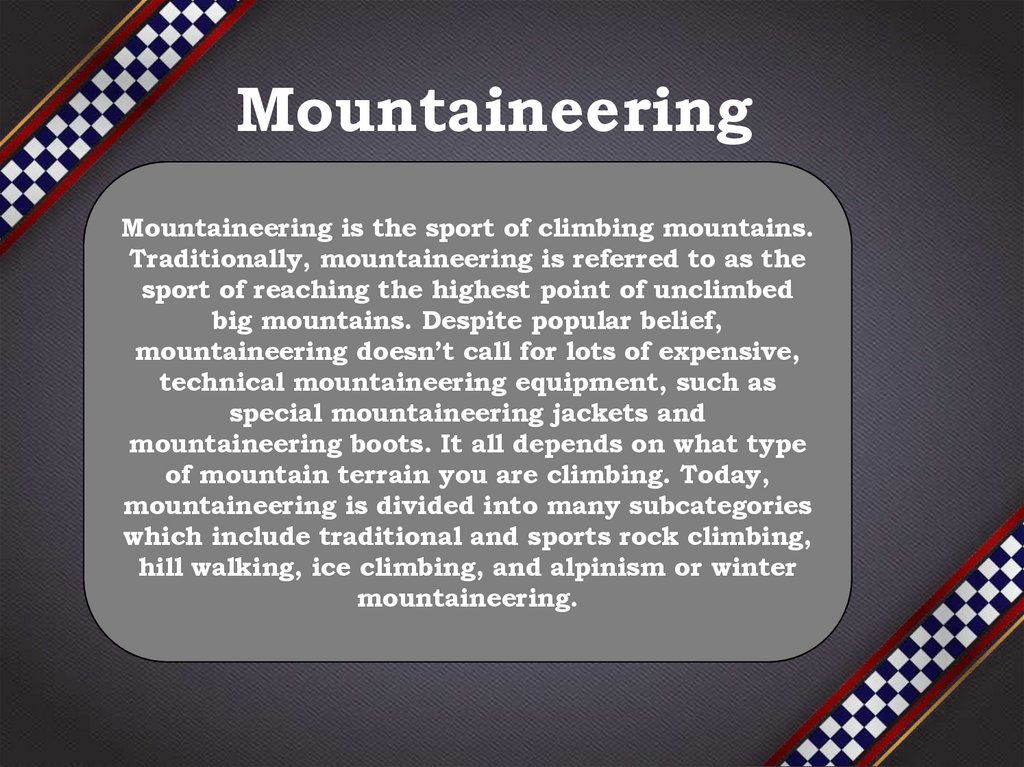
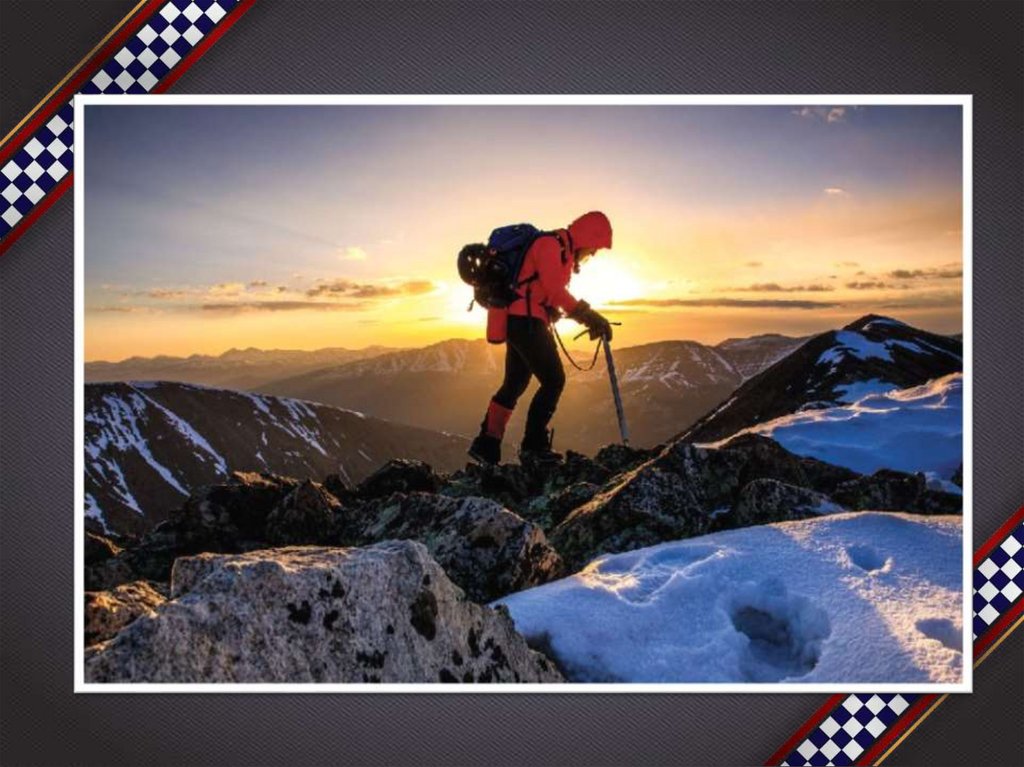
MountaineeringMountaineering is the sport of climbing mountains.
Traditionally, mountaineering is referred to as the
sport of reaching the highest point of unclimbed
big mountains. Despite popular belief,
mountaineering doesn’t call for lots of expensive,
technical mountaineering equipment, such as
special mountaineering jackets and
mountaineering boots. It all depends on what type
of mountain terrain you are climbing. Today,
mountaineering is divided into many subcategories
which include traditional and sports rock climbing,
hill walking, ice climbing, and alpinism or winter
mountaineering.
23.
24.
RallyingRallying is a form of motorsport that is
performed on public or private roads with
specially built road-legal cars and track roads.
The sport is not done on a circuit but rather in a
point-to-point format where participants and
their co-drivers drive between set control
points, leaving at regular intervals from one or
more start points.
25.
26.
What qualitiesshould people have
to do extreme
sports?
27.
• positive energy• courage
• survival instinct
• ability to evaluate risk
• sense of adventure
• physical strength
• quick reactions
• sense of humour
• determination
• sense of balance
• good health
• care
• co-operative skills
• stamina
28.
Thank you for yourattention!